What Is Perplexity and How Is It Changing Business Workflows?
Introduction Business teams spend a significant amount of time searching for information, comparing sources, analyzing documents, and preparing reports. Perplexity is changing this process by combining AI with web search to deliver conversational answers backed by citations and original sources. Instead of opening dozens of webpages, employees can ask a question and receive a synthesised answer that can be verified. What Is Perplexity? Perplexity is an AI-powered search and research platform designed to help users find, understand, and work with information more efficiently. Unlike a traditional search engine that primarily provides a list of links, Perplexity generates direct answers by searching relevant sources and presenting supporting citations. Its Research mode can perform multiple searches, analyze numerous sources, and produce a comprehensive report, making it particularly useful for complex business research. How Is Perplexity Changing Business Workflows? The biggest change is the shift from searching for information to working with information. 1. Faster Market Research Marketing and strategy teams can use Perplexity to research competitors, industry trends, customer behavior, and emerging opportunities. Instead of manually collecting information from multiple websites, teams can ask focused questions and receive a cited summary. 2. Connecting Internal and External Knowledge For Enterprise users, Perplexity can search company files alongside web sources. This means employees can combine internal reports, presentations, documents, and proprietary information with current external research. For example, a strategy team could ask: “Compare our previous market performance with current industry trends and identify three growth opportunities.” Perplexity can bring together relevant internal information and external sources to support the analysis. 3. Reducing Repetitive Work Perplexity can help create research summaries, reports, presentations, dashboards, and other business deliverables. Its newer Computer capabilities are designed to handle multi-step tasks across connected tools and data sources. This can reduce repetitive work such as collecting information, summarizing documents, preparing first drafts, and organizing research. 4. Better Decision-Making Business decisions depend on current and reliable information. Because Perplexity provides citations and allows users to trace answers back to sources, teams can more easily verify important information before acting on it. This is especially valuable for finance, sales, marketing, product development, consulting, and competitive intelligence. 5. Less Context Switching Modern employees often move between browsers, spreadsheets, project-management platforms, documents, and communication tools. Perplexity is increasingly designed to bring research and connected business information into one workflow. For example, its Linear connector allows Enterprise users to query project and issue information and combine it with company documents and web research. Real-World Business Applications Perplexity can support workflows across multiple departments: Perplexity’s Enterprise platform also provides internal knowledge search, connected applications, collaboration features, and enterprise security controls. The Future of AI-Powered Workflows The evolution of Perplexity shows that business AI is moving beyond simple question-and-answer tools. The goal is increasingly to connect research → analysis → creation → execution in one workflow. Organizations can use AI not only to find information but also to transform that information into useful business outputs. Perplexity’s Computer platform, for example, is designed to orchestrate multiple AI models and work across connected tools to handle complex, multi-step tasks. From AI Search to Business Automation Introduction AI search has changed how businesses find information. Instead of opening multiple websites, reading long documents, and manually comparing sources, employees can ask an AI system a question and receive a synthesized answer with supporting information. But the next major shift is happening beyond search: AI is moving from answering questions to completing business tasks. This transition is creating a new workflow model where AI can research, analyze, create, communicate, and automate actions with much less manual effort. From Search to Action Traditional search follows a simple process: Question → Search → Information → Human Action. AI-powered workflows are evolving into: Goal → AI Research → Analysis → Action → Result. Platforms such as Perplexity are increasingly combining search with AI agents that can work across websites, company information, documents, and connected applications. Perplexity’s Computer for Enterprise, for example, is designed to research information, analyze data, create documents, interact with connected applications, and execute multi-step workflows. This means AI is becoming less like a search box and more like a digital worker. How AI Search Becomes Business Automation The transformation starts with information gathering. AI can search current web sources, analyze internal documents, and identify relevant information. It can then turn that information into a report, presentation, spreadsheet, email, or other business output. For example, a marketing manager could ask: “Research our top competitors, compare their latest campaigns, create a summary report, and send it to the marketing team.” Instead of completing each step manually, an AI agent can coordinate research, analysis, content creation, and communication as one workflow. Perplexity describes this type of workflow as research → analysis → document creation → email delivery → scheduled follow-up. Where Businesses Can Use AI Automation AI-powered search and automation can support almost every department. Marketing teams can automate competitor monitoring, campaign research, content briefs, and market reports. Sales teams can research prospects, summarize accounts, prepare meeting briefs, and organize follow-ups. Finance teams can collect financial information, compare reports, and prepare analysis for decision-makers. HR teams can simplify employee onboarding, answer policy questions, and organize internal documentation. Technology teams can analyze technical documentation, investigate incidents, generate reports, and support development workflows. Perplexity highlights use cases such as competitive analysis, technical documentation, onboarding, and incident post-mortems. The Rise of AI Agents The most important development is the rise of AI agents. Unlike conventional chatbots, agents are designed to work toward a goal and perform multiple steps with less human intervention. Research from Perplexity and Harvard Business School describes this transition as a movement from simply looking up and synthesizing information toward planning and carrying out tasks autonomously. The human role therefore changes from doing every step manually to giving objectives, supervising AI, reviewing results, and making important decisions. What Businesses Should Consider Automation does not mean removing humans from every workflow. Businesses still need strong security, permissions, data governance, and human review—especially when
What Is Deep Work and Why Does It Matter?
In today’s fast-paced digital world, constant notifications, emails, and social media make it difficult to stay focused. This is where Deep Work becomes a game-changer. Coined by author Cal Newport, deep work refers to the ability to concentrate on a cognitively demanding task without distractions. It allows you to produce high-quality work in less time while continuously improving your skills. Deep work isn’t just about working harder—it’s about working smarter. When you eliminate distractions and dedicate uninterrupted time to a single task, your brain enters a state of intense focus. This helps you solve complex problems, generate creative ideas, and complete meaningful work much faster than switching between multiple tasks. Professionals, students, entrepreneurs, and creators all benefit from deep work. Programmers write better code, writers produce better content, designers create more innovative ideas, and students understand concepts more effectively. In a world where attention is constantly divided, the ability to focus deeply has become one of the most valuable professional skills. Benefits of Deep Work To practice deep work, schedule dedicated focus sessions, silence notifications, work in a quiet environment, and prioritize your most important tasks during your peak energy hours. Even 60–90 minutes of uninterrupted concentration each day can significantly improve your performance over time. Ultimately, deep work is about creating more value with your time. In an age of endless distractions, those who can focus deeply will stand out, produce better results, and build successful careers. Developing this habit today can lead to greater productivity, higher-quality work, and long-term personal and professional growth. Deep Work vs. Shallow Work Tip: Aim for 2–4 hours of deep work on your most important tasks each day. Consistent focus compounds into significant long-term results. Impact of Deep Work vs. Shallow Work Illustrative comparison of effectiveness across key productivity factors. category deep shallow Focus 95 40 Productivity 90 55 Learning 88 45 Creativity 92 50 Task Quality 94 60 Why Most Students Struggle to Focus Staying focused has become one of the biggest challenges for students today. With smartphones, social media, online entertainment, and constant notifications competing for attention, concentrating on studies is harder than ever. While many students believe they simply lack discipline, the real reasons often go much deeper. Understanding these challenges is the first step toward improving concentration and academic performance. One of the biggest reasons students struggle to focus is digital distraction. Every notification, message, or short video interrupts the brain’s attention. Even a quick glance at a phone can break concentration, making it take several minutes to regain full focus. Frequent multitasking—such as studying while scrolling through social media or chatting with friends—reduces both learning efficiency and memory retention. Another common reason is the lack of clear study goals. Many students sit down to study without deciding exactly what they want to accomplish. Without a specific objective, the mind easily wanders. Breaking large subjects into smaller, manageable tasks makes studying feel less overwhelming and helps maintain motivation. Poor lifestyle habits also play a major role. Inadequate sleep, unhealthy eating, dehydration, and lack of physical activity reduce energy levels and make it difficult for the brain to stay alert. Sleep is especially important because it supports memory, learning, and concentration. Students who consistently sleep well often perform better than those who study late into the night. Stress and anxiety are additional factors that affect focus. Worrying about exams, assignments, or future careers can consume mental energy, leaving less attention available for studying. Taking short breaks, practicing relaxation techniques, and maintaining a balanced routine can help reduce mental fatigue. The study environment matters too. A noisy room, cluttered desk, or constant interruptions make it difficult to stay engaged. Creating a quiet, organized workspace helps the brain associate that environment with focused work. Common Reasons Students Lose Focus How to Improve Focus The ability to focus is a skill that can be developed with consistent practice. Small changes in daily habits—such as reducing distractions, improving sleep, and planning study sessions—can make a significant difference over time. Students who build strong focus not only perform better in exams but also develop valuable skills that benefit them throughout their careers. Illustrative Comparison of Common Focus Challenges Common Causes of Student Distraction Illustrative comparison of factors that commonly reduce students’ ability to focus. The Benefits of Deep Work for Students In an age of smartphones, social media, and constant notifications, staying focused has become one of the biggest challenges for students. Many spend hours studying but achieve very little because their attention is constantly interrupted. This is where Deep Work can make a significant difference. Deep Work is the practice of concentrating on one important task without distractions for a dedicated period. Instead of multitasking, students focus entirely on learning, solving problems, or completing assignments. This approach improves understanding, boosts productivity, and helps students achieve better academic results in less time. One of the greatest benefits of deep work is better learning and memory retention. When students study with complete concentration, the brain processes information more effectively and stores it in long-term memory. This means less time is spent relearning concepts before exams. Deep work also improves problem-solving and critical thinking. Subjects like mathematics, programming, engineering, and science often require sustained concentration to understand complex concepts. Interruptions can break the thinking process, while focused study sessions allow students to analyze problems more deeply and develop stronger solutions. Another major advantage is higher productivity. Many students confuse being busy with being productive. Switching between study materials, messages, and social media wastes valuable time. During deep work sessions, students complete assignments faster because their attention remains on one task from start to finish. Deep work also reduces stress. Last-minute studying often creates anxiety because tasks pile up over time. By consistently dedicating focused time each day, students stay ahead of deadlines and feel more confident during exams. Benefits of Deep Work for Students How Students Can Practice Deep Work Building the habit of deep work doesn’t happen overnight. Start with shorter focus sessions and gradually
One Master Certification: Your Complete Path to AI, Data, Digital & Career Success
In today’s rapidly evolving digital world, learning a single skill is no longer enough to stay competitive. Employers are looking for professionals who can leverage Artificial Intelligence, analyse data, execute digital marketing strategies, communicate effectively, and solve real-world business challenges. This is where One Master Certification becomes the perfect solution for students, working professionals, entrepreneurs, faculty members, and institutions looking to stay ahead. One Master Certification is designed as a comprehensive career development program that combines multiple high-demand skills into a single learning journey. Instead of enrolling in separate courses for AI, analytics, marketing, and career development, learners gain practical knowledge through one integrated certification program. Why Choose One Master Certification? The biggest advantage of this certification is its industry-focused curriculum. The program goes beyond theory and emphasises practical learning through live projects, hands-on exercises, real-world case studies, and expert mentorship. Key learning areas include: By mastering these essential skills, learners become more confident, adaptable, and job-ready in today’s competitive employment market. Who Can Benefit? One Master Certification is designed for everyone. Whether you’re starting your career or planning your next big move, this certification provides the knowledge and confidence needed to succeed. Practical Learning That Makes a Difference Unlike traditional learning programs, One Master Certification focuses on implementation. Learners participate in interactive live sessions, complete practical assignments, work on real industry projects, and receive personalised mentorship throughout the program. The certification also offers: These features ensure that learners don’t just understand concepts—they know how to apply them in real business environments. Career Opportunities After Certification As organisations continue adopting AI, automation, and digital transformation, the demand for multi-skilled professionals continues to grow. Graduates of One Master Certification can pursue roles such as: The combination of technical knowledge and career development skills makes learners valuable across multiple industries. Final Thoughts The future belongs to professionals who continuously learn, adapt, and embrace emerging technologies. One Master Certification brings together AI, data analytics, digital marketing, communication, and career development into one complete program, helping learners build a future-ready skill set. If you’re looking to accelerate your career, increase your employability, or future-proof your professional journey, One Master Certification is your complete path to AI, data, digital, and career success. Invest in your skills today and prepare for the opportunities of tomorrow. Why One Master Certification Is the Smart Choice for Everyone In today’s fast-changing digital economy, success depends on more than just academic qualifications. Employers are looking for professionals who can work with Artificial Intelligence (AI), analyse data, understand digital marketing, communicate effectively, and adapt to new technologies. Learning these skills separately can be expensive and time-consuming. That’s why One Master Certification is the smart choice for students, professionals, entrepreneurs, faculty, and educational institutions. One Master Certification is a comprehensive, career-focused program that combines the most in-demand skills into one practical learning experience. Instead of enrolling in multiple courses, learners gain expertise in AI, data analytics, digital marketing, career development, productivity tools, and professional communication—all under one certification. Learn the Skills That Employers Want Modern organisations are embracing AI, automation, and data-driven decision-making. Companies expect employees to understand technology while also being capable of solving business problems. One Master Certification prepares learners with practical knowledge that matches these evolving industry needs. The program covers: This combination of technical and professional skills helps learners stand out in today’s competitive job market. Suitable for Everyone One of the biggest strengths of One Master Certification is its flexibility. The program is designed for learners at different stages of their careers. No matter your background, the certification offers practical knowledge that delivers long-term value. Practical Learning with Real-World Experience Unlike traditional classroom programs that focus mainly on theory, One Master Certification emphasises hands-on learning. Participants work on live projects, solve real business problems, attend interactive sessions, and receive personalised mentorship from experienced professionals. Program highlights include: This practical approach ensures that learners develop confidence while gaining experience that employers value. Your Career Growth Journey Career development is a continuous process. As you gain new digital skills, your opportunities also expand. The graph above illustrates how continuous skill development can lead to accelerating career growth over time. As technology adoption increases across industries, professionals with AI, analytics, and digital expertise are likely to see greater opportunities for advancement. Build a Future-Ready Career Technology continues to reshape every industry, making continuous learning more important than ever. One Master Certification equips learners with the technical expertise, business knowledge, and professional confidence needed to succeed in this evolving landscape. Whether your goal is to land your first job, switch careers, grow your business, or become a future-ready professional, this certification provides a complete learning pathway. By combining AI, data analytics, digital marketing, communication, and career development into one program, One Master Certification helps you stay competitive and prepared for the opportunities of tomorrow. Master ChatGPT & AI Tools for Better Productivity Artificial Intelligence is transforming the way we work, learn, and communicate. From creating content and analysing data to automating repetitive tasks and improving decision-making, AI tools have become essential for professionals across every industry. Among these tools, ChatGPT has emerged as one of the most powerful AI assistants, helping millions of people save time and boost productivity. Mastering ChatGPT and other AI-powered tools is no longer just an advantage—it is becoming a must-have skill in today’s digital workplace. Whether you’re a student, working professional, entrepreneur, or business owner, learning how to use AI effectively can help you work smarter, complete tasks faster, and unlock new career opportunities. Why Learn ChatGPT? ChatGPT is much more than a chatbot. It acts as a virtual assistant capable of generating ideas, drafting emails, writing reports, summarising documents, creating presentations, assisting with coding, and answering complex questions. Instead of spending hours on repetitive work, users can focus on strategic thinking, creativity, and problem-solving. Some of the key benefits include: By using ChatGPT effectively, professionals can improve both the speed and quality of their work. AI Tools That Improve Productivity While ChatGPT is one
What Is AI-Powered Business Process Automation and How Does It Work?
AI-Powered Business Process Automation (BPA) Business Process Automation (BPA) is the use of technology to automate repetitive business tasks such as invoice processing, customer support, employee onboarding, and data entry. When Artificial Intelligence (AI) is integrated into BPA, automation becomes smarter by enabling systems to learn, analyse data, understand language, and make decisions with minimal human intervention. Unlike traditional automation, AI-powered BPA can process unstructured data, predict outcomes, and continuously improve performance through learning. How AI-Powered BPA Works Key Technologies Benefits Real-World Applications AI Workflow Process Input Data → AI Analysis (ML + NLP) → Decision Engine → RPA Execution → Business Outcome → Continuous Learning AI-Powered BPA Technology Share Key Technologies in AI-Powered BPA Illustrative contribution of core technologies in intelligent business automation. Top Business Processes SMEs Can Automate with AI in 2026 Small and Medium Enterprises (SMEs) are increasingly adopting Artificial Intelligence (AI) to automate routine operations, reduce costs, and improve productivity. In 2026, AI-powered automation is no longer limited to large enterprises—affordable cloud-based AI tools enable SMEs to streamline workflows, enhance customer experiences, and make data-driven decisions. Business Processes SMEs Can Automate 1. Customer Support AI chatbots and virtual assistants provide 24/7 support, answer FAQs, resolve common issues, and route complex queries to human agents. This improves customer satisfaction while reducing response time. 2. Human Resources (HR) AI automates resume screening, interview scheduling, employee onboarding, attendance tracking, and performance analysis, allowing HR teams to focus on talent development. 3. Finance & Accounting AI simplifies invoice processing, expense management, payroll, tax calculations, and fraud detection, minimising manual errors and improving financial accuracy. 4. Sales Automation AI analyses customer behaviour, scores leads, predicts buying intent, and recommends personalised follow-ups, helping sales teams close deals faster. 5. Marketing AI generates content, schedules campaigns, segments audiences, personalises email marketing, and measures campaign performance, increasing engagement and ROI. 6. Inventory Management AI predicts product demand, monitors stock levels, automates reordering, and reduces overstocking or stock shortages, improving supply chain efficiency. 7. Document Processing Using Optical Character Recognition (OCR), Natural Language Processing (NLP), and Machine Learning (ML), AI extracts information from invoices, contracts, forms, and reports, reducing manual data entry. Why SMEs Should Adopt AI Automation AI Automation Adoption Across SME Functions High-Impact AI Automation Areas for SMEs Illustrative automation potential across common business functions in 2026. Benefits of AI Business Automation for Small and Medium Enterprises Small and Medium Enterprises (SMEs) face increasing pressure to improve efficiency, reduce costs, and deliver better customer experiences while operating with limited resources. AI Business Automation helps SMEs streamline repetitive tasks, improve decision-making, and scale operations without significantly increasing workforce or operational expenses. In 2026, AI will become an essential business tool that enables companies to work smarter, respond faster, and stay competitive. Key Benefits of AI Business Automation 1. Cost Reduction AI automates repetitive and time-consuming tasks such as data entry, invoice processing, customer inquiries, and report generation. This reduces labour costs, minimises operational expenses, and lowers the risk of costly human errors. Businesses can allocate their budgets to innovation and growth instead of routine administration. 2. Increased Productivity Employees spend less time on manual work and more time on strategic activities like customer engagement, product development, and business expansion. AI systems work 24/7 without interruptions, ensuring continuous operations and faster task completion. 3. Faster Decision-Making AI analyses large volumes of business data in real time, identifying trends, customer behaviour, and operational patterns. Managers receive actionable insights and predictive recommendations that support faster and more informed business decisions. 4. Improved Customer Experience AI-powered chatbots, virtual assistants, and recommendation engines provide instant responses, personalised product suggestions, and round-the-clock support. Faster service and personalised interactions improve customer satisfaction, loyalty, and retention. 5. Business Scalability As businesses grow, workloads increase. AI automation allows SMEs to handle more customers, orders, and transactions without proportionally increasing staff. This makes scaling operations more efficient and cost-effective. 6. Better Accuracy and Compliance Automation minimises manual mistakes in accounting, payroll, inventory management, and documentation. AI also helps monitor compliance requirements, reducing financial and regulatory risks. 7. Enhanced Marketing Performance AI optimises digital marketing by analysing customer preferences, segmenting audiences, automating email campaigns, generating content, and measuring campaign performance. This improves engagement while reducing marketing costs. 8. Smarter Inventory Management AI forecasts product demand, tracks inventory levels in real time, and automates stock replenishment. This helps businesses avoid stock shortages, reduce excess inventory, and improve cash flow. 9. Stronger Financial Management AI simplifies budgeting, expense tracking, fraud detection, and financial forecasting. Businesses gain greater visibility into cash flow and profitability, enabling more confident financial planning. 10. Competitive Advantage Businesses adopting AI can respond faster to market changes, deliver superior customer experiences, and operate more efficiently than competitors relying on manual processes. AI enables SMEs to compete effectively with larger organisations. Why AI Automation Matters in 2026 Modern AI platforms combine Machine Learning (ML), Natural Language Processing (NLP), Robotic Process Automation (RPA), and predictive analytics into affordable cloud solutions designed specifically for SMEs. This allows businesses of all sizes to automate complex workflows without requiring large IT teams or significant infrastructure investments. Business Impact of AI Automation Top Benefits of AI Business Automation for SMEs Illustrative business impact of AI automation across key performance areas. How to Implement AI Automation in Your Business: Step-by-Step Guide Artificial Intelligence (AI) is transforming the way businesses operate by automating repetitive tasks, improving productivity, and enabling smarter decision-making. However, successful AI adoption requires more than simply purchasing software. Businesses need a structured implementation strategy that aligns AI with their goals, workflows, and employees. Whether you’re a startup or an established SME, following a step-by-step approach can help you maximise the return on your AI investment. Step 1: Assess Your Business Needs Begin by identifying repetitive, time-consuming, and error-prone processes. Analyse where employees spend the most manual effort and determine which activities can benefit from automation. Common areas include: Prioritise processes that offer the highest business impact with the lowest implementation complexity. Step 2: Define Clear Business Goals Set
What Is Self-Verifying AI? How AI Is Learning to Check Its Own Work
Artificial Intelligence has evolved rapidly over the last few years. From generating text and writing code to creating images and analysing complex datasets, AI has become an indispensable tool for businesses and individuals alike. However, one of the biggest challenges facing today’s AI systems is reliability. Large Language Models (LLMs) sometimes generate incorrect information with complete confidence—a phenomenon known as AI hallucination. To address this issue, researchers and technology companies are developing a new generation of intelligent systems known as Self-Verifying AI. Instead of producing an answer once and delivering it immediately, these systems review, validate, and improve their responses before presenting them to users. This shift represents one of the most important developments in artificial intelligence, moving AI from simply generating content to actively checking its own work. What Is Self-Verifying AI? Self-Verifying AI is an advanced AI approach where the model evaluates its own output before presenting the final response. Much like a human editor proofreading an article, the AI performs one or more verification steps to detect mistakes, inconsistencies, or unsupported claims. Rather than relying solely on its first generated answer, Self-Verifying AI asks questions such as: Only after these checks does the AI produce its final output. This process significantly improves the accuracy, reliability, and trustworthiness of AI-generated content. Why Traditional AI Makes Mistakes Modern AI models predict the most likely next word based on patterns learned from massive datasets. They do not inherently understand facts the way humans do. As a result, AI may sometimes: These mistakes become especially risky in industries such as healthcare, finance, legal services, engineering, and scientific research How Self-Verifying AI Works Most Self-Verifying AI systems follow a multi-stage workflow: 1. Initial Response Generation The AI first creates an answer using its normal reasoning process. ↓ 2. Internal Review The model analyses its own response by checking: ↓ 3. Evidence Validation The AI compares its answer against: ↓ 4. Error Detection Potential problems are identified, including: ↓ 5. Response Refinement The AI rewrites or improves the answer before presenting the final version. This verification loop may happen multiple times depending on the complexity of the task. Why Self-Verifying AI Matters The biggest advantage of Self-Verifying AI is improved reliability. Organisations increasingly depend on AI for business-critical decisions, where even small mistakes can lead to financial loss, legal issues, or customer dissatisfaction. Key benefits include: Self-Verifying AI vs Traditional AI Traditional AI Self-Verifying AI Generates one response Generates and reviews responses Higher risk of hallucinations Lower hallucination rate Limited error detection Detects logical and factual errors Minimal self-correction Automatically refines answers Faster but less reliable Slightly slower but more accurate Illustrative comparison of AI response quality Conceptual comparison showing expected improvements with self-verification. Values are illustrative, not benchmark results. Traditional AI Self-Verifying AI 0%25%50%75%100%AccuracyHallucination resistance Real-World Applications Self-Verifying AI is already becoming valuable across multiple industries. 🏥 Healthcare Medical AI systems can review patient summaries, validate clinical recommendations, and identify missing information before assisting healthcare professionals. 💻 Software Development AI coding assistants verify generated code by: This reduces bugs before deployment. ⚖️ Legal Services Law firms use AI to: 📊 Business Analytics Self-Verifying AI validates: before they reach decision-makers. 🎓 Education Educational AI systems verify: to improve learning accuracy. How Self-Verifying AI Reduces Hallucinations AI hallucinations occur when a model generates information that appears convincing but is false or unsupported. Self-Verifying AI reduces these errors by: While no AI system is perfect, these techniques significantly improve reliability compared to traditional single-pass generation. Challenges of Self-Verifying AI Despite its advantages, Self-Verifying AI is not without limitations: As AI technology continues to advance, researchers are working to make verification both faster and more efficient. The Future of Self-Verifying AI The next generation of AI systems is expected to become increasingly autonomous in evaluating their own work. Future capabilities may include: As businesses adopt AI for mission-critical operations, self-verification is likely to become a standard feature rather than an optional enhancement. Physical AI Explained: How Robots Are Learning to Think and Act Like Humans Artificial Intelligence (AI) has transformed how computers analyse data, recognise patterns, and generate human-like responses. But a new generation of AI is taking intelligence beyond screens and into the physical world. This evolution is known as Physical AI, also called Embodied AI. Unlike traditional AI systems that exist only in software, Physical AI enables robots and intelligent machines to perceive their surroundings, make decisions, and perform real-world actions. From autonomous warehouse robots to healthcare assistants and self-driving vehicles, Physical AI is redefining how humans interact with machines. What is Physical (Embodied) AI? Physical AI refers to AI systems that are integrated into physical machines such as robots, drones, autonomous vehicles, and industrial equipment. These systems combine artificial intelligence with sensors, cameras, robotics, and real-time decision-making to interact safely and intelligently with the environment. Instead of simply answering questions or analysing digital information, Physical AI can: In simple terms, Physical AI gives robots the ability to see, think, and act much like humans. Traditional AI vs Physical AI Traditional AI mainly operates in the digital world. It powers chatbots, recommendation engines, virtual assistants, fraud detection systems, and language models. While these applications are highly intelligent, they do not directly interact with the physical environment. Physical AI extends these capabilities by connecting AI with robotic hardware. Traditional AI Physical AI Software-based intelligence Intelligence inside physical machines Works with digital data Works with real-world environments Generates text, images, or predictions Performs physical actions No direct interaction with surroundings Uses sensors and robotics to interact with the world Examples: ChatGPT, search engines, recommendation systems Examples: Warehouse robots, autonomous vehicles, robotic assistants This combination of intelligence and movement is what makes Physical AI revolutionary. How Physical AI Works Physical AI relies on several advanced technologies working together. 1. Sensors Sensors act as the robot’s senses. They collect information about the surrounding environment. Common sensors include: These devices help robots understand distance, movement, temperature, location, and obstacles. 2. Computer Vision Computer vision enables machines to interpret
The Rise of AI Orchestrators: Why Software Engineers Need More Than Coding Skills
The software development industry is experiencing its biggest transformation in decades. Until recently, developers spent most of their time writing code line by line, debugging applications, and maintaining software. In 2026, however, Artificial Intelligence has changed the way software is built. AI coding assistants, autonomous AI agents, and low-code platforms are automating repetitive tasks, allowing engineers to focus on solving business problems rather than simply writing code. This shift has created a new role known as the AI Orchestrator—a professional who coordinates multiple AI systems, verifies their outputs, integrates tools, and ensures software is reliable, secure, and aligned with business goals. Instead of replacing developers, AI is redefining what makes a great software engineer. What is an AI Orchestrator? An AI Orchestrator is a technology professional who manages and coordinates multiple AI tools and autonomous agents to complete complex software development tasks. Rather than writing every function manually, they design workflows where AI handles coding, testing, documentation, deployment, and monitoring under human supervision. An AI Orchestrator combines technical expertise with strategic thinking by: Think of an AI Orchestrator as the project manager, architect, and quality controller for an AI-powered software development team. Traditional Developer vs AI Orchestrator Traditional Software Developer AI Orchestrator Writes code manually Directs AI to generate code Fixes bugs line by line Uses AI for debugging and optimisation Works on one task at a time Coordinates multiple AI agents simultaneously Focuses on implementation Focuses on architecture and strategy Writes documentation manually Generates documentation using AI Performs repetitive coding Solves complex business problems The future developer spends less time typing code and more time making critical technical decisions. Why Companies Are Hiring AI-First Engineers Organisations across industries are adopting AI-powered development because it significantly improves productivity and accelerates software delivery. Key reasons include: Companies are now looking for engineers who know how to collaborate with AI, not compete against it. Skills Every Future AI Orchestrator Needs Success in the AI-first era requires more than programming knowledge. The most valuable professionals combine technical expertise with problem-solving and communication skills. Essential skills include: Developers who continuously upgrade these skills will remain highly valuable in the evolving job market. Are Developers Becoming Obsolete? The short answer is no. AI excels at generating code, suggesting improvements, and automating repetitive tasks. However, it cannot fully understand business strategy, customer requirements, ethical considerations, or long-term system architecture without human guidance. Developers are moving from being code writers to becoming: The future belongs to professionals who know how to use AI effectively, not those who ignore it. Career Opportunities in the AI Era As businesses embrace AI-driven software development, several new career paths are emerging: These roles offer exciting opportunities for students and professionals willing to adapt to the changing technology landscape. Future Outlook Experts predict that software development will increasingly involve collaboration between humans and AI agents. Developers will oversee intelligent systems capable of generating code, testing applications, fixing bugs, and deploying software automatically. Rather than replacing engineers, AI will eliminate repetitive work and allow professionals to focus on creativity, innovation, and strategic decision-making. The most successful software engineers of the future will be those who can combine programming knowledge with AI orchestration skills. Top 10 Skills Every Indian Student Needs to Succeed in the Agentic AI Era Artificial Intelligence is no longer just a tool—it is becoming a collaborative partner in the workplace. The rise of Agentic AI, where AI agents can plan, reason, and perform tasks independently, is transforming industries such as software development, healthcare, finance, manufacturing, and education. For Indian students, this shift presents exciting career opportunities, but success requires more than traditional coding skills. Here are the top 10 skills every student should develop to stay competitive in the AI-driven job market. 1. Prompt Engineering Knowing how to communicate effectively with AI models is becoming a core skill. Well-crafted prompts produce better code, content, and business solutions while improving productivity. 2. AI Agent Development Students should learn how AI agents work, interact with APIs, and automate workflows. Building AI-powered assistants is becoming a valuable industry skill. 3. Python & APIs Python remains the leading programming language for AI, automation, and machine learning. Understanding APIs helps developers connect AI tools with real-world applications. 4. Cloud Computing Platforms like AWS, Microsoft Azure, and Google Cloud power modern AI applications. Cloud skills enable students to build scalable AI solutions. 5. Data Analysis AI is only as effective as the data it uses. Learning SQL, Excel, Power BI, or Python libraries helps students extract meaningful insights and make informed decisions. 6. Automation Businesses are automating repetitive tasks using AI and workflow tools. Learning automation improves efficiency and increases career opportunities. 7. Critical Thinking AI generates answers quickly, but humans must evaluate accuracy, solve complex problems, and make strategic decisions. Critical thinking remains one of the most valuable future skills. 8. AI Ethics Responsible AI development requires understanding privacy, fairness, security, and bias. Ethical AI professionals are increasingly in demand. 9. Communication Skills The ability to explain technical ideas, collaborate with teams, and present AI solutions clearly is essential for career growth. 10. Continuous Learning AI evolves rapidly. Students who regularly learn new tools, frameworks, and technologies will remain relevant throughout their careers. Coding to Prompting: How AI is Transforming Software Development in 2026 Software development has entered a new era. In 2026, developers are spending less time writing every line of code manually and more time guiding AI to build applications faster and smarter. This shift from coding to prompting is transforming how software is designed, tested, and deployed. Instead of creating everything from scratch, developers now provide clear instructions—or prompts—to AI coding assistants. These tools generate code, suggest improvements, detect bugs, write documentation, and even automate testing. As a result, software teams can deliver products in days instead of weeks. Evolution from Manual Coding to AI-Assisted Development Traditional software development required developers to write, debug, and optimise every feature manually. Today, AI handles many repetitive coding tasks, allowing engineers to focus on
The LLM Ladder — From Chatting to Building to Training, Step by Step
Large Language Models (LLMs) have revolutionized the way we interact with Artificial Intelligence. From answering simple questions to powering intelligent business applications, LLMs have become an essential part of modern technology. However, mastering LLMs is not a one-step process. Instead, it follows a progressive journey known as the LLM Ladder—a roadmap that helps learners and professionals move from basic AI interactions to developing, fine-tuning, and training their own language models. At the first stage, Chatting with LLMs, users simply interact with AI assistants like ChatGPT, Claude, or Gemini using natural language. This level requires no programming knowledge and focuses on understanding what AI can do. Users learn how to ask questions, generate content, summarize documents, translate languages, brainstorm ideas, and automate simple daily tasks. It serves as the perfect introduction to Generative AI. The second stage is Prompt Engineering, where users learn how to communicate more effectively with AI. Instead of asking generic questions, they design structured prompts that produce accurate and consistent responses. Techniques such as role prompting, chain-of-thought prompting, few-shot learning, and structured output formatting significantly improve the quality of AI-generated content. Prompt engineering has become one of the most valuable skills for AI professionals because it maximizes model performance without changing the underlying model. The third level focuses on API Integration. Developers move beyond chatting with AI and begin embedding LLM capabilities into websites, mobile applications, chatbots, and enterprise software. Using APIs from providers like OpenAI, Anthropic, or Google, applications can automatically generate content, answer customer questions, summarize documents, classify text, and power intelligent virtual assistants. This is where AI begins creating measurable business value. The fourth stage introduces Retrieval-Augmented Generation (RAG). Instead of relying only on a model’s pre-trained knowledge, RAG connects LLMs to external knowledge sources such as company documents, PDFs, databases, or websites. This enables AI to provide accurate, up-to-date, and context-aware responses. Businesses widely use RAG for internal knowledge bases, customer support systems, legal research, and healthcare documentation. At the fifth level, professionals explore Fine-Tuning. Rather than changing prompts, they train existing foundation models using domain-specific datasets. Fine-tuning allows models to understand specialized vocabulary, company policies, medical terminology, legal documents, or industry-specific workflows. The result is higher accuracy and responses tailored to a particular business or domain. The final stage of the LLM Ladder is Training Your Own Model. This is the most advanced level and involves collecting massive datasets, designing neural network architectures, training models on GPU clusters, evaluating performance, and optimizing deployment. Organizations pursuing this path require expertise in machine learning, distributed computing, data engineering, and MLOps. Although resource-intensive, training custom models provides complete control over performance, security, and domain specialization. The LLM Ladder demonstrates that AI expertise develops gradually. Every level builds upon the previous one, transforming beginners into AI engineers capable of building intelligent systems. Whether your goal is improving productivity through prompt engineering, developing AI-powered applications, or training next-generation language models, following this structured roadmap provides a clear path for continuous growth in the rapidly evolving field of Artificial Intelligence. What is an LLM? LLM (Large Language Model) is a type of artificial intelligence (AI) trained on vast amounts of text from books, websites, articles, and other written sources. Its goal is to understand human language and generate natural, context-aware responses. LLMs can perform a wide range of language-based tasks, including: Unlike traditional software that follows fixed rules, an LLM learns patterns in language during training. This enables it to understand context, recognize relationships between words, and produce human-like text based on the instructions it receives. Some of the most well-known LLMs include ChatGPT (OpenAI), Claude (Anthropic), Gemini (Google), Llama (Meta), and Mistral AI. In simple terms, an LLM is a powerful AI language engine that can read, understand, and generate text, making it the foundation of today’s AI assistants, chatbots, and intelligent applications. Learn How Developers Evolve from Using AI Tools to Building Intelligent Applications and Training Custom Models Artificial Intelligence (AI) is no longer limited to research labs or large technology companies. Today, developers of all experience levels can leverage powerful AI tools to build intelligent applications, automate workflows, and solve real-world business challenges. However, becoming an AI developer is a gradual journey that involves learning new skills, mastering advanced technologies, and understanding how Large Language Models (LLMs) work behind the scenes. This evolution can be viewed as a progression from simply using AI tools to creating custom AI solutions and eventually training specialized models. The journey begins with using AI tools such as ChatGPT, GitHub Copilot, Gemini, and Claude. At this stage, developers rely on AI to generate code snippets, explain programming concepts, debug applications, create documentation, and automate repetitive tasks. These tools significantly increase productivity while allowing developers to focus on solving business problems rather than writing boilerplate code. Most importantly, this stage helps developers understand the strengths and limitations of modern AI systems. As developers gain confidence, they move into the next phase—building AI-powered applications. Instead of using AI only for personal productivity, they begin integrating LLMs into web applications, mobile apps, chatbots, virtual assistants, and enterprise platforms through APIs. Developers learn how to send prompts, process responses, manage conversations, and design user experiences around AI capabilities. Applications can summarize documents, generate reports, answer customer questions, classify text, translate languages, and automate business workflows, making AI a valuable component of modern software development. The next milestone is implementing Retrieval-Augmented Generation (RAG). Standard LLMs rely on pre-trained knowledge, which may not include an organization’s latest information. RAG solves this limitation by connecting AI models to external data sources such as company documents, PDFs, databases, websites, and knowledge bases. Developers learn to create intelligent systems that retrieve relevant information before generating responses, resulting in more accurate, context-aware, and trustworthy AI applications. This approach is widely adopted in customer support, healthcare, legal services, education, and enterprise knowledge management. Once developers understand how to build AI applications, they often explore fine-tuning models for specialized domains. Rather than depending entirely on generic foundation models, developers train existing
What Is Hidden AI Inside Smartphones?
Artificial Intelligence (AI) in smartphones is no longer limited to voice assistants or camera filters. Modern smartphones now contain “hidden AI” systems working silently in the background to improve performance, battery life, security, photography, and user experience. Most users interact with these features every day without even realizing AI is involved. Hidden AI refers to the machine learning algorithms and neural processing systems integrated deep inside smartphone hardware and software. These systems continuously analyze user behavior, app usage, location patterns, and device performance to make smartphones smarter and faster. One of the biggest examples of hidden AI is smartphone photography. When users click a photo, AI instantly detects scenes such as food, pets, landscapes, or night mode conditions. It automatically adjusts brightness, colors, sharpness, and exposure in milliseconds. Features like portrait mode, object detection, AI beauty enhancement, and low-light photography are powered by advanced AI engines built into modern smartphones. Battery optimization is another major hidden AI feature. Smartphones now study user habits to understand which apps are frequently used and which apps consume unnecessary power. AI automatically limits background activity, adjusts refresh rates, and optimizes charging patterns to improve battery health and extend daily usage time. AI is also deeply integrated into smartphone security systems. Face unlock and fingerprint recognition use AI-powered biometric analysis to identify users accurately and securely. Modern AI systems can even detect unusual behavior or suspicious login attempts to protect personal data. Voice assistants such as Siri, Google Assistant, and Bixby rely heavily on hidden AI. These assistants process natural language, understand commands, recognize speech patterns, and provide personalized responses. Over time, they learn user preferences and improve their recommendations automatically. Another powerful hidden AI system works inside smartphone processors. Many flagship devices now include dedicated Neural Processing Units (NPUs) or AI chips designed specifically for machine learning tasks. These chips process AI operations faster while consuming less power compared to traditional CPUs. Hidden AI also enhances gaming and entertainment experiences. Smartphones use AI to optimize graphics performance, reduce lag, improve touch response, and automatically adjust game settings depending on device temperature and battery conditions. Streaming apps use AI to recommend content based on viewing habits and interests. In daily life, hidden AI supports predictive text, real-time language translation, spam call detection, smart notifications, navigation suggestions, and personalized app recommendations. AI quietly analyzes patterns to make devices feel more intuitive and personalized. As smartphone technology continues to evolve, hidden AI will become even more advanced. Future smartphones may predict user needs before commands are given, provide advanced health monitoring, and offer highly personalized digital experiences. In simple words, hidden AI is the invisible intelligence inside smartphones that makes devices smarter, faster, safer, and more efficient without users noticing the complex technology working behind the scenes. AI Features Used Inside Smartphones Most Common Hidden AI Features in Smartphones Popular AI-powered systems integrated into modern smartphones. Hidden AI Processing Flow How AI Improves Your Smartphone Camera Artificial Intelligence (AI) has completely transformed smartphone photography. Modern smartphones are no longer dependent only on camera hardware; instead, AI software now plays a major role in capturing professional-quality images. From night mode and portrait blur to scene detection and automatic enhancement, AI helps users take better photos effortlessly. One of the most popular AI camera features is Night Mode. In low-light conditions, smartphone cameras usually struggle to capture clear and bright images. AI solves this problem by analyzing multiple frames in seconds, reducing noise, improving brightness, and balancing colors automatically. This allows users to capture detailed and sharp night photos without using professional cameras. Portrait Mode is another AI-powered feature widely used today. AI intelligently separates the subject from the background using depth detection technology. It creates a soft background blur, also called the “bokeh effect,” making portraits look more cinematic and professional. Advanced AI systems can even detect hair edges, facial contours, and lighting conditions to produce natural-looking results. Scene Detection is another hidden AI technology working inside smartphone cameras. AI instantly recognizes scenes such as food, sunsets, greenery, pets, documents, beaches, or cityscapes. Once the scene is identified, the camera automatically adjusts brightness, saturation, contrast, sharpness, and white balance to produce the best possible image. Users often do not realize these adjustments are happening automatically in real time. AI Enhancement also improves image quality after a photo is taken. Smartphones use machine learning algorithms to sharpen details, remove unwanted noise, improve skin tones, enhance colors, and stabilize blurry shots. Some devices even use AI to restore old or low-resolution photos by increasing clarity and detail. Another important AI feature is Smart HDR (High Dynamic Range). AI combines multiple exposures into a single image to balance bright and dark areas. This helps prevent overexposed skies or dark shadows and creates more natural-looking photos. AI continuously analyzes lighting conditions to optimize image balance instantly. Modern smartphone cameras also use AI for video recording. Features like AI stabilization reduce shaky footage while recording videos. AI can track moving subjects, improve focus accuracy, and optimize exposure dynamically during recording. Some smartphones even provide cinematic video effects powered entirely by AI. Facial recognition and beauty filters are also powered by AI. Smartphones analyze facial features and apply subtle enhancements such as skin smoothing, lighting correction, and eye brightness adjustments. These features are especially popular for selfies and social media content creation. AI has also improved zoom capabilities through computational photography. Instead of relying only on optical zoom hardware, AI reconstructs image details digitally to maintain clarity at higher zoom levels. This allows smartphones to capture better distant shots. As AI technology continues evolving, smartphone cameras will become even smarter. Future AI cameras may predict user preferences, automatically compose shots professionally, and deliver DSLR-level quality using advanced computational photography. In simple words, AI acts like a professional photographer inside your smartphone, helping users capture brighter, sharper, and more visually appealing photos with minimal effort. Voice Assistants That Listen and Learn Voice assistants have become one of the most powerful examples of Artificial Intelligence
What Are Open and Closed AI Ecosystems?
Artificial Intelligence ecosystems can generally be divided into open and closed models based on accessibility, collaboration, and control. Open AI Ecosystem An open AI ecosystem promotes transparency, collaboration, and shared innovation. In this model, developers, researchers, and organizations can access open-source frameworks, datasets, and tools to build, customize, and improve AI solutions. Popular platforms like TensorFlow, PyTorch, and Hugging Face encourage community contributions, faster innovation, and cost-effective development. Open ecosystems are especially beneficial for startups, educators, and independent developers because they reduce barriers to entry and foster experimentation. Closed AI Ecosystem A closed AI ecosystem is controlled by private organizations that restrict access to their technologies, data, or models. These systems often prioritize security, performance optimization, and monetization. Companies maintain tighter control over intellectual property, updates, and user interaction. Examples include proprietary enterprise AI platforms that offer polished user experiences but limited customization. Closed ecosystems are often favored by large corporations requiring security, compliance, and premium support. Key Differences Which Is Better? Neither model is universally superior. Open ecosystems drive rapid technological progress and accessibility, while closed ecosystems offer reliability, security, and commercial stability. Businesses often choose based on their goals, resources, and compliance needs. As AI continues to evolve, the balance between openness and control will shape the future of innovation, accessibility, and ethical AI deployment. Advantages of Open AI Ecosystems Open AI ecosystems offer significant advantages by encouraging collaboration, accessibility, and rapid innovation across industries. Unlike closed systems that restrict access to proprietary tools and technologies, open AI platforms allow developers, researchers, startups, and enterprises to freely use, modify, and improve AI models and frameworks. One of the biggest benefits is accelerated innovation. Open-source communities continuously contribute improvements, updates, and new features, allowing AI technologies to evolve faster. Developers worldwide can share ideas, solve problems collectively, and build on existing advancements rather than starting from scratch. Cost efficiency is another major advantage. Open AI tools reduce expensive licensing fees, making advanced technologies more accessible to startups, educational institutions, and small businesses. This democratization of AI enables wider participation and drives broader technological growth. Open ecosystems also offer greater customization and flexibility. Organizations can tailor models to their unique needs, industries, or customer demands without depending solely on a vendor’s limitations. This is particularly valuable for businesses seeking specialized solutions. Additionally, open AI promotes transparency and trust. Since the code and methodologies are publicly accessible, users can inspect algorithms, identify biases, and ensure ethical AI practices more effectively. The strong community support behind open ecosystems provides valuable resources, tutorials, troubleshooting, and shared knowledge, making adoption easier for newcomers. Overall, open AI ecosystems empower innovation, lower barriers, encourage ethical development, and foster global collaboration—making them a powerful driver of future technological progress. Benefits of Closed AI Ecosystems Closed AI ecosystems provide businesses and organizations with a highly controlled, secure, and optimized environment for deploying artificial intelligence solutions. Unlike open ecosystems, where tools and models are publicly accessible, closed AI platforms are managed by private companies that maintain ownership over their technology, infrastructure, and development processes. One of the primary benefits of closed AI ecosystems is enhanced security. Organizations operating in sectors such as finance, healthcare, defense, and enterprise services often require strict protection of sensitive data. Closed systems offer tighter access controls, proprietary safeguards, and secure deployment environments, reducing the risk of data breaches and unauthorized modifications. Reliability and consistent performance are also major advantages. Since proprietary AI providers manage updates, infrastructure, and optimization internally, users typically experience more stable operations, professional maintenance, and dedicated customer support. This can be especially valuable for businesses that depend on AI for mission-critical operations. Another important benefit is regulatory compliance. Closed ecosystems often align their systems with industry regulations, legal standards, and enterprise governance requirements. This makes them more suitable for organizations that must meet strict compliance obligations. Closed AI systems also deliver premium support services, including technical assistance, troubleshooting, and customized enterprise solutions. Businesses can often integrate these platforms seamlessly into their workflows without needing extensive in-house AI expertise. Additionally, proprietary ecosystems often focus on performance optimization, ensuring models are fine-tuned for speed, scalability, and specialized business use cases. While closed ecosystems may limit customization compared to open-source alternatives, they provide a polished, dependable, and secure framework that appeals to large organizations seeking efficiency and reduced operational risk. In summary, closed AI ecosystems excel in security, reliability, compliance, and enterprise-level support—making them an ideal choice for businesses prioritizing control, performance, and long-term operational stability. Top Companies Leading Open vs. Closed AI in 2026 In 2026, the artificial intelligence industry is increasingly divided between open AI ecosystems, which emphasize accessibility and collaboration, and closed AI ecosystems, which prioritize proprietary innovation, security, and enterprise control. Leaders in Open AI Ecosystems Several companies are driving open or open-weight AI innovation: Leaders in Closed AI Ecosystems Closed AI continues to be dominated by highly capitalized enterprises: Industry Trends Open ecosystems are excelling in developer adoption, customization, and global experimentation, while closed ecosystems dominate premium enterprise services, reliability, and large-scale business deployment. As AI competition intensifies, 2026 is shaping up as a pivotal year where organizations must decide whether openness, flexibility, and lower costs outweigh the security, polish, and support of proprietary systems. Graph: Top AI Companies by Ecosystem Leadership in 2026 Cost Comparison: Open-Source AI vs Proprietary AI Tools Artificial Intelligence (AI) has become a critical technology for businesses, startups, researchers, and developers. However, one of the biggest decisions organizations face is whether to adopt open-source AI tools or proprietary AI solutions. The cost difference between these two approaches can significantly impact long-term business strategy, scalability, and operational efficiency. Open-source AI refers to models and frameworks whose source code is publicly available and can be modified or self-hosted. Popular examples include Meta’s Llama models and Mistral AI tools. Proprietary AI tools, on the other hand, are commercial systems controlled by companies such as OpenAI, Anthropic, and Google. These are usually accessed through APIs or subscription-based platforms. The cost comparison between these options goes beyond licensing
What is Python and Why It’s Popular in AI/ML
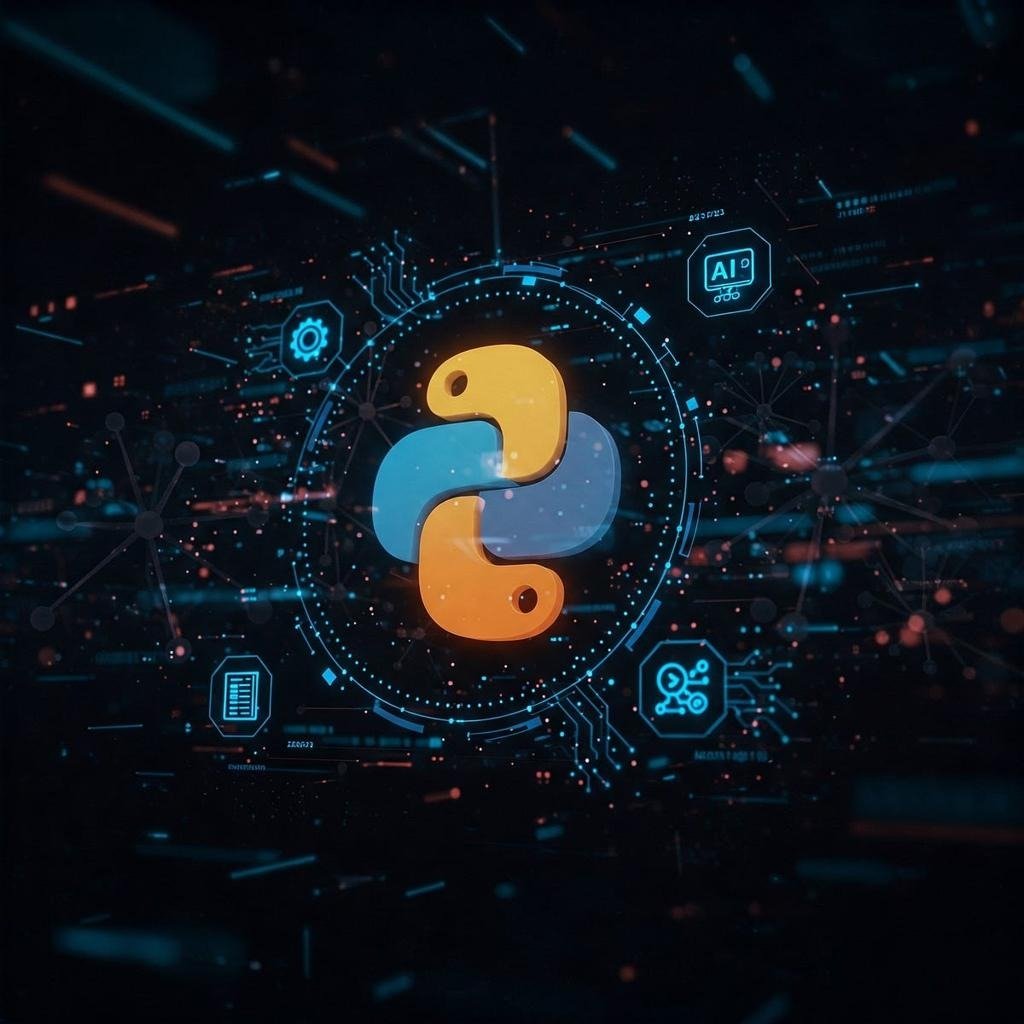
🧠 Introduction In the world of Artificial Intelligence (AI) and Machine Learning (ML), one programming language consistently stands out—Python. Whether it’s building recommendation systems, training deep learning models, or analyzing massive datasets, Python has become the backbone of modern AI development. But what exactly is Python, and why has it become the top choice for developers, data scientists, and AI engineers? Let’s break it down in a simple, practical way. 🐍 What is Python? Python is a high-level, interpreted programming language known for its simplicity and readability. Created by Guido van Rossum and released in 1991, Python was designed with one clear goal: make coding easy to understand and write. Unlike complex languages that require heavy syntax, Python uses clean and minimal code structures that resemble human language. This makes it beginner-friendly while still being powerful enough for advanced applications like AI and ML. Key Characteristics of Python: Because of these features, Python is widely used in: 🤖 Why Python is Popular in AI and Machine Learning Python’s dominance in AI/ML is not accidental—it’s the result of multiple strong advantages working together. 1. Simple and Readable Syntax AI and ML involve complex mathematical models and algorithms. Python reduces that complexity with its clean syntax. For example, tasks that require dozens of lines in other languages can often be done in just a few lines in Python. This allows developers to focus more on logic and problem-solving, rather than worrying about syntax errors. 2. Powerful Libraries and Frameworks One of Python’s biggest strengths is its rich ecosystem of libraries specifically designed for AI and ML. Some of the most widely used include: These libraries save time and effort by providing pre-built functions and tools. 3. Strong Community Support Python has one of the largest developer communities in the world. This means: If you’re stuck while building an AI model, chances are someone has already solved that problem online. 4. Versatility and Flexibility Python is not limited to just AI. It integrates easily with: This makes it ideal for building end-to-end AI systems, from data collection to deployment. 5. Integration with AI Technologies Python supports integration with cutting-edge technologies such as: Frameworks like TensorFlow and PyTorch are primarily built for Python, making it the default choice for AI innovation. 6. Faster Development Cycle In AI/ML projects, experimentation is key. Python allows: This significantly reduces development time compared to other programming languages. 📊 Graph: Python’s Popularity in AI/ML y=20+15xy = 20 + 15xy=20+15x Explanation: This simple graph represents the rapid growth of Python usage in AI/ML over time. As time (x) increases, adoption (y) rises steadily, reflecting how Python has become the dominant language in the AI ecosystem. 🚀 Real-World Applications of Python in AI/ML Python is used in many real-world AI applications, including: 🧠 Introduction These applications highlight Python’s ability to handle complex AI tasks efficiently. 💡 Why Beginners Prefer Python for AI For someone starting in AI/ML, Python offers: Instead of spending months learning syntax, beginners can start building AI models within weeks. Setting Up Python Environment (Anaconda & Jupyter Notebook) 🧠 Introduction Before you can start building AI or Machine Learning models, the very first step is setting up a proper Python environment. A well-configured environment ensures that your tools, libraries, and dependencies work smoothly without conflicts. Two of the most popular tools for this are Anaconda and Jupyter Notebook. Together, they provide a powerful, beginner-friendly setup for coding, data analysis, and AI development. Let’s understand how they work and how to set them up step by step. 🐍 What is Anaconda? Anaconda is a Python distribution specifically designed for data science, AI, and machine learning. Instead of installing Python and libraries one by one, Anaconda provides everything in a single package. Key Features of Anaconda: With Anaconda, you don’t have to worry about manually installing libraries like NumPy, Pandas, or TensorFlow—they are either pre-installed or easily accessible. 📒 What is Jupyter Notebook? Jupyter Notebook is an interactive coding environment that runs in your browser. It allows you to write and execute Python code in small sections called “cells.” Why Jupyter is Popular: It’s widely used by data scientists because it makes experimentation and explanation simple. ⚙️ Step-by-Step: Installing Anaconda 1. Download Anaconda 2. Run the Installer 3. Verify Installation 🧪 Creating a Python Environment One of the most powerful features of Anaconda is environment management. An environment is like a separate workspace where you can install specific versions of Python and libraries without affecting other projects. Steps to Create an Environment: Now you have a clean workspace ready for your project. 📓 Launching Jupyter Notebook Once Anaconda is installed, launching Jupyter is very simple: Method 1: Using Anaconda Navigator Method 2: Using Command Prompt jupyter notebook This will open Jupyter in your browser. ✍️ Understanding Jupyter Interface Jupyter Notebook has a simple interface: Types of Cells: This combination makes Jupyter perfect for learning and documenting your work. 📦 Installing Libraries in Anaconda Even though Anaconda comes with many libraries, you may need additional ones. Using Anaconda Navigator: Using Command Line: conda install numpy pip install pandas 📊 Graph: Environment Setup Efficiency y=−2x+10y = -2x + 10y=−2x+10 Explanation: This graph represents how setup complexity decreases as you use better tools like Anaconda. Traditional setup (higher x) involves more complexity (higher y), while Anaconda simplifies the process significantly. 🚀 Why Use Anaconda + Jupyter for AI/ML? 1. All-in-One Solution No need to install multiple tools separately. 2. Easy Environment Management Avoids version conflicts between projects. 3. Beginner-Friendly Simple UI and guided setup process. 4. Perfect for Experimentation Jupyter allows quick testing and visualization. 5. Industry Standard Widely used by data scientists and AI engineers. ⚠️ Common Mistakes to Avoid 💡 Pro Tips 🧠 Introduction If you’re starting your journey in programming—especially in AI and Machine Learning—learning Python syntax is your first real step. Syntax simply means the rules that define how code is written and understood by the computer. The good news? Python is known for having one of the