
Navigating the Skills Gap in IT
Powered by Pinaki IT Hub – Building the Next Generation of TechLeaders. Technology has always been the backbone of progress. But in 2025, we’re facing a paradox: 📌 Businesses are investing billions in AI, cloud, cybersecurity, and data. 📌 Yet, millions of jobs are going unfilled because professionals don’t have the right skills. This is what experts call the IT Skills Gap — and it’s not just a buzzword, it’s the biggest challenge of the digital era. In this blog, we’ll explore: By the end, you’ll have a crystal-clear roadmap to thrive in the evolving tech landscape. What is the IT Skills Gap? The IT skills gap is one of the biggest challenges facing the global economy in 2025. At its core, the gap represents a disconnect between supply and demand: ● What businesses require → advanced, specialized, and constantly evolving technical skills to drive growth, security, and innovation.● What professionals currently possess → often outdated, fragmented, or purely theoretical knowledge, lacking hands-on experience and modern industry exposure. This mismatch creates a bottleneck where jobs exist, but skilled people don’t. 🔎 A Simple Example Imagine a bank in 2025: ● It wants to deploy an AI-powered fraud detection system that monitorstransactions in real-time.● The system must not only detect anomalies but also comply with global data protection laws (like GDPR in Europe, DPDPA in India, and AI Act in the EU).● The bank posts a job opening for AI Engineers with knowledge of Machine Learning + AI Ethics + Data Governance. 📌 Here’s the reality:● Thousands of Computer Science graduates apply.● Most know basic Python or Java.● But only a tiny fraction understands how to:○ Train bias-free ML models.○ Handle cross-border data privacy rules.○ Integrate AI into live financial systems. 👉 Result: ● The vacancy remains open for months.● Project deadlines get delayed.● Competitors with the right talent gain an edge. This is the IT Skills Gap in action — not a shortage of people, but a shortage of the right skills.📊 Global Snapshot (2025)The IT skills gap isn’t limited to one country — it’s a worldwide crisis:● 76% of CEOs in 2025 admit they are struggling to hire the right IT talent (PwC Global CEO Survey). ● The World Economic Forum (2025) estimates that the global IT skills shortage costs businesses a staggering $8.5 trillion in lost revenue every year — through stalled projects, inefficiencies, and cybersecurity risks.● In India, long known as the “IT outsourcing hub,” the issue is even sharper. Despite producing 1.5 million engineering graduates every year, studies show that 42% of graduates are unemployable for advanced IT roles due to outdated curriculums, poor practical training, and lack of exposure to global best practices. 🌍 Regional Breakdown● United States → Facing severe shortages in cybersecurity experts. Over 500,000 cybersecurity jobs remain vacant (CyberSeek 2025).● Europe → Struggling with compliance-focused roles such as AI Ethics Officers and Data Governance Specialists, especially after the implementation of the EU AI Act.● Asia-Pacific (APAC) → Countries like India and the Philippines have a huge supply of IT graduates but a lack of specialization in AI, Cloud, and advanced DevOps.● Middle East & Africa → Governments are investing heavily in smart cities and digital transformation, but a lack of skilled cloud architects and AI engineers slows down implementation. 🛑 Why Does It Matter? The IT skills gap isn’t just an HR problem — it has serious consequences: Global Inequality → Countries with skilled workforces surge ahead, while others fall behind in the digital economy. Delayed Projects → Businesses cannot launch new products or services on time. Higher Costs → Companies pay premium salaries to a small pool of skilled professionals. Security Risks → A lack of cybersecurity experts leaves organizations vulnerable to attacks. Lost Innovation → Startups and enterprises miss out on adopting cutting-edge tools like AI, blockchain, or quantum computing. 💡The problem isn’t the number of people entering the IT job market. In fact, millions graduate every year. The real problem is that their skills don’t match industry needs. This means companies remain talent-starved, and graduates remain jobless — creating a lose-lose situation for both.👉 In short: The IT skills gap is the silent crisis of 2025 — and solving it requires urgent upskilling, re-skilling, and industry-relevant training. Why is the Skills Gap Widening in 2025? If the IT skills gap was already a problem in the 2010s, by 2025 it has become a global emergency.The speed of change in technology is outpacing the speed of learning, and this is creating an ever-widening chasm between what businesses need and what professionals can deliver. Let’s break down the five major reasons why the gap is worse than ever before: a) Rapid Tech Evolution – The World Can’t Keep Up Technology in 2025 doesn’t evolve yearly — it evolves quarterly or even monthly. ● AI (Artificial Intelligence): In 2022, ChatGPT shook the world. By 2025, generative AI models, multimodal systems, and domain-specific AI assistants are everywhere — from healthcare to finance. Yet, very few professionals know how to fine-tune AI models, manage bias, or integrate them into enterprise systems responsibly. ● Cloud Computing: Cloud migration was once optional, now it’s survival. Enterprises are going multi-cloud (AWS + Azure + GCP) and demanding DevOps + security + compliance knowledge from cloud engineers. ● Cybersecurity: The rise in AI-driven cyberattacks and deepfake scams requires specialists in Zero Trust Architecture, Ethical Hacking, and Cyber Forensics. ● Blockchain & Web3: Beyond cryptocurrency, blockchain is powering digital identity, supply chain traceability, and healthcare data security. ● Quantum Computing: Still emerging, but even basic knowledge of quantum algorithms is becoming valuable in finance and pharma industries. 📌 The Problem:Traditional universities cannot keep pace. By the time a syllabus is designed, approved, and taught, the industry has already moved 2–3 steps ahead. 👉 Example: Many Indian engineering colleges are still teaching C, C++, and outdated Java frameworks as core subjects, while companies now want Python, TensorFlow, Kubernetes, and Generative AI deployment skills. Result: Students graduate with outdated knowledge
Tech Culture & Society in 2025
The Digital Dilemma: Balancing Tech, Mental Health, and AI Ethics in 2025Powered by Pinaki IT Hub – Building the Next Generation of Ethical AI Leaders Technology has always shaped the way we live, work, and interact—but in 2025, it’s not just a tool; it’s the environment we live in. From the rise of creator-driven economies to growing concerns about mental health, our relationship with technology is at a turning point. In this blog, we’ll explore four critical aspects of tech culture today: Screen addiction and its mental health impact Digital detox—fact or fantasy? Is tech connecting or isolating us? The youth creator economy—empowerment or exploitation? Alongside, we’ll connect these societal shifts to data governance, AI ethics, and digital literacy, so you’ll see why mastering these skills is essential for any professional in 2025. Screen Addiction: How is Tech Affecting Mental Health? In 2025, our relationship with technology is at an all-time high — and so is our screen time. On average, a person now spends 9–11 hours a day on digital devices — whether it’s smartphones, laptops, AR glasses, or mixed-reality headsets. While this constant connectivity powers our productivity, learning, and entertainment, it also has a hidden cost — our mental health. The Hidden Impact of Excessive Screen Time Sleep Disruption● Blue-light exposure from screens delays melatonin production — the hormone that helps you sleep.● Late-night scrolling tricks the brain into thinking it’s still daytime, disrupting the circadian rhythm (our body’s natural sleep-wake cycle).● Consequence: Insomnia, fatigue, and a higher risk of mood disorders. Reduced Attention Span● In 2000, the average human attention span was 12 seconds. By 2024, it had dropped to just 7 seconds — shorter than that of a goldfish!● Constant notifications, pop-up ads, and algorithm-driven content keep our brains in a constant state of micro-distraction.● Consequence: Difficulty focusing on tasks, reduced deep work capacity, and lower productivity. Anxiety & Depression● Social comparison on platforms like Instagram or TikTok leads people to feel “less than” others.● Cyberbullying and online harassment amplify emotional stress.● Doomscrolling — endlessly consuming negative news — creates a persistent state of mental fatigue.● Consequence: Higher rates of anxiety, depressive episodes, and emotional burnout. Global Reality Check ● In 2024, Japan reported a 17% rise in “digital burnout” diagnoses among tech workers.● The government responded with new workplace mental health laws requiring companies to set maximum screen exposure limits and offer mental health check-ins.● Similar trends are emerging in South Korea, the US, and parts of Europe. The AI Connection ● Modern AI platforms are designed to keep you hooked — they track your likes, habits, and scrolling patterns to deliver content you can’t resist.● This “engagement optimization” often prioritizes addictive material over healthy, balanced consumption.● Ethical AI governance can help: ○ Set algorithmic limits to avoid overexposure.○ Offer “digital well-being” nudges.○ Encourage mindful breaks instead of endless scrolling. Healthy Tech Habits for 2025 Mindful scrolling — unfollow accounts that cause stress and follow those thatinspire.Blue-light filters or blue-light blocking glasses after sunset. Scheduled breaks using the 20-20-20 rule (every 20 minutes, look at something 20feet away for 20 seconds). Screen-free zones at home, especially in bedrooms. Digital detox days — one day a week without social media or non-essential screenuse. Thought: Technology is here to stay — but how we use it will decide whether it becomes a tool for growth or a source of burnout. A balanced digital lifestyle is not about rejecting tech, but about using it consciously and healthily. Want to understand digital wellness and learn practical strategies to manage screen addiction? Join Pinaki’s Course on “Digital Well-being & Mindful Tech Use” — because your mental health matters as much as your online life. Digital Detox: Can People Really Disconnect? Over the last few years, the term “digital detox” has transformed from a niche lifestyle choice into a multi-billion-dollar wellness industry. From luxury resorts promoting “No Wi-Fi Zones” to smartphone apps that track your time away from other apps, the concept has gone mainstream. But in 2025, one big question remains: Is it truly possible to unplug in a world where everything is online? The Reality CheckAccording to the 2025 Global Wellness Report:● Only 8% of people who attempt a week-long digital detox actually make it without relapsing.● The main reason? Digital dependency is now woven into the core of daily life. Why Disconnecting is So Difficult Social PressureBeing “offline” can make people feel left out of social updates, group chats, or professional opportunities. Work Is DigitalRemote work tools, cloud platforms, and virtual meetings make it nearly impossible to stay productive without screens. Life Is Digital○ Banking: Most transactions are online or via apps.○ Payments: From street food stalls to supermarkets, QR codes and UPI have replaced cash.○ Communication: WhatsApp, emails, and Slack are the primary modes of contact — even for emergencies. Case Study: The Singapore Corporate Detox PilotIn 2024, a large Singapore-based company tested a 1-day-per-month “Digital Detox Pass” for its employees.● Employees were encouraged to avoid non-essential devices for 24 hours.● Results:○ Productivity rose by 14% (fewer distractions meant deeper focus).○ Stress levels dropped during detox days.○ However: Most participants still checked devices occasionally — especially for urgent work messages or family updates. The AI ConnectionFuture AI personal assistants could make healthy disconnection easier by: ● Blocking non-urgent notifications during rest or family time.● Monitoring signs of mental fatigue and suggesting breaks before burnout hits.● Filtering content so only truly important updates come through during “detox hours.”● Creating custom offline schedules that align with a person’s work, hobbies, and sleep cycle. Practical Tips for a Realistic Digital DetoxYou don’t have to go fully offline to feel the benefits. Start small: Plan Offline Activities — Hobbies, outdoor walks, or in-person meetups to replace screen time. Micro-Detoxes — Take 2–3 hours daily without screens (e.g., during meals, workouts, or before bed). No-Phone Zones — Keep devices out of bedrooms or dining areas. App-Free Days — Choose one weekend day to avoid
Data Governance in AI, Automation of Data & Misuse Risks in 2025

Powered by Pinaki IT Hub – Building the Next Generation of Ethical AI Leaders Introduction: The AI Data Revolution of 2025 Welcome to 2025, where data is not just information—it’s intelligence. Artificial Intelligence (AI) has transformed industries, from healthcare and finance to education and retail. But as AI systems evolve, they rely on one critical foundation: data governance. Without proper governance, AI can be biased, unsafe, or even illegal. That’s why global companies and governments are investing heavily in frameworks that ensure data is accurate, secure, compliant, and ethically used. At Pinaki IT Hub, we are not just teaching technology—we’re preparing students and professionals to master AI data governance, automation, and compliance so they can lead in this new era. In this blog, we’ll break down: ● What data governance in AI really means in 2025● How automation of data governance works● The risks of data misuse and real-world cases● Global regulations and compliance requirements● A step-by-step learning roadmap for students and professionals● How Pinaki IT Hub prepares you to master it all By the end of this guide, every doubt you have about data governance in AI will be clear. What is Data Governance in AI? Data Governance in AI is the structured framework of rules, processes, roles, and technologies designed to ensure that every piece of data used in Artificial Intelligence systems is handled responsibly, ethically, and in compliance with legal requirements. It goes beyond simple data management. It focuses on creating trustworthy AI ecosystems where data is: Accurate – Data is cleansed, validated, and free from errors, ensuring AI models learn from high-quality information. Inaccurate data leads to poor predictions, biased outputs, or system failures. Secure – Sensitive information is protected from breaches, unauthorized access, and misuse through encryption, access controls, and continuous monitoring. Fair and Unbiased – AI systems are only as fair as the data they learn from. Governance ensures datasets are diverse, representative, and regularly audited to detect and mitigate bias. Compliant with Laws – With global regulations like the EU AI Act, GDPR, and India’s Digital Personal Data Protection Act (DPDPA), governance ensures that data collection, storage, and usage meet strict legal standards. Properly Documented and Auditable – Governance establishes data lineage—a record of where data came from, how it was transformed, and how it’s being used—providing full transparency and accountability. Why It’s Like a Safety Framework for AI Think of AI as a high-powered engine and data as its fuel. If the fuel is impure or the engine is unregulated, the entire machine breaks down—causing incorrect predictions, compliance violations, or ethical risks.Data Governance is the safety framework that ensures:● The “fuel” (data) is clean and legally obtained● The “engine” (AI) runs efficiently, securely, and transparently● Every action can be traced, explained, and justifiedBy enforcing these principles, organizations can build trustworthy AI systems that are scalable, ethical, and aligned with both business and regulatory needs. Pinaki IT Hub Approach: We train our students not only to understand this framework but also to implement it with real-world tools and compliance workflows, making them industry-ready AI governance professionals. Why It Matters in 2025 EU AI Act Enforcement (Aug 2025) Companies must follow strict rules for data transparency, security, and lawful sourcing or risk fines of up to 7% of global turnover. Data Sprawl Problem AI systems generate massive volumes of new data—logs, synthetic datasets, and agent activity—that can become untraceable without proper governance. Rise of Real-time AI With IoT devices, AI agents, and streaming analytics, decisions happen instantly. Governance now needs automation to keep pace. Ethics & Trust Biased AI has caused global scandals—hiring algorithms rejecting candidates unfairly, or financial AI denying loans without explanation. Governance prevents these risks. Career Demand By 2026, over 70% of AI-related jobs will require knowledge of data governance and compliance. Pinaki Insight: Our training integrates AI, Data Governance, and Compliance Modules so you can enter this high-demand job market with confidence. Automation of Data GovernanceManually checking data is impossible at 2025 scale. That’s where automation comes in. Automation Component What It Does Tools & Tech Metadata Management Tracks data lineage and usage history Collibra, Alation Automated Compliance Maps data against laws (GDPR, AI Act, India’s DPDPA) OneTrust, BigID Bias Detection Monitors and flags biased training data Fairlearn, Aequitas Access Control Manages permissions for users and AI agents Okta, Azure AD Synthetic Data Testing Generates safe test data for model training Mostly AI, Gretel.ai At Pinaki IT Hub, we train you to use these tools in real projects, including: ● Automating GDPR compliance checks● Implementing bias audits for AI models● Building data lineage dashboards Data Misuse Risks in 2025 AI without governance is dangerous. Here are the biggest risks students and professionals must understand: Data BreachesAI-driven organizations face more cyberattacks because of the high value of their data. Example: In 2024, a financial AI platform leaked 3M user records because they failed to encrypt training datasets. AI Agent MisbehaviorAutonomous AI agents can access APIs or internal systems. Without governance, they may misuse credentials or exfiltrate data. Real Case: 23% of companies reported agent-related credential leaks in early 2025. Bias and DiscriminationAI trained on biased data can lead to unfair hiring, lending, or healthcare decisions. Example: A global HR platform faced lawsuits in 2025 when its AI recruiter unintentionally favored candidates from certain universities. Regulatory PenaltiesWith the EU AI Act and India’s Digital Personal Data Protection Act (DPDPA), companies face heavy fines if they mishandle data or lack proper consent tracking. Reputational DamageData misuse can destroy customer trust—and no AI model can fix that. Pinaki Promise: In our AI Governance Training Program, we simulate real-world risk scenarios and teach how to prevent them through hands-on labs. Global Regulations Shaping Data Governance Region Key Regulation Impact on AI & Data Governance EU EU AI Act (Aug 2025), EU Data Act Mandatory risk assessments, transparency, bias control India Digital Personal Data Protection Act (DPDPA) Consent-first governance and strict breach penalties US NIST AI Risk Management Framework AI system classification and
Digital Health Transformation in 2025: WhereTechnology Meets Humanity
Introduction: The Digital Pulse of Healthcare Welcome to 2025 — a time when technology has evolved from being a support system in healthcare to becoming its very backbone. From telehealth consultations replacing clinic queues to wearable devices predicting heart attacks before they occur, we are witnessing a complete digital revolution in healthcare. This transformation, often referred to as Digital Health Transformation, is the strategic integration of digital technologies to enhance healthcare delivery, access, and outcomes. But it isn’t just about tools and apps. It’s about empowering patients, enhancing doctor capabilities, reducing healthcare costs, and making health systems resilient. In this blog, we’ll explore how and why digital health is booming in 2025, the key technologies driving this change, the global market demand, ethical concerns, and how future-ready professionals can ride this wave. What is Digital Health Transformation? Digital Health Transformation refers to the comprehensive adoption and integration ofdigital tools into healthcare systems and services. This includes:● Telehealth & Virtual Care● Mobile Health Apps (mHealth)● Wearable Tech & Remote Monitoring Devices● Artificial Intelligence (AI) & Machine Learning (ML)● Electronic Health Records (EHRs) & Cloud Infrastructure● IoT in Healthcare (IoMT)● Blockchain for Health Data Security● Digital Therapeutics (DTx)● Health Analytics & Predictive ModelingThe aim? To enhance patient engagement, reduce operational inefficiencies, support data-driven decisions, and make healthcare more accessible, personalized, and cost-effective. Why is Digital Health Growing So Rapidly in 2025? 1. Post-COVID Digital Mindset ShiftThe COVID-19 pandemic rewired the global mindset. Both patients and providers now see digital-first care as the default, not the alternative. In India alone, telehealth consultations rose from 3 million in 2019 to over 300 million in 2024. 2. Chronic Disease EpidemicOver 60% of global deaths are due to chronic conditions like diabetes, heart disease, and cancer. Digital tools enable real-time monitoring, preventive care, and behavioral nudges to manage such diseases proactively. 3. Aging Population & Healthcare Worker ShortageBy 2025, nearly 25% of the population in Europe and Japan is over 60. Simultaneously, there’s a global shortage of doctors and nurses. Digital systems help scale care delivery via AI triage bots, tele-nursing, and remote diagnostics. 4. Data as the New VaccineFrom personal genomics to hospital-level patient analytics, data is enabling more precise, predictive, and preventive healthcare. This data-centric approach is revolutionizing diagnosis, treatment, and population health management. 5. Consumer-Led HealthcareIn 2025, people expect to manage their health like they manage their bank accounts — mobile-first, personalized, and on-demand. This ‘consumerization’ of healthcare is accelerating the need for smarter digital services. Global Market Demand and Industry Trends Market Size Projections:● Global digital health market will hit $660+ billion by end of 2025● Wearable health tech will exceed $175 billion● Global telemedicine market will surpass $220 billion Who’s Driving the Demand? ● Governments: Public health agencies are digitizing national healthcare records, pandemic response systems, and universal access tools (e.g., India’s ABDM)● Startups: HealthTech is one of the hottest verticals for investment, with $24B raised globally in 2024● Big Tech: Google, Apple, Amazon, and Microsoft are all building healthcare arms● Hospitals: Transitioning to smart hospital ecosystems with connected devices and cloud-based EHRs Cross-Industry Synergies:● Retail + Health: Pharmacies offer virtual clinics (e.g., 1mg, CVS Health)● Fitness + Health: Devices like Fitbit, WHOOP, and Apple Watch detect AFib and sleep apnea● Insurance + Health: Usage-based insurance linked to activity and heart rate Key Technologies Transforming Healthcare in 2025 The healthcare industry is undergoing a dramatic evolution, driven by emerging technologies that not only improve patient outcomes but also enhance healthcare efficiency, accessibility, and personalization. Let’s delve deeper into each transformative technology reshaping modern healthcare: 1. Telehealth: Healthcare Beyond BoundariesWhat It Is: Telehealth enables remote consultations using digital communication tools such as video calls, messaging, and integrated patient portals. How It Works: ● Patients book virtual appointments through platforms like Practo, Teladoc Health, Microsoft Teams Healthcare, or national telehealth portals.● Doctors can evaluate symptoms, offer prescriptions, and conduct follow-ups — all from their homes or clinics.● Integration with electronic medical records (EMRs) allows seamless access to patient history.Current Usage in 2025:● Over 70% of outpatient visits in Tier 2 and Tier 3 cities are conducted virtually.● Rural India has witnessed over 3x increase in teleconsultations post-integration with the Ayushman Bharat Digital Mission (ABDM).● In the West, AI triage bots pre-screen patients before connecting them to live physicians.Key Benefits:● Reduces hospital burden and patient wait times.● Provides access to healthcare in remote or underserved regions.● Cost-effective for both providers and patients. 2. AI in Diagnosis & Decision Support: AugmentedIntelligence for Faster Care What It Is: Artificial Intelligence (AI) systems are trained to detect diseases, analyzepatterns, and assist doctors with evidence-based recommendations.Applications in 2025: ● Radiology: AI models scan X-rays, MRIs, and CT scans to identify conditions like lung cancer, pneumonia, brain tumors, etc., with high accuracy.● Dermatology & Ophthalmology: Tools like Google’s DeepMind help detect diabetic retinopathy and skin cancers.●Voice & NLP-based Diagnostics: AI listens to cough patterns or speech changes to detect diseases like Parkinson’s or COVID-related complications.Benefits:● Enables early diagnosis even before symptoms escalate.● Reduces misdiagnosis and supports clinical decision-making.● Works as a virtual assistant for overburdened doctors, especially in emergency triage and radiology. 3. Wearables & IoMT (Internet of Medical Things):Always-On Health Tracking What It Is: Smart health devices that continuously monitor and transmit real-time data to doctors, caregivers, or cloud systems. Popular Devices in 2025: ● Smartwatches (Apple Watch, Fitbit Sense, Galaxy Watch): Track heart rate, ECG, blood oxygen, sleep, and stress levels.● Glucose Monitors (Dexcom G7, FreeStyle Libre 3): Offer continuous glucose monitoring without finger pricks.●Smart Inhalers: Monitor asthma triggers and medication usage.● ECG patches and BP cuffs connected to mobile apps. How It Works: ● These devices collect data and sync with cloud databases or mobile apps.● Alerts are sent to doctors in case of abnormalities.Benefits:● Supports chronic care management (diabetes, hypertension, COPD).● Encourages preventive health by catching issues early.● Integrates with AI models for predictive analytics. 4. Cloud & Interoperability: Making Patient DataSeamless and Secure What It Is: Storing and sharing patient data across healthcare
How AI Uses IoT Data to Personalize Experiences Across Industries — And Why It’s a Game Changer for Your Career in 2025
In 2025, two technologies dominate the conversation around innovation: Artificial Intelligence (AI) and the Internet of Things (IoT). On their own, both are powerful. Together, they are revolutionizing how businesses operate and how customers interact with brands, services, and environments. Whether it’s walking into a retail store and seeing products curated just for you, getting a hotel room automatically set to your preferences, or receiving proactive customer service before a problem occurs — these aren’t future concepts. They’re happening now, thanks to AI leveraging IoT data. But beyond the tech buzz, there’s a growing question among professionals, businesses, and students alike: “What does AI + IoT mean for the future of work, innovation, and my career?” This blog explores that in deep detail — explaining what’s happening now, the real-world examples transforming industries, the technical and business challenges (like interoperability), and most importantly, why this space is one of the most high-potential career paths for 2025 and beyond. 🔍 Understanding AI and IoT: The Powerful Duo Before we explore the magic of personalization, let’s understand what we’re talking about. ✅ What is IoT (Internet of Things)?IoT refers to a vast network of connected devices embedded with sensors, software, and communication tools that collect and exchange data over the internet.Examples:● Smartwatches tracking your heart rate● Smart fridges that notify you when groceries are low● Industrial sensors measuring equipment health in factories● Home automation systems controlling lighting, AC, and securityAccording to Statista, by the end of 2025, there will be over 75 billion connected IoT devices globally. ✅ What is AI (Artificial Intelligence)? AI is the capability of machines to simulate human intelligence — learning from data, making decisions, predicting outcomes, and automating tasks.AI is the brain that learns from IoT data and acts on it intelligently.When combined, AI and IoT create an intelligent ecosystem where machines:● Collect data through IoT sensors● Analyze it using AI algorithms● Make decisions or recommendations● Act autonomously or assist human usersThis synergy is what enables the deeply personalized experiences we’ll explore below. 🌍 Real-World Applications of AI + IoT for Personalized Experiences ⚙️The Interoperability Challenge: Why It’s a Roadblock One of the biggest challenges in realizing the full potential of AI + IoT is interoperability.❗ What is Interoperability?It refers to the ability of different IoT devices, platforms, and software systems to connect, share data, and work together seamlessly.❌ Problems We Face:● Different communication protocols (Zigbee, Bluetooth, Wi-Fi, LoRa)● Diverse data formats (JSON, XML, proprietary formats)● Platform-specific devices that can’t talk to each other● Security and privacy concerns when integrating multiple systemsExample: A smart lock, light bulb, and speaker from three different brands may not communicate — making unified control impossible.Without a universal standard, developers struggle to build scalable systems that work reliably across homes, hospitals, or cities. 🧠 How AI Helps Solve Interoperability Problems AI is not just a consumer of data. It can also be a translator, mediator, and optimizer. 🔮 Future Trends: Why AI + IoT is the Future of Innovation As we move further into 2025 and beyond, one thing is clear: the convergence of Artificial Intelligence (AI) and the Internet of Things (IoT) will shape the future of how businesses operate, how services are delivered, and how individuals interact with technology. This fusion isn’t just a trend — it’s the foundation of the next industrial and digital revolution. Let’s break down the future trends, statistics, and technological shifts that highlight why AI + IoT is becoming central to digital transformation across all industries. 📊 Key Market Predictions 🌐 Over 75 Billion IoT Devices by 2025According to Statista and IDC, by the end of 2025, there will be over 75 billion IoT-connected devices worldwide. This includes:● Smart home systems (thermostats, lights, security cams)● Wearable health trackers● Connected vehicles● Smart factories with embedded sensors and roboticsThis explosion of connected devices means a massive influx of real-time data — and only AI can process and extract value from it efficiently. 💰 AI + IoT Market to Exceed $500 Billion by 2027As per Allied Market Research, the AIoT (Artificial Intelligence of Things) market is expected to surpass $500 billion by 2027, driven by demand across:● Smart manufacturing● Autonomous vehicles● Healthcare and remote monitoring● Smart cities and infrastructure automationEnterprises are rapidly investing in AI-powered IoT platforms to automate decision-making, reduce human error, and personalize experiences at scale. 🏬 Over 65% of Enterprises Will Use AI for Personalized Solutions By 2026, more than 65% of global businesses are predicted to deploy AI-powered personalization engines, according to Gartner. These solutions will:● Analyze user behavior and context● Tailor digital interfaces, ads, products, and support interactions● Provide real-time, dynamic changes to services based on data from IoT devicesWhether in e-commerce, hospitality, or telemedicine, personalization won’t be optional — it’ll be expected. 🚀 What’s Coming Next: Game-Changing Innovations 📈 The Career Impact: Why You Should Build a Future in AI + IoT As AI and IoT converge, there is an unprecedented demand for skilled professionals who can understand, design, and deploy intelligent systems. Here’s why this field is a goldmine of opportunity in 2025 and beyond: 📌 In-Demand Career Paths: 🎓 Why Learn AI + IoT Now? Because companies are actively hiring, and the skills gap is massive. You don’t need to wait 10 years — the future is already here.📊 Job Growth Estimates: ● AI jobs expected to grow 31% annually (World Economic Forum)● IoT-related roles projected to cross 100 million by 2030● Salaries are 2x to 3x higher for roles that involve AI or IoT🎓 Get Industry-Ready with Pinaki IT ConsultantAt Pinaki IT Consultant, we prepare you with hands-on training, certifications, and real-world projects in areas like:● AI & Machine Learning (Python, TensorFlow, NLP, CV)● IoT Systems Design & Integration (NodeMCU, Raspberry Pi, MQTT)● Cloud & Edge Architecture (AWS IoT Core, Azure, GCP)● Cybersecurity for IoT Devices● Data Analytics for Smart Systems● Industrial Automation with AIYou’ll work on projects like:● Smart Parking Systems● Wearable Health Monitoring● AI-Powered Surveillance● Smart Agriculture IoT Networks ✅ Certifications ✅ Live Projects ✅ Job
Why Every Business in 2025 Needs a SMART Integrated IT Solution
In today’s ultra-competitive, rapidly evolving digital landscape, businesses can’t afford to operate in silos. The winners of 2025 and beyond are organizations that seamlessly integrate software, hardware, and IT services into unified, SMART solutions — unlocking unprecedented operational efficiency, agility, and innovation. Whether you’re a growing startup, a traditional manufacturing enterprise, or a modern e-commerce giant, having a SMART Integrated IT Solution is no longer optional — it’s a strategic necessity. This comprehensive guide explores what these solutions are, why they’re critical, how they drive efficiency, and showcases real-world companies already reaping the rewards. In today’s ultra-competitive, rapidly evolving digital landscape, businesses can’t afford to operate in silos. The winners of 2025 and beyond are organizations that seamlessly integrate software, hardware, and IT services into unified, SMART solutions — unlocking unprecedented operational efficiency, agility, and innovation.Whether you’re a growing startup, a traditional manufacturing enterprise, or a modern e-commerce giant, having a SMART Integrated IT Solution is no longer optional — it’s a strategic necessity. This comprehensive guide explores what these solutions are, why they’re critical, how they drive efficiency, and showcases real-world companies already reaping the rewards. 📈 What Exactly is a SMART Integrated IT Solution? A SMART Integrated IT Solution combines:✅ Software (like ERP, CRM, HRMS, Analytics Platforms)✅ Hardware (servers, IoT devices, networking equipment, edge computing)✅ Managed IT & Support Services (cloud, cybersecurity, data backup, remote monitoring)— all brought together in a way that’s:● Scalable● Measurable● Automated● Resilient● TransformationalUnlike traditional IT setups where these components are often managed in isolation, a SMART solution ensures they communicate seamlessly, adapt dynamically to business needs, and enable real-time decision-making. 🚀 Why Every Business in 2025 Needs It Here’s why a SMART Integrated IT strategy is mission-critical for staying competitive: 1️⃣Drives End-to-End Efficiency Integrated systems break down departmental silos. For instance:● A sales CRM directly updating inventory levels in ERP in real time.● IoT-enabled production lines sending live data to analytics dashboards to predict machine maintenance.👉 Result: Less manual intervention, fewer errors, faster processes. 2️⃣Enhances Decision-Making with Unified Data When your software, hardware, and support ecosystem are interconnected:● Management gets a single-pane-of-glass view of operations.● Analytics can run on data streams across finance, supply chain, and customer support simultaneously.In 2025, where data is the backbone of strategic moves, this integration is priceless. 3️⃣Future-Proofs Against Disruptions Whether it’s a cyber threat, a supply chain glitch, or a sudden market pivot — integrated ITsystems respond faster. For example:● Automated failovers ensure your apps don’t go down if one server crashes.● Smart dashboards alert teams instantly about anomalies. 4️⃣Saves Costs Over the Long Run Businesses with fragmented IT often overspend on multiple vendors, incompatible softwarelicenses, and redundant hardware. A SMART integrated approach streamlines spend andincreases ROI. 5️⃣Powers Innovation From launching new digital products to leveraging AI and ML for customer personalization, a SMART platform makes it easier to adopt new tech without ripping apart existing systems. 🌍 Real-World Examples: Who’s Already Doing This? 🏭 Siemens: Smart Factories Siemens uses integrated IT & OT (Operational Tech) to run digital twins of their factories.● IoT sensors on machinery feed live data to cloud analytics.● Predictive maintenance reduces unplanned downtimes by up to 50%.● Combined ERP systems automate parts reordering based on usage patterns. 🛒 Amazon: End-to-End AutomationAmazon integrates: ● Warehouse robots (hardware)● Inventory & delivery management systems (software)● AWS cloud services (managed IT)— enabling them to process millions of orders daily with precision and minimal manual oversight. 🚗Tesla: Connected Cars & Manufacturing Tesla doesn’t just sell cars; it sells a connected ecosystem.● Vehicle software updates over-the-air.● Gigafactories use integrated systems for supply chain, robotics, and energy management.● Central dashboards help manage everything from battery production to global delivery logistics 🧩 What Happens When You Don’t Have Integrated IT? ● Data silos cause inconsistent reporting across departments.● Manual hand-offs slow down workflows.● Security risks multiply when different systems don’t coordinate patching and compliance.● Costs balloon with multiple vendors and duplicated infrastructure.In short: competitors with SMART integrated setups simply outpace you. 💡 How Does Integration Actually Drive Efficiency? ⚙️ Area 🔍 Traditional Setup 🚀 SMART Integrated Setup Data Handling Disconnected systems, manualExcel exports Centralized dashboards &auto-updated reports CustomerService Support reps switching betweenmultiple apps Single CRM pulling data from billing,orders, tickets Production Maintenance on schedule (orafter breakdown) Predictive maintenance from IoTsensors Security Standalone firewalls & antivirus Unified threat detection acrossendpoints, network, cloud Scaling Manual procurement,installations Auto-scale on cloud based ondemand 💰 What’s the Market Saying?● According to Gartner, by 2026, 80% of mid to large businesses will shift to unified digital operations platforms.● IDC forecasts global spending on digital transformation will reach $3.4 trillion by 2026, much of it driven by integrating IT across the enterprise stack.● McKinsey notes businesses with deeply integrated digital operations outperform peers by 23% in profitability on average. 💰 What’s the Market Saying? ● According to Gartner, by 2026, 80% of mid to large businesses will shift to unified digital operations platforms.● IDC forecasts global spending on digital transformation will reach $3.4 trillion by 2026, much of it driven by integrating IT across the enterprise stack.● McKinsey notes businesses with deeply integrated digital operations outperform peers by 23% in profitability on average. 📝 Common FAQs from Business Owners ❓ Isn’t this only for big enterprises?Not at all.Even small businesses use integrated solutions — like combining Shopify (e-commerce), QuickBooks (accounting), and HubSpot (CRM) into one cohesive ecosystem. ❓ What about security risks? Integrated IT solutions often reduce risks because you can deploy centralized security policies and real-time monitoring across systems, instead of patching each manually. ❓ Won’t this be too expensive? It may seem so upfront, but typically lowers TCO (total cost of ownership) by reducing redundancies, lowering maintenance, and speeding up ROI. ⚡ How Pinaki IT Consultants Helps BusinessesImplement SMART Integrated IT At Pinaki IT Hub, we specialize in building customized, scalable IT ecosystems that: ✅ Combine your software, hardware & managed services✅ Automate manual workflows & integrate critical business apps✅ Set up predictive analytics & intelligent dashboards✅ Implement unified security and compliance✅ Provide 24/7
From Coding to Career: Top 7 Global IT CertificationsThat Will Skyrocket Your Career in 2025
(And Why Full Stack Development is Still the Smartest Move You Can Make) Why Certifications Matter More Than Ever in 2025 In today’s hyper-digital economy, simply knowing how to code isn’t enough. Trust and credibility (for employers worldwide)A significant salary boost (often 20-40% higher)Global career mobility (work from anywhere)The skills to tackle tomorrow’s tech problems. In fact, a recent LinkedIn study revealed that certified IT professionals are hired 40% faster and promoted 2x quicker than their non-certified peers. So let’s dive into the top 7 certifications that will transform your IT career in 2025 — and see why full stack development remains the backbone of modern tech jobs. 1. Full Stack Development: The “Career Compounder” If there’s one path that consistently tops global demand charts, it’s full stack development. Why Full Stack? The Payoff Popular Certifications & Skills At Pinaki IT Hub, we build your end-to-end skills from HTML, CSS, JS, React to Node, Python, MongoDB, plus DevOps tools — so you’re industry-ready, not just theoretically trained. 2. Certified Data Professional (CDP) Data is no longer just a byproduct of business — it is the business. What is CDP? The Certified Data Professional (CDP) by ICCP is a global certification that covers: Unlike platform-specific certs (AWS, Azure), CDP is vendor-neutral, meaning it’s respectedacross sectors. Why It’s Booming Career Roles Data Analyst | Data Engineer | BI Specialist | CDO | Data Governance Head The Impact CDP-certified professionals often command 20-35% higher pay, especially when paired with machine learning or cloud data expertise. 3. AWS Certified Solutions Architect – Associate AWS owns 33%+ of the cloud infrastructure market, dwarfing Azure & GCP. This makes AWS certs the gold standard for cloud careers. What You Learn Why It Matters The ROI 4. Certified Ethical Hacker (CEH) Cybercrime is projected to cost $10.5 trillion annually by 2025 (Cybersecurity Ventures). Why CEH? Career Roles Ethical Hacker | Security Analyst | Pen Tester | Incident Response The Pay 5. Google Professional Data Engineer If you want to lead AI & ML initiatives, you need robust pipelines & analytics systems. That’s what GCP’s Data Engineer cert ensures. What It Validates The Outlook 6. CompTIA Security+ A foundational cybersecurity cert that’s globally respected. Perfect for new graduates or IT pros pivoting into security. What You’ll Master Recognized Everywhere The Numbers Security+ certified pros earn 15-20% more on average, and often move into advanced certs like CEH or CISSP later. 7. Microsoft Azure Solutions Architect Azure is growing faster than AWS in many markets, making this certification a top choice. What It Covers Career Scope Cloud Architect | Infrastructure Engineer | DevOps Consultant The Payoff Microsoft-certified architects average ₹20-35 LPA in India, and $130-180K globally. So Why Is Full Stack Still the Smartest Bet? Because every major product needs a strong foundation of front-end + back-end + database + cloud deployment. Even as companies hire for data, cloud, or security roles, they prefer candidates who grasp the end-to-end flow of applications. With full stack: Top MNCs like Google, Amazon, Microsoft, IBM, Accenture, Deloitte, Capgemini, and Cisco rely on certified professionals in cloud computing, AI, cyber security, and data analytics to drive innovation and build future-ready solutions. These certifications not only validate your expertise but also open doors to exciting opportunities with global tech giants. For example, here is a list of MNCs that use these technologies and value these certifications: Google Google actively employs professionals skilled in Data Science, Machine Learning, Cloud Computing (GCP), and Cyber Security. Certifications like Google Cloud Professional, TensorFlow Developer, and CompTIA Security+ align perfectly with their technology stack and innovation culture. Amazon (AWS) Amazon Web Services is the global leader in cloud infrastructure, requiring expertise in AWS Certified Solutions Architect, DevOps, and Data Analytics. These certifications are widely recognized and often essential for roles within Amazon and its partner ecosystem Microsoft Microsoft relies heavily on professionals certified in Azure Cloud, Microsoft Certified: Azure Solutions Architect, and Data Fundamentals. They also value certifications in AI and security, ensuring their teams build secure, scalable products. IBM IBM invests in talent with certifications in AI Engineering, Cyber Security (CISSP, CISM), Data Science, and DevOps. Their focus on enterprise solutions means these skills are critical to driving innovation in hybrid cloud and AI. Accenture As a leading global IT consulting firm, Accenture employs professionals with certifications across AWS, Azure, Salesforce, Oracle, and SAP. These certifications help deliver large-scale digital transformation projects for Fortune 500 clients. Deloitte Deloitte’s technology consulting division often requires certifications in Cloud Platforms, Cyber Security, Data Analytics, and Robotic Process Automation (UiPath, Blue Prism) to execute complex projects for various industries. Capgemini Capgemini hires certified experts in Cloud Infrastructure (AWS, Azure, GCP), DevOps tools (Docker, Kubernetes), and Business Intelligence (Power BI, Tableau), ensuring they stay competitive in delivering end-to-end IT solutions. Cisco Cisco’s networking and security products rely on professionals certified in Cisco Certified Network Associate (CCNA), CCNP, and CyberOps, crucial for maintaining global IT infrastructure. How Pinaki IT Hub Powers Your Global IT Career At Pinaki IT Hub, we’ve helped 10,000+ students & professionals across 22 countries build careers with: Structured Full Stack & Data Science programs Specialized tracks in AWS, Azure, Google Cloud, Cybersecurity & Scrum Hands-on labs & real projects (not just theory) Industry mentors guiding you on portfolios & interview prep Direct placement support with partner companies Ready to Future-Proof Your Career? Whether you dream of architecting the next big AI app, securing million-dollar infrastructures, or building beautiful, robust web platforms — these certifications will unlock those doors. Book a free counseling session with Pinaki IT Hub today. We’ll map your career goals, identify your ideal certifications, and get you started on a personalized roadmap. Visit www.pinakiithub.com or call us now. wayaacademy@gmail.compinakiithub.com
Top 5 Global IT Certifications That Boost Your Career in 2025

In today’s fast-evolving digital world, IT professionals must stay ahead of the curve to thrive. With businesses rapidly embracing digital transformation, having the right certifications not only validates your skills but also opens doors to higher-paying roles, global opportunities, and professional credibility. Whether you’re a beginner looking to break into tech or a working professional planning to upskill, these top 5 global IT certifications will significantly boost your career in 2025. 1.Certified Data Professional (CDP): Your Complete Guide to Building a Future-Ready Data Career In today’s digital-first world, data is more than just numbers — it’s the backbone of smart decisions, innovation, and competitive growth. As organizations across the globe embrace data-driven strategies, the demand for skilled data professionals has skyrocketed. One of the most respected credentials in this space is the Certified Data Professional (CDP) certification. At Pinaki IT Hub, we guide ambitious learners and working professionals to excel in such high-value certifications, ensuring they stand out in a crowded job market. guide will give you complete clarity on CDP, why it matters, what future it holds, and how it can accelerate your career. What is Certified Data Professional (CDP)? The Certified Data Professional (CDP) is an internationally recognized certification offered by the Institute for Certification of Computing Professionals (ICCP). Unlike many niche certifications that focus on a single technology or tool, CDP is a comprehensive program designed to validate your expertise across the broad landscape of data management. The CDP framework is modular — allowing you to specialize in multiple key domains such as: ✅Data Analytics & Data Science✅Data Governance & Quality✅Data Integration & Interoperability ✅Business Intelligence & Data Warehousing✅IT & Data Management By earning the CDP, you demonstrate your capability to handle complex data challenges across industries. Why is CDP Important? 1 Establishes You as a True Data Expert CDP is respected globally because it goes beyond surface-level skills. It assesses your ability to manage data throughout its lifecycle, ensuring you understand both the technical and strategic aspects of data. 2 Boosts Your Employability Across Industries Today, every sector — be it finance, healthcare, retail, or manufacturing — is looking for certified data professionals. With CDP, you open doors to diverse roles without being limited to a single domain. 3 Builds Trust & Credibility For recruiters and employers, a CDP certification signals that you’ve been vetted against rigorous international standards. This gives them confidence in your abilities to lead data initiatives. What’s the Market Future for Certified Data Professionals? The demand for qualified data experts is not slowing down — it’s accelerating. According to IDC, the global data sphere will grow to 175 zettabytes by 2025. Businesses worldwide are investing billions in data analytics, AI, and big data to gain a competitive edge. The global big data analytics market is projected to reach $655 billion by 2029. This means organizations urgently need certified professionals who can: ✅Ensure data quality & compliance✅Extract meaningful insights✅Implement secure, scalable data architectures✅Drive data-informed decision-making CDP gives you a solid footing to tap into these booming opportunities. Why is CDP Crucial for Career Growth? Gives You a Competitive Edge With countless resumes flooding the market, certifications like CDP instantly help you stand out. It demonstrates your serious commitment to mastering data, which employers highly value. Opens Up High-Paying Roles Certified professionals often command 15-30% higher salaries than their non-certified peers. CDP makes you eligible for roles like: ● Data Analyst / Data Scientist● Data Engineer● BI Developer● Data Governance Manager● Chief Data Officer (CDO) Ensures Continuous Learning & Relevance Data trends evolve rapidly. Pursuing and maintaining a CDP pushes you to stay updated on the latest practices, tools, and compliance standards — keeping your career future-proof. Common Questions People Have About CDP Is CDP only for IT professionals? Not at all! While IT experience helps, CDP is designed for anyone who wants to specialize in data — whether you come from statistics, business, engineering, or computer science. How is CDP different from platform-specific certifications like AWS or Azure Data? Certifications like AWS Certified Data Analytics focus on that cloud ecosystem. CDP, on the other hand, is vendor-neutral, testing your understanding of core data principles applicable across tools and platforms. How long does it take to prepare for CDP? It depends on your background. With guided mentorship (like at Pinaki IT Hub), most professionals are ready in 3-6 months, balancing preparation with their existing studies or work. Is CDP globally recognized? Yes! CDP is awarded by ICCP, a prestigious body whose certifications are respected by employers worldwide. Do I need to renew my CDP? Yes. Like most high-level certifications, maintaining CDP requires periodic updates or continuing education credits to ensure you’re aligned with industry changes. How Pinaki IT Hub Helps You Achieve CDP & Beyond At Pinaki IT Hub, we don’t just teach — we build careers. With us, you’ll get:✅Structured training covering CDP domains in depth✅Practical, hands-on projects to make you job-ready✅Mentorship from industry experts who’ve worked on large-scale data initiatives✅Mock tests, case studies & interview preparation✅Guidance to build a profile that top employers can’t ignore Whether you’re starting fresh, pivoting into data from another role, or looking to climb the next rung in your career, our tailored programs help you get certified and move ahead with confidence. In Conclusion: Should You Pursue CDP? If you want a stable, high-growth career in the data-driven world — with opportunities across industries and geographies — CDP is one of the smartest investments you can make. It validates your skills, boosts your credibility, enhances your salary potential, and ensures you’re ready to tackle tomorrow’s data challenges. Ready to build a future-proof data career? Connect with our experts at Pinaki IT Hub today. 2. AWS Certified Solutions Architect – Associate: The Ultimate Guide to This In-Demand Certification In today’s fast-paced tech landscape, cloud computing is no longer optional — it’s the backbone of digital transformation. Organizations are rapidly migrating their infrastructure and services to the cloud to improve scalability, flexibility, and cost efficiency. Among the leading
What is Big Data? How We Can Convert Big Data to Predictive Data? How Predictive Data is Useful for Different Businesses? And How AI Will Help in This?
1. Introduction to Big Data 1.1 Definition of Big Data Big Data refers to massive volumes of data—structured, semi-structured, and unstructured—that are generated by people, systems, and machines in real time. This data is too large and complex for traditional data-processing software to handle effectively. Big Data isn’t just about size—it’s about how data is captured, stored, processed, and analyzed to gain insights that improve decision-making, innovation, and efficiency. Expanded Sections: 1.2 The 5 Vs of Big Data Big Data is typically characterized by five core dimensions, known as the 5 Vs: 1. Volume Refers to the sheer amount of data generated every second. Subtopics to Expand: 2. Velocity The speed at which data is generated, collected, and processed. Detailed Insights: 3. Variety The different types and formats of data available. Expansion Areas: 4. Veracity Data reliability, quality, and trustworthiness. Elaborations: 5. Value The usefulness of the data collected. Topics to Expand: 1.3 Evolution of Data Storage and Processing Over time, how we manage data has evolved significantly: A. Relational Databases (1970s–1990s) B. The NoSQL Revolution (2000s–2010s) C. Distributed Computing D. Real-Time Processing E. Cloud Computing & Data Lakes F. Edge Computing Visual Suggestions: 1.4 Importance in Today’s Digital Economy Big Data is foundational to modern economies because it supports: Expansion Angles: 1.5 Real-World Examples A. Google B. Amazon C. Facebook (Meta) D. Tesla Visuals: 📈 Visuals Suggestion 2. Big Data Architecture & Technologies Big Data doesn’t just refer to massive volumes of information—it’s also about the underlying architecture that allows organizations to store, process, and analyze data at scale. Building a robust and scalable architecture is critical to unlocking the true value of Big Data 2.1 Components of Big Data Architecture Big Data architecture is the blueprint for handling vast volumes of data efficiently. It comprises various layers, each with specific roles: 2.2 Batch Processing vs. Stream Processing 2.3 Big Data Tools and Frameworks Apache Hadoop Apache Spark Apache Kafka Apache Hive HBase NoSQL Databases 2.4 Cloud Solutions for Big Data Cloud platforms offer scalable, managed solutions for Big Data: Amazon Web Services (AWS) Microsoft Azure Google Cloud Platform (GCP) 2.5 Architecture Use Case: E-Commerce Analytics Pipeline Visualization: Tableau dashboards show sales funnel drop-off and product preferences. Data Sources: User clicks, purchases, reviews, social media feedback. Ingestion: Kafka ingests real-time user activity. Storage: S3 or HDFS stores raw and processed data. Processing: Spark processes for session segmentation, sentiment tagging. Analysis: Machine learning models predict next-purchase behavior. ⏳ Batch Processing vs. Stream Processing Feature Batch Processing Stream Processing Data Handling Processes historical data in chunks Processes real-time data continuously Latency High (minutes to hours) Low (milliseconds to seconds) Use Cases Monthly reports, ETL jobs Fraud detection, real-time alerts Examples Hadoop MapReduce, Apache Hive Apache Kafka, Spark Streaming, Flink Data Volume Handles large volumes at once Handles continuous streams with fast input Use Case Examples: 🔨 Key Big Data Tools and Frameworks 1. Apache Hadoop A foundational framework for Big Data storage and batch processing. Includes: Strengths: Fault tolerance, scalabilityLimitations: High latency, not ideal for real-time processing 2. Apache Spark An advanced processing engine that supports in-memory computation for both batch and stream data. Modules include: Why Spark over Hadoop? Faster due to in-memory processing; more versatile for ML and streaming. 3. Apache Kafka A distributed streaming platform used for real-time data pipelines and event streaming. Kafka ensures: 4. Apache Hive A SQL-like interface built on top of Hadoop. It enables querying and managing large datasets stored in HDFS using familiar SQL syntax. Best suited for: Data warehousing use cases, ETL jobs. 5. HBase A NoSQL, columnar database built on Hadoop. Excellent for: 6. NoSQL Databases Designed for flexible schema and horizontal scalability: ☁️ Cloud-Based Big Data Solutions Organizations are rapidly shifting to cloud-based Big Data platforms to reduce operational overhead and gain elasticity. Amazon Web Services (AWS) Microsoft Azure Google Cloud Platform Advantages of cloud-based Big Data: 📊 Visuals Suggestion plaintextCopyEditData Sources ↓ Data Ingestion (Kafka, Flume) ↓ Storage Layer (HDFS, S3, NoSQL) ↓ Processing Layer (Spark, Hadoop) ↓ Analytics & ML (Hive, MLlib, TensorFlow) ↓ Visualization (Power BI, Tableau, Dashboards) Feature Hadoop MapReduce Apache Spark Processing Mode Batch Only Batch + Stream Speed Slower Faster (in-memory) Programming Support Java Scala, Python, Java, R Machine Learning External Libraries Built-in (MLlib) Real-time Capabilities No Yes (Spark Streaming) Fault Tolerance Yes Yes Use Cases Data warehousing, ETL AI/ML, real-time analytics 3. What is Predictive Data? Predictive Data isn’t just a collection of past observations; it’s meticulously prepared, transformed, and enriched information designed to reveal patterns, relationships, and trends that can be extrapolated to forecast future outcomes. Unlike descriptive analytics, which tells us “what happened,” or diagnostic analytics, which explains “why it happened,” predictive data focuses on “what will happen.” Its core characteristics include being actionable, meaning it’s directly usable for making predictions, and being clean and structured, free from noise and inconsistencies, and in a format suitable for algorithmic consumption. Often, it’s also enriched with derived features that capture more complex relationships and is contextualized by integrating relevant external data points for a holistic view. Real-world applications span predicting customer churn, stock market fluctuations, disease outbreaks, and even equipment failures. The Conversion Process: Big Data to Predictive Analytics Pipeline The journey from raw Big Data to actionable predictive insights is a multi-stage process, each step building upon the last to refine and enhance the data’s predictive power. Data Cleaning This initial step is paramount, adhering to the “garbage in, garbage out” principle; unreliable inputs lead to unreliable predictions. Given the scale, variety, and velocity of Big Data, cleaning presents unique challenges. Key techniques include handling missing values through imputation strategies like mean, median, mode, or more advanced machine learning-based methods. Outlier detection and treatment are crucial, employing statistical methods like Z-scores or IQR, or through visualization and domain knowledge. Noise reduction techniques such as smoothing and binning help clarify underlying patterns. Additionally, inconsistent data requires standardization and correction, while data deduplication eliminates redundant records. Feature Engineering Often considered an art form,
What is Predictive Analytics? Transforming Data into future insights
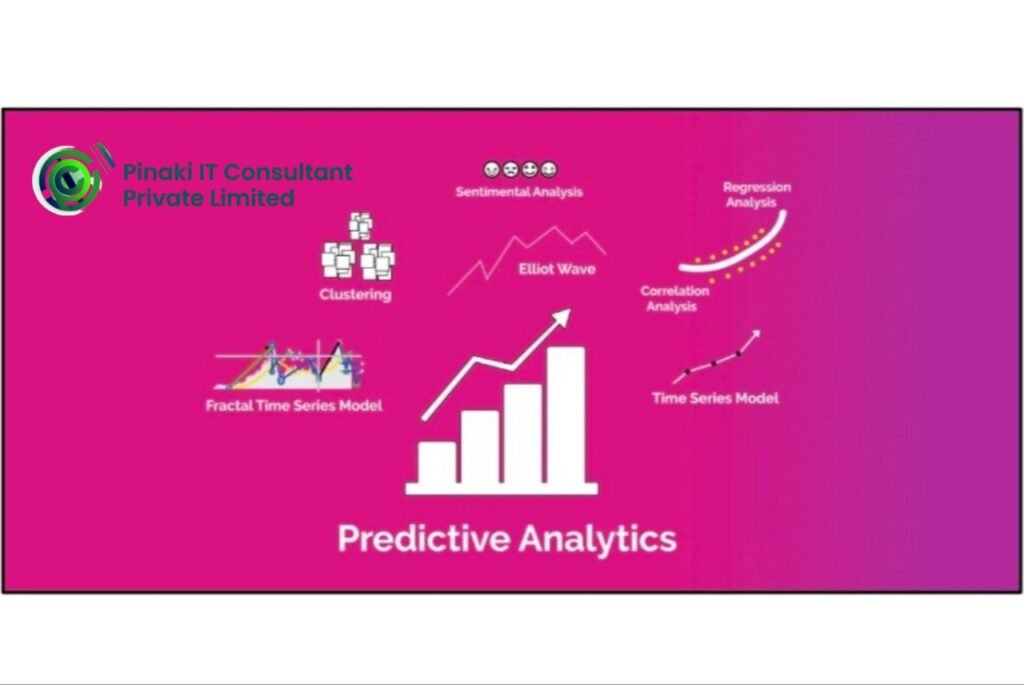
Predictive analytics and predictive AI can help your organization forecast outcomes based on historical data and analytics techniques. Predictive analytics definition Predictive analytics is a category of advanced data analytics aimed at making predictions about future outcomes based on historical data and analytics techniques such as statistical modeling, data mining, and machine learning (ML). Many organizations are beginning to leverage redictive AI to speed up automate statistical data analysis. The science of predictive analytics can generate future insights with a significant degree of precision. With the help of sophisticated predictive analytics tools and models, any organization can now use past and current data to reliably forecast trends and behaviors milliseconds, days, or years into the future. Predictive analytics has captured the support of a wide range of organizations, with a global market size of over $18 billion in 2024, according to Fortune Business Insights. The report projects the market will reach over $95 billion by 2032, growing at a compound annual growth rate (CAGR) of about 23% from 2024 to 2032. Predictive analytics vs predictive AI Organizations are increasingly turning to predictive AI over predictive analytics to anticipate, for example, future outcomes, causation, and risk exposure. While predictive analytics frequently makes use of AI tools, it’s driven by humans querying data, identifying trends, and testing assumptions. Predictive AI is autonomous, analyzing thousands of factors and years of data, and can be usd to predict customer churn, supply chain disruptions, and mechanical failures, among other things. ML enables predictive AI to improve its forecasting accuracy over time. Predictive AI vs Gen AI Predictive AI forecasts future events and outcomes while gen AI creates novel content. Predictive AI uses a combination of statistical analysis and ML algorithms to uncover insights in historical data and make predictions about upcoming events, results, or trends and often makes use of smaller, more targeted datasets than gen AI. Gen AI, on the other hand, responds to prompts or requests by creating content — audio, images, software code, text, video — based on patterns learned from existing content. Gen AI can be used to hold conversations, answer questions, write stories, produce source code, and create images and video. Most start with a deep learning model called a foundation model — often a large language model (LLM) or small language model (SLM) to learn how to generate statistically probable outputs. Organizations leverage predictive AI for things like financial forecasting, fraud detection, and supply chain management. Gen AI use cases include chatbots and virtual agents for customer service, creating targeted ad and sales copy marketing and advertising, and generating code for software development. Predictive analytics in business Predictive analytics draws its power from many methods and technologies, including big data, data mining, statistical modeling, ML, and assorted mathematical processes. Organizations use predictive analytics to sift through current and historical data to detect trends, and forecast events and conditions that should occur at a specific time, based on supplied parameters. With predictive analytics, organizations can find and exploit patterns contained within data in order to detect risks and opportunities. Models can be designed, for instance, to discover relationships between various behavior factors. Such models enable the assessment of either the promise or risk presented by a particular set of conditions, guiding informed decision making across various categories of supply chain and procurement events. For tips on how to effectively harness the power of predictive analytics. Benefits of predictive analytics Predictive analytics makes looking into the future more accurate and reliable than previous tools. As such it can help adopters find ways to save and earn money. Retailers often use predictive models to forecast inventory requirements, manage shipping schedules, and configure store layouts tomaximize sales. Airlines frequently use predictive analytics to set ticket prices reflecting past travel trends. Hotels, restaurants, and other hospitality industry players can use the technology to forecast the number of gests on any given night in order to maximize occupancy and revenue. By optimizing marketing campaigns with predictive analytics, organizations can also generate new customer responses or purchases, as well as promote cross-sell opportunities. Predictive models can help businesses attract, retain, and nurture their most valued customers. Predictive analytics can also be used to detect and halt various types of criminal behavior before any serious damage is inflected. By using predictive analytics to study user behaviors and actions, an organization can detect activities that are out of the ordinary, ranging from credit card fraud to corporate spying to cyberattacks. Challenges of predictive analytics Initiating and maintaining a predictive analytics practice or predictive AI is no easy task. Here are some of the challenges organizations must account for, according to AI knowledge management specialist, Shelf: ● Data quality and quantity: The quality and quantity of your data are key to the accuracy of predictions. Inadequate or poor quality data will lead to poor results.● Model complexity and interpretability: Many AI models are complex and opaque. Unless they’re built with transparency in mind, it can be extremely difficult to understand how they arrive at certain predictions.● Ethical, privacy, and regulatory concerns: Predictive models can have ethical implications, especially around privacy and bias. They must also comply with all relevant regulations. A misstep can lead to a loss of trust.● Integration and implementation: Integrating predictive analytics into existing systems and workflows requires care and thought, and integrating predictive AI with an IT infrastructure reliant on legacy systems can be difficult.● Skills gap: Professionals with skills in predictive analytics and predictive AI are in high demand, but they can be difficult to attract and retain. Predictive analytics use cases Organizations today use predictive analytics and predictive AI in a virtually endless number of ways. The technology helps adopters in fields as diverse as finance, healthcare, retail, hospitality, pharmaceuticals, automotive, aerospace, and manufacturing. Here are a few ways organizations make use of predictive analytics: ● Aerospace: Predict the impact of specific maintenance operations on aircraft reliability, fuel use, availability, and uptime.● Automotive: Incorporate records of component sturdiness and failure into upcoming