The Importance of Learning Multiple Skills in IT

Introduction to Multi-Skilling in IT In today’s rapidly evolving digital era, the Information Technology (IT) industry has become one of the most dynamic and competitive fields in the world. Technologies are constantly changing, new tools and frameworks are emerging, and businesses are continuously looking for professionals who can adapt quickly to these changes. In such an environment, relying on a single skill is no longer sufficient. This is where the concept of multi-skilling in IT comes into play. Multi-skilling refers to the ability of an individual to acquire and apply knowledge across multiple domains rather than being limited to just one area of expertise. In the context of IT, it means having a combination of skills such as programming, database management, cloud computing, cybersecurity, data analysis, UI/UX design, and even soft skills like communication and problem-solving. A multi-skilled professional is not only technically sound but also capable of understanding how different technologies work together to build efficient and scalable solutions. The need for multi-skilling has grown significantly due to the increasing complexity of IT projects. Modern applications and systems are no longer built using a single technology stack. For example, developing a web application may require knowledge of front-end technologies like HTML, CSS, and JavaScript, back-end programming languages such as Python, Java, or Node.js, database management systems, and cloud platforms for deployment. A professional who understands multiple aspects of this process can contribute more effectively and collaborate better with different teams. Moreover, multi-skilling enhances an individual’s ability to solve problems creatively and efficiently. When a person is exposed to various technologies and domains, they develop a broader perspective, which helps them approach challenges from different angles. This not only improves decision-making but also leads to innovative solutions that might not be possible with a limited skill set. In a field like IT, where problem-solving is a core requirement, this advantage becomes extremely valuable. Another important factor driving the importance of multi-skilling is the rapid pace of technological advancements. Trends such as Artificial Intelligence (AI), Machine Learning (ML), Cybersecurity, Cloud Computing, and Data Science are continuously reshaping the industry. Professionals who limit themselves to a single skill may find it difficult to keep up with these changes. On the other hand, those who continuously learn and expand their skill set are better equipped to adapt and grow with the industry. Multi-skilling also plays a crucial role in career growth and job security. Employers today prefer candidates who can handle multiple responsibilities and contribute to different areas of a project. This not only increases employability but also opens up a wider range of career opportunities, including roles in full-stack development, DevOps, system architecture, and technical consulting. Additionally, multi-skilled professionals are often more resilient during economic uncertainties, as they can switch roles or domains more easily compared to those with a narrow skill set. Furthermore, the rise of freelancing, remote work, and startup culture has made multi-skilling even more important. Many organizations, especially startups, look for individuals who can wear multiple hats and manage various tasks efficiently. A developer who can also handle basic design, deployment, and client communication becomes a valuable asset in such environments. However, multi-skilling does not mean mastering everything at once. It is about building a strong foundation in one core area and gradually expanding into related domains. The goal is to become a well-rounded professional who can understand, adapt, and contribute in multiple ways rather than being restricted to a single role. In conclusion, multi-skilling in IT is no longer just a desirable trait—it has become a necessity. It empowers professionals to stay relevant, enhances their problem-solving abilities, improves career prospects, and prepares them for the ever-changing demands of the industry. As technology continues to advance, the ability to learn and integrate multiple skills will be the key to long-term success in the IT world. Why the IT Industry Demands Versatile Professionals The modern IT industry is evolving at an unprecedented pace, driven by rapid technological advancements, digital transformation, and increasing business demands. In such a fast-moving environment, organizations no longer look for professionals who are limited to a single skill or role. Instead, they seek versatile professionals who can adapt, learn, and contribute across multiple areas. This shift has made versatility one of the most valuable qualities in the IT workforce today. One of the primary reasons behind this demand is the complex nature of modern IT projects. Today’s applications and systems are built using a combination of technologies, tools, and platforms. For instance, a single project may involve front-end development, back-end logic, database management, cloud deployment, and cybersecurity measures. Companies prefer professionals who have a broader understanding of these components, as it allows for smoother collaboration, faster development, and fewer dependencies on multiple specialists. Another key factor is the need for agility and adaptability. Technology trends such as Artificial Intelligence, Machine Learning, Cloud Computing, and Cybersecurity are constantly evolving. Businesses must quickly adapt to these changes to stay competitive. Versatile professionals who can learn new tools and technologies quickly help organizations remain flexible and responsive in a rapidly changing market. Cost efficiency is also a major reason why companies value multi-skilled individuals. Hiring separate specialists for every small task can be expensive, especially for startups and small businesses. A versatile professional who can handle multiple responsibilities—such as coding, testing, deployment, and basic troubleshooting—helps reduce costs while maintaining productivity. This is particularly important in lean teams where resources are limited. Furthermore, versatile professionals contribute significantly to better problem-solving and innovation. When individuals have knowledge of multiple domains, they can approach challenges from different perspectives. This cross-functional understanding often leads to creative and effective solutions. It also enables professionals to identify potential issues early and resolve them efficiently, improving the overall quality of projects. The rise of remote work and global teams has also increased the demand for versatile professionals. In distributed work environments, individuals are often expected to take ownership of multiple tasks and communicate effectively across different functions. Professionals who can manage diverse responsibilities independently
Why Industry-Focused Training Is Important for IT Careers

Understanding Industry-Focused Training Industry-focused training is a modern approach to education that is designed to match the current needs, technologies, and working practices of the IT industry. Unlike traditional learning methods that focus mainly on theory, industry-focused training emphasizes practical knowledge, real-world experience, and hands-on skill development. The main goal of this type of training is to prepare students so they can easily adapt to professional environments and perform tasks that companies actually require. In many traditional academic programs, students learn through textbooks, classroom lectures, and written exams. While these methods are important for understanding basic concepts and theoretical foundations, they often do not fully prepare students for real-world industry challenges. Many graduates face difficulties when they enter the workforce because they lack practical exposure, familiarity with modern tools, and real project experience. Industry-focused training helps bridge this gap by combining theory with practical learning experiences. One of the key elements of industry-focused training is the integration of real-world projects and practical assignments. Students are encouraged to work on tasks that simulate real business problems or technical challenges faced by companies. This helps learners understand how to apply their knowledge to solve actual problems rather than just memorizing concepts. By working on projects, students also gain valuable experience in planning, execution, debugging, and problem-solving, which are essential skills in the IT industry. Another important aspect of industry-focused training is learning to use the tools, technologies, and platforms commonly used by professionals. In fields such as software development, data analysis, cloud computing, cybersecurity, and digital marketing, professionals rely on specific tools to complete their work efficiently. Through industry-focused training, students get hands-on practice with these tools, which makes them more confident and capable when they begin their professional careers. Industry-focused training also helps students develop soft skills and professional habits that are essential in the workplace. These include communication, teamwork, time management, adaptability, and critical thinking. In many cases, students work in teams to complete projects, which helps them understand how collaboration works in real organizations. Learning to meet deadlines, manage tasks, and communicate ideas clearly are all important aspects of becoming a successful IT professional. Mentorship and guidance from experienced trainers or industry experts are also a major part of industry-focused training. Trainers who have real industry experience can provide valuable insights about current trends, best practices, and career expectations. Their guidance helps students understand what employers are looking for and how they can improve their skills to meet those expectations. Another advantage of industry-focused training is that it helps students stay updated with rapidly changing technologies. The IT industry evolves quickly, with new tools, programming languages, and frameworks appearing regularly. Training programs that follow an industry-focused approach continuously update their curriculum to reflect these changes, ensuring that students learn relevant and in-demand skills. Overall, industry-focused training plays a vital role in making students job-ready and confident professionals. By combining theoretical knowledge with practical experience, modern tools, mentorship, and real-world exposure, this approach prepares learners to succeed in the competitive IT industry. Students who receive industry-focused training are better equipped to adapt to workplace challenges, contribute to projects effectively, and build long-term successful careers in the technology field. Skills Required by IT Companies vs Skills Learned in Traditional Education Difference Between Traditional Learning and Industry-Based Training In the field of IT education, understanding the difference between traditional learning and industry-based training is very important. Both approaches aim to educate students, but they differ significantly in terms of teaching methods, learning outcomes, and practical exposure. While traditional learning focuses mainly on theoretical knowledge, industry-based training focuses on preparing students for real workplace challenges and professional environments. 1. Learning Approach Traditional learning is primarily based on lectures, textbooks, and classroom discussions. Students usually learn concepts through theoretical explanations and written examinations. On the other hand, industry-based training follows a practical and application-oriented approach. Students are encouraged to apply what they learn by working on assignments, projects, and real-world scenarios. 2. Curriculum and Course Structure In traditional education systems, the curriculum may remain the same for many years. As a result, students sometimes learn outdated concepts that may not fully match current industry requirements. Industry-based training programs, however, are designed to adapt quickly to industry trends. The curriculum is updated regularly to include the latest technologies, tools, and methodologies used by companies. 3. Practical Experience One of the biggest differences lies in the level of practical exposure. Traditional learning often focuses more on theoretical understanding, with limited opportunities for hands-on practice. Industry-based training emphasizes learning by doing, where students work on real or simulated projects, practical assignments, and case studies. This helps them understand how theoretical knowledge is applied in real situations. 4. Use of Tools and Technologies Traditional education sometimes teaches concepts without giving students the opportunity to work with the actual tools used in the industry. In contrast, industry-based training ensures that students gain hands-on experience with modern tools, software platforms, and technologies that professionals use in their daily work. This makes it easier for students to adapt when they enter the workforce. 5. Interaction with Industry Professionals Traditional learning environments may have limited interaction with industry experts. Industry-based training often includes mentorship from experienced professionals, guest lectures, and practical insights from people who are actively working in the field. This helps students understand real industry expectations and career opportunities. 6. Skill Development Traditional education mainly focuses on building academic knowledge and helping students perform well in examinations. Industry-based training focuses on developing technical skills as well as soft skills such as teamwork, communication, time management, and problem-solving. These skills are essential for success in professional environments. 7. Job Readiness Traditional learning prepares students academically, but it may not always make them fully prepared for the demands of the workplace. Industry-based training is designed specifically to make students job-ready by providing practical experience and exposure to real work environments. 8. Learning Outcomes The outcome of traditional learning is usually a degree or academic qualification. While this is important, employers often
Why Continuous Upskilling Is Essential in the IT Industry
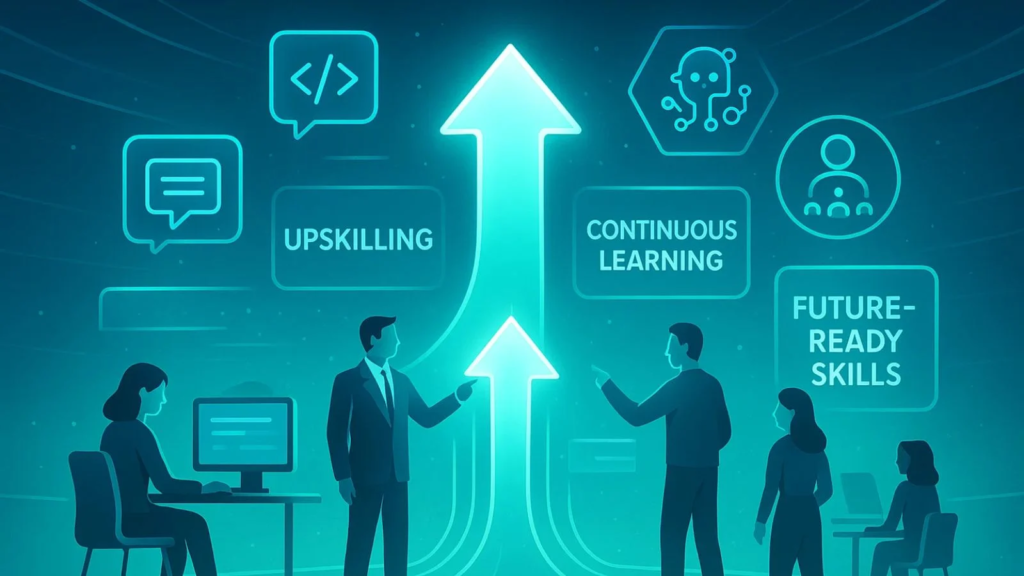
Introduction to Continuous Upskilling in IT The Information Technology (IT) industry is one of the most dynamic and rapidly evolving sectors in the world. Every year, new technologies, tools, programming languages, and frameworks emerge, transforming how businesses operate and how services are delivered. From artificial intelligence and cloud computing to cybersecurity and data analytics, innovation is constant. In such a fast-paced environment, relying only on the skills learned during college or early career stages is no longer enough. This is where continuous upskilling becomes crucial. Continuous upskilling refers to the ongoing process of learning new skills, enhancing existing knowledge, and adapting to emerging industry trends. It is not a one-time effort but a long-term commitment to professional growth. For IT professionals, upskilling can involve learning new programming languages, understanding advanced technologies, earning industry-recognized certifications, attending workshops, or even developing soft skills like communication, leadership, and critical thinking. The IT industry does not stand still. Technologies that were in high demand five years ago may now be outdated. For example, traditional systems are rapidly being replaced by cloud-based solutions, automation tools, and AI-driven platforms. Companies are constantly upgrading their infrastructure to remain competitive in the digital economy. As a result, they seek professionals who are updated with the latest trends and capable of handling modern challenges. Without continuous learning, professionals risk falling behind and becoming less relevant in the job market. Moreover, competition in the IT job market is increasing globally. With remote work opportunities expanding, companies can hire talent from anywhere in the world. This means IT professionals are no longer competing only locally but internationally. Continuous upskilling helps individuals stand out, improve their expertise, and increase their value in a highly competitive environment. Upskilling also directly impacts career growth and salary potential. Professionals who regularly update their skills are more likely to receive promotions, leadership roles, and better compensation packages. They are seen as proactive, adaptable, and future-ready employees. On the other hand, those who resist change may struggle with limited growth opportunities. Beyond career advancement, continuous upskilling fosters innovation and confidence. Learning new technologies enhances problem-solving abilities and allows professionals to contribute creative solutions to complex challenges. It builds adaptability, which is essential in an industry where change is the only constant. In today’s digital era, continuous upskilling is not optional—it is a necessity. It ensures long-term career sustainability, professional relevance, and personal growth. IT professionals who embrace lifelong learning position themselves for success in an ever-changing technological landscape, making them valuable assets to both their organizations and the broader industry. Rapid Technological Advancements The IT industry is driven by rapid technological advancements that continuously reshape the way businesses operate and individuals work. Unlike many traditional industries where changes happen gradually, technology evolves at an extraordinary pace. New programming languages, development frameworks, software tools, and digital platforms are introduced regularly, making it essential for IT professionals to stay updated. One of the biggest drivers of change is the rise of emerging technologies such as Artificial Intelligence (AI), Machine Learning (ML), Cloud Computing, Blockchain, Internet of Things (IoT), and Cybersecurity innovations. These technologies are not just trends—they are transforming entire industries including healthcare, finance, education, retail, and manufacturing. As businesses adopt these solutions to improve efficiency and customer experience, the demand for professionals skilled in these areas continues to grow. For example, companies are rapidly shifting from traditional on-premise infrastructure to cloud-based platforms. Automation tools are replacing repetitive manual tasks, and AI-powered systems are being used for decision-making and data analysis. This means professionals who were once focused on older systems must now learn new tools, platforms, and methodologies to remain relevant. Another key aspect of rapid technological advancement is the short lifecycle of technical skills. A programming language or framework that is highly popular today may become outdated in just a few years. Continuous innovation leads to frequent updates and new versions of technologies, requiring professionals to constantly upgrade their knowledge. Additionally, customer expectations are evolving alongside technology. Users expect faster applications, stronger security, seamless digital experiences, and innovative solutions. To meet these expectations, companies rely on IT professionals who are well-versed in the latest technologies and best practices. In such a fast-changing environment, adaptability becomes a critical skill. Continuous upskilling allows IT professionals to keep pace with technological shifts, understand emerging trends early, and leverage new opportunities. Instead of being overwhelmed by change, skilled professionals can use technological advancements as a stepping stone for career growth and innovation. Ultimately, rapid technological advancements are both a challenge and an opportunity. Those who embrace learning and stay updated can thrive in this evolving landscape, while those who resist change risk being left behind. Digital Transformation Across Industries Digital transformation is no longer limited to the IT sector—it has become a global movement impacting almost every industry. From healthcare and banking to retail, education, manufacturing, and even agriculture, organizations are integrating digital technologies to improve efficiency, enhance customer experience, and stay competitive in the modern marketplace. At its core, digital transformation refers to the adoption of digital tools, platforms, and technologies to fundamentally change how businesses operate and deliver value to customers. Companies are shifting from traditional processes to automated systems, cloud-based platforms, data-driven decision-making, and AI-powered solutions. This shift has created a massive demand for skilled IT professionals who can design, implement, and manage these digital systems. For example, in the banking sector, mobile banking apps, digital payments, and blockchain technology are transforming financial services. In healthcare, telemedicine, electronic health records, and AI-based diagnostics are improving patient care. Retail businesses are leveraging e-commerce platforms, data analytics, and personalized marketing strategies to enhance customer engagement. Similarly, manufacturing industries are adopting smart factories and IoT-enabled systems to optimize production. As industries undergo digital transformation, the skill requirements for IT professionals also evolve. Companies now look for expertise in cloud computing, cybersecurity, data analytics, DevOps, automation, and system integration. Professionals who fail to update their skills may struggle to meet these changing demands. Moreover, digital transformation increases competition among businesses, pushing
The Role of Mentorship in Building a Successful IT Career

Understanding Mentorship in the IT Industry Mentorship in the IT industry refers to a professional relationship where an experienced IT professional guides, supports, and advises someone who is earlier in their career. Unlike traditional classroom learning, mentorship is practical, experience-based, and focused on real-world challenges. It helps individuals understand not only technical concepts but also how the industry actually works. In the fast-evolving world of information technology, new tools, programming languages, frameworks, and methodologies emerge regularly. For beginners and even mid-level professionals, navigating this dynamic environment can be overwhelming. This is where mentorship plays a crucial role. A mentor provides clarity, direction, and insights that are often not available through courses or certifications. Mentorship in IT goes beyond teaching coding skills. It includes guidance on selecting the right career path, preparing for technical interviews, building a strong portfolio, improving problem-solving abilities, and developing soft skills such as communication and teamwork. A mentor can help identify strengths and weaknesses, suggest areas for improvement, and share lessons learned from personal experience. Another important aspect of mentorship in the IT industry is exposure to real-world problem-solving. While theoretical knowledge can be gained from books or online tutorials, understanding how to apply that knowledge in real projects requires practical insight. Mentors often share case studies, debugging strategies, best practices, and industry standards that significantly accelerate a mentee’s growth. Mentorship can take different forms in IT. It may be a formal program organized by a company, where senior employees mentor junior staff. It can also be informal, such as a senior developer guiding a fresher within a team. In today’s digital world, mentorship also happens through online communities, tech forums, open-source collaborations, and professional networking platforms. The relationship between mentor and mentee is built on trust, communication, and mutual respect. A mentor provides honest feedback and constructive criticism, while a mentee remains open to learning and actively applies the guidance received. This two-way interaction makes mentorship more impactful than one-way instruction. Ultimately, understanding mentorship in the IT industry means recognizing it as a long-term investment in professional growth. It is not just about learning new technologies; it is about developing confidence, gaining strategic career direction, and building a strong professional foundation. In a competitive and rapidly changing industry like IT, mentorship often becomes the key factor that differentiates average professionals from truly successful ones. Why Mentorship Matters for IT Beginners Starting a career in the IT industry can be both exciting and overwhelming. With countless programming languages, frameworks, tools, and career paths available, beginners often struggle to decide where to focus. This is where mentorship becomes extremely valuable. A mentor provides direction, clarity, and real-world insight that helps IT beginners move forward with confidence. 1. Provides Clear Career Direction Many beginners are confused about whether to choose web development, data science, cybersecurity, cloud computing, or another specialization. Without proper guidance, they may spend months learning skills that don’t align with their long-term goals. A mentor helps identify interests, strengths, and market demand, making it easier to choose the right path. 2. Reduces Common Beginner Mistakes IT beginners often make mistakes such as overloading themselves with too many technologies, ignoring fundamentals, or not building practical projects. A mentor helps avoid these common errors by sharing experience-based advice. This saves time, effort, and frustration. 3. Accelerates Learning Self-learning is important, but it can be slow and confusing without feedback. Mentors provide structured guidance, suggest reliable resources, and review work. For example, during code reviews, a mentor can point out inefficiencies or bad practices that a beginner might not notice. This significantly improves learning speed and quality. 4. Builds Confidence Many beginners face self-doubt, especially when they encounter complex bugs or difficult concepts. Having a mentor provides reassurance and motivation. Knowing that someone experienced believes in your potential boosts confidence and encourages persistence. 5. Helps with Real-World Exposure Academic learning often focuses on theory, but the IT industry demands practical problem-solving. Mentors share real project experiences, industry standards, and workplace expectations. This helps beginners understand how teams collaborate, how deadlines work, and how to handle real clients or stakeholders. 6. Improves Professional Skills Technical skills alone are not enough in IT. Communication, teamwork, time management, and problem-solving are equally important. Mentors guide beginners on how to behave professionally, communicate effectively in meetings, and work efficiently within a team. 7. Supports Career Opportunities Mentors often have industry connections and knowledge about job openings, internships, and certifications. They can guide beginners in preparing resumes, building portfolios, and preparing for interviews. This increases the chances of landing the first job successfully. Types of Mentorship: Formal vs Informal Mentoring Mentorship in the IT industry can take different forms depending on the structure and setting of the relationship. Broadly, mentorship is divided into two main types: formal mentoring and informal mentoring. Both play an important role in professional development, but they differ in structure, approach, and flexibility. 1. Formal Mentoring Formal mentoring is a structured program usually organized by a company, institution, or professional organization. In this setup, mentors and mentees are officially assigned to each other with specific goals, timelines, and expectations. Key Features of Formal Mentoring: In IT companies, formal mentoring is commonly used to support freshers, interns, or newly promoted employees. For example, a junior developer may be assigned a senior developer to guide them through projects, company processes, and technical standards. Advantages: Limitations: 2. Informal Mentoring Informal mentoring develops naturally without official assignment. It happens when a less experienced professional seeks guidance from someone they respect or connect with. This type of mentorship is based on mutual interest and voluntary interaction. Key Features of Informal Mentoring: In the IT field, informal mentoring may occur when a junior developer regularly seeks advice from a senior colleague, or when professionals connect through online communities, tech forums, or networking events. Advantages: Limitations: 3. Comparing Formal and Informal Mentoring Aspect Formal Mentoring Informal Mentoring Structure Organized & structured Natural & flexible Goal Setting Predefined goals Self-defined goals Duration Fixed period Open-ended Accountability
How IT Training Helps Freshers Get Industry Exposure

Introduction to Industry-Oriented IT Training In today’s fast-growing digital era, the IT industry is continuously evolving with new technologies, tools, and work methodologies. Companies are no longer looking for candidates who only have theoretical knowledge from books or classrooms. Instead, they prefer professionals who can understand real business problems, work on live tools, and contribute to projects from the very beginning. This is why industry-oriented IT training has become extremely important, especially for freshers who are starting their careers in the technology field. Industry-oriented IT training is a learning approach that focuses on making students job-ready by providing practical exposure along with theoretical understanding. Traditional education systems often focus more on concepts, definitions, and exams, whereas industry training focuses on real-time project execution, practical assignments, and hands-on learning. This helps freshers understand how technologies are actually used in companies and how real IT projects are executed. One of the biggest challenges freshers face after completing their degrees is the skill gap between academic learning and industry expectations. Many students learn programming languages, databases, or networking concepts in college, but they don’t get exposure to real project environments. Industry-oriented training programs help bridge this gap by introducing learners to real-world workflows, development cycles, debugging processes, and team collaboration methods used in IT companies. Another important aspect of industry-oriented IT training is exposure to the latest industry tools and technologies. With the rapid growth of fields like Cloud Computing, Artificial Intelligence, Machine Learning, Data Analytics, DevOps, and Cyber Security, companies expect candidates to be familiar with modern tools and platforms. Industry training institutes update their curriculum regularly to match current market demand, ensuring that learners stay relevant and competitive in the job market. Industry-oriented training also focuses on project-based learning. Instead of only learning theory, students work on live or simulated industry projects. This helps them understand client requirements, project planning, execution strategies, testing processes, and deployment methods. Working on projects not only improves technical knowledge but also builds confidence and problem-solving ability. Apart from technical skills, industry-oriented IT training also helps freshers develop essential professional skills such as communication, teamwork, time management, and adaptability. Since most IT companies work in team-based environments, understanding collaboration tools and work culture is very important. Many training programs also introduce learners to Agile methodology, Scrum practices, and real development workflows followed in companies. Another major advantage of industry-oriented IT training is mentorship and career guidance. Many training institutes provide guidance from industry experts who share real experiences, career advice, and industry insights. This helps freshers understand market expectations, interview patterns, and career growth opportunities in different IT domains. Additionally, industry training programs often provide placement assistance, resume building support, portfolio development, and interview preparation. This structured support system increases the chances of freshers getting placed in good companies and starting their careers with confidence. In simple terms, industry-oriented IT training prepares freshers not only to get a job but also to perform effectively in a professional environment from the first day. It helps them move from theoretical learners to practical professionals who are ready to handle real industry challenges. As the IT industry continues to grow and competition increases, industry-oriented training is becoming a key factor in building successful careers. Freshers who gain practical exposure, industry knowledge, and real project experience always have an advantage over those who rely only on academic learning. Why Freshers Need Industry Exposure Before Getting a Job In today’s competitive job market, having a degree alone is often not enough to secure a good job in the IT industry. Companies are looking for candidates who can understand real work environments, handle practical tasks, and contribute to projects from day one. This is why industry exposure has become extremely important for freshers before they enter the professional world. Industry exposure helps freshers understand how the real IT industry works beyond textbooks and classroom learning. In college, students mostly learn theoretical concepts, programming basics, and academic projects. However, real companies work on live client requirements, tight deadlines, teamwork, and complex problem-solving situations. Without industry exposure, freshers may find it difficult to adjust to this fast-paced environment. Another major reason why industry exposure is important is that it reduces the skill gap between academic learning and industry expectations. Many freshers know concepts but struggle when they are asked to apply them in real projects. Industry exposure through training, internships, or live projects helps them understand practical implementation, debugging, testing, and deployment processes used in real companies. Industry exposure also builds confidence in freshers. When students work on real-time projects or industry-level assignments, they become more comfortable with tools, technologies, and workflows. This confidence is very important during job interviews and also helps freshers perform better once they get hired. Apart from technical knowledge, industry exposure helps freshers develop professional skills. In real IT companies, employees need to communicate with team members, managers, and sometimes clients. They need to manage deadlines, work in teams, and adapt to changing project requirements. Industry exposure helps freshers learn workplace behavior, communication skills, and teamwork culture. Another important benefit of industry exposure is better career clarity. Many freshers are confused about which IT field to choose, such as development, testing, cloud computing, data analytics, or cyber security. When they get industry exposure through training programs or internships, they understand which domain matches their interest and skills. Industry exposure also increases job opportunities. Companies prefer candidates who already understand industry tools, workflows, and project environments because they require less training after hiring. This makes freshers with industry exposure more valuable and increases their chances of getting selected. Additionally, freshers with industry exposure usually perform better in technical interviews because they can explain practical experiences, real project challenges, and problem-solving approaches. This gives them an advantage over candidates who only have theoretical knowledge. In simple words, industry exposure helps freshers become job-ready, confident, and technically strong before entering the professional world. It prepares them to face real industry challenges, work in professional environments, and grow faster in their careers.
How Project-Based Learning Improves Coding Skills Faster

How Project-Based Learning Improves Coding Skills Faster Boost your real-world coding ability with projects instead of textbooks. In the world of coding education, traditional learning methods like memorizing syntax, watching videos, and solving isolated programming problems are helpful—but they often fall short when it comes to real-world application. This is where Project-Based Learning (PBL) makes a huge difference. At Pinaki IT Hub, we believe coding becomes meaningful when you build something real. In this blog, we’ll explore what PBL is, why it works, how it builds skills faster, and how both students and professionals can benefit immediately. Learn By Building, Not Just Studying The Future of Skill-Based Education Traditional learning often focuses on theory first and application later — but in today’s fast-moving tech world, skills matter more than memorization. Employers are not just looking for certificates; they want proof that you can actually build, solve problems, and deliver results. Project-Based Learning shifts the focus from passive learning to active creation, helping students become confident professionals instead of just knowledgeable learners. What is Project-Based Learning? Turning Knowledge Into Real-World Skills Project-Based Learning (PBL) is a hands-on approach where learners actively create applications, tools, and systems rather than simply consuming information. Instead of only understanding concepts, students apply them in real scenarios — learning how technology works beyond textbooks. This method builds deeper understanding, stronger retention, and practical expertise that stays with you throughout your career. Move Beyond Tutorials Stop Watching. Start Creating. Many learners fall into the cycle of endlessly watching tutorials, memorizing syntax, and solving disconnected practice problems — yet still feel unprepared for real jobs. Project-Based Learning breaks this cycle by placing you in the creator’s role from the start. You don’t just follow instructions — you think, experiment, make decisions, and build solutions. This transforms learning from a passive activity into an engaging, career-ready experience. Build Software That Actually Matters Create Projects You Can Showcase With Project-Based Learning, you don’t just practice — you produce meaningful work that demonstrates your abilities. Students gain experience by developing real software such as interactive websites, mobile applications, engaging games, data-driven dashboards, and even AI-powered chatbots. These projects become powerful portfolio pieces that prove your skills to recruiters and set you apart in a competitive job market. Learn Like Real Developers Experience the Actual Workflow of the Tech Industry Professional developers don’t get everything right on the first attempt — they build, test, debug, refine, and improve continuously. Project-Based Learning mirrors this exact process. As you iterate through challenges, you develop problem-solving abilities, logical thinking, and resilience. Over time, you stop fearing errors and start seeing them as stepping stones toward mastery. Confidence Comes From Doing Practical Exposure That Prepares You for Real Jobs When you repeatedly apply your knowledge to real projects, confidence grows naturally. You begin to understand how systems connect, how users interact with technology, and how to approach complex challenges. This practical exposure ensures that when you step into a professional environment, nothing feels unfamiliar — because you’ve already experienced similar situations during your learning journey. From Learner to Professional Build Skills That Employers Trust Companies value candidates who can contribute from day one. Project-Based Learning helps you develop industry-relevant skills, collaborative thinking, and a solution-oriented mindset. Instead of saying “I learned this,” you can confidently say, “I built this.” That difference speaks volumes to hiring managers and dramatically improves your career opportunities. Your Career Starts With What You Build Don’t Just Study Technology — Create With It The strongest careers are built on practical capability, not just theoretical understanding. Project-Based Learning empowers you to transform ideas into reality, preparing you for the demands of the modern workforce. If your goal is to become truly job-ready, the path is simple: learn actively, build consistently, and grow through experience. Why Project-Based Learning Works So Well Because Real Skills Are Built Through Action In today’s competitive tech landscape, simply knowing concepts is no longer enough. Employers seek professionals who can apply knowledge, solve real problems, and adapt quickly. Project-Based Learning works because it transforms education from passive consumption into active creation — ensuring learners don’t just study technology, they experience it. By working on real projects, students develop practical expertise that prepares them for the expectations of modern workplaces. Deep Understanding vs. Shallow Knowledge Learn the Logic, Not Just the Language Coding is not about memorizing commands or copying syntax — it’s about understanding how and why code works. When learners build projects, they naturally explore the logic behind every function, workflow, and system interaction. This deeper engagement strengthens conceptual clarity and ensures knowledge stays with you far longer than information gained through passive methods. Problems Create Better Programmers Real Challenges Build Real Thinkers When you work on projects, things don’t always go as planned — and that’s where true learning begins. Unexpected errors, broken features, and system limitations push you to analyze situations and find solutions. Instead of avoiding difficulties, Project-Based Learning trains your brain to approach problems with curiosity and confidence — a defining trait of successful developers. Encounter Bugs, Build Brilliance Debugging Is Where Mastery Begins Every developer faces bugs, but experienced ones know how to resolve them efficiently. Through project work, learners repeatedly practice troubleshooting, identifying root causes, and optimizing performance. Over time, debugging stops feeling frustrating and starts becoming an opportunity to sharpen your technical instincts — turning challenges into expertise. Start Thinking Like a Developer Shift From Following Instructions to Creating Solutions Tutorial-based learning often encourages imitation, but real growth happens when you begin making independent decisions. Project-Based Learning nurtures a developer mindset — one that focuses on structure, scalability, user experience, and efficiency. You stop asking, “What should I do next?” and start deciding, “What is the best way to build this?” Stronger Skill Transfer to Real Jobs Learn Once, Apply Everywhere One of the greatest advantages of Project-Based Learning is how effectively skills translate into professional environments. The workflows, tools, and problem-solving methods you practice during projects closely resemble those
Careers That Are Growing Faster Because of Data & Technology

In today’s digital-first world, Data and Technology are no longer optional skills — they are the backbone of modern businesses. From startups to global enterprises, companies are using data-driven decisions and advanced technology to grow faster, smarter, and more efficiently. As a result, careers powered by data and technology are growing at an unprecedented speed and offer exciting opportunities for students, freshers, and working professionals. This blog will help you understand: Why Data & Technology Are So Important Today: Powering the Digital Age Introduction: Living in a Data-Driven World We are living in an era where almost every action we perform leaves a digital footprint. From browsing websites and using mobile applications to online shopping, digital payments, social media engagement, and even smart home devices, data is constantly being generated. This massive flow of information has transformed how organizations operate, how governments make decisions, and how individuals interact with technology. Data and technology are no longer optional tools; they have become the foundation of modern business, innovation, and social development. The combination of data and technology enables organizations to gain deep insights, automate complex processes, enhance customer experiences, and remain competitive in fast-changing markets. Companies that understand how to collect, analyze, and apply data effectively are more likely to grow faster, reduce operational risks, and make informed strategic decisions. This is why data literacy and technological skills are now considered essential across industries and professions. Understanding the Role of Data in the Modern Economy What Is Data and Why Does It Matter? Data refers to raw facts and information generated through digital interactions, sensors, transactions, customer feedback, and online activities. While raw data alone may seem meaningless, when it is processed and analyzed using technology, it becomes valuable intelligence that helps organizations understand patterns, trends, and user behavior. In today’s digital economy, data has become one of the most valuable assets. Companies such as e-commerce platforms, social media networks, financial institutions, and healthcare providers rely heavily on data to improve services, personalize user experiences, and optimize internal operations. Data-driven organizations are able to make smarter decisions based on evidence rather than assumptions, leading to improved performance and sustainable growth. Data as a Strategic Business Resource Unlike traditional resources such as machinery or physical infrastructure, data can be reused, refined, and expanded over time. Businesses now treat data as a strategic resource that helps them identify market opportunities, reduce inefficiencies, and gain a competitive advantage. Organizations that invest in data analytics tools and skilled professionals can convert complex information into actionable insights that directly impact profitability and customer satisfaction. How Technology Converts Data into Meaningful Insights The Role of Advanced Technologies Technology plays a critical role in transforming raw data into useful knowledge. Tools such as cloud computing, artificial intelligence, machine learning, big data platforms, and automation systems enable organizations to process large volumes of information quickly and accurately. These technologies allow businesses to extract patterns, predict outcomes, and generate insights that would be impossible to achieve through manual methods. For example, machine learning algorithms can analyze customer purchase behavior to recommend products, while predictive analytics can help companies forecast demand and manage inventory efficiently. Cloud platforms make it possible to store massive datasets securely and access them from anywhere in the world, supporting remote work and global collaboration. Automation and Real-Time Decision Making Modern technology also enables real-time data processing and automation. Businesses can monitor performance metrics instantly, detect issues early, and respond to changes in the market faster than ever before. Automated systems reduce human error, increase operational efficiency, and allow employees to focus on strategic and creative tasks instead of repetitive manual work. Improving Customer Experience Through Data and Technology Understanding Customer Behavior One of the biggest advantages of using data is the ability to understand customer behavior in detail. Businesses can analyze browsing patterns, purchase history, feedback, and engagement metrics to gain insights into customer preferences and expectations. This helps organizations create personalized experiences that build stronger relationships and increase brand loyalty. Personalization has become a key factor in customer satisfaction. Whether it is customized product recommendations, targeted marketing campaigns, or personalized support services, data-driven strategies allow companies to deliver relevant content and offers that match individual customer needs. Enhancing Customer Engagement and Trust Technology also enables businesses to communicate more effectively with customers through chatbots, CRM systems, and automated support tools. These solutions provide faster response times, consistent service quality, and better issue resolution. When customers receive timely and accurate support, their trust in the brand increases, leading to long-term relationships and repeat business. Driving Business Growth and Profitability Data-Driven Decision Making Traditional business decisions were often based on intuition or past experience. Today, organizations rely on data analytics to support decision-making processes. By analyzing market trends, consumer demand, and operational performance, companies can make informed choices that reduce risks and improve outcomes. Data-driven strategies help businesses identify new opportunities, optimize pricing models, and improve resource allocation. This results in higher productivity, better financial performance, and stronger competitive positioning in the market. Optimizing Operations and Reducing Costs Technology enables businesses to streamline operations through automation and process optimization. Supply chain management systems, inventory tracking tools, and enterprise software platforms help organizations reduce waste, minimize delays, and improve overall efficiency. By leveraging data insights, companies can identify bottlenecks and implement improvements that save time and money. The Impact of Data and Technology Across Industries Information Technology and Software Development The IT sector relies heavily on data and advanced technologies to develop innovative software solutions, manage networks, and ensure cybersecurity. Data analytics helps IT professionals monitor system performance, detect security threats, and improve user experience. Cloud computing and artificial intelligence have further expanded the possibilities of digital transformation. Healthcare and Medical Innovation In healthcare, data and technology have revolutionized patient care and medical research. Electronic health records, wearable devices, and diagnostic tools generate valuable patient data that helps doctors make accurate diagnoses and develop personalized treatment plans. Predictive analytics is also being used to identify disease patterns
Choosing the Right Skill Path for Long-Term Career Success

Your Ultimate Guide to Making Smart, Future-Proof Career Decisions In today’s fast-moving and highly competitive world, choosing the right career path is no longer a simple decision driven by passion alone. While interest and motivation still matter, long-term career success now depends on how informed, strategic, and future-ready your choices are. The professional landscape is evolving at an unprecedented pace, and the skills you choose to develop today will directly influence your opportunities, stability, and growth tomorrow. Digital transformation, automation, and global connectivity have reshaped how industries operate and how talent is evaluated. Jobs that were once secure are being redefined, while entirely new roles are emerging across technology, analytics, sustainability, and digital business. In this environment, skills have become the true currency of career growth. Choosing wisely can open doors to global opportunities, while poor decisions can limit progress despite hard work. Why Choosing the Right Skill Path Matters More Than Ever The Career Decisions That Quietly Shape Your Entire Future Every major turning point in life is often defined not by one dramatic moment, but by a series of small, consistent decisions. Career choices work the same way. The skills you choose to learn today silently influence where you will stand five, ten, or even twenty years from now. They determine not just your income, but your confidence, relevance, freedom, and long-term satisfaction. In a world where industries are transforming faster than ever before, choosing the right skill path has become less of an option and more of a necessity. Unlike earlier generations, where one degree could support an entire career, today’s professionals must think dynamically. Skills are no longer static assets; they are living tools that must evolve with market needs. The right skill path can unlock opportunities, while the wrong one can quietly limit growth—even for highly hardworking individuals. Understanding the Shift: How the Job Market Is Being Redefined From Stable Roles to Skill-Driven Careers The global job market is undergoing a historic transformation. Traditional roles that once offered long-term stability are gradually giving way to flexible, skill-centric careers. Employers today are less focused on titles and more focused on capabilities. What you can do now matters far more than what you studied years ago. Technological advancement, globalization, and digital adoption have accelerated this shift. Automation is replacing repetitive tasks, while innovation is creating entirely new categories of work. As a result, professionals who continuously upgrade their skills are moving ahead, while those who rely solely on past qualifications often struggle to stay relevant. Alignment with Market Demand: The Foundation of a Strong Career Why Demand-Driven Skills Create Long-Term Value Choosing a skill path aligned with market demand ensures that your efforts translate into real opportunities. Industries invest in skills that solve current and future problems, and professionals who possess those skills naturally become valuable assets. In 2026 and beyond, sectors such as artificial intelligence, digital analytics, automation, cybersecurity, renewable energy, and advanced software development are shaping the global workforce. Roles like AI and machine learning specialists, data scientists, cloud engineers, digital strategists, and automation experts are no longer niche positions. They are becoming core functions across industries—from healthcare and finance to manufacturing and retail. This rise reflects where businesses are allocating budgets, building infrastructure, and planning for the future. When your skills align with these demands, you are not chasing jobs. Jobs begin to find you. Job Security and Growth in an Uncertain World How the Right Skills Protect You Against Disruption Job security today does not come from staying in one company for decades. It comes from being employable across companies, industries, and even countries. Professionals with in-demand skills enjoy a level of security that goes beyond a single role—they carry their value with them wherever they go. Global employment projections indicate that while some traditional jobs may decline, millions of new roles are expected to emerge by 2030. This shift does not signal job loss; it signals job transformation. New opportunities are being created faster than old ones are disappearing—but only for those who are prepared. When you invest in the right skill path, you position yourself on the growth side of this transformation. You become part of the workforce that is expanding, not shrinking. This leads to higher earning potential, faster promotions, and greater negotiating power throughout your career. Adaptation to Change: The New Career Superpower Why Learning Agility Matters More Than Experience Industries no longer operate on fixed models. Technology, consumer behavior, and global trends continuously reshape how businesses function. Skills that were relevant five years ago may already be outdated today. In this environment, adaptability is no longer optional—it is essential. Choosing the right skill path means choosing skills that evolve rather than expire. Fields like AI, data, digital marketing, and automation are not static disciplines. They constantly update, encouraging professionals to grow alongside them. This continuous learning keeps your mindset flexible and your profile competitive. Professionals who adapt quickly are not threatened by change—they leverage it. They move confidently through transitions, whether it’s a new role, a new industry, or a new market altogether. Financial Stability and Career Sustainability How Skills Translate into Income and Independence Financial growth is a natural outcome of valuable skills. When your expertise solves real business problems, organizations are willing to pay a premium for it. The right skill path often leads to multiple income streams—full-time roles, consulting, freelancing, or entrepreneurial ventures. Moreover, skill-based careers reduce dependency on a single employer. This independence offers greater control over career decisions, work-life balance, and long-term planning. Professionals with strong, relevant skills can adapt their careers around life changes instead of being constrained by them. Over time, this stability compounds—not just financially, but emotionally. Confidence grows when you know your skills will remain valuable regardless of market fluctuations. Personal Fulfillment and Professional Confidence When Growth Aligns with Purpose A well-chosen skill path does more than secure jobs; it builds confidence and fulfillment. Learning meaningful skills creates a sense of progress and control over your future. You
How Consulting-Based Learning Prepares You for Real-World Projects

Bridging the Gap Between Classroom Knowledge and Industry Practice Traditional classroom learning plays an important role in building a strong foundation of concepts, theories, and frameworks. Students learn models, methodologies, and best practices that explain how businesses, markets, and organizations work. However, one of the biggest challenges students face is applying this theoretical knowledge to real-world situations. This is where consulting-based learning becomes a powerful bridge between academics and industry practice. Consulting-based learning exposes students to real business problems rather than hypothetical case studies. Instead of solving predefined textbook questions, learners work on live projects where challenges are often complex, dynamic, and unclear. This experience helps students understand that real-world problems rarely have one “correct” answer. They learn to analyze situations, identify root causes, and design practical solutions that align with business goals, budgets, and timelines. By working on consulting-style projects, students begin to think and act like professionals. They apply classroom concepts such as market analysis, strategy formulation, data interpretation, and process optimization in real scenarios. This hands-on application strengthens their understanding and helps them retain knowledge more effectively compared to passive learning methods. It also teaches them how to adapt theories when real-world constraints come into play. Another major advantage of consulting-based learning is exposure to industry expectations. Students learn how to communicate with stakeholders, present findings clearly, and justify their recommendations with data and insights. They gain experience in teamwork, client interaction, deadline management, and professional documentation—skills that are often difficult to develop in a traditional academic environment. Most importantly, consulting-based learning builds confidence. When students successfully contribute to real projects, they realize their knowledge has practical value. This confidence prepares them to transition smoothly from classroom learning to professional roles, reducing the gap between education and employment. As a result, graduates enter the workforce not just with theoretical knowledge, but with real-world experience that employers highly value. Hands-On Experience That Shapes Future Professionals Hands-on experience is one of the most valuable aspects of consulting-based learning, as it allows students to move beyond theory and actively engage in real-world problem-solving. Instead of only learning what to do, students learn how to do it by working on live projects that reflect actual industry challenges. This practical exposure helps shape students into confident, capable, and industry-ready professionals. Through consulting-based learning, students are involved in every stage of a project—from understanding the client’s problem and conducting research to analyzing data and presenting actionable solutions. This end-to-end exposure gives them a realistic understanding of how professional projects operate. It also helps them develop a structured approach to solving problems, a skill that is essential across all industries. Hands-on projects encourage critical thinking and decision-making. Students must evaluate multiple options, assess risks, and justify their recommendations based on real constraints such as time, budget, and resources. This process strengthens their analytical abilities and teaches them to make informed decisions rather than relying solely on theoretical assumptions. In addition to technical knowledge, consulting-based learning builds essential soft skills. Students learn how to collaborate with team members, communicate ideas clearly, handle feedback, and adapt to changing project requirements. These skills are crucial for professional success and are often what differentiate high-performing individuals in the workplace. Most importantly, hands-on experience helps students discover their strengths and career interests. By working on real projects, they gain clarity about the roles and responsibilities they enjoy, whether it is strategy, analysis, client communication, or execution. This self-awareness, combined with practical experience, shapes future professionals who are not only skilled but also confident and career-focused. Turning Theory into Action Through Real-World Consulting One of the biggest challenges in traditional education is translating theoretical knowledge into practical application. While concepts, frameworks, and models provide essential understanding, their true value is realized only when they are applied in real-world situations. Real-world consulting bridges this gap by giving learners the opportunity to implement theory in dynamic, practical environments. Through consulting-based learning, students actively apply academic concepts such as business strategy, market research, data analysis, and problem-solving frameworks to actual business challenges. Instead of working on hypothetical examples, they engage with real clients, real data, and real constraints. This hands-on application helps students understand how theoretical ideas evolve when faced with practical limitations and real-world complexity. Real-world consulting also teaches adaptability. In professional settings, challenges are rarely well-defined, and information may be incomplete or constantly changing. Students learn to refine their approach, adjust strategies, and think critically when theoretical models do not fit perfectly. This ability to adapt theory to practice is a crucial skill that prepares students for the unpredictable nature of professional work. Additionally, consulting projects emphasize accountability and results. Students are responsible for delivering actionable insights and measurable outcomes, not just academic answers. This sense of responsibility encourages deeper engagement, stronger ownership of work, and a results-oriented mindset that employers highly value. By turning theory into action through real-world consulting, learners gain practical confidence and professional competence. They graduate not only with conceptual knowledge but also with the ability to apply that knowledge effectively in real business environments, making them better prepared for real-world projects and long-term career success. Learning by Solving Actual Business Challenges Consulting-based learning allows students to gain knowledge by working on real business problems rather than theoretical examples. This approach helps learners understand how businesses function in practical environments and prepares them for real-world responsibilities. From Case Studies to Career-Ready Skills Case studies have long been an important part of academic learning, helping students understand business scenarios, strategies, and decision-making processes. They introduce learners to real-life situations in a structured way and encourage analytical thinking. However, while case studies are valuable, they often remain limited to discussion and theoretical solutions. Consulting-based learning takes this a step further by transforming case-based understanding into practical, career-ready skills. Through consulting-oriented projects, students move beyond analyzing past situations to actively working on current and evolving business challenges. Instead of simply discussing what a company should do, learners are involved in researching, analyzing, and recommending solutions that can be implemented
How Non-Tech Students Can Enter Data Science Without Coding Fear

A Beginner-Friendly Roadmap with a Practical Learning Approach Data Science has become one of the most in-demand career options today. However, many students from non-technical backgrounds (Arts, Commerce, Management, Humanities) hesitate to enter this field because of one common fear — coding. The good news is: You do not need to be an engineer or a hardcore coder to start a career in Data Science. This guide explains how non-tech students can confidently enter Data Science using a step-by-step, practical, and beginner-friendly approach. 1. What Is Data Science? Data Science is the process of collecting, organizing, analyzing, and interpreting data in order to make smart and informed decisions.In today’s digital world, almost everything we do creates data — from online shopping and social media to banking, healthcare, and education. Data Science helps organizations understand this data and use it in a meaningful way. Instead of making decisions based on guesswork, companies use Data Science to find patterns, trends, and insights hidden inside large amounts of data. Analyzing Sales Data to Increase Profit Analyzing sales data means carefully studying information related to a company’s sales, such as how much was sold, when it was sold, and which products performed best. This data helps businesses understand what is working and what is not. For example, a company can analyze: By understanding these patterns, businesses can make better decisions like increasing stock for high-demand products, offering discounts on slow-moving items, or focusing marketing efforts on best-selling products. As a result, companies can reduce losses and increase overall profit. 2. Understanding Customer Behavior from Website or Social Media Data Customer behavior analysis focuses on understanding how users interact with a website or social media platform. Every click, like, comment, share, or visit creates data that shows what customers are interested in. For example, businesses can analyze: This data helps companies understand customer preferences and problems. If users leave a website without completing a purchase, businesses can improve the design, content, or user experience. Understanding customer behavior leads to better engagement, higher conversions, and stronger customer relationships. 3. Predicting Trends Using Past Data Predicting trends means using historical data (past records) to estimate what might happen in the future. Data Science identifies patterns and repeated behaviors in old data to make accurate predictions. For example, companies can predict: If past data shows that a product’s demand increases every year during a particular season, the company can prepare in advance by increasing production, inventory, and marketing. Trend prediction helps businesses plan better, reduce risks, and stay ahead of competitors. 2. Is Data Science Only for Engineers? (Myth vs Reality) This is one of the biggest myths. Reality: Companies value insights and decision-making skills, not just technical degrees. 3. Common Coding Fears Among Non-Tech Students Many non-tech students feel nervous about coding because they come from backgrounds where programming was never taught, which often creates self-doubt and fear even before they start learning. “I Have Never Done Coding Before” Many non-tech students feel scared because they have never written a single line of code in their academic life. This fear usually comes from the belief that coding must be very complex and technical. However, in Data Science, beginners start from the very basics, such as understanding simple commands and logic. Not having a coding background does not mean you cannot learn it. In fact, many successful data professionals started with zero coding knowledge and learned step by step. “Python Looks Difficult” Python often looks difficult to beginners because they see complex code examples online or hear others talk about advanced programming. In reality, Python is one of the easiest programming languages to learn, especially for non-tech students. It uses simple, English-like words, which makes it easier to read and understand. When Python is taught using real-life data examples instead of theory, it becomes much less intimidating and more practical. “My Math Is Weak” Another common fear is having weak mathematics skills. Many students think Data Science requires advanced mathematics or complex formulas. In reality, beginner-level Data Science uses only basic math concepts such as percentages, averages, and simple comparisons. The focus is more on understanding patterns and trends rather than solving difficult equations. With regular practice, even students who are not confident in math can perform well in Data Science roles. The Truth About Beginner-Level Coding in Data Science The truth is that beginner-level Data Science requires only very basic coding, and this coding is learned slowly and gradually through practice. Students are not expected to write complex programs at the start. Instead, they begin with small tasks like reading data, making simple calculations, and creating basic reports or charts. As confidence grows, coding skills improve naturally. With consistent hands-on practice and real-world examples, coding fear reduces over time, making Data Science accessible even for non-tech students. 4. Skills You Already Have That Help in Data Science As a non-tech student, you already have useful skills such as: Logical Thinking Logical thinking is the ability to break a big problem into smaller, manageable steps and analyze it clearly. In Data Science, this skill helps you understand what the data is saying and why certain patterns appear. For example, if sales suddenly drop, logical thinking helps you check factors like season, pricing, or customer behavior instead of guessing. Even without coding knowledge, logical thinking allows you to ask the right questions, connect data points, and make decisions based on facts rather than assumptions. This skill is one of the strongest advantages non-tech students already have. Basic Math (Percentages, Averages) Basic math plays an important role in understanding and analyzing data. Concepts like percentages help you measure growth, decline, or performance, while averages help you understand overall trends. For example, calculating average sales, conversion rates, or customer spending gives a clear picture of performance. You do not need advanced mathematics at the beginner level. These simple calculations are enough to draw meaningful conclusions and support data-driven decisions in most entry-level Data Science roles. Excel or Spreadsheet Knowledge Excel