

Artificial Intelligence ecosystems can generally be divided into open and closed models based on accessibility, collaboration, and control.
Open AI Ecosystem
An open AI ecosystem promotes transparency, collaboration, and shared innovation. In this model, developers, researchers, and organizations can access open-source frameworks, datasets, and tools to build, customize, and improve AI solutions. Popular platforms like TensorFlow, PyTorch, and Hugging Face encourage community contributions, faster innovation, and cost-effective development. Open ecosystems are especially beneficial for startups, educators, and independent developers because they reduce barriers to entry and foster experimentation.
Closed AI Ecosystem
A closed AI ecosystem is controlled by private organizations that restrict access to their technologies, data, or models. These systems often prioritize security, performance optimization, and monetization. Companies maintain tighter control over intellectual property, updates, and user interaction. Examples include proprietary enterprise AI platforms that offer polished user experiences but limited customization. Closed ecosystems are often favored by large corporations requiring security, compliance, and premium support.
Key Differences
- Open AI: Flexible, collaborative, customizable, and innovation-driven
- Closed AI: Controlled, secure, proprietary, and business-focused
Which Is Better?
Neither model is universally superior. Open ecosystems drive rapid technological progress and accessibility, while closed ecosystems offer reliability, security, and commercial stability. Businesses often choose based on their goals, resources, and compliance needs.
As AI continues to evolve, the balance between openness and control will shape the future of innovation, accessibility, and ethical AI deployment.
Advantages of Open AI Ecosystems
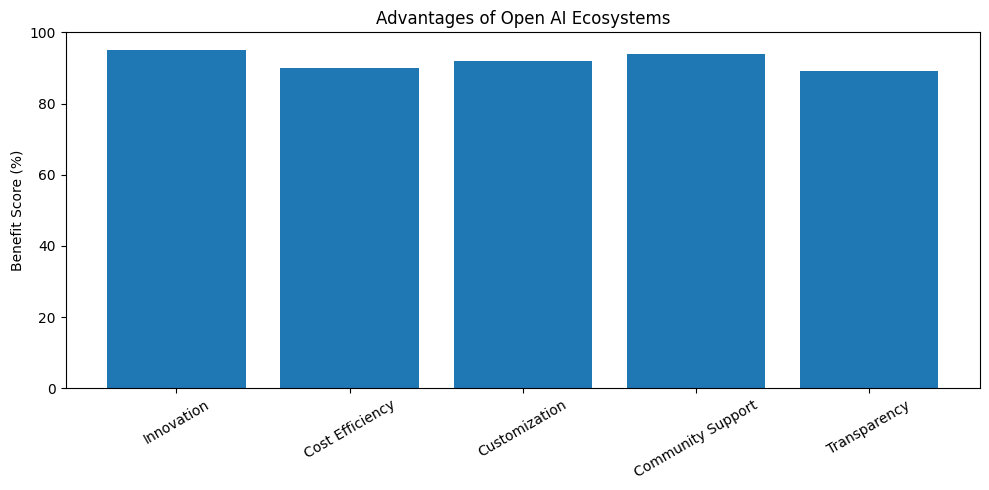
Open AI ecosystems offer significant advantages by encouraging collaboration, accessibility, and rapid innovation across industries. Unlike closed systems that restrict access to proprietary tools and technologies, open AI platforms allow developers, researchers, startups, and enterprises to freely use, modify, and improve AI models and frameworks.
One of the biggest benefits is accelerated innovation. Open-source communities continuously contribute improvements, updates, and new features, allowing AI technologies to evolve faster. Developers worldwide can share ideas, solve problems collectively, and build on existing advancements rather than starting from scratch.
Cost efficiency is another major advantage. Open AI tools reduce expensive licensing fees, making advanced technologies more accessible to startups, educational institutions, and small businesses. This democratization of AI enables wider participation and drives broader technological growth.
Open ecosystems also offer greater customization and flexibility. Organizations can tailor models to their unique needs, industries, or customer demands without depending solely on a vendor’s limitations. This is particularly valuable for businesses seeking specialized solutions.
Additionally, open AI promotes transparency and trust. Since the code and methodologies are publicly accessible, users can inspect algorithms, identify biases, and ensure ethical AI practices more effectively.
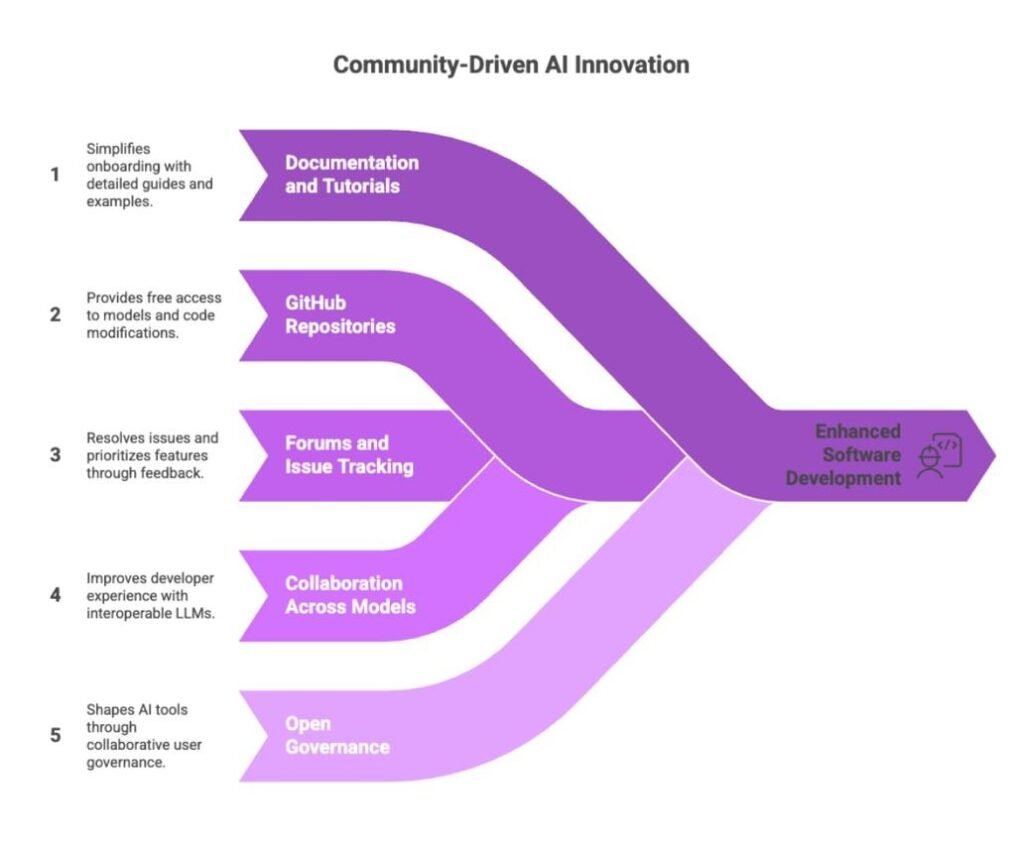
The strong community support behind open ecosystems provides valuable resources, tutorials, troubleshooting, and shared knowledge, making adoption easier for newcomers.
Overall, open AI ecosystems empower innovation, lower barriers, encourage ethical development, and foster global collaboration—making them a powerful driver of future technological progress.

Benefits of Closed AI Ecosystems
Closed AI ecosystems provide businesses and organizations with a highly controlled, secure, and optimized environment for deploying artificial intelligence solutions. Unlike open ecosystems, where tools and models are publicly accessible, closed AI platforms are managed by private companies that maintain ownership over their technology, infrastructure, and development processes.
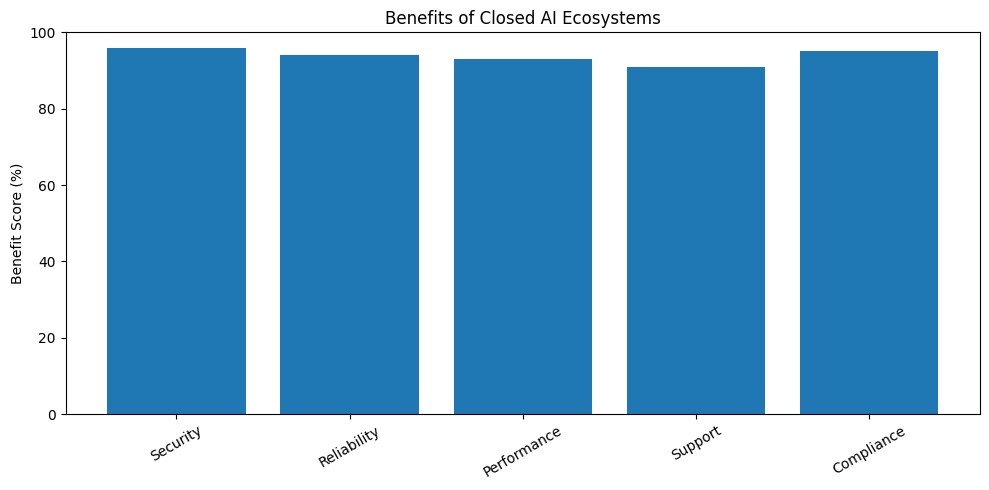
One of the primary benefits of closed AI ecosystems is enhanced security. Organizations operating in sectors such as finance, healthcare, defense, and enterprise services often require strict protection of sensitive data. Closed systems offer tighter access controls, proprietary safeguards, and secure deployment environments, reducing the risk of data breaches and unauthorized modifications.
Reliability and consistent performance are also major advantages. Since proprietary AI providers manage updates, infrastructure, and optimization internally, users typically experience more stable operations, professional maintenance, and dedicated customer support. This can be especially valuable for businesses that depend on AI for mission-critical operations.
Another important benefit is regulatory compliance. Closed ecosystems often align their systems with industry regulations, legal standards, and enterprise governance requirements. This makes them more suitable for organizations that must meet strict compliance obligations.
Closed AI systems also deliver premium support services, including technical assistance, troubleshooting, and customized enterprise solutions. Businesses can often integrate these platforms seamlessly into their workflows without needing extensive in-house AI expertise.
Additionally, proprietary ecosystems often focus on performance optimization, ensuring models are fine-tuned for speed, scalability, and specialized business use cases.
While closed ecosystems may limit customization compared to open-source alternatives, they provide a polished, dependable, and secure framework that appeals to large organizations seeking efficiency and reduced operational risk.
In summary, closed AI ecosystems excel in security, reliability, compliance, and enterprise-level support—making them an ideal choice for businesses prioritizing control, performance, and long-term operational stability.
Top Companies Leading Open vs. Closed AI in 2026
In 2026, the artificial intelligence industry is increasingly divided between open AI ecosystems, which emphasize accessibility and collaboration, and closed AI ecosystems, which prioritize proprietary innovation, security, and enterprise control.
Leaders in Open AI Ecosystems
Several companies are driving open or open-weight AI innovation:
- Meta (Llama series): Meta remains a dominant force through its Llama family, providing powerful open-weight large language models that developers can customize and deploy widely.
- Hugging Face: Often called the “GitHub of AI,” Hugging Face has become a critical hub for open-source models, datasets, and developer collaboration.
- Mistral AI: Known for efficient open-weight models, Mistral continues to expand Europe’s role in AI accessibility.
- DeepSeek and Qwen (Alibaba): Emerging strongly in global open-model competition, particularly in multilingual and cost-efficient deployments.
Leaders in Closed AI Ecosystems
Closed AI continues to be dominated by highly capitalized enterprises:
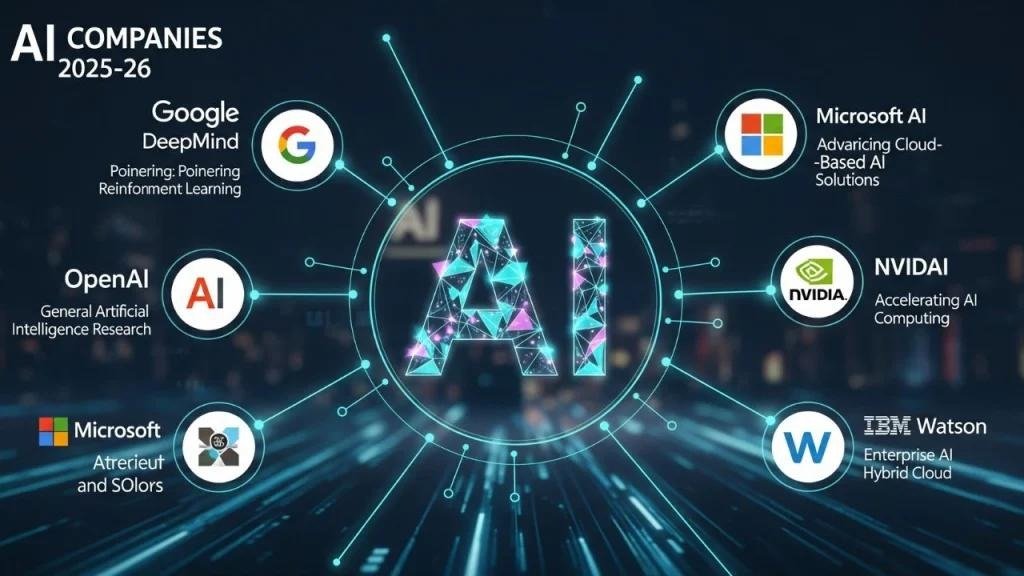
- OpenAI: With ChatGPT and enterprise integrations, OpenAI remains a major proprietary leader despite growing competition.
- Google DeepMind: Through Gemini and enterprise AI solutions, Google combines advanced research with closed commercial deployment.
- Anthropic: Claude’s strong enterprise adoption and safety focus have made Anthropic one of the fastest-rising proprietary AI providers.
- Microsoft: Through Azure AI and deep partnerships, Microsoft remains central to enterprise AI infrastructure.
Industry Trends
Open ecosystems are excelling in developer adoption, customization, and global experimentation, while closed ecosystems dominate premium enterprise services, reliability, and large-scale business deployment.
As AI competition intensifies, 2026 is shaping up as a pivotal year where organizations must decide whether openness, flexibility, and lower costs outweigh the security, polish, and support of proprietary systems.
Graph: Top AI Companies by Ecosystem Leadership in 2026
Cost Comparison: Open-Source AI vs Proprietary AI Tools
Artificial Intelligence (AI) has become a critical technology for businesses, startups, researchers, and developers. However, one of the biggest decisions organizations face is whether to adopt open-source AI tools or proprietary AI solutions. The cost difference between these two approaches can significantly impact long-term business strategy, scalability, and operational efficiency.
Open-source AI refers to models and frameworks whose source code is publicly available and can be modified or self-hosted. Popular examples include Meta’s Llama models and Mistral AI tools. Proprietary AI tools, on the other hand, are commercial systems controlled by companies such as OpenAI, Anthropic, and Google. These are usually accessed through APIs or subscription-based platforms. The cost comparison between these options goes beyond licensing fees and includes infrastructure, maintenance, customization, scalability, and hidden operational expenses.
Initial Setup Costs
One of the major advantages of open-source AI is the low entry cost. Most open-source models are free to download and use without licensing fees. Organizations can deploy these systems on their own servers or cloud infrastructure. This makes open-source AI highly attractive for startups and research institutions with limited budgets. However, although there are no direct licensing costs, companies still need skilled engineers, cloud infrastructure, and GPU resources to run and maintain the models effectively.
In contrast, proprietary AI tools usually require subscription fees or pay-per-use pricing. Services such as GPT-based APIs or enterprise AI platforms charge users based on tokens, API calls, or monthly usage. While this may appear expensive initially, proprietary systems often eliminate the need for complex infrastructure management because the vendor handles hosting, updates, and optimization. This reduces technical setup complexity for organizations without specialized AI teams.
Infrastructure and Maintenance Costs
Infrastructure costs create one of the largest financial differences between open-source and proprietary AI systems. Open-source AI often requires powerful GPUs, large storage systems, and continuous server management. Training or fine-tuning large models can demand expensive hardware such as NVIDIA H100 GPUs, which significantly increases operational expenses. Additionally, companies must employ machine learning engineers and DevOps teams to maintain the system.
Proprietary AI solutions reduce infrastructure responsibilities because the vendor hosts and maintains the model. Businesses simply connect through APIs or cloud dashboards. This lowers maintenance costs and reduces the need for specialized staff. However, ongoing subscription or token usage fees can become expensive over time, especially for high-volume enterprise applications. Organizations with millions of AI queries per month may face rapidly increasing operational costs.
Customization and Flexibility Costs
Open-source AI provides unmatched customization capabilities. Businesses can modify model architecture, retrain systems using proprietary datasets, and integrate AI into internal workflows. This flexibility is valuable for industries such as healthcare, banking, and government where compliance and data privacy are critical. However, customization requires technical expertise and additional development costs.
Proprietary AI tools offer limited customization because users cannot access the underlying source code or training methods. Companies rely heavily on vendor-provided features and updates. Although this reduces development complexity, it may create vendor lock-in, where organizations become dependent on a single provider’s pricing and ecosystem. Over time, switching costs can become very high.
Long-Term Financial Impact
From a long-term perspective, open-source AI can become more cost-efficient for large organizations. Once infrastructure is established, the marginal cost of running additional AI tasks decreases significantly. Some studies suggest that open-source AI models can reduce operational costs by up to 84% compared to proprietary alternatives in large-scale deployments.
Moreover, companies using open-source AI avoid recurring licensing fees and gain full control over their systems. Businesses with strong engineering teams may achieve substantial savings over several years. For example, companies like Pinterest reportedly reduced AI deployment costs dramatically by combining open-source and proprietary models strategically.
On the other hand, proprietary AI tools remain attractive for small and medium-sized businesses because they provide fast deployment, technical support, and minimal maintenance requirements. Companies can implement AI solutions quickly without investing heavily in infrastructure or hiring specialized AI engineers. For organizations prioritizing speed and simplicity, proprietary systems may offer better short-term value despite higher recurring fees.
Comparative Cost Overview
| Cost Factor | Open-Source AI | Proprietary AI |
| Licensing Fees | Usually free | Subscription/API-based |
| Infrastructure | High self-hosting costs | Vendor-managed |
| Maintenance | Requires in-house experts | Vendor handles updates |
| Customization | Highly flexible | Limited customization |
| Scalability | Cost-efficient at scale | Expensive with heavy usage |
| Vendor Dependency | Low | High |
| Data Privacy | Greater control | Shared with vendor systems |
Suggested Graph: Cost Trend Over Time
Cost
^
| Proprietary AI
| /
| /
| /
| /
| Open-Source AI
| /———–
| /
|_____/__________________> Time
Explanation:
- Proprietary AI starts with lower setup costs but increases steadily due to recurring API and subscription fees.
- Open-source AI has higher initial infrastructure costs but becomes more economical over time.
Which AI Ecosystem Is Better for Startups, Developers & Enterprises?
Choosing between open-source AI and proprietary AI ecosystems has become one of the most important technology decisions for businesses and developers. As artificial intelligence rapidly transforms industries, organizations must decide whether they should rely on flexible community-driven ecosystems or commercially managed AI platforms. The answer depends on the organization’s size, technical expertise, budget, scalability needs, and long-term goals.
Open-source AI ecosystems include tools, frameworks, and models that are publicly accessible and customizable. Examples include TensorFlow, PyTorch, Hugging Face, and Meta’s Llama models. Proprietary AI ecosystems are commercial platforms controlled by companies such as OpenAI, Google, Microsoft, and Anthropic. These platforms usually provide AI through APIs, cloud services, and subscription models. Both ecosystems offer unique advantages, but their suitability varies for startups, developers, and enterprises.
AI Ecosystems for Startups
For startups, speed, affordability, and flexibility are critical factors. Open-source AI ecosystems are highly attractive because they reduce licensing costs and provide access to advanced AI technologies without requiring expensive subscriptions. Startups can customize models, experiment freely, and build innovative solutions without being locked into a vendor’s ecosystem. This flexibility encourages rapid innovation and product differentiation.
However, open-source AI also comes with challenges. Startups often lack the engineering resources required to manage infrastructure, optimize models, and maintain AI systems. Training and hosting open-source models may require expensive GPU infrastructure and specialized expertise. This can increase operational complexity for small teams.
Proprietary AI platforms are attractive to startups because they simplify deployment. Services from companies like OpenAI and Google allow startups to integrate AI features quickly through APIs. This reduces development time and eliminates infrastructure management responsibilities. Proprietary ecosystems also provide technical support, security updates, and scalability. Startups focused on launching products quickly may benefit more from proprietary AI during early growth stages.
Many startups now adopt a hybrid strategy: using proprietary APIs for rapid deployment while experimenting with open-source models for long-term cost optimization and customization.
AI Ecosystems for Developers
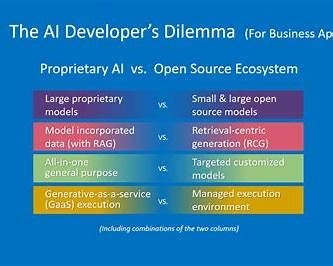
Developers often prioritize flexibility, transparency, experimentation, and community collaboration. Open-source AI ecosystems are particularly attractive because they provide direct access to source code, model architectures, and community contributions. Developers can fine-tune models, modify algorithms, and integrate AI into custom applications without restrictions. Open-source ecosystems also foster innovation through large collaborative communities.
Frameworks like TensorFlow and PyTorch have become industry standards because they offer extensive libraries, tutorials, and research support. Developers can learn faster, contribute improvements, and adapt AI systems for unique use cases. Transparency is another key advantage. Open-source AI allows developers to inspect how models function, which is important for debugging, ethical AI practices, and bias detection.
Despite these advantages, open-source AI can require significant effort. Developers may spend time configuring environments, managing dependencies, and troubleshooting compatibility issues. Documentation quality may vary, and there is often no dedicated customer support.
Proprietary AI ecosystems simplify development workflows by offering pre-built APIs, managed cloud environments, and integrated developer tools. Platforms like OpenAI’s GPT APIs or Google Vertex AI reduce setup complexity and accelerate implementation. Developers can focus on building applications rather than maintaining infrastructure. However, proprietary ecosystems limit customization and may restrict access to model internals. This can hinder experimentation and create dependency on vendor ecosystems.
For independent developers and researchers, open-source AI generally offers greater creative freedom. For developers working on commercial applications with strict deadlines, proprietary AI may provide better productivity and reliability.
AI Ecosystems for Enterprises
Large enterprises typically prioritize scalability, security, governance, compliance, and reliability. Proprietary AI ecosystems often align well with these requirements because vendors provide enterprise-grade support, service-level agreements, and managed infrastructure. Companies like Microsoft, Google, and OpenAI offer integrated AI platforms that connect with existing enterprise software ecosystems. This simplifies deployment across large organizations.
Proprietary AI also reduces operational risk because vendors handle updates, optimization, monitoring, and cybersecurity. Enterprises operating in regulated industries such as healthcare, banking, and government often value the reliability and compliance features offered by commercial AI providers.
However, enterprises are increasingly adopting open-source AI due to concerns about vendor lock-in, rising subscription costs, and data privacy. Open-source ecosystems allow organizations to deploy AI models on-premises or in private cloud environments, giving them greater control over sensitive data. Enterprises can customize AI systems according to industry-specific needs and compliance requirements.
A growing trend among enterprises is the adoption of hybrid AI ecosystems. Organizations combine proprietary AI for productivity tools and customer-facing applications while using open-source AI for internal systems, research, and customized workflows. This balanced approach helps enterprises optimize costs, maintain flexibility, and reduce dependency on a single vendor.
Comparative Overview
| Factor | Open-Source AI | Proprietary AI |
| Cost | Lower licensing costs | Subscription/API costs |
| Customization | Highly customizable | Limited customization |
| Ease of Use | Requires expertise | Beginner-friendly |
| Infrastructure | Self-managed | Vendor-managed |
| Transparency | High | Limited |
| Community Support | Strong developer communities | Dedicated enterprise support |
| Scalability | Flexible but complex | Easy enterprise scaling |
| Vendor Lock-in | Low | High |
Suggested Graph: Ecosystem Preference by User Type
Preference Level
^
| Enterprises
| /\
| / \
| / \
| Developers —- Open Source
| /
| /
| Startups –/—— Proprietary
|
|__________________________________> AI Ecosystem
Graph Explanation:
- Developers strongly prefer open-source ecosystems for flexibility and experimentation.
- Startups often balance between proprietary convenience and open-source affordability.
- Enterprises increasingly adopt hybrid ecosystems depending on security and scalability needs.