
The software development industry is experiencing its biggest transformation in decades. Until recently, developers spent most of their time writing code line by line, debugging applications, and maintaining software. In 2026, however, Artificial Intelligence has changed the way software is built. AI coding assistants, autonomous AI agents, and low-code platforms are automating repetitive tasks, allowing engineers to focus on solving business problems rather than simply writing code.
This shift has created a new role known as the AI Orchestrator—a professional who coordinates multiple AI systems, verifies their outputs, integrates tools, and ensures software is reliable, secure, and aligned with business goals. Instead of replacing developers, AI is redefining what makes a great software engineer.
What is an AI Orchestrator?
An AI Orchestrator is a technology professional who manages and coordinates multiple AI tools and autonomous agents to complete complex software development tasks. Rather than writing every function manually, they design workflows where AI handles coding, testing, documentation, deployment, and monitoring under human supervision.
An AI Orchestrator combines technical expertise with strategic thinking by:
- Designing AI-powered development workflows
- Assigning tasks to specialised AI agents
- Reviewing and validating AI-generated code
- Integrating APIs, cloud platforms, and databases
- Monitoring security, compliance, and performance
- Optimising AI outputs for business requirements
Think of an AI Orchestrator as the project manager, architect, and quality controller for an AI-powered software development team.
Traditional Developer vs AI Orchestrator
| Traditional Software Developer | AI Orchestrator |
| Writes code manually | Directs AI to generate code |
| Fixes bugs line by line | Uses AI for debugging and optimisation |
| Works on one task at a time | Coordinates multiple AI agents simultaneously |
| Focuses on implementation | Focuses on architecture and strategy |
| Writes documentation manually | Generates documentation using AI |
| Performs repetitive coding | Solves complex business problems |
The future developer spends less time typing code and more time making critical technical decisions.
Why Companies Are Hiring AI-First Engineers
Organisations across industries are adopting AI-powered development because it significantly improves productivity and accelerates software delivery.
Key reasons include:
- Faster Development: AI generates boilerplate code, reducing project timelines.
- Higher Productivity: Developers manage multiple AI agents instead of completing repetitive tasks manually.
- Lower Costs: Automation reduces development and maintenance expenses.
- Improved Software Quality: AI assists with testing, bug detection, and code optimisation.
- Rapid Innovation: Teams can prototype and launch products much faster.
Companies are now looking for engineers who know how to collaborate with AI, not compete against it.
Skills Every Future AI Orchestrator Needs
Success in the AI-first era requires more than programming knowledge. The most valuable professionals combine technical expertise with problem-solving and communication skills.
Essential skills include:
- Prompt Engineering
- Python Programming
- AI Agent Development
- Cloud Computing (AWS, Azure, Google Cloud)
- API Integration
- Large Language Models (LLMs)
- Data Analysis
- Cybersecurity Fundamentals
- System Design
- Critical Thinking and Business Understanding
Developers who continuously upgrade these skills will remain highly valuable in the evolving job market.
Are Developers Becoming Obsolete?
The short answer is no.
AI excels at generating code, suggesting improvements, and automating repetitive tasks. However, it cannot fully understand business strategy, customer requirements, ethical considerations, or long-term system architecture without human guidance.
Developers are moving from being code writers to becoming:
- AI Architects
- Solution Designers
- Automation Engineers
- Product Innovators
- AI Workflow Managers
The future belongs to professionals who know how to use AI effectively, not those who ignore it.
Career Opportunities in the AI Era
As businesses embrace AI-driven software development, several new career paths are emerging:
- AI Orchestrator
- AI Solutions Engineer
- Prompt Engineer
- AI Product Manager
- Machine Learning Operations (MLOps) Engineer
- AI Automation Consultant
- AI Systems Architect
- Generative AI Developer
These roles offer exciting opportunities for students and professionals willing to adapt to the changing technology landscape.
Future Outlook
Experts predict that software development will increasingly involve collaboration between humans and AI agents. Developers will oversee intelligent systems capable of generating code, testing applications, fixing bugs, and deploying software automatically.
Rather than replacing engineers, AI will eliminate repetitive work and allow professionals to focus on creativity, innovation, and strategic decision-making. The most successful software engineers of the future will be those who can combine programming knowledge with AI orchestration skills.
Top 10 Skills Every Indian Student Needs to Succeed in the Agentic AI Era
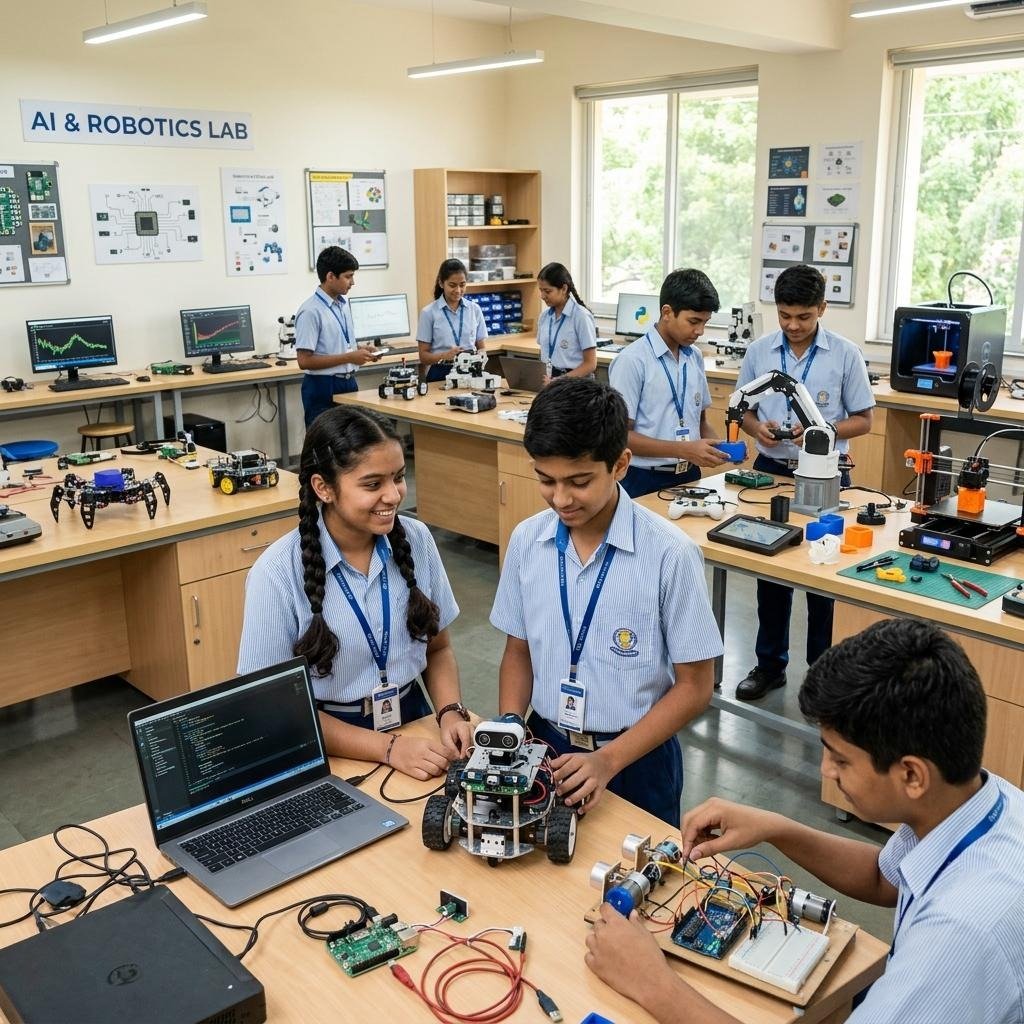
Artificial Intelligence is no longer just a tool—it is becoming a collaborative partner in the workplace. The rise of Agentic AI, where AI agents can plan, reason, and perform tasks independently, is transforming industries such as software development, healthcare, finance, manufacturing, and education. For Indian students, this shift presents exciting career opportunities, but success requires more than traditional coding skills. Here are the top 10 skills every student should develop to stay competitive in the AI-driven job market.
1. Prompt Engineering
Knowing how to communicate effectively with AI models is becoming a core skill. Well-crafted prompts produce better code, content, and business solutions while improving productivity.
2. AI Agent Development
Students should learn how AI agents work, interact with APIs, and automate workflows. Building AI-powered assistants is becoming a valuable industry skill.
3. Python & APIs
Python remains the leading programming language for AI, automation, and machine learning. Understanding APIs helps developers connect AI tools with real-world applications.
4. Cloud Computing
Platforms like AWS, Microsoft Azure, and Google Cloud power modern AI applications. Cloud skills enable students to build scalable AI solutions.
5. Data Analysis
AI is only as effective as the data it uses. Learning SQL, Excel, Power BI, or Python libraries helps students extract meaningful insights and make informed decisions.
6. Automation
Businesses are automating repetitive tasks using AI and workflow tools. Learning automation improves efficiency and increases career opportunities.
7. Critical Thinking
AI generates answers quickly, but humans must evaluate accuracy, solve complex problems, and make strategic decisions. Critical thinking remains one of the most valuable future skills.
8. AI Ethics
Responsible AI development requires understanding privacy, fairness, security, and bias. Ethical AI professionals are increasingly in demand.
9. Communication Skills
The ability to explain technical ideas, collaborate with teams, and present AI solutions clearly is essential for career growth.
10. Continuous Learning
AI evolves rapidly. Students who regularly learn new tools, frameworks, and technologies will remain relevant throughout their careers.
Coding to Prompting: How AI is Transforming Software Development in 2026
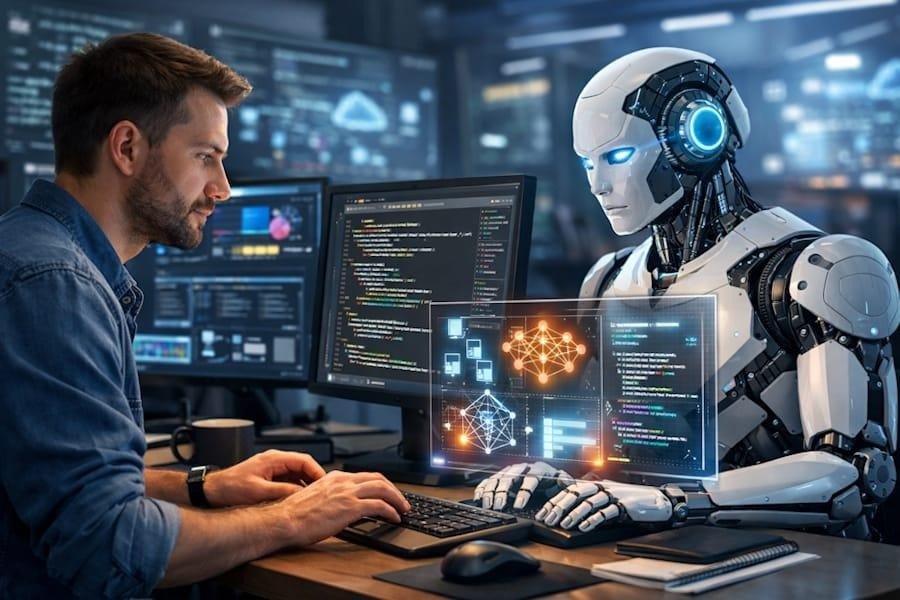
Software development has entered a new era. In 2026, developers are spending less time writing every line of code manually and more time guiding AI to build applications faster and smarter. This shift from coding to prompting is transforming how software is designed, tested, and deployed.
Instead of creating everything from scratch, developers now provide clear instructions—or prompts—to AI coding assistants. These tools generate code, suggest improvements, detect bugs, write documentation, and even automate testing. As a result, software teams can deliver products in days instead of weeks.
Evolution from Manual Coding to AI-Assisted Development
Traditional software development required developers to write, debug, and optimise every feature manually. Today, AI handles many repetitive coding tasks, allowing engineers to focus on architecture, business logic, and user experience.
This evolution doesn’t eliminate programming skills—it enhances them. Developers who understand both coding and AI prompting can build better software more efficiently.
AI Coding Assistants
Modern AI coding assistants act as intelligent programming partners. They can:
- Generate code from natural language prompts
- Suggest bug fixes and optimisations
- Write unit tests automatically
- Create technical documentation
- Explain complex code snippets
- Accelerate debugging and refactoring
These tools significantly improve developer productivity while reducing repetitive work.
Prompt-Based Software Creation
Prompt-based development allows engineers to describe an application’s functionality in plain language. AI then converts those instructions into working code, UI components, APIs, or database structures.
For example:
Prompt: “Create a responsive e-commerce homepage with product cards, search functionality, and user login.”
The AI generates the initial frontend structure, which developers can review, customise, and deploy.
Real-World Examples
AI-assisted development is already being used across industries:
- Startups rapidly build Minimum Viable Products (MVPs).
- IT companies automate code reviews and testing.
- Enterprises generate APIs and documentation with AI.
- Educational platforms help students learn programming through AI-assisted coding.
These applications reduce development time while improving consistency and collaboration.
Benefits and Limitations
Benefits
- Faster software development
- Higher developer productivity
- Reduced coding errors
- Improved documentation
- Faster prototyping and deployment
Limitations
- AI-generated code still requires human review.
- Security vulnerabilities may go unnoticed without testing.
- Complex business logic often needs experienced developers.
- AI depends on clear prompts and quality input.
Evolution of Software Development (Illustrative)
Shift from Manual Coding to AI-Assisted Development
Illustrative trend showing the growing role of AI in software development between 2023 and 2028.
0%25%50%75%100%202320242025202620272028
Note: The chart above is an illustrative visualisation of the increasing adoption of AI-assisted software development and prompt-based workflows. It is intended for educational purposes rather than representing a specific industry survey.
Will AI Replace Developers? The Truth Behind Self-Assembling Software

Artificial Intelligence is changing software development faster than ever before. Modern AI tools can generate code, create user interfaces, write documentation, detect bugs, and even deploy applications with minimal human input. This rapid progress has sparked an important question: Will AI replace software developers?
The answer is not entirely. AI is transforming the way software is built, but human developers remain essential for creativity, decision-making, system architecture, and solving complex business problems. Rather than replacing developers, AI is reshaping their responsibilities.
What is Self-Assembling Software?
Self-assembling software refers to applications that can be generated automatically using AI. Instead of manually writing thousands of lines of code, developers describe the application’s requirements using natural language prompts. AI then assembles the frontend, backend, database structure, APIs, documentation, and even testing workflows.
For example, a developer can request:
“Build an online food delivery application with user authentication, payment integration, restaurant listings, and order tracking.”
An advanced AI system can generate the initial application structure within minutes, allowing developers to focus on refinement and customisation.
Can AI Build Complete Applications?
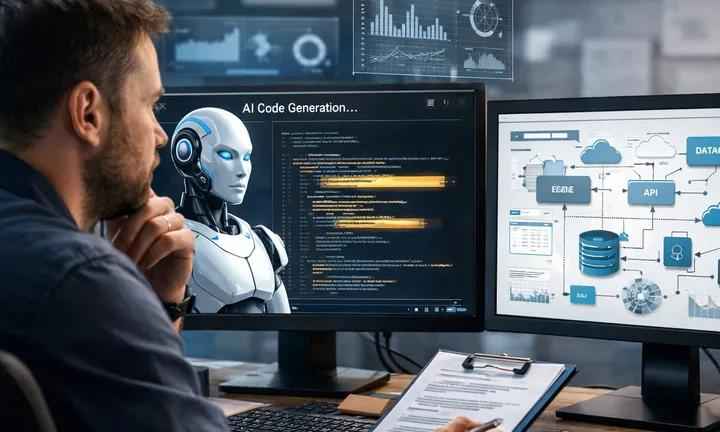
Yes—but only to a certain extent.
Today’s AI tools are capable of:
- Generating website layouts
- Writing backend APIs
- Creating database schemas
- Producing documentation
- Writing unit tests
- Suggesting bug fixes
- Building simple mobile applications
However, large enterprise applications still require experienced developers to design scalable architectures, optimise performance, integrate business processes, and ensure security and compliance. AI accelerates development but does not eliminate the need for engineering expertise.
Jobs AI Can Automate
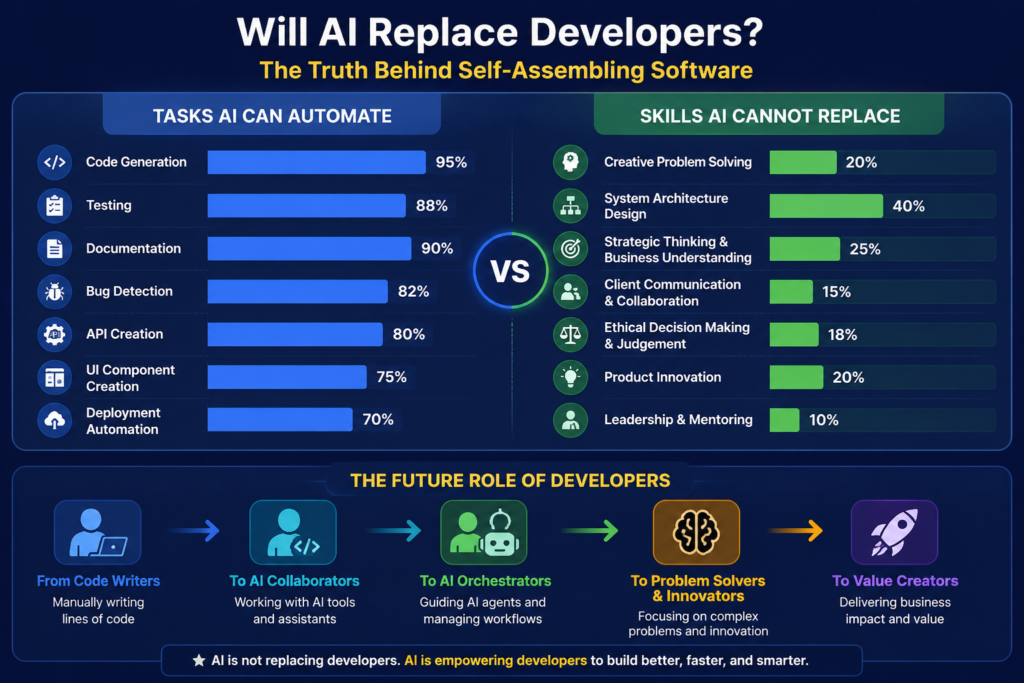
AI is particularly effective at handling repetitive and time-consuming tasks, including:
- Boilerplate code generation
- Code completion
- Software testing
- Documentation writing
- Debugging common errors
- API generation
- UI component creation
- Basic DevOps automation
These tasks become faster and more efficient with AI assistance, enabling developers to concentrate on innovation rather than repetitive coding.
Skills AI Cannot Replace
While AI excels at automation, several human abilities remain difficult to replicate:
- Creative problem-solving
- System architecture design
- Strategic business thinking
- Client communication
- Team collaboration
- Ethical decision-making
- Product innovation
- Leadership and mentoring
These skills require human judgment, empathy, and contextual understanding that AI cannot fully provide.
The Future Role of Developers
The role of software engineers is evolving from writing every line of code to managing intelligent development systems. Future developers will spend more time:
- Designing software architecture
- Creating effective AI prompts
- Supervising AI-generated code
- Integrating AI agents into workflows
- Ensuring cybersecurity and compliance
- Delivering business value through technology
Developers are becoming AI Orchestrators who guide intelligent systems rather than performing every technical task manually.
Human Skills vs AI Automation in Software Development (Illustrative)
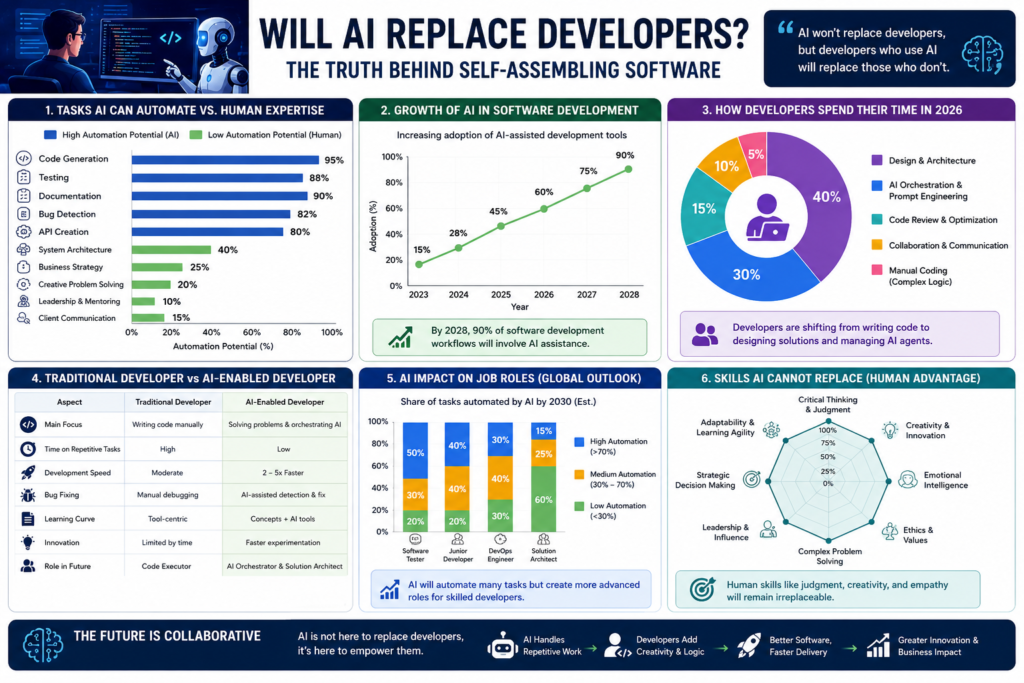
Tasks Most Likely to Be AI-Automated vs Human-Led
Illustrative comparison of automation potential across common software development activities.
0%25%50%75%100%Code GenerationTestingDocumentationBug DetectionAPI CreationSystem ArchitectureBusiness StrategyCreative Problem…Leadership Client Communication
Note: This chart is an illustrative representation of how AI may impact different software development tasks. It highlights that repetitive technical work is more easily automated, while strategic, creative, and interpersonal responsibilities continue to rely heavily on human expertise.