
Introduction to Multi-Skilling in IT

In today’s rapidly evolving digital era, the Information Technology (IT) industry has become one of the most dynamic and competitive fields in the world. Technologies are constantly changing, new tools and frameworks are emerging, and businesses are continuously looking for professionals who can adapt quickly to these changes. In such an environment, relying on a single skill is no longer sufficient. This is where the concept of multi-skilling in IT comes into play.
Multi-skilling refers to the ability of an individual to acquire and apply knowledge across multiple domains rather than being limited to just one area of expertise. In the context of IT, it means having a combination of skills such as programming, database management, cloud computing, cybersecurity, data analysis, UI/UX design, and even soft skills like communication and problem-solving. A multi-skilled professional is not only technically sound but also capable of understanding how different technologies work together to build efficient and scalable solutions.
The need for multi-skilling has grown significantly due to the increasing complexity of IT projects. Modern applications and systems are no longer built using a single technology stack. For example, developing a web application may require knowledge of front-end technologies like HTML, CSS, and JavaScript, back-end programming languages such as Python, Java, or Node.js, database management systems, and cloud platforms for deployment. A professional who understands multiple aspects of this process can contribute more effectively and collaborate better with different teams.
Moreover, multi-skilling enhances an individual’s ability to solve problems creatively and efficiently. When a person is exposed to various technologies and domains, they develop a broader perspective, which helps them approach challenges from different angles. This not only improves decision-making but also leads to innovative solutions that might not be possible with a limited skill set. In a field like IT, where problem-solving is a core requirement, this advantage becomes extremely valuable.
Another important factor driving the importance of multi-skilling is the rapid pace of technological advancements. Trends such as Artificial Intelligence (AI), Machine Learning (ML), Cybersecurity, Cloud Computing, and Data Science are continuously reshaping the industry. Professionals who limit themselves to a single skill may find it difficult to keep up with these changes. On the other hand, those who continuously learn and expand their skill set are better equipped to adapt and grow with the industry.
Multi-skilling also plays a crucial role in career growth and job security. Employers today prefer candidates who can handle multiple responsibilities and contribute to different areas of a project. This not only increases employability but also opens up a wider range of career opportunities, including roles in full-stack development, DevOps, system architecture, and technical consulting. Additionally, multi-skilled professionals are often more resilient during economic uncertainties, as they can switch roles or domains more easily compared to those with a narrow skill set.
Furthermore, the rise of freelancing, remote work, and startup culture has made multi-skilling even more important. Many organizations, especially startups, look for individuals who can wear multiple hats and manage various tasks efficiently. A developer who can also handle basic design, deployment, and client communication becomes a valuable asset in such environments.
However, multi-skilling does not mean mastering everything at once. It is about building a strong foundation in one core area and gradually expanding into related domains. The goal is to become a well-rounded professional who can understand, adapt, and contribute in multiple ways rather than being restricted to a single role.
In conclusion, multi-skilling in IT is no longer just a desirable trait—it has become a necessity. It empowers professionals to stay relevant, enhances their problem-solving abilities, improves career prospects, and prepares them for the ever-changing demands of the industry. As technology continues to advance, the ability to learn and integrate multiple skills will be the key to long-term success in the IT world.
Why the IT Industry Demands Versatile Professionals
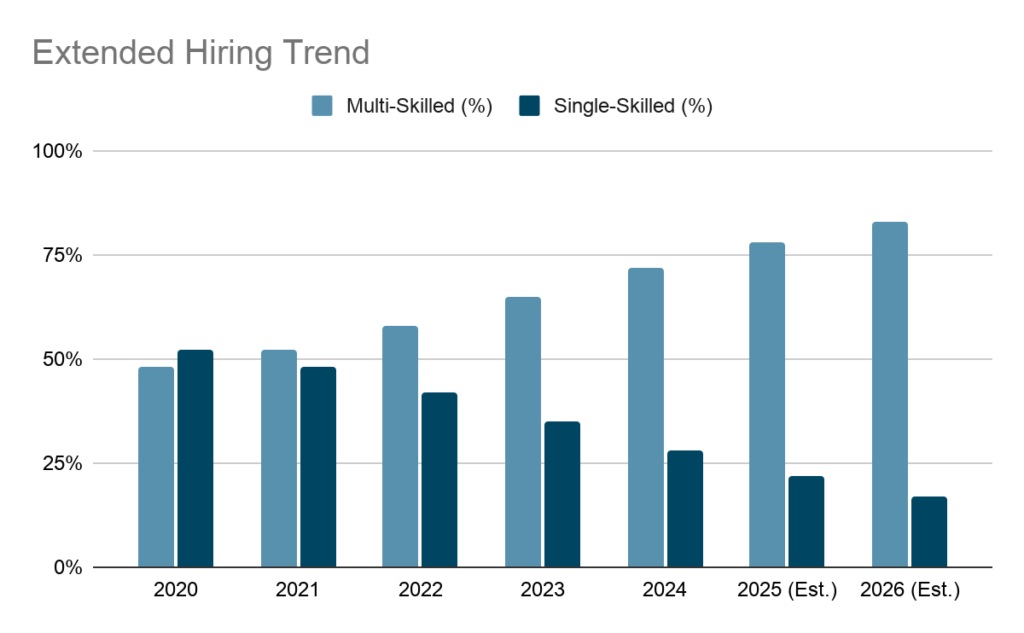
The modern IT industry is evolving at an unprecedented pace, driven by rapid technological advancements, digital transformation, and increasing business demands. In such a fast-moving environment, organizations no longer look for professionals who are limited to a single skill or role. Instead, they seek versatile professionals who can adapt, learn, and contribute across multiple areas. This shift has made versatility one of the most valuable qualities in the IT workforce today.
One of the primary reasons behind this demand is the complex nature of modern IT projects. Today’s applications and systems are built using a combination of technologies, tools, and platforms. For instance, a single project may involve front-end development, back-end logic, database management, cloud deployment, and cybersecurity measures. Companies prefer professionals who have a broader understanding of these components, as it allows for smoother collaboration, faster development, and fewer dependencies on multiple specialists.
Another key factor is the need for agility and adaptability. Technology trends such as Artificial Intelligence, Machine Learning, Cloud Computing, and Cybersecurity are constantly evolving. Businesses must quickly adapt to these changes to stay competitive. Versatile professionals who can learn new tools and technologies quickly help organizations remain flexible and responsive in a rapidly changing market.
Cost efficiency is also a major reason why companies value multi-skilled individuals. Hiring separate specialists for every small task can be expensive, especially for startups and small businesses. A versatile professional who can handle multiple responsibilities—such as coding, testing, deployment, and basic troubleshooting—helps reduce costs while maintaining productivity. This is particularly important in lean teams where resources are limited.
Furthermore, versatile professionals contribute significantly to better problem-solving and innovation. When individuals have knowledge of multiple domains, they can approach challenges from different perspectives. This cross-functional understanding often leads to creative and effective solutions. It also enables professionals to identify potential issues early and resolve them efficiently, improving the overall quality of projects.
The rise of remote work and global teams has also increased the demand for versatile professionals. In distributed work environments, individuals are often expected to take ownership of multiple tasks and communicate effectively across different functions. Professionals who can manage diverse responsibilities independently are more valuable in such setups.
In addition, businesses today focus heavily on end-to-end project delivery. They prefer employees who can understand the entire lifecycle of a project—from planning and development to deployment and maintenance. Versatile professionals bridge the gap between different stages of development, ensuring better coordination and smoother execution.
Lastly, the competitive job market plays a crucial role in this demand. With a large number of IT professionals entering the field, having multiple skills gives candidates a significant edge. Employers are more likely to choose individuals who can offer more value and flexibility compared to those with a narrow specialization.
In conclusion, the IT industry demands versatile professionals because they bring adaptability, efficiency, innovation, and broader expertise to the table. As technology continues to advance and business needs become more complex, the ability to work across multiple domains will remain a critical factor for success in the IT world.
The Rise of Full-Stack Developers
In recent years, the demand for full-stack developers has grown rapidly, making them one of the most sought-after professionals in the IT industry. A full-stack developer is someone who has the ability to work on both the front-end (client-side) and back-end (server-side) of an application. This means they can handle everything from designing user interfaces to managing databases and server logic, making them highly valuable in today’s technology-driven world.
The rise of full-stack developers is largely driven by the changing needs of modern businesses. Companies now prefer professionals who can manage multiple aspects of a project rather than relying on separate teams for front-end and back-end development. This approach not only reduces costs but also improves efficiency and speeds up the development process. Startups, in particular, benefit greatly from full-stack developers, as they often operate with limited resources and require individuals who can take on multiple responsibilities.
Another important reason for this trend is the evolution of web technologies and frameworks. Tools like JavaScript frameworks (React, Angular, Vue), along with back-end technologies such as Node.js, Python, and databases like MongoDB or MySQL, have made it easier for developers to learn and work across the entire development stack. The availability of such integrated technologies has simplified the process of becoming a full-stack developer.
Full-stack developers also play a crucial role in end-to-end project development. Since they understand the complete workflow of an application, they can ensure better coordination between different stages of development. This leads to fewer communication gaps, faster problem-solving, and more efficient project execution. Their ability to switch between different tasks makes them highly adaptable and productive in dynamic work environments.
Moreover, the rise of Agile and DevOps practices has further increased the demand for full-stack developers. In these methodologies, teams are expected to collaborate closely and deliver results quickly. Full-stack developers fit perfectly into this model because they can contribute to multiple stages of development, testing, and deployment, ensuring smoother and faster delivery cycles.
From a career perspective, becoming a full-stack developer offers excellent growth opportunities. These professionals are in high demand across industries, including startups, tech companies, and large enterprises. Their diverse skill set not only increases employability but also opens doors to roles such as software engineer, technical lead, and even product manager.
However, it is important to note that being a full-stack developer does not mean mastering every technology at an expert level. Instead, it involves having a strong understanding of both front-end and back-end concepts, along with the ability to learn and adapt to new tools as needed. The goal is to be versatile and capable of handling different aspects of development effectively.
In conclusion, the rise of full-stack developers reflects the growing need for multi-skilled, adaptable, and efficient professionals in the IT industry. As technology continues to evolve and businesses seek faster and more cost-effective solutions, full-stack developers will continue to play a key role in shaping the future of software development.
Benefits of Learning Multiple Programming Languages
In the ever-evolving world of Information Technology, programming languages are the foundation of software development. While mastering one language is important, learning multiple programming languages offers a significant advantage in today’s competitive IT landscape. It not only enhances technical expertise but also improves adaptability, problem-solving skills, and career opportunities.
One of the key benefits of learning multiple programming languages is improved problem-solving ability. Different programming languages are designed with unique features and approaches to solving problems. For example, some languages are better suited for web development, while others excel in data analysis, system programming, or artificial intelligence. When a developer is familiar with multiple languages, they can choose the most efficient and suitable tool for a specific task, leading to better and faster solutions.
Another major advantage is greater flexibility and adaptability. The IT industry is constantly changing, with new languages and frameworks emerging regularly. A developer who knows multiple languages can quickly adapt to new technologies and switch between different projects with ease. This flexibility makes professionals more valuable to employers and helps them stay relevant in the industry.
Learning multiple programming languages also leads to a deeper understanding of programming concepts. Many core concepts such as data structures, algorithms, object-oriented programming, and functional programming are common across languages. When developers learn different languages, they gain a broader perspective and a stronger grasp of these fundamental principles. This not only improves coding skills but also makes it easier to learn new languages in the future.
In addition, multi-language proficiency opens up diverse career opportunities. Different industries and roles require different programming languages. For instance, web development may require JavaScript, Python, or PHP, while mobile app development may involve Kotlin or Swift. Data science often relies on Python or R, and system-level programming may require C or C++. By learning multiple languages, professionals can explore various career paths and increase their chances of landing better job opportunities.
Another important benefit is enhanced collaboration and teamwork. In real-world IT projects, teams often work with multiple technologies and languages. A developer who understands more than one language can communicate more effectively with team members, understand different parts of a project, and contribute more efficiently. This cross-functional knowledge improves team productivity and project outcomes.
Moreover, learning multiple programming languages encourages innovation and creativity. Exposure to different programming paradigms and techniques allows developers to think outside the box and come up with unique solutions. It also helps in integrating different technologies to build more powerful and scalable applications.
From a practical perspective, knowing multiple languages can also be beneficial for freelancing and personal projects. Clients often have varied requirements, and having a diverse skill set allows developers to take on a wider range of projects. This not only increases earning potential but also helps in building a strong and versatile portfolio.
However, it is important to approach this learning process strategically. Instead of trying to learn many languages at once, it is better to build a strong foundation in one language and then gradually expand to others based on career goals and industry demand.
In conclusion, learning multiple programming languages is a powerful way to enhance technical skills, improve career prospects, and stay competitive in the IT industry. It equips professionals with the ability to adapt, innovate, and excel in a rapidly changing technological environment, making it a valuable investment for long-term success.
How Multi-Skilling Improves Problem-Solving Ability
In the IT industry, problem-solving is one of the most critical skills a professional can possess. With systems becoming more complex and technologies constantly evolving, the ability to analyze, understand, and resolve issues efficiently is highly valued. This is where multi-skilling plays a powerful role. By gaining knowledge across multiple domains, IT professionals develop a broader perspective that significantly enhances their problem-solving abilities.
One of the main ways multi-skilling improves problem-solving is by providing multiple approaches to a single problem. When an individual is skilled in different technologies or programming languages, they are not limited to one method of solving an issue. Instead, they can evaluate various options and choose the most effective and efficient solution. For example, a developer who understands both front-end and back-end technologies can identify whether a problem originates from the user interface, server logic, or database, leading to quicker and more accurate solutions.
Another important advantage is the development of analytical and critical thinking skills. Exposure to different domains—such as data analysis, cybersecurity, cloud computing, and software development—helps professionals understand how systems interact with each other. This interconnected knowledge allows them to break down complex problems into smaller, manageable parts and analyze each component effectively. As a result, they can identify root causes rather than just addressing surface-level issues.
Multi-skilling also enhances adaptability in problem-solving. In real-world IT scenarios, problems are rarely straightforward and often require a combination of skills to resolve. A multi-skilled professional can quickly switch between different tools, technologies, and approaches depending on the situation. This flexibility is especially valuable in high-pressure environments where quick decision-making is essential.
Furthermore, having knowledge of multiple domains encourages creative thinking and innovation. When individuals are exposed to diverse concepts and techniques, they are more likely to combine ideas from different areas to create unique solutions. For instance, integrating knowledge of machine learning with web development can lead to the creation of intelligent applications that offer personalized user experiences.
Collaboration is another area where multi-skilling contributes to better problem-solving. In team-based projects, professionals often need to work with members from different technical backgrounds. A multi-skilled individual can understand the perspectives of various team members, communicate effectively, and contribute to solving problems collectively. This reduces misunderstandings and leads to faster and more efficient resolution of issues.
Additionally, multi-skilling helps in anticipating and preventing problems. When professionals understand the entire system rather than just one part of it, they can identify potential risks and vulnerabilities early. This proactive approach not only saves time and resources but also improves the overall quality and reliability of the project.
However, it is important to note that multi-skilling does not mean having superficial knowledge of many areas. Instead, it involves building a solid foundation in key domains and continuously expanding that knowledge over time. The goal is to develop a well-rounded skill set that enhances both technical expertise and problem-solving capabilities.
In conclusion, multi-skilling significantly improves problem-solving ability by providing diverse perspectives, enhancing analytical thinking, encouraging creativity, and enabling adaptability. In an industry where challenges are complex and ever-changing, having multiple skills empowers IT professionals to tackle problems more effectively and deliver innovative solutions.
Career Growth Opportunities with Diverse Skills
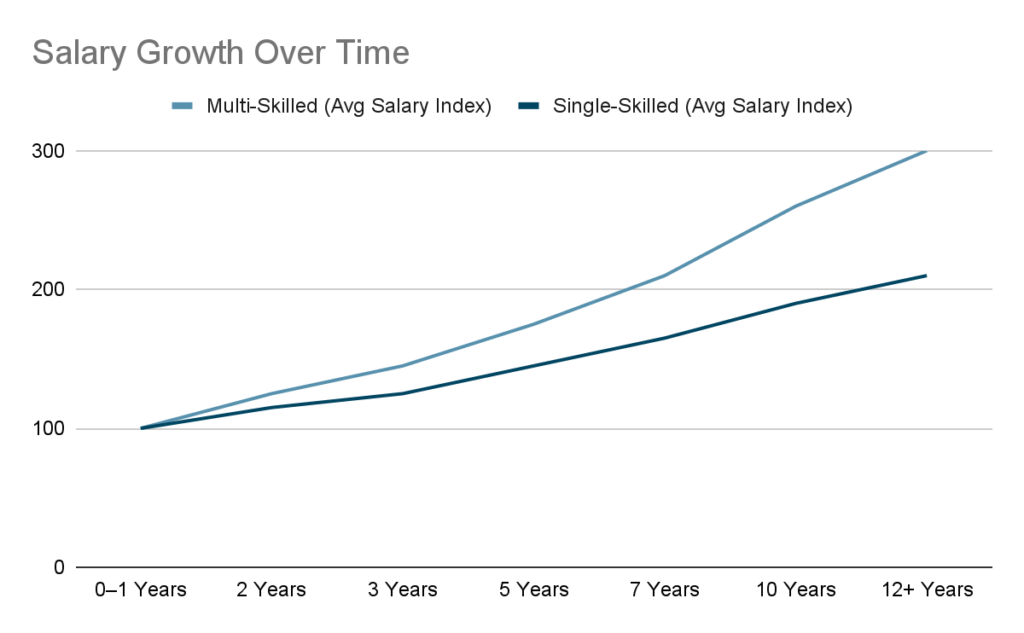
In today’s competitive IT landscape, having expertise in just one area is often not enough to achieve long-term career success. Professionals who develop diverse skill sets—combining multiple technical and non-technical abilities—tend to experience faster and more sustainable career growth. Multi-skilled individuals are better equipped to adapt to changing industry demands, making them highly valuable to employers.
One of the biggest advantages of having diverse skills is increased career opportunities. IT is a vast field that includes areas such as software development, data science, cybersecurity, cloud computing, and more. When professionals acquire skills across different domains, they open doors to a wider range of job roles. For example, someone with knowledge of both programming and data analysis can explore careers in data science, business analytics, or even AI development.
Another key benefit is faster career progression. Employees who can handle multiple responsibilities are often considered for promotions and leadership roles. Organizations prefer individuals who understand different aspects of a project, as they can make better decisions and manage teams more effectively. This makes it easier for multi-skilled professionals to move into roles such as team lead, project manager, or technical architect.
Diverse skills also contribute to higher earning potential. Professionals who bring multiple competencies to the table are often rewarded with better salaries and benefits. Employers are willing to invest more in individuals who can add value in different areas, reduce dependency on multiple specialists, and improve overall productivity.
In addition, having a broad skill set provides greater job security. The IT industry is constantly evolving, and certain technologies may become outdated over time. Professionals who rely on a single skill may find it difficult to stay relevant. However, those with diverse skills can easily transition to new roles or technologies, ensuring stability even during industry changes or economic uncertainties.
Another important aspect is the opportunity for career flexibility and role switching. Multi-skilled professionals are not restricted to a single career path. They can switch between roles such as developer, analyst, consultant, or even entrepreneur, depending on their interests and market demand. This flexibility allows individuals to explore different areas and find the career path that suits them best.
Diverse skills also enhance professional credibility and confidence. When individuals have knowledge across multiple domains, they are better prepared to handle complex tasks and challenges. This not only boosts their confidence but also builds a strong professional reputation, making them more attractive to employers and clients.
Moreover, in the era of freelancing and remote work, having multiple skills creates additional income opportunities. Freelancers who can offer a combination of services—such as web development, UI/UX design, and digital marketing—are more likely to attract clients and secure projects. This diversification of skills leads to greater financial stability and independence.
However, it is important to develop these skills strategically. Instead of trying to learn everything at once, professionals should focus on building a strong foundation in one core area and then gradually expand into related fields. This approach ensures depth as well as breadth of knowledge.
In conclusion, diverse skills play a crucial role in unlocking career growth opportunities in the IT industry. They increase employability, accelerate career progression, enhance earning potential, and provide long-term job security. As the industry continues to evolve, professionals who invest in building a wide range of skills will be better positioned to achieve success and stand out in the competitive job market.
Importance of Combining Technical and Soft Skills
In the modern IT industry, having strong technical knowledge alone is no longer enough to achieve long-term success. While technical skills—such as programming, data analysis, cloud computing, and cybersecurity—form the foundation of an IT career, soft skills like communication, teamwork, adaptability, and problem-solving are equally important. The combination of both creates a well-rounded professional who can not only build solutions but also effectively deliver and manage them.
One of the key reasons for combining technical and soft skills is effective communication. IT professionals often need to explain complex technical concepts to non-technical stakeholders, clients, or team members. Without strong communication skills, even the best technical ideas can fail to make an impact. Being able to clearly present ideas, write documentation, and collaborate with others ensures smoother project execution and better understanding across teams.
Another important aspect is teamwork and collaboration. Most IT projects are not handled by individuals but by teams consisting of developers, designers, testers, and managers. Soft skills such as cooperation, empathy, and active listening help professionals work effectively in such environments. A technically skilled individual who can also collaborate well is far more valuable than someone who works in isolation.
Combining these skills also enhances problem-solving capabilities. Technical skills help in identifying and fixing issues, while soft skills enable professionals to approach problems with patience, creativity, and critical thinking. For example, understanding a client’s requirements accurately requires both technical knowledge and the ability to ask the right questions and interpret feedback.
Leadership is another area where the balance of technical and soft skills becomes essential. As professionals grow in their careers, they often move into roles that require managing teams, making decisions, and guiding projects. Leadership and management skills, such as decision-making, conflict resolution, and motivation, are crucial at this stage. Without these, even highly skilled technical experts may struggle to advance into senior positions.
Moreover, soft skills play a significant role in adaptability and continuous learning. The IT industry is constantly evolving, and professionals must be open to change and willing to learn new technologies. Skills like time management, self-discipline, and a positive attitude help individuals stay productive and keep up with industry trends.
Client interaction is another critical area where this combination proves valuable. IT professionals often work directly with clients to understand requirements, provide updates, and deliver solutions. Strong interpersonal skills help build trust and maintain professional relationships, which can lead to repeat business and long-term opportunities.
Additionally, the integration of technical and soft skills improves career growth and employability. Employers today look for candidates who not only have technical expertise but can also fit into the company culture, communicate effectively, and contribute to team success. Professionals who possess both skill sets stand out in interviews and are more likely to secure better roles and promotions.
However, it is important to develop these skills simultaneously. While technical skills can be learned through practice and training, soft skills require real-world experience, self-awareness, and continuous improvement. Participating in group projects, presentations, and collaborative tasks can help in strengthening these abilities.
In conclusion, combining technical and soft skills is essential for success in the IT industry. This balance enables professionals to not only build effective solutions but also communicate, collaborate, and lead efficiently. As the industry continues to grow and evolve, individuals who master both aspects will have a significant advantage in achieving long-term career success.
Role of Cross-Functional Knowledge in IT Jobs

In today’s dynamic IT environment, professionals are no longer confined to a single role or domain. The increasing complexity of projects and the integration of multiple technologies have made cross-functional knowledge a critical asset. Cross-functional knowledge refers to the understanding of different areas within IT—such as development, testing, deployment, security, data management, and even business processes—beyond one’s core expertise.
One of the primary roles of cross-functional knowledge is to enhance collaboration across teams. IT projects typically involve multiple departments working together, including developers, designers, testers, DevOps engineers, and project managers. When professionals have a basic understanding of each other’s roles and responsibilities, communication becomes smoother, misunderstandings are reduced, and teamwork becomes more efficient. This leads to faster project completion and better outcomes.
Another important aspect is improved problem-solving and troubleshooting. Many technical issues in IT are interconnected and may span across different layers of a system. For example, a performance issue in an application could be related to the code, database, server, or network. A professional with cross-functional knowledge can analyze the problem from multiple angles and identify the root cause more quickly, rather than relying solely on one area of expertise.
Cross-functional knowledge also plays a key role in end-to-end project understanding. Professionals who are aware of the entire lifecycle of a project—from requirement gathering and design to development, testing, deployment, and maintenance—can contribute more effectively at every stage. This holistic view helps in making better decisions, anticipating challenges, and ensuring that all components of the system work seamlessly together.
In addition, it increases flexibility and adaptability in the workplace. Organizations often need employees who can step into different roles when required, especially in fast-paced or resource-constrained environments. A developer with knowledge of testing or deployment processes, for example, can assist in multiple phases of a project, making them more valuable to the organization.
Another significant benefit is better alignment with business goals. IT is not just about technology—it is also about solving business problems. Professionals with cross-functional knowledge, especially those who understand business processes and user requirements, can develop solutions that are more aligned with organizational objectives. This ensures that technology delivers real value rather than just technical functionality.
Cross-functional knowledge also supports career growth and leadership development. As professionals advance in their careers, they are expected to take on broader responsibilities, such as managing teams, overseeing projects, or making strategic decisions. Having knowledge across different domains prepares individuals for such roles by giving them the ability to understand and manage various aspects of a project effectively.
Moreover, in the era of Agile and DevOps practices, cross-functional knowledge has become even more important. These methodologies emphasize collaboration, continuous integration, and shared responsibilities among team members. Professionals who can contribute across different functions fit perfectly into such environments, improving productivity and delivery speed.
However, it is important to maintain a balance. Cross-functional knowledge should complement, not replace, core expertise. Professionals should aim to build strong skills in their primary domain while gradually expanding their understanding of related areas.
In conclusion, cross-functional knowledge plays a vital role in modern IT jobs by improving collaboration, enhancing problem-solving, increasing flexibility, and aligning technical work with business goals. As the IT industry continues to evolve, professionals who can work across multiple domains will be better equipped to succeed and grow in their careers.
Adapting to Rapid Technological Changes
The IT industry is one of the fastest-evolving sectors in the world, where new technologies, tools, and frameworks emerge almost every day. From Artificial Intelligence and Machine Learning to Cloud Computing and Cybersecurity, the pace of innovation is constantly reshaping how businesses operate. In such a dynamic environment, the ability to adapt to rapid technological changes is not just an advantage—it is a necessity for every IT professional.
One of the main reasons adaptation is crucial is the short lifecycle of technologies. Tools and programming languages that are popular today may become outdated in a few years. Professionals who rely only on existing knowledge risk becoming irrelevant in the job market. On the other hand, those who continuously learn and upgrade their skills can stay competitive and take advantage of new opportunities as they arise.
Adapting to change begins with a mindset of continuous learning. IT professionals must be willing to explore new technologies, enroll in courses, attend workshops, and stay updated with industry trends. Online learning platforms, certifications, and hands-on projects play a key role in helping individuals keep their knowledge current. This proactive approach ensures that they are always prepared for upcoming changes in the industry.
Another important factor is flexibility in skill application. As technologies evolve, professionals often need to transition from one tool or framework to another. For example, a developer may need to move from traditional web development to modern frameworks or from on-premise systems to cloud-based solutions. Having a strong foundation in core concepts makes it easier to adapt and apply existing knowledge to new technologies.
Multi-skilling further strengthens the ability to adapt. When individuals have knowledge across multiple domains—such as programming, cloud, data, and security—they can quickly adjust to changing requirements. This versatility allows them to switch roles, work on diverse projects, and remain valuable to organizations even as technologies evolve.
Adapting to technological changes also enhances problem-solving and innovation. New technologies often bring new challenges, and professionals who embrace change are better equipped to find creative solutions. They are more open to experimenting with new tools and approaches, which leads to improved efficiency and innovation in their work.
From an organizational perspective, companies prefer employees who are future-ready and adaptable. Businesses need to adopt new technologies to remain competitive, and they rely on professionals who can support this transformation. Employees who resist change can slow down progress, while those who embrace it contribute to growth and success.
However, adapting to rapid changes can be challenging. It requires time, effort, and the willingness to step out of one’s comfort zone. Professionals may feel overwhelmed by the constant need to learn new skills. To overcome this, it is important to focus on learning strategically—prioritizing technologies that are in demand and relevant to career goals rather than trying to learn everything at once.
Additionally, building a habit of self-learning and curiosity is essential. Reading tech blogs, participating in developer communities, contributing to open-source projects, and experimenting with new tools can make the learning process more engaging and effective.
In conclusion, adapting to rapid technological changes is a key factor for success in the IT industry. It ensures that professionals remain relevant, competitive, and capable of handling new challenges. By embracing continuous learning, staying flexible, and developing a growth mindset, individuals can not only keep up with changes but also thrive in the ever-evolving world of technology.
Increased Employability and Job Security
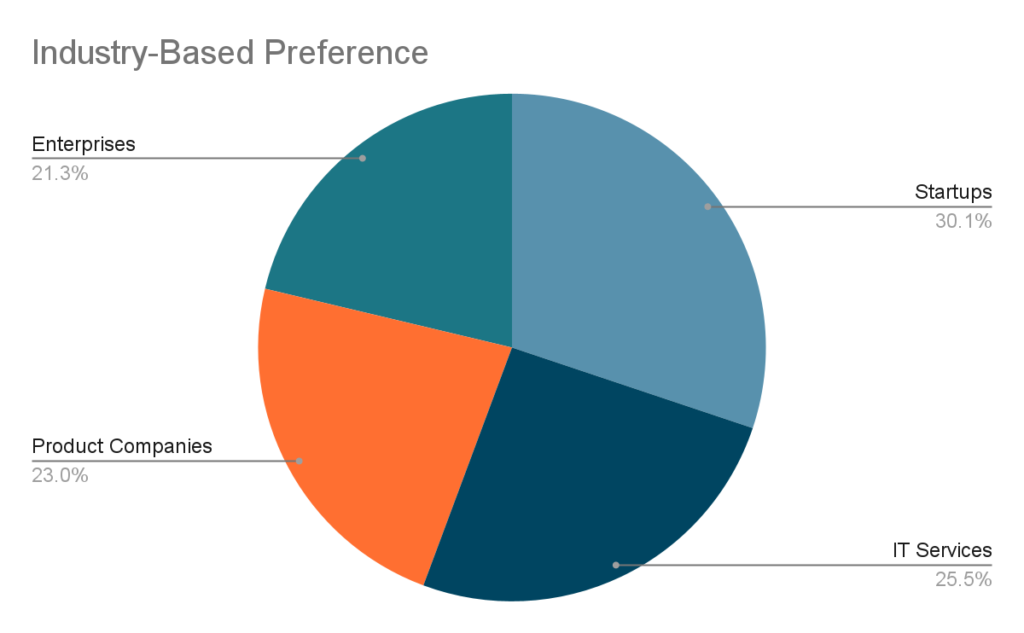
In today’s highly competitive IT industry, employability and job security are two of the most important concerns for professionals. With rapid technological advancements and evolving business needs, companies are constantly looking for individuals who can offer more than just basic expertise. This is where multi-skilling and diverse knowledge play a crucial role in enhancing both employability and long-term job stability.
One of the primary benefits of having multiple skills is higher employability. Employers prefer candidates who can contribute to different aspects of a project rather than being limited to a single role. For instance, a professional who understands programming, basic cloud concepts, and version control systems is more attractive to recruiters than someone with knowledge of only one area. This broader skill set increases the chances of getting hired, as it aligns better with the diverse requirements of modern organizations.
Another key advantage is the ability to stand out in a competitive job market. With a growing number of IT graduates and professionals entering the field, competition for jobs has increased significantly. Candidates who possess multiple skills and can demonstrate versatility have a clear edge over others. Their ability to adapt and take on different responsibilities makes them more appealing to employers.
Multi-skilled professionals also enjoy greater job security. The IT industry is constantly evolving, and certain technologies can become outdated over time. Professionals who rely on a single skill may face challenges if that skill becomes less relevant. However, those with diverse skills can easily transition to new roles or technologies, reducing the risk of job loss. This adaptability acts as a safety net in uncertain times.
In addition, organizations value employees who can handle multiple responsibilities efficiently. In many companies, especially startups and mid-sized businesses, employees are expected to contribute beyond their primary roles. A developer who can also assist in testing, deployment, or basic troubleshooting becomes a valuable asset. This versatility not only increases job stability but also strengthens the individual’s position within the organization.
Another important factor is the rise of automation and artificial intelligence, which is transforming the job landscape. While some routine tasks are being automated, there is a growing demand for professionals who can manage, integrate, and innovate with these technologies. Multi-skilled individuals are better prepared to adapt to this shift, ensuring their relevance in the future job market.
Furthermore, having diverse skills opens up multiple career opportunities. Even if one domain experiences a slowdown, professionals can explore opportunities in other areas where their skills are applicable. This flexibility reduces dependency on a single career path and provides more stability over time.
Continuous learning also plays a vital role in maintaining employability and job security. Professionals who actively update their skills and stay informed about industry trends are more likely to remain in demand. Certifications, online courses, and practical experience help in keeping knowledge up to date and aligned with market needs.
However, it is important to approach multi-skilling strategically. Instead of learning unrelated skills, professionals should focus on building complementary skills that enhance their core expertise. This ensures both depth and breadth of knowledge, making them more effective and reliable in their roles.
In conclusion, increased employability and job security are direct outcomes of developing diverse skills in the IT industry. By becoming adaptable, versatile, and continuously learning, professionals can not only secure better job opportunities but also ensure long-term career stability in an ever-changing technological landscape.
Freelancing and Remote Work Opportunities

The rise of digital transformation and global connectivity has significantly changed the way people work, especially in the IT industry. Today, professionals are no longer limited to traditional office-based jobs. Freelancing and remote work opportunities have become increasingly popular, offering flexibility, independence, and access to a global job market. For multi-skilled IT professionals, these opportunities are even more rewarding and accessible.
One of the biggest advantages of freelancing is the freedom to work independently. Professionals can choose their own projects, set their schedules, and work from any location. This level of flexibility is particularly appealing to those who want to maintain a better work-life balance or explore multiple career paths simultaneously. Remote work, similarly, allows individuals to work for companies across the world without the need to relocate, breaking geographical barriers.
Multi-skilling plays a crucial role in maximizing these opportunities. Freelancers who possess a combination of skills—such as web development, UI/UX design, digital marketing, and basic SEO—can offer a wider range of services to clients. This makes them more competitive in the freelance marketplace and increases their chances of securing projects. Clients often prefer professionals who can handle multiple aspects of a project rather than hiring separate specialists for each task.
Another important benefit is access to a global client base. Freelancing platforms and remote job portals connect professionals with clients from different countries and industries. This not only increases earning potential but also provides exposure to diverse projects and work cultures. Working with international clients helps in building a strong portfolio and gaining valuable experience.
Freelancing and remote work also offer multiple income streams. Unlike traditional jobs that provide a fixed salary, freelancers can take on multiple projects at the same time, increasing their overall earnings. Multi-skilled professionals can diversify their services and attract clients from different domains, ensuring a steady flow of work.
In addition, these work models encourage continuous learning and skill development. Since freelancers often work on varied projects, they are exposed to different technologies, tools, and challenges. This helps them expand their knowledge and stay updated with industry trends. The need to remain competitive also motivates professionals to keep upgrading their skills regularly.
Another key aspect is entrepreneurial growth. Freelancing allows individuals to build their personal brand and, over time, even start their own business or agency. By developing a strong reputation and client base, professionals can scale their work and create long-term career opportunities beyond traditional employment.
However, freelancing and remote work also come with challenges, such as inconsistent income, client management, and self-discipline. Professionals need strong time management, communication, and organizational skills to succeed in this environment. Building trust with clients, meeting deadlines, and maintaining quality work are essential for long-term success.
Despite these challenges, the demand for remote work and freelance professionals continues to grow, especially in the IT sector. Companies are increasingly adopting flexible work models, and the gig economy is expanding rapidly. This trend creates more opportunities for individuals who are skilled, adaptable, and ready to work in a global environment.
In conclusion, freelancing and remote work opportunities have opened new doors for IT professionals, offering flexibility, independence, and global exposure. Multi-skilled individuals are in a strong position to take full advantage of these opportunities, as their diverse abilities allow them to handle a wide range of projects and stand out in a competitive market.
Building a Strong and Flexible IT Portfolio
In the competitive world of Information Technology, having a well-structured portfolio is just as important as having technical skills. A strong and flexible IT portfolio serves as a practical demonstration of your abilities, showcasing what you can do rather than just what you claim to know. It acts as a powerful tool to attract recruiters, clients, and employers by highlighting your real-world experience, creativity, and versatility.
One of the key purposes of an IT portfolio is to showcase practical skills and projects. Instead of relying only on resumes or certifications, a portfolio provides concrete evidence of your work. It can include projects such as web applications, mobile apps, data analysis reports, machine learning models, or cybersecurity implementations. These projects reflect your problem-solving ability, coding standards, and understanding of different technologies.
A flexible portfolio should highlight diversity in skills and technologies. For example, if you are a developer, your portfolio can include front-end projects, back-end systems, database management, and even cloud deployments. This demonstrates that you are not limited to a single domain and can handle multiple aspects of development. Including a variety of projects also shows your adaptability and willingness to learn new tools and frameworks.
Another important aspect is quality over quantity. It is better to have a few well-developed, polished projects than many incomplete or poorly executed ones. Each project in your portfolio should clearly explain the problem, the solution, the technologies used, and your role in the project. Proper documentation, clean code, and user-friendly design can significantly enhance the impact of your portfolio.
A strong IT portfolio also reflects real-world problem-solving. Projects that address real-life challenges or simulate industry scenarios are more valuable than basic or theoretical work. For example, creating an e-commerce website, a task management system, or a data dashboard demonstrates practical application of skills and makes your portfolio more relevant to employers.
Flexibility in a portfolio means keeping it updated and adaptable. The IT industry evolves quickly, and your portfolio should reflect your latest skills and knowledge. Regularly adding new projects, updating old ones, and incorporating modern technologies ensures that your portfolio remains relevant and competitive.
Another crucial element is presentation and accessibility. Your portfolio should be easy to navigate, visually appealing, and accessible online. Platforms like personal websites, GitHub repositories, or portfolio hosting sites allow you to present your work professionally. Clear descriptions, screenshots, live demos, and links to source code can make your portfolio more engaging and informative.
In addition, including collaborative projects and contributions can add significant value. Working on team projects or contributing to open-source platforms shows your ability to collaborate, communicate, and work in real-world development environments. This is highly appreciated by employers and clients.
A well-built portfolio also supports freelancing and personal branding. For freelancers, it acts as a digital resume that helps attract clients and build trust. A strong portfolio can set you apart in a crowded market and increase your chances of getting high-quality projects.
However, building a portfolio requires consistency and effort. It is important to focus on continuous improvement, learning from feedback, and refining your work over time. Avoid copying projects without understanding them, and instead aim to create original and meaningful solutions.
In conclusion, building a strong and flexible IT portfolio is essential for showcasing your skills, gaining opportunities, and growing your career. It not only reflects your technical expertise but also your creativity, adaptability, and commitment to learning. In an industry where practical knowledge matters the most, a well-crafted portfolio can be the key to standing out and achieving long-term success.
Understanding Different IT Domains (AI, Cybersecurity, Cloud, etc.)
The Information Technology industry is vast and continuously expanding, with multiple domains that serve different purposes and industries. To build a successful career in IT, it is important to have a clear understanding of these domains. Gaining knowledge across areas such as Artificial Intelligence (AI), Cybersecurity, Cloud Computing, Data Science, and Software Development helps professionals become more versatile and better prepared for modern technological demands.
One of the most prominent domains today is Artificial Intelligence (AI) and Machine Learning (ML). This field focuses on creating systems that can learn from data and make intelligent decisions. AI is widely used in applications like chatbots, recommendation systems, image recognition, and automation. Professionals in this domain work with algorithms, data models, and tools like Python, TensorFlow, and other AI frameworks.
Another critical domain is Cybersecurity, which deals with protecting systems, networks, and data from cyber threats. With the increasing number of cyberattacks and data breaches, cybersecurity has become a top priority for organizations. This field includes areas such as ethical hacking, network security, information security, and risk management. Professionals in cybersecurity ensure that systems remain safe, secure, and compliant with industry standards.
Cloud Computing is another rapidly growing domain that has transformed how businesses store and manage data. Instead of relying on physical servers, organizations now use cloud platforms to host applications and services. Popular cloud service providers include AWS, Microsoft Azure, and Google Cloud. Knowledge of cloud computing allows professionals to deploy, manage, and scale applications efficiently, making it a highly valuable skill in today’s IT landscape.
The domain of Data Science and Analytics focuses on extracting meaningful insights from large sets of data. With businesses relying heavily on data-driven decisions, data science has become one of the most in-demand fields. It involves skills such as data analysis, visualization, statistical modeling, and working with tools like Python, R, and SQL. Professionals in this field help organizations make informed decisions based on data patterns and trends.
Software Development remains the backbone of the IT industry. It involves designing, developing, and maintaining applications and systems. This domain includes front-end development, back-end development, mobile app development, and full-stack development. Programming languages like Java, Python, JavaScript, and C++ are commonly used in this field.
Another important area is DevOps, which focuses on improving collaboration between development and operations teams. DevOps practices aim to automate processes, enhance deployment speed, and ensure continuous integration and delivery. This domain requires knowledge of tools like Docker, Kubernetes, and CI/CD pipelines.
Understanding these different IT domains provides several benefits. It helps professionals choose the right career path based on their interests and strengths. It also enables better collaboration with teams working in different areas, as individuals can understand how each domain contributes to a project.
Moreover, having knowledge of multiple domains enhances adaptability and career growth. As technology evolves, the boundaries between these domains are becoming less distinct. For example, cloud computing is often used in AI applications, and cybersecurity is essential for protecting cloud-based systems. Professionals who understand these connections are better equipped to handle complex projects and innovate effectively.
However, it is not necessary to master every domain at once. The ideal approach is to build a strong foundation in one core area and gradually expand knowledge into related fields. This balanced approach ensures both depth and versatility.
In conclusion, understanding different IT domains such as AI, cybersecurity, cloud computing, and data science is essential for building a successful and future-ready career. It allows professionals to explore diverse opportunities, improve collaboration, and stay relevant in an ever-changing technological landscape.
Time Management While Learning Multiple Skills
In the fast-paced world of IT, learning multiple skills has become essential for career growth. However, one of the biggest challenges professionals and students face is managing time effectively while learning different skills simultaneously. Without proper planning and discipline, it can become overwhelming and lead to burnout or incomplete learning. Therefore, mastering time management is crucial for successfully developing multiple skills.
The first step in effective time management is setting clear goals and priorities. Instead of trying to learn everything at once, it is important to identify which skills are most relevant to your career path. For example, if your goal is to become a full-stack developer, you should prioritize front-end, back-end, and database-related skills. Clear goals help in focusing your time and energy on what truly matters.
Another important strategy is creating a structured learning schedule. Dividing your time into dedicated slots for each skill can help maintain consistency. For instance, you can allocate specific hours of the day or week to different subjects. This approach ensures balanced learning and prevents neglecting any particular skill. Consistency is more important than spending long hours irregularly.
Breaking down learning into smaller tasks is also highly effective. Instead of setting large, overwhelming goals, divide them into manageable steps. For example, rather than aiming to “learn Python,” focus on completing specific topics like variables, loops, and functions. This makes the learning process more achievable and keeps motivation high.
Time management also requires the ability to avoid distractions and stay focused. In today’s digital world, distractions such as social media and unnecessary browsing can consume a significant amount of time. Creating a dedicated study environment and using techniques like the Pomodoro method (focused work sessions with short breaks) can improve productivity.
Another key factor is maintaining a balance between learning and practice. Simply consuming theoretical knowledge is not enough in IT. It is essential to allocate time for hands-on practice, projects, and real-world application. Practical experience not only reinforces learning but also makes it more effective and long-lasting.
Learning multiple skills also demands regular revision and tracking progress. Reviewing what you have learned helps in retaining information and identifying areas that need improvement. Keeping track of progress through checklists or learning logs can provide a sense of achievement and keep you motivated.
It is equally important to avoid overloading yourself. Trying to learn too many skills at the same time can lead to confusion and reduced efficiency. A better approach is to focus on one primary skill while gradually adding secondary skills. This ensures depth of knowledge along with gradual expansion.
Additionally, maintaining discipline and consistency is the foundation of good time management. Even dedicating a small amount of time daily can lead to significant progress over time. Building a routine and sticking to it is more effective than irregular bursts of effort.
Lastly, taking care of your physical and mental well-being is essential. Proper rest, breaks, and a healthy lifestyle improve concentration and productivity. Overworking without breaks can reduce efficiency and negatively impact learning.
In conclusion, time management plays a vital role in successfully learning multiple skills in the IT field. By setting clear goals, creating a structured plan, staying consistent, and maintaining a balance between learning and practice, individuals can effectively develop diverse skills without feeling overwhelmed. With the right approach, mastering multiple skills becomes a manageable and rewarding journey.
Challenges of Multi-Skilling and How to Overcome Them

While multi-skilling offers numerous advantages in the IT industry, it also comes with its own set of challenges. Learning multiple skills simultaneously can be demanding, time-consuming, and sometimes overwhelming. However, with the right approach and strategies, these challenges can be effectively managed and turned into opportunities for growth.
One of the most common challenges is information overload. With so many technologies, tools, and concepts available, it can be difficult to decide what to learn and where to start. This often leads to confusion and lack of direction. To overcome this, it is important to set clear goals and follow a structured learning path. Focus on skills that align with your career objectives and learn them step by step instead of trying to cover everything at once.
Another major issue is the lack of depth in knowledge. When individuals try to learn too many skills at the same time, they may end up with only a basic understanding of each, without mastering any. This can limit their effectiveness in real-world scenarios. The solution is to build a strong foundation in one core skill first and then gradually expand into related areas. This ensures both depth and breadth of knowledge.
Time management is also a significant challenge in multi-skilling. Balancing multiple subjects along with work or studies can be difficult. Without proper planning, it can lead to inconsistency and incomplete learning. Creating a realistic schedule, setting daily or weekly goals, and maintaining consistency can help manage time more effectively.
Another challenge is mental fatigue and burnout. Continuously learning and switching between different skills can be exhausting, especially without proper breaks. To avoid burnout, it is essential to maintain a balanced routine, take regular breaks, and avoid overloading yourself. Learning should be consistent but not overwhelming.
Difficulty in staying motivated is another common problem. When progress seems slow or when concepts become complex, individuals may feel discouraged. To overcome this, it is helpful to track progress, celebrate small achievements, and work on practical projects. Seeing real results can boost confidence and keep motivation high.
The lack of practical application can also hinder effective multi-skilling. Simply learning theory without applying it can make it difficult to retain knowledge. Engaging in hands-on projects, internships, or real-world problem-solving helps in reinforcing skills and gaining confidence.
Another challenge is choosing the right combination of skills. Not all skills complement each other, and learning unrelated technologies may not add much value. To address this, focus on complementary skills—for example, combining programming with cloud computing or data analysis with visualization tools. This creates a more cohesive and valuable skill set.
Additionally, keeping up with constant changes in technology can be overwhelming. New tools and trends emerge frequently, making it difficult to stay updated. The key is to focus on core concepts rather than chasing every new trend. Strong fundamentals make it easier to learn and adapt to new technologies when needed.
Lastly, many individuals face self-doubt and fear of failure when learning multiple skills. They may feel that they are not progressing fast enough or that others are ahead of them. Overcoming this requires a growth mindset—understanding that learning is a continuous process and progress takes time.
In conclusion, while multi-skilling presents challenges such as information overload, time constraints, lack of depth, and burnout, these can be effectively managed with proper planning, consistency, and a focused approach. By setting clear goals, prioritizing learning, practicing regularly, and maintaining balance, individuals can successfully overcome these challenges and build a strong, versatile skill set in the IT industry.
Certifications and Courses to Expand Skill sets
In the ever-evolving IT industry, certifications and professional courses play a crucial role in helping individuals expand their skillsets and stay competitive. While practical experience is essential, certifications act as proof of knowledge and expertise, making professionals more credible in the eyes of employers. They also provide structured learning paths, helping individuals gain in-demand skills in a systematic way.
One of the biggest advantages of certifications is that they are industry-recognized credentials. Leading companies and organizations design certification programs that align with real-world requirements. Certifications from platforms like AWS, Microsoft, Google Cloud, Cisco, and CompTIA are widely valued and often preferred by recruiters. According to industry reports, certifications such as AWS Certified Solutions Architect, Microsoft Azure certifications, Google Cloud certifications, and CompTIA Security+ are among the most widely held and pursued globally .
Different IT domains offer specialized certifications that help professionals build expertise in specific areas. In cloud computing, certifications like AWS Certified Solutions Architect, Microsoft Azure Fundamentals, and Google Cloud Professional Cloud Architect validate skills in designing and managing cloud infrastructure. These certifications are highly in demand as businesses increasingly move to cloud-based systems .
In the field of cybersecurity, certifications such as Certified Ethical Hacker (CEH), CompTIA Security+, and CISSP help professionals develop skills in network security, ethical hacking, and risk management. With the rise in cyber threats, these certifications are becoming essential for securing systems and data.
For those interested in networking, certifications like Cisco CCNA and CCNP provide knowledge of network infrastructure, routing, and switching. These are ideal for roles such as network engineer and system administrator.
In data science and analytics, certifications and courses in Python, R, machine learning, and data visualization are highly valuable. Programs like Google Data Analytics and other data science certifications help professionals gain skills in handling and analyzing large datasets, which is increasingly important for business decision-making.
Another growing area is DevOps and automation, where certifications in tools like Docker, Kubernetes, and CI/CD pipelines help professionals streamline development and deployment processes. These skills are highly valued in organizations that focus on continuous delivery and agile practices.
Apart from domain-specific certifications, there are also foundational certifications for beginners. Certifications like CompTIA A+, ITIL Foundation, and entry-level cloud certifications provide a strong base for starting a career in IT. These certifications help individuals understand core concepts and prepare for more advanced roles.
Online learning platforms also play a major role in skill development. Websites like Coursera, Udemy, edX, and LinkedIn Learning offer a wide range of courses that complement certifications. These platforms provide flexibility, allowing learners to study at their own pace and gain hands-on experience through projects and assignments.
One important benefit of certifications is that they encourage continuous learning and upskilling. Since technologies change rapidly, professionals need to keep updating their knowledge. Certifications help in staying aligned with industry trends and acquiring new skills as required.
However, it is important to choose certifications strategically. Instead of collecting multiple unrelated certifications, professionals should focus on those that align with their career goals and complement their existing skills. A well-planned combination of certifications can significantly enhance career growth and job opportunities.
In conclusion, certifications and courses are powerful tools for expanding skillsets in the IT industry. They provide structured learning, validate expertise, and open doors to new opportunities. By selecting the right certifications and continuously upgrading their knowledge, professionals can stay relevant and achieve long-term success in their careers.
Real-Life Examples of Multi-Skilled IT Professionals

In the IT industry, multi-skilling is not just a concept—it is a proven path followed by many successful professionals. Real-life examples show how individuals who combine multiple skills are able to innovate, solve complex problems, and achieve remarkable career growth. These professionals demonstrate the power of blending technical expertise with versatility and continuous learning.
One of the most well-known examples is Elon Musk. Although widely recognized as an entrepreneur, his success is deeply rooted in his understanding of multiple domains, including software, engineering, artificial intelligence, and business strategy. His involvement in companies like Tesla and SpaceX highlights how combining technical knowledge with leadership and innovation can lead to groundbreaking achievements.
Another great example is Satya Nadella. With a strong background in engineering and cloud computing, he transformed Microsoft by focusing on cloud technology, artificial intelligence, and collaboration tools. His ability to combine technical expertise with strategic thinking and leadership skills played a key role in the company’s growth and modernization.
Mark Zuckerberg is also a classic example of a multi-skilled IT professional. As the creator of Facebook (now part of Meta), he combined programming skills with product design, user experience understanding, and business strategy. His ability to manage both technical development and business expansion helped build one of the world’s largest social media platforms.
Another inspiring figure is Sundar Pichai, who leads Google. His career reflects a blend of technical knowledge, product management, and leadership. From working on products like Chrome to leading global operations, his multi-disciplinary skills have been crucial to his success.
We can also look at Linus Torvalds, who developed the Linux operating system. His expertise in programming, system design, and open-source collaboration showcases how deep technical skills combined with community engagement can create widely used technologies.
Beyond these global leaders, there are countless modern IT professionals who demonstrate multi-skilling in practical ways. For example, a full-stack developer who works on both front-end and back-end systems, a DevOps engineer who manages development and deployment, or a data analyst who also understands business strategy. These professionals may not be as famous, but they play a critical role in driving innovation within organizations.
Freelancers and startup founders are also excellent examples of multi-skilled professionals. Many of them handle coding, design, client communication, and marketing simultaneously. Their ability to manage multiple responsibilities allows them to build and grow successful businesses with limited resources.
These real-life examples highlight a common pattern: successful IT professionals do not limit themselves to a single skill. Instead, they continuously learn, adapt, and expand their expertise across different domains. This not only enhances their problem-solving abilities but also opens up new opportunities for growth and innovation.
In conclusion, real-world examples clearly show that multi-skilling is a key factor behind success in the IT industry. Whether it is global tech leaders or everyday professionals, the ability to combine multiple skills leads to better career opportunities, stronger impact, and long-term success in a rapidly changing technological world.
Future Trends: Why Multi-Skilling Will Be Essential
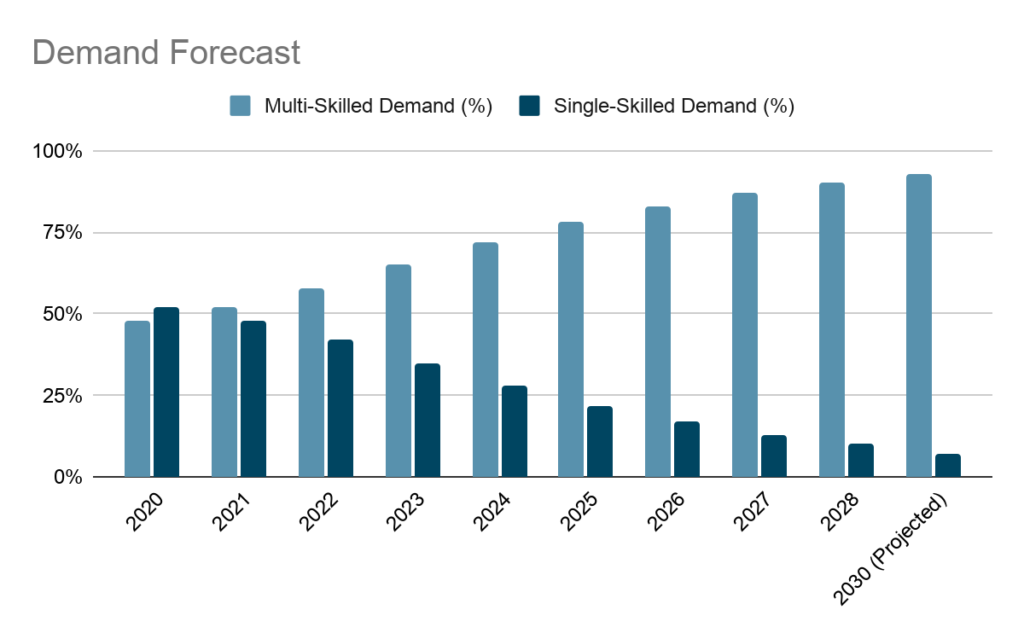
EAs the IT industry continues to evolve, the future of work is being shaped by rapid innovation, automation, and increasing integration of technologies. In this changing landscape, multi-skilling is no longer optional—it is becoming essential for professionals who want to stay relevant and competitive. Future trends clearly indicate that the demand for individuals with diverse skill sets will only continue to grow.
One of the biggest drivers of this trend is the rise of emerging technologies such as Artificial Intelligence (AI), Machine Learning, Blockchain, Internet of Things (IoT), and Cloud Computing. These technologies do not operate in isolation; they often work together to create advanced solutions. For example, AI applications rely on cloud infrastructure, data analytics, and cybersecurity. Professionals who understand multiple domains will be better equipped to work on such integrated systems.
Another major trend is automation and the transformation of job roles. Many repetitive and routine tasks are being automated, reducing the demand for narrowly focused roles. At the same time, new roles are emerging that require a combination of skills. For instance, roles like AI engineers, cloud architects, and DevOps specialists require knowledge of multiple technologies and processes. Multi-skilled professionals are more likely to adapt to these changes and take advantage of new opportunities.
The future workplace will also emphasize cross-functional collaboration. Organizations are moving towards agile and flexible work environments where teams work closely across different domains. Professionals who can understand and contribute to multiple areas will play a key role in improving collaboration and ensuring faster project delivery.
Another important factor is the growth of the gig economy and remote work culture. Companies are increasingly hiring freelancers and remote professionals who can handle multiple responsibilities independently. This shift favors individuals who have diverse skills and can manage end-to-end tasks without constant supervision.
Additionally, the demand for continuous learning and adaptability will increase. Technologies will continue to evolve at a rapid pace, and professionals will need to update their skills regularly. Multi-skilling fosters a mindset of lifelong learning, making it easier for individuals to adapt to new tools, platforms, and methodologies.
From a business perspective, organizations prefer employees who can add value in multiple areas. Multi-skilled professionals help reduce dependency on large teams, improve efficiency, and support innovation. This makes them highly valuable assets in both startups and large enterprises.
Another future trend is the blending of technical and non-technical skills. Roles in IT will increasingly require a combination of technical expertise, business understanding, communication skills, and creativity. Professionals who can bridge the gap between technology and business needs will have a significant advantage.
Moreover, career paths in IT are becoming more flexible and dynamic. Instead of following a linear path, professionals can explore different roles and domains throughout their careers. Multi-skilling enables this flexibility, allowing individuals to switch roles, industries, or specializations as needed.
However, to succeed in this future landscape, it is important to approach multi-skilling strategically. Building a strong foundation in one core area and then expanding into related domains ensures both depth and versatility.
In conclusion, future trends in the IT industry clearly highlight the growing importance of multi-skilling. With the rise of new technologies, automation, and changing work environments, professionals who develop diverse skills will be better prepared to adapt, innovate, and succeed. Multi-skilling is not just a trend—it is the foundation for building a future-ready career in the ever-changing world of technology.
Conclusion: Becoming a Well-Rounded IT Professional
In today’s fast-changing IT landscape, success is no longer defined by expertise in a single skill. Instead, it depends on the ability to adapt, learn, and apply knowledge across multiple domains. Becoming a well-rounded IT professional means combining technical expertise, diverse skill sets, and essential soft skills to stay relevant and competitive in the industry.
Throughout this discussion, it is clear that multi-skilling offers numerous benefits—from improved problem-solving and increased employability to better career growth and job security. Professionals who invest in learning multiple skills are better equipped to handle complex projects, collaborate effectively with teams, and adapt to new technologies as they emerge.
A well-rounded IT professional does not just focus on coding or technical tasks but also understands the broader picture. This includes knowledge of different IT domains, awareness of business needs, and the ability to communicate ideas clearly. Such individuals can bridge the gap between technical and non-technical teams, making them valuable assets to any organization.
Continuous learning plays a crucial role in this journey. The IT industry evolves rapidly, and staying updated with the latest tools, technologies, and trends is essential. Certifications, online courses, practical projects, and real-world experience all contribute to building a strong and versatile skill set. At the same time, developing soft skills like communication, teamwork, and time management ensures overall professional growth.
It is also important to maintain a balance between depth and breadth of knowledge. While exploring multiple skills, professionals should build strong expertise in at least one core area. This combination of specialization and versatility creates a solid foundation for long-term success.
Moreover, embracing challenges, staying curious, and being open to change are key traits of a successful IT professional. The ability to step out of one’s comfort zone and continuously improve is what sets high achievers apart in this field.
In conclusion, becoming a well-rounded IT professional is a continuous journey rather than a one-time goal. By developing multiple skills, staying adaptable, and maintaining a growth mindset, individuals can unlock new opportunities, achieve career stability, and thrive in the ever-evolving world of technology.
To explore more insights and start your IT journey, visit https://pinakiithub.com/
