
How Project-Based Learning Improves Coding Skills Faster

Boost your real-world coding ability with projects instead of textbooks.
In the world of coding education, traditional learning methods like memorizing syntax, watching videos, and solving isolated programming problems are helpful—but they often fall short when it comes to real-world application. This is where Project-Based Learning (PBL) makes a huge difference.
At Pinaki IT Hub, we believe coding becomes meaningful when you build something real. In this blog, we’ll explore what PBL is, why it works, how it builds skills faster, and how both students and professionals can benefit immediately.
Learn By Building, Not Just Studying
The Future of Skill-Based Education
Traditional learning often focuses on theory first and application later — but in today’s fast-moving tech world, skills matter more than memorization. Employers are not just looking for certificates; they want proof that you can actually build, solve problems, and deliver results.
Project-Based Learning shifts the focus from passive learning to active creation, helping students become confident professionals instead of just knowledgeable learners.
What is Project-Based Learning?
Turning Knowledge Into Real-World Skills
Project-Based Learning (PBL) is a hands-on approach where learners actively create applications, tools, and systems rather than simply consuming information.
Instead of only understanding concepts, students apply them in real scenarios — learning how technology works beyond textbooks. This method builds deeper understanding, stronger retention, and practical expertise that stays with you throughout your career.
Move Beyond Tutorials
Stop Watching. Start Creating.
Many learners fall into the cycle of endlessly watching tutorials, memorizing syntax, and solving disconnected practice problems — yet still feel unprepared for real jobs.
Project-Based Learning breaks this cycle by placing you in the creator’s role from the start. You don’t just follow instructions — you think, experiment, make decisions, and build solutions. This transforms learning from a passive activity into an engaging, career-ready experience.
Build Software That Actually Matters
Create Projects You Can Showcase
With Project-Based Learning, you don’t just practice — you produce meaningful work that demonstrates your abilities. Students gain experience by developing real software such as interactive websites, mobile applications, engaging games, data-driven dashboards, and even AI-powered chatbots.
These projects become powerful portfolio pieces that prove your skills to recruiters and set you apart in a competitive job market.
Learn Like Real Developers
Experience the Actual Workflow of the Tech Industry
Professional developers don’t get everything right on the first attempt — they build, test, debug, refine, and improve continuously. Project-Based Learning mirrors this exact process.
As you iterate through challenges, you develop problem-solving abilities, logical thinking, and resilience. Over time, you stop fearing errors and start seeing them as stepping stones toward mastery.
Confidence Comes From Doing
Practical Exposure That Prepares You for Real Jobs
When you repeatedly apply your knowledge to real projects, confidence grows naturally. You begin to understand how systems connect, how users interact with technology, and how to approach complex challenges.
This practical exposure ensures that when you step into a professional environment, nothing feels unfamiliar — because you’ve already experienced similar situations during your learning journey.
From Learner to Professional
Build Skills That Employers Trust
Companies value candidates who can contribute from day one. Project-Based Learning helps you develop industry-relevant skills, collaborative thinking, and a solution-oriented mindset.
Instead of saying “I learned this,” you can confidently say, “I built this.” That difference speaks volumes to hiring managers and dramatically improves your career opportunities.
Your Career Starts With What You Build
Don’t Just Study Technology — Create With It
The strongest careers are built on practical capability, not just theoretical understanding. Project-Based Learning empowers you to transform ideas into reality, preparing you for the demands of the modern workforce.
If your goal is to become truly job-ready, the path is simple: learn actively, build consistently, and grow through experience.
Why Project-Based Learning Works So Well
Because Real Skills Are Built Through Action
In today’s competitive tech landscape, simply knowing concepts is no longer enough. Employers seek professionals who can apply knowledge, solve real problems, and adapt quickly. Project-Based Learning works because it transforms education from passive consumption into active creation — ensuring learners don’t just study technology, they experience it.
By working on real projects, students develop practical expertise that prepares them for the expectations of modern workplaces.
Deep Understanding vs. Shallow Knowledge
Learn the Logic, Not Just the Language
Coding is not about memorizing commands or copying syntax — it’s about understanding how and why code works. When learners build projects, they naturally explore the logic behind every function, workflow, and system interaction.
This deeper engagement strengthens conceptual clarity and ensures knowledge stays with you far longer than information gained through passive methods.
Problems Create Better Programmers
Real Challenges Build Real Thinkers
When you work on projects, things don’t always go as planned — and that’s where true learning begins. Unexpected errors, broken features, and system limitations push you to analyze situations and find solutions.
Instead of avoiding difficulties, Project-Based Learning trains your brain to approach problems with curiosity and confidence — a defining trait of successful developers.
Encounter Bugs, Build Brilliance
Debugging Is Where Mastery Begins
Every developer faces bugs, but experienced ones know how to resolve them efficiently. Through project work, learners repeatedly practice troubleshooting, identifying root causes, and optimizing performance.
Over time, debugging stops feeling frustrating and starts becoming an opportunity to sharpen your technical instincts — turning challenges into expertise.
Start Thinking Like a Developer
Shift From Following Instructions to Creating Solutions
Tutorial-based learning often encourages imitation, but real growth happens when you begin making independent decisions. Project-Based Learning nurtures a developer mindset — one that focuses on structure, scalability, user experience, and efficiency.
You stop asking, “What should I do next?” and start deciding, “What is the best way to build this?”
Stronger Skill Transfer to Real Jobs
Learn Once, Apply Everywhere
One of the greatest advantages of Project-Based Learning is how effectively skills translate into professional environments. The workflows, tools, and problem-solving methods you practice during projects closely resemble those used in the industry.
This makes the transition from student to professional smoother, faster, and far less intimidating.
Confidence That Comes From Capability
When You’ve Built It Yourself, You Trust Your Skills
Confidence doesn’t come from certificates — it comes from proven ability. Each completed project reinforces your belief in your capabilities and prepares you to take on bigger challenges.
By the time opportunities arrive, you don’t just hope you’re ready — you know you are.
The Smarter Way to Learn Technology
Don’t Just Study Hard — Learn Smart
Project-Based Learning works because it aligns education with how humans naturally grow: through practice, experimentation, and continuous improvement. It replaces surface-level knowledge with meaningful expertise and prepares learners for long-term success.
If your goal is to stand out in the tech world, the strategy is clear — build more, solve more, and learn in the way that truly works.
Faster Skill Development Starts With Smarter Learning
Don’t Just Spend Time Learning — Accelerate It
In the world of technology, speed matters. The faster you gain practical skills, the sooner you become industry-ready. Project-Based Learning accelerates growth by placing you directly in real development scenarios instead of keeping you stuck in endless theory.
Rather than waiting months to feel confident, you begin developing real capabilities from the very beginning.
Learning Speed Comparison: Traditional vs Project-Based Learning
This graph compares how quickly learners develop coding skills using different learning methods. Traditional learning focuses mainly on theory, while tutorial-based learning provides guided practice. Project-Based Learning accelerates skill development by allowing learners to apply concepts directly in real-world scenarios. This practical exposure helps learners understand faster, retain knowledge longer, and become job-ready in less time.
Learn Concepts in Real Context
Understanding Comes Easier When You See Where It’s Used
Abstract lessons can be difficult to grasp when they lack practical relevance. But when concepts are tied to real projects, everything starts making sense faster. You don’t just learn what a function does — you understand why it matters and where it should be applied.
Contextual learning removes confusion and replaces it with clarity, helping you progress with greater efficiency.
Apply Knowledge Immediately
The Shortest Path From Learning to Mastery
One of the biggest reasons learners forget new concepts is the gap between studying and applying. Project-Based Learning eliminates this delay by encouraging immediate implementation.
As soon as you learn something new, you use it — reinforcing your understanding and turning fresh knowledge into a lasting skill.
Retain More, Forget Less
Because Experience Stays Longer Than Information
Reading or watching tutorials may help temporarily, but active participation strengthens memory. When you build projects, your brain connects logic, action, and outcome — making the learning far more permanent.
This is why hands-on learners often move ahead faster than those relying solely on traditional methods.
Build Coding Muscle Memory
Practice Until Skill Becomes Second Nature
Just like athletes train their bodies through repetition, developers train their minds through consistent practice. Writing code regularly creates “muscle memory,” allowing you to recognize patterns, recall syntax faster, and solve problems more naturally.
Over time, tasks that once felt complex begin to feel effortless — a clear sign of real progress.
Reduce the Learning Curve
Grow Faster Without Feeling Overwhelmed
Project-Based Learning breaks down complex skills into practical steps. Instead of trying to understand everything at once, you learn progressively while building meaningful solutions.
This structured exposure minimizes overwhelm and keeps motivation high, ensuring steady and sustainable growth.
Momentum Creates Motivation
Progress You Can See Drives You Forward
Nothing is more motivating than watching your own capabilities expand. Each completed feature, working interface, or solved error becomes proof of improvement.
This visible progress builds momentum — and momentum is what transforms beginners into confident professionals.
Learn Faster. Become Job-Ready Sooner.
The Advantage That Sets You Apart
Project-Based Learning is powerful because it aligns effort with outcomes. You don’t just invest time — you gain measurable skills that prepare you for real opportunities.
If your goal is rapid, meaningful growth, the approach is simple: learn in context, apply instantly, and practice consistently. That’s how true expertise is built.
Exposure That Mirrors the Real Tech Industry
Learn in the Same Environment Professionals Work In
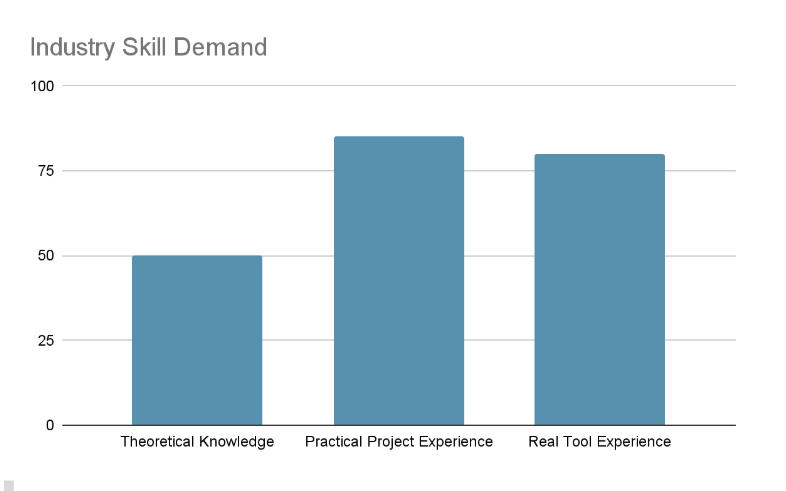
Becoming a developer requires more than understanding programming languages — it demands familiarity with the tools that power modern software development. Project-Based Learning places you inside a professional ecosystem where you don’t just study workflows, you actively experience them.
This early exposure removes the gap between training and employment, helping you step into real roles with confidence.
Go Beyond Theory — Work With Real Tools
Because Developers Are Defined by What They Can Use
Reading about technology builds awareness, but using it builds competence. Through Project-Based Learning, you interact with the platforms, frameworks, and systems that companies rely on every day.
Instead of feeling intimidated by professional tools later, you develop comfort and efficiency while you’re still learning — a major advantage in your career journey.
Master Version Control With Git & GitHub
Build, Track, and Collaborate Like Modern Teams
Version control is the backbone of collaborative development. By working with Git and GitHub, you learn how to manage code changes, maintain project history, and contribute safely within team environments.
These practices not only improve organization but also prepare you for structured workflows followed across the global tech industry.
Develop Faster With Professional IDEs
Create in an Environment Built for Productivity
Tools like VS Code and advanced IDEs are designed to simplify complex development tasks. When learners use these platforms, they gain access to powerful features such as intelligent code suggestions, debugging support, and integrated extensions.
The result is a smoother development experience — and a deeper understanding of how professionals build software efficiently.
Understand the Power Behind the Screen
Terminals, CLIs, and Databases Made Practical
Great developers don’t rely solely on graphical interfaces; they understand the systems running underneath. Working with terminals and command-line tools builds technical confidence, while hands-on database experience with technologies like MySQL or MongoDB teaches you how applications store, manage, and retrieve data.
This knowledge strengthens your foundation and helps you see the bigger picture of software architecture.
Step Into the Cloud Era
Learn How Modern Applications Go Live
Today’s applications don’t just run locally — they serve users across the world. By exploring cloud platforms such as AWS or Firebase, you understand how products are deployed, scaled, and maintained in real environments.
This exposure transforms your perspective from “building projects” to “launching real products.”
Connect Systems With API Integrations
Make Technology Communicate Seamlessly
Modern software thrives on connectivity. APIs allow applications to interact, exchange data, and expand functionality. Through Project-Based Learning, you gain firsthand experience integrating services — an essential skill for building dynamic, feature-rich applications.
Once you understand how systems communicate, your ability to create sophisticated solutions grows exponentially.
Don’t Just Learn About Tools — Learn Through Them
Familiarity Today Creates Confidence Tomorrow
When you consistently work with professional tools, they stop feeling complex and start feeling natural. By the time you enter the workforce, you’re not adapting — you’re already aligned with industry practices.
Project-Based Learning ensures that you graduate not only with knowledge, but with the practical readiness employers value most. Because true career preparation begins with real-world exposure.
Where Real Growth Begins
Challenges That Shape Strong Developers
In technology, progress rarely comes without obstacles. Real projects test your patience, logic, and creativity — but they also build the capabilities that define exceptional developers. Project-Based Learning introduces you to these challenges early, helping you develop the mindset needed to navigate complexity with confidence.
Instead of fearing problems, you begin to see them as opportunities to grow.
Problem-Solving: The Core Skill of Every Developer

Because Coding Is About Thinking, Not Just Typing
Great developers are not those who memorize the most syntax — they are the ones who know how to approach a problem logically. When you work on real projects, you constantly analyze requirements, evaluate options, and make decisions.
This repeated mental exercise sharpens your reasoning ability and trains you to think structurally — a skill that stays valuable throughout your career.
Learn to Troubleshoot With Confidence
Turn Errors Into Expertise
Projects rarely function perfectly on the first attempt. Errors appear, features behave unexpectedly, and systems sometimes fail. But each issue teaches you how to investigate, test possibilities, and resolve challenges efficiently.
Over time, troubleshooting becomes second nature, allowing you to stay calm under pressure and focused on solutions rather than setbacks.
Discover the Power of Smart Research
Know Where — and How — to Find Answers
The best developers aren’t expected to know everything; they are expected to figure things out quickly. Project-Based Learning encourages independent exploration, whether it’s scanning documentation, analyzing community discussions, or testing alternative approaches.
This habit of proactive learning ensures you remain adaptable in an industry that evolves every day.
Break Complexity Into Clarity
Solve Big Problems One Step at a Time
Large challenges can feel overwhelming — until you learn how to divide them into manageable pieces. Working on projects trains your brain to simplify complexity, prioritize tasks, and execute solutions methodically.
This structured approach improves productivity and prevents confusion, enabling you to tackle even the most demanding technical scenarios.
Build a Developer’s Mindset
Shift From “Why Isn’t It Working?” to “How Can I Fix It?”
Your mindset determines how far you grow. Project-Based Learning cultivates resilience and curiosity, replacing frustration with determination. You stop waiting for answers and start creating them.
This transformation marks the moment you evolve from a learner into a problem-solver — exactly what employers seek.
Think Critically. Build Intelligently.
Smarter Decisions Lead to Better Software
Critical thinking allows you to evaluate multiple solutions and choose the most efficient one. As you gain project experience, you naturally begin writing cleaner code, designing stronger systems, and anticipating potential issues before they arise.
The result isn’t just functional software — it’s thoughtful, high-quality development.
The Skill That Accelerates Every Career
Better Thinkers Become Better Developers — Faster
When problem-solving and critical thinking become habits, growth speeds up dramatically. You adapt quicker, learn advanced concepts more easily, and handle real-world responsibilities with greater assurance.
Project-Based Learning doesn’t just teach you how to code — it teaches you how to think. And once you master that, there is no limit to what you can build.
Who Truly Wins With Project-Based Learning?
The Learners Who Choose Growth Over Comfort
Success in technology doesn’t come from passive study — it comes from active creation. Project-Based Learning is designed for students who want more than just classroom knowledge. It empowers ambitious learners to move ahead with stronger skills, real experience, and the confidence to step into competitive environments.
For students willing to build, experiment, and challenge themselves, the rewards are significant.
Learn Faster Than the Traditional Curve
Stay Ahead While Others Are Still Catching Up
When education is centered around real projects, progress naturally accelerates. Instead of spending months trying to fully understand abstract concepts, you grasp them quickly through practical application.
This faster learning cycle allows you to advance beyond the average learner — giving you a valuable edge in both academics and career preparation.
Build a Portfolio That Speaks for You
Show Your Skills — Don’t Just Claim Them
Certificates tell recruiters what you studied, but a portfolio shows what you can actually do. Through Project-Based Learning, every application, system, or feature you build becomes proof of your capability.
When opportunities arise, you won’t struggle to demonstrate your value — your work will do the talking.
Increase Your Chances of Internships and Jobs
Because Employers Trust Practical Experience
Companies consistently prefer candidates who can contribute from day one. Students with hands-on project exposure appear more prepared, adaptable, and professionally aware.
By the time you enter the hiring process, you already understand development workflows — making you a stronger, more credible candidate.
Develop Confidence in Real Coding Environments
Replace Self-Doubt With Self-Assurance
Confidence grows when you repeatedly solve problems and create working solutions. As you navigate real coding environments, tools, and challenges, uncertainty begins to fade.
You stop questioning whether you’re ready — because your experience confirms that you are
Understand How the Industry Actually Works
Move From Classroom Learning to Professional Awareness
Many students feel overwhelmed during their first industry exposure simply because everything feels unfamiliar. Project-Based Learning removes that shock by introducing you to real workflows early — from planning and building to testing and improving.
This familiarity allows you to transition smoothly into professional spaces with minimal adjustment.
Make Coding Practical, Not Abstract
See the Real Impact of What You Build
When coding is only theoretical, it can feel distant and difficult to connect with. But when you create projects that function in the real world, technology becomes tangible and meaningful.
Concepts gain purpose, learning becomes engaging, and the entire journey feels more rewarding.
From Curious Student to Career-Ready Professional
The Advantage That Changes Your Future
Project-Based Learning doesn’t just make education more interesting — it makes it more effective. You graduate with clarity, capability, and direction, fully prepared to pursue opportunities with confidence.
Because in the end, the students who win are those who don’t just learn technology — they build with it.
Who Wins With Project-Based Learning?
Professionals Ready to Stay Relevant
Technology evolves rapidly, and the skills that were valuable yesterday may not be enough tomorrow. For professionals, staying competitive means continuously upgrading capabilities and adapting to modern tools and frameworks.
Project-Based Learning offers a practical path to reinvention — helping working professionals transform experience into expertise that aligns with current industry demands.
Job Categories Based on Coding Dependency
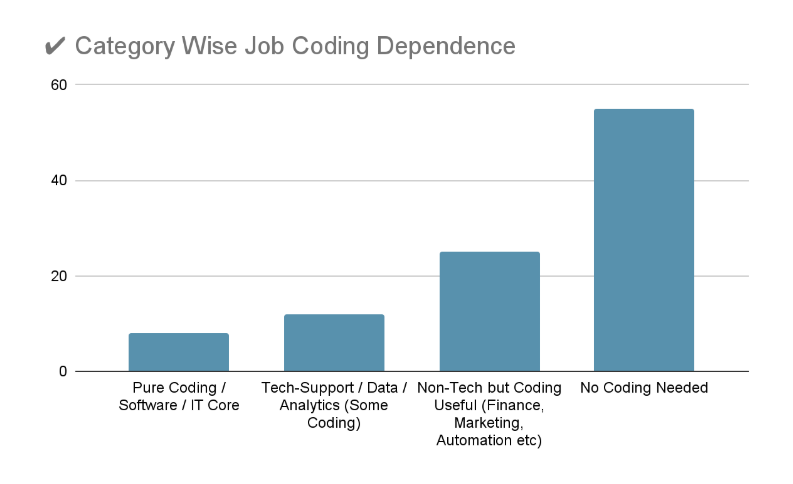
This table shows how coding requirements vary across different job categories. Coding is not required in every job, but in today’s modern job market, the use of coding skills is steadily increasing across industries.
In Pure Coding / IT Core jobs, coding is the primary skill used for software development, programming, and system building.
In Tech Support, Data, and Analytics roles, coding is used partially, such as for automation scripts, data queries, or working with technical tools.
In Non-Tech jobs like finance, marketing, and automation-related roles, coding may not be mandatory but helps improve productivity and efficiency.
In No Coding jobs, coding skills are generally not required, such as in some administrative, field-based, or manual roles.
Overall, this distribution shows that coding is no longer limited to IT — it is gradually becoming an important skill across multiple industries.
Upgrade Skills Before They Become Obsolete
Growth Is a Choice — Not a Chance
Relying on outdated knowledge can quietly slow career progression. By engaging in real projects, professionals refresh their technical foundation while learning modern development practices.
This proactive approach ensures you remain valuable in a job market that rewards adaptability and forward-thinking talent.
Learn the Technologies Shaping the Future
Stay Aligned With Industry Demand
Employers are actively seeking expertise in technologies such as React, Node.js, Python, and AI/ML. Understanding these tools theoretically is helpful — but building with them creates true readiness.
Project-Based Learning allows professionals to work directly with trending tech, ensuring their skill set reflects where the industry is heading, not where it has been.
Showcase Competence Through Real Work
Let Your Projects Demonstrate Your Capability
As careers progress, expectations grow. Recruiters and decision-makers increasingly look for evidence of practical expertise rather than just years of experience.
By developing real-world projects, professionals create a powerful body of work that validates their abilities and strengthens their professional credibility.
Unlock Pathways to Advanced Roles
Prepare for the Next Step — Not Just the Current One
Career growth often requires more than ambition; it demands proof that you can handle greater responsibility. Hands-on project experience builds system-level thinking, architectural awareness, and stronger problem-solving abilities.
These qualities position you for promotions, leadership opportunities, or specialized technical roles.
Build the Freedom to Create Independently
From Freelancing to Startup Innovation
Modern professionals increasingly seek flexibility — whether through freelancing, consulting, or launching their own products. Project-Based Learning equips you with the confidence to design, build, and deploy solutions independently.
With practical expertise, you gain the freedom to explore opportunities beyond traditional employment.
Stand Out in a Competitive Job Market
Practical Experience Creates Professional Authority
In a crowded talent landscape, differentiation is essential. Professionals who combine experience with updated, hands-on skills naturally command greater attention from employers.
When you can demonstrate that you not only understand technology but can actively build with it, you shift from being just another candidate to becoming a preferred choice.
Reinvent Your Career With Real Experience
Because Progress Belongs to Those Who Keep Building
Project-Based Learning is more than an educational method — it is a strategy for long-term career resilience. It empowers professionals to evolve confidently, seize emerging opportunities, and remain future-ready.
The formula is simple: upgrade continuously, build consistently, and position yourself where growth never stops.
How Project-Based Learning Works
A Structured Path From Beginner to Builder
Great developers aren’t created through random practice — they grow through structured, real-world execution. At Pinaki IT Hub, Project-Based Learning follows a carefully designed framework that mirrors how professional software is actually built.
Each stage is intentional, ensuring that learners don’t just gain knowledge but develop the confidence to create production-ready applications.
Start With a Real Project Idea
Because Real Skills Come From Real Challenges
Every powerful learning journey begins with a meaningful objective. Instead of practicing disconnected exercises, you work on projects that reflect modern digital needs — such as an e-commerce web application, social login systems using OAuth, real-time chat platforms, portfolio websites with CMS capabilities, or even AI-powered voice assistants.
This immediately shifts your mindset from “learning to code” to building solutions that people can use.
Plan Like an Engineer
Strong Systems Begin With Smart Architecture
Before writing a single line of code, professionals plan their approach — and that’s exactly what you learn here. Projects are broken down into essential layers including UI/UX components, backend logic, database structure, and deployment strategy.
This phase strengthens your ability to think structurally, helping you understand how individual pieces connect to form scalable, high-performing systems.
Build Module by Module
Progress That Feels Real — Because It Is
Complex applications aren’t built all at once; they evolve feature by feature. You develop functionality step-by-step, working on authentication systems like login and registration, creating smooth routing experiences, integrating APIs, managing CRUD operations, and configuring hosting with custom domains.
With every module completed, your confidence expands — and the project starts looking more like a professional product.
Test, Debug, and Improve
Where Good Developers Become Great Ones
No software is perfect on the first attempt. That’s why testing and refinement are essential parts of the journey. You gain exposure to automated testing fundamentals, user behavior analysis, bug resolution, and code refactoring for improved readability and performance.
This stage builds resilience, teaching you how to stay solution-focused even when challenges arise — a defining quality of successful developers.
Types of Skills Developed Through Project-Based Learning
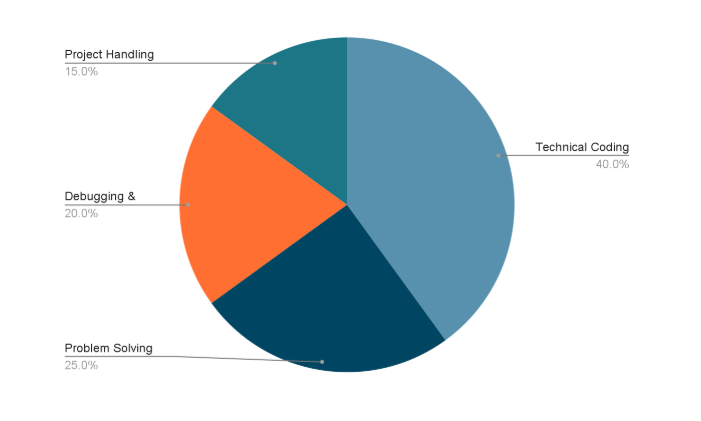
This pie chart shows how Project-Based Learning helps learners develop multiple types of skills. While technical coding skills form the core, learners also gain problem-solving ability, debugging experience, and real-world project handling confidence. This balanced skill development is what makes PBL highly effective in preparing learners for real industry environments.
Take Your Project Live
Experience the Thrill of Real Deployment
Few moments are as transformative as seeing your application go live. Your project is hosted on real servers, made accessible to users, and functions like an actual production-grade product.
This experience removes the fear of real-world development and replaces it with a powerful sense of capability.
Gain Confidence That Classrooms Alone Can’t Provide
Because Experience Is the Best Teacher
When you’ve planned, built, tested, and deployed a complete application, you no longer feel like a beginner. You understand workflows, anticipate challenges, and approach development with clarity.
This depth of exposure ensures you are not just trained — you are prepared.
From Idea to Deployment — Just Like the Industry
Learn the Process Employers Trust
The true strength of Project-Based Learning at Pinaki IT Hub lies in its alignment with real industry practices. You graduate with more than theoretical understanding — you carry the experience of building software from scratch.
And that difference is what transforms learners into professionals. Because the best way to prepare for the real world is to start working in it early.
Real Skills You’ll Gain
Move Beyond Learning — Build True Technical Capability
In today’s tech-driven world, success belongs to those who can do more than just understand concepts. Employers look for individuals who can contribute from day one with practical expertise and confidence.
Through Project-Based Learning, you develop technical skills that are not only relevant but immediately applicable — preparing you to solve real problems and build real products.
Master the Foundations of Frontend Development
Create Interfaces Users Love
Frontend development is where technology meets user experience. By working with modern tools such as React, HTML, and CSS, you learn how to design responsive layouts, structure clean interfaces, and deliver seamless digital experiences.
More importantly, you understand how thoughtful design impacts usability — enabling you to build applications that feel intuitive and engaging.
Strengthen Your Backend Expertise
Power the Logic Behind Every Great Application
While users see the interface, the backend is what makes everything function smoothly. Exposure to technologies like Node.js, Python, and PHP helps you understand server-side logic, request handling, authentication flows, and system performance.
This knowledge equips you to build applications that are not only functional but also reliable and scalable.
Understand How Data Drives Modern Software
Learn to Store, Manage, and Retrieve Information Efficiently
Every powerful application depends on well-structured data. By working with both SQL and NoSQL databases, you gain clarity on how information is organized, accessed, and secured.
This skill enables you to design smarter systems and ensures your applications remain fast, stable, and capable of handling growth.
Build Connectivity With APIs & Authentication
Make Applications Smarter and More Secure
Modern software rarely operates in isolation. APIs allow platforms to communicate, share data, and extend functionality, while authentication ensures safe and trusted user access.
Through hands-on implementation, you learn how to integrate services seamlessly and create secure digital environments — a capability highly valued across the industry.
Gain Exposure to DevOps Fundamentals
Understand What Happens After the Code Is Written
Writing code is only part of the journey; knowing how to deploy and maintain it is equally important. DevOps basics introduce you to hosting, version control, deployment workflows, and performance monitoring.
This broader perspective helps you see the complete lifecycle of an application — transforming you from a coder into a well-rounded developer.
Become a Versatile, Industry-Ready Developer
Skills That Open Doors Across Roles
When your technical foundation spans multiple layers of development, your career possibilities expand significantly. You can collaborate more effectively, adapt to diverse projects, and contribute with greater impact.
Versatility is one of the most sought-after traits in technology — and these skills ensure you stand out wherever you go.
Learn Skills That Stay Relevant
Because Strong Foundations Power Long-Term Success
Technology will continue to evolve, but a solid technical core allows you to evolve with it. The skills you gain aren’t just for your first job — they support continuous growth throughout your career.
With the right expertise, you don’t just enter the industry prepared — you enter it positioned to thrive.
Professional Skills You’ll Gain
Because Technical Knowledge Alone Isn’t Enough
In the modern workplace, success depends on more than writing great code. Employers seek professionals who can communicate clearly, collaborate effectively, manage responsibilities, and adapt to dynamic environments.
Project-Based Learning helps you cultivate these essential professional skills — ensuring you graduate not only as a capable developer but as a dependable team player ready for real-world challenges.
Learn the Art of Team Collaboration
Great Products Are Built Together
Software development is rarely a solo effort. Working on projects teaches you how to share ideas, align with team goals, divide responsibilities, and support others when challenges arise.
This collaborative mindset prepares you for professional environments where teamwork drives innovation and efficiency.
Work With Version Control Like Professionals

Stay Organized. Stay Accountable. Stay Efficient.
Version control is more than a technical process — it reflects discipline and transparency in your workflow. By managing code changes, tracking progress, and maintaining structured repositories, you learn how professional teams operate without confusion or conflict.
This habit builds accountability and ensures your work remains reliable and easy to manage.
Turn Ideas Into Action Through Planning
Execution Is What Creates Results
Strong professionals don’t rely on motivation alone — they rely on structured planning. While working on projects, you learn how to evaluate requirements, set milestones, prioritize tasks, and execute with clarity.
These abilities help you stay focused, reduce errors, and consistently deliver high-quality outcomes.
Strengthen Your Problem-Solving Ability
Approach Challenges With Logic and Confidence
Every project introduces situations that demand thoughtful decision-making. Instead of reacting impulsively, you develop the ability to analyze scenarios, explore solutions, and choose the most effective path forward.
Over time, this measured approach becomes a natural strength — one that distinguishes dependable professionals from average performers.
Master Deadline Management
Deliver Excellence — On Time, Every Time
Meeting deadlines is a hallmark of professionalism. Project-Based Learning trains you to manage your time wisely, balance multiple responsibilities, and maintain productivity without compromising quality.
This reliability builds trust — a trait that employers value just as highly as technical expertise.
Build Workplace Readiness Before You’re Hired
Step Into Your Career With Confidence
When professional skills grow alongside technical ones, the transition into the workforce becomes significantly smoother. You understand expectations, communicate effectively, and contribute meaningfully from the start.
Instead of adjusting slowly, you arrive prepared — ready to perform and progress.
Become the Professional Companies Want to Hire
Skill + Discipline = Career Acceleration
Professional success is rarely accidental; it is built on habits that support consistent performance. By mastering collaboration, planning, accountability, and time management, you position yourself as someone organizations can depend on.
Because in the end, companies don’t just hire knowledge — they hire professionals who know how to deliver.
Common Project Ideas to Start With
Small Projects That Create Big Developers
Every expert was once a beginner — and every successful developer started by building simple, meaningful applications. The right starter projects don’t just teach coding; they challenge your thinking, strengthen your fundamentals, and introduce you to real development workflows.
These projects are designed to push you slightly beyond your comfort zone — because that’s exactly where rapid growth happens.
Build a Weather Application
Learn How Real-Time Data Powers Modern Apps
A weather app is the perfect introduction to dynamic development. As you fetch live data from external APIs and display it through an intuitive interface, you begin to understand how applications communicate with the outside world.
This project strengthens your skills in API integration, data handling, and responsive design — all while giving you the satisfaction of creating something people can actually use.
Create a To-Do List With a Real Database
Move From Static Screens to Functional Systems
At first glance, a to-do list may seem simple — but building one with a real database transforms it into a powerful learning experience. You discover how data is stored, updated, retrieved, and managed securely.
This project introduces you to full-stack thinking, helping you see how frontend actions connect seamlessly with backend processes.
Design an Interactive Quiz Application
Combine Logic, Engagement, and User Experience
A quiz app challenges you to think about more than just code — it pushes you to design structured workflows and engaging user journeys. From handling questions and scoring logic to displaying results dynamically, every feature sharpens your problem-solving ability.
By the end, you gain confidence in building applications that are both functional and interactive.
Build a Personal Blog With CMS
Take Control of Content Through Smart Architecture
Creating a blog with a content management system teaches you how scalable platforms are structured. Instead of hardcoding updates, you develop the ability to add, edit, and manage content effortlessly.
This project deepens your understanding of databases, admin panels, and user roles — skills widely used in professional environments.
Develop an E-Commerce Prototype
Understand the Backbone of Digital Businesses
An e-commerce project brings together multiple layers of development — product listings, user authentication, shopping carts, and payment workflows. It challenges you to think strategically about performance, usability, and trust.
Completing a project of this scale marks a turning point, proving that you can handle complex, real-world systems.
Step Outside Your Comfort Zone
Because Growth Never Happens Inside It
The moment a project feels slightly difficult is often the moment real learning begins. Each challenge forces you to research, experiment, debug, and improve — accelerating your evolution as a developer.
Over time, tasks that once felt intimidating become achievable, and your confidence rises with every milestone.
Start Building Today — Thank Yourself Tomorrow
The Fastest Way to Improve Is to Create
You don’t need to wait until you “know everything” to begin. Progress comes from consistent action, not perfection. With every project you complete, your skills compound and your professional identity becomes stronger.
So start building now — because the developers who succeed are the ones who learn by creating, not just consuming.
How Pinaki IT Hub Helps You Succeed
Where Ambition Meets the Right Guidance
Success in technology isn’t just about learning — it’s about learning the right way, with the right support system behind you. At Pinaki IT Hub, Project-Based Learning is designed to be structured, practical, and career-focused so that every student progresses with clarity and confidence.
We don’t just train you to understand technology — we prepare you to build a future with it.
Tailored Mentorship That Keeps You Moving
Because Getting Stuck Should Never Stop Your Growth
Learning complex skills can feel overwhelming without proper guidance. That’s why personalized mentorship is at the heart of our approach. With dedicated one-to-one support, your doubts are addressed quickly, challenges are simplified, and progress becomes consistent.
Instead of struggling alone, you move forward with expert direction — making your learning journey smoother and far more effective.
Structured Projects With a Clear Path
From Beginner Confidence to Advanced Capability
Random practice creates confusion, but structured execution creates mastery. Our projects are carefully designed to guide you step-by-step, ensuring that each level builds naturally upon the previous one.
This clarity eliminates guesswork and allows you to focus your energy on what truly matters — developing skills that are relevant, practical, and industry-ready.
Real Feedback That Elevates Your Work
Learn What Professionals Do Differently
Growth accelerates when you understand not just what to build, but how to build it better. Our mentors provide constructive, real-world feedback that helps you refine your logic, improve code quality, and follow professional development standards.
Over time, you begin writing cleaner, more efficient code — the kind employers expect from serious developers.
Portfolio Reviews That Strengthen Your Profile
Transform Projects Into Career Assets
A strong portfolio can open doors long before your first interview. We help you polish your projects so they reflect both your technical ability and your attention to detail.
When recruiters evaluate your work, they don’t just see assignments — they see proof of capability and commitment.
Career Support That Goes Beyond Training
Prepare for Opportunities With Confidence
Technical skills alone don’t secure roles; preparation does. From resume building and interview readiness to placement guidance, we ensure you understand how to present yourself professionally.
This holistic support empowers you to approach opportunities with confidence and clarity.
More Than an Institute — A Launchpad for Your Career
Your Growth Is Our Mission
At Pinaki IT Hub, every resource, mentor, and project is aligned with one goal: helping you succeed in a competitive tech landscape. We focus on building not just skilled learners, but confident professionals ready to contribute from day one.
Because when the right training meets the right mindset, success stops being uncertain — and starts becoming inevitable.
Why Project-Based Learning Is Your Fastest Path to Coding Excellence
Stop Preparing — Start Becoming
There is a clear difference between learning about technology and becoming truly capable in it. Traditional education builds awareness, but real-world experience builds expertise.
Project-Based Learning bridges this gap by transforming knowledge into practical ability — helping you evolve from someone who understands code to someone who can confidently create with it.
Knowledge Tells. Experience Proves.
And Proof Is What Employers Trust
Understanding concepts is valuable, but the industry rewards those who can apply them effectively. Experience demonstrates your readiness to contribute, collaborate, and solve problems in real environments.
When recruiters see real projects instead of just certifications, your profile instantly carries greater credibility and impact.
Confidence Is Built Through Creation
The More You Build, The Stronger You Become
Confidence doesn’t appear overnight — it grows every time you overcome a challenge, debug an error, or launch a working application. Each completed project strengthens both your technical foundation and your belief in your own capabilities.
Over time, what once felt complex becomes second nature — and that transformation defines a true developer.
Improve Faster Than You Thought Possible
Because Action Accelerates Mastery
Passive learning often stretches progress across months or even years. But when you actively build, experiment, and refine your work, growth compounds rapidly.
Project-Based Learning places you on the fastest track to improvement by ensuring that every effort directly enhances your real-world capability.
Whether You’re Starting Fresh or Leveling Up
Real Projects Create Real Momentum
For students, it builds a powerful foundation early in their careers. For professionals, it unlocks new opportunities and keeps skills aligned with evolving industry demands.
No matter where you begin, the formula remains the same: consistent building leads to continuous growth.
The Developers Who Succeed All Share One Habit
They Don’t Just Learn — They Build
Behind every successful coder is a portfolio of projects that shaped their journey. These experiences sharpen thinking, expand creativity, and prepare you for challenges beyond the classroom.
If your goal is long-term success, there is no substitute for hands-on execution.
Your Future Is Defined By What You Create Today
Take the Step That Moves You Forward
The opportunity to grow is always within reach — but progress begins the moment you decide to act. By choosing Project-Based Learning, you choose clarity over confusion, capability over hesitation, and progress over stagnation.
The path to coding excellence isn’t complicated — build consistently, learn actively, and never stop improving.
Ready to Accelerate Your Coding Journey?
Start Building the Career You Envision
Explore industry-focused courses and guided project programs designed to make you job-ready and future-ready. Your next level of growth is waiting — all it takes is the decision to begin.
👉 Discover what’s possible at Pinaki IT Hub:
https://pinakiithub.com/