
Powered by Pinaki IT Hub – Building the Next Generation of Tech
Leaders.
Technology has always been the backbone of progress. But in 2025, we’re facing a paradox:
📌 Businesses are investing billions in AI, cloud, cybersecurity, and data.
📌 Yet, millions of jobs are going unfilled because professionals don’t have the right skills.
This is what experts call the IT Skills Gap — and it’s not just a buzzword, it’s the biggest challenge of the digital era.
In this blog, we’ll explore:
- What exactly is the IT skills gap?
- Why is the gap widening in 2025?
- Which IT skills are most in-demand right now?
- How organizations are adapting to survive.
- How individuals can future-proof their careers.
- Why choosing Pinaki IT Hub can help you stay ahead.
By the end, you’ll have a crystal-clear roadmap to thrive in the evolving tech landscape.
What is the IT Skills Gap?
The IT skills gap is one of the biggest challenges facing the global economy in 2025. At its core, the gap represents a disconnect between supply and demand:
● What businesses require → advanced, specialized, and constantly evolving technical skills to drive growth, security, and innovation.
● What professionals currently possess → often outdated, fragmented, or purely theoretical knowledge, lacking hands-on experience and modern industry exposure.
This mismatch creates a bottleneck where jobs exist, but skilled people don’t.
🔎 A Simple Example
Imagine a bank in 2025:
● It wants to deploy an AI-powered fraud detection system that monitors
transactions in real-time.
● The system must not only detect anomalies but also comply with global data protection laws (like GDPR in Europe, DPDPA in India, and AI Act in the EU).
● The bank posts a job opening for AI Engineers with knowledge of Machine Learning + AI Ethics + Data Governance.
📌 Here’s the reality:
● Thousands of Computer Science graduates apply.
● Most know basic Python or Java.
● But only a tiny fraction understands how to:
○ Train bias-free ML models.
○ Handle cross-border data privacy rules.
○ Integrate AI into live financial systems.
👉 Result:
● The vacancy remains open for months.
● Project deadlines get delayed.
● Competitors with the right talent gain an edge.
This is the IT Skills Gap in action — not a shortage of people, but a shortage of the right skills.
📊 Global Snapshot (2025)
The IT skills gap isn’t limited to one country — it’s a worldwide crisis:
● 76% of CEOs in 2025 admit they are struggling to hire the right IT talent (PwC Global CEO Survey).
● The World Economic Forum (2025) estimates that the global IT skills shortage costs businesses a staggering $8.5 trillion in lost revenue every year — through stalled projects, inefficiencies, and cybersecurity risks.
● In India, long known as the “IT outsourcing hub,” the issue is even sharper. Despite producing 1.5 million engineering graduates every year, studies show that 42% of graduates are unemployable for advanced IT roles due to outdated curriculums, poor practical training, and lack of exposure to global best practices.
🌍 Regional Breakdown
● United States → Facing severe shortages in cybersecurity experts. Over 500,000 cybersecurity jobs remain vacant (CyberSeek 2025).
● Europe → Struggling with compliance-focused roles such as AI Ethics Officers and Data Governance Specialists, especially after the implementation of the EU AI Act.
● Asia-Pacific (APAC) → Countries like India and the Philippines have a huge supply of IT graduates but a lack of specialization in AI, Cloud, and advanced DevOps.
● Middle East & Africa → Governments are investing heavily in smart cities and digital transformation, but a lack of skilled cloud architects and AI engineers slows down implementation.
🛑 Why Does It Matter?
The IT skills gap isn’t just an HR problem — it has serious consequences:
Global Inequality → Countries with skilled workforces surge ahead, while others fall behind in the digital economy.
Delayed Projects → Businesses cannot launch new products or services on time.
Higher Costs → Companies pay premium salaries to a small pool of skilled professionals.
Security Risks → A lack of cybersecurity experts leaves organizations vulnerable to attacks.
Lost Innovation → Startups and enterprises miss out on adopting cutting-edge tools like AI, blockchain, or quantum computing.
💡The problem isn’t the number of people entering the IT job market. In fact, millions graduate every year.
The real problem is that their skills don’t match industry needs. This means companies remain talent-starved, and graduates remain jobless — creating a lose-lose situation for both.
👉 In short: The IT skills gap is the silent crisis of 2025 — and solving it requires urgent upskilling, re-skilling, and industry-relevant training.
Why is the Skills Gap Widening in 2025?
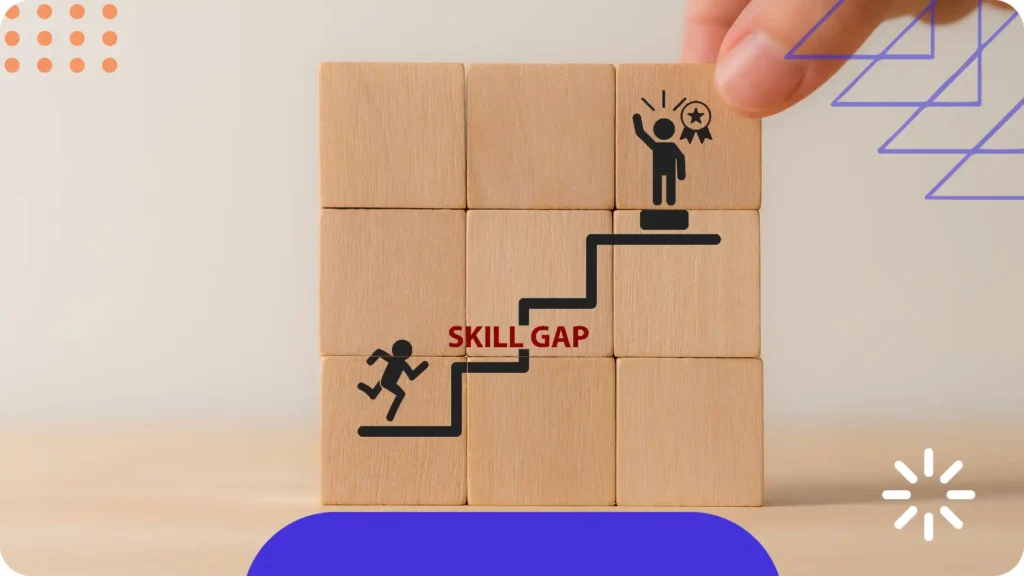
If the IT skills gap was already a problem in the 2010s, by 2025 it has become a global emergency.
The speed of change in technology is outpacing the speed of learning, and this is creating an ever-widening chasm between what businesses need and what professionals can deliver. Let’s break down the five major reasons why the gap is worse than ever before:
a) Rapid Tech Evolution – The World Can’t Keep Up
Technology in 2025 doesn’t evolve yearly — it evolves quarterly or even monthly.
● AI (Artificial Intelligence): In 2022, ChatGPT shook the world. By 2025, generative AI models, multimodal systems, and domain-specific AI assistants are everywhere — from healthcare to finance. Yet, very few professionals know how to fine-tune AI models, manage bias, or integrate them into enterprise systems responsibly.
● Cloud Computing: Cloud migration was once optional, now it’s survival. Enterprises are going multi-cloud (AWS + Azure + GCP) and demanding DevOps + security + compliance knowledge from cloud engineers.
● Cybersecurity: The rise in AI-driven cyberattacks and deepfake scams requires specialists in Zero Trust Architecture, Ethical Hacking, and Cyber Forensics.
● Blockchain & Web3: Beyond cryptocurrency, blockchain is powering digital identity, supply chain traceability, and healthcare data security.
● Quantum Computing: Still emerging, but even basic knowledge of quantum algorithms is becoming valuable in finance and pharma industries.
📌 The Problem:
Traditional universities cannot keep pace. By the time a syllabus is designed, approved, and taught, the industry has already moved 2–3 steps ahead.
👉 Example: Many Indian engineering colleges are still teaching C, C++, and outdated Java frameworks as core subjects, while companies now want Python, TensorFlow, Kubernetes, and Generative AI deployment skills.
Result: Students graduate with outdated knowledge → Companies can’t hire them → The gap widens.
b) Automation Replacing Old Roles Automation and AI are eliminating “repetitive” IT jobs at lightning speed.
● Routine IT Support: Chatbots, AI assistants, and self-healing IT systems are replacing Tier-1 and Tier-2 support jobs.
● Software Testing: AI-powered test automation tools (like Testim and Applitools) now detect bugs faster than human testers.
● Data Entry & Reporting: Automated RPA (Robotic Process Automation) tools are handling repetitive back-office tasks.
📌 Impact:
● Professionals who relied on these jobs are suddenly left without work.
● Unless they re-skill in emerging areas (AI Ops, DevOps, Cybersecurity), they are left behind.
👉 Example: A 2018 IT Support Engineer with only Windows troubleshooting skills is now unemployable unless they upgrade to cloud infrastructure management + AI monitoring tools.
c) New Roles Demand Multi-Disciplinary Skills
The IT industry no longer hires “single-skill” professionals.
Today’s job roles are hybrid and multi-disciplinary, requiring knowledge across domains.
● A Cloud Engineer isn’t just about AWS anymore. They need:
○ AWS + Azure + GCP basics
○ DevOps automation with Jenkins/Docker/Kubernetes
○ Security compliance (GDPR, HIPAA, DPDPA India)
○ Cost optimization strategies
● A Data Scientist in 2025 must know:
○ Advanced ML algorithms
○ AI Ethics & Bias Mitigation
○ Real-time ML pipelines (MLOps)
○ Big Data frameworks like Spark & Hadoop
○ Visualization tools (Tableau, Power BI)
📌 The Problem:
Universities and traditional training institutes still teach “single-skill modules” (like only Java or only Python).
But companies want full-stack, cross-functional experts.
Result: Professionals trained in silos → Industry demanding “end-to-end” knowledge → Skills gap widens.
d) Global Competition – The Remote Work Revolution
Before the pandemic, most IT jobs were location-based. By 2025, remote work has completely globalized the IT talent market.
● A company in London can easily hire a cybersecurity analyst from India or a cloud engineer from Poland.
● Salaries are competitive, but companies only choose candidates who are globally competent — meaning they not only know technical skills but also global compliance laws, cross-cultural collaboration, and advanced English communication.
📌 Impact on Indian IT Professionals:
● While India produces the largest number of IT graduates, many lack exposure to global standards.
● Example: A U.S. firm may reject an Indian candidate who knows AWS but has zero experience with GDPR/CCPA compliance, preferring a European professional instead.
👉 The market is no longer local — you’re competing against the world.
e) Lack of Practical Exposure – The Experience Deficit Perhaps the biggest reason for the skills gap is the lack of hands-on training.
● Most graduates complete 4 years of engineering with textbook knowledge only.
● Few ever build real-world projects (e.g., deploying a live ML model, setting up a cloud environment, or handling a simulated cyberattack).
● Companies don’t just want degrees — they want proof of execution.
📌 Industry Reality:
● Recruiters now scan GitHub profiles more than resumes.
● Job postings demand “experience with live projects,” even for entry-level positions.
● Internships and hackathons are becoming more valuable than college exams.
👉 Example:
Two candidates apply for a Data Analyst job:
● Candidate A: Holds a B.Tech degree but only knows Excel and basic SQL.
● Candidate B: Has built 5 real projects — sales forecasting models, Tableau dashboards, and automated data pipelines.
Who gets hired? Candidate B — every single time.
Result: Graduates without real projects remain unemployed → Companies keep complaining about lack of job-ready talent → Skills gap widens further.
📢The IT skills gap is not just growing naturally — it’s being accelerated by:
● Faster technology shifts
● Automation eliminating low-level jobs
● Rising expectations for multi-disciplinary skills
● Global competition through remote work
● A broken education-to-industry pipeline
👉 In 2025, the “skills gap” isn’t a small hurdle — it’s the defining challenge of the IT workforce.
Only those who invest in continuous learning, hands-on exposure, and globally aligned training will stay relevant.
The Most In-Demand IT Skills
In 2025, the IT industry isn’t just about coding or maintaining systems anymore. The market has shifted towards specialized, high-value, and interdisciplinary skill sets that enable companies to innovate, secure, and scale rapidly.
According to Gartner, NASSCOM, and LinkedIn’s Future of Jobs Report (2025), the following are the hottest skills employers are chasing globally — with direct implications for hiring, salaries, and career growth.
🔐 Cybersecurity – The Digital Shield
Cybersecurity is no longer optional — it’s a survival requirement. With businesses moving 90% of their workloads to digital platforms, every organization is a potential target.
●Why It’s in Demand (2025):
○ Global cybercrime damages are projected to hit $10.5 trillion annually (Cybersecurity Ventures, 2025).
○ AI-powered attacks and ransomware have become more sophisticated.
○ Strict data privacy laws (like EU AI Act, India’s DPDPA, California Privacy Rights Act) demand compliance-ready systems.
●Skills Companies Want:
○ Ethical Hacking & Penetration Testing → Simulating attacks to find vulnerabilities.
○ Cloud Security → Protecting AWS, Azure, and hybrid cloud infrastructures.
○ Zero Trust Architecture → “Never trust, always verify” security models.
○ Incident Response & Threat Intelligence → Quick reaction to breaches.
💡 Example: Banks, hospitals, and e-commerce firms now hire full-time cyber teams to prevent even 1-minute downtime, as it can cost millions.
☁️ Cloud Computing & DevOps – The Backbone of Modern IT
Cloud has become the default infrastructure for startups, enterprises, and even governments. In 2025, 94% of enterprises use some form of cloud services.
● Why It’s in Demand (2025):
○ Businesses need scalability, cost optimization, and reliability.
○ DevOps ensures faster delivery cycles and automation, which are crucial in
a competitive market.
● Skills Companies Want:
○ AWS, Azure, GCP → Mastery of cloud platforms.
○ Kubernetes & Docker → Containerization and orchestration for microservices.
○ CI/CD Pipelines → Automating code testing and deployment.
○ Cloud Cost Optimization → Balancing performance and budget.
💡 Example: A streaming company like Netflix or Hotstar relies on DevOps engineers to ensure millions of users stream smoothly during peak hours
🤖 Artificial Intelligence & Machine Learning – The Game Changer
AI isn’t just a buzzword anymore — it’s the engine of transformation in almost every industry, from healthcare to finance. The AI market is projected to reach $407 billion by 2027.
● Why It’s in Demand (2025):
○ Generative AI is reshaping content, design, and coding.
○ Businesses demand AI models that are ethical, explainable, and scalable.
○ Integration with real-world applications (self-driving cars, fraud detection, smart assistants).
● Skills Companies Want:
○ Generative AI → Building ChatGPT-like tools for enterprises.
○ Natural Language Processing (NLP) → For chatbots, translation, and text analysis.
○ Computer Vision → Used in AR, surveillance, and healthcare.
○ MLOps → Deploying and monitoring machine learning models in production.
○ AI Ethics & Data Governance → Ensuring fairness, compliance, and trustworthiness.
💡 Example: Hospitals now need AI specialists to build early disease detection systems powered by medical imaging and real-time analytics.
📊 Data Science & Big Data Analytics – The New Oil Refinery

In today’s digital economy, data is the new oil — but only if you know how to refine it. Data Science transforms raw numbers into actionable strategies.
● Why It’s in Demand (2025):
○ Every click, swipe, and transaction generates data.
○ Businesses that harness data for insights grow 30% faster than competitors.
○ Governments rely on analytics for policy-making, traffic control, and smart cities.
● Skills Companies Want:
○ Python, R, Spark → Programming and big data handling.
○ Tableau, Power BI → Data visualization tools for decision-making.
○ Machine Learning Integration → Turning predictions into live features.
○ Data Compliance → Understanding GDPR, HIPAA, DPDPA.
💡 Example: Amazon uses real-time big data analytics to predict shopping trends and optimize supply chains worldwide.
🏗️ Full Stack Development – End-to-End Builders
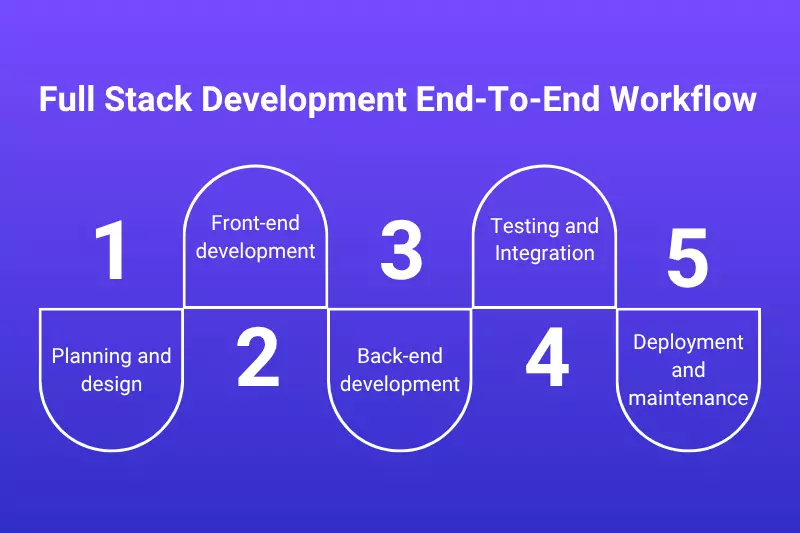
Full stack developers remain highly valuable because they can handle projects from start to finish, bridging front-end, back-end, and deployment.
● Why It’s in Demand (2025):
○ Startups and SMEs want versatile developers who can build entire products.
○ Enterprises prefer multi-skilled engineers for agile projects.
● Skills Companies Want:
○ MERN/MEAN Stack (MongoDB, Express, React/Angular, Node.js).
○ Next.js & Serverless Architecture → For scalable applications.
○ API Development & Security.
○ UI/UX Sensibility → Developers who also understand design principles.
💡 Example: A fintech startup building a payment app needs full stack developers who can code APIs, design dashboards, and integrate payment gateways — all at once.
🌐 Emerging Technologies – The Future-Ready Arsenal

While core IT skills remain vital, emerging technologies are shaping the future of work and society. Professionals with even foundational knowledge in these areas stand out in the global job market.
● Blockchain Development (Web3, DeFi, NFTs)
○ Beyond crypto, blockchain is being used for supply chain, digital IDs, and smart contracts.
● AR/VR Development (Metaverse Applications)
○ Education, training simulations, and virtual commerce are powered by AR/VR.
● Quantum Computing Basics
○ Still in its early stage, but companies like Google and IBM are investing heavily. Having basic quantum knowledge will be a big differentiator.
💡 Example: Nike’s Metaverse sneakers or decentralized finance platforms like Uniswap show how emerging tech creates new industries overnight.
💡In 2025, having just one skill isn’t enough.
The most successful professionals are T-shaped:
● Deep expertise in one area (e.g., AI, cybersecurity).
● Broad understanding of related fields (e.g., cloud, DevOps, compliance).
👉 Employers don’t just want coders anymore — they want problem-solvers who can innovate, secure, and scale in a global market.
How Organizations are Adapting to the IT Skills Gap
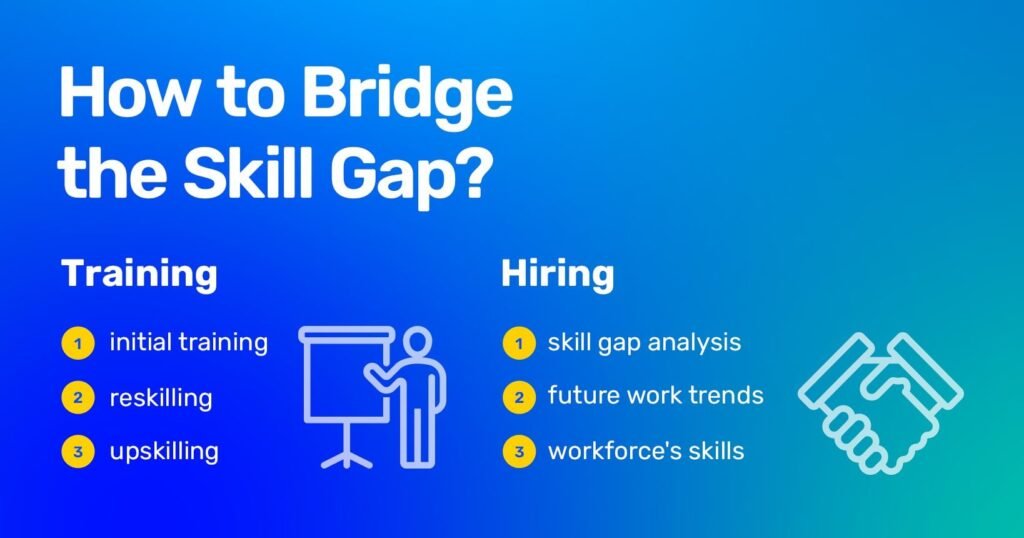
The IT skills gap is no longer just a recruitment problem — it’s a strategic survival challenge for businesses in 2025. With projects getting delayed, cyber risks multiplying, and competitors innovating faster, organizations are forced to reinvent how they attract, develop, and retain talent. Here’s how they are responding:
a) Upskilling & Reskilling Existing Staff
● Instead of relying only on external hiring, companies are investing heavily in training their current workforce.
● Many Fortune 500 firms have allocated 15–20% of their annual HR budgets for employee learning programs.
● Popular methods include:
○ In-house learning academies (e.g., IBM SkillsBuild, Microsoft Learn).
○ Sponsored certifications (AWS, Google Cloud, CISSP, etc.).
○ AI-based personalized training platforms that assess employee weaknesses and recommend tailored learning paths.
● Why it works: It reduces hiring costs, improves employee loyalty, and ensures the company always has up-to-date talent.
b) Hiring Non-Traditional Talent
● Organizations have realized that degrees alone don’t guarantee employability.
● Increasingly, candidates from bootcamps, self-learning platforms (Udemy, Coursera), and open-source communities are being hired.
● Example: Several Indian startups now hire blockchain developers purely based on their GitHub contributions rather than a formal degree.
● Why it works: These candidates often bring real-world project experience and adaptability, making them job-ready from day one.
c) Global Recruitment & Remote Teams
● With the rise of hybrid and remote work, geographical barriers are disappearing.
● A US-based fintech firm can hire a cloud engineer in Bangalore or a cybersecurity analyst in Poland within days.
● This has expanded the talent pool but also increased competition for Indian IT
professionals.
● Why it works: Access to a global workforce means organizations can scale faster without being constrained by local talent shortages.
d) AI-Powered Hiring & Talent Analytics
● Traditional recruitment based on resumes and interviews is giving way to AI-driven assessments.
● Modern hiring tools can:
○ Evaluate coding skills through live tests.
○ Measure adaptability and problem-solving through scenario-based AI simulations.
○ Predict a candidate’s future learning potential rather than just past experience.
● Why it works: Helps companies identify not just the “best on paper,” but the ones who can grow with evolving technologies.
e) Industry-Academia Partnerships (e.g., Pinaki IT Consultant)
● Leading IT institutes and consultancies are becoming strategic partners for businesses.
● Example: Companies tie up with Pinaki IT Consultant to co-create customized training modules, ensuring fresh graduates are industry-ready from day one.
● This reduces onboarding time and creates a continuous talent pipeline.
● Why it works: Solves the root problem by aligning education with real industry demand.
How Individuals Can Bridge the Skills Gap
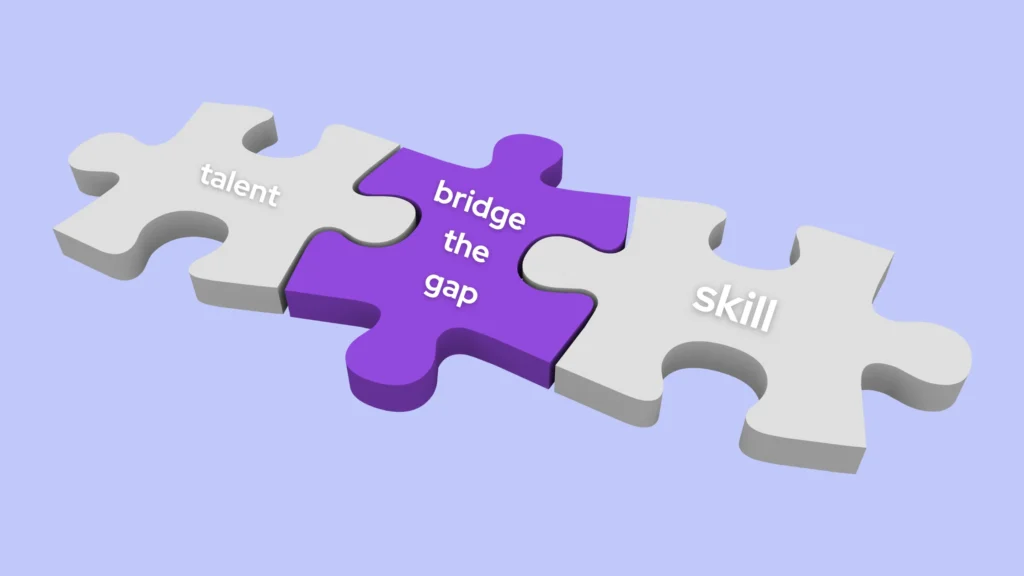
For IT professionals, the harsh truth of 2025 is this: Either you adapt, or you get left behind. Companies are no longer hiring just based on degrees — they’re hiring skills, projects, and adaptability. Here’s how individuals can stay competitive:
a) Continuous Learning is Non-Negotiable
● The era of “learn once, use forever” is over.
● In IT, skills have a shelf life of 18–24 months.
● Professionals must commit to lifelong learning via online platforms, mentorship, and industry communities.
● Smart professionals set aside at least 5–7 hours per week for upskilling.
b) Focus on Future-Proof Skills
● Instead of chasing every trend, focus on skills that will remain relevant for the
next decade:
○ AI & Machine Learning (Generative AI, MLOps).
○ Cybersecurity (Ethical Hacking, Zero Trust).
○ Cloud & DevOps (Multi-cloud, Kubernetes, automation).
○ Data Governance & Analytics (Compliance-ready data strategies).
● These areas guarantee high demand + high salaries.
c) Get Certified to Stand Out
● Certifications act as proof of expertise and give recruiters confidence.
● Examples:
○ Cloud: AWS, Azure, GCP.
○ Cybersecurity: CISSP, CEH.
○ Data: Google Data Analytics, Microsoft Power BI.
● Professionals with recognized certifications report up to 40% higher employability.
d) Build Hands-On Projects & Portfolios

● Recruiters are now saying: “Show me your GitHub, not your CV.”
● Real-world projects (AI models, apps, cloud deployments, cybersecurity simulations) carry more weight than marksheets.
● Tip: Contribute to open-source projects or build case studies to showcase practical knowledge.
e) Don’t Ignore Soft Skills
● Surprisingly, tech skills alone aren’t enough.
● Companies value:
○ Communication (explaining tech to non-tech stakeholders).
○ Problem-solving & critical thinking.
○ Ethical awareness (e.g., AI bias, data privacy).
● Professionals with a mix of hard + soft skills rise faster into leadership roles.
In 2025, the winners will be organizations that invest in people and individuals who invest in themselves. The IT skills gap is big — but it’s also a massive opportunity for those willing to evolve.
Why Pinaki IT Consultant?
At this point, you might wonder:
💭 “There are hundreds of IT institutes and online courses out there — why should I choose Pinaki IT Hub in 2025?”
The answer is simple: Pinaki IT Hub isn’t just another training center. It’s a career transformation ecosystem. Unlike generic institutes that only focus on delivering lectures, Pinaki creates industry-ready professionals who are globally employable. Here’s why it stands apart:
🎓 Why Learn with Pinaki?
When you choose Pinaki IT Hub, you’re not just signing up for a course — you’re investing in a globally recognized, career-defining journey.
✅ Global Certification
● Every program comes with globally valid certifications that boost your profile on LinkedIn, GitHub, and international job portals.
● Employers worldwide recognize these certifications, making your resume stand out instantly.
✅ Industry Mentors with 15+ Years of Experience
● Pinaki’s mentors are not just trainers, but industry veterans with 15–20 years of experience in IT, cloud, AI, and cybersecurity.
● They’ve worked with MNCs, startups, and international clients — and now bring that expertise directly to you.
● This means you don’t just learn “textbook theory” but real-life problem solving skills.
✅ 100% Hands-On Learning for Real-World Readiness
● Forget PPT slides and one-sided lectures.
● At Pinaki, every session is hands-on: coding, deploying, testing, securing, and troubleshooting — just like you would in a real IT job.
● By the end of your course, you’ll already be comfortable handling live projects and enterprise-level tools.
✅ 1. Industry-Tied Curriculum — Always Relevant, Never Outdated
● Courses updated every quarter to align with current global industry demand.
● Example: When Generative AI & AI Governance emerged in 2024, Pinaki immediately introduced dedicated modules.
● Students don’t just learn what’s trending today — they prepare for what employers will demand tomorrow.
✅ 2. Global Collaboration with DBSL (UK) — International Exposure
● Pinaki partners with DBSL UK, enabling students to work on international projects and global client challenges.
● You also gain cross-cultural communication skills — critical for remote work and global job opportunities.
✅ 3. Hands-On, Project-Based Learning — Not Just Theory
● Every course follows the Learn → Build → Deploy model.
● Students work on capstone projects, case studies, and GitHub portfolios.
● Example: Cloud learners deploy actual AWS & Azure solutions; AI learners build and fine-tune real ML models.
✅ 4. Proven Placement Success — 97% Alumni Employability
● With a dedicated placement cell, alumni now work at:
○ TCS, Infosys, Accenture, Wipro.
○ Google Cloud partners, UK-based startups, and AI consulting firms.
● Support includes resume building, mock interviews, recruiter networking, and company referrals.
✅ 5. Future-Ready Programs — Beyond Basic IT
Specializations include:
● AI Governance & Ethical AI
● Cloud & DevOps
● Cybersecurity & Ethical Hacking
● Data Governance & Analytics
These are not “optional add-ons” — they’re core skills for the 2025–2030 IT job market.
✅ 6. Mentorship from Global Experts
● Trainers are working IT professionals with global projects under their belt.
● They provide insider strategies, real-world workflows, and industry networking — things no textbook or YouTube tutorial can teach.
✅ 7. Flexible Learning Options
● Hybrid model: online + offline classes.
● Weekend batches for working professionals.
✅ 8. Career Support
● Unlike most institutes that stop after your course ends, Pinaki stays with you:
○ Resume upgrades.
○ Ongoing interview prep.
○ Career counseling.
○ Alumni networking opportunities.
📌 Real Success Story
● A student who knew only basic Java in 2023 enrolled in Pinaki’s AI & Cloud
Program.
● By 2025, he became an AI Cloud Consultant in the UK via Pinaki’s DBSL collaboration.
● Without Pinaki’s future-ready curriculum, his career might have stayed limited to Java coding.
✅ Pinaki IT Hub doesn’t just give you a certificate — it gives you global credibility, future-ready skills, and a career launchpad that lasts for life. If you want to stay ahead in IT, Pinaki is where your journey begins.
The Career Outlook – Why You Must Act Now
The future of IT jobs isn’t just about growth — it’s about survival. The technology industry is evolving faster than ever before, and by 2030, the World Bank projects that 85 million jobs worldwide may go unfilled due to a massive IT skills gap.
That number isn’t just a statistic — it represents millions of opportunities that will never reach unskilled professionals, but instead be taken by those who have invested in the right knowledge, certifications, and practical skills today.
🌍 The Global Reality of 2025–2030
● Automation & AI adoption: By 2030, more than 50% of routine IT jobs (like basic coding, testing, or data entry) may be automated.
● High demand, low supply: Roles in AI, Cloud, Cybersecurity, Blockchain, and Data Governance are skyrocketing, but universities are struggling to update their curriculums fast enough.
● Remote-first hiring: Companies are now recruiting from a global talent pool, meaning your competition isn’t just the graduate next door — it’s someone in another country with future-ready certifications.
💰 Who Will Earn the Big Salaries?
Professionals who upskill today will be the highest-paid leaders of tomorrow.
● Cloud Architects, AI Consultants, and Cybersecurity Leaders are already commanding salaries 2–3x higher than traditional IT developers.
● By 2030, these fields will dominate IT recruitment, and only certified, skilled professionals will qualify.
● Recruiters are no longer impressed with “just a degree” — they want proof of practical expertise through certifications, live project experience, and portfolios.
⚠️ The Risk of Doing Nothing

Not upgrading is no longer an option.
● Professionals who fail to adapt will face:
○ Job insecurity as automation eats into traditional roles.
○ Redundancy when their skills are replaced by AI-driven solutions.
○ Limited growth stuck in low-paying, outdated job profiles.
● Imagine being a 10-year experienced developer, but unable to compete with a 2-year fresher who is skilled in AI, DevOps, or Cloud. That’s the harsh reality already unfolding.
📈 Why You Must Act NOW, Not Later

● The skills gap is widening every month. Waiting even a year means falling behind a
global workforce that never stops learning.
● Certifications and skill-building take time. If you start today, you’ll be ready to capture
the opportunities of 2026–2030.
● Companies don’t wait for professionals to catch up — they hire those who are
already trained.
🕒 In Short:
● The best time to bridge your skills gap was yesterday.
● The next best time is today.
● By delaying, you don’t just lose time — you risk losing your place in the future IT
workforce.
✅ If you want to secure your future, command higher salaries, and stay relevant in a
world where AI, Cloud, and Cybersecurity dominate, the time to act is RIGHT NOW.
📢 In 2025, the IT skills gap isn’t just an industry problem — it’s a personal challenge for
every professional.
Your career, your growth, your stability depend on how well you adapt.
The good news? You don’t have to do it alone.
With the right guidance, mentorship, and training, you can not only survive — but thrive.
🎯 Are you ready to future-proof your IT career?
📚 Enroll in Pinaki IT Hub’s Future-Ready IT Programs today and gain:
● Hands-on projects
● Industry certifications
● Global exposure
● 97% placement assistance
👉 Don’t let the skills gap hold you back.
Be the professional companies are searching for.
Join Pinaki IT Consultant Now – www.pinakiithub.com
