Careers That Are Growing Faster Because of Data & Technology

In today’s digital-first world, Data and Technology are no longer optional skills — they are the backbone of modern businesses. From startups to global enterprises, companies are using data-driven decisions and advanced technology to grow faster, smarter, and more efficiently. As a result, careers powered by data and technology are growing at an unprecedented speed and offer exciting opportunities for students, freshers, and working professionals. This blog will help you understand: Why Data & Technology Are So Important Today: Powering the Digital Age Introduction: Living in a Data-Driven World We are living in an era where almost every action we perform leaves a digital footprint. From browsing websites and using mobile applications to online shopping, digital payments, social media engagement, and even smart home devices, data is constantly being generated. This massive flow of information has transformed how organizations operate, how governments make decisions, and how individuals interact with technology. Data and technology are no longer optional tools; they have become the foundation of modern business, innovation, and social development. The combination of data and technology enables organizations to gain deep insights, automate complex processes, enhance customer experiences, and remain competitive in fast-changing markets. Companies that understand how to collect, analyze, and apply data effectively are more likely to grow faster, reduce operational risks, and make informed strategic decisions. This is why data literacy and technological skills are now considered essential across industries and professions. Understanding the Role of Data in the Modern Economy What Is Data and Why Does It Matter? Data refers to raw facts and information generated through digital interactions, sensors, transactions, customer feedback, and online activities. While raw data alone may seem meaningless, when it is processed and analyzed using technology, it becomes valuable intelligence that helps organizations understand patterns, trends, and user behavior. In today’s digital economy, data has become one of the most valuable assets. Companies such as e-commerce platforms, social media networks, financial institutions, and healthcare providers rely heavily on data to improve services, personalize user experiences, and optimize internal operations. Data-driven organizations are able to make smarter decisions based on evidence rather than assumptions, leading to improved performance and sustainable growth. Data as a Strategic Business Resource Unlike traditional resources such as machinery or physical infrastructure, data can be reused, refined, and expanded over time. Businesses now treat data as a strategic resource that helps them identify market opportunities, reduce inefficiencies, and gain a competitive advantage. Organizations that invest in data analytics tools and skilled professionals can convert complex information into actionable insights that directly impact profitability and customer satisfaction. How Technology Converts Data into Meaningful Insights The Role of Advanced Technologies Technology plays a critical role in transforming raw data into useful knowledge. Tools such as cloud computing, artificial intelligence, machine learning, big data platforms, and automation systems enable organizations to process large volumes of information quickly and accurately. These technologies allow businesses to extract patterns, predict outcomes, and generate insights that would be impossible to achieve through manual methods. For example, machine learning algorithms can analyze customer purchase behavior to recommend products, while predictive analytics can help companies forecast demand and manage inventory efficiently. Cloud platforms make it possible to store massive datasets securely and access them from anywhere in the world, supporting remote work and global collaboration. Automation and Real-Time Decision Making Modern technology also enables real-time data processing and automation. Businesses can monitor performance metrics instantly, detect issues early, and respond to changes in the market faster than ever before. Automated systems reduce human error, increase operational efficiency, and allow employees to focus on strategic and creative tasks instead of repetitive manual work. Improving Customer Experience Through Data and Technology Understanding Customer Behavior One of the biggest advantages of using data is the ability to understand customer behavior in detail. Businesses can analyze browsing patterns, purchase history, feedback, and engagement metrics to gain insights into customer preferences and expectations. This helps organizations create personalized experiences that build stronger relationships and increase brand loyalty. Personalization has become a key factor in customer satisfaction. Whether it is customized product recommendations, targeted marketing campaigns, or personalized support services, data-driven strategies allow companies to deliver relevant content and offers that match individual customer needs. Enhancing Customer Engagement and Trust Technology also enables businesses to communicate more effectively with customers through chatbots, CRM systems, and automated support tools. These solutions provide faster response times, consistent service quality, and better issue resolution. When customers receive timely and accurate support, their trust in the brand increases, leading to long-term relationships and repeat business. Driving Business Growth and Profitability Data-Driven Decision Making Traditional business decisions were often based on intuition or past experience. Today, organizations rely on data analytics to support decision-making processes. By analyzing market trends, consumer demand, and operational performance, companies can make informed choices that reduce risks and improve outcomes. Data-driven strategies help businesses identify new opportunities, optimize pricing models, and improve resource allocation. This results in higher productivity, better financial performance, and stronger competitive positioning in the market. Optimizing Operations and Reducing Costs Technology enables businesses to streamline operations through automation and process optimization. Supply chain management systems, inventory tracking tools, and enterprise software platforms help organizations reduce waste, minimize delays, and improve overall efficiency. By leveraging data insights, companies can identify bottlenecks and implement improvements that save time and money. The Impact of Data and Technology Across Industries Information Technology and Software Development The IT sector relies heavily on data and advanced technologies to develop innovative software solutions, manage networks, and ensure cybersecurity. Data analytics helps IT professionals monitor system performance, detect security threats, and improve user experience. Cloud computing and artificial intelligence have further expanded the possibilities of digital transformation. Healthcare and Medical Innovation In healthcare, data and technology have revolutionized patient care and medical research. Electronic health records, wearable devices, and diagnostic tools generate valuable patient data that helps doctors make accurate diagnoses and develop personalized treatment plans. Predictive analytics is also being used to identify disease patterns
Choosing the Right Skill Path for Long-Term Career Success

Your Ultimate Guide to Making Smart, Future-Proof Career Decisions In today’s fast-moving and highly competitive world, choosing the right career path is no longer a simple decision driven by passion alone. While interest and motivation still matter, long-term career success now depends on how informed, strategic, and future-ready your choices are. The professional landscape is evolving at an unprecedented pace, and the skills you choose to develop today will directly influence your opportunities, stability, and growth tomorrow. Digital transformation, automation, and global connectivity have reshaped how industries operate and how talent is evaluated. Jobs that were once secure are being redefined, while entirely new roles are emerging across technology, analytics, sustainability, and digital business. In this environment, skills have become the true currency of career growth. Choosing wisely can open doors to global opportunities, while poor decisions can limit progress despite hard work. Why Choosing the Right Skill Path Matters More Than Ever The Career Decisions That Quietly Shape Your Entire Future Every major turning point in life is often defined not by one dramatic moment, but by a series of small, consistent decisions. Career choices work the same way. The skills you choose to learn today silently influence where you will stand five, ten, or even twenty years from now. They determine not just your income, but your confidence, relevance, freedom, and long-term satisfaction. In a world where industries are transforming faster than ever before, choosing the right skill path has become less of an option and more of a necessity. Unlike earlier generations, where one degree could support an entire career, today’s professionals must think dynamically. Skills are no longer static assets; they are living tools that must evolve with market needs. The right skill path can unlock opportunities, while the wrong one can quietly limit growth—even for highly hardworking individuals. Understanding the Shift: How the Job Market Is Being Redefined From Stable Roles to Skill-Driven Careers The global job market is undergoing a historic transformation. Traditional roles that once offered long-term stability are gradually giving way to flexible, skill-centric careers. Employers today are less focused on titles and more focused on capabilities. What you can do now matters far more than what you studied years ago. Technological advancement, globalization, and digital adoption have accelerated this shift. Automation is replacing repetitive tasks, while innovation is creating entirely new categories of work. As a result, professionals who continuously upgrade their skills are moving ahead, while those who rely solely on past qualifications often struggle to stay relevant. Alignment with Market Demand: The Foundation of a Strong Career Why Demand-Driven Skills Create Long-Term Value Choosing a skill path aligned with market demand ensures that your efforts translate into real opportunities. Industries invest in skills that solve current and future problems, and professionals who possess those skills naturally become valuable assets. In 2026 and beyond, sectors such as artificial intelligence, digital analytics, automation, cybersecurity, renewable energy, and advanced software development are shaping the global workforce. Roles like AI and machine learning specialists, data scientists, cloud engineers, digital strategists, and automation experts are no longer niche positions. They are becoming core functions across industries—from healthcare and finance to manufacturing and retail. This rise reflects where businesses are allocating budgets, building infrastructure, and planning for the future. When your skills align with these demands, you are not chasing jobs. Jobs begin to find you. Job Security and Growth in an Uncertain World How the Right Skills Protect You Against Disruption Job security today does not come from staying in one company for decades. It comes from being employable across companies, industries, and even countries. Professionals with in-demand skills enjoy a level of security that goes beyond a single role—they carry their value with them wherever they go. Global employment projections indicate that while some traditional jobs may decline, millions of new roles are expected to emerge by 2030. This shift does not signal job loss; it signals job transformation. New opportunities are being created faster than old ones are disappearing—but only for those who are prepared. When you invest in the right skill path, you position yourself on the growth side of this transformation. You become part of the workforce that is expanding, not shrinking. This leads to higher earning potential, faster promotions, and greater negotiating power throughout your career. Adaptation to Change: The New Career Superpower Why Learning Agility Matters More Than Experience Industries no longer operate on fixed models. Technology, consumer behavior, and global trends continuously reshape how businesses function. Skills that were relevant five years ago may already be outdated today. In this environment, adaptability is no longer optional—it is essential. Choosing the right skill path means choosing skills that evolve rather than expire. Fields like AI, data, digital marketing, and automation are not static disciplines. They constantly update, encouraging professionals to grow alongside them. This continuous learning keeps your mindset flexible and your profile competitive. Professionals who adapt quickly are not threatened by change—they leverage it. They move confidently through transitions, whether it’s a new role, a new industry, or a new market altogether. Financial Stability and Career Sustainability How Skills Translate into Income and Independence Financial growth is a natural outcome of valuable skills. When your expertise solves real business problems, organizations are willing to pay a premium for it. The right skill path often leads to multiple income streams—full-time roles, consulting, freelancing, or entrepreneurial ventures. Moreover, skill-based careers reduce dependency on a single employer. This independence offers greater control over career decisions, work-life balance, and long-term planning. Professionals with strong, relevant skills can adapt their careers around life changes instead of being constrained by them. Over time, this stability compounds—not just financially, but emotionally. Confidence grows when you know your skills will remain valuable regardless of market fluctuations. Personal Fulfillment and Professional Confidence When Growth Aligns with Purpose A well-chosen skill path does more than secure jobs; it builds confidence and fulfillment. Learning meaningful skills creates a sense of progress and control over your future. You
Humans + AI = Superpower!Why the Future Belongs to Human–AICollaboration
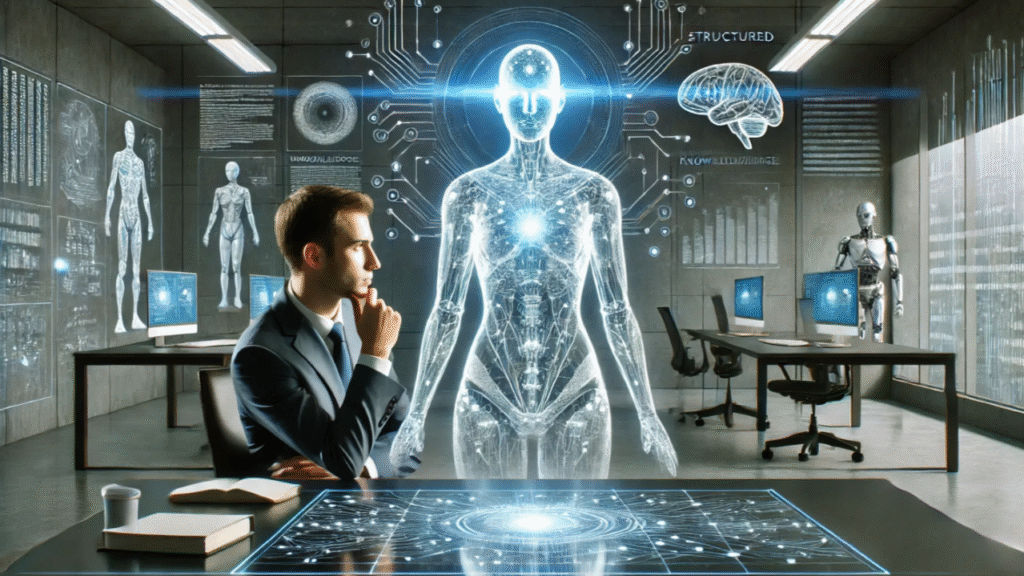
For years, the world kept debating whether AI would replace humans and whether machines would eventually take over our jobs. But today, the truth is clearer than ever: it’s not Humans vs AI — it’s Humans with AI. When human intelligence, creativity, intuition, and emotion come together with the speed, precision, and analytical power of artificial intelligence, something extraordinary happens. We unlock a superpower that neither side can achieve alone. This is the beginning of a new era — a future shaped by collaboration, innovation, and limitless possibilities. Welcome to the age where humans don’t compete with AI… they rise higher with it. The Real Future: Human IntelligenceAmplified by Artificial Intelligence The Shift From Fear to Understanding For decades, the global conversation around technology has been dominated by a single anxiety-driven question: “Will AI replace humans?” This fear grew louder each time a breakthrough in automation or machine learning was announced, as though every innovation moved humanity one step closer to irrelevance. Yet, as we stand today in the most advanced phase of the digital revolution, the answer has become clearer than ever. AI is not here to replace humans; it is here to amplify what humans can do. The future is not a battlefield where humans and machines fight for dominance. Instead, it is a shared space where human intelligence and artificial intelligence merge to create something far greater than either could achieve alone. What once seemed like a threat is now revealing itself as an unprecedented opportunity to unlock new levels of creativity, problem-solving, and progress. What Humans Bring to the Equation Human intelligence is rich with qualities no machine can replicate — not because AI is limited, but because the human experience is infinitely complex. Emotion, intuition, imagination, empathy, and the ability to understand the unspoken layers of human life give people a depth that goes beyond data. A human mind can look at a challenge and not only calculate possibilities but also imagine entirely new realities. We feel, connect, dream, hesitate, reflect, and create meaning in everything we do. Humans understand context, cultural nuance, social behavior, and moral responsibility in a way no algorithm can. This is what allows leaders to inspire, artists to innovate, caregivers to heal, and strategists to envision long-term transformation. Our intelligence is not linear — it is emotional, spiritual, logical, and creative all at once. That multidimensional nature is what makes us unique and irreplaceable. What AI Adds to Human Potential Artificial intelligence brings a completely different kind of power — speed, scale, and precision. AI can process massive datasets in seconds, detect patterns invisible to the human eye, execute repetitive tasks with perfect consistency, and make predictions based purely on logic and data. It enhances accuracy, reduces error, accelerates workflows, and unlocks opportunities that were once limited by time and human capacity. AI does not get tired, overwhelmed, emotional, or distracted. It can operate continuously, learning from every new piece of information and refining its capabilities over time. This ability to analyze, automate, and optimize makes AI not a competitor but a powerful partner that extends what humans can achieve. By taking over the mechanical parts of work, AI frees humans to do what we do best — innovate, think, create, and connect. The Power of Combining Human and ArtificialIntelligence When human strengths and AI capabilities merge, a new form of hybrid intelligence emerges — one that is superior to either side alone. Human creativity guided by AI insights becomes more precise. Human decisions supported by AI analysis become stronger. Human empathy enhanced with AI-driven personalization becomes more impactful. On the other hand, AI becomes far more meaningful when directed by human purpose, emotion, and ethics. Together, they create a force that is smarter, faster, and more powerful than anything the world has seen before. This synergy is not the distant future — it is already shaping medicine, engineering, business, education, art, marketing, and every major field of innovation. When humans think and machines compute, ideas that once took months can now take minutes. Solutions that once felt impossible suddenly become achievable. The Future of Work, Innovation, and Business Growth The workplace of tomorrow will not be dominated by robots pushing humans aside. Instead, it will be a space where people use AI as naturally as they use smartphones today — as tools that expand their abilities and open new paths forward. Companies that embrace this collaboration will grow faster, innovate smarter, and operate more efficiently. Creativity will scale. Decision-making will strengthen. Customer experiences will become more personalized. Industries will be transformed not because AI replaces humans, but because AI empowers humans to operate at their highest potential. The future belongs to those who understand that AI is not a replacement but an amplifier — a catalyst that elevates human intelligence to extraordinary heights. A New Era of Human–Machine Partnership We are entering a time where the most successful individuals and organizations will not be the ones who fear AI, but the ones who embrace it as a partner. Human intelligence defines the direction; artificial intelligence accelerates the journey.Together, they unlock possibilities that were once unimaginable. The real future is not Humans vs AI. It is Humans with AI —working side by side, building, creating, healing, solving, and pushing the world into a new era of limitless possibilities. Why Humans Alone Aren’t EnoughAnymore Understanding the Pace of Today’s World In today’s world, we live inside a storm of information—an environment where the speed, scale, and complexity of daily operations far exceed anything humanity has ever witnessed before. Every second, billions of data points are generated across industries, platforms, devices, and consumer touchpoints. These data streams are not occasional; they are constant, endless, and overwhelmingly rich. They come from customer interactions, market fluctuations, browsing patterns, mobile usage behaviors, financial transactions, supply-chain movements, social sentiments, and thousands of micro-activities happening around the world simultaneously. What used to be a manageable flow of information has now turned into a massive ocean, expanding
Bridging the Gap Between DataAnalytics and Machine Learning:Real-World Use Cases for 2025
Introduction: From Insight to Intelligence Welcome to 2025 — a time when data has become every organization’s most valuable currency. From e-commerce platforms predicting what you’ll buy next to banks detecting fraud before it happens, the ability to extract insights from data and turn them into intelligent action has become a defining business advantage. Yet, many companies jump straight into Artificial Intelligence (AI) and Machine Learning (ML) without realizing that success begins with strong data analytics foundations. Analytics is the bridge that transforms raw data into meaningful intelligence, enabling ML models to make accurate predictions. In this blog, we’ll explore how businesses are using data analytics as a stepping stone to machine learning, how both complement each other, and how industries like retail, healthcare, and finance are using this synergy to stay competitive in 2025. Understanding the Connection Between Data Analytics and Machine Learning In today’s digital world, businesses and organizations are flooded with massive amounts of data every second — from customer behavior and sales numbers to sensor readings, website clicks, and social media activity. However, data in its raw form is often just a chaotic collection of numbers and text. To turn this vast sea of information into something meaningful, two powerful disciplines come into play — Data Analytics and Machine Learning. Although these terms are often used interchangeably, they serve distinct yet interconnected purposes. Understanding how they complement one another is crucial for anyone looking to leverage data effectively — whether in business strategy, product development, or research innovation. What is Data Analytics? Data analysis business intelligence analytics internet technology concept At its core, Data Analytics is the process of examining, cleaning, transforming, and interpreting data to uncover valuable insights. It’s like detective work — going through the clues (data) to understand what happened and why. Using statistical techniques, visualization tools, and database queries, data analysts explore historical and real-time datasets to identify trends, anomalies, and relationships between different variables. For example, a retail company might analyze last year’s sales data to understand which products performed well during the festive season, which regions saw the highest demand, and what marketing campaigns led to the most conversions. This insight helps them make informed business decisions for the future. In simple terms, data analytics answers questions such as: ● What happened?● Why did it happen?● Where are the opportunities or problems? The insights derived from analytics form the backbone of evidence-based decision-making. Instead of relying on intuition or guesswork, businesses can use concrete data to guide strategies and measure results more accurately. What is Machine Learning? While data analytics helps explain the past and present, Machine Learning (ML) takes things a step further — it helps predict the future. Machine learning is a subset of artificial intelligence that uses algorithms to “learn” patterns from data and make decisions or predictions without being explicitly programmed. The more data an ML model is exposed to, the more accurate its predictions become. For instance, think of how Netflix suggests movies you might like. The platform’s machine learning algorithms analyze your viewing history and the preferences of users with similar tastes to predict what you’re likely to watch next. Similarly, banks use ML models to detect fraudulent transactions by identifying unusual spending patterns. In short, machine learning answers questions like: ● What will happen next?● What should we do next based on these predictions? Unlike traditional programming, where developers manually code every rule, ML systems learn these rules automatically from large datasets. The process involves feeding data into algorithms, training them, and testing their accuracy over time. How Do They Work Together? Although data analytics and machine learning are distinct, they are deeply interconnected. In fact, one cannot function effectively without the other. Data analytics forms the foundation — it ensures that the data being used is accurate, clean, and relevant. Without proper analytics, machine learning models would be trained on flawed or incomplete information, leading to unreliable predictions. Imagine trying to teach a student using incorrect textbooks — no matter how hard they study, their understanding will remain faulty. Similarly, if an ML algorithm is trained on poor-quality data, it will produce poor-quality results. On the other hand, machine learning enhances data analytics by automating the discovery of complex patterns that might not be visible through traditional analysis. ML can sift through massive datasets in seconds, finding subtle relationships and correlations that humans might miss. Together, these two disciplines create a continuous cycle of learning and improvement: Data Analytics extracts insights from raw data. Machine Learning uses those insights to make predictions. Those predictions generate new data, which analytics can evaluate again — refining the cycle further. This dynamic partnership enables organizations to move from descriptive analytics (understanding what happened) to predictive analytics (anticipating what will happen), and even to prescriptive analytics (deciding the best course of action). Why the Connection Matters The synergy between data analytics and machine learning is shaping how modern businesses operate. From personalized marketing to fraud detection and healthcare diagnostics, the power of combining analytics and ML is evident everywhere.Consider these real-world examples: ● E-commerce platforms analyze user browsing and purchase data (analytics) to train ML models that recommend products (machine learning).● Financial institutions use analytics to monitor customer transactions, and ML to predict potential loan defaults or detect suspicious activity.● Healthcare providers analyze patient histories to identify disease trends and then apply ML to predict which patients are at risk for certain conditions.In all these cases, data analytics lays the groundwork for understanding, while machine learning transforms that understanding into intelligent action. To summarize, data analytics and machine learning are two sides of the same coin. Data analytics helps organizations understand what has happened and why, while machine learning leverages that understanding to anticipate what will happen next. Clean, structured, and meaningful data is the lifeblood of any successful machine learning model. Without strong data analytics practices — such as data cleaning, validation, and interpretation — even the most advanced algorithms can fail to
A Comparative Analysis of Traditional DSA (Data Structures & Algorithms) and Machine Learning Algorithms, with a Focus on Their Applications in Industry
Powered by Pinaki IT Hub – Building the Next Generation of Tech Leaders Technology has always been built on strong fundamentals. In computer science, Data Structures & Algorithms (DSA) have been the backbone for decades, ensuring efficiency, speed, and reliability in software systems. At the same time, Machine Learning (ML) algorithms are redefining how industries operate in 2025, enabling machines to learn, predict, and automate decisions. But the real question is – do we still need DSA when ML is taking over? Or are they both equally essential for the future of IT? Understanding the Basics Traditional DSA (Data Structures & Algorithms) – The Foundation of Computer ScienceWhen we talk about the fundamentals of computer science, Data Structures & Algorithms (DSA) sit at the very core. They are often called the “language of efficiency” because they determine how data is stored, accessed, and processed in the most optimal way possible. Data Structures: The Building Blocks of Efficient Computing Data structures are not just containers; they are strategic blueprints that decide how information is stored, retrieved, and manipulated in a computer’s memory. Choosing the right data structure can be the difference between a program that runs in milliseconds and one that takes hours. Let’s explore the most important ones in depth: Arrays – The Foundation of Data Storage When it comes to organizing data in computer memory, arrays are often the very first data structure taught to programmers — and for good reason. Arrays provide a simple yet powerful way to store and manage a collection of elements.At their core, arrays are collections of elements of the same type (such as integers, characters, or floating-point numbers) that are stored in continuous memory blocks. This means that if you know the starting address of an array, you can instantly jump to any element by applying a simple arithmetic calculation:Address=Base+(Index×SizeOfElement)Address = Base + (Index times SizeOfElement)Address=Base+(Index×SizeOfElement) This direct computation makes accessing elements almost instantaneous. For example, if you want the 5th element in an array (array[4] in most programming languages, since indexing starts at 0), the computer can fetch it in O(1) time without scanning through the entire collection. How Arrays Work Think of arrays like books on a shelf: each book (element) has a fixed position. If you know the position number, you can immediately pull out the book without scanning others. This ordered arrangement makes arrays extremely efficient for random access operations. However, the “fixed shelf” analogy also highlights their limitation: once the shelf is full, adding new books requires either replacing existing ones or buying a new shelf (resizing), which involves copying everything over. Advantages of Arrays Best for Fixed-Size Collections○ Perfect for storing static data like marks of 100 students, monthly sales data, or weekly temperatures. Constant-Time Access (O(1))○ Direct access to any element without looping. This makes arrays ideal when fast lookups are needed. Simplicity and Predictability○ Easy to implement, understand, and use across nearly all programming languages. Cache Friendliness○ Since elements are stored in continuous memory, modern CPUs can pre-fetch data into cache, boosting performance. Limitations of Arrays Resizing Overhead○ If the array is full and more data needs to be added, the system must allocate a new, larger array and copy all existing elements over. This resizing is computationally expensive. Costly Insertions & Deletions○ Inserting or removing elements in the middle requires shifting elements left or right, which can take O(n) time.○ For example, deleting the 2nd element in an array of 1,000 items requires shifting 998 elements.Fixed Type and Size○ Arrays can only hold elements of the same type and often require size declaration at creation. Real-World Examples of Arrays● Storing Pixel Data in Images○ Images are grids of pixels, and arrays map this perfectly. A photo with resolution 1920×1080 is stored as a two-dimensional array of color values.● Leaderboards in Gaming○ Scores of players can be stored in a sequential array for quick lookups and rankings.● Compiler Symbol Tables○ Arrays are used in low-level operations where speed and direct memory mapping are critical.● IoT Sensor Data○ Continuous streams of temperature, humidity, or pressure readings can be stored in arrays for quick retrieval and analysis. In summary, arrays are fast, predictable, and ideal for scenarios where size is known in advance and random access is critical. However, when flexibility in resizing or frequent insertions/deletions are required, more dynamic structures like linked lists or dynamic arrays (e.g., ArrayList in Java, Vector in C++) are preferred. Linked Lists – Flexible but Sequential If arrays are like books neatly arranged on a shelf, then linked lists are like a chain of treasure chests, where each chest contains not only an item but also the key to the next one. A linked list is a linear data structure made up of individual units called nodes. Each node contains two parts: How Linked Lists Work When a linked list is created, the first node is known as the head. Each node points to the next, and the last node points to null, signaling the end of the list. So, if you want the 10th element, the computer must follow the chain — from the head to the 2nd node, then to the 3rd, and so on — until it arrives at the target. This makes access sequential rather than random, which is both the strength and weakness of linked lists.There are also variations:● Singly Linked List: Each node points to the next one.● Doubly Linked List: Each node points both to the next and the previous, allowing two-way traversal.● Circular Linked List: The last node points back to the first, forming a loop. Advantages of Linked Lists Memory Utilization○ No need for large contiguous memory blocks, which helps when free memory is fragmented. Dynamic Sizing○ Unlike arrays, linked lists don’t require a fixed size. They can grow or shrink as needed, making them memory-efficient in dynamic scenarios. Efficient Insertions and Deletions○ Adding or removing elements doesn’t require shifting other elements, only updating pointers.○ Particularly useful for insertion at the
How IT Giants Are Leveraging Artificial Intelligence & Machine Learning in 2025

Powered by Pinaki IT Hub – Building the Next Generation of Tech Leaders Technology has always been the cornerstone of innovation, but in 2025, Artificial Intelligence (AI) and Machine Learning (ML) have become game-changers for IT giants across the globe. From predictive analytics to autonomous systems, AI & ML are driving efficiency, creativity, and competitive advantage. But this transformation also requires deep understanding of algorithms, market trends, and future career opportunities. In this blog, we’ll explore: By the end, you’ll know how these technologies are shaping the IT landscape – and how you can be part of it. 1. What Are AI & ML? A Deep Dive Artificial Intelligence (AI) Artificial Intelligence (AI) refers to the development of computer systems or machines that can perform tasks that typically require human intelligence. These tasks include learning from data (machine learning), reasoning, problem-solving, understanding natural language, recognizing patterns, and making decisions. AI works by using algorithms and models to process large amounts of data, identify trends, and improve performance over time. It aims to replicate or simulate cognitive functions such as perception, reasoning, learning, and self-correction. Key Components of AI Applications of AI Machine Learning (ML): Machine Learning is a core subfield of Artificial Intelligence (AI) that allows machines to analyze data, identify patterns, and make informed decisions with minimal human intervention. Instead of relying solely on explicitly programmed instructions, ML systems learn and adapt through exposure to large amounts of information, refining their performance as they process more data. At its foundation, ML uses mathematical models and statistical algorithms to extract insights from raw data. These insights enable machines to perform tasks such as recognizing images, understanding speech, predicting future trends, and even diagnosing diseases—tasks that traditionally required human intelligence. Key Features of ML: Types of Machine Learning: Why ML Matters: Machine Learning powers many aspects of modern life—recommendation engines on Netflix and Amazon, fraud detection in banking, voice assistants like Alexa and Siri, and even medical imaging analysis. Its potential continues to expand as computing power and data availability grow, pushing the boundaries of what machines can achieve. Key Components of AI & ML in 2025 Generative AI has matured into ultra-advanced systems capable of producing human-like text, hyper-realistic images, dynamic videos, and even executable code. In 2025, it fuels content creation, personalized marketing, product design, and immersive entertainment, enabling businesses to achieve scalable creativity without compromising on quality or originality. NLP bridges the gap between human language and machine understanding. By 2025, NLP models excel at context aware conversation, real-time language translation, sentiment detection, and advanced information retrieval, making AI systems more intuitive, empathetic, and capable of human-like interactions. Deep learning employs multi-layered neural networks that replicate the human brain’s processing capabilities. These networks excel in speech recognition, natural language understanding, medical imaging, predictive analytics, and autonomous systems, achieving near-human levels of precision in complex decision-making. Reinforcement Learning thrives on a reward-driven learning mechanism, where algorithms learn through trial-and-error interactions with their environment. In 2025, RL powers robotics, autonomous vehicles, industrial automation, and game theory, enabling systems to make real-time adaptive decisions with minimal human oversight. MLOps ensures seamless deployment, monitoring, and scaling of ML models in production. It integrates DevOps practices with ML lifecycle management, automating training, version control, performance tracking, and updates. By 2025, MLOps is a core enabler of efficient, reliable, and compliant AI-driven enterprises. 2. Algorithms Powering AI & ML in IT In 2025, AI and ML innovations are driven by advanced algorithms that empower IT systems to analyze vast datasets, predict outcomes, automate decision-making, and continuously optimize performance. These algorithms are categorized based on their learning approaches and application areas: Supervised Learning Algorithms Supervised learning uses labeled datasets, where machines learn from input-output pairs to make predictions or classifications. Unsupervised Learning Algorithms Unsupervised learning identifies patterns, clusters, and structures within unlabeled datasets, enabling systems to discover hidden insights. Deep Learning Architectures Deep learning algorithms mimic the human brain through artificial neural networks, powering advanced AI applications. Reinforcement Learning Models Reinforcement learning trains models through trial and error, rewarding correct actions to optimize performance over time. Why These Algorithms Matter in IT These algorithms are the backbone of next-generation IT solutions, driving systems from basic automation toward true intelligence. By integrating these algorithms, IT is no longer just a support function—it becomes a strategic intelligence layer, capable of learning, adapting, and evolving with business needs in 2025 and beyond. 3. Real-World Applications by IT Giants Google Microsoft Amazon IBM 4. Market Impact & Growth The global AI market is projected to reach $407 billion by 2027 (PwC, 2025), driven by the rapid adoption of machine learning and deep learning technologies across industries. 5. Career Opportunities in AI & ML – A Growing Frontier The career landscape in Artificial Intelligence (AI) and Machine Learning (ML) is expanding rapidly, with organizations across industries integrating intelligent technologies into their operations. According to LinkedIn’s Future of Jobs Report (2025), AI & ML roles are growing at an impressive 40% Year-over-Year (YoY), making them some of the most sought-after and high-paying professions globally. Key Roles and What They Do 1. AI/ML Engineer 2. Data Scientist (ML Specialist) 3. MLOps Engineer 4. AI Ethics & Governance Officer 5. Computer Vision Engineer 6. NLP Specialist Salary Insights Industries Hiring AI & ML Experts 6. Why Choose Pinaki IT Consultant to Learn AI & ML? Learning Artificial Intelligence and Machine Learning is not just about theory – it’s about gaining practical skills that make you industry-ready. Pinaki IT Consultant bridges the gap between learning and real-world application with a holistic approach to training. 1. Hands-On Learning with Real-World Projects Instead of just learning concepts, you’ll work on live AI & ML projects – from building predictive models to deploying AI solutions across industries like healthcare, finance, and e-commerce. This ensures you graduate with a strong portfolio that showcases your skills. 2. Mentorship from Industry Veterans Our mentors come with 15+ years of experience in AI, ML, and Data Science. They provide personalized
Electric Vehicles and Future Mobility – Are EVs Sustainable for the Long Run?

Powered by Pinaki IT Hub – Driving Knowledge for a Smarter FutureThe automotive industry is at a turning point. In 2025, electric vehicles (EVs) are no longer futuristic concepts — they’re mainstream. Yet, a big question remains: Are EVs truly sustainable for the long run? In this blog, we’ll explore:● What’s driving the EV revolution?● Why the world is shifting to electric mobility?● The challenges and hidden drawbacks of EV adoption.● How EVs are reshaping career opportunities.● What the future of EVs and mobility looks like.● And how Pinaki can help you build a future-ready career in this evolving industry. Why Are Electric Vehicles Becoming a Global Priority? The shift toward electric vehicles (EVs) is no longer just a futuristic vision — it’s a global movement driven by environmental necessity, economic advantages, and technological innovation. 2.Are EVs Truly Sustainable in the Long Run? While Electric Vehicles (EVs) are often hailed as the future of clean transportation, their overall sustainability is more complex than it appears. The real question goes beyond tailpipe emissions — it’s about the entire lifecycle: production, energy source, usage, and disposal. Key Challenges Impacting EV Sustainability Battery Production & Rare Earth Mining○ EV batteries require lithium, cobalt, and nickel, which are extracted through environmentally intensive mining.○ Mining activities lead to deforestation, water contamination, and ecosystem damage. Electricity Source Matters○ EVs eliminate exhaust emissions, but if they are charged using coal-powered electricity, emissions simply shift from cars to power plants.○ The true benefits are realized only in regions powered by clean energy sources like solar, wind, hydro, or nuclear. Battery Recycling & Disposal○ Lithium-ion batteries degrade over time, and large-scale recycling is still in its early stages.○ Improper disposal can lead to chemical leaks, fires, and long-term environmental harm. Infrastructure Limitations○ Many regions still lack adequate charging stations.○ Long charging times and “range anxiety” — the fear of running out of charge — remain major consumer concerns. High Upfront Costs○ Despite lower running costs, EVs remain pricier than traditional cars.○ Many buyers are waiting for prices to drop before making the switch. 3.Then Why Should We Still Adapt to EVs? Despite concerns like charging infrastructure, battery costs, or range anxiety, transitioning to electric mobility is no longer optional—it’s a necessity. The price of ignoring this shift will be far greater than the challenges of adopting it.Consequences of Ignoring EV Adoption 4.Career Opportunities in EV & Future Mobility The Electric Vehicle (EV) revolution is more than a technological shift — it’s shaping a new era of transportation and creating a booming job market across multiple industries. As governments, manufacturers, and startups invest billions into clean mobility, a wave of new and specialized careers is emerging. Key Career Roles Emerging● Battery Engineers & Energy Storage Specialists – Innovating next-generation batteries that are lighter, more efficient, and fully recyclable to power EVs sustainably.● EV Software Developers – Creating advanced navigation, real-time diagnostics, safety systems, and smart charging solutions that make EVs more intelligent and user-friendly. AI & IoT Specialists – Driving the future of autonomous mobility by integrating artificial intelligence and Internet of Things (IoT) technologies for connected and self-driving vehicles. ● EV Infrastructure Experts – Developing and managing large-scale charging station networks, energy grids, and smart infrastructure to support the rapid adoption of EVs.● Sustainability Analysts – Ensuring the entire EV lifecycle — from raw material sourcing to battery disposal — meets eco-friendly and regulatory standards. Market Growth Outlook● The global EV market is projected to soar to $1.4 trillion by 2030 (BloombergNEF).● India alone is targeting 30% electric vehicle sales by 2030, potentially creating millions of new jobs in engineering, AI, energy, and infrastructure.● Professionals with expertise in EV technology, battery innovation, AI, and sustainability will be in unprecedented demand. 5.The Future of EVs – Where Are We Headed? Solid-State Batteries – The next generation of batteries promises longer lifespans, ultra-fast charging times, and enhanced safety. These batteries will significantly improve EV range, reduce maintenance costs, and minimize fire risks compared to traditional lithium-ion cells. Vehicle-to-Grid (V2G) Technology – EVs won’t just be modes of transport; they will act as mobile energy storage units. Future EVs will supply excess power back to homes, businesses, and city grids, reducing strain on energy infrastructure and supporting renewable energy integration. Autonomous Mobility – Self-driving electric vehicles will revolutionize logistics, ride-hailing services, and public transport by improving safety, efficiency, and accessibility while reducing congestion and traffic emissions. Smart Cities & Green Policies – With AI-powered traffic management systems and renewable-powered infrastructure, EVs will seamlessly integrate into the ecosystem of smart cities. Governments worldwide are already setting ambitious green targets and offering incentives to accelerate EV adoption. By 2040, electric mobility will no longer be an alternative; it will be the standard — reshaping industries, economies, and urban landscapes. 6.How Pinaki IT Hub Helps You Build a Career in Future Mobility At Pinaki IT Hub, we see Electric Vehicles (EVs) and Smart Mobility not just as a technological evolution but as a career-defining revolution that opens doors to global opportunities. Why Choose Pinaki IT Hub? ● Industry-Tailored Learning Gain specialized knowledge through courses on EV software development, battery management systems, AI-powered automotive solutions, and data-driven analytics for smarter, safer mobility.● Hands-On Training Work on real-time projects like EV charging infrastructure simulations, IoT-based vehicle tracking, and predictive maintenance systems — ensuring you graduate with practical expertise.● Global Collaboration Learn from global advancements through our strategic partnership with DBSL (UK), giving you access to cutting-edge international EV technologies and trends.● Future-Focused CurriculumStay ahead of the curve with regularly updated modules on emerging technologies, sustainable design, and regulatory frameworks shaping the future of mobility.● Career Support & Placement Benefit from personalized career guidance and direct connections with top automotive, AI, and clean-tech companies actively recruiting EV specialists. At Pinaki IT Hub, we don’t just teach EV technology; we shape future-ready professionals to lead the next era of mobility innovation. The EV industry isn’t just about cleaner cars — it’s about building a smarter, more sustainable
Introduction: Navigating the Dawn of the Metaverse Era

In recent years, the concept of the metaverse has emerged from the pages of science fiction and speculative fiction to become a tangible force shaping the future of digital experiences. Once a niche term known mostly to gamers and tech enthusiasts, the metaverse now represents a broad and ambitious vision: a persistent, immersive digital universe where people can work, play, socialize, and engage with content in entirely new ways. Enabled by advanced technologies like virtual reality (VR), augmented reality (AR), extended reality (XR), and blockchain, the metaverse is transforming how we interact with digital environments—bringing immersive and interactive experiences into the mainstream. The term “metaverse” was popularized by author Neal Stephenson in his 1992 novel Snow Crash, where he imagined a virtual space parallel to the physical world. Fast forward to the early 2000s, platforms like Second Life and World of Warcraft began to build online environments that mimicked aspects of the real world. However, these were largely closed, game-centric systems. The real breakthrough came with the convergence of high-speed connectivity, realistic 3D rendering, decentralized systems, and wearable computing—making it possible to create persistent, interoperable digital spaces that users can inhabit and customize. Initially rooted in the gaming industry, the metaverse is now expanding across multiple sectors. Enterprises are creating virtual workspaces that support collaboration beyond the constraints of physical offices. Retailers are launching 3D virtual storefronts, allowing consumers to engage with products in novel ways. Artists and content creators are building and selling NFTs (non-fungible tokens) that represent ownership of digital assets. Even governments are exploring virtual spaces for civic engagement and public services. These developments signal a shift from metaverse as entertainment to metaverse as infrastructure. At the heart of this transformation is the fusion of immersive technology and decentralization. Devices such as Meta Quest headsets or Microsoft HoloLens allow users to step into virtual environments with lifelike realism, while blockchain ensures verifiable ownership, provenance, and decentralized governance. Meanwhile, AI enhances avatars, virtual assistants, and generative content, making digital interactions more human-like and scalable. The layering of these technologies has created the conditions for what some call the “next evolution of the internet”—a shift from 2D browsing to 3D living. As organizations look toward the future, the metaverse represents a new frontier in digital transformation. It challenges companies to rethink how they operate, how they connect with customers, and how they design products and services. It also brings forth new business models, from virtual real estate and digital fashion to immersive education and remote surgeries. These opportunities, however, are not without challenges: ensuring privacy, building ethical frameworks, and preventing digital inequality will be just as critical as technological innovation. This blog will explore the rise of the metaverse through multiple lenses: from the transformation of hybrid work environments to innovations in e-commerce, education, and entertainment. It will also examine the underlying technologies driving these changes, the security and governance challenges, and the strategic implications for businesses, governments, and users alike. As we enter this new digital age, understanding the metaverse isn’t just about keeping up with trends—it’s about preparing for a paradigm shift in how we live, work, and interact in both the virtual and physical worlds. 1. Hybrid Work Environments in the Metaverse The global shift toward hybrid work—accelerated by the COVID-19 pandemic—has led to profound changes in how organizations think about collaboration, productivity, and workplace infrastructure. With remote and distributed workforces becoming the norm, the metaverse presents an evolutionary leap in hybrid work, transforming flat video calls and static collaboration tools into interactive, immersive environments that better replicate physical office dynamics. Hybrid work in the metaverse doesn’t just connect people; it reimagines how people connect. Virtual Office Spaces: New Frontiers of Collaboration Traditional video conferencing tools like Zoom and Microsoft Teams have proven invaluable in maintaining continuity, but they fall short in fostering spontaneity, engagement, and presence—key aspects of the in-person office. Enter the metaverse: a persistent, shared digital space where employees can work, collaborate, and interact through avatars in 3D virtual environments. Two leading examples: Other platforms like Spatial, Virbela, and Gather.town are also gaining popularity for creating metaverse-style workspaces accessible via browsers or headsets, catering to teams that want more than Slack channels and Zoom links. Benefits of Metaverse-Enabled Hybrid Work The metaverse offers a number of strategic and operational benefits for organizations embracing hybrid work models: Challenges to Adoption and Scalability Despite the potential, several hurdles must be overcome before metaverse workspaces become mainstream: Case Studies: Companies Embracing Metaverse Workspaces Several organizations and institutions are already exploring how metaverse platforms can enhance or supplement hybrid work: The Future of Work: Persistent, Personalized, and Immersive The metaverse will not replace every aspect of physical office life, nor will it render all remote collaboration tools obsolete. Instead, it will complement and enhance hybrid work, enabling more meaningful, flexible, and inclusive experiences. As metaverse technologies mature and become more affordable, we can expect them to become standard elements in enterprise tech stacks—much like video conferencing did post-2020. To prepare for this future, organizations should begin by: The metaverse offers a vision of work where distance no longer limits collaboration and digital presence feels almost physical. While challenges remain, the potential to reshape work culture, employee experience, and organizational agility is immense. 2. E-Commerce and Virtual Shopping The landscape of commerce has undergone significant transformation over the past two decades. From traditional brick-and-mortar retail to the convenience of online marketplaces like Amazon and Alibaba, shopping has progressively moved into the digital sphere. Yet, the next major shift in this evolution is being driven by the metaverse—a convergence of immersive technologies and decentralized systems that allow for new types of consumer experiences. Virtual shopping and e-commerce in the metaverse are no longer experimental concepts; they are rapidly becoming essential strategies for brand engagement, customer loyalty, and digital revenue generation. The Rise of Immersive Shopping Experiences In the metaverse, shopping is not just transactional—it’s experiential. Rather than scrolling through a flat webpage or clicking through product thumbnails, users
Introduction: Navigating the Talent Gap in the IT Industry

In the digital era, information technology (IT) is no longer a back-end support function—it’s the backbone of modern enterprises. From cloud computing and artificial intelligence (AI) to cybersecurity and software development, IT is responsible for driving innovation, enabling global connectivity, and safeguarding critical systems. However, as the pace of digital transformation accelerates, a significant and persistent challenge looms over the tech landscape: the growing shortage of skilled IT talent. Today’s IT job market is experiencing an unprecedented demand for professionals across nearly every domain. According to recent data from the U.S. Bureau of Labor Statistics, employment in computer and information technology occupations is projected to grow by 15% from 2021 to 2031, much faster than the average for all occupations. Globally, industry leaders such as Gartner and IDC report similar trends—millions of positions remain unfilled due to a lack of qualified candidates. For businesses of all sizes, this talent scarcity isn’t just a staffing problem—it’s a direct threat to competitiveness, resilience, and growth. Digital Transformation and Its Ripple Effect on Talent Demand The digital transformation wave is sweeping across industries—banking, healthcare, logistics, education, manufacturing, and more. As businesses rush to digitize operations, migrate to the cloud, and embrace automation, the need for IT professionals has skyrocketed. AI and machine learning have introduced a new layer of complexity, requiring not just engineers but data scientists, algorithm specialists, and ethics experts. Cybersecurity has become a boardroom priority, driven by escalating ransomware attacks and data breaches, fueling the need for professionals trained in digital forensics, incident response, and network defense. Startups, tech giants, governments, and even nonprofits are competing in the same global talent pool. Whether it’s a Silicon Valley firm developing the next big fintech app or a hospital implementing a secure patient portal, IT roles are central to these initiatives. The net result? A demand-supply mismatch that is growing wider with each passing year. Consequences of the Talent Shortage The implications of the IT talent shortage are far-reaching. Organizations unable to fill critical roles often delay projects, reduce innovation pipelines, and risk falling behind competitors who have access to more robust talent networks. According to a report by McKinsey, 87% of organizations say they are already experiencing or expect to experience a talent gap in the near future. This gap affects not just delivery timelines but also the quality, security, and scalability of digital solutions. For startups and small-to-medium enterprises (SMEs), the shortage can be especially crippling. They may struggle to match the compensation and perks offered by larger tech firms, making talent acquisition a costly and competitive endeavor. Even when talent is successfully onboarded, high turnover and burnout can lead to knowledge drain and disruption of long-term projects. From a macroeconomic perspective, the shortage in IT talent is slowing national innovation agendas, affecting digital infrastructure goals, and weakening cybersecurity postures at a time when digital threats are more sophisticated than ever. Why This Blog Matters Now This blog is an in-depth exploration of the ongoing IT talent shortage, designed for industry professionals, HR leaders, educators, policymakers, and business executives who are grappling with this issue in real time. Over the next several sections, we’ll analyze: We’ll also present real-world insights, case studies, and discussion questions to stimulate thinking and collaborative problem-solving across stakeholders. Setting the Stage for Solutions The IT talent shortage is not insurmountable—but it does require a multi-pronged approach. Solutions lie in rethinking recruitment strategies, investing in lifelong learning, embracing remote work, and building inclusive workplaces that attract diverse talent. By understanding the root causes and emerging patterns, organizations can shift from reactive hiring to proactive workforce development. The following sections will break down each of these themes in detail, offering practical insights, examples, and strategies to help you navigate the talent landscape and turn today’s challenge into tomorrow’s competitive advantage. 1. Rising Demand Across IT Specializations. The digital era has ushered in unprecedented transformation across every industry, placing IT professionals at the core of innovation, infrastructure, and security. From banking to healthcare, logistics to entertainment, the reliance on digital ecosystems has grown rapidly. This surge has catalyzed an explosive demand for IT specialists in several key areas, creating a talent vacuum that companies are struggling to fill. Demand Surge in High-Impact Domains Cybersecurity has emerged as one of the most sought-after IT disciplines in recent years. With cyberattacks becoming more frequent and sophisticated, organizations—from startups to global enterprises—are investing heavily in security measures. According to Cybersecurity Ventures, there will be an estimated 3.5 million unfilled cybersecurity jobs globally by 2025, reflecting the critical shortage of qualified professionals in this space. The demand spans across roles such as penetration testers, threat analysts, SOC analysts, and incident responders. Artificial Intelligence (AI) and Machine Learning (ML) are other rapidly growing fields driving the talent crunch. As businesses integrate AI into customer service, decision-making, predictive analytics, and automation, the need for machine learning engineers, data scientists, and NLP specialists has skyrocketed. According to McKinsey, companies that effectively integrate AI could double their cash flow by 2030—yet many are stalled due to the lack of in-house AI talent. Cloud Computing is now the backbone of modern enterprise IT infrastructure. With the rise of remote work, digital products, and software-as-a-service (SaaS), companies have migrated to platforms like AWS, Microsoft Azure, and Google Cloud. As a result, there’s a sharp rise in demand for cloud architects, DevOps engineers, and site reliability engineers (SREs), many of whom are needed to design, deploy, and maintain scalable cloud environments. Software Development remains the beating heart of digital business. Full-stack developers, backend engineers, mobile app developers, and frontend designers are constantly in demand. Even with the advent of no-code and low-code platforms, the need for skilled coders who can build robust, secure, and scalable applications has not diminished. DevOps and IT Operations have also seen strong growth due to the need for continuous integration/continuous deployment (CI/CD) practices and infrastructure automation. Businesses that embrace agile workflows rely on DevOps engineers to streamline deployments, monitor performance, and reduce time
Blockchain and Its Potential Beyond Cryptocurrencies:

1. Introduction to Blockchain Technology In the last decade, one of the most groundbreaking and widely discussed technologies has been blockchain. While it first entered the public consciousness as the foundation for Bitcoin and other cryptocurrencies, blockchain has since evolved into a transformative force poised to revolutionize numerous industries far beyond digital currency. At its core, blockchain is a decentralized digital ledger technology that securely records transactions across a network of computers. Unlike traditional databases, which are typically stored on a central server and maintained by a single authority, a blockchain is distributed and immutable. Every participant in the network (referred to as a “node”) maintains a copy of the entire ledger, and once a transaction is recorded, it cannot be altered or deleted without consensus across the network. This decentralization and immutability make blockchain inherently secure, transparent, and resistant to fraud, characteristics that are increasingly valuable in a world where data manipulation, identity theft, and systemic inefficiencies are common problems in both public and private sectors. What Is Blockchain, Really? Blockchain can be thought of as a continuously growing chain of records, called “blocks,” that are linked and secured using cryptographic principles. Each block contains: This chaining of blocks together ensures that the entire transaction history is traceable and tamper-proof. Even if a single piece of data in a previous block is changed, it invalidates all subsequent blocks unless the change is validated by the network — an almost impossible feat in large, well-secured networks. This design makes blockchain particularly attractive for applications that require a high degree of data integrity and security, such as finance, healthcare, supply chains, voting systems, and more. The Genesis: Blockchain and Bitcoin Blockchain technology was first conceptualized by Satoshi Nakamoto in 2008 as the underlying infrastructure for Bitcoin. The aim was to create a peer-to-peer electronic cash system that did not rely on central authorities like banks. Bitcoin’s blockchain maintained a public ledger of all transactions, where ownership of coins could be tracked without revealing user identities. Bitcoin showcased the power of blockchain as a trustless system — that is, a system where trust is distributed among participants, and where integrity is enforced not by central authorities but by cryptographic consensus mechanisms such as Proof of Work (PoW). Since then, blockchain technology has evolved to support many other cryptocurrencies and platforms, such as Ethereum, which introduced smart contracts — self-executing agreements coded into the blockchain. This development opened the door to more complex applications and led to the emergence of blockchain 2.0, where the focus shifted from digital currencies to programmable value systems. Beyond the Crypto Craze: A Foundation for Digital Trust While cryptocurrency remains a high-profile application of blockchain, the true value of this technology lies in its ability to establish trust in digital environments. In sectors plagued by inefficiencies, corruption, data breaches, or lack of transparency, blockchain can serve as a trust-enhancing infrastructure. Some of the inherent qualities of blockchain that make it uniquely valuable include: These characteristics position blockchain as a powerful tool for reimagining how trust and value are managed in digital systems. Blockchain Types: Public, Private, and Hybrid To understand blockchain’s versatility, it’s essential to differentiate between the various types of blockchains: Each type of blockchain serves different needs, making the technology applicable across a wide range of use cases and industries. Blockchain as an Enabler of the Next Digital Revolution Much like how the internet transformed how we access and share information, blockchain is revolutionizing how we handle trust, value, and data. From enabling peer-to-peer lending without banks to securing supply chains and creating digital identities, blockchain’s potential is vast. What sets blockchain apart from previous technologies is its promise to eliminate intermediaries in transactions and processes. By removing the need for a central authority, blockchain empowers individuals and organizations to interact directly with greater security, efficiency, and transparency. For instance, imagine a world where: These are not far-fetched fantasies — they are already being tested and, in some cases, implemented in real-world pilots and enterprise use cases. Conclusion to the Introduction The rise of blockchain technology marks a paradigm shift in how we conceptualize trust, ownership, and digital transactions. Although it is often synonymous with cryptocurrencies like Bitcoin, blockchain’s underlying architecture holds far greater potential. As we move forward, it’s clear that this technology is poised to redefine everything from supply chain logistics to public governance. This blog will explore how blockchain is making strides beyond cryptocurrencies, improving transparency, automating systems, securing digital interactions, and reshaping industries through decentralized innovation. We’ll also examine how IT companies are integrating blockchain into their ecosystems and address the challenges and regulatory hurdles on the road to mass adoption. Up next: Blockchain Use Cases Beyond Bitcoin. Would you like me to continue with the next section right away? 2. Blockchain Use Cases Beyond Bitcoin While blockchain’s first major breakthrough came through Bitcoin, the technology’s versatility has propelled its adoption into many industries far beyond the realm of cryptocurrency. Today, blockchain is being recognized not just as a financial tool but as a transformative infrastructure that can solve age-old challenges related to trust, transparency, security, and efficiency. Here, we explore a variety of use cases where blockchain is already making waves or has the potential to reshape entire systems. 1. Supply Chain Management Supply chains are inherently complex, often involving multiple parties — manufacturers, logistics providers, retailers, and regulators — each of whom relies on accurate and timely information. Traditional systems for managing supply chains often lack transparency and are susceptible to fraud, inefficiencies, and bottlenecks. How Blockchain Helps: Real Example: Walmart, in partnership with IBM’s Hyperledger Fabric, uses blockchain to track the origin of food products. They were able to reduce the time it took to trace mangoes from 7 days to just 2.2 seconds — a game-changer in food safety and recalls. 2. Voting Systems and Digital Democracy One of the most talked-about use cases is blockchain’s potential to secure democratic processes. Voting systems around the world are