
Careers That Are Growing Faster Because of Data & Technology

In today’s digital-first world, Data and Technology are no longer optional skills — they are the backbone of modern businesses. From startups to global enterprises, companies are using data-driven decisions and advanced technology to grow faster, smarter, and more efficiently. As a result, careers powered by data and technology are growing at an unprecedented speed and offer exciting opportunities for students, freshers, and working professionals. This blog will help you understand: Why Data & Technology Are So Important Today: Powering the Digital Age Introduction: Living in a Data-Driven World We are living in an era where almost every action we perform leaves a digital footprint. From browsing websites and using mobile applications to online shopping, digital payments, social media engagement, and even smart home devices, data is constantly being generated. This massive flow of information has transformed how organizations operate, how governments make decisions, and how individuals interact with technology. Data and technology are no longer optional tools; they have become the foundation of modern business, innovation, and social development. The combination of data and technology enables organizations to gain deep insights, automate complex processes, enhance customer experiences, and remain competitive in fast-changing markets. Companies that understand how to collect, analyze, and apply data effectively are more likely to grow faster, reduce operational risks, and make informed strategic decisions. This is why data literacy and technological skills are now considered essential across industries and professions. Understanding the Role of Data in the Modern Economy What Is Data and Why Does It Matter? Data refers to raw facts and information generated through digital interactions, sensors, transactions, customer feedback, and online activities. While raw data alone may seem meaningless, when it is processed and analyzed using technology, it becomes valuable intelligence that helps organizations understand patterns, trends, and user behavior. In today’s digital economy, data has become one of the most valuable assets. Companies such as e-commerce platforms, social media networks, financial institutions, and healthcare providers rely heavily on data to improve services, personalize user experiences, and optimize internal operations. Data-driven organizations are able to make smarter decisions based on evidence rather than assumptions, leading to improved performance and sustainable growth. Data as a Strategic Business Resource Unlike traditional resources such as machinery or physical infrastructure, data can be reused, refined, and expanded over time. Businesses now treat data as a strategic resource that helps them identify market opportunities, reduce inefficiencies, and gain a competitive advantage. Organizations that invest in data analytics tools and skilled professionals can convert complex information into actionable insights that directly impact profitability and customer satisfaction. How Technology Converts Data into Meaningful Insights The Role of Advanced Technologies Technology plays a critical role in transforming raw data into useful knowledge. Tools such as cloud computing, artificial intelligence, machine learning, big data platforms, and automation systems enable organizations to process large volumes of information quickly and accurately. These technologies allow businesses to extract patterns, predict outcomes, and generate insights that would be impossible to achieve through manual methods. For example, machine learning algorithms can analyze customer purchase behavior to recommend products, while predictive analytics can help companies forecast demand and manage inventory efficiently. Cloud platforms make it possible to store massive datasets securely and access them from anywhere in the world, supporting remote work and global collaboration. Automation and Real-Time Decision Making Modern technology also enables real-time data processing and automation. Businesses can monitor performance metrics instantly, detect issues early, and respond to changes in the market faster than ever before. Automated systems reduce human error, increase operational efficiency, and allow employees to focus on strategic and creative tasks instead of repetitive manual work. Improving Customer Experience Through Data and Technology Understanding Customer Behavior One of the biggest advantages of using data is the ability to understand customer behavior in detail. Businesses can analyze browsing patterns, purchase history, feedback, and engagement metrics to gain insights into customer preferences and expectations. This helps organizations create personalized experiences that build stronger relationships and increase brand loyalty. Personalization has become a key factor in customer satisfaction. Whether it is customized product recommendations, targeted marketing campaigns, or personalized support services, data-driven strategies allow companies to deliver relevant content and offers that match individual customer needs. Enhancing Customer Engagement and Trust Technology also enables businesses to communicate more effectively with customers through chatbots, CRM systems, and automated support tools. These solutions provide faster response times, consistent service quality, and better issue resolution. When customers receive timely and accurate support, their trust in the brand increases, leading to long-term relationships and repeat business. Driving Business Growth and Profitability Data-Driven Decision Making Traditional business decisions were often based on intuition or past experience. Today, organizations rely on data analytics to support decision-making processes. By analyzing market trends, consumer demand, and operational performance, companies can make informed choices that reduce risks and improve outcomes. Data-driven strategies help businesses identify new opportunities, optimize pricing models, and improve resource allocation. This results in higher productivity, better financial performance, and stronger competitive positioning in the market. Optimizing Operations and Reducing Costs Technology enables businesses to streamline operations through automation and process optimization. Supply chain management systems, inventory tracking tools, and enterprise software platforms help organizations reduce waste, minimize delays, and improve overall efficiency. By leveraging data insights, companies can identify bottlenecks and implement improvements that save time and money. The Impact of Data and Technology Across Industries Information Technology and Software Development The IT sector relies heavily on data and advanced technologies to develop innovative software solutions, manage networks, and ensure cybersecurity. Data analytics helps IT professionals monitor system performance, detect security threats, and improve user experience. Cloud computing and artificial intelligence have further expanded the possibilities of digital transformation. Healthcare and Medical Innovation In healthcare, data and technology have revolutionized patient care and medical research. Electronic health records, wearable devices, and diagnostic tools generate valuable patient data that helps doctors make accurate diagnoses and develop personalized treatment plans. Predictive analytics is also being used to identify disease patterns
Choosing the Right Skill Path for Long-Term Career Success

Your Ultimate Guide to Making Smart, Future-Proof Career Decisions In today’s fast-moving and highly competitive world, choosing the right career path is no longer a simple decision driven by passion alone. While interest and motivation still matter, long-term career success now depends on how informed, strategic, and future-ready your choices are. The professional landscape is evolving at an unprecedented pace, and the skills you choose to develop today will directly influence your opportunities, stability, and growth tomorrow. Digital transformation, automation, and global connectivity have reshaped how industries operate and how talent is evaluated. Jobs that were once secure are being redefined, while entirely new roles are emerging across technology, analytics, sustainability, and digital business. In this environment, skills have become the true currency of career growth. Choosing wisely can open doors to global opportunities, while poor decisions can limit progress despite hard work. Why Choosing the Right Skill Path Matters More Than Ever The Career Decisions That Quietly Shape Your Entire Future Every major turning point in life is often defined not by one dramatic moment, but by a series of small, consistent decisions. Career choices work the same way. The skills you choose to learn today silently influence where you will stand five, ten, or even twenty years from now. They determine not just your income, but your confidence, relevance, freedom, and long-term satisfaction. In a world where industries are transforming faster than ever before, choosing the right skill path has become less of an option and more of a necessity. Unlike earlier generations, where one degree could support an entire career, today’s professionals must think dynamically. Skills are no longer static assets; they are living tools that must evolve with market needs. The right skill path can unlock opportunities, while the wrong one can quietly limit growth—even for highly hardworking individuals. Understanding the Shift: How the Job Market Is Being Redefined From Stable Roles to Skill-Driven Careers The global job market is undergoing a historic transformation. Traditional roles that once offered long-term stability are gradually giving way to flexible, skill-centric careers. Employers today are less focused on titles and more focused on capabilities. What you can do now matters far more than what you studied years ago. Technological advancement, globalization, and digital adoption have accelerated this shift. Automation is replacing repetitive tasks, while innovation is creating entirely new categories of work. As a result, professionals who continuously upgrade their skills are moving ahead, while those who rely solely on past qualifications often struggle to stay relevant. Alignment with Market Demand: The Foundation of a Strong Career Why Demand-Driven Skills Create Long-Term Value Choosing a skill path aligned with market demand ensures that your efforts translate into real opportunities. Industries invest in skills that solve current and future problems, and professionals who possess those skills naturally become valuable assets. In 2026 and beyond, sectors such as artificial intelligence, digital analytics, automation, cybersecurity, renewable energy, and advanced software development are shaping the global workforce. Roles like AI and machine learning specialists, data scientists, cloud engineers, digital strategists, and automation experts are no longer niche positions. They are becoming core functions across industries—from healthcare and finance to manufacturing and retail. This rise reflects where businesses are allocating budgets, building infrastructure, and planning for the future. When your skills align with these demands, you are not chasing jobs. Jobs begin to find you. Job Security and Growth in an Uncertain World How the Right Skills Protect You Against Disruption Job security today does not come from staying in one company for decades. It comes from being employable across companies, industries, and even countries. Professionals with in-demand skills enjoy a level of security that goes beyond a single role—they carry their value with them wherever they go. Global employment projections indicate that while some traditional jobs may decline, millions of new roles are expected to emerge by 2030. This shift does not signal job loss; it signals job transformation. New opportunities are being created faster than old ones are disappearing—but only for those who are prepared. When you invest in the right skill path, you position yourself on the growth side of this transformation. You become part of the workforce that is expanding, not shrinking. This leads to higher earning potential, faster promotions, and greater negotiating power throughout your career. Adaptation to Change: The New Career Superpower Why Learning Agility Matters More Than Experience Industries no longer operate on fixed models. Technology, consumer behavior, and global trends continuously reshape how businesses function. Skills that were relevant five years ago may already be outdated today. In this environment, adaptability is no longer optional—it is essential. Choosing the right skill path means choosing skills that evolve rather than expire. Fields like AI, data, digital marketing, and automation are not static disciplines. They constantly update, encouraging professionals to grow alongside them. This continuous learning keeps your mindset flexible and your profile competitive. Professionals who adapt quickly are not threatened by change—they leverage it. They move confidently through transitions, whether it’s a new role, a new industry, or a new market altogether. Financial Stability and Career Sustainability How Skills Translate into Income and Independence Financial growth is a natural outcome of valuable skills. When your expertise solves real business problems, organizations are willing to pay a premium for it. The right skill path often leads to multiple income streams—full-time roles, consulting, freelancing, or entrepreneurial ventures. Moreover, skill-based careers reduce dependency on a single employer. This independence offers greater control over career decisions, work-life balance, and long-term planning. Professionals with strong, relevant skills can adapt their careers around life changes instead of being constrained by them. Over time, this stability compounds—not just financially, but emotionally. Confidence grows when you know your skills will remain valuable regardless of market fluctuations. Personal Fulfillment and Professional Confidence When Growth Aligns with Purpose A well-chosen skill path does more than secure jobs; it builds confidence and fulfillment. Learning meaningful skills creates a sense of progress and control over your future. You
Career Opportunities After LearningPython & R: Roles, Growth & Salaries
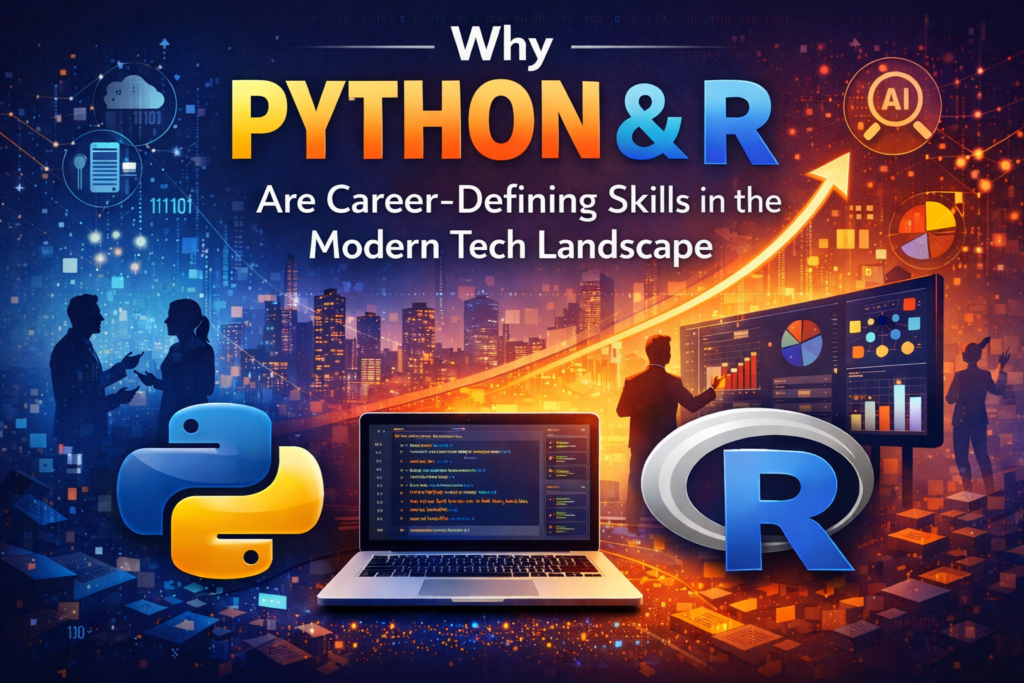
In today’s data-driven world, Python and R have become two of the most powerful and in-demand programming languages. From startups to global enterprises, organizations rely on data to make smarter decisions—and skilled professionals who can analyze, visualize, and interpret this data are in high demand.Learning Python and R opens the door to multiple high-growth career paths in data analytics, data science, machine learning, and business intelligence. This blog explores the top career opportunities, role responsibilities, growth potential, and salary expectations after mastering Python and R. Why Python & R Are Career-Defining Skills in the ModernTech Landscape Introduction: Skills That Shape the Future of Work In today’s rapidly evolving digital economy, data has become the backbone of decision-making across industries. Organizations no longer rely on intuition alone; they depend on data-driven insights to optimize operations, predict trends, improve customer experiences, and gain a competitive edge. At the center of this transformation are two powerful programming languages—Python and R. Together, they have emerged as career-defining skills for professionals aiming to build a strong, future-ready career in technology, analytics, and artificial intelligence. Python and R are not just tools; they are enablers of innovation. From startups to global enterprises, these languages empower professionals to convert raw data into meaningful intelligence. Mastering them opens doors to diverse roles, industries, and long-term growth opportunities. Understanding Python: The Backbone of ModernTechnology Python’s Versatility Across Domains Python has gained massive global adoption due to its simplicity, readability, and versatility. It is widely used for data analysis, automation, machine learning, artificial intelligence, web development, and cloud-based applications. Its extensive ecosystem of libraries—such as Pandas, NumPy, Matplotlib, Scikit-learn, TensorFlow, and PyTorch—allows professionals to handle complex tasks efficiently and at scale. What makes Python particularly valuable is its ability to integrate seamlessly with other technologies. Whether it is working with databases, cloud platforms, APIs, or big data frameworks, Python adapts effortlessly, making it a preferred choice for organizations building modern digital solutions. Python in Real-World Business Applications In practical business environments, Python is used to automate repetitive tasks, process massive datasets, develop predictive models, and deploy AI-driven solutions. Companies rely on Python to optimize supply chains, detect fraud, personalize marketing campaigns, improve healthcare diagnostics, and enhance financial forecasting. This widespread applicability makes Python a foundational skill for professionals across technical and non-technical roles. The Power of R: Precision in Statistics and Research R as a Specialized Tool for Data Science While Python offers broad flexibility, R excels in statistical analysis, data modeling, and research-based insights. It is particularly favored by statisticians, data scientists, researchers, and analysts who work with complex datasets and require deep analytical accuracy. R provides advanced statistical techniques, hypothesis testing, regression modeling, and data visualization capabilities that are critical in research-driven environments. Industries such as healthcare, finance, pharmaceuticals, academia, and market research heavily rely on R for evidence-based decision-making. Its ability to produce high-quality visualizations and interpretable statistical outputs makes it indispensable where precisionmatters most. R’s Role in Evidence-Based Decision Making Organizations use R to analyze clinical trial data, assess financial risks, evaluate market behavior, and validate business strategies. The insights generated through R help leaders make informed decisions backed by statistical confidence rather than assumptions. For professionals, this means gaining credibility as someone who can translate data into reliable, actionable conclusions. Why Python and R Together Create a CompetitiveAdvantage Complementary Strengths for End-to-End Data Solutions Individually, Python and R are powerful; together, they create a comprehensive skill set that makes professionals highly versatile. Python handles data collection, preprocessing, automation, and machine learning efficiently, while R provides depth in statistical analysis and research validation. This combination allows professionals to manage the entire datalifecycle—from raw data to strategic insights. Employers increasingly value candidates who can switch between tools based on business needs. A professional proficient in both Python and R can collaborate effectively with cross-functional teams, bridge gaps between engineering and analytics, and deliver solutions that are both scalable and statistically sound. What Companies Expect from Data-Driven Professionals Handling and Cleaning Large DatasetsModern organizations generate enormous volumes of data from multiple sources, including customer interactions, IoT devices, transaction systems, and digital platforms. Companies expect professionals to efficiently collect, clean, structure, and manage this data. Python and R provide robust tools for data wrangling, ensuring accuracy, consistency, and reliability before analysis begins. Performing Advanced Statistical AnalysisBeyond basic reporting, businesses require deeper analysis to identify patterns, correlations, and trends. Professionals skilled in Python and R can apply statistical techniques to uncover insights that drive strategic decisions. This capability is essential for roles in data science, analytics, research, and business intelligence. Building Predictive and Machine Learning ModelsOne of the most valuable applications of Python and R is predictive modeling. Organizations use these models to forecast demand, predict customer behavior, optimize pricing, and reduce risks. Professionals who can design, train, and evaluate predictive models are seen as high-value assets in today’s competitive job market. Communicating Insights Clearly and Effectively Technical skills alone are not enough. Companies seek professionals who can communicate insights clearly to stakeholders who may not have a technical background. Python and R enable the creation of meaningful visualizations, dashboards, and reports that translate complex data into understandable narratives. This ability to connect data with business strategy is what truly defines a successful professional. Industry-Wide Demand for Python and R Skills Applications Across Multiple Sectors Python and R are in demand across a wide range of industries, including IT, finance, healthcare, marketing, e-commerce, manufacturing, logistics, and consulting. Whether it is optimizing production processes, improving patient outcomes, enhancing customer targeting, or driving digital transformation, these skills are universally relevant. Career Roles Enabled by Python and R Professionals with expertise in Python and R can pursue diverse career paths such as Data Analyst, Data Scientist, Machine Learning Engineer, Business Analyst, AI Specialist, Research Analyst, and Automation Engineer. These roles not only offer strong compensation but also long-term career stability and growth. Python & R as Long-Term Career Investments Staying Relevant in a Rapidly Changing Job Market Technology continues to evolve, but
Top 10 Vulnerabilities Cybercriminals Exploit —

And How Ethical Hackers Stop Them In today’s hyper-connected digital world, cyber threats evolve every day. Hackers are more sophisticated, smarter, and constantly probing for weak spots in systems — but ethical hackers work just as hard (if not harder) to safeguard businesses before damage occurs. At Pinaki IT Consultant Pvt. Ltd., we believe strong cybersecurity isn’t just a defense — it’s a proactive shield built on understanding vulnerabilities, testing systems relentlessly, and leveraging cutting-edge technologies like AI for real-time threat intelligence. In this article, we’ll explore: The Top 10 vulnerabilities cybercriminals exploit How ethical hackers identify and fix them How companies implement defenses How AI enhances cybersecurity What Is a Vulnerability? A vulnerability is any flaw or weakness hidden within software, hardware components, networks, or even day-to-day operational processes that can be misused by attackers. These weaknesses create openings that allow unauthorized access, data theft, service interruptions, or complete system manipulation. In today’s digital landscape, no industry is fully immune — whether it’s finance, healthcare, retail, education, or government, every sector carries potential blind spots that cybercriminals actively look for. This is where ethical hackers play a crucial role. They identify these weak points before malicious actors do, helping organizations strengthen their systems, patch vulnerabilities, and build a safer, moreresilient digital environment. Understanding the Role of Ethical Hackers Ethical hackers — sometimes called white-hat hackers or cybersecurity analysts — play a crucial role in identifying, analyzing, and mitigating risks long before they turn into threats. Unlike cybercriminals, they work under legal authorization and follow strict guidelines. Their job is to mimic attackers, uncover vulnerabilities, and provide actionable insights thatstrengthen the organization’s overall security posture. Ethical hackers bridge the gap between potential weaknesses and the strong, resilient systems needed to protect sensitive data, operations, and brand trust. They use a variety of structured methodologies to uncover how an attacker might infiltrate a system. Each technique serves a unique purpose, allowing businesses to see their digital environment through different threat perspectives — whether technical, procedural, or human. This holistic approach ensures that no potential risk is left hidden beneath the surface. Penetration Testing (Pentesting) Simulating Real-World AttacksPenetration testing is one of the most powerful tools ethical hackers use to understand an organization’s true security strength. It involves simulating real-world cyberattacks on networks, applications, servers, and devices. The goal is not just to find vulnerabilities but to demonstrate how deep an attacker could go if those vulnerabilities were exploited. Pentesting helps organizations recognize whether their current security controls are truly effective or simply giving a false sense of protection. Identifying Weak Points Before Criminals DoEvery system, no matter how advanced, carries risks. Penetration tests uncover security gaps such as misconfigurations, outdated software, poor authentication practices, exposed APIs, or insecure data pathways. Ethical hackers use step-by-step, attacker-like methodologies to explore these loopholes and assess how far they can penetrate. This process reveals not just what is vulnerable, but how an actual breach could unfold — making it one of the most realistic security exercises a business can invest in. Delivering Actionable SolutionsAfter completing the test, ethical hackers compile detailed reports explaining the vulnerabilities found, the severity of each issue, and how they can be fixed. This empowers businesses to prioritize repairs, allocate budgets better, and strengthen their systems strategically rather than blindly. Pentesting is not just a test — it’s a pathway toward stronger, smarter, and more resilient cybersecurity. Vulnerability Assessments Scanning for Weaknesses Across the Entire Digital InfrastructureWhile pentesting focuses on attack simulation, vulnerability assessments take a more systematic and wide-angle approach. Ethical hackers perform automated and manual scans across networks, devices, applications, and cloud environments to detect any potential flaw that could lead to a breach. This assessment covers everything from unpatched software to weak passwords, misconfigured firewalls, insecure ports, and outdated libraries. Recognizing Risks Before They Become ThreatsVulnerability assessments help organizations maintain constant awareness of their security posture. New vulnerabilities surface daily — from zero-day exploits to evolving malware strains. Ethical hackers continuously analyze these trends and correlate them with the company’s systems to determine which new weaknesses could have an impact. This process ensures that organizations always stay one step ahead of attackers. Prioritizing Fixes Based on SeverityNot all vulnerabilities pose the same level of danger. Ethical hackers classify them based on criticality, potential impact, and exploitability. This allows security teams to fix the most dangerous risks first and ensure resources are used effectively. Vulnerability assessments are a continuous process — essential for maintaining long-term security and preventingunnoticed risks from piling up. Security Audits Evaluating Compliance, Controls & Best PracticesSecurity audits are comprehensive examinations of an organization’s cybersecurity policies, procedures, and technical configurations. Ethical hackers review everything — from access control to data protection protocols — to ensure the company meets compliance standards such as ISO, GDPR, HIPAA, PCI-DSS, and more. Ensuring Strong Governance Across All DepartmentsUnlike pentesting, which is highly technical, security audits also evaluate non-technical aspects of cybersecurity. This includes employee behavior, documentation quality, incident response readiness, backup policies, and physical security measures. Ethical hackers analyze whether workflows align with industry standards and whether every departmentfollows necessary security practices. Building Long-Term, System-Level SecurityThrough these audits, organizations gain clarity on where they stand and what needs improvement. Ethical hackers provide detailed recommendations that strengthen governance, enhance internal processes, and create a more resilient security culture. Security audits lay the foundation for ongoing protection — not just technical fixes butinstitutional improvements. Social Engineering Tests Testing the Human Side of SecurityTechnology may be strong, but humans are often the weakest link. Social engineering tests are designed to measure how employees respond to real-world psychological manipulation attempts. Ethical hackers mimic attackers by sending phishing emails, impersonating internal staff, making scam phone calls, or attempting unauthorized physical access. Understanding Employee Awareness & Training NeedsThese tests reveal whether employees unknowingly click suspicious links, share sensitive data, or fail to verify identities. Ethical hackers don’t conduct these tests to blame staff — but to diagnose training gaps, improve awareness, and prevent human errors
Why Every Working Professional Must Learn AI & Data Skills (Regardless of Their Job Role)

In today’s fast-changing digital world, every major industry — whether it’s finance, marketing, HR, healthcare, logistics, supply chain, ed-tech, retail, e-commerce, or customer service — is being reshaped by the combined force of Artificial Intelligence (AI) and Data Science. The impact is so deep and widespread that no job role, department, or business model can afford to ignore it anymore. Processes that once required heavy manpower, long hours, and complex decision cycles are now being executed faster, smarter, and with far greater accuracy thanks to AI-driven insights and automation. The truth is simple and undeniable: AI is not replacing people… AI-powered professionals are replacing those who don’t upgrade. Companies are not looking for just employees anymore — they want efficient employees, data-driven problem solvers, and professionals who can work smarter, not just harder. Whether you’re a fresher entering the job market, a mid-level employee trying to grow, a senior manager leading teams, or even a business owner trying to scale operations — AI and data skills have become the new baseline for future career growth. The shift is already visible everywhere. Businesses that adopt AI move faster than their competitors. Teams that understand data make better decisions. Professionals who automate repetitive tasks achieve higher productivity and gain more opportunities. In a world where technology evolves daily, the biggest career risk today is sticking to old methods while the industry moves ahead. That is why upskilling is no longer a luxury — it is a survival strategy. Building AI and data skills today doesn’t just prepare you for future jobs; it empowers you to stay relevant, confident, and irreplaceable in your field. AI & Data Skills Are Now Required in Every Job Role The Era of Universal Digital Transformation The modern workplace has undergone one of the most dramatic shifts in human history. For decades, technology evolved steadily, staying largely within the domains of IT experts, programmers, engineers, or data scientists. But the arrival of artificial intelligence and data-driven technologies has completely transformed this landscape. Today, AI is not simply an add-on or a luxury; it has become the backbone of nearly every industry, every business function, and every professional role. Whether in small startups or global enterprises, the fundamental expectation is clear: employees must know howto work alongside intelligent digital tools. This shift has created a revolution in job requirements, placing AI literacy and data understanding at the center of future skills. AI no longer exists as a specialized function tucked away in server rooms. It is now embedded in the tools we use daily, the platforms we manage, the customer interactions we handle, and the decisions we make. Employees today cannot rely on traditional experience alone; they must be able to interpret data, automate tasks, and understand intelligent systems thatinfluence business operations. What was once a niche skill expected from a select few is now a universal requirement across departments — from marketing to sales, finance to operations, HR to healthcare, and even education. The modern professional is expected to be a hybrid: someone who combines human expertise with digital capability. The Rise of Intelligent Tools Across Departments Artificial intelligence has moved closer to the core of every business function. For marketers, AI helps automate content, optimize ads, and predict customer behavior. For sales teams, AI-powered CRM systems analyze large volumes of customer data and provide insights that were impossible to see manually. For HR professionals, AI helps with resume screening, employee retention analysis, and workforce planning. For finance teams, AI tools detect fraud, forecast budgets, and track anomalies in real time. Even sectors traditionally driven by manual processes, such as operations, logistics, and healthcare, are now deeply dependent on AI-driven automation and analytics. The introduction of these tools has not reduced the importance of human judgment; rather, it has amplified it. AI provides clarity, speed, and efficiency, but it still needs human oversight, direction, and contextual decision-making. As a result, professionals can no longer afford to ignore these systems or remain dependent on outdated workflows. This growing ecosystem of intelligent platforms has made it essential for every employee to understand how AI operates, how data is processed, and how analytical insights are used. Without this knowledge, employees risk falling behind or becoming lessvaluable in an increasingly competitive market. Marketing: A Completely Transformed Landscape Marketing has experienced one of the most dramatic AI transitions of all industries. What was once a heavily manual, intuition-driven field is now powered by algorithms capable of analyzing millions of data points at lightningspeed. AI tools create social media content, generate ad copies, design personalized email campaigns, and even identify ideal audiences with astonishing accuracy. Digital marketers use AI-driven ad optimization systems that track real-time performance and adjust campaigns automatically, ensuring maximum ROI with minimal human intervention. This shift means marketers are no longer simply storytellers or creative thinkers. They must now understand how AI models predict user behavior, how algorithms determine ad placements, and how analytics dashboards translate massive data sets into actionable insights. The modern marketer is expected to be data-savvy, tech-aware, and comfortable with automationtools. Those who understand AI not only work more efficiently but also create stronger, more personalized customer experiences. Sales: Driven by Predictions and Buyer Intelligence Sales teams today operate in a world where data drives nearly every decision. AI-powered CRM systems now track customer interactions, analyze communication patterns, and predict which leads are more likely to convert. Instead of manually sorting through hundreds of contacts, sales professionals rely on intelligent scoring systems that highlight high-potential prospects. AI also helps personalize pitches, recommend follow-up strategies, and identify emerging market opportunities. The sales process has shifted from guesswork to science. A modern salesperson must understand these tools to work effectively. The ability to interpret CRM insights, leverage AI recommendations, and analyze customer behavior data is now part of the core job requirement. Without these skills, sales professionals risk losing deals to competitors who use AI-driven insights to build deeper, more intelligent customer relationships. Human Resources: Automation for Better
Why Google’s New Search Update Is Changing the Future of SEO — WhatEvery Business Must Know
Introduction: A New Era of Search Has Begun Google has rolled out one of its most impactful search updates in recent years, and it is reshaping how websites are ranked across the internet. This update is not just a minor tweak—it is a major shift that focuses on user intent, real value, and authentic content quality over traditional SEO shortcuts. Businesses that once depended on keyword stuffing, repetitive blogs, or low-quality backlinks are now experiencing drastic ranking changes. Google’s goal is simple: ensure that users find trustworthy, meaningful, and experience-rich content every time they search. Because of this, websites must now operate with a “value-first mindset” rather than an “SEO-first mindset.” What Actually Changed in Google’s NewUpdate Google’s latest search update represents a fundamental transformation in how the search engine evaluates online content, shifting its focus from traditional SEO techniques toward a more human-centered, experience-driven model. Rather than relying mainly on keywords, backlinks, or mechanical ranking signals, Google’s AI now analyzes the overall usefulness,authenticity, and depth of the information presented. This means the search engine is no longer just scanning text; it is actively interpreting the intent behind the content, the clarity with which information is explained, and the level of expertise demonstrated by the creator. The update essentially upgrades Google’s ability to differentiate between content created togenuinely inform and help users, and content produced solely to manipulate search rankings. Websites that provide real value, show expertise, and maintain a strong user experience are now being pushed higher, while repetitive, shallow, or artificially generated content declines significantly in visibility. Google’s Evolving Vision: A SearchEngine That Understands Human Needs At the heart of this update lies Google’s broader mission to create a search environment that mirrors real human inquiry. Google wants search to feel like a conversation with a knowledgeable guide, not a mechanical system delivering random results. Over the years, users have increasingly expressed frustration with low-quality articles, content stuffed with keywords, and AI-generated fluff dominating top positions. Google’s new algorithmic framework was built to solve this problem by evaluating whether a page genuinely answers the user’s core question, offers clarity, and provides insights that reflect actual human thinking. This shift signals Google’s intention to reward authenticity over optimization, experiences over automation, and expertise over mass production. The update is a step toward a more intuitive search experience where users can trust that what they find is reliable, thoughtful, and actually helpful. AI Evaluation of Human-Centric ValueHas Become the Core Ranking Factor One of the most significant changes introduced in this update is Google’s new AI-driven scoring system for “human value.” The algorithm no longer stops at checking whether keywords are used correctly or whether the page follows basic on-page SEO rules; instead, it tries to understand the meaning behind the content and the intent behind the creator’s words. It evaluates whether the writer shows genuine knowledge, whether explanations are clear and logical, and whether the content includes depth that reflects real expertise. This AI model can now detect patterns of writing that signal authenticity — such as narrative flow, contextual reasoning, and natural variation in explanation — and distinguishes them from robotic, repetitive, or machine-generated styles. Content that feels generic, overly templated, or artificially inflated is quickly deprioritized. In contrast, content that feels like it was crafted by an expert who cares about the user’s problem receives stronger ranking signals. User Behavior Signals Are Now StrongerThan Traditional SEO Metrics Another major transformation brought by this update is the elevated importance of user behavior. Google’s system now gives much more weight to how real visitors interact with a page. If users stay longer, scroll deeper, read multiple sections, or explore other pages on the same website, Google interprets these actions as signs of high-quality content. On the other hand, if users click back instantly, skim only briefly, or refine their search immediately after visiting a page, the system marks that content as unhelpful or irrelevant. These signals create a feedback loop where content that genuinely satisfies intent naturally rises, and content that frustrates users gradually fades from the rankings. The update essentially givesusers the power to shape search results through their natural browsing behavior, making authentic engagement more valuable than any amount of keyword optimization The New Definition of High-QualityContent Centers Around Depth and RealExpertise In this updated system, high-quality content is no longer defined by the number of keywords included or the length of the article. Instead, it is defined by how deeply the topic is explored, how clearly it is explained, and how uniquely it contributes to the user’s understanding. Google now looks for content that demonstrates genuine expertise through well-developedarguments, nuanced insights, detailed examples, and thoughtful reasoning. Shallow overviews or rewritten versions of existing online information are no longer enough to rank. The system rewards content that feels complete, well-researched, and thoroughly structured, with a logical progression of ideas that helps users grasp the subject from multiple angles. This emphasis on depth means creators must move beyond surface-level explanations and focus on providing real knowledge and value — the kind that cannot be easily duplicated or mass-produced. Repetitive, Thin, and AI-Spam Content IsNow a Serious Ranking Liability One of the strongest impacts of the update is the detection and demotion of content that appears repetitive, shallow, or automatically generated. Pages that provide minimal information, offer generic statements, or repeat the same ideas with slight rewording are flagged as low-value. Google’s AI can now identify patterns associated with mass-produced or auto-generated content, including unnatural sentence structures, mechanical transitions, and a lack of real insight. Such content is treated as “search noise” and pushed down significantly in rankings. Large websites that relied on quantity over quality — publishing hundreds of mediocre articles — are particularly affected, as the update prioritizes originality and substance over volume. Google wants the web to feel more human again, and this means eliminating content that contributes nothing meaningful to the reader’s understanding. Backlinks and Technical Loopholes HaveLost Much of Their Previous Influence In
How Blockchain Enhances Data Transparencyin Data Science Projects & Helps Track andAudit AI Decision-Making
In today’s digital world, data is the backbone of every innovation. From recommendation systems and fraud detection to healthcare analytics and real-time market predictions, data powers intelligent decision-making across industries. However, with massive volumes of data being collected, processed, and transformed, the need for trust, transparency, and security has grown stronger than ever. This is exactly where blockchain technology steps in as a game-changing partner for data science and artificial intelligence (AI). Blockchain, once known mainly for cryptocurrencies, has evolved into a robust frameworkthat ensures accountability and transparency in data-driven workflows. When combined with data science and AI systems, blockchain offers a verifiable, tamper-proof ecosystem where every data input, model update, and decision output can be tracked with complete trust. The integration of these technologies is shaping a new future where data integrity is guaranteed,algorithms are auditable, and decisions are more ethical and explainable. How Blockchain Enhances Data Transparencyin Data Science Projects Easy, descriptive, and beginner-friendly explanation Data science runs on one essential element — data. Every prediction, analysis, or insight created by a data scientist depends completely on how accurate, complete, and trustworthy that data is. But in the real world, data is rarely perfect. It may be missing values, updated incorrectly, or changed by someone without authorization. Sometimes, errors happen by mistake. Other times, data may even be manipulated intentionally. When this happens, every analysis or machine learning model built on that data becomes unreliable. To solve this problem, blockchain technology offers something powerful — a transparent, tamper-proof, and decentralized way to store and track data. This allows data scientists to work with datasets that are more trustworthy, consistent, and verifiable. 1.Why Transparency Matters in Data Science Transparency is the backbone of every trustworthy data science project. Whenever data is collected, stored, processed, or used to train a model, it goes through multiple steps, and each of these steps affects the final result. Transparency means being able to clearly see this entire journey without confusion. It means understanding where the data originally came from, how it was created, who accessed it, how it was cleaned, when it was transformed, and whether it was changed at any moment. When this visibility is present, the entire data ecosystem becomes healthier, more honest, more reliable, and more efficient. But when transparency is missing, small hidden issues silently grow into big problems that can damage the accuracy and credibility of the final insights. 1.1 Understanding the True Meaning of Transparency Transparency in data science does not only mean showing the final dataset or explaining the model. It means showing the full truth behind the data. It means having a clear and traceable record of every action taken—from the moment the data enters the system until it is used to make predictions. It means that nothing about the data is hidden, unclear, or suspicious. This level of clarity allows everyone involved in the project to trust the data, trust the process, and trust the outcome. In simple words, transparency removes the guesswork and provides a clean lens through which the entire data journey can be seen. Transparency becomes especially important in modern data science because data does not stay in one place. It moves from systems to spreadsheets, from spreadsheets to databases, from databases to machine learning pipelines, and from those pipelines to dashboards. At each stage, changes, errors, or manipulations can happen. Without transparency, no one knows whether anything was altered intentionally or accidentally. With transparency, every movement becomes visible, and the data journey becomes easy to understand for both technical and non-technical people. 1.2 Transparency Builds Confidence in Insights When data is transparent, people start trusting the decisions that come from it. A company can make confident business plans, a hospital can make accurate medical predictions, and a bank can assess financial risks more safely. This trust is possible because everyone can see that the data used was genuine, clean, and verified. But if the source of the data is unknown, if no one knows who modified it, or if the data appears inconsistent, then even the most advanced models lose credibility. Confidence grows when transparency ensures there are no surprises hidden inside the data. For example, if a prediction model shows a sudden spike in customer behavior, the team can quickly check the data history and confirm whether the spike is real or the result of a data entry error. When transparency is missing, people waste time doubting the insights instead of taking action. A transparent system allows stakeholders to trust the analytics with full confidence because the data story is visible, honest, and complete. 1.3 Transparency Helps Prevent Hidden Errors Hidden errors are the silent killers of data science. They do not scream, they do not create alarms, and they do not appear instantly. Instead, they slowly enter the system and quietly distort the results. These errors can be as small as a misplaced decimal, a wrong formula, a duplicated value, or an outdated file being used. In a non-transparent environment, theseerrors remain buried deep inside the workflow. People start questioning the model performance without realizing the real cause is a hidden issue inside the data. When transparency is present, every transformation, every modification, and every update becomes visible. This makes hidden errors easier to detect and fix. Teams can trace the issue back to the exact moment it occurred and correct it before it spreads further. Transparency acts like a flashlight that reveals all corners of the data pipeline, ensuring that small mistakes do not grow into large failures. It protects the integrity of the project and reduces the risk of flawed insights. 1.4 Transparency Helps Teams Understand the DataJourney Data science is never a one-person job. It involves data analysts, engineers, scientists, business teams, project managers, and sometimes even clients. When different people work on the same data, misunderstandings can easily occur if the data journey is not clear. Transparency helps every member of the team understand how the data evolved from raw form to final
What is Big Data? How We Can Convert Big Data to Predictive Data? How Predictive Data is Useful for Different Businesses? And How AI Will Help in This?
1. Introduction to Big Data 1.1 Definition of Big Data Big Data refers to massive volumes of data—structured, semi-structured, and unstructured—that are generated by people, systems, and machines in real time. This data is too large and complex for traditional data-processing software to handle effectively. Big Data isn’t just about size—it’s about how data is captured, stored, processed, and analyzed to gain insights that improve decision-making, innovation, and efficiency. Expanded Sections: 1.2 The 5 Vs of Big Data Big Data is typically characterized by five core dimensions, known as the 5 Vs: 1. Volume Refers to the sheer amount of data generated every second. Subtopics to Expand: 2. Velocity The speed at which data is generated, collected, and processed. Detailed Insights: 3. Variety The different types and formats of data available. Expansion Areas: 4. Veracity Data reliability, quality, and trustworthiness. Elaborations: 5. Value The usefulness of the data collected. Topics to Expand: 1.3 Evolution of Data Storage and Processing Over time, how we manage data has evolved significantly: A. Relational Databases (1970s–1990s) B. The NoSQL Revolution (2000s–2010s) C. Distributed Computing D. Real-Time Processing E. Cloud Computing & Data Lakes F. Edge Computing Visual Suggestions: 1.4 Importance in Today’s Digital Economy Big Data is foundational to modern economies because it supports: Expansion Angles: 1.5 Real-World Examples A. Google B. Amazon C. Facebook (Meta) D. Tesla Visuals: 📈 Visuals Suggestion 2. Big Data Architecture & Technologies Big Data doesn’t just refer to massive volumes of information—it’s also about the underlying architecture that allows organizations to store, process, and analyze data at scale. Building a robust and scalable architecture is critical to unlocking the true value of Big Data 2.1 Components of Big Data Architecture Big Data architecture is the blueprint for handling vast volumes of data efficiently. It comprises various layers, each with specific roles: 2.2 Batch Processing vs. Stream Processing 2.3 Big Data Tools and Frameworks Apache Hadoop Apache Spark Apache Kafka Apache Hive HBase NoSQL Databases 2.4 Cloud Solutions for Big Data Cloud platforms offer scalable, managed solutions for Big Data: Amazon Web Services (AWS) Microsoft Azure Google Cloud Platform (GCP) 2.5 Architecture Use Case: E-Commerce Analytics Pipeline Visualization: Tableau dashboards show sales funnel drop-off and product preferences. Data Sources: User clicks, purchases, reviews, social media feedback. Ingestion: Kafka ingests real-time user activity. Storage: S3 or HDFS stores raw and processed data. Processing: Spark processes for session segmentation, sentiment tagging. Analysis: Machine learning models predict next-purchase behavior. ⏳ Batch Processing vs. Stream Processing Feature Batch Processing Stream Processing Data Handling Processes historical data in chunks Processes real-time data continuously Latency High (minutes to hours) Low (milliseconds to seconds) Use Cases Monthly reports, ETL jobs Fraud detection, real-time alerts Examples Hadoop MapReduce, Apache Hive Apache Kafka, Spark Streaming, Flink Data Volume Handles large volumes at once Handles continuous streams with fast input Use Case Examples: 🔨 Key Big Data Tools and Frameworks 1. Apache Hadoop A foundational framework for Big Data storage and batch processing. Includes: Strengths: Fault tolerance, scalabilityLimitations: High latency, not ideal for real-time processing 2. Apache Spark An advanced processing engine that supports in-memory computation for both batch and stream data. Modules include: Why Spark over Hadoop? Faster due to in-memory processing; more versatile for ML and streaming. 3. Apache Kafka A distributed streaming platform used for real-time data pipelines and event streaming. Kafka ensures: 4. Apache Hive A SQL-like interface built on top of Hadoop. It enables querying and managing large datasets stored in HDFS using familiar SQL syntax. Best suited for: Data warehousing use cases, ETL jobs. 5. HBase A NoSQL, columnar database built on Hadoop. Excellent for: 6. NoSQL Databases Designed for flexible schema and horizontal scalability: ☁️ Cloud-Based Big Data Solutions Organizations are rapidly shifting to cloud-based Big Data platforms to reduce operational overhead and gain elasticity. Amazon Web Services (AWS) Microsoft Azure Google Cloud Platform Advantages of cloud-based Big Data: 📊 Visuals Suggestion plaintextCopyEditData Sources ↓ Data Ingestion (Kafka, Flume) ↓ Storage Layer (HDFS, S3, NoSQL) ↓ Processing Layer (Spark, Hadoop) ↓ Analytics & ML (Hive, MLlib, TensorFlow) ↓ Visualization (Power BI, Tableau, Dashboards) Feature Hadoop MapReduce Apache Spark Processing Mode Batch Only Batch + Stream Speed Slower Faster (in-memory) Programming Support Java Scala, Python, Java, R Machine Learning External Libraries Built-in (MLlib) Real-time Capabilities No Yes (Spark Streaming) Fault Tolerance Yes Yes Use Cases Data warehousing, ETL AI/ML, real-time analytics 3. What is Predictive Data? Predictive Data isn’t just a collection of past observations; it’s meticulously prepared, transformed, and enriched information designed to reveal patterns, relationships, and trends that can be extrapolated to forecast future outcomes. Unlike descriptive analytics, which tells us “what happened,” or diagnostic analytics, which explains “why it happened,” predictive data focuses on “what will happen.” Its core characteristics include being actionable, meaning it’s directly usable for making predictions, and being clean and structured, free from noise and inconsistencies, and in a format suitable for algorithmic consumption. Often, it’s also enriched with derived features that capture more complex relationships and is contextualized by integrating relevant external data points for a holistic view. Real-world applications span predicting customer churn, stock market fluctuations, disease outbreaks, and even equipment failures. The Conversion Process: Big Data to Predictive Analytics Pipeline The journey from raw Big Data to actionable predictive insights is a multi-stage process, each step building upon the last to refine and enhance the data’s predictive power. Data Cleaning This initial step is paramount, adhering to the “garbage in, garbage out” principle; unreliable inputs lead to unreliable predictions. Given the scale, variety, and velocity of Big Data, cleaning presents unique challenges. Key techniques include handling missing values through imputation strategies like mean, median, mode, or more advanced machine learning-based methods. Outlier detection and treatment are crucial, employing statistical methods like Z-scores or IQR, or through visualization and domain knowledge. Noise reduction techniques such as smoothing and binning help clarify underlying patterns. Additionally, inconsistent data requires standardization and correction, while data deduplication eliminates redundant records. Feature Engineering Often considered an art form,
What is Predictive Analytics? Transforming Data into future insights
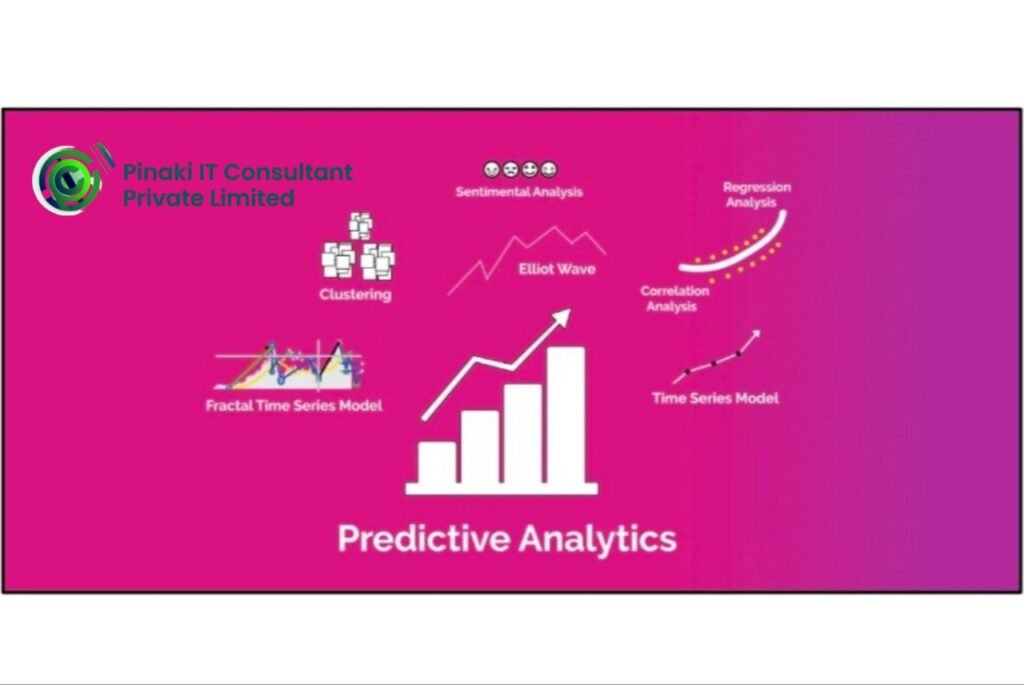
Predictive analytics and predictive AI can help your organization forecast outcomes based on historical data and analytics techniques. Predictive analytics definition Predictive analytics is a category of advanced data analytics aimed at making predictions about future outcomes based on historical data and analytics techniques such as statistical modeling, data mining, and machine learning (ML). Many organizations are beginning to leverage redictive AI to speed up automate statistical data analysis. The science of predictive analytics can generate future insights with a significant degree of precision. With the help of sophisticated predictive analytics tools and models, any organization can now use past and current data to reliably forecast trends and behaviors milliseconds, days, or years into the future. Predictive analytics has captured the support of a wide range of organizations, with a global market size of over $18 billion in 2024, according to Fortune Business Insights. The report projects the market will reach over $95 billion by 2032, growing at a compound annual growth rate (CAGR) of about 23% from 2024 to 2032. Predictive analytics vs predictive AI Organizations are increasingly turning to predictive AI over predictive analytics to anticipate, for example, future outcomes, causation, and risk exposure. While predictive analytics frequently makes use of AI tools, it’s driven by humans querying data, identifying trends, and testing assumptions. Predictive AI is autonomous, analyzing thousands of factors and years of data, and can be usd to predict customer churn, supply chain disruptions, and mechanical failures, among other things. ML enables predictive AI to improve its forecasting accuracy over time. Predictive AI vs Gen AI Predictive AI forecasts future events and outcomes while gen AI creates novel content. Predictive AI uses a combination of statistical analysis and ML algorithms to uncover insights in historical data and make predictions about upcoming events, results, or trends and often makes use of smaller, more targeted datasets than gen AI. Gen AI, on the other hand, responds to prompts or requests by creating content — audio, images, software code, text, video — based on patterns learned from existing content. Gen AI can be used to hold conversations, answer questions, write stories, produce source code, and create images and video. Most start with a deep learning model called a foundation model — often a large language model (LLM) or small language model (SLM) to learn how to generate statistically probable outputs. Organizations leverage predictive AI for things like financial forecasting, fraud detection, and supply chain management. Gen AI use cases include chatbots and virtual agents for customer service, creating targeted ad and sales copy marketing and advertising, and generating code for software development. Predictive analytics in business Predictive analytics draws its power from many methods and technologies, including big data, data mining, statistical modeling, ML, and assorted mathematical processes. Organizations use predictive analytics to sift through current and historical data to detect trends, and forecast events and conditions that should occur at a specific time, based on supplied parameters. With predictive analytics, organizations can find and exploit patterns contained within data in order to detect risks and opportunities. Models can be designed, for instance, to discover relationships between various behavior factors. Such models enable the assessment of either the promise or risk presented by a particular set of conditions, guiding informed decision making across various categories of supply chain and procurement events. For tips on how to effectively harness the power of predictive analytics. Benefits of predictive analytics Predictive analytics makes looking into the future more accurate and reliable than previous tools. As such it can help adopters find ways to save and earn money. Retailers often use predictive models to forecast inventory requirements, manage shipping schedules, and configure store layouts tomaximize sales. Airlines frequently use predictive analytics to set ticket prices reflecting past travel trends. Hotels, restaurants, and other hospitality industry players can use the technology to forecast the number of gests on any given night in order to maximize occupancy and revenue. By optimizing marketing campaigns with predictive analytics, organizations can also generate new customer responses or purchases, as well as promote cross-sell opportunities. Predictive models can help businesses attract, retain, and nurture their most valued customers. Predictive analytics can also be used to detect and halt various types of criminal behavior before any serious damage is inflected. By using predictive analytics to study user behaviors and actions, an organization can detect activities that are out of the ordinary, ranging from credit card fraud to corporate spying to cyberattacks. Challenges of predictive analytics Initiating and maintaining a predictive analytics practice or predictive AI is no easy task. Here are some of the challenges organizations must account for, according to AI knowledge management specialist, Shelf: ● Data quality and quantity: The quality and quantity of your data are key to the accuracy of predictions. Inadequate or poor quality data will lead to poor results.● Model complexity and interpretability: Many AI models are complex and opaque. Unless they’re built with transparency in mind, it can be extremely difficult to understand how they arrive at certain predictions.● Ethical, privacy, and regulatory concerns: Predictive models can have ethical implications, especially around privacy and bias. They must also comply with all relevant regulations. A misstep can lead to a loss of trust.● Integration and implementation: Integrating predictive analytics into existing systems and workflows requires care and thought, and integrating predictive AI with an IT infrastructure reliant on legacy systems can be difficult.● Skills gap: Professionals with skills in predictive analytics and predictive AI are in high demand, but they can be difficult to attract and retain. Predictive analytics use cases Organizations today use predictive analytics and predictive AI in a virtually endless number of ways. The technology helps adopters in fields as diverse as finance, healthcare, retail, hospitality, pharmaceuticals, automotive, aerospace, and manufacturing. Here are a few ways organizations make use of predictive analytics: ● Aerospace: Predict the impact of specific maintenance operations on aircraft reliability, fuel use, availability, and uptime.● Automotive: Incorporate records of component sturdiness and failure into upcoming
Introduction: Navigating the Dawn of the Metaverse Era

In recent years, the concept of the metaverse has emerged from the pages of science fiction and speculative fiction to become a tangible force shaping the future of digital experiences. Once a niche term known mostly to gamers and tech enthusiasts, the metaverse now represents a broad and ambitious vision: a persistent, immersive digital universe where people can work, play, socialize, and engage with content in entirely new ways. Enabled by advanced technologies like virtual reality (VR), augmented reality (AR), extended reality (XR), and blockchain, the metaverse is transforming how we interact with digital environments—bringing immersive and interactive experiences into the mainstream. The term “metaverse” was popularized by author Neal Stephenson in his 1992 novel Snow Crash, where he imagined a virtual space parallel to the physical world. Fast forward to the early 2000s, platforms like Second Life and World of Warcraft began to build online environments that mimicked aspects of the real world. However, these were largely closed, game-centric systems. The real breakthrough came with the convergence of high-speed connectivity, realistic 3D rendering, decentralized systems, and wearable computing—making it possible to create persistent, interoperable digital spaces that users can inhabit and customize. Initially rooted in the gaming industry, the metaverse is now expanding across multiple sectors. Enterprises are creating virtual workspaces that support collaboration beyond the constraints of physical offices. Retailers are launching 3D virtual storefronts, allowing consumers to engage with products in novel ways. Artists and content creators are building and selling NFTs (non-fungible tokens) that represent ownership of digital assets. Even governments are exploring virtual spaces for civic engagement and public services. These developments signal a shift from metaverse as entertainment to metaverse as infrastructure. At the heart of this transformation is the fusion of immersive technology and decentralization. Devices such as Meta Quest headsets or Microsoft HoloLens allow users to step into virtual environments with lifelike realism, while blockchain ensures verifiable ownership, provenance, and decentralized governance. Meanwhile, AI enhances avatars, virtual assistants, and generative content, making digital interactions more human-like and scalable. The layering of these technologies has created the conditions for what some call the “next evolution of the internet”—a shift from 2D browsing to 3D living. As organizations look toward the future, the metaverse represents a new frontier in digital transformation. It challenges companies to rethink how they operate, how they connect with customers, and how they design products and services. It also brings forth new business models, from virtual real estate and digital fashion to immersive education and remote surgeries. These opportunities, however, are not without challenges: ensuring privacy, building ethical frameworks, and preventing digital inequality will be just as critical as technological innovation. This blog will explore the rise of the metaverse through multiple lenses: from the transformation of hybrid work environments to innovations in e-commerce, education, and entertainment. It will also examine the underlying technologies driving these changes, the security and governance challenges, and the strategic implications for businesses, governments, and users alike. As we enter this new digital age, understanding the metaverse isn’t just about keeping up with trends—it’s about preparing for a paradigm shift in how we live, work, and interact in both the virtual and physical worlds. 1. Hybrid Work Environments in the Metaverse The global shift toward hybrid work—accelerated by the COVID-19 pandemic—has led to profound changes in how organizations think about collaboration, productivity, and workplace infrastructure. With remote and distributed workforces becoming the norm, the metaverse presents an evolutionary leap in hybrid work, transforming flat video calls and static collaboration tools into interactive, immersive environments that better replicate physical office dynamics. Hybrid work in the metaverse doesn’t just connect people; it reimagines how people connect. Virtual Office Spaces: New Frontiers of Collaboration Traditional video conferencing tools like Zoom and Microsoft Teams have proven invaluable in maintaining continuity, but they fall short in fostering spontaneity, engagement, and presence—key aspects of the in-person office. Enter the metaverse: a persistent, shared digital space where employees can work, collaborate, and interact through avatars in 3D virtual environments. Two leading examples: Other platforms like Spatial, Virbela, and Gather.town are also gaining popularity for creating metaverse-style workspaces accessible via browsers or headsets, catering to teams that want more than Slack channels and Zoom links. Benefits of Metaverse-Enabled Hybrid Work The metaverse offers a number of strategic and operational benefits for organizations embracing hybrid work models: Challenges to Adoption and Scalability Despite the potential, several hurdles must be overcome before metaverse workspaces become mainstream: Case Studies: Companies Embracing Metaverse Workspaces Several organizations and institutions are already exploring how metaverse platforms can enhance or supplement hybrid work: The Future of Work: Persistent, Personalized, and Immersive The metaverse will not replace every aspect of physical office life, nor will it render all remote collaboration tools obsolete. Instead, it will complement and enhance hybrid work, enabling more meaningful, flexible, and inclusive experiences. As metaverse technologies mature and become more affordable, we can expect them to become standard elements in enterprise tech stacks—much like video conferencing did post-2020. To prepare for this future, organizations should begin by: The metaverse offers a vision of work where distance no longer limits collaboration and digital presence feels almost physical. While challenges remain, the potential to reshape work culture, employee experience, and organizational agility is immense. 2. E-Commerce and Virtual Shopping The landscape of commerce has undergone significant transformation over the past two decades. From traditional brick-and-mortar retail to the convenience of online marketplaces like Amazon and Alibaba, shopping has progressively moved into the digital sphere. Yet, the next major shift in this evolution is being driven by the metaverse—a convergence of immersive technologies and decentralized systems that allow for new types of consumer experiences. Virtual shopping and e-commerce in the metaverse are no longer experimental concepts; they are rapidly becoming essential strategies for brand engagement, customer loyalty, and digital revenue generation. The Rise of Immersive Shopping Experiences In the metaverse, shopping is not just transactional—it’s experiential. Rather than scrolling through a flat webpage or clicking through product thumbnails, users