How AI with Digital Marketing help our Business to Grow and Provide more Security

In present today’s world, Businesses are facing fastly changes in the Digital Space. Artificial Intelligence (AI) is no longer something optional for companies. it’s now a must have tool. With competition becoming fiercer, Businesses are using AI not only to improve their Marketing Strategies but also to secure their operations and protect customer information. AI is changing Digital Marketing in a big way. It helps companies offer highly personalized experiences to their customers while also setting up strong security systems to protect important data. In How AI with Digital Marketing help our Business to Grow and Provide more Security_ AI has great developing, many Businesses are still unsure about fully connecting it in their marketing efforts. Traditional Marketing methods are no longer enough to meet the growing challenges of scale, difficulty, and security in the digital world. Without using AI, businesses power miss out on chances to improve their Marketing Campaigns, connect better with customers, and keep their online activities safe. On top of that, the increasing number of Cyberattacks means businesses must find better ways to protect their data and online assets. How AI powered digital marketing solutions can help businesses grow while also boosting their security. From creating marketing strategies that connect with customers on a personal level to using AI for stronger protection of sensitive data, AI has the power to change the game. Businesses can use AI to stay competitive and safe in today’s challenging digital environment. Understanding the Role of AI in Digital Marketing Artificial Intelligence (AI) plays a huge role in Modern Digital Marketing. It uses Complex Algorithms, Machine Learning (ML), and Natural Language Processing (NLP) to analyze large amounts of data, forecast trends, and improve marketing strategies. AI can take over automatic tasks like Data Analysis, saving businesses time and effort. It can also look at lots of data at once, find patterns, and provide helpful understanding that allow businesses to make smarter, more informed decisions. AI, businesses can gain real-time understanding (insights) into how customers are behaving, what they want, and how they engage with different marketing campaigns. AI also helps businesses adjust their strategies quickly, ensuring they stay on track and meet their goals. AI is not limited to just one part of marketing_it can be applied across a range of areas, such as content creation, targeting ads to the right audience, managing customer relationships, and more. Benefits of AI for Business Growth in Marketing AI in Digital Marketing allows businesses to target customers more effectively, make faster, data-driven decisions, and offer a personalized experience. These capabilities not only improve marketing outcomes but also help businesses build long-term relationships with their customers. AI-Driven(Guide) Strategies for Business Growth Personalization and Customer Engagement Personalization has become a fundamental aspect of modern digital marketing With the power of AI, businesses can create personalized experiences for their customers on a larger scale. For e.g.., AI-driven recommendation systems, like those used by Netflix, Amazon and others analyze user behavior to suggest products, services, or content tailored specifically to each individual. By delivering the right content to the right person at the right time, businesses can significantly increase customer engagement and loyalty. In email marketing, AI can optimize subject lines, sending times, and content based on the preferences of individual customers. AI also enables dynamic website content, which adjusts based on each visitor’s actions and behavior. This ensures that the user experience is both seamless and engaging, encouraging visitors to interact with the content and driving conversions. Prediction Analytics for Better Marketing ROI AI’s prediction analytics capabilities offer businesses an effective way to improve Marketing Return On Investment (ROI). By analyzing past data and current trends, AI can Predict Customer behavior and identify patterns that may indicate future purchases. This insight allows businesses to direct their marketing efforts toward high-value prospects, optimizing their advertising spend. For instance, prediction analytics can identify customers who are at risk of churning, giving businesses the opportunity to engage them with targeted retention strategies before they leave. In AI-driven optimization tools can adjust bids in real time for Pay-Per-Click (PPC) campaigns, ensuring that every advertising dollar spent delivers maximum value. When combined with machine learning, predictive modeling in digital ads helps improve targeting and minimize wasted ad spend, allowing businesses to achieve better results at a lower cost. Automation in Advertising and Content Marketing AI’s role in automation is incredibly valuable for businesses looking to optimize their digital marketing efforts. By automating routine tasks such as ad scheduling, A/B testing, and content distribution, AI frees up time for businesses to focus on higher-level strategy while maintaining a constant presence in front of their audience. AI tools can even automatically adjust ads based on performance, tweaking creative elements or targeting parameters in real-time to ensure optimal engagement. An excellent e.g.. of AI-powered automation is programmatic advertising, where AI algorithms place ads in real-time, choosing the most appropriate platform, audience, and timing to achieve the greatest impact. This type of automation not only saves time but also enhances efficiency and scale, allowing businesses to reach their target audience more effectively and with greater precision. Improving Security with AI in Digital Marketing Data Security and Privacy Protection As data breaches have become more common, protecting customer information has become more important than ever. AI plays a key role in ensuring that sensitive data remains secure and that businesses comply with data protection laws, such as the General Data Protection Regulation (GDPR). AI systems can continuously monitor online transactions and customer data for any unusual activity that could indicate a potential security threat. This allows businesses to address potential problems before they become serious issues. AI can also automate tasks like encrypting data, managing who has access to it, and conducting regular audits. These efforts ensure that only authorized personnel can access sensitive information, helping to build trust with customers and maintain a company’s credibility. By keeping customer data secure, businesses are better positioned to prevent costly data breaches and keep their operations running smoothly. Fraud Detection
Is Artificial Intelligence Bright Revolution in IT Industries, Know How?
In today’s fast-advance tech landscape, Artificial Intelligence (AI) is no longer just a futuristic concept. It has become essential in reshaping the way we approach technology, particularly in the IT Industry. AI, with its ability to know, understand, and manipulate data to solve complex problems, is transforming traditional methods and setting new standards for innovation. Is Artificial Intelligence Bright Revolution in IT Industries_ AI Transformations in the IT Industry AI’s integration into IT processes brings remarkable opportunities for Automation, Accuracy, and Predictive Insights that were previously unattainable. It has already begun to impact several key areas in IT by automating routine tasks, optimizing workflows, and enabling faster, data-driven decision-making. Through AI-driven insights, businesses can achieve real-time problem-solving, minimize manual intervention, and focus on strategic growth. This technological shift allows IT professionals to move beyond routine tasks, dedicating their expertise to solving more complex issues and advancing organizational goals. Key Areas where AI Revolutionizes IT In Software Development, AI assists in Accelerating code generation, testing, and debugging. Tools like AI-powered code analyzers identify errors in real-time, enhancing productivity while reducing errors. This process not only streamlines software development but also improves quality control, ensuring products reach the market faster and with higher reliability. Real-World Examples of AI Impacting IT Several prominent IT firms have successfully integrated AI into their operations, demonstrating the tangible benefits of this technology. For instance, major tech companies utilize AI-powered Data Analytics to optimize data processing, resulting in reduced operational costs and increased accuracy. Similarly, cybersecurity firms leverage AI-driven threat Detection Systems to maintain high standards of security and mitigate risks proactively. These Real-World applications highlight how AI enables IT industries to achieve measurable outcomes, such as faster processing times, enhanced security protocols, and improved customer satisfaction. Challenges and Ethical Considerations While AI brings undeniable benefits, it also presents challenges, particularly concerning data privacy, Algorithmic Bias, and ethical implications. Ensuring ethical AI use and protecting sensitive data require careful oversight, especially in Industries like IT, where confidentiality and compliance are paramount. Additionally, there’s a need to align AI systems with human-centered values, which demands a balance between technological progress and societal responsibility. Future of AI in IT Industries future of AI in IT looks promising, with trends indicating continued growth in AI-driven tools and platforms. Emerging areas, such as quantum computing and advanced machine learning, promise to further revolutionize IT infrastructures, offering faster processing, enhanced security, and unparalleled data management capabilities. AI will also reshape IT job roles, demanding new skills in AI development, data Science, and Ethical AI application. The role of AI in IT will continue to evolve, potentially creating new job opportunities while enhancing operational efficiency. Artificial Intelligence is cleraly transforming the IT Industry, driving innovation, enhancing efficiency, and setting the stage for a more automated and secure technological future. From Data Management and cybersecurity to software development and customer service, AI’s influence is broad and impactful. As we look to the future, AI will remain a vital force in revolutionizing IT, bringing both challenges and opportunities. Embracing this change is key for Industry and companies to stay ahead in a competitive, technology-driven world. AI Examples and Applications Virtual Assistants: AI-powered virtual assistants like Siri, Alexa, and Google Assistant use Natural Language Processing (NLP) to understand and respond to User queries. They perform tasks such as setting reminders, providing weather updates, and controlling smart home devices. Platforms System like Netflix and Amazon use AI Algorithms to analyze user behavior and preferences, suggesting movies or products tailored to individual users. These systems rely on collaborative filtering and content-based filtering methods to enhance user experience. Applications in Ai image recognition, such as facial recognition technology, utilize deep learning algorithms to identify and classify images. This technology is used in security systems, social media tagging, and photo organization. Chatbots AI-driven chatbots are employed in customer service to engage with customers, answer FAQs, and assist with transactions. They use machine learning to improve responses over time, enhancing user interaction. Healthcare Diagnostics: AI applications in healthcare include Predictive Analytics and diagnostic tools that analyze medical data to identify diseases. For example, AI can analyze radiology images for anomalies, assisting radiologists in making quicker and more accurate diagnoses. How AI Works AI systems typically work by processing large datasets to learn patterns and make predictions. Here’s a simplified_ Automate Task The trained model is deployed in real-world applications to make predictions or automate tasks. Data Collection AI gathers data from various sources, such as user interactions or sensor inputs. Data Processing The data is cleaned and organized for analysis. Model Training Machine learning algorithms are applied to the processed data to train the AI model. This involves adjusting parameters to minimize errors in predictions. User Feedback Loop AI systems continually learn from new data and user feedback, refining their algorithms for better accuracy. AI Automation Makers AI automation makers are tools or platforms that enable businesses to automate tasks using AI technologies without requiring extensive coding knowledge. These tools often feature drag-and-drop interfaces, allowing users to create automated workflows easily.Some key functionalities are_ AI Automation Task Automating repetitive tasks such as data entry, email responses, and report generation. Workflow Integration Connecting various applications and services to streamline processes, such as integrating Customer Relationship Managemnet CRM systems with email marketing tools. Analytics Predict Future Using AI to analyze historical data and predict future trends, enabling better decision-making. Popular AI automation makers include Zapier, which connects different apps and automates workflows, and UiPath, which focuses on Robotic Process Automation (RPA) to automate business processes. wayaacademy@gmail.compinakiithub.com
What is .NET Framework? Features, Architecture, and Benefits
In today’s fast-changing technology world, picking the right framework is key for good software development. With so many choices, developers often find it hard to choose the best one for their projects. The .NET Framework, made by Microsoft, has become a top choice for creating and running applications, especially for Windows. In this article, we will look at the .NET Framework, its features, structure, and advantages. By the end, you will see how .NET can improve efficiency, security, and performance in your software projects.What is .NET Framework? Features, Architecture, and Benefits What is .NET Framework? The .NET Framework is a software development platform that helps developers create, run, and manage applications on Windows. Introduced in the early 2000s, it has grown to meet the changing needs of developers and businesses. The framework includes many programming languages, libraries, and tools that make it easier to build high-quality software quickly. Features of the .NET Framework The heart of the .NET Framework is the Common Language Runtime (CLR). It is the part that runs applications and provides important services, including- The CLR takes care of memory, helping to avoid memory leaks and making applications run better. It helps manage errors so that applications can recover from unexpected problems smoothly. The CLR automatically frees up memory used by objects that are no longer needed. Base Class Library (BCL) – The set of ready-to-use classes and methods that make programming easier. Some key parts include- Data Management Classes to work with data like arrays and collections, simplifying how developers handle information. BCL provides tools for reading from and writing to files, making file management simple. It includes classes to help developers create user-friendly interfaces without starting from scratch. Language Interoperability – A standout feature of the .NET Framework is that it supports multiple programming languages. Developers can use languages like C, VB.NET, and F together in the same project. This flexibility allows teams with different skills to collaborate easily. The .NET Framework has several built-in Security Features to keep applications safe, such as– Code Access Security (CAS) allows the framework to control what code can do, ensuring only authorized actions are performed. Developers can set permissions based on user roles, ensuring that users can only access what they are allowed to. The .NET Framework makes it Easy to Build and Use Web Services, which let applications communicate over the internet. This includes- Developers can create services that follow standard protocols for easy communication between applications. WCF (Windows Communication Foundation) helps create applications that can share services across different platforms. Architecture of the .NET Framework The Architecture of the .NET Framework is many into layers, each serving a different role in building and running applications. Overview of the Layered Architecture Application This is where users interact with the application, usually through a visual interface. Presentation This layer manages how the application looks and responds to user input. Business Logic This part handles the core functions of the application, processing user requests and managing data. Data Access This layer communicates with databases, managing how data is stored and retrieved. Explanation of CLR and BCL – The CLR runs the applications, while the BCL offers useful functions that make development easier. Together, they are the foundation of the .NET Framework, allowing for effective application creation and execution. Benefits of Using the .NET Framework Enhanced Productivity for Developers The .NET Framework helps developers work faster with its many libraries and tools. Features like IntelliSense in Visual Studio offer real-time suggestions, making coding smoother and quicker. Cross-Platform Compatibility With .NET Core, the framework now works on Windows, macOS, and Linux. This allows developers to build applications that reach more users and work in different environments. Strong Security Features The security measures built into the .NET Framework protect applications from common threats. By following best practices, developers can create applications that keep sensitive information safe. Scalability and Performance The .NET Framework can handle large and complex applications. It allows for running multiple processes at the same time, making it easy to grow applications as more users join. The Just-In-Time (JIT) compilation also helps applications run faster. Real-World Applications of the .NET Framework Large businesses use .NET to build integrated solutions for managing processes like finance and human resources. Companies, such as Stack Overflow, use .NET for their applications, benefiting from its strong features and security. Many dynamic websites and web services are built using ASP.NET, a web framework in the .NET family. The .NET Framework is a powerful tool for developers wanting to create secure and high-performing applications. Its features and structure make it a great choice for modern software development. By learning more about .NET, developers can enhance their projects and create high-quality solutions. wayaacademy@gmail.compinakiithub.com
How AI is Important for Today Education & How it connects with different IT Technologies
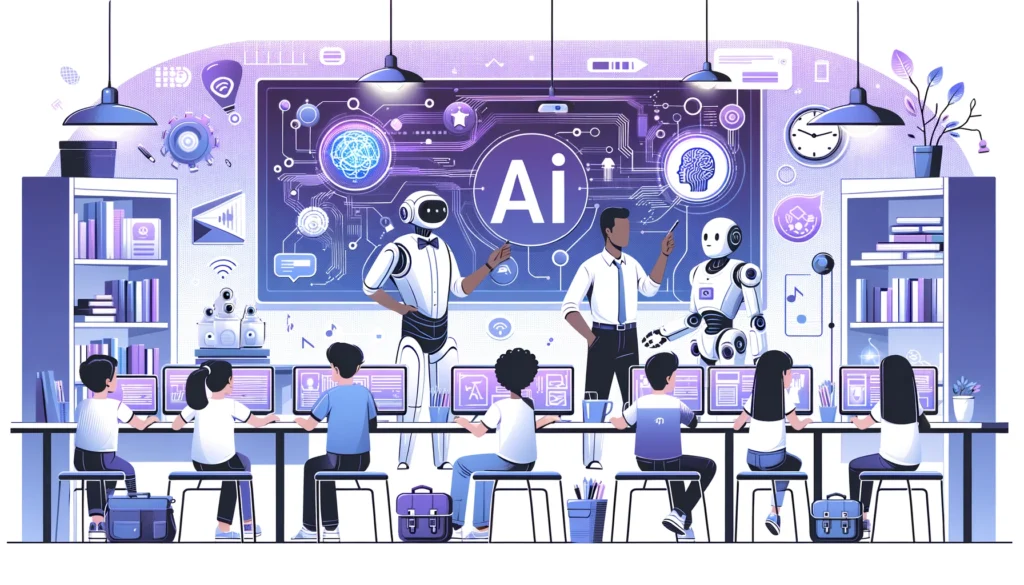
The impact of Artificial Intelligence (AI) on education is personalizing, increasing accessibility and efficiency of learning. The interaction between students and educational materials have changed the way how students and teachers interact with educational materials because of AI driven platforms. The discussion of the role of AI in education and its reliance on IT technologies will let us delve a little deeper into how AI impacts education.How AI is Important for Today Education & How it connects with different IT Technologies Personalized Learning with AI Personalized learning with Ai experiences specific to the needs of each student is achieved through AI. It is able to analyze how a student learns, what strengths or weaknesses a student has, and adjust the lesson content as a result. Supposing a student finds mathematical tasks challenging, AI can give some more exercises to well: improve their mathematics grasp. Machine learning (ML) models learn from past interactions and predict future learning paths on the basis of the past interactions. Big data technology also plays a role in practically using AI in personalized learning. These data are huge and are generated as students interact with content. AI takes this data and uses it to make personalized learning plans for every student so that they receive the best support available. AI in Creating Educational Content Teachers make educational materials using AI to do it quickly and effectively. It can create quizzes, tests or even entire courses. Natural language processing (NLP), one of the parts of AI, takes text inputs and generates text like exam questions or explanation. AI based platforms can offer individual, personalized assessments for students, with tailored and personalized feedback, boosting their learning! Interactive learning experiences also receive support from AI. AI is paired with virtual reality (VR) and augmented reality (AR) to create immersive simulations. To give an example, medical students can use AI powered VR tools to practice surgery and get real time feedback about their performance. Automating Administrative Tasks AI cuts down on educator duties, automating repetitive work. It sees to handling grading, attendance tracking and scheduling, saving time. For instance AI can grade multiple choice exams or essays instantly against a predefined criteria set. This is particularly effective for teachers of large classes of students. Finally, the use of AI for these tasks is closely tied to cloud computing. On the cloud, Educational institutions store data which is available for AI to utilize to automate processes at a good pace. Schools can eliminate the drudgery of managing a large number of students while streamlining operations by utilizing this combination. AI in Educational Platforms and Infrastructure More and more educational platforms have started using AI to enhance learning outcomes. These platforms rely on technologies such as cloud computing, data analytics, and cybersecurity. With cloud computing, AI driven learning tools are delivered on demand, helping to make education more global and more accessible to students around the world. AI powered Data Analytics tracks student performance and the progress for teachers to make data driven decisions and improve instruction. AI based cybersecurity also protects sensitive student data from cyber threats and keeps the digital learning environments secure. AI and Smart Classrooms The Internet of Things and Artificial Intelligence (AI) has led to smart classrooms becoming more common these days. In a classroom, IoT devices can be used to measure student engagement, room conditions, and also help with managing classroom equipment. This data is being analyzed by AI, giving recommendations to teachers on how to better the learning environment. For example, it might suggest a change in the speed of a lecture to keep students engaged. The connection between AI and IoT brings dynamic classrooms together where learning is more interactive and responsive to students’ needs. AI in Lifelong Learning AI learning platforms provide courses and learning paths for adults who want to upskill and advance their career. Using these platforms, your learning is personalized even for professionals using their interest and learning history to recommend courses. Learners can also use AI driven job platforms to fill these skill gaps and suggest relevant courses to prepare for employment. These platforms analyze industry trends, link learning content to the skills in demand. AI in Language Learning With AI powered language learning tools, learning a new language gets a lot easier. Machine learning is a key component of Duolingo, as apps like it use machine learning to offer personalized lessons and measure progress. It means these apps can understand and respond to the users in a conversational way, therefore making learning more intuitive but also more accessible to non native speakers. AI enabled translation tools enable students to access learning materials in languages that they are more comfortable with, thereby removing barriers to education. Here’s a simplified overview as to how AI is changing education and how it’s making your education more personalized, simpler for administrative tasks and better educational platforms. AI is changing the face of education through its connection to IT technologies like BI, cloud computing and IoT. wayaacademy@gmail.compinakiithub.com