AI for Climate Intelligence: Predicting Weather, Energy Use & Crop Yields
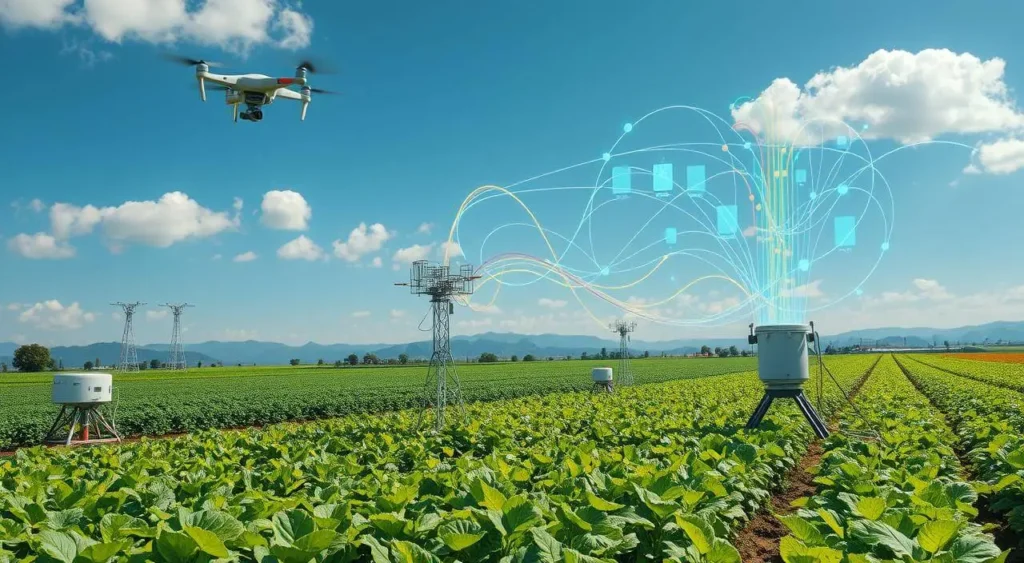
Powered by Pinaki IT Hub – Turning Data into Decisions for aSustainable TomorrowThe 21st century’s biggest challenge isn’t just about technology — it’s about survival. As climate change accelerates, the world faces more unpredictable weather patterns, extreme heat waves, energy shortages, and food insecurity. But here’s the good news — Artificial Intelligence (AI) is emerging as one of the most powerful tools to fight back. Through predictive analytics, machine learning, and real-time data insights, AI is helping us understand, adapt to, and even reverse some effects of climate change. In this blog, we’ll explore: ✅ How AI predicts weather and natural disasters more accurately than ever.✅ How it helps reduce energy waste and improve renewable energy use.✅ How AI supports agriculture and boosts crop productivity.✅ Why AI for Climate Intelligence is one of the most in-demand fields in coming year..✅ And how Pinaki IT Hub can help you build a career in this fast-growing area Why AI is Key to Tackling ClimateChange Introduction: The Complexity of Climate Systems Climate change stands as the defining challenge of the 21st century. It is not just an environmental issue—it’s a social, economic, and humanitarian crisis that affects every aspect of life on Earth. The global rise in temperatures, melting ice caps, rising sea levels, and the increasing frequency of extreme weather events are warning signs that humanity must act decisively and intelligently to protect the planet. However, the Earth’s climate system is extraordinarily complex. It involves billions of data points constantly interacting—temperature shifts, ocean currents, atmospheric pressure variations, soil moisture, greenhouse gas concentrations, and countless other variables. Understanding how these factors influence one another and forecasting how they will behave in the future is a monumental scientific challenge. Traditional models and human analysis alone cannot handle the scale of this data. The sheer volume and speed of global climate information are far beyond what conventional computing or manual analysis can manage efficiently. This is where Artificial Intelligence (AI) becomes a transformative tool—capable of processing, interpreting, and predicting complex climate patterns with unprecedented accuracy and speed. AI: The New Force in Climate Science Artificial Intelligence, particularly through Machine Learning (ML) and Deep Learning (DL), can identify hidden relationships within massive datasets. Instead of programming rules manually, AI learns from data itself—making it ideal for understanding dynamic and nonlinear systems like the Earth’s climate. AI-driven climate models can process decades of satellite, oceanographic, and meteorological data in a fraction of the time it would take traditional systems. These models can: ● Detect early signs of extreme weather events like cyclones, droughts, and heatwaves.● Predict long-term climate trends, including rainfall variability, glacier melting, and rising sea levels.● Optimize energy consumption by forecasting electricity demand.● Help farmers and policymakers make informed, sustainable decisions. AI doesn’t just describe the current state of the planet—it can simulate future conditions,test different scenarios, and recommend solutions to mitigate environmental damage. AI in Extreme Weather Forecasting One of the most powerful real-world applications of AI in climate management is extreme weather prediction. Traditional weather forecasting models rely heavily on physics-based equations and historical data but struggle with accuracy when predicting rapid, localized events. AI, however, thrives in such complex environments. By learning from millions of historical weather patterns, satellite images, and atmospheric readings, AI systems can identify subtle precursors to major events. For example: ● Google’s DeepMind has developed AI models capable of predicting rainfall up to 90 minutes in advance with remarkable accuracy—critical for flood-prone regions.● IBM’s Watson uses AI-driven weather analytics to forecast cyclones, hurricanes, and floods up to 10 days earlier than traditional methods, giving communities more time to prepare.● Governments and disaster management authorities are using AI tools to predict wildfire spread, analyze wind directions, and assess post-disaster damage through satellite imagery. Such predictive capabilities can save thousands of lives and prevent billions of dollars in economic losses by enabling proactive disaster response. AI and Energy Optimization Energy production and consumption lie at the heart of the climate crisis. Fossil fuels still power much of the world, releasing enormous amounts of carbon dioxide and methane into the atmosphere. Transitioning to renewable energy is vital—but integrating renewables into existing power grids is a challenge due to their intermittent nature (e.g., solar and windpower depend on weather conditions). AI plays a crucial role in solving this. Smart grids powered by AI can: ● Balance supply and demand in real time, ensuring efficient energy distribution.● Predict peak usage hours and adjust energy flow accordingly.● Integrate renewable sources seamlessly by forecasting solar and wind energy availability.● Reduce energy wastage and blackouts, cutting operational costs and emissions. For instance, Google applied AI to manage energy consumption in its data centers and achieved a 40% reduction in cooling energy usage, significantly lowering their carbon footprint. Similarly, AI-powered platforms like AutoGrid and FlexGen are helping utilities worldwide optimize energy distribution, predict power surges, and manage energy storage systems for cleaner, more reliable electricity. AI in Agriculture and Food Security Agriculture is both a victim and a contributor to climate change. It depends heavily on weather patterns and natural resources like water and soil, yet it also produces significant greenhouse gas emissions. As global populations rise, ensuring food security while reducing environmental impact is a delicate balance. AI technologies are reshaping modern agriculture by providing data-driven insights that enable farmers to work smarter and sustainably. Key applications include: ● Precision Farming: AI drones and sensors monitor soil quality, moisture, and nutrient levels. Machine learning models then suggest optimal planting times, irrigation schedules, and fertilizer use.● Pest and Disease Detection: AI image recognition tools can identify pest infestations or crop diseases early, helping farmers act before large-scale damage occurs.● Yield Prediction: Based on rainfall forecasts, temperature trends, and soil data, AI systems can predict yields and guide agricultural planning.● Resource Optimization: Farmers can reduce water usage and chemical dependency, improving efficiency while preserving the environment. By making farming more adaptive and efficient, AI not only safeguards food production but also reduces carbon emissions and resource waste,
Will AI Replace Human Jobs or Create New Ones?

AI and the Future of Work: A Revolution in Motion Artificial Intelligence (AI) has traveled a long road — from the imaginative worlds of science fiction novels and futuristic movies to becoming a living, breathing force that’s reshaping industries and redefining the very fabric of how we live and work. Once just a concept confined to research labs and tech enthusiasts, AI today powers our phones, drives cars, personalizes our shopping experiences, assists doctors in diagnosing diseases, and even helps teachers create adaptive learning paths for students. In short, AI is no longer the future — it’s the present. But as machines learn to “think,” analyze, and even create, one of the most profound questions of our generation comes to the surface: Will AI replace human jobs, or will it open doors to new opportunities that never existed before? The Transformation Has Already Begun Across the globe, AI is automating repetitive tasks, increasing productivity, and enabling data-driven decision-making. In healthcare, AI algorithms can detect diseases from medical scans faster and more accurately than the human eye. In finance, predictive analytics and machine learning models are helping institutions detect fraud, forecast market trends, and personalize customer services. Meanwhile, in manufacturing, AI-powered robots streamline production lines, ensuring precision and consistency. In education, intelligent tutoring systems personalize lessons for each student’s learning pace. And in entertainment — from Netflix recommendations to AI-generated music — technology is redefining creativity itself. However, these innovations also bring a new wave of transformation to the global job market. Roles that once relied on routine and repetition are being automated, while entirely new job categories — like AI trainers, data ethicists, prompt engineers, and machine learning operations specialists — are emerging. The challenge lies in adapting our skills and mindset to this changing landscape. The Human Touch: Still Irreplaceable While AI can process data and perform calculations at lightning speed, there are things it cannot replicate — empathy, ethical judgment, creativity, and emotional intelligence. These are the distinctly human traits that define leadership, innovation, and meaningful connection. Rather than seeing AI as a competitor, we can view it as a collaborator — an intelligent assistant that augments human capabilities rather than replaces them. Imagine marketers using AI tools to analyze audience behavior more precisely, allowing them to focus on storytelling and strategy. Or teachers leveraging AI-driven analytics to better understand student performance and provide personalized attention. The future of work isn’t about humans versus machines; it’s about humans with machines. Preparing for the AI-Driven Future At Pinaki IT Hub, we believe that the key to thriving in this new world lies in continuous learning, adaptability, and skill transformation. Understanding AI — not just how it works but how it shapes industries — empowers professionals to stay relevant, resilient, and ready for the opportunities it creates. Our goal is to bridge the gap between technology and human potential. Through expert insights, training programs, and real-world applications, we help learners and professionals harness AI’s power to drive innovation rather than fear disruption. Because the truth is, AI won’t replace humans — but humans who know how to use AI will replace those who don’t. Artificial Intelligence is not merely a technological revolution; it’s a human revolution. It challenges us to rethink how we work, what skills we value, and how we can collaborate with intelligent systems to build a smarter, more inclusive future. The story of AI is still being written — and each of us has a role in shaping it. The question isn’t whether AI will take jobs. The real question is: Are we ready to evolve with it? The Reality: Automation Is Already Here Artificial Intelligence is no longer just a futuristic concept — it’s a living, evolving force transforming every aspect of modern work. Across industries, from healthcare and education to logistics and creative arts, AI-powered systems are performing tasks once thought to be exclusively human. Machines today can analyze X-rays and detect diseases, drive vehicles safely through traffic, compose music, write code, and even generate lifelike art and storytelling content. What was once confined to science fiction is now woven into our everyday lives — quietly automating tasks, optimizing processes, and accelerating innovation. According to a report by McKinsey & Company, by the year 2030, up to 30% of global work hours could be automated. Industries like manufacturing, transportation, data processing, and customer support are at the forefront of this transformation. Automation is becoming the silent engine powering modern economies — boosting efficiency, reducing human error, and increasing output at unprecedented scales. But this doesn’t signal the end of human employment — instead, it marks the beginning of a massive shift in how we define work. The future of work is not about replacing humans but redefining the relationship between humans and machines. The Rise of Intelligent Automation In the past, automation was largely mechanical — machines replaced physical labor in factories and production lines. Today, automation has evolved into a more intelligent, cognitive form. AI systems don’t just execute commands; they learn, adapt, and improve over time. Through technologies like machine learning, computer vision, and natural language processing, these systems can analyze enormous amounts of data, identify patterns, and make predictions with remarkable accuracy. For example: ● In healthcare, AI-powered diagnostic tools can scan millions of images to identify tumors or fractures that a human eye might miss.● In finance, algorithms analyze market data to forecast trends, detect fraud, and automate trading decisions.● In retail, AI personalizes recommendations, manages inventory, and predicts customer preferences.● In transportation, self-driving systems are reshaping logistics and urban mobility. These examples reveal a new truth — automation is no longer limited to repetitive of manual work. It’s moving into cognitive and creative domains, redefining the skill sets that industries value most. Redefining Work, Not Replacing It Despite fears of job loss, automation also brings creation. Every technological revolution in history — from the industrial age to the digital era — has created new types of work, often more
How Cybersecurity and Generative AI Are Reshaping the Digital World…
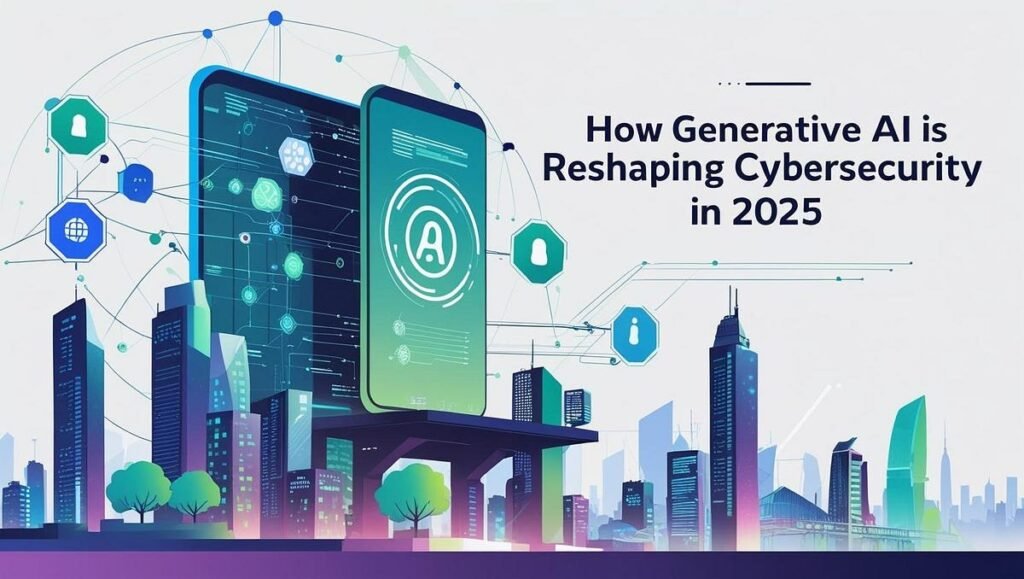
Powered by Pinaki IT Hub – Building the Next Generation of Cybersecurity & AI Leaders The worlds of cybersecurity and Generative AI (GenAI) are no longer separate disciplines. They’ve merged into a powerful partnership that protects data, predicts threats, and even creates intelligent systems that learn to defend themselves. From personal devices to enterprise infrastructure, cybersecurity powered by GenAI is revolutionizing how we work, live, and do business. In this blog, we’ll explore: ● What cybersecurity means in the era of GenAI● How GenAI is used in daily life and business applications● Real-world examples from leading companies● The market growth and impact of AI-driven security● Career opportunities in this fast-growing field● How Pinaki IT Hub is preparing professionals for the future of AI-powered cybersecurity. What Is Cybersecurity in the GenAI Era? Introduction: The Evolution of Digital Defense Cybersecurity has long been the backbone of the digital world, protecting organizations and individuals from malicious actors. In its earlier stages, it focused mainly on tools like firewalls, antivirus software, and manual threat detection. These methods were effective when attacks were simpler and more predictable. Today, the digital landscape has changed dramatically. Threats have become far more complex, as cybercriminals use automated and AI-powered techniques to launch large-scale, sophisticated attacks. Traditional security tools, which rely heavily on predefined rules and signatures, are no longer enough to counter such fast-moving, constantly evolving threats. This shift has given rise to a new era of cybersecurity powered by Generative AI (GenAI). Unlike traditional tools, GenAI leverages machine learning, natural language processing, and advanced pattern recognition to not just detect and respond to attacks but to predict and prevent them. Modern cybersecurity is no longer a static shield. It has evolved into an intelligent, adaptive defense system—capable of anticipating risks, neutralizing threats before they escalate, and continuously improving as it learns from new data. Redefining Cybersecurity with GenAI In the past, cybersecurity relied on databases of known malware and threat signatures. Security systems only acted when they recognized patterns that matched previously seen attacks. This approach often left organizations vulnerable to new, unknown, or evolving threats. GenAI changes this approach entirely. By continuously learning from massive amounts of real-time data, it can:● Identify unusual patterns or behaviors that deviate from the norm.● Simulate potential attack scenarios to uncover weaknesses in a system.● Generate and deploy defensive measures on its own, often faster than human intervention. This has transformed cybersecurity from being: Reactive – responding after an attack occurs, to being● Proactive – predicting and preventing attacks before they cause harm.In today’s world, cybersecurity powered by GenAI is:● Predictive, using intelligent algorithms to foresee potential attack vectors.● Adaptive, modifying defense strategies as attackers change tactics.● Automated, responding to threats in real time without human delay. AI-Driven Threat Detection One of the most important ways GenAI has transformed cybersecurity is through real-time threat detection. Organizations today manage vast amounts of data—coming from cloud services, IoT devices, digital platforms, and millions of user interactions. Manually reviewing such data for signs of a breach is simply impossible. GenAI acts as an intelligent observer, scanning billions of data points at incredible speed to identify unusual activity. It learns what normal behavior looks like—such as typical login times, device usage patterns, and network activity—and raises alerts when it detects anything abnormal. For example, if a company employee who usually logs in during office hours suddenly attempts to access sensitive data at midnight from a new device in another country, GenAI can flag the activity as suspicious or even block it in real time. In addition to detecting current threats, GenAI uses predictive analytics to identify warning signs that often precede attacks. This allows organizations to strengthen defenses before the attack even happens. Automated Incident Response Traditional cybersecurity processes often required human teams to investigate alerts, analyze the threat, and then take action. This approach could take hours or even days, giving attackers time to cause serious damage. In today’s GenAI-driven environment, incident response is fast and often fully automated. As soon as a threat is detected, the system can:● Instantly block malicious IP addresses or suspicious domains.● Quarantine compromised files or devices to stop the spread of malware.● Deploy patches automatically to fix newly discovered vulnerabilities.● Trigger self-healing mechanisms, restoring affected systems to their secure state.This automation significantly reduces the time between detection and action—often from hours to seconds—minimizing potential damage, reducing downtime, and preventing breaches from escalating. Zero-Trust Architecture In the past, once a user or device gained access to a network, it was often assumed to be trustworthy. This created vulnerabilities because attackers who got inside—through stolen credentials or compromised accounts—could move freely within the system. Modern cybersecurity, particularly in the GenAI era, follows a Zero-Trust approach. This means no user, device, or application is trusted by default—not even those already inside the network. GenAI enhances this approach by applying continuous verification and context-aware authentication. It evaluates factors like device type, location, time of login, and behavior patterns before granting access. If anything seems off—for example, an employee tries to access data unrelated to their role—access is denied or flagged for further review. Additionally, micro-segmentation of networks ensures that even if an attacker breaches one area, they cannot easily move across the system. GenAI plays a key role in detecting and stopping such lateral movements within the network. Data Privacy and Compliance Protecting sensitive data is not only essential for security but also a legal requirement in many industries. Regulations like GDPR, HIPAA, and CCPA impose strict rules on how organizations collect, store, and share personal information. Manual compliance processes, such as periodic audits and reporting, are often time-consuming and prone to oversight. GenAI revolutionizes this by providing automated compliance monitoring and reporting. It continuously tracks how data is handled, flags potential violations in real time, and helps organizations maintain compliance effortlessly. For example, if unauthorized personnel try to access restricted customer records or if data is transferred to a location that violates privacy regulations, GenAI can immediately detect and
The Hidden Link Between Artificial Intelligence,Machine Learning & Career Growth
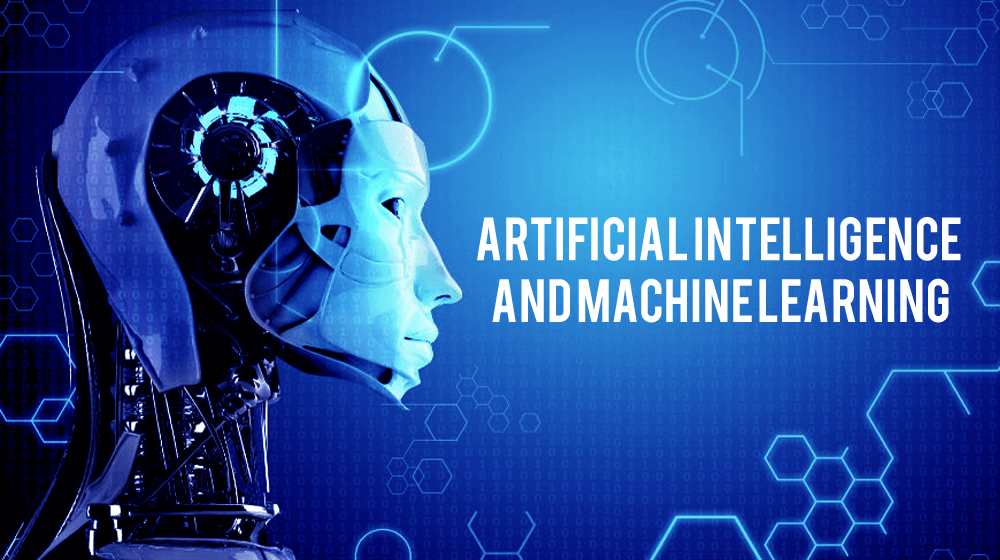
Introduction Artificial Intelligence (AI) and Machine Learning (ML) are no longer just technical buzzwords — they are shaping the future of industries, businesses, and careers. From predicting diseases to optimizing business operations, AI and ML are redefining how we live and work. But the real question is: how do these technologies connect to your career growth? Let’s explore what AI and ML mean, why they matter, how they are used, their benefits, and how you can leverage them for your professional journey. What are AI & Machine Learning? Imagine you have a really smart friend who never forgets anything, always learns from past experiences, and sometimes even gives better suggestions than you. That’s Artificial Intelligence (AI). It’s basically when computers start acting less like boring machines and more like humans — they can think, solve problems, make decisions, and even argue with you (just like your sibling does!). Now, how do these machines get so smart? That’s where Machine Learning (ML) comes in. Think of ML as the “training coach” of AI. Instead of spoon-feeding instructions, we throw loads of data at it — like pictures of cats, dogs, or a million pizza orders — and the system learns on its own. Over time, it gets better and better, just like you getting better at cricket, cooking, or scrolling Instagram without getting caught by your boss.So, in short:●AI is the grand vision — the dream of machines that can “think” like us.● ML is the practical tool — the gym workout that builds the muscles behind that dream.Without ML, AI is like a superhero without powers. With ML, AI can do everything from recommending your next Netflix binge to driving cars, writing essays, and yes — even helping you avoid sending that “wrong text” at 2 AM Why AI & ML Matter Today Do you know how much data the world generates every single day? 2.5 quintillion bytes. That’s so much data that if it were printed on paper, we’d probably need a new planet just to store the files! And honestly, no human — not even your nosy neighbor who remembers everyone’s gossip — can keep track of that much information. That’s where AI and ML jump in wearing superhero capes. ● Save Time Through Automation: Remember when you had to manually reply to every “Hi” on WhatsApp? Now chatbots do it faster than you can type “brb.” AI takes the boring tasks and handles them like a pro, leaving you free for important things… like binge-watching your favorite series.● Cut Costs by Predicting Demand & Risks: Businesses used to make wild guesses about what customers wanted. Sometimes they were right, sometimes they were stuck with 10,000 unsold fidget spinners. ML makes accurate predictions, so companies don’t waste money — or warehouse space.● Personalized Experiences: Ever noticed how Netflix knows you better than your best friend? That’s AI whispering, “She liked K-drama last week, give her three more tear-jerkers today.” It’s like having a personal assistant who knows your mood swings better than you do.● Smarter, Faster, More Accurate Decisions: Humans argue for hours over pizza toppings. AI looks at thousands of factors and decides instantly — pepperoni wins. For businesses, this means sharper strategies, better results, and fewer “oops”moments. The truth is, whether you’re in tech, healthcare, finance, fashion, or even farming, AI & ML are everywhere. Your career might not involve coding robots, but trust me — these technologies will sneak into your work life sooner or later. The question is: will you be the one using AI, or will AI be the one outsmarting you? Real-World Applications of AI & ML AI and ML aren’t just living in sci-fi movies anymore — they’re already bossing around in our daily lives (sometimes without us even realizing). Here’s how they’re sneaking into different industries:● Healthcare : Imagine a doctor who never forgets a case, never misreads an X-ray, and doesn’t get tired after 20 patients. That’s AI. From spotting cancer early to predicting the next epidemic, AI is basically the Sherlock Holmes of medicine —minus the pipe. And yes, it can even recommend personalized treatment plans, like “No more late-night pizza if you want a healthy heart.”● Finance : Ever get a text saying, “Suspicious login detected”? That’s AI playing bodyguard for your bank account. It catches fraudsters faster than you catch your sibling stealing snacks. Plus, it does credit scoring and even automated trading,making stock markets less about “gut feeling” and more about “smart algorithms.”● Retail : You thought Amazon and Flipkart just knew what you wanted? Nope. That’s ML analyzing your every click, search, and even what you almost bought at 3 AM. It’s like having a shopkeeper who remembers every tiny detail — except this one doesn’t judge you for adding 10 things to cart and buying none. ● Transportation : Forget honking in traffic jams — AI is already guiding smart traffic systems and developing self-driving cars. It’s like having a driver who never gets angry, never asks for directions, and never complains about fuel prices.●Marketing : Ever wonder why Instagram shows you that shoe ad right after you just thought about shoes? That’s AI reading your digital mind. It predicts what you’ll want, sends you targeted ads, and even sets up chatbots that politely say “How may I help you?” at 2 AM when no human customer service rep would.● Education : Textbooks don’t adjust to your learning speed, but AI-powered platforms do. They know if you’re breezing through math or crying over algebra and then adjust lessons accordingly. Basically, it’s like having a tutor who’s always patient and never yells, “Weren’t you listening the first time?” So, whether you’re shopping, studying, traveling, or just chilling online — AI and ML are quietly running the show. They’re not the future — they’re the nosy roommates already living with us. Benefits of Learning AI & ML (a.k.a. Why Your Future Self Will ThankYou) High Demand & Career SecurityImagine walking into a party and
How IT Giants Are Leveraging Artificial Intelligence & Machine Learning in 2025
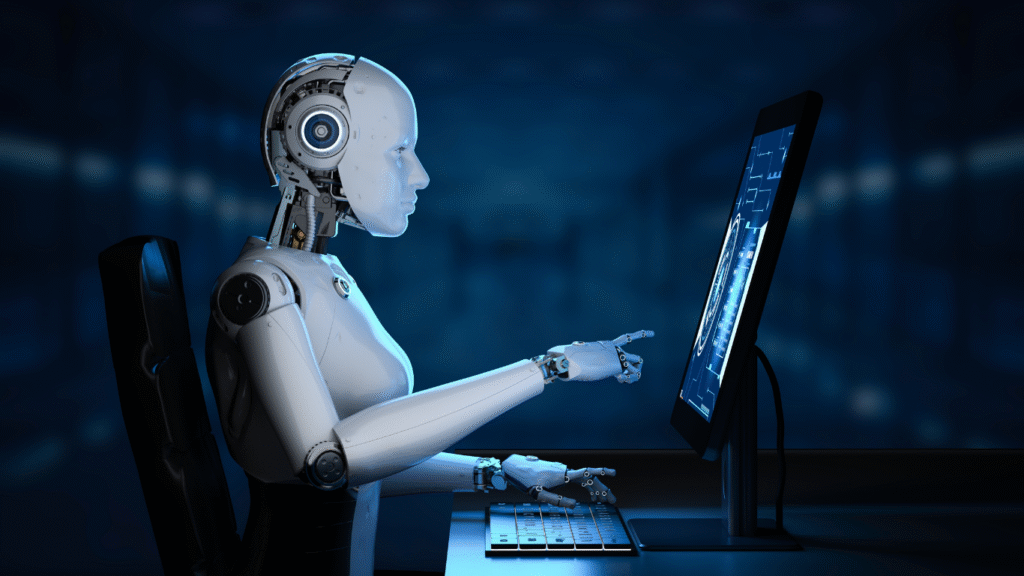
Powered by Pinaki IT Hub – Building the Next Generation of Tech Leaders Technology has always been the cornerstone of innovation, but in 2025, Artificial Intelligence (AI) and Machine Learning (ML) have become game-changers for IT giants across the globe. From predictive analytics to autonomous systems, AI & ML are driving efficiency, creativity, and competitive advantage. But this transformation also requires deep understanding of algorithms, market trends, and future career opportunities. In this blog, we’ll explore: By the end, you’ll know how these technologies are shaping the IT landscape – and how you can be part of it. 1. What Are AI & ML? A Deep Dive Artificial Intelligence (AI) Artificial Intelligence (AI) refers to the development of computer systems or machines that can perform tasks that typically require human intelligence. These tasks include learning from data (machine learning), reasoning, problem-solving, understanding natural language, recognizing patterns, and making decisions. AI works by using algorithms and models to process large amounts of data, identify trends, and improve performance over time. It aims to replicate or simulate cognitive functions such as perception, reasoning, learning, and self-correction. Key Components of AI Applications of AI Machine Learning (ML): Machine Learning is a core subfield of Artificial Intelligence (AI) that allows machines to analyze data, identify patterns, and make informed decisions with minimal human intervention. Instead of relying solely on explicitly programmed instructions, ML systems learn and adapt through exposure to large amounts of information, refining their performance as they process more data. At its foundation, ML uses mathematical models and statistical algorithms to extract insights from raw data. These insights enable machines to perform tasks such as recognizing images, understanding speech, predicting future trends, and even diagnosing diseases—tasks that traditionally required human intelligence. Key Features of ML: Types of Machine Learning: Why ML Matters: Machine Learning powers many aspects of modern life—recommendation engines on Netflix and Amazon, fraud detection in banking, voice assistants like Alexa and Siri, and even medical imaging analysis. Its potential continues to expand as computing power and data availability grow, pushing the boundaries of what machines can achieve. Key Components of AI & ML in 2025 Generative AI has matured into ultra-advanced systems capable of producing human-like text, hyper-realistic images, dynamic videos, and even executable code. In 2025, it fuels content creation, personalized marketing, product design, and immersive entertainment, enabling businesses to achieve scalable creativity without compromising on quality or originality. NLP bridges the gap between human language and machine understanding. By 2025, NLP models excel at context aware conversation, real-time language translation, sentiment detection, and advanced information retrieval, making AI systems more intuitive, empathetic, and capable of human-like interactions. Deep learning employs multi-layered neural networks that replicate the human brain’s processing capabilities. These networks excel in speech recognition, natural language understanding, medical imaging, predictive analytics, and autonomous systems, achieving near-human levels of precision in complex decision-making. Reinforcement Learning thrives on a reward-driven learning mechanism, where algorithms learn through trial-and-error interactions with their environment. In 2025, RL powers robotics, autonomous vehicles, industrial automation, and game theory, enabling systems to make real-time adaptive decisions with minimal human oversight. MLOps ensures seamless deployment, monitoring, and scaling of ML models in production. It integrates DevOps practices with ML lifecycle management, automating training, version control, performance tracking, and updates. By 2025, MLOps is a core enabler of efficient, reliable, and compliant AI-driven enterprises. 2. Algorithms Powering AI & ML in IT In 2025, AI and ML innovations are driven by advanced algorithms that empower IT systems to analyze vast datasets, predict outcomes, automate decision-making, and continuously optimize performance. These algorithms are categorized based on their learning approaches and application areas: Supervised Learning Algorithms Supervised learning uses labeled datasets, where machines learn from input-output pairs to make predictions or classifications. Unsupervised Learning Algorithms Unsupervised learning identifies patterns, clusters, and structures within unlabeled datasets, enabling systems to discover hidden insights. Deep Learning Architectures Deep learning algorithms mimic the human brain through artificial neural networks, powering advanced AI applications. Reinforcement Learning Models Reinforcement learning trains models through trial and error, rewarding correct actions to optimize performance over time. Why These Algorithms Matter in IT These algorithms are the backbone of next-generation IT solutions, driving systems from basic automation toward true intelligence. By integrating these algorithms, IT is no longer just a support function—it becomes a strategic intelligence layer, capable of learning, adapting, and evolving with business needs in 2025 and beyond. 3. Real-World Applications by IT Giants Google Microsoft Amazon IBM 4. Market Impact & Growth The global AI market is projected to reach $407 billion by 2027 (PwC, 2025), driven by the rapid adoption of machine learning and deep learning technologies across industries. 5. Career Opportunities in AI & ML – A Growing Frontier The career landscape in Artificial Intelligence (AI) and Machine Learning (ML) is expanding rapidly, with organizations across industries integrating intelligent technologies into their operations. According to LinkedIn’s Future of Jobs Report (2025), AI & ML roles are growing at an impressive 40% Year-over-Year (YoY), making them some of the most sought-after and high-paying professions globally. Key Roles and What They Do 1. AI/ML Engineer 2. Data Scientist (ML Specialist) 3. MLOps Engineer 4. AI Ethics & Governance Officer 5. Computer Vision Engineer 6. NLP Specialist Salary Insights Industries Hiring AI & ML Experts 6. Why Choose Pinaki IT Consultant to Learn AI & ML? Learning Artificial Intelligence and Machine Learning is not just about theory – it’s about gaining practical skills that make you industry-ready. Pinaki IT Consultant bridges the gap between learning and real-world application with a holistic approach to training. 1. Hands-On Learning with Real-World Projects Instead of just learning concepts, you’ll work on live AI & ML projects – from building predictive models to deploying AI solutions across industries like healthcare, finance, and e-commerce. This ensures you graduate with a strong portfolio that showcases your skills. 2. Mentorship from Industry Veterans Our mentors come with 15+ years of experience in AI, ML, and Data Science. They provide personalized
Tech Culture & Society in 2025
The Digital Dilemma: Balancing Tech, Mental Health, and AI Ethics in 2025Powered by Pinaki IT Hub – Building the Next Generation of Ethical AI Leaders Technology has always shaped the way we live, work, and interact—but in 2025, it’s not just a tool; it’s the environment we live in. From the rise of creator-driven economies to growing concerns about mental health, our relationship with technology is at a turning point. In this blog, we’ll explore four critical aspects of tech culture today: Screen addiction and its mental health impact Digital detox—fact or fantasy? Is tech connecting or isolating us? The youth creator economy—empowerment or exploitation? Alongside, we’ll connect these societal shifts to data governance, AI ethics, and digital literacy, so you’ll see why mastering these skills is essential for any professional in 2025. Screen Addiction: How is Tech Affecting Mental Health? In 2025, our relationship with technology is at an all-time high — and so is our screen time. On average, a person now spends 9–11 hours a day on digital devices — whether it’s smartphones, laptops, AR glasses, or mixed-reality headsets. While this constant connectivity powers our productivity, learning, and entertainment, it also has a hidden cost — our mental health. The Hidden Impact of Excessive Screen Time Sleep Disruption● Blue-light exposure from screens delays melatonin production — the hormone that helps you sleep.● Late-night scrolling tricks the brain into thinking it’s still daytime, disrupting the circadian rhythm (our body’s natural sleep-wake cycle).● Consequence: Insomnia, fatigue, and a higher risk of mood disorders. Reduced Attention Span● In 2000, the average human attention span was 12 seconds. By 2024, it had dropped to just 7 seconds — shorter than that of a goldfish!● Constant notifications, pop-up ads, and algorithm-driven content keep our brains in a constant state of micro-distraction.● Consequence: Difficulty focusing on tasks, reduced deep work capacity, and lower productivity. Anxiety & Depression● Social comparison on platforms like Instagram or TikTok leads people to feel “less than” others.● Cyberbullying and online harassment amplify emotional stress.● Doomscrolling — endlessly consuming negative news — creates a persistent state of mental fatigue.● Consequence: Higher rates of anxiety, depressive episodes, and emotional burnout. Global Reality Check ● In 2024, Japan reported a 17% rise in “digital burnout” diagnoses among tech workers.● The government responded with new workplace mental health laws requiring companies to set maximum screen exposure limits and offer mental health check-ins.● Similar trends are emerging in South Korea, the US, and parts of Europe. The AI Connection ● Modern AI platforms are designed to keep you hooked — they track your likes, habits, and scrolling patterns to deliver content you can’t resist.● This “engagement optimization” often prioritizes addictive material over healthy, balanced consumption.● Ethical AI governance can help: ○ Set algorithmic limits to avoid overexposure.○ Offer “digital well-being” nudges.○ Encourage mindful breaks instead of endless scrolling. Healthy Tech Habits for 2025 Mindful scrolling — unfollow accounts that cause stress and follow those thatinspire.Blue-light filters or blue-light blocking glasses after sunset. Scheduled breaks using the 20-20-20 rule (every 20 minutes, look at something 20feet away for 20 seconds). Screen-free zones at home, especially in bedrooms. Digital detox days — one day a week without social media or non-essential screenuse. Thought: Technology is here to stay — but how we use it will decide whether it becomes a tool for growth or a source of burnout. A balanced digital lifestyle is not about rejecting tech, but about using it consciously and healthily. Want to understand digital wellness and learn practical strategies to manage screen addiction? Join Pinaki’s Course on “Digital Well-being & Mindful Tech Use” — because your mental health matters as much as your online life. Digital Detox: Can People Really Disconnect? Over the last few years, the term “digital detox” has transformed from a niche lifestyle choice into a multi-billion-dollar wellness industry. From luxury resorts promoting “No Wi-Fi Zones” to smartphone apps that track your time away from other apps, the concept has gone mainstream. But in 2025, one big question remains: Is it truly possible to unplug in a world where everything is online? The Reality CheckAccording to the 2025 Global Wellness Report:● Only 8% of people who attempt a week-long digital detox actually make it without relapsing.● The main reason? Digital dependency is now woven into the core of daily life. Why Disconnecting is So Difficult Social PressureBeing “offline” can make people feel left out of social updates, group chats, or professional opportunities. Work Is DigitalRemote work tools, cloud platforms, and virtual meetings make it nearly impossible to stay productive without screens. Life Is Digital○ Banking: Most transactions are online or via apps.○ Payments: From street food stalls to supermarkets, QR codes and UPI have replaced cash.○ Communication: WhatsApp, emails, and Slack are the primary modes of contact — even for emergencies. Case Study: The Singapore Corporate Detox PilotIn 2024, a large Singapore-based company tested a 1-day-per-month “Digital Detox Pass” for its employees.● Employees were encouraged to avoid non-essential devices for 24 hours.● Results:○ Productivity rose by 14% (fewer distractions meant deeper focus).○ Stress levels dropped during detox days.○ However: Most participants still checked devices occasionally — especially for urgent work messages or family updates. The AI ConnectionFuture AI personal assistants could make healthy disconnection easier by: ● Blocking non-urgent notifications during rest or family time.● Monitoring signs of mental fatigue and suggesting breaks before burnout hits.● Filtering content so only truly important updates come through during “detox hours.”● Creating custom offline schedules that align with a person’s work, hobbies, and sleep cycle. Practical Tips for a Realistic Digital DetoxYou don’t have to go fully offline to feel the benefits. Start small: Plan Offline Activities — Hobbies, outdoor walks, or in-person meetups to replace screen time. Micro-Detoxes — Take 2–3 hours daily without screens (e.g., during meals, workouts, or before bed). No-Phone Zones — Keep devices out of bedrooms or dining areas. App-Free Days — Choose one weekend day to avoid
Data Governance in AI, Automation of Data & Misuse Risks in 2025

Powered by Pinaki IT Hub – Building the Next Generation of Ethical AI Leaders Introduction: The AI Data Revolution of 2025 Welcome to 2025, where data is not just information—it’s intelligence. Artificial Intelligence (AI) has transformed industries, from healthcare and finance to education and retail. But as AI systems evolve, they rely on one critical foundation: data governance. Without proper governance, AI can be biased, unsafe, or even illegal. That’s why global companies and governments are investing heavily in frameworks that ensure data is accurate, secure, compliant, and ethically used. At Pinaki IT Hub, we are not just teaching technology—we’re preparing students and professionals to master AI data governance, automation, and compliance so they can lead in this new era. In this blog, we’ll break down: ● What data governance in AI really means in 2025● How automation of data governance works● The risks of data misuse and real-world cases● Global regulations and compliance requirements● A step-by-step learning roadmap for students and professionals● How Pinaki IT Hub prepares you to master it all By the end of this guide, every doubt you have about data governance in AI will be clear. What is Data Governance in AI? Data Governance in AI is the structured framework of rules, processes, roles, and technologies designed to ensure that every piece of data used in Artificial Intelligence systems is handled responsibly, ethically, and in compliance with legal requirements. It goes beyond simple data management. It focuses on creating trustworthy AI ecosystems where data is: Accurate – Data is cleansed, validated, and free from errors, ensuring AI models learn from high-quality information. Inaccurate data leads to poor predictions, biased outputs, or system failures. Secure – Sensitive information is protected from breaches, unauthorized access, and misuse through encryption, access controls, and continuous monitoring. Fair and Unbiased – AI systems are only as fair as the data they learn from. Governance ensures datasets are diverse, representative, and regularly audited to detect and mitigate bias. Compliant with Laws – With global regulations like the EU AI Act, GDPR, and India’s Digital Personal Data Protection Act (DPDPA), governance ensures that data collection, storage, and usage meet strict legal standards. Properly Documented and Auditable – Governance establishes data lineage—a record of where data came from, how it was transformed, and how it’s being used—providing full transparency and accountability. Why It’s Like a Safety Framework for AI Think of AI as a high-powered engine and data as its fuel. If the fuel is impure or the engine is unregulated, the entire machine breaks down—causing incorrect predictions, compliance violations, or ethical risks.Data Governance is the safety framework that ensures:● The “fuel” (data) is clean and legally obtained● The “engine” (AI) runs efficiently, securely, and transparently● Every action can be traced, explained, and justifiedBy enforcing these principles, organizations can build trustworthy AI systems that are scalable, ethical, and aligned with both business and regulatory needs. Pinaki IT Hub Approach: We train our students not only to understand this framework but also to implement it with real-world tools and compliance workflows, making them industry-ready AI governance professionals. Why It Matters in 2025 EU AI Act Enforcement (Aug 2025) Companies must follow strict rules for data transparency, security, and lawful sourcing or risk fines of up to 7% of global turnover. Data Sprawl Problem AI systems generate massive volumes of new data—logs, synthetic datasets, and agent activity—that can become untraceable without proper governance. Rise of Real-time AI With IoT devices, AI agents, and streaming analytics, decisions happen instantly. Governance now needs automation to keep pace. Ethics & Trust Biased AI has caused global scandals—hiring algorithms rejecting candidates unfairly, or financial AI denying loans without explanation. Governance prevents these risks. Career Demand By 2026, over 70% of AI-related jobs will require knowledge of data governance and compliance. Pinaki Insight: Our training integrates AI, Data Governance, and Compliance Modules so you can enter this high-demand job market with confidence. Automation of Data GovernanceManually checking data is impossible at 2025 scale. That’s where automation comes in. Automation Component What It Does Tools & Tech Metadata Management Tracks data lineage and usage history Collibra, Alation Automated Compliance Maps data against laws (GDPR, AI Act, India’s DPDPA) OneTrust, BigID Bias Detection Monitors and flags biased training data Fairlearn, Aequitas Access Control Manages permissions for users and AI agents Okta, Azure AD Synthetic Data Testing Generates safe test data for model training Mostly AI, Gretel.ai At Pinaki IT Hub, we train you to use these tools in real projects, including: ● Automating GDPR compliance checks● Implementing bias audits for AI models● Building data lineage dashboards Data Misuse Risks in 2025 AI without governance is dangerous. Here are the biggest risks students and professionals must understand: Data BreachesAI-driven organizations face more cyberattacks because of the high value of their data. Example: In 2024, a financial AI platform leaked 3M user records because they failed to encrypt training datasets. AI Agent MisbehaviorAutonomous AI agents can access APIs or internal systems. Without governance, they may misuse credentials or exfiltrate data. Real Case: 23% of companies reported agent-related credential leaks in early 2025. Bias and DiscriminationAI trained on biased data can lead to unfair hiring, lending, or healthcare decisions. Example: A global HR platform faced lawsuits in 2025 when its AI recruiter unintentionally favored candidates from certain universities. Regulatory PenaltiesWith the EU AI Act and India’s Digital Personal Data Protection Act (DPDPA), companies face heavy fines if they mishandle data or lack proper consent tracking. Reputational DamageData misuse can destroy customer trust—and no AI model can fix that. Pinaki Promise: In our AI Governance Training Program, we simulate real-world risk scenarios and teach how to prevent them through hands-on labs. Global Regulations Shaping Data Governance Region Key Regulation Impact on AI & Data Governance EU EU AI Act (Aug 2025), EU Data Act Mandatory risk assessments, transparency, bias control India Digital Personal Data Protection Act (DPDPA) Consent-first governance and strict breach penalties US NIST AI Risk Management Framework AI system classification and
How AI Uses IoT Data to Personalize Experiences Across Industries — And Why It’s a Game Changer for Your Career in 2025
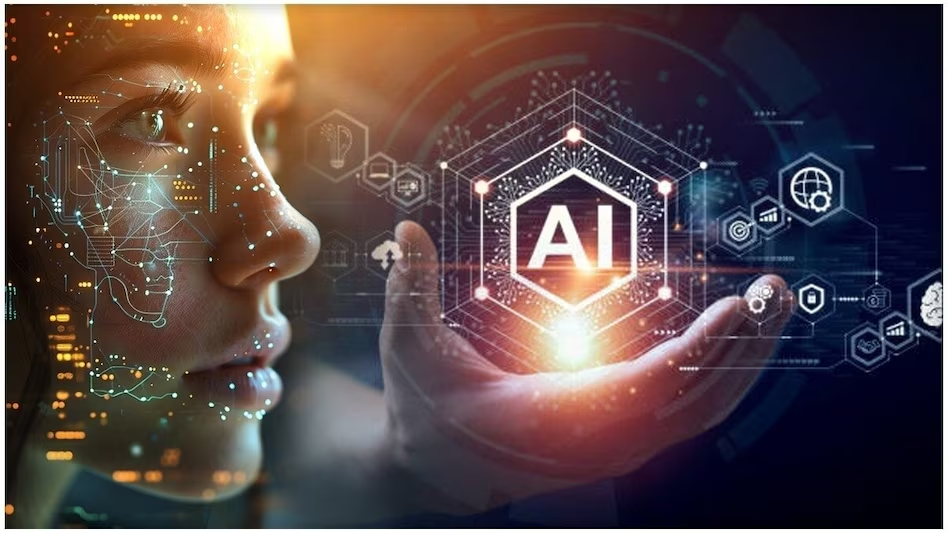
In 2025, two technologies dominate the conversation around innovation: Artificial Intelligence (AI) and the Internet of Things (IoT). On their own, both are powerful. Together, they are revolutionizing how businesses operate and how customers interact with brands, services, and environments. Whether it’s walking into a retail store and seeing products curated just for you, getting a hotel room automatically set to your preferences, or receiving proactive customer service before a problem occurs — these aren’t future concepts. They’re happening now, thanks to AI leveraging IoT data. But beyond the tech buzz, there’s a growing question among professionals, businesses, and students alike: “What does AI + IoT mean for the future of work, innovation, and my career?” This blog explores that in deep detail — explaining what’s happening now, the real-world examples transforming industries, the technical and business challenges (like interoperability), and most importantly, why this space is one of the most high-potential career paths for 2025 and beyond. 🔍 Understanding AI and IoT: The Powerful Duo Before we explore the magic of personalization, let’s understand what we’re talking about. ✅ What is IoT (Internet of Things)?IoT refers to a vast network of connected devices embedded with sensors, software, and communication tools that collect and exchange data over the internet.Examples:● Smartwatches tracking your heart rate● Smart fridges that notify you when groceries are low● Industrial sensors measuring equipment health in factories● Home automation systems controlling lighting, AC, and securityAccording to Statista, by the end of 2025, there will be over 75 billion connected IoT devices globally. ✅ What is AI (Artificial Intelligence)? AI is the capability of machines to simulate human intelligence — learning from data, making decisions, predicting outcomes, and automating tasks.AI is the brain that learns from IoT data and acts on it intelligently.When combined, AI and IoT create an intelligent ecosystem where machines:● Collect data through IoT sensors● Analyze it using AI algorithms● Make decisions or recommendations● Act autonomously or assist human usersThis synergy is what enables the deeply personalized experiences we’ll explore below. 🌍 Real-World Applications of AI + IoT for Personalized Experiences ⚙️The Interoperability Challenge: Why It’s a Roadblock One of the biggest challenges in realizing the full potential of AI + IoT is interoperability.❗ What is Interoperability?It refers to the ability of different IoT devices, platforms, and software systems to connect, share data, and work together seamlessly.❌ Problems We Face:● Different communication protocols (Zigbee, Bluetooth, Wi-Fi, LoRa)● Diverse data formats (JSON, XML, proprietary formats)● Platform-specific devices that can’t talk to each other● Security and privacy concerns when integrating multiple systemsExample: A smart lock, light bulb, and speaker from three different brands may not communicate — making unified control impossible.Without a universal standard, developers struggle to build scalable systems that work reliably across homes, hospitals, or cities. 🧠 How AI Helps Solve Interoperability Problems AI is not just a consumer of data. It can also be a translator, mediator, and optimizer. 🔮 Future Trends: Why AI + IoT is the Future of Innovation As we move further into 2025 and beyond, one thing is clear: the convergence of Artificial Intelligence (AI) and the Internet of Things (IoT) will shape the future of how businesses operate, how services are delivered, and how individuals interact with technology. This fusion isn’t just a trend — it’s the foundation of the next industrial and digital revolution. Let’s break down the future trends, statistics, and technological shifts that highlight why AI + IoT is becoming central to digital transformation across all industries. 📊 Key Market Predictions 🌐 Over 75 Billion IoT Devices by 2025According to Statista and IDC, by the end of 2025, there will be over 75 billion IoT-connected devices worldwide. This includes:● Smart home systems (thermostats, lights, security cams)● Wearable health trackers● Connected vehicles● Smart factories with embedded sensors and roboticsThis explosion of connected devices means a massive influx of real-time data — and only AI can process and extract value from it efficiently. 💰 AI + IoT Market to Exceed $500 Billion by 2027As per Allied Market Research, the AIoT (Artificial Intelligence of Things) market is expected to surpass $500 billion by 2027, driven by demand across:● Smart manufacturing● Autonomous vehicles● Healthcare and remote monitoring● Smart cities and infrastructure automationEnterprises are rapidly investing in AI-powered IoT platforms to automate decision-making, reduce human error, and personalize experiences at scale. 🏬 Over 65% of Enterprises Will Use AI for Personalized Solutions By 2026, more than 65% of global businesses are predicted to deploy AI-powered personalization engines, according to Gartner. These solutions will:● Analyze user behavior and context● Tailor digital interfaces, ads, products, and support interactions● Provide real-time, dynamic changes to services based on data from IoT devicesWhether in e-commerce, hospitality, or telemedicine, personalization won’t be optional — it’ll be expected. 🚀 What’s Coming Next: Game-Changing Innovations 📈 The Career Impact: Why You Should Build a Future in AI + IoT As AI and IoT converge, there is an unprecedented demand for skilled professionals who can understand, design, and deploy intelligent systems. Here’s why this field is a goldmine of opportunity in 2025 and beyond: 📌 In-Demand Career Paths: 🎓 Why Learn AI + IoT Now? Because companies are actively hiring, and the skills gap is massive. You don’t need to wait 10 years — the future is already here.📊 Job Growth Estimates: ● AI jobs expected to grow 31% annually (World Economic Forum)● IoT-related roles projected to cross 100 million by 2030● Salaries are 2x to 3x higher for roles that involve AI or IoT🎓 Get Industry-Ready with Pinaki IT ConsultantAt Pinaki IT Consultant, we prepare you with hands-on training, certifications, and real-world projects in areas like:● AI & Machine Learning (Python, TensorFlow, NLP, CV)● IoT Systems Design & Integration (NodeMCU, Raspberry Pi, MQTT)● Cloud & Edge Architecture (AWS IoT Core, Azure, GCP)● Cybersecurity for IoT Devices● Data Analytics for Smart Systems● Industrial Automation with AIYou’ll work on projects like:● Smart Parking Systems● Wearable Health Monitoring● AI-Powered Surveillance● Smart Agriculture IoT Networks ✅ Certifications ✅ Live Projects ✅ Job
Why Every Business in 2025 Needs a SMART Integrated IT Solution
In today’s ultra-competitive, rapidly evolving digital landscape, businesses can’t afford to operate in silos. The winners of 2025 and beyond are organizations that seamlessly integrate software, hardware, and IT services into unified, SMART solutions — unlocking unprecedented operational efficiency, agility, and innovation. Whether you’re a growing startup, a traditional manufacturing enterprise, or a modern e-commerce giant, having a SMART Integrated IT Solution is no longer optional — it’s a strategic necessity. This comprehensive guide explores what these solutions are, why they’re critical, how they drive efficiency, and showcases real-world companies already reaping the rewards. In today’s ultra-competitive, rapidly evolving digital landscape, businesses can’t afford to operate in silos. The winners of 2025 and beyond are organizations that seamlessly integrate software, hardware, and IT services into unified, SMART solutions — unlocking unprecedented operational efficiency, agility, and innovation.Whether you’re a growing startup, a traditional manufacturing enterprise, or a modern e-commerce giant, having a SMART Integrated IT Solution is no longer optional — it’s a strategic necessity. This comprehensive guide explores what these solutions are, why they’re critical, how they drive efficiency, and showcases real-world companies already reaping the rewards. 📈 What Exactly is a SMART Integrated IT Solution? A SMART Integrated IT Solution combines:✅ Software (like ERP, CRM, HRMS, Analytics Platforms)✅ Hardware (servers, IoT devices, networking equipment, edge computing)✅ Managed IT & Support Services (cloud, cybersecurity, data backup, remote monitoring)— all brought together in a way that’s:● Scalable● Measurable● Automated● Resilient● TransformationalUnlike traditional IT setups where these components are often managed in isolation, a SMART solution ensures they communicate seamlessly, adapt dynamically to business needs, and enable real-time decision-making. 🚀 Why Every Business in 2025 Needs It Here’s why a SMART Integrated IT strategy is mission-critical for staying competitive: 1️⃣Drives End-to-End Efficiency Integrated systems break down departmental silos. For instance:● A sales CRM directly updating inventory levels in ERP in real time.● IoT-enabled production lines sending live data to analytics dashboards to predict machine maintenance.👉 Result: Less manual intervention, fewer errors, faster processes. 2️⃣Enhances Decision-Making with Unified Data When your software, hardware, and support ecosystem are interconnected:● Management gets a single-pane-of-glass view of operations.● Analytics can run on data streams across finance, supply chain, and customer support simultaneously.In 2025, where data is the backbone of strategic moves, this integration is priceless. 3️⃣Future-Proofs Against Disruptions Whether it’s a cyber threat, a supply chain glitch, or a sudden market pivot — integrated ITsystems respond faster. For example:● Automated failovers ensure your apps don’t go down if one server crashes.● Smart dashboards alert teams instantly about anomalies. 4️⃣Saves Costs Over the Long Run Businesses with fragmented IT often overspend on multiple vendors, incompatible softwarelicenses, and redundant hardware. A SMART integrated approach streamlines spend andincreases ROI. 5️⃣Powers Innovation From launching new digital products to leveraging AI and ML for customer personalization, a SMART platform makes it easier to adopt new tech without ripping apart existing systems. 🌍 Real-World Examples: Who’s Already Doing This? 🏭 Siemens: Smart Factories Siemens uses integrated IT & OT (Operational Tech) to run digital twins of their factories.● IoT sensors on machinery feed live data to cloud analytics.● Predictive maintenance reduces unplanned downtimes by up to 50%.● Combined ERP systems automate parts reordering based on usage patterns. 🛒 Amazon: End-to-End AutomationAmazon integrates: ● Warehouse robots (hardware)● Inventory & delivery management systems (software)● AWS cloud services (managed IT)— enabling them to process millions of orders daily with precision and minimal manual oversight. 🚗Tesla: Connected Cars & Manufacturing Tesla doesn’t just sell cars; it sells a connected ecosystem.● Vehicle software updates over-the-air.● Gigafactories use integrated systems for supply chain, robotics, and energy management.● Central dashboards help manage everything from battery production to global delivery logistics 🧩 What Happens When You Don’t Have Integrated IT? ● Data silos cause inconsistent reporting across departments.● Manual hand-offs slow down workflows.● Security risks multiply when different systems don’t coordinate patching and compliance.● Costs balloon with multiple vendors and duplicated infrastructure.In short: competitors with SMART integrated setups simply outpace you. 💡 How Does Integration Actually Drive Efficiency? ⚙️ Area 🔍 Traditional Setup 🚀 SMART Integrated Setup Data Handling Disconnected systems, manualExcel exports Centralized dashboards &auto-updated reports CustomerService Support reps switching betweenmultiple apps Single CRM pulling data from billing,orders, tickets Production Maintenance on schedule (orafter breakdown) Predictive maintenance from IoTsensors Security Standalone firewalls & antivirus Unified threat detection acrossendpoints, network, cloud Scaling Manual procurement,installations Auto-scale on cloud based ondemand 💰 What’s the Market Saying?● According to Gartner, by 2026, 80% of mid to large businesses will shift to unified digital operations platforms.● IDC forecasts global spending on digital transformation will reach $3.4 trillion by 2026, much of it driven by integrating IT across the enterprise stack.● McKinsey notes businesses with deeply integrated digital operations outperform peers by 23% in profitability on average. 💰 What’s the Market Saying? ● According to Gartner, by 2026, 80% of mid to large businesses will shift to unified digital operations platforms.● IDC forecasts global spending on digital transformation will reach $3.4 trillion by 2026, much of it driven by integrating IT across the enterprise stack.● McKinsey notes businesses with deeply integrated digital operations outperform peers by 23% in profitability on average. 📝 Common FAQs from Business Owners ❓ Isn’t this only for big enterprises?Not at all.Even small businesses use integrated solutions — like combining Shopify (e-commerce), QuickBooks (accounting), and HubSpot (CRM) into one cohesive ecosystem. ❓ What about security risks? Integrated IT solutions often reduce risks because you can deploy centralized security policies and real-time monitoring across systems, instead of patching each manually. ❓ Won’t this be too expensive? It may seem so upfront, but typically lowers TCO (total cost of ownership) by reducing redundancies, lowering maintenance, and speeding up ROI. ⚡ How Pinaki IT Consultants Helps BusinessesImplement SMART Integrated IT At Pinaki IT Hub, we specialize in building customized, scalable IT ecosystems that: ✅ Combine your software, hardware & managed services✅ Automate manual workflows & integrate critical business apps✅ Set up predictive analytics & intelligent dashboards✅ Implement unified security and compliance✅ Provide 24/7
What is Big Data? How We Can Convert Big Data to Predictive Data? How Predictive Data is Useful for Different Businesses? And How AI Will Help in This?
1. Introduction to Big Data 1.1 Definition of Big Data Big Data refers to massive volumes of data—structured, semi-structured, and unstructured—that are generated by people, systems, and machines in real time. This data is too large and complex for traditional data-processing software to handle effectively. Big Data isn’t just about size—it’s about how data is captured, stored, processed, and analyzed to gain insights that improve decision-making, innovation, and efficiency. Expanded Sections: 1.2 The 5 Vs of Big Data Big Data is typically characterized by five core dimensions, known as the 5 Vs: 1. Volume Refers to the sheer amount of data generated every second. Subtopics to Expand: 2. Velocity The speed at which data is generated, collected, and processed. Detailed Insights: 3. Variety The different types and formats of data available. Expansion Areas: 4. Veracity Data reliability, quality, and trustworthiness. Elaborations: 5. Value The usefulness of the data collected. Topics to Expand: 1.3 Evolution of Data Storage and Processing Over time, how we manage data has evolved significantly: A. Relational Databases (1970s–1990s) B. The NoSQL Revolution (2000s–2010s) C. Distributed Computing D. Real-Time Processing E. Cloud Computing & Data Lakes F. Edge Computing Visual Suggestions: 1.4 Importance in Today’s Digital Economy Big Data is foundational to modern economies because it supports: Expansion Angles: 1.5 Real-World Examples A. Google B. Amazon C. Facebook (Meta) D. Tesla Visuals: 📈 Visuals Suggestion 2. Big Data Architecture & Technologies Big Data doesn’t just refer to massive volumes of information—it’s also about the underlying architecture that allows organizations to store, process, and analyze data at scale. Building a robust and scalable architecture is critical to unlocking the true value of Big Data 2.1 Components of Big Data Architecture Big Data architecture is the blueprint for handling vast volumes of data efficiently. It comprises various layers, each with specific roles: 2.2 Batch Processing vs. Stream Processing 2.3 Big Data Tools and Frameworks Apache Hadoop Apache Spark Apache Kafka Apache Hive HBase NoSQL Databases 2.4 Cloud Solutions for Big Data Cloud platforms offer scalable, managed solutions for Big Data: Amazon Web Services (AWS) Microsoft Azure Google Cloud Platform (GCP) 2.5 Architecture Use Case: E-Commerce Analytics Pipeline Visualization: Tableau dashboards show sales funnel drop-off and product preferences. Data Sources: User clicks, purchases, reviews, social media feedback. Ingestion: Kafka ingests real-time user activity. Storage: S3 or HDFS stores raw and processed data. Processing: Spark processes for session segmentation, sentiment tagging. Analysis: Machine learning models predict next-purchase behavior. ⏳ Batch Processing vs. Stream Processing Feature Batch Processing Stream Processing Data Handling Processes historical data in chunks Processes real-time data continuously Latency High (minutes to hours) Low (milliseconds to seconds) Use Cases Monthly reports, ETL jobs Fraud detection, real-time alerts Examples Hadoop MapReduce, Apache Hive Apache Kafka, Spark Streaming, Flink Data Volume Handles large volumes at once Handles continuous streams with fast input Use Case Examples: 🔨 Key Big Data Tools and Frameworks 1. Apache Hadoop A foundational framework for Big Data storage and batch processing. Includes: Strengths: Fault tolerance, scalabilityLimitations: High latency, not ideal for real-time processing 2. Apache Spark An advanced processing engine that supports in-memory computation for both batch and stream data. Modules include: Why Spark over Hadoop? Faster due to in-memory processing; more versatile for ML and streaming. 3. Apache Kafka A distributed streaming platform used for real-time data pipelines and event streaming. Kafka ensures: 4. Apache Hive A SQL-like interface built on top of Hadoop. It enables querying and managing large datasets stored in HDFS using familiar SQL syntax. Best suited for: Data warehousing use cases, ETL jobs. 5. HBase A NoSQL, columnar database built on Hadoop. Excellent for: 6. NoSQL Databases Designed for flexible schema and horizontal scalability: ☁️ Cloud-Based Big Data Solutions Organizations are rapidly shifting to cloud-based Big Data platforms to reduce operational overhead and gain elasticity. Amazon Web Services (AWS) Microsoft Azure Google Cloud Platform Advantages of cloud-based Big Data: 📊 Visuals Suggestion plaintextCopyEditData Sources ↓ Data Ingestion (Kafka, Flume) ↓ Storage Layer (HDFS, S3, NoSQL) ↓ Processing Layer (Spark, Hadoop) ↓ Analytics & ML (Hive, MLlib, TensorFlow) ↓ Visualization (Power BI, Tableau, Dashboards) Feature Hadoop MapReduce Apache Spark Processing Mode Batch Only Batch + Stream Speed Slower Faster (in-memory) Programming Support Java Scala, Python, Java, R Machine Learning External Libraries Built-in (MLlib) Real-time Capabilities No Yes (Spark Streaming) Fault Tolerance Yes Yes Use Cases Data warehousing, ETL AI/ML, real-time analytics 3. What is Predictive Data? Predictive Data isn’t just a collection of past observations; it’s meticulously prepared, transformed, and enriched information designed to reveal patterns, relationships, and trends that can be extrapolated to forecast future outcomes. Unlike descriptive analytics, which tells us “what happened,” or diagnostic analytics, which explains “why it happened,” predictive data focuses on “what will happen.” Its core characteristics include being actionable, meaning it’s directly usable for making predictions, and being clean and structured, free from noise and inconsistencies, and in a format suitable for algorithmic consumption. Often, it’s also enriched with derived features that capture more complex relationships and is contextualized by integrating relevant external data points for a holistic view. Real-world applications span predicting customer churn, stock market fluctuations, disease outbreaks, and even equipment failures. The Conversion Process: Big Data to Predictive Analytics Pipeline The journey from raw Big Data to actionable predictive insights is a multi-stage process, each step building upon the last to refine and enhance the data’s predictive power. Data Cleaning This initial step is paramount, adhering to the “garbage in, garbage out” principle; unreliable inputs lead to unreliable predictions. Given the scale, variety, and velocity of Big Data, cleaning presents unique challenges. Key techniques include handling missing values through imputation strategies like mean, median, mode, or more advanced machine learning-based methods. Outlier detection and treatment are crucial, employing statistical methods like Z-scores or IQR, or through visualization and domain knowledge. Noise reduction techniques such as smoothing and binning help clarify underlying patterns. Additionally, inconsistent data requires standardization and correction, while data deduplication eliminates redundant records. Feature Engineering Often considered an art form,