Introduction
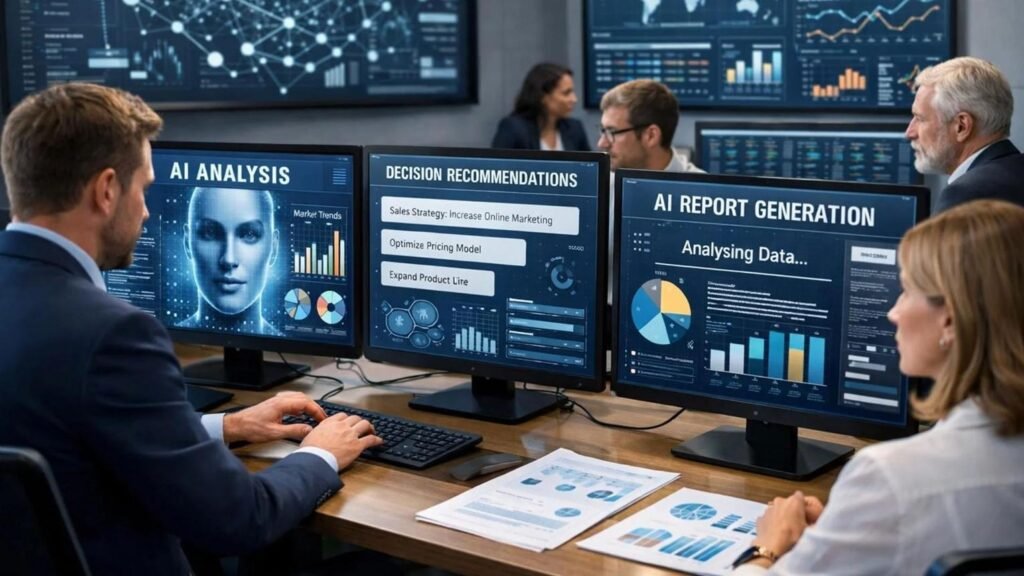
Business teams spend a significant amount of time searching for information, comparing sources, analyzing documents, and preparing reports. Perplexity is changing this process by combining AI with web search to deliver conversational answers backed by citations and original sources. Instead of opening dozens of webpages, employees can ask a question and receive a synthesised answer that can be verified.
What Is Perplexity?
Perplexity is an AI-powered search and research platform designed to help users find, understand, and work with information more efficiently. Unlike a traditional search engine that primarily provides a list of links, Perplexity generates direct answers by searching relevant sources and presenting supporting citations.
Its Research mode can perform multiple searches, analyze numerous sources, and produce a comprehensive report, making it particularly useful for complex business research.
How Is Perplexity Changing Business Workflows?
The biggest change is the shift from searching for information to working with information.
1. Faster Market Research
Marketing and strategy teams can use Perplexity to research competitors, industry trends, customer behavior, and emerging opportunities. Instead of manually collecting information from multiple websites, teams can ask focused questions and receive a cited summary.
2. Connecting Internal and External Knowledge
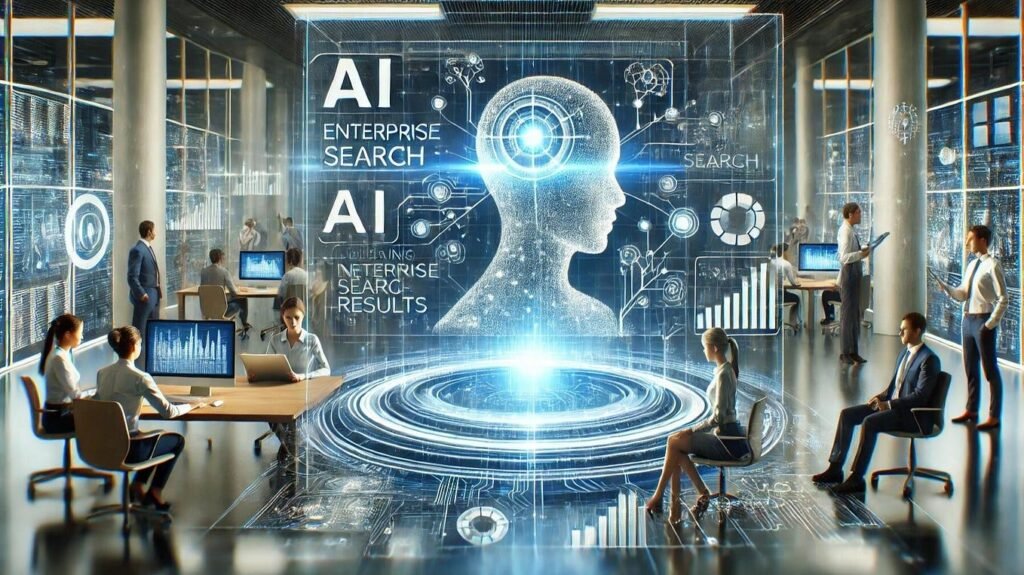
For Enterprise users, Perplexity can search company files alongside web sources. This means employees can combine internal reports, presentations, documents, and proprietary information with current external research.
For example, a strategy team could ask:
“Compare our previous market performance with current industry trends and identify three growth opportunities.”
Perplexity can bring together relevant internal information and external sources to support the analysis.
3. Reducing Repetitive Work
Perplexity can help create research summaries, reports, presentations, dashboards, and other business deliverables. Its newer Computer capabilities are designed to handle multi-step tasks across connected tools and data sources.
This can reduce repetitive work such as collecting information, summarizing documents, preparing first drafts, and organizing research.
4. Better Decision-Making
Business decisions depend on current and reliable information. Because Perplexity provides citations and allows users to trace answers back to sources, teams can more easily verify important information before acting on it.
This is especially valuable for finance, sales, marketing, product development, consulting, and competitive intelligence.
5. Less Context Switching
Modern employees often move between browsers, spreadsheets, project-management platforms, documents, and communication tools. Perplexity is increasingly designed to bring research and connected business information into one workflow.
For example, its Linear connector allows Enterprise users to query project and issue information and combine it with company documents and web research.
Real-World Business Applications
Perplexity can support workflows across multiple departments:
- Marketing: Competitor research, campaign research, content planning
- Sales: Prospect research, industry analysis, sales preparation
- Finance: Market intelligence and financial research
- HR: Employee onboarding and policy research
- Product: Competitor monitoring and product research
- Technology: Technical research, documentation, and incident analysis
- Management: Strategic planning, reports, and executive summaries
Perplexity’s Enterprise platform also provides internal knowledge search, connected applications, collaboration features, and enterprise security controls.
The Future of AI-Powered Workflows
The evolution of Perplexity shows that business AI is moving beyond simple question-and-answer tools. The goal is increasingly to connect research → analysis → creation → execution in one workflow.
Organizations can use AI not only to find information but also to transform that information into useful business outputs. Perplexity’s Computer platform, for example, is designed to orchestrate multiple AI models and work across connected tools to handle complex, multi-step tasks.
From AI Search to Business Automation
Introduction
AI search has changed how businesses find information. Instead of opening multiple websites, reading long documents, and manually comparing sources, employees can ask an AI system a question and receive a synthesized answer with supporting information. But the next major shift is happening beyond search: AI is moving from answering questions to completing business tasks.
This transition is creating a new workflow model where AI can research, analyze, create, communicate, and automate actions with much less manual effort.
From Search to Action
Traditional search follows a simple process: Question → Search → Information → Human Action.
AI-powered workflows are evolving into: Goal → AI Research → Analysis → Action → Result.
Platforms such as Perplexity are increasingly combining search with AI agents that can work across websites, company information, documents, and connected applications. Perplexity’s Computer for Enterprise, for example, is designed to research information, analyze data, create documents, interact with connected applications, and execute multi-step workflows.
This means AI is becoming less like a search box and more like a digital worker.
How AI Search Becomes Business Automation
The transformation starts with information gathering. AI can search current web sources, analyze internal documents, and identify relevant information. It can then turn that information into a report, presentation, spreadsheet, email, or other business output.
For example, a marketing manager could ask:
“Research our top competitors, compare their latest campaigns, create a summary report, and send it to the marketing team.”
Instead of completing each step manually, an AI agent can coordinate research, analysis, content creation, and communication as one workflow. Perplexity describes this type of workflow as research → analysis → document creation → email delivery → scheduled follow-up.
Where Businesses Can Use AI Automation
AI-powered search and automation can support almost every department.
Marketing teams can automate competitor monitoring, campaign research, content briefs, and market reports.
Sales teams can research prospects, summarize accounts, prepare meeting briefs, and organize follow-ups.
Finance teams can collect financial information, compare reports, and prepare analysis for decision-makers.
HR teams can simplify employee onboarding, answer policy questions, and organize internal documentation.
Technology teams can analyze technical documentation, investigate incidents, generate reports, and support development workflows. Perplexity highlights use cases such as competitive analysis, technical documentation, onboarding, and incident post-mortems.
The Rise of AI Agents
The most important development is the rise of AI agents. Unlike conventional chatbots, agents are designed to work toward a goal and perform multiple steps with less human intervention.
Research from Perplexity and Harvard Business School describes this transition as a movement from simply looking up and synthesizing information toward planning and carrying out tasks autonomously.
The human role therefore changes from doing every step manually to giving objectives, supervising AI, reviewing results, and making important decisions.
What Businesses Should Consider
Automation does not mean removing humans from every workflow. Businesses still need strong security, permissions, data governance, and human review—especially when AI handles sensitive information or makes decisions.
A practical approach is to begin with repetitive, measurable workflows. Identify a process that requires significant research or manual data handling, automate selected steps, and measure the results. Successful workflows can then be expanded across departments.
How Perplexity Helps Automate Everyday Business Tasks
Introduction
Businesses spend countless hours on repetitive activities such as researching information, preparing reports, checking emails, monitoring competitors, creating presentations, and organizing data. AI-powered tools are changing this routine by allowing employees to delegate parts of this work to intelligent systems. Perplexity has expanded beyond AI-powered search with Computer, an AI agent designed to research information, use connected applications, create documents, and execute multi-step workflows.
From Searching to Doing
Traditional Perplexity helps users find and understand information. Computer takes the next step by helping execute tasks. According to Perplexity, a single task can involve research, analysis, document creation, email delivery, and scheduled follow-up without requiring the user to manually coordinate every step.
This changes the everyday business workflow from “search → read → copy → create → send” to “give a goal → AI works → review the result.”
Everyday Tasks Perplexity Can Automate
1. Research and Market Intelligence
Employees can use Perplexity to research competitors, industries, customers, products, and market trends. Computer can perform parallel web research and synthesize findings, making it useful for competitive analysis and market research.
For example, a marketing manager could ask:
“Research our five main competitors, compare their latest campaigns, and create a summary for tomorrow’s meeting.”
Instead of manually collecting information from different websites, the AI can coordinate the research and prepare the output.
2. Reports and Presentations
Creating business reports and presentations often involves collecting information, organizing data, writing content, and formatting the final document. Computer can create reports, presentations, dashboards, spreadsheets, and other business deliverables from multiple inputs.
This allows employees to spend more time reviewing insights rather than formatting documents.
3. Email and Communication
Perplexity’s connected workflow capabilities can assist with email-related work, including drafting and managing communications. Computer can connect with services such as Gmail and Outlook, allowing tasks to move between research and communication.
For example:
Research a potential client → summarize the company → create a personalized email → prepare it for review.
4. Recurring Business Reports
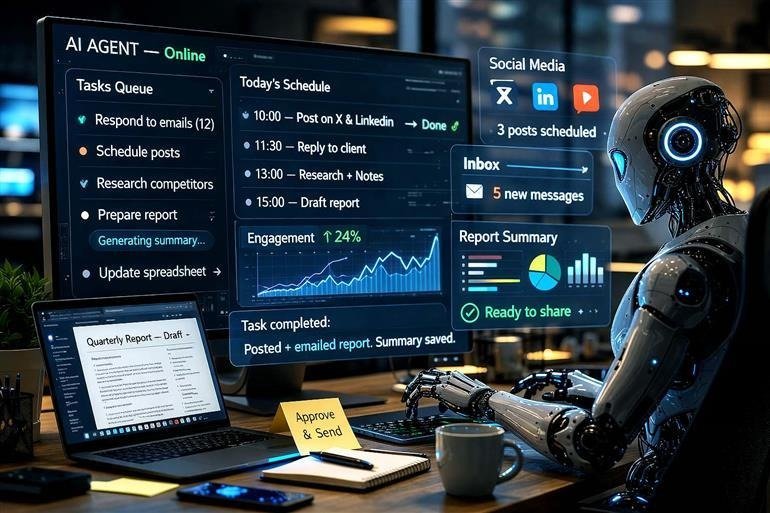
One of the most useful automation features is scheduled work. Perplexity Computer can run recurring tasks such as monitoring, reports, alerts, inbox checks, competitive tracking, and daily briefings in the background.
A company could schedule:
- Daily industry news summaries
- Weekly competitor reports
- Sales pipeline updates
- Regulatory monitoring
- Morning business briefings
- Customer or inbox monitoring
This turns one-time AI assistance into an ongoing workflow.
5. Connecting Business Applications
AI becomes more useful when it can work with the tools employees already use. Computer supports connectors for applications such as Gmail, Outlook, Slack, Notion, Salesforce, GitHub, Linear, Google Drive, and other business systems.
This means information does not have to remain isolated inside an AI chat. It can be used within broader business processes.
Why This Matters for Businesses
The biggest benefit is not simply completing tasks faster. It is reducing the amount of manual coordination required between tasks. Perplexity describes Computer as a digital worker that can combine research, tool execution, document creation, integrations, and scheduled automation.
Employees can therefore focus more on activities that require human judgment, creativity, relationships, and strategic decision-making.
The Future of Everyday Work
AI automation is moving from simple chatbots toward systems that can understand a goal and coordinate multiple actions. Perplexity’s Computer is designed around this model, allowing users to describe a desired outcome and have AI agents handle research, browsing, creation, and connected-tool actions.
However, businesses should still maintain human oversight, especially for sensitive communications, financial activities, confidential data, and important decisions.
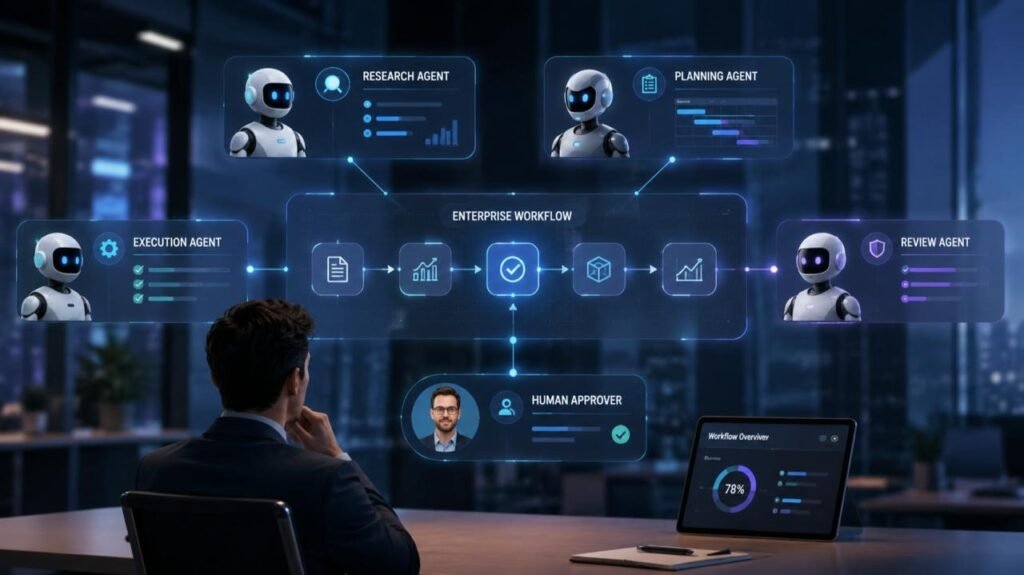
The Future: From AI Tools to Autonomous Business Workflows
Introduction
Artificial Intelligence is entering a new phase. Businesses initially adopted AI tools to generate content, answer questions, summarize documents, and search for information. Today, the focus is shifting toward AI agents that can plan, execute, monitor, and improve multi-step business workflows.
This evolution moves organizations from simply using AI tools to building autonomous business workflows, where AI can perform connected tasks with limited human intervention.
From AI Tools to AI Agents
Traditional AI tools usually wait for a user to give them an instruction. For example, an employee may ask an AI chatbot to write an email or summarize a report. The human then takes the next step.
Agentic AI works differently. An AI agent can receive a goal, determine the steps required, use connected tools, and work toward completing the task.
Perplexity’s Computer illustrates this direction. It is designed as a digital worker that can research, browse, create documents, use connected applications, and execute multi-step workflows.
The workflow therefore changes from:
Ask → Answer → Human Action
to:
Goal → Plan → Research → Execute → Monitor → Result
What Are Autonomous Business Workflows?
An autonomous business workflow is a process where AI performs multiple connected steps with minimal manual coordination.
Imagine a sales workflow. Instead of an employee manually researching a prospect, checking recent company news, preparing a briefing, drafting an email, and updating a CRM, an AI agent could coordinate these activities as one workflow.
Similarly, a marketing workflow could monitor competitors, identify important changes, prepare a summary, create recommendations, and notify the marketing team.
Perplexity says Computer can combine research, analysis, document creation, email delivery, and scheduled follow-ups in a single workflow.
Always-On Business Operations
One of the biggest changes is that AI agents can work beyond normal working hours. Perplexity’s Computer supports scheduled tasks that can run in the background for monitoring, reports, alerts, inbox checks, competitive tracking, and briefings.
For example, a company could create workflows that:
- Monitor competitor websites
- Track industry news
- Prepare daily business briefings
- Monitor sales pipelines
- Check selected inbox activity
- Generate weekly reports
- Alert teams when important changes occur
This transforms AI from an on-demand assistant into an always-available digital workforce.
AI Agents Will Connect Business Systems
The future of automation will depend heavily on integrations. AI becomes more powerful when it can work across the applications businesses already use.
Perplexity Computer supports connections with tools including Gmail, Slack, Notion, Salesforce, GitHub, Linear, Microsoft Teams, Google Drive, and other business systems.
This creates the possibility of workflows such as:
Customer inquiry → AI analyzes request → checks company information → prepares response → updates CRM → notifies sales team.
Instead of employees moving information between disconnected applications, AI can coordinate the process.
Humans Will Move Toward Supervision and Strategy
Autonomous workflows do not necessarily mean removing humans from the process. Instead, human responsibilities are likely to shift toward strategy, judgment, approval, creativity, and oversight.
McKinsey notes that agentic AI is moving beyond rule-based automation toward work involving judgment, requiring organizations to rethink workflows, talent, and operating models.
Businesses will need clear approval processes, security controls, access permissions, monitoring, and human review for high-impact activities.
The Next Stage of Business Automation
The future is not about having hundreds of separate AI tools. It is about creating connected AI systems that understand business goals and coordinate the tools required to achieve them.
Perplexity describes Computer as capable of orchestrating multiple AI agents, tools, research processes, and connected applications to complete complex tasks.
This represents a major shift:
AI Tool → AI Assistant → AI Agent → Autonomous Workflow
The final stage is a business environment where routine workflows continuously operate in the background, while employees focus on decisions that require human expertise.
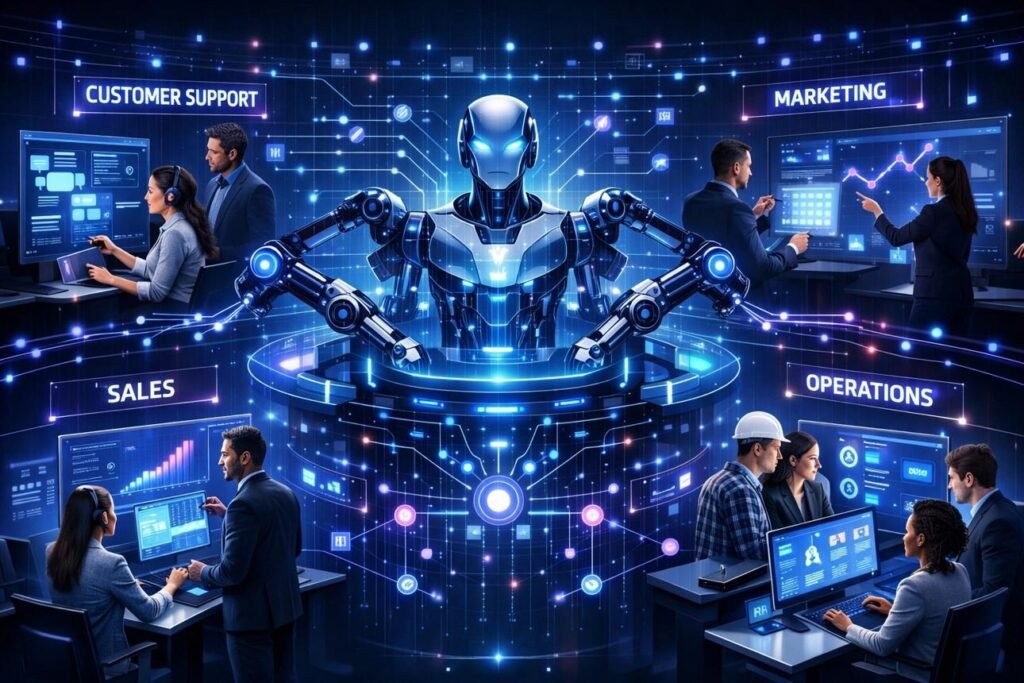
AI Agents: The Next Step in Business Automation
Introduction
Business automation is entering a new phase. Earlier automation systems followed predefined rules, while modern AI tools can understand natural language, generate content, analyze information, and assist employees. The next step is AI agents—systems designed to understand a goal, plan tasks, use digital tools, and execute multi-step workflows.
Instead of simply telling AI what to write or search, businesses can increasingly tell an AI agent what needs to be achieved and allow it to coordinate the steps required to reach that outcome. McKinsey describes this transition as a move from reactive AI toward goal-driven execution across complex business processes.
What Are AI Agents?
An AI agent is software that can perceive information, reason about a task, plan actions, interact with applications, and work toward a defined objective.
A traditional AI assistant might answer:
“What are the latest trends in our industry?”
An AI agent could take the request further:
Research industry trends → analyze competitors → identify opportunities → create a report → send it to the strategy team.
This ability to coordinate several actions is what makes AI agents different from basic chatbots and single-purpose AI tools.
Perplexity’s Computer is an example of this emerging model. It is described as an independent digital worker that can research information, work across organizational context and hundreds of app connectors, create assets, manage email, and execute multi-step workflows.
How AI Agents Change Business Automation
Traditional automation works best when processes are predictable. AI agents can potentially handle workflows where inputs vary and decisions require context.
For example, an e-commerce company could use an AI agent to monitor customer inquiries, identify urgent issues, check order information, prepare responses, and escalate unusual cases to an employee.
Similarly, a sales agent could research a prospect, analyze company information, prepare a personalized briefing, draft outreach, and update a CRM.
This changes the automation model from:
Rule → Task → Output
to:
Goal → Plan → Multiple Actions → Review → Outcome
Everyday Business Applications
AI agents can support a wide range of workflows.
Sales: Agents can research prospects, prepare meeting briefs, update customer records, and organize follow-ups.
Marketing: They can monitor competitors, analyze trends, prepare content briefs, and support campaign workflows.
Customer Service: Agents can classify requests, retrieve relevant information, draft responses, and escalate complex cases.
Finance: AI agents can help collect information, analyze reports, identify anomalies, and prepare recurring summaries.
IT: They can investigate technical issues, search documentation, summarize incidents, and coordinate repetitive operational tasks.
The broader opportunity is significant because agents can work across multiple systems rather than operating as isolated AI tools. McKinsey notes that agentic AI can combine planning, memory, integrations, and orchestration to automate complex workflows.
From Employees Using AI to Employees Managing AI
One of the biggest changes will be the role of employees. Instead of manually performing every step of a workflow, employees may increasingly define objectives, supervise AI agents, review outputs, and handle exceptions.
This creates a human + AI workforce, where people focus on judgment, creativity, relationships, and strategic decisions while agents handle repetitive execution.
McKinsey describes this emerging model as organizations moving toward collaboration between humans and virtual AI agents, with some companies progressing from simple assistance to end-to-end workflow automation.
Challenges Businesses Must Consider
AI agents also introduce new risks. Giving an agent access to email, databases, CRM systems, or financial tools means businesses must carefully control permissions and monitor actions.
Accuracy, privacy, security, transparency, and human oversight are essential. Organizations should begin with clearly defined workflows, establish approval points for sensitive actions, and continuously evaluate agent performance.
Importantly, the goal should not be to automate everything. McKinsey emphasizes that business value comes from redesigning workflows, rather than simply adding an AI agent to an existing process.
The Future of AI Agents
The evolution is moving from:
AI Tools → AI Assistants → AI Agents → Autonomous Business Workflows
The future workplace may contain networks of specialized agents working together—one researching information, another analyzing data, another preparing content, and another coordinating execution.
The human role will remain essential, but the way work is organized will change. Instead of managing every individual task, employees may increasingly manage goals, workflows, and AI-powered digital workers.