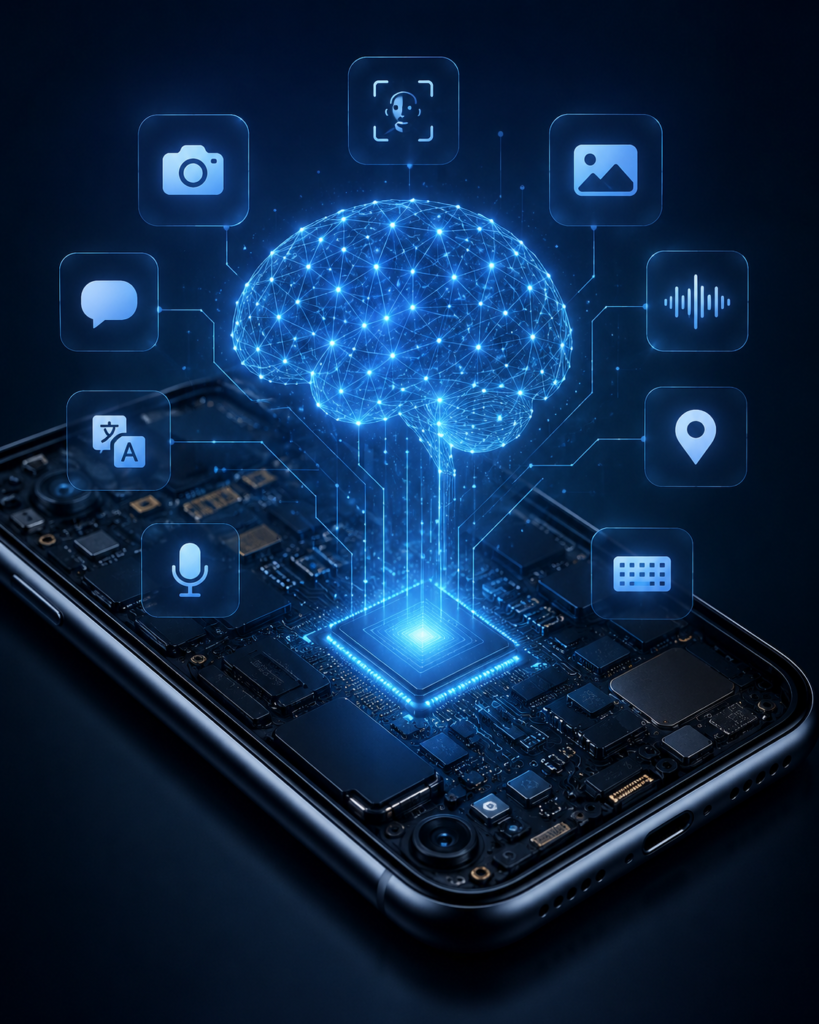
Artificial Intelligence (AI) in smartphones is no longer limited to voice assistants or camera filters. Modern smartphones now contain “hidden AI” systems working silently in the background to improve performance, battery life, security, photography, and user experience. Most users interact with these features every day without even realizing AI is involved.
Hidden AI refers to the machine learning algorithms and neural processing systems integrated deep inside smartphone hardware and software. These systems continuously analyze user behavior, app usage, location patterns, and device performance to make smartphones smarter and faster.
One of the biggest examples of hidden AI is smartphone photography. When users click a photo, AI instantly detects scenes such as food, pets, landscapes, or night mode conditions. It automatically adjusts brightness, colors, sharpness, and exposure in milliseconds. Features like portrait mode, object detection, AI beauty enhancement, and low-light photography are powered by advanced AI engines built into modern smartphones.
Battery optimization is another major hidden AI feature. Smartphones now study user habits to understand which apps are frequently used and which apps consume unnecessary power. AI automatically limits background activity, adjusts refresh rates, and optimizes charging patterns to improve battery health and extend daily usage time.
AI is also deeply integrated into smartphone security systems. Face unlock and fingerprint recognition use AI-powered biometric analysis to identify users accurately and securely. Modern AI systems can even detect unusual behavior or suspicious login attempts to protect personal data.
Voice assistants such as Siri, Google Assistant, and Bixby rely heavily on hidden AI. These assistants process natural language, understand commands, recognize speech patterns, and provide personalized responses. Over time, they learn user preferences and improve their recommendations automatically.
Another powerful hidden AI system works inside smartphone processors. Many flagship devices now include dedicated Neural Processing Units (NPUs) or AI chips designed specifically for machine learning tasks. These chips process AI operations faster while consuming less power compared to traditional CPUs.
Hidden AI also enhances gaming and entertainment experiences. Smartphones use AI to optimize graphics performance, reduce lag, improve touch response, and automatically adjust game settings depending on device temperature and battery conditions. Streaming apps use AI to recommend content based on viewing habits and interests.
In daily life, hidden AI supports predictive text, real-time language translation, spam call detection, smart notifications, navigation suggestions, and personalized app recommendations. AI quietly analyzes patterns to make devices feel more intuitive and personalized.
As smartphone technology continues to evolve, hidden AI will become even more advanced. Future smartphones may predict user needs before commands are given, provide advanced health monitoring, and offer highly personalized digital experiences.
In simple words, hidden AI is the invisible intelligence inside smartphones that makes devices smarter, faster, safer, and more efficient without users noticing the complex technology working behind the scenes.
AI Features Used Inside Smartphones
Most Common Hidden AI Features in Smartphones
Popular AI-powered systems integrated into modern smartphones.
Hidden AI Processing Flow
How AI Improves Your Smartphone Camera
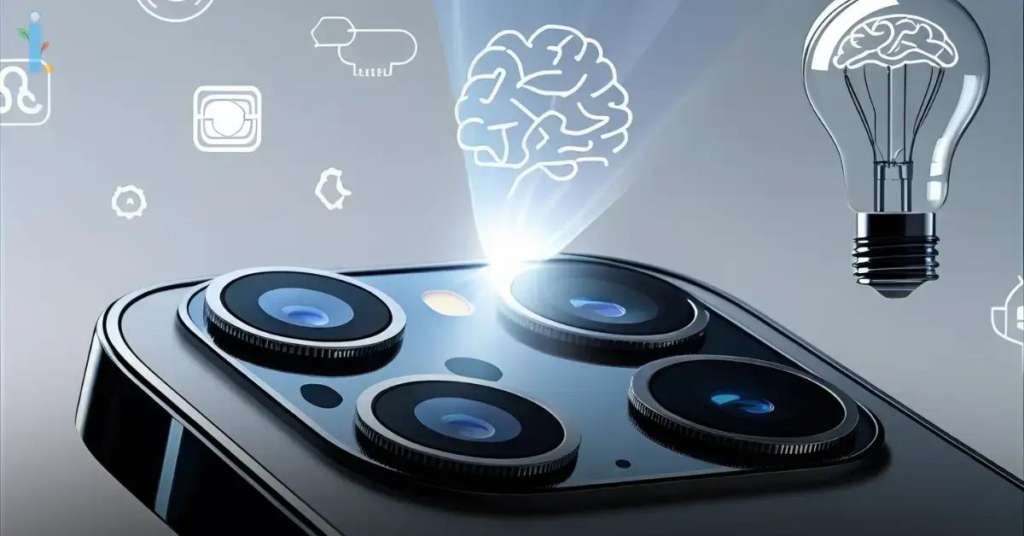
Artificial Intelligence (AI) has completely transformed smartphone photography. Modern smartphones are no longer dependent only on camera hardware; instead, AI software now plays a major role in capturing professional-quality images. From night mode and portrait blur to scene detection and automatic enhancement, AI helps users take better photos effortlessly.
One of the most popular AI camera features is Night Mode. In low-light conditions, smartphone cameras usually struggle to capture clear and bright images. AI solves this problem by analyzing multiple frames in seconds, reducing noise, improving brightness, and balancing colors automatically. This allows users to capture detailed and sharp night photos without using professional cameras.
Portrait Mode is another AI-powered feature widely used today. AI intelligently separates the subject from the background using depth detection technology. It creates a soft background blur, also called the “bokeh effect,” making portraits look more cinematic and professional. Advanced AI systems can even detect hair edges, facial contours, and lighting conditions to produce natural-looking results.
Scene Detection is another hidden AI technology working inside smartphone cameras. AI instantly recognizes scenes such as food, sunsets, greenery, pets, documents, beaches, or cityscapes. Once the scene is identified, the camera automatically adjusts brightness, saturation, contrast, sharpness, and white balance to produce the best possible image. Users often do not realize these adjustments are happening automatically in real time.
AI Enhancement also improves image quality after a photo is taken. Smartphones use machine learning algorithms to sharpen details, remove unwanted noise, improve skin tones, enhance colors, and stabilize blurry shots. Some devices even use AI to restore old or low-resolution photos by increasing clarity and detail.
Another important AI feature is Smart HDR (High Dynamic Range). AI combines multiple exposures into a single image to balance bright and dark areas. This helps prevent overexposed skies or dark shadows and creates more natural-looking photos. AI continuously analyzes lighting conditions to optimize image balance instantly.
Modern smartphone cameras also use AI for video recording. Features like AI stabilization reduce shaky footage while recording videos. AI can track moving subjects, improve focus accuracy, and optimize exposure dynamically during recording. Some smartphones even provide cinematic video effects powered entirely by AI.
Facial recognition and beauty filters are also powered by AI. Smartphones analyze facial features and apply subtle enhancements such as skin smoothing, lighting correction, and eye brightness adjustments. These features are especially popular for selfies and social media content creation.
AI has also improved zoom capabilities through computational photography. Instead of relying only on optical zoom hardware, AI reconstructs image details digitally to maintain clarity at higher zoom levels. This allows smartphones to capture better distant shots.
As AI technology continues evolving, smartphone cameras will become even smarter. Future AI cameras may predict user preferences, automatically compose shots professionally, and deliver DSLR-level quality using advanced computational photography.
In simple words, AI acts like a professional photographer inside your smartphone, helping users capture brighter, sharper, and more visually appealing photos with minimal effort.
Voice Assistants That Listen and Learn
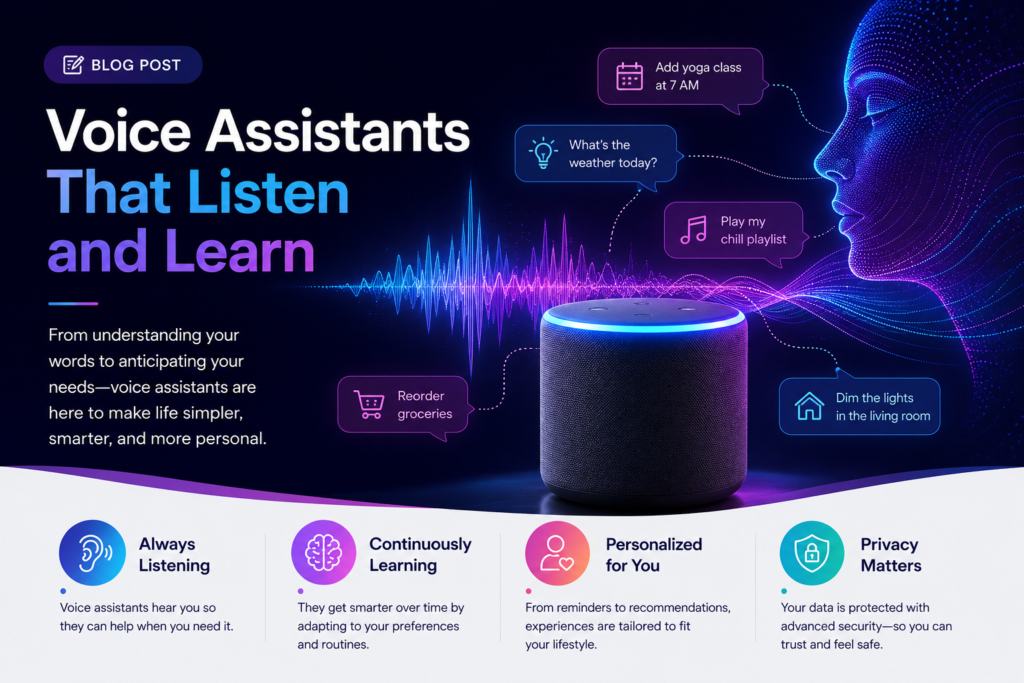
Voice assistants have become one of the most powerful examples of Artificial Intelligence (AI) inside modern smartphones and smart devices. Technologies like Apple Siri, Google Assistant, and Amazon Alexa are designed to understand human speech, process commands, and continuously learn from user interactions to provide smarter and more personalized responses.
These voice assistants rely on advanced AI systems such as machine learning, natural language processing (NLP), speech recognition, and deep learning. Their goal is to communicate with users in a natural and conversational way, making technology easier and faster to use.
When a user says commands like “Call Mom,” “Play music,” “Set an alarm,” or “What’s the weather today?”, the voice assistant first converts speech into digital text using speech recognition AI. The system then analyzes the sentence structure, identifies keywords, and understands the intent behind the command using Natural Language Processing.
For example, if someone asks Google Assistant, “Remind me to attend my meeting tomorrow morning,” AI understands important details such as the reminder task, date, and time. It processes this information instantly and creates a reminder automatically.
One of the most interesting features of AI voice assistants is their ability to learn from user behavior over time. Siri, Google Assistant, and Alexa analyze frequently used commands, search habits, locations, schedules, music preferences, and daily routines to provide more personalized experiences. This learning process is powered by machine learning algorithms that improve accuracy with continued usage.
For instance, if a user regularly asks for traffic updates every morning, the assistant may proactively provide traffic information before the user even asks. Similarly, AI can recommend playlists, suggest nearby restaurants, remind users about appointments, or predict commonly used actions based on patterns.
Google Assistant is known for its advanced search and conversational abilities. It uses Google’s powerful AI and search engine infrastructure to answer complex questions, translate languages, and control smart home devices. It can understand follow-up questions in conversations, making interactions feel more natural.
Apple Siri focuses heavily on privacy and device integration. Siri uses AI to help users send messages, make calls, control iPhone settings, manage calendars, and operate Apple smart devices. Apple’s AI systems process many commands directly on the device to improve privacy and security.
Amazon Alexa is widely used in smart speakers and smart homes. Alexa uses AI to control connected devices such as lights, televisions, air conditioners, security systems, and appliances. It can also shop online, play music, answer questions, and automate household tasks using voice commands.
AI voice assistants also improve accessibility for users. People with visual impairments or physical disabilities can use voice commands to operate smartphones and smart devices more easily. Voice AI makes technology more inclusive and user-friendly.
Modern voice assistants continue improving through deep learning. They can now recognize different accents, speech styles, languages, and pronunciation patterns more accurately than before. AI also helps reduce background noise and improve voice clarity during communication.
Another major area where AI voice assistants are expanding is smart homes and Internet of Things (IoT) devices. Users can control lights, fans, cameras, smart TVs, and home appliances through simple voice commands. AI creates seamless automation experiences by connecting multiple devices together.
Despite their convenience, voice assistants also raise concerns about privacy and data security. Since these systems constantly listen for wake words such as “Hey Siri,” “OK Google,” or “Alexa,” many users worry about how voice data is collected and stored. Companies now use advanced encryption and privacy controls to improve user trust and data protection.
The future of AI voice assistants looks even more advanced. Upcoming AI systems may understand emotions, provide human-like conversations, translate languages instantly in real time, and predict user needs with greater accuracy. Future assistants may become true digital companions capable of handling personal productivity, entertainment, education, and daily life management.
In simple words, Siri, Google Assistant, and Alexa are examples of hidden AI systems that listen, analyze, learn, and respond intelligently. These assistants continue evolving to make technology faster, smarter, and more personalized for users around the world.
AI-Powered Battery Optimization
Battery life has become one of the most important features in modern smartphones, and Artificial Intelligence (AI) now plays a major role in improving it. Instead of relying only on bigger batteries, smartphone companies are using AI-powered battery optimization systems that learn user habits, reduce unnecessary power consumption, and improve overall device performance.
AI-powered battery optimization works by continuously analyzing how users interact with their smartphones throughout the day. The AI system studies app usage patterns, charging behavior, screen activity, location services, background processes, and performance requirements. Based on this data, the smartphone automatically adjusts settings to save battery without affecting user experience.
One of the biggest ways AI helps save battery life is through app management. Many apps continue running in the background even when users are not actively using them. AI identifies which apps are frequently used and which ones consume unnecessary power. Less important apps are restricted from running continuously in the background, reducing battery drain significantly.
For example, if a user regularly opens social media apps during the evening but rarely uses certain gaming apps, the AI system prioritizes battery resources for frequently used apps while limiting background activity for unused ones. This intelligent app prioritization helps extend battery life throughout the day.
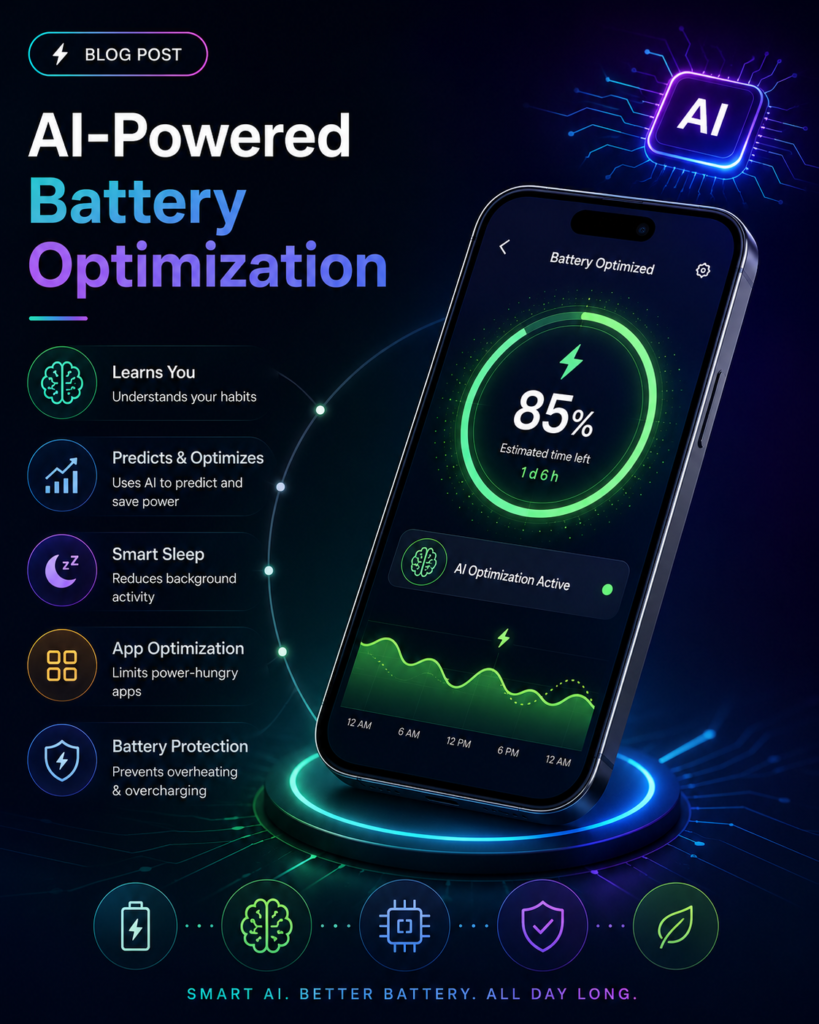
AI also improves battery charging behavior using machine learning. Modern smartphones now include adaptive charging systems that study users’ charging routines. If a user usually charges the phone overnight, AI slows down charging after reaching around 80% and completes the remaining charging closer to wake-up time. This reduces battery stress and helps maintain long-term battery health.
Another important AI optimization feature is adaptive brightness control. Smartphones use AI to understand user brightness preferences in different environments. Instead of always using maximum brightness, AI automatically adjusts screen brightness depending on lighting conditions and user habits. Since displays consume a large amount of battery power, intelligent brightness management helps improve battery efficiency.
AI also optimizes smartphone processors and performance management. During heavy tasks like gaming or video editing, AI dynamically increases processing power for smooth performance. When users perform lighter activities such as messaging or reading, AI reduces processor activity to save energy. This smart balance between performance and efficiency helps smartphones operate smoothly while consuming less power.
Gaming optimization is another area where AI battery management plays an important role. AI systems monitor device temperature, CPU usage, graphics processing, and battery levels during gaming sessions. The smartphone can automatically adjust graphics settings, frame rates, and background activity to reduce overheating and improve battery efficiency during long gaming sessions.
Network and connectivity management also use AI-powered optimization. Smartphones intelligently switch between Wi-Fi, 4G, and 5G networks based on signal strength and usage patterns. AI can disable unused connections like Bluetooth or GPS when they are not needed, helping reduce unnecessary battery consumption.
AI-powered battery systems are especially useful for smartphones with high-refresh-rate displays and powerful processors. Features like 120Hz displays and advanced gaming chips consume significant power, but AI helps manage these components efficiently to maintain battery performance.
Some smartphones even provide battery usage predictions powered by AI. These systems estimate how long the battery will last based on current usage patterns and suggest actions to improve battery life. Users may receive recommendations to close certain apps, enable power-saving modes, or reduce screen brightness.
AI battery optimization also improves overall smartphone longevity. By reducing overheating, preventing excessive charging stress, and managing power consumption intelligently, AI helps maintain battery health for longer periods. This means users may experience slower battery degradation over time.
Modern smartphone brands such as Apple, Samsung, Google, Xiaomi, and OnePlus heavily rely on AI-powered battery systems. Features like Adaptive Battery, Optimized Charging, AI Power Saving Mode, and Intelligent Performance Management are now common in flagship smartphones.
As AI technology continues evolving, future smartphones may become even more energy efficient. Advanced AI systems may predict user activity more accurately, automatically optimize hardware in real time, and deliver longer battery life without requiring larger battery sizes.
In simple words, AI-powered battery optimization acts like a smart energy manager inside your smartphone. It learns how you use your device, reduces unnecessary power consumption, improves charging behavior, and balances performance efficiently to deliver longer-lasting battery life and better overall smartphone performance.