
AI in Smart Study Planning
In today’s competitive academic environment, managing studies efficiently has become a challenge for most students. Many struggle with creating effective timetables, staying consistent, and covering the entire syllabus on time. This is where Artificial Intelligence (AI) plays a crucial role by transforming traditional study planning into a smarter and more efficient process.
AI in smart study planning helps students create personalized study schedules based on their learning patterns, strengths, and weaknesses. Unlike manual planning, which often lacks flexibility, AI-powered tools continuously analyze a student’s progress and adjust the study plan accordingly. This ensures that more time is allocated to weaker subjects while maintaining balance across all topics.
One of the biggest advantages of AI is its ability to automate scheduling. Students no longer need to spend hours planning their day. AI tools can organize study sessions, revision time, and breaks in a way that maximizes productivity. If a student misses a session or falls behind, the system automatically reschedules tasks without disturbing the overall plan.
AI also helps in breaking down complex topics into smaller, manageable sections. This approach makes studying less overwhelming and improves focus. Instead of cramming everything at once, students can follow a structured path that gradually builds their understanding.
Another important feature is real-time progress tracking. AI tools monitor performance and provide insights into how well a student is doing. Based on this data, they suggest improvements, recommend revision strategies, and even predict areas that need more attention before exams.
Additionally, AI encourages better time management by sending reminders for assignments, deadlines, and revision sessions. Some advanced tools even analyze when a student is most productive during the day and schedule difficult subjects accordingly.
Despite these benefits, many students still ignore AI in study planning because they are either unaware of these features or rely on traditional methods. In reality, many apps they already use—like digital calendars, study planners, and note-taking tools—have built-in AI capabilities that can significantly improve their efficiency.
In conclusion, AI in smart study planning is not just about convenience—it is about making studying more strategic, personalized, and effective. By using AI, students can reduce stress, stay organized, and achieve better academic results with less effort.
How AI Helps in Note Making Automatically
Note making has always been an important part of a student’s learning process, but it is also one of the most time-consuming tasks. Students often spend a large amount of time writing notes from textbooks, lectures, PDFs, or online resources, which reduces the time available for actual understanding and revision. With the rise of Artificial Intelligence (AI), this process has become much faster, smarter, and more efficient.
AI-powered note-making tools are designed to automatically convert large and complex information into structured, easy-to-understand notes. Instead of manually reading every line and highlighting key points, students can simply upload a document, lecture recording, or web content, and AI will instantly generate summarized notes. These notes are usually well-organized with headings, subheadings, bullet points, and key highlights.
One of the most powerful features of AI in note-making is automatic summarization. AI can analyze long paragraphs and extract only the most important information without losing the core meaning. This helps students quickly revise chapters before exams without going through entire textbooks again. Some advanced tools also allow different levels of summaries such as short, medium, or detailed notes depending on the student’s requirement.
Another major advantage is speech-to-text note creation. During lectures or online classes, students can record audio, and AI can convert spoken words into written notes in real time. This eliminates the need to write everything manually and ensures that no important point is missed during fast-paced lectures.
AI also helps in smart organization of notes. It can categorize topics automatically, group related concepts together, and even suggest a proper structure for better understanding. For example, if a student is studying a science chapter, AI can separate definitions, formulas, examples, and explanations into different sections automatically.
In addition to this, many AI tools offer keyword detection and highlighting. They identify important terms, dates, formulas, and concepts from the content and highlight them so students can focus on what really matters. This makes revision faster and more effective.
Another useful feature is multilingual and simplified explanations. AI can rewrite complex topics into simpler language or even translate notes into different languages. This is especially helpful for students who struggle with difficult academic language or are studying in a non-native language.
AI tools also support interactive note enhancement, where students can edit, expand, or shorten notes anytime. Some platforms even connect related topics from different chapters, helping students build a better conceptual understanding instead of memorizing isolated points.
Despite all these benefits, many students still depend on traditional handwritten notes. The main reason is lack of awareness or habit. However, once students start using AI tools, they realize how much time and effort can be saved while improving the quality of their study material.
In conclusion, AI in automatic note making is not just a convenience tool but a powerful learning assistant. It helps students save time, stay organized, and focus more on understanding concepts rather than just writing them. As education continues to evolve, AI-based note-making will become an essential part of smart learning.
How AI Helps in Note Making Automatically

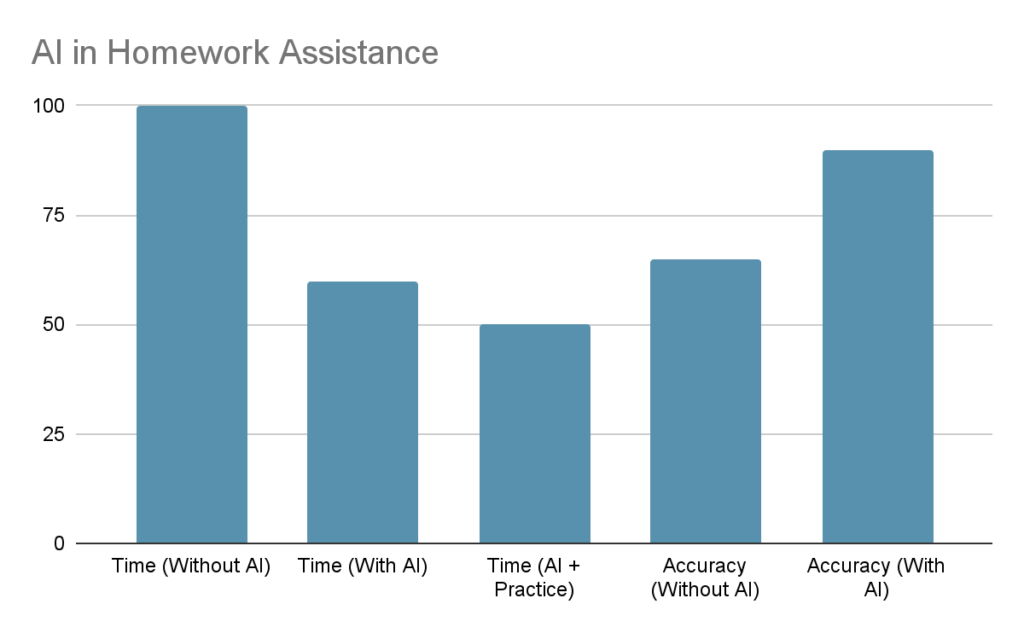
Homework has always been an important part of a student’s learning journey, but it is also one of the most stressful and time-consuming tasks. Students often get stuck on difficult questions, struggle to understand concepts, or spend too much time searching for answers in books and online resources. Artificial Intelligence (AI) is now changing this experience by providing quick, accurate, and easy homework assistance.
AI-powered tools help students solve problems step by step instead of just giving final answers. This is especially useful because it allows students to actually understand the concept rather than simply copying solutions. Whether it is mathematics, science, grammar, coding, or general subjects, AI can break down complex problems into simple explanations that are easy to follow.
One of the biggest advantages of AI in homework assistance is instant doubt solving. Students no longer need to wait for teachers or tutors to clarify their doubts. They can simply type or scan a question, and AI tools provide immediate explanations. This makes learning faster and more efficient, especially during exam preparation when time is limited.
AI also helps in step-by-step problem solving. For example, in mathematics, instead of directly showing the final answer, AI explains each step clearly, helping students understand the logic behind the solution. This improves conceptual clarity and builds confidence in problem-solving.
Another important feature is multi-subject support. AI is not limited to one subject; it can assist in various fields like science, history, English writing, programming, and more. For instance, it can help students write essays, correct grammar mistakes, explain scientific concepts, or debug simple coding errors.
AI tools also provide personalized learning support. If a student repeatedly makes mistakes in a particular topic, AI can detect this pattern and suggest additional practice questions or simplified explanations. This targeted approach helps students improve their weak areas more effectively.
In addition, AI can assist in homework completion efficiency by summarizing questions, translating languages, and even suggesting ideas for assignments or projects. It helps students get started when they are confused or stuck, which reduces procrastination and stress.
Another useful aspect is 24/7 availability. Unlike teachers or tutors, AI tools are always accessible. Students can get help anytime—whether it is late at night before submission or during revision sessions. This flexibility makes AI a reliable study companion.
Despite these advantages, many students still hesitate to use AI for homework because they fear it might reduce their learning. However, when used correctly, AI does not replace learning—it enhances it by guiding students in the right direction and making concepts easier to understand.
In conclusion, AI in quick homework assistance is a powerful tool that helps students learn faster, solve doubts instantly, and understand concepts more clearly. It reduces academic stress and encourages independent learning, making education more efficient and accessible for everyone.
AI Tools for Grammar and Writing Improvement
In today’s digital learning era, strong writing skills have become just as important as academic knowledge. Whether it is essays, assignments, emails, blog writing, or exam answers, students are expected to communicate their ideas clearly and correctly. However, many students struggle with grammar mistakes, weak sentence formation, poor vocabulary, and lack of writing structure. This is where Artificial Intelligence (AI) tools play a major role in improving grammar and overall writing quality.
AI-powered writing tools are designed to analyze text in real time and identify grammatical errors, spelling mistakes, punctuation issues, and sentence structure problems. Instead of manually checking every line, students can simply write their content, and AI instantly highlights errors along with corrections and suggestions. This makes the writing process faster, easier, and more accurate.
One of the most important benefits of AI in writing improvement is real-time grammar correction. As students type, AI tools automatically detect mistakes such as tense errors, subject-verb agreement issues, missing articles, or incorrect word usage. This helps students learn from their mistakes instantly rather than repeating them in future writing tasks.
AI also helps in sentence improvement and rewriting. Many tools not only correct grammar but also suggest better ways to structure sentences. For example, if a sentence is too long or unclear, AI can rewrite it in a simpler and more professional format. This improves readability and makes the content more impactful.
Another powerful feature is vocabulary enhancement. AI tools suggest better word choices, synonyms, and more formal alternatives to common words. This helps students avoid repetitive language and develop a richer vocabulary over time. For example, instead of using simple words repeatedly, AI can recommend more expressive and academic terms.
AI is also extremely useful for writing style improvement. Whether a student is writing an academic essay, a formal email, or a creative paragraph, AI can adjust suggestions based on tone and purpose. It ensures that the writing matches the required format, whether it is formal, semi-formal, or informal.
In addition, AI tools help with content structuring and organization. Many students struggle with organizing their thoughts in a logical flow. AI can suggest introductions, body paragraphs, and conclusions, helping students create well-structured writing pieces that are easy to understand and score better in exams.
Another useful aspect is plagiarism detection and originality improvement. Some AI tools check whether the content is unique and suggest modifications to make it more original. This is especially important for assignments, research papers, and academic submissions.
AI also supports learning through feedback. Instead of just correcting mistakes, it explains why something is wrong. This educational approach helps students understand grammar rules better and gradually improve their writing skills without depending heavily on teachers or guides.
Despite these advantages, many students still rely on manual writing methods and ignore AI tools due to lack of awareness. However, once they start using AI for writing improvement, they notice significant improvement in speed, accuracy, and confidence.
In conclusion, AI tools for grammar and writing improvement are powerful learning assistants that help students write better, clearer, and more professional content. They not only correct mistakes but also teach students how to become better writers over time, making communication skills stronger and more effective.
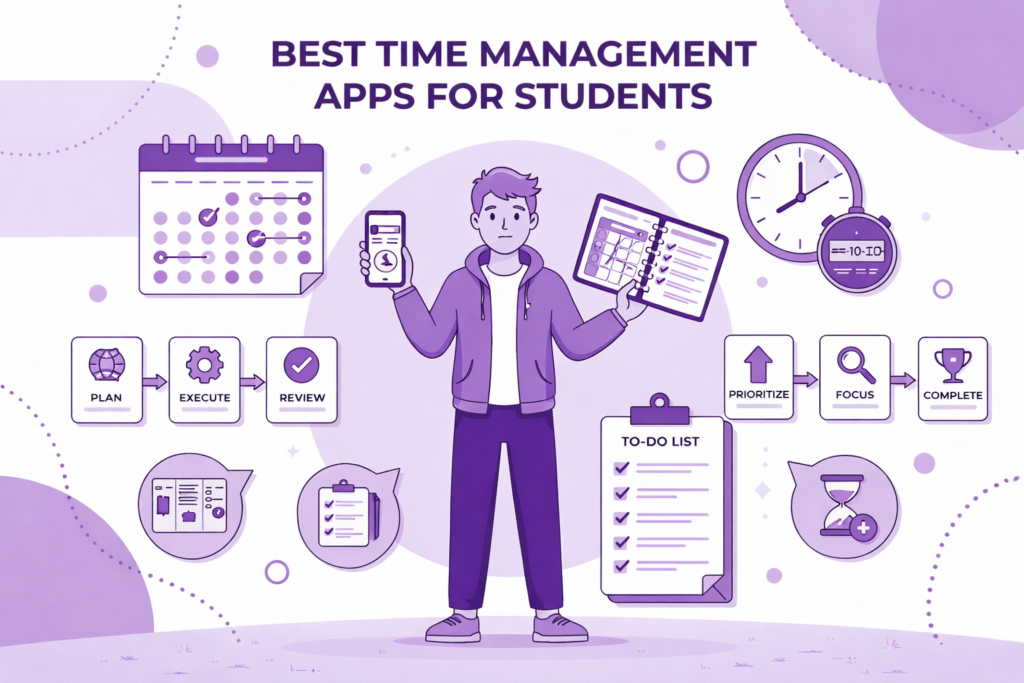
AI-Based Time Management Apps for Students
In today’s digital learning era, strong writing skills have become just as important as academic knowledge. Whether it is essays, assignments, emails, blog writing, or exam answers, students are expected to communicate their ideas clearly and correctly. However, many students struggle with grammar mistakes, weak sentence formation, poor vocabulary, and lack of writing structure. This is where Artificial Intelligence (AI) tools play a major role in improving grammar and overall writing quality.
AI-powered writing tools are designed to analyze text in real time and identify grammatical errors, spelling mistakes, punctuation issues, and sentence structure problems. Instead of manually checking every line, students can simply write their content, and AI instantly highlights errors along with corrections and suggestions. This makes the writing process faster, easier, and more accurate.
One of the most important benefits of AI in writing improvement is real-time grammar correction. As students type, AI tools automatically detect mistakes such as tense errors, subject-verb agreement issues, missing articles, or incorrect word usage. This helps students learn from their mistakes instantly rather than repeating them in future writing tasks.
AI also helps in sentence improvement and rewriting. Many tools not only correct grammar but also suggest better ways to structure sentences. For example, if a sentence is too long or unclear, AI can rewrite it in a simpler and more professional format. This improves readability and makes the content more impactful.
Another powerful feature is vocabulary enhancement. AI tools suggest better word choices, synonyms, and more formal alternatives to common words. This helps students avoid repetitive language and develop a richer vocabulary over time. For example, instead of using simple words repeatedly, AI can recommend more expressive and academic terms.
AI is also extremely useful for writing style improvement. Whether a student is writing an academic essay, a formal email, or a creative paragraph, AI can adjust suggestions based on tone and purpose. It ensures that the writing matches the required format, whether it is formal, semi-formal, or informal.
In addition, AI tools help with content structuring and organization. Many students struggle with organizing their thoughts in a logical flow. AI can suggest introductions, body paragraphs, and conclusions, helping students create well-structured writing pieces that are easy to understand and score better in exams.
Another useful aspect is plagiarism detection and originality improvement. Some AI tools check whether the content is unique and suggest modifications to make it more original. This is especially important for assignments, research papers, and academic submissions.
AI also supports learning through feedback. Instead of just correcting mistakes, it explains why something is wrong. This educational approach helps students understand grammar rules better and gradually improve their writing skills without depending heavily on teachers or guides.
Despite these advantages, many students still rely on manual writing methods and ignore AI tools due to lack of awareness. However, once they start using AI for writing improvement, they notice significant improvement in speed, accuracy, and confidence.
In conclusion, AI tools for grammar and writing improvement are powerful learning assistants that help students write better, clearer, and more professional content. They not only correct mistakes but also teach students how to become better writers over time, making communication skills stronger and more effective.
Personalized Learning with AI Algorithms
Education is no longer limited to the same teaching method for every student. In traditional classrooms, all students are taught in the same way, at the same speed, and with the same material. However, every student has different learning abilities, interests, and understanding levels. This is where Artificial Intelligence (AI) and personalized learning algorithms are transforming education by creating a customized learning experience for each student.
Personalized learning with AI means using intelligent systems that analyze a student’s behavior, performance, strengths, and weaknesses to design a learning path specifically for them. Instead of a one-size-fits-all approach, AI ensures that each student gets content and practice according to their individual needs.
One of the key ways AI enables personalized learning is through performance tracking and analysis. AI tools continuously monitor how a student performs in quizzes, assignments, and practice tests. Based on this data, the system identifies which topics the student is strong in and which areas need improvement. This allows learners to focus more on weak subjects instead of wasting time on topics they already understand.
Another important feature is adaptive learning paths. AI algorithms automatically adjust the difficulty level of questions and lessons based on the student’s progress. If a student is performing well, the system gradually introduces more challenging topics. If a student is struggling, AI simplifies the content and provides additional practice until the concept is clear.
AI also enhances learning through recommendation systems, similar to how streaming platforms suggest movies or songs. In education, AI recommends study materials, videos, quizzes, and articles based on the student’s learning history. This ensures that students always get relevant and useful content without having to search for it manually.
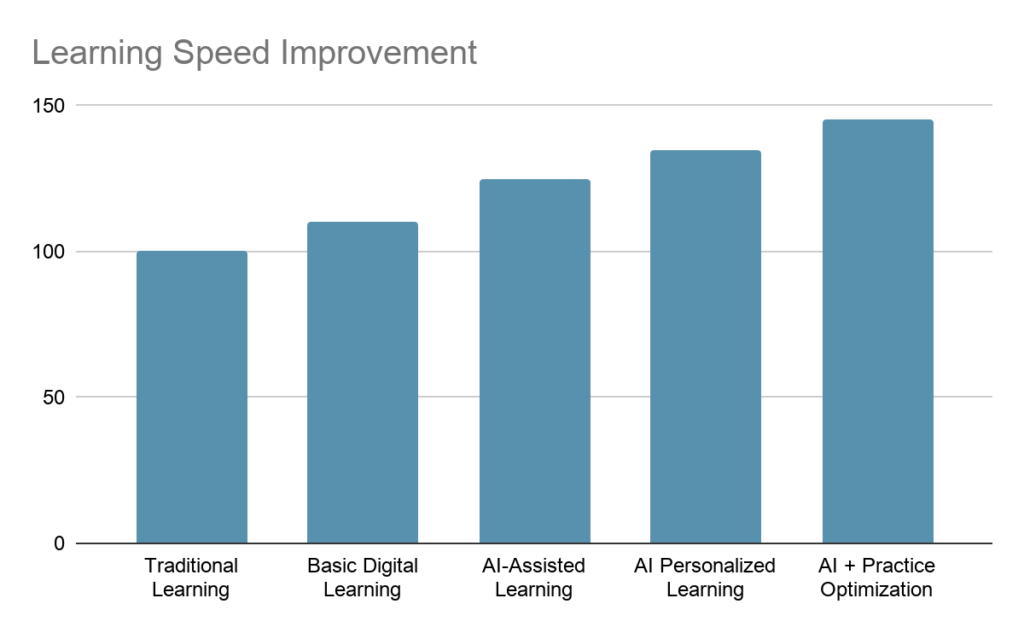
Another powerful aspect is real-time feedback and correction. Instead of waiting for teachers to evaluate assignments, AI provides instant feedback on answers. It explains mistakes, suggests correct solutions, and helps students understand concepts immediately. This improves learning speed and retention.
AI-powered personalized learning also supports self-paced education. Every student can learn at their own speed without feeling pressure to match others. Slow learners can take extra time on difficult topics, while fast learners can move ahead quickly without waiting for the class.
In addition, AI helps with learning style adaptation. Some students learn better through visuals, others through reading, and some through interactive practice. AI systems identify these preferences and adjust the content format accordingly, making learning more effective and engaging.
Another major benefit is predictive learning analysis. AI can predict a student’s future performance based on current data. If a student is likely to struggle in upcoming topics or exams, the system can suggest early intervention strategies like extra practice or revision sessions.
Despite all these advantages, many students still follow traditional learning methods and are unaware of how powerful AI-based personalization can be. They often study the same way as everyone else, even though AI tools are available to make their learning journey more efficient and tailored.
In conclusion, personalized learning with AI algorithms is revolutionizing education by making it more student-centered, flexible, and effective. It helps learners understand concepts better, study at their own pace, and focus on areas that truly need improvement. With AI, education is becoming smarter, more adaptive, and truly personalized for every student.
AI in Online Research and Information Filtering
In the digital age, students and learners have access to an overwhelming amount of information online. While this is a great advantage, it also creates a major problem—finding accurate, relevant, and reliable information from thousands of search results. This is where Artificial Intelligence (AI) plays an important role by making online research faster, smarter, and more efficient through information filtering.
AI-powered systems help users by analyzing large volumes of data available on the internet and presenting only the most relevant and useful information. Instead of manually going through multiple websites, students can rely on AI tools that understand the context of their query and provide precise answers, summaries, and resources.
One of the key benefits of AI in online research is smart search results filtering. Traditional search engines show results based on keywords, which often include irrelevant or low-quality pages. AI improves this by understanding intent behind the search and ranking results based on usefulness, credibility, and relevance. This helps students save time and focus only on trusted sources.
AI also enables quick information summarization. When students research long articles, research papers, or academic content, AI tools can automatically summarize the key points. This allows learners to understand the main idea without reading entire documents, making research much faster and more efficient.
Another important feature is fake and low-quality content detection. The internet contains a large amount of misleading or incorrect information. AI algorithms help filter out unreliable sources by analyzing patterns such as credibility, source reputation, and content consistency. This ensures that students get accurate and trustworthy information for their studies.
AI also improves research through context-based recommendations. When a student searches for a topic, AI suggests related articles, case studies, videos, and references that expand understanding. This helps in building deeper knowledge instead of just surface-level information.
Another useful aspect is automatic categorization of data. AI can organize search results into different sections like definitions, examples, explanations, and advanced concepts. This structured format makes it easier for students to study and revise complex topics.
AI tools also support language simplification and translation. Many academic resources are written in complex language or foreign languages. AI can simplify difficult text or translate it into a student’s preferred language, making information more accessible to everyone.
In addition, AI helps with research productivity by saving time and reducing effort. Instead of spending hours searching, reading, and filtering information, students can quickly gather all necessary material in one place. This allows them to focus more on understanding and learning rather than searching.
Despite these advantages, many students still rely on traditional search methods and are unaware of AI-powered research tools. As a result, they often spend more time than necessary and may even use incomplete or unreliable information.
In conclusion, AI in online research and information filtering is transforming the way students gather knowledge. It makes research faster, more accurate, and more organized by filtering unnecessary data and highlighting the most useful information. With AI, students can study smarter, not harder, and access high-quality knowledge with ease.
Voice Assistants as Study Companions
Voice assistants powered by Artificial Intelligence (AI) have become a silent but powerful part of students’ daily learning routines. Tools like Google Assistant, Siri, and Alexa are no longer just used for setting alarms or playing music—they are now becoming helpful study companions that support students in learning, organizing, and managing their academic tasks.
One of the biggest advantages of voice assistants is hands-free learning support. Students can simply speak their questions instead of typing them. Whether it is asking for a definition, solving a math doubt, or understanding a concept, voice assistants provide quick answers instantly. This makes learning more interactive and time-efficient, especially during revision or multitasking.
Voice assistants also help in quick information access. Instead of searching manually through books or browsers, students can ask questions like “Explain photosynthesis” or “What is Newton’s second law?” and receive simple explanations immediately. This saves time and helps in faster understanding of topics.
Another important feature is study scheduling and reminders. Voice assistants can set alarms for study sessions, remind students about assignments, and notify them about exam dates or deadlines. This helps students stay organized and reduces the chances of missing important tasks.
AI-powered voice assistants are also useful for language learning and pronunciation improvement. Students can practice speaking, and the assistant can help correct pronunciation or translate words into different languages. This is especially helpful for improving communication skills and learning new languages effectively.
In addition, voice assistants support note-taking and quick task management. Students can create shopping lists, to-do lists, or quick notes just by speaking. For example, while studying, if a student gets an important point, they can instantly save it without stopping their work.
Another helpful aspect is focus and productivity support. Voice assistants can play study music, set timers for study sessions using techniques like the Pomodoro method, and even guide students in managing breaks. This helps in improving concentration and avoiding distractions.
Voice assistants also provide real-time updates and information, such as weather updates, news summaries, and general knowledge facts. While not directly academic, this helps students stay informed and improves their awareness.
Despite these benefits, many students still use voice assistants only for basic tasks and ignore their full educational potential. They are often unaware that these tools can significantly improve their study efficiency and learning experience.
In conclusion, voice assistants as study companions are making learning more interactive, accessible, and efficient. They help students save time, stay organized, and get instant answers, making them a valuable part of modern education powered by Artificial Intelligence.
AI for Resume and CV Building for Students
Creating a strong resume or CV is one of the most important steps for students entering internships, part-time jobs, or full-time careers. However, many students struggle with what to write, how to structure their resume, and how to present their skills effectively. This is where Artificial Intelligence (AI) is making the process easier, faster, and more professional.
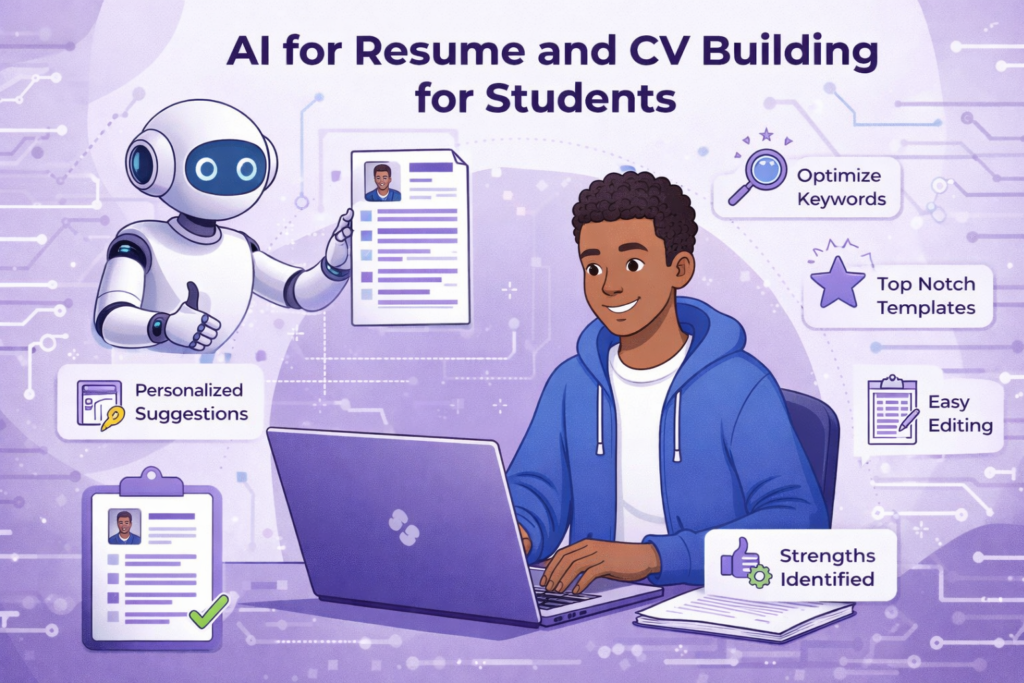
AI-powered resume-building tools help students create well-structured and impactful resumes without needing advanced writing or design skills. These tools guide users step by step, suggesting the right format, sections, and content based on their education, skills, and career goals.
One of the biggest advantages of AI in resume building is automatic content generation. Students can simply enter basic details like education, skills, and experience, and AI will generate professional descriptions for each section. For example, it can turn a simple line like “worked on a project” into a detailed, impactful statement that highlights responsibilities and achievements.
AI also helps with resume structuring and formatting. Many students are unsure about how to organize their resume. AI tools automatically arrange sections such as summary, education, skills, projects, and experience in a clean and professional layout. This ensures that the resume looks attractive and is easy for recruiters to read.
Another powerful feature is keyword optimization for ATS (Applicant Tracking Systems). Many companies use software to scan resumes before they reach human recruiters. AI tools analyze job descriptions and suggest relevant keywords that should be included in the resume. This increases the chances of the resume getting shortlisted.
AI also improves grammar, tone, and clarity. It checks for spelling mistakes, sentence structure issues, and weak wording, and suggests better alternatives. This ensures that the resume sounds professional and polished.
In addition, AI tools provide personalized suggestions based on career goals. For example, if a student is applying for a marketing role, AI may suggest adding relevant skills like content creation, SEO, or social media management. This helps in aligning the resume with industry expectations.
Another important feature is resume scoring and feedback. Some AI tools analyze the overall quality of the resume and give a score based on factors like content, formatting, and keyword usage. They also provide suggestions on how to improve it, making the resume more effective.
AI can also assist in creating multiple versions of resumes for different job roles. Instead of making separate resumes manually, students can quickly customize their CV for different applications using AI suggestions.
Despite these benefits, many students still create resumes manually or use outdated formats. They may not realize that AI tools can significantly improve their chances of getting noticed by recruiters.
In conclusion, AI for resume and CV building is a powerful solution that helps students create professional, optimized, and job-ready resumes with ease. It saves time, improves quality, and increases the chances of success in today’s competitive job market. By using AI, students can present themselves more confidently and effectively to potential employers.
AI Tools for Presentation Creation (PPTs)
In today’s academic environment, presentations have become an essential part of learning. From school projects to college seminars and professional pitches, students are often required to present their ideas clearly and creatively. However, creating a high-quality PowerPoint presentation is not as easy as it seems. It requires proper content planning, structured flow, attractive design, and clear communication. Many students struggle with these aspects and end up spending hours just designing slides instead of focusing on the actual content. This is where Artificial Intelligence (AI) tools are revolutionizing presentation creation.
AI-powered presentation tools simplify the entire process by automating content generation, design, and structuring. Students can simply enter a topic, a few keywords, or even a paragraph, and the AI tool can instantly generate a complete presentation. This includes slide titles, bullet points, and even suggestions for visuals. This not only saves time but also ensures that the presentation is well-organized and easy to understand.
One of the most powerful features of AI in PPT creation is intelligent content generation. AI understands the topic and converts it into presentation-friendly content. Instead of long paragraphs, it creates concise bullet points that are perfect for slides. This helps students avoid overcrowded slides and maintain clarity in their presentation.
AI also plays a major role in automatic slide structuring. A good presentation needs a logical flow, starting with an introduction, followed by key points, examples, and a conclusion. AI tools automatically organize the content in this sequence, ensuring that the presentation is coherent and impactful. This is especially useful for students who are unsure about how to structure their ideas.
Another major advantage is design automation and visual enhancement. Many students are not skilled in design, which can make their presentations look plain or unprofessional. AI tools automatically apply suitable themes, color combinations, fonts, and layouts that make the slides visually appealing. They also suggest relevant images, icons, graphs, and charts that enhance the overall quality of the presentation.
AI tools also help with data visualization. If a student includes data or statistics, AI can automatically convert it into charts, graphs, or infographics. This makes the information easier to understand and more engaging for the audience.
In addition, AI supports content summarization for slides. When students input large amounts of text, AI can condense it into short and meaningful points suitable for presentation. This ensures that slides remain clean and readable while still conveying the key message.
Another useful feature is language improvement and tone correction. AI checks grammar, sentence structure, and clarity, ensuring that the content is professional and error-free. It can also adjust the tone based on the type of presentation, whether it is academic, formal, or creative.
AI tools also assist in speaker notes and presentation guidance. They can generate notes for each slide, helping students understand what to say while presenting. This improves confidence and ensures smoother delivery during presentations.
Some advanced AI tools even offer real-time suggestions and editing, allowing students to modify content, change designs, or add new slides instantly. This flexibility makes it easier to refine presentations without starting from scratch.
Despite these powerful features, many students still rely on manual methods of creating presentations. They often spend excessive time adjusting fonts, aligning text, and searching for images, which reduces their focus on the actual subject matter. AI eliminates these repetitive tasks and allows students to concentrate on understanding and presenting their ideas effectively.
In conclusion, AI tools for presentation creation are transforming the way students prepare and deliver presentations. They make the process faster, smarter, and more efficient by handling content, design, and structure automatically. By using AI, students can create professional, engaging, and impactful presentations with minimal effort, ultimately improving both their productivity and performance.
AI in Language Learning and Translation
In today’s globalized world, knowing multiple languages has become a valuable skill for students. Whether it is for education, career opportunities, or communication, language plays a crucial role. However, learning a new language can be challenging, especially when it comes to grammar, vocabulary, pronunciation, and understanding context. This is where Artificial Intelligence (AI) is transforming language learning and translation by making the process faster, easier, and more interactive.
AI-powered language learning tools provide a personalized learning experience based on the student’s level, pace, and progress. Instead of following traditional methods like memorizing vocabulary lists or grammar rules, AI adapts the content according to the learner’s performance. If a student struggles with a particular topic, AI provides extra practice and simplified explanations until the concept becomes clear.
One of the biggest advantages of AI in language learning is real-time translation. Students can instantly translate words, sentences, or even entire documents from one language to another. This helps them understand content from different sources without language barriers. It is especially useful when studying foreign materials, research papers, or communicating with people from different countries.
AI also plays a major role in improving pronunciation and speaking skills. Many AI tools use voice recognition technology to analyze how a student speaks and provide feedback on pronunciation, tone, and fluency. This helps learners correct their mistakes and sound more natural while speaking a new language.
Another powerful feature is interactive conversation practice. AI chat-based systems allow students to practice real-life conversations without fear of making mistakes. This builds confidence and helps learners improve their communication skills in a safe and supportive environment.
AI also enhances learning through smart vocabulary building. Instead of random word lists, AI suggests words based on context and usage. It also provides examples, synonyms, and real-life sentences, making it easier for students to understand and remember new words.
In addition, AI helps with grammar correction and sentence formation. When students write in a new language, AI tools automatically detect errors and suggest corrections. They also explain why a sentence is incorrect, helping students learn grammar rules effectively.
Another important aspect is multilingual content access. AI allows students to read, listen, and understand content in multiple languages by providing translations, subtitles, and simplified explanations. This opens up access to global knowledge and learning resources.
AI also supports continuous progress tracking. It monitors a student’s learning journey, tracks improvements, and provides insights into areas that need more attention. This helps learners stay motivated and focused on their goals.
Despite these advantages, many students still rely on traditional methods of language learning, such as textbooks and rote memorization. While these methods are useful, they often lack interactivity and personalization. AI, on the other hand, makes language learning more engaging, flexible, and effective.
In conclusion, AI in language learning and translation is revolutionizing how students acquire new languages. It removes language barriers, improves communication skills, and provides a personalized learning experience. By using AI tools, students can learn languages more efficiently and confidently, preparing themselves for a more connected and global future.
Using AI for Coding Help and Debugging

In today’s digital world, coding has become an essential skill for students across various fields. However, learning programming is not always easy. Students often face challenges such as understanding complex logic, fixing errors, and debugging code. Even a small mistake in syntax can cause an entire program to fail, leading to frustration and wasted time. This is where Artificial Intelligence (AI) is transforming the coding experience by acting as a smart assistant for learning, writing, and debugging code.
AI-powered coding tools help students write code faster and more accurately by providing real-time suggestions and corrections. Instead of struggling to remember syntax or searching for solutions online, students can rely on AI to guide them through the process. These tools can autocomplete code, suggest functions, and even generate entire code snippets based on simple instructions.
One of the most important benefits of AI in coding is real-time error detection and debugging. AI tools can instantly identify mistakes in code, such as syntax errors, logical issues, or missing elements. More importantly, they don’t just point out the error—they also explain what went wrong and suggest how to fix it. This helps students understand their mistakes and improves their problem-solving skills.
AI also supports step-by-step code explanation. For beginners, understanding how a piece of code works can be difficult. AI can break down complex code into simple explanations, making it easier for students to learn programming concepts. This is especially helpful when working with new languages or advanced topics.
Another powerful feature is code generation from natural language. Students can simply describe what they want to build, and AI can generate the corresponding code. For example, a student can type “create a login form using HTML and CSS,” and AI will provide a ready-to-use code structure. This helps beginners get started quickly and learn by example.
AI tools also help with learning multiple programming languages. Whether it is Python, Java, C++, or web development languages, AI can assist across different platforms. It provides syntax suggestions, best practices, and solutions tailored to each language.
In addition, AI enhances coding through practice and project guidance. It can suggest practice problems, mini-project ideas, and improvements to existing code. This helps students build hands-on experience and improve their coding skills over time.
Another key advantage is time efficiency. Instead of spending hours searching for errors or solutions, students can quickly identify and fix issues with AI assistance. This allows them to focus more on learning concepts and building projects.
AI also promotes independent learning. Students do not always need to depend on teachers, mentors, or forums for help. They can solve doubts instantly and continue learning without interruptions. This builds confidence and encourages self-learning.
However, it is important to use AI wisely. Some students may rely too much on AI-generated code without understanding it. This can limit their learning. AI should be used as a guide and learning assistant, not as a shortcut to avoid thinking.
In conclusion, AI for coding help and debugging is a powerful tool that makes programming easier, faster, and more accessible for students. It reduces errors, improves understanding, and supports continuous learning. By using AI effectively, students can become better programmers and build strong technical skills for the future.
AI-Based Career Guidance Tools
Choosing the right career path is one of the most important and often confusing decisions for students. With so many options available today—engineering, management, design, data science, government jobs, and more—students often feel overwhelmed and unsure about which direction to take. Traditional career guidance methods, such as advice from teachers or family members, may not always be personalized or up-to-date. This is where Artificial Intelligence (AI) is transforming career guidance by providing smarter, data-driven, and personalized recommendations.
AI-based career guidance tools are designed to analyze a student’s interests, skills, academic performance, and personality traits to suggest suitable career options. Instead of giving general advice, these tools provide personalized career paths based on individual strengths and preferences. This helps students make more informed and confident decisions about their future.
One of the key features of AI in career guidance is skill and interest assessment. Students can take short quizzes or assessments, and AI analyzes their responses to identify their strengths, weaknesses, and areas of interest. Based on this analysis, it suggests careers that align with their natural abilities and passions.
Another important advantage is data-driven career recommendations. AI systems use large datasets, including job market trends, industry demands, and salary insights, to recommend career options that are not only suitable but also have strong future potential. This helps students choose careers that are relevant and in demand.
AI also provides career path clarity by showing step-by-step guidance. For example, if a student wants to become a data scientist, AI can outline the required skills, courses, certifications, and experience needed to achieve that goal. This gives students a clear roadmap instead of leaving them confused about where to start.
Another powerful feature is course and college recommendations. AI tools can suggest the best courses, universities, or online platforms based on the student’s career choice, budget, and academic background. This simplifies the process of selecting the right educational path.
AI-based tools also support resume building and skill development suggestions. They can recommend which skills a student should learn to improve their chances in a particular field. For example, if a student is interested in digital marketing, AI may suggest learning SEO, content writing, and social media management.
In addition, AI helps with real-time career updates and trends. It keeps students informed about new job roles, emerging industries, and changing market demands. This ensures that students are always aware of the latest opportunities and do not rely on outdated information.
Another useful aspect is continuous guidance and improvement. AI does not just give one-time suggestions; it keeps tracking progress and updating recommendations as the student grows and develops new skills. This makes career planning a continuous and evolving process.
Despite these benefits, many students still depend only on traditional advice and ignore AI-based tools due to lack of awareness. As a result, they may miss out on personalized insights and better opportunities.
In conclusion, AI-based career guidance tools are helping students make smarter and more informed career decisions. They provide personalized recommendations, clear career paths, and real-time insights, making the process of choosing a career easier and more effective. By using AI, students can align their skills and interests with the right opportunities and build a successful future with confidence.
AI in Exam Preparation and Mock Tests
Exams are one of the most stressful parts of a student’s academic journey. Preparing effectively requires proper planning, consistent practice, and a clear understanding of strengths and weaknesses. However, many students struggle with what to study, how much to practice, and whether they are truly ready for the exam. This is where Artificial Intelligence (AI) is transforming exam preparation by making it more structured, personalized, and result-oriented.
AI-powered tools help students prepare smarter by analyzing their performance and creating customized study plans. Instead of following a generic approach, AI identifies which topics a student is strong in and which areas need improvement. This allows students to focus more on weak subjects and use their time more efficiently.
One of the most powerful features of AI in exam preparation is personalized mock tests. Unlike traditional practice papers, AI-generated mock tests are tailored to a student’s level of understanding. If a student is performing well, the difficulty level increases gradually. If they are struggling, AI provides easier questions and additional practice to build confidence.
AI also provides instant feedback and detailed analysis after each test. Instead of just showing the score, it breaks down performance by topic, question type, and accuracy. Students can clearly see where they made mistakes and understand how to improve. This targeted feedback helps in faster learning and better retention.
Another major advantage is adaptive learning and revision planning. Based on test performance, AI suggests which topics need revision and how much time should be allocated to each subject. It can even create a daily or weekly revision schedule, ensuring that students cover the entire syllabus before exams.
AI tools also support time management practice. Many students know the answers but fail to complete exams on time. AI-based mock tests simulate real exam conditions with timers, helping students improve their speed and accuracy under pressure.
In addition, AI helps with question prediction and pattern analysis. By analyzing previous years’ papers and exam trends, AI can suggest important topics and commonly asked question types. While it cannot guarantee exact questions, it gives students a strong idea of what to focus on.
Another useful feature is doubt-solving during preparation. If a student gets stuck on a question, AI can provide step-by-step solutions and explanations instantly. This ensures that learning does not stop due to confusion or lack of guidance.
AI also keeps students motivated through progress tracking and performance insights. It shows improvement over time, highlights achievements, and encourages consistent practice. This helps students stay focused and confident during their preparation.
Despite these advantages, many students still rely only on traditional study methods like reading textbooks and solving fixed question papers. While these are important, they often lack personalization and detailed feedback. AI fills this gap by offering a smarter and more efficient way to prepare.
In conclusion, AI in exam preparation and mock tests is a game-changer for students. It provides personalized practice, instant feedback, and strategic guidance, helping students prepare more effectively and perform better in exams. By using AI tools, students can reduce stress, improve accuracy, and achieve their academic goals with greater confidence.
Smart AI Calendars for Assignment Tracking
Managing assignments, deadlines, classes, and personal study time can quickly become overwhelming for students. Many struggle to keep track of multiple submissions, forget important deadlines, or end up completing tasks at the last minute. Poor time management often leads to stress, incomplete work, and lower performance. This is where Smart AI-powered calendars are transforming the way students organize and track their academic responsibilities.
AI calendars are not just simple date trackers—they are intelligent systems that understand a student’s schedule, workload, and priorities. They automatically organize tasks, set reminders, and adjust plans in real time to ensure that nothing important is missed.
One of the most powerful features of AI calendars is automatic assignment scheduling. Students can input their deadlines, and the AI breaks down the task into smaller steps, assigning specific time slots for research, drafting, editing, and submission. This helps avoid last-minute rush and ensures better quality work.
AI calendars also provide smart reminders and notifications. Instead of basic alerts, these reminders are context-aware. For example, if an assignment deadline is near, the AI will send multiple reminders in advance and even suggest when to start working on it based on your free time.
Another major advantage is dynamic rescheduling. If a student misses a planned study session or an unexpected task comes up, the AI automatically adjusts the schedule without disturbing the overall plan. This flexibility helps students stay on track even when things don’t go as planned.
AI also helps in priority management. When multiple assignments are due at the same time, students often get confused about what to do first. AI analyzes deadlines, difficulty level, and workload to suggest which tasks should be prioritized. This ensures that important assignments are completed on time.
In addition, AI calendars support time-blocking techniques. They divide the day into focused study sessions, breaks, and revision time. Some advanced tools even consider productivity patterns and suggest the best time for deep work versus lighter tasks.
Another useful feature is integration with other tools. AI calendars can sync with emails, learning platforms, and task managers. For example, if a teacher sends an assignment via email, the AI can automatically detect it and add it to the calendar with a deadline reminder.
AI also offers progress tracking and insights. It monitors how consistently a student follows the schedule and provides feedback on productivity. Students can see how much time they spend on each subject and identify areas where they need to improve time management.
Moreover, AI helps reduce stress through balanced scheduling. It ensures that students do not overload themselves by spreading tasks evenly and including breaks. This prevents burnout and keeps productivity steady.
Another important aspect is goal setting and long-term planning. Students can set academic goals, such as completing a syllabus or preparing for exams, and AI will create a roadmap to achieve them step by step.
Despite these advantages, many students still rely on manual planners or memory to track assignments. They often underestimate deadlines or forget tasks, which leads to unnecessary pressure. AI calendars eliminate this problem by acting as a personal assistant that keeps everything organized.
In conclusion, smart AI calendars for assignment tracking are a powerful tool for improving time management, productivity, and consistency. They help students stay organized, meet deadlines, and reduce stress by automating planning and reminders. By using AI calendars, students can focus more on learning and less on managing their schedules, ultimately leading to better academic performance.
AI for Creativity (Design, Content, Ideas)
Creativity is an essential skill for students, whether it’s for designing projects, writing assignments, creating presentations, or generating new ideas. However, many students often face challenges like lack of inspiration, creative blocks, or limited design and writing skills. This is where Artificial Intelligence (AI) is becoming a powerful tool that enhances creativity by helping students generate ideas, design visuals, and create high-quality content effortlessly.
AI does not replace creativity—it enhances and supports it. It acts like a creative assistant that helps students think better, explore more options, and bring their ideas to life in a faster and more efficient way.
One of the biggest advantages of AI in creativity is idea generation. Students often struggle to start a project or think of unique topics. AI tools can instantly suggest ideas for blogs, presentations, assignments, social media content, or even startup concepts. This helps students overcome creative blocks and get started quickly.
AI is also highly useful for content creation. Whether it is writing essays, captions, reports, or scripts, AI can generate structured and meaningful content based on a simple prompt. It helps students organize their thoughts, improve writing flow, and create content that is clear and engaging.
Another powerful feature is design assistance. Many students are not skilled in graphic design, but AI tools can create professional-quality visuals such as posters, presentations, social media posts, and thumbnails. They automatically suggest layouts, colors, fonts, and design elements, making creative work easier and more visually appealing.
AI also supports image and visual generation. Students can describe what they want, and AI can generate images, illustrations, or concepts based on that description. This is especially useful for projects, presentations, and creative assignments where visuals play an important role.
In addition, AI helps with content enhancement and editing. It can rewrite sentences, improve tone, fix grammar, and make content more impactful. This ensures that the final output is polished and professional.
Another important aspect is brainstorming and multiple variations. AI can generate different versions of the same idea, giving students multiple options to choose from. This encourages experimentation and helps in selecting the best possible approach.
AI also enables faster execution of ideas. Instead of spending hours thinking, writing, and designing, students can complete creative tasks in much less time. This allows them to focus more on refining their ideas rather than struggling to create them from scratch.
Moreover, AI encourages learning through creativity. By exploring AI-generated suggestions, students can understand new styles, formats, and approaches, which helps in improving their own creative skills over time.
Despite these benefits, some students hesitate to use AI for creative work, thinking it may reduce originality. However, when used correctly, AI actually boosts creativity by providing inspiration and saving time, while the final output still depends on the student’s input and ideas.
In conclusion, AI for creativity is a powerful tool that helps students generate ideas, create content, and design visuals more efficiently. It removes creative barriers, saves time, and enhances the overall quality of work. By using AI as a creative partner, students can unlock new possibilities and express their ideas more effectively in both academic and personal projects.
AI-Powered Doubt Solving Platforms
Doubts are a natural part of the learning process, but for many students, getting those doubts cleared at the right time can be difficult. In traditional learning, students often have to wait for the next class, depend on teachers’ availability, or search through multiple resources to find answers. This delay can interrupt learning and reduce understanding. Artificial Intelligence (AI) is solving this problem by introducing AI-powered doubt solving platforms that provide instant, accurate, and personalized solutions anytime.
AI-based doubt solving platforms act like a 24/7 personal tutor. Students can ask questions at any time—day or night—and receive immediate answers. This removes dependency on fixed schedules and ensures continuous learning without interruptions.
One of the biggest advantages of these platforms is instant doubt resolution. Students can type, upload, or even scan a question, and AI quickly analyzes it to provide a solution. This is especially useful during homework, exam preparation, or revision when time is limited.
AI also provides step-by-step explanations instead of just giving direct answers. This is crucial because it helps students understand the logic behind the solution. Whether it’s a math problem, a science concept, or a grammar query, AI breaks it down into simple steps, making it easier to learn and remember.
Another important feature is multi-subject support. AI platforms can handle a wide range of subjects, including mathematics, science, English, coding, and even general knowledge. This makes them a one-stop solution for students across different streams.
AI-powered tools also offer personalized learning support. They analyze the type of questions a student asks and identify patterns in their mistakes. Based on this, the system suggests additional practice questions, similar problems, or simplified explanations to strengthen weak areas.
In addition, these platforms support image and voice-based queries. Students can take a picture of a question or speak their doubt, and AI will process it and provide an answer. This makes the process faster and more convenient, especially for complex or lengthy questions.
Another powerful aspect is concept clarity and alternative explanations. If a student does not understand one explanation, AI can provide different ways to explain the same concept. This ensures better understanding compared to traditional methods.
AI also helps in learning at one’s own pace. Students can ask the same question multiple times without hesitation or fear of judgment. This creates a comfortable learning environment where they can focus on improving their understanding.
Moreover, AI platforms continuously improve through data and learning algorithms, making their responses more accurate and helpful over time. This ensures better quality support for students.
Despite these benefits, some students still rely only on traditional methods for doubt solving and may hesitate to use AI tools. However, AI does not replace teachers—it complements them by providing instant support when needed.
In conclusion, AI-powered doubt solving platforms are transforming the way students learn by making help instantly available, personalized, and easy to understand. They reduce learning gaps, save time, and improve confidence, allowing students to study more effectively and independently.
How Students Use AI Without Realizing It
Artificial Intelligence (AI) has become deeply integrated into everyday technology, yet many students don’t even realize how often they are using it. While some students actively use AI tools for studying or content creation, a large number are already benefiting from AI in their daily academic life without being aware of it. These hidden use cases show how AI is quietly making learning easier, faster, and more efficient.
One of the most common examples is search engines. When students search for information online, AI works behind the scenes to understand their query and show the most relevant results. Features like auto-suggestions, “people also ask,” and quick answers are all powered by AI, helping students find information quickly without manually filtering through multiple websites.
Another hidden use is in autocorrect and predictive text. Whether students are typing messages, writing assignments, or sending emails, AI helps by correcting spelling mistakes and suggesting the next word. This not only saves time but also improves writing accuracy without conscious effort.
Students also use AI in recommendation systems. Platforms like video streaming apps or learning platforms suggest educational videos, tutorials, or courses based on previous activity. This helps students discover useful content without actively searching for it.
AI is also present in navigation and maps. When students use maps to find routes to school, coaching centers, or libraries, AI analyzes traffic, distance, and time to suggest the fastest route. While this may not seem academic, it indirectly helps in time management and planning.
Another important use is in email filtering and organization. AI automatically sorts emails into categories like primary, social, or spam. This helps students focus on important academic emails and avoid distractions.
AI also plays a role in online shopping and research comparisons. When students look for books, gadgets, or study materials, AI suggests products based on preferences and previous searches, making decision-making easier.
In addition, voice assistants like mobile assistants are often used for simple tasks such as setting alarms, reminders, or searching for quick answers. Many students use these features daily without realizing they are interacting with AI.
AI is also used in social media feeds. The content students see—educational posts, reels, or study tips—is often curated by AI based on their interests and activity. This can indirectly support learning by exposing them to useful information.
Another hidden use is in translation and language tools. Students often use translation features in browsers or apps to understand content in different languages, which is powered by AI.
Even online learning platforms and apps use AI to track progress, suggest lessons, and recommend practice exercises. Students may think they are just using an app, but AI is working in the background to improve their learning experience.
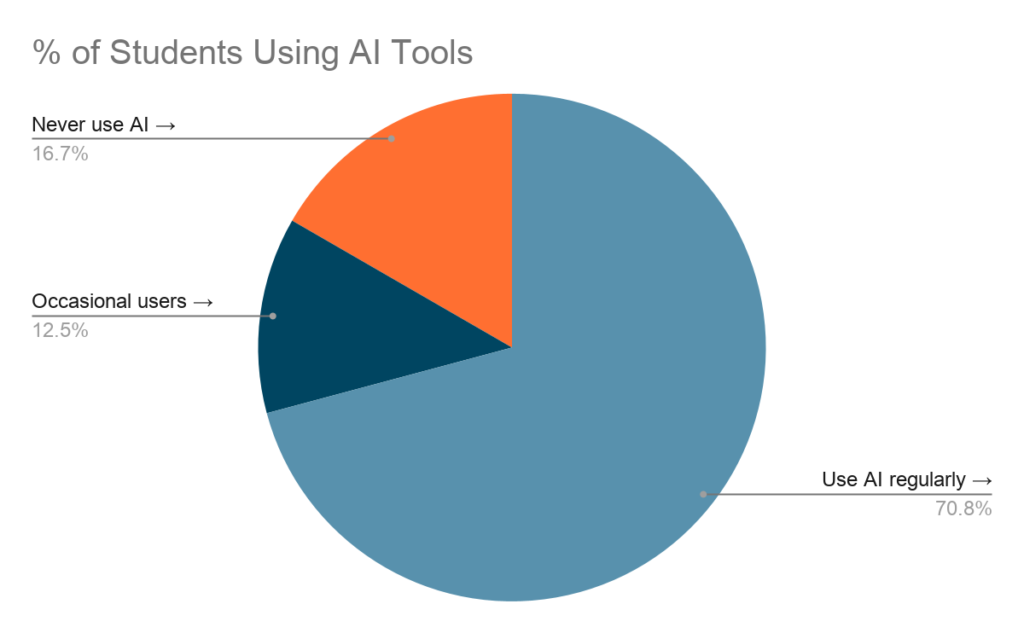
Despite using all these AI-powered features daily, many students still believe they are not using AI at all. This lack of awareness prevents them from fully utilizing AI tools for more advanced and productive purposes.
In conclusion, AI is already a part of students’ daily lives in ways they often overlook. From searching information to writing messages and watching educational content, AI is constantly supporting them behind the scenes. By becoming aware of these hidden use cases, students can start using AI more intentionally and effectively to improve their learning and productivity.
AI in Email Writing and Communication Skills
In today’s academic and professional world, effective communication is a crucial skill for students. Whether it is writing emails to teachers, applying for internships, communicating with clients, or collaborating on projects, students are expected to express their thoughts clearly and professionally. However, many students struggle with writing proper emails, maintaining the right tone, and avoiding grammar mistakes. This is where Artificial Intelligence (AI) is playing a significant role in improving email writing and overall communication skills.
AI-powered writing tools help students compose emails quickly and efficiently. Instead of worrying about how to start or what to write, students can simply enter a basic idea, and AI generates a well-structured email with proper formatting. This includes subject lines, greetings, body content, and closing statements, making the email look professional and complete.
One of the most important benefits of AI is grammar and error correction. AI tools automatically detect spelling mistakes, punctuation errors, and incorrect sentence structures. They also suggest improvements in real time, ensuring that the email is clear, accurate, and easy to understand.
AI also helps in maintaining the right tone and style. Writing an email to a teacher, a company, or a friend requires different tones—formal, semi-formal, or informal. AI can adjust the tone based on the purpose of the email, ensuring that the message sounds appropriate and respectful.
Another powerful feature is sentence improvement and rewriting. If a student writes a sentence that is unclear or too basic, AI can rewrite it in a more professional and impactful way. This improves the overall quality of communication and makes the message more effective.
AI also supports email structuring and clarity. Many students struggle to organize their thoughts logically. AI tools help in arranging content into clear paragraphs, ensuring that the message flows smoothly and is easy for the reader to follow.
In addition, AI assists in quick responses and reply suggestions. For example, when replying to emails, AI can suggest appropriate responses based on the context. This saves time and helps students respond more efficiently, especially in formal or professional situations.
Another useful aspect is vocabulary enhancement. AI suggests better word choices, synonyms, and phrases that make emails more polished and professional. This helps students gradually improve their language skills over time.
AI also helps in learning through feedback. Instead of just correcting mistakes, it explains why certain changes are needed. This allows students to understand grammar rules and communication techniques, leading to long-term improvement.
Moreover, AI can assist with multilingual communication. Students can write emails in one language and use AI to translate them into another while maintaining proper tone and meaning. This is especially helpful in global communication or when dealing with international clients or institutions.
Despite these advantages, many students still write emails manually without using AI tools, often making avoidable mistakes. They may not realize how much time and effort can be saved while improving the quality of their communication.
In conclusion, AI in email writing and communication skills is a powerful tool that helps students write clear, professional, and effective messages. It improves grammar, tone, structure, and overall clarity, making communication more confident and impactful. By using AI, students can develop strong communication skills that are essential for both academic success and future career growth.
AI for Mental Health & Productivity Tracking
In today’s fast-paced academic environment, students often face high levels of stress, anxiety, and pressure to perform. Managing studies, assignments, exams, and personal life at the same time can become overwhelming. At the same time, staying productive and maintaining focus is another major challenge. This is where Artificial Intelligence (AI) is playing an important role by helping students monitor both their mental health and productivity in a smarter and more balanced way.
AI-powered tools for mental health and productivity tracking act like a personal support system that continuously observes patterns in behavior, mood, and work habits. Instead of relying only on self-awareness, students can use AI to gain deeper insights into how they are feeling and performing on a daily basis.
One of the key features of AI in this area is mood tracking and emotional analysis. Some tools allow students to log their feelings or analyze text inputs (like journal entries or chats) to detect emotional patterns. Based on this data, AI can identify signs of stress, anxiety, or burnout and provide suggestions to manage them.
AI also supports personalized wellness recommendations. If a student is showing signs of low productivity or stress, the system may suggest taking a break, practicing mindfulness, improving sleep habits, or adjusting study schedules. This helps students maintain a healthier balance between work and rest.
Another important aspect is productivity tracking and analysis. AI tools monitor how students spend their time—how long they study, how often they take breaks, and how consistent they are. Based on this, AI provides insights into productivity patterns and suggests improvements.
AI also helps in goal setting and habit building. Students can set daily or weekly goals, and AI tracks their progress while providing reminders and motivation. It can also suggest better routines to improve consistency and discipline.
In addition, AI enables focus improvement techniques. Many tools use AI to block distractions, manage notifications, and guide students through focused study sessions using methods like time-blocking or Pomodoro techniques. This helps in maintaining concentration and avoiding procrastination.
Another useful feature is burnout prevention and balance management. AI ensures that students do not overload themselves with excessive work. It recommends breaks, leisure activities, and proper scheduling to maintain both mental and physical well-being.
AI tools also provide progress reports and insights. Students can see how their productivity and mood change over time. This helps them understand what works best for them and make better decisions regarding their study habits.
Moreover, some advanced AI systems offer chat-based support where students can talk about their stress or concerns. While not a replacement for professional help, it provides a safe space for students to express themselves and receive basic guidance.
Despite these benefits, many students ignore mental health and focus only on academic performance. They may not realize that productivity and mental well-being are deeply connected. Without proper balance, both can suffer.
In conclusion, AI for mental health and productivity tracking is helping students lead a more balanced and efficient life. It not only improves study habits but also supports emotional well-being, ensuring that students stay focused, motivated, and mentally healthy. By using AI tools wisely, students can achieve better results without compromising their mental health.
Conclusion
Artificial Intelligence is no longer a future concept—it is already a part of students’ daily lives, often in ways they don’t even notice. From smart study planning and automatic note-making to quick homework assistance, personalized learning, and productivity tracking, AI is quietly transforming how students learn, manage time, and improve their skills.
The biggest advantage of AI is that it helps students study smarter, not harder. It saves time, reduces stress, and provides personalized support based on individual needs. Whether it’s improving writing, creating presentations, solving doubts, or preparing for exams, AI acts as a powerful assistant that makes learning more efficient and effective.
However, many students still underuse or ignore these tools due to lack of awareness or hesitation. The key is not to depend completely on AI but to use it wisely as a support system that enhances understanding and productivity.
In the coming years, AI will play an even bigger role in education. Students who start using these tools early will have a clear advantage in terms of learning speed, creativity, and overall performance. By embracing AI in a balanced way, students can unlock their full potential and make their academic journey more organized, engaging, and successful.
Want to explore more useful content like this? Visit our website and keep learning smarter. [https://pinakiithub.com]