
Understanding Industry-Focused Training
Industry-focused training is a modern approach to education that is designed to match the current needs, technologies, and working practices of the IT industry. Unlike traditional learning methods that focus mainly on theory, industry-focused training emphasizes practical knowledge, real-world experience, and hands-on skill development. The main goal of this type of training is to prepare students so they can easily adapt to professional environments and perform tasks that companies actually require.
In many traditional academic programs, students learn through textbooks, classroom lectures, and written exams. While these methods are important for understanding basic concepts and theoretical foundations, they often do not fully prepare students for real-world industry challenges. Many graduates face difficulties when they enter the workforce because they lack practical exposure, familiarity with modern tools, and real project experience. Industry-focused training helps bridge this gap by combining theory with practical learning experiences.
One of the key elements of industry-focused training is the integration of real-world projects and practical assignments. Students are encouraged to work on tasks that simulate real business problems or technical challenges faced by companies. This helps learners understand how to apply their knowledge to solve actual problems rather than just memorizing concepts. By working on projects, students also gain valuable experience in planning, execution, debugging, and problem-solving, which are essential skills in the IT industry.
Another important aspect of industry-focused training is learning to use the tools, technologies, and platforms commonly used by professionals. In fields such as software development, data analysis, cloud computing, cybersecurity, and digital marketing, professionals rely on specific tools to complete their work efficiently. Through industry-focused training, students get hands-on practice with these tools, which makes them more confident and capable when they begin their professional careers.
Industry-focused training also helps students develop soft skills and professional habits that are essential in the workplace. These include communication, teamwork, time management, adaptability, and critical thinking. In many cases, students work in teams to complete projects, which helps them understand how collaboration works in real organizations. Learning to meet deadlines, manage tasks, and communicate ideas clearly are all important aspects of becoming a successful IT professional.
Mentorship and guidance from experienced trainers or industry experts are also a major part of industry-focused training. Trainers who have real industry experience can provide valuable insights about current trends, best practices, and career expectations. Their guidance helps students understand what employers are looking for and how they can improve their skills to meet those expectations.
Another advantage of industry-focused training is that it helps students stay updated with rapidly changing technologies. The IT industry evolves quickly, with new tools, programming languages, and frameworks appearing regularly. Training programs that follow an industry-focused approach continuously update their curriculum to reflect these changes, ensuring that students learn relevant and in-demand skills.
Overall, industry-focused training plays a vital role in making students job-ready and confident professionals. By combining theoretical knowledge with practical experience, modern tools, mentorship, and real-world exposure, this approach prepares learners to succeed in the competitive IT industry. Students who receive industry-focused training are better equipped to adapt to workplace challenges, contribute to projects effectively, and build long-term successful careers in the technology field.
Skills Required by IT Companies vs Skills Learned in Traditional Education
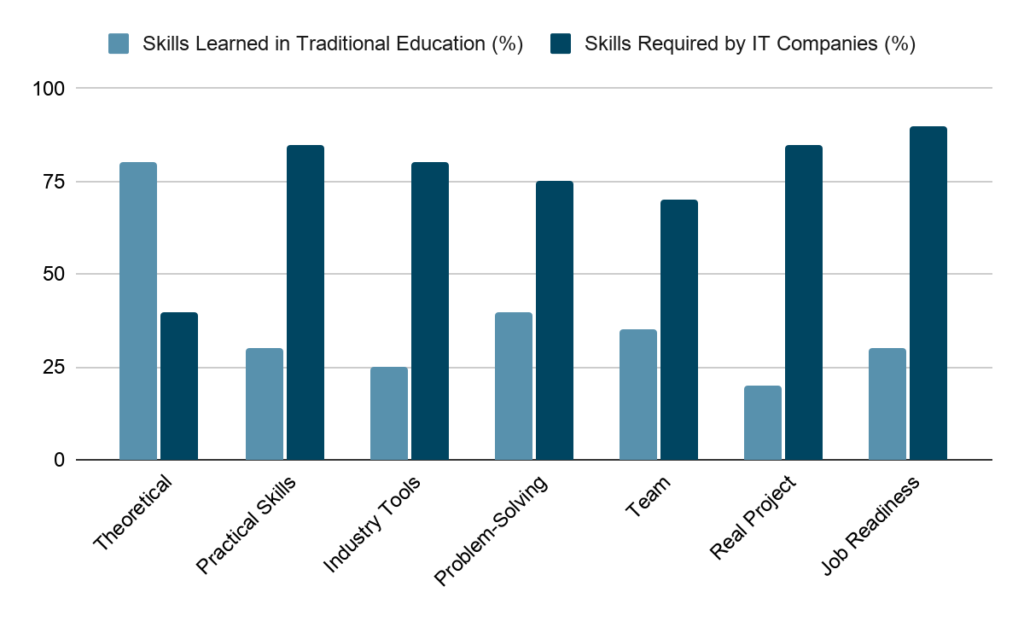
Difference Between Traditional Learning and Industry-Based Training
In the field of IT education, understanding the difference between traditional learning and industry-based training is very important. Both approaches aim to educate students, but they differ significantly in terms of teaching methods, learning outcomes, and practical exposure. While traditional learning focuses mainly on theoretical knowledge, industry-based training focuses on preparing students for real workplace challenges and professional environments.
1. Learning Approach
Traditional learning is primarily based on lectures, textbooks, and classroom discussions. Students usually learn concepts through theoretical explanations and written examinations. On the other hand, industry-based training follows a practical and application-oriented approach. Students are encouraged to apply what they learn by working on assignments, projects, and real-world scenarios.
2. Curriculum and Course Structure
In traditional education systems, the curriculum may remain the same for many years. As a result, students sometimes learn outdated concepts that may not fully match current industry requirements. Industry-based training programs, however, are designed to adapt quickly to industry trends. The curriculum is updated regularly to include the latest technologies, tools, and methodologies used by companies.
3. Practical Experience
One of the biggest differences lies in the level of practical exposure. Traditional learning often focuses more on theoretical understanding, with limited opportunities for hands-on practice. Industry-based training emphasizes learning by doing, where students work on real or simulated projects, practical assignments, and case studies. This helps them understand how theoretical knowledge is applied in real situations.
4. Use of Tools and Technologies
Traditional education sometimes teaches concepts without giving students the opportunity to work with the actual tools used in the industry. In contrast, industry-based training ensures that students gain hands-on experience with modern tools, software platforms, and technologies that professionals use in their daily work. This makes it easier for students to adapt when they enter the workforce.
5. Interaction with Industry Professionals
Traditional learning environments may have limited interaction with industry experts. Industry-based training often includes mentorship from experienced professionals, guest lectures, and practical insights from people who are actively working in the field. This helps students understand real industry expectations and career opportunities.
6. Skill Development
Traditional education mainly focuses on building academic knowledge and helping students perform well in examinations. Industry-based training focuses on developing technical skills as well as soft skills such as teamwork, communication, time management, and problem-solving. These skills are essential for success in professional environments.
7. Job Readiness
Traditional learning prepares students academically, but it may not always make them fully prepared for the demands of the workplace. Industry-based training is designed specifically to make students job-ready by providing practical experience and exposure to real work environments.
8. Learning Outcomes
The outcome of traditional learning is usually a degree or academic qualification. While this is important, employers often look for candidates who can apply their knowledge effectively. Industry-based training aims to produce skilled professionals who are capable of solving real problems and contributing to projects from the beginning of their careers.In conclusion, both traditional learning and industry-based training have their importance, but in today’s fast-changing technology landscape, industry-focused training provides a more practical and career-oriented approach. By combining theoretical knowledge with real-world experience, industry-based training helps students become confident, capable, and ready to succeed in the IT industry.
Why Companies Prefer Job-Ready Candidates
In today’s fast-paced and competitive business environment, companies look for professionals who can contribute to work immediately without requiring extensive training. This is why many employers prefer hiring job-ready candidates—individuals who already possess the practical skills, technical knowledge, and professional mindset needed to perform their roles effectively.
One of the main reasons companies prefer job-ready candidates is productivity. When a candidate already understands industry tools, workflows, and technologies, they can start working on tasks and projects much faster. Organizations do not have to spend too much time and resources on basic training, which helps them save both time and operational costs.
Another important reason is the ability to handle real-world challenges. Job-ready candidates usually have experience working on practical projects, case studies, or internships during their training. Because of this exposure, they are better prepared to deal with real business problems, deadlines, and client requirements. They understand how to approach problems, analyze situations, and find effective solutions.
Companies also value candidates who are familiar with modern tools and technologies used in the industry. In the IT sector especially, technologies evolve quickly, and organizations prefer employees who already have experience working with relevant software, platforms, and frameworks. This reduces the learning curve and allows new employees to integrate smoothly into existing teams and projects.
Another reason companies prefer job-ready candidates is their professional skills and work attitude. Through practical training and real project experience, these candidates develop essential workplace skills such as teamwork, communication, time management, and adaptability. These qualities help them collaborate effectively with colleagues and perform well in a professional environment.
Furthermore, job-ready candidates often demonstrate confidence and problem-solving abilities. Since they have already practiced applying their knowledge in real or simulated scenarios, they are more comfortable handling technical challenges and making decisions when needed. Employers see this as a strong advantage because it shows that the candidate can work independently and contribute meaningfully to the organization.
In conclusion, companies prefer job-ready candidates because they bring practical knowledge, relevant skills, and the ability to perform tasks efficiently from the beginning. By reducing training time and increasing productivity, such candidates help organizations achieve their goals more effectively. This is why industry-focused training and practical learning have become increasingly important for students who want to succeed in the modern IT industry.
Role of Practical Projects in Skill Development

Practical projects play a crucial role in helping students develop real-world skills and practical understanding of the concepts they learn during their training. While theoretical knowledge provides the foundation, practical projects allow students to apply that knowledge in real situations, which strengthens their learning and improves their technical abilities.
One of the biggest advantages of practical projects is that they help students understand how concepts work in real applications. Instead of only reading about technologies or programming techniques, learners actively use them to create solutions. This process helps them gain deeper knowledge and improves their ability to solve technical problems effectively.
Practical projects also help students develop problem-solving skills. When working on a project, students often face challenges such as errors in code, design issues, or unexpected technical problems. By identifying and fixing these issues, they learn how to think critically, analyze problems, and find solutions. These skills are extremely valuable in the IT industry, where professionals frequently deal with complex technical challenges.
Another important benefit of practical projects is that they help students gain experience with industry tools and technologies. Many projects require the use of specific programming languages, frameworks, software tools, and development platforms. By working with these tools during training, students become more confident and comfortable using them in real work environments.
Practical projects also encourage teamwork and collaboration. In many training programs, students work together in groups to complete projects. This helps them learn how to communicate effectively, share ideas, divide tasks, and work toward a common goal. Such experiences prepare them for professional environments where teamwork is essential.
In addition, practical projects help students build a strong portfolio. A portfolio that includes completed projects, applications, or case studies demonstrates a student’s skills and abilities to potential employers. It shows that the candidate has practical experience and can apply their knowledge to create real solutions.
Practical project work also improves confidence and creativity. When students successfully complete a project, they gain confidence in their abilities and become more motivated to learn new technologies and explore innovative solutions.
In conclusion, practical projects are a key part of skill development because they transform theoretical knowledge into real-world expertise. By working on hands-on projects, students develop technical skills, problem-solving abilities, teamwork experience, and professional confidence, all of which are essential for building a successful career in the IT industry.
Learning Real Tools and Technologies Used in the Industry
One of the most important aspects of industry-focused training is learning the real tools and technologies that professionals use in the IT industry. In today’s technology-driven world, companies rely on various software platforms, development tools, and frameworks to complete projects efficiently. Therefore, students who gain hands-on experience with these tools during their training are better prepared for real job environments.
Traditional learning methods often focus on theoretical concepts without giving students the opportunity to work with the actual technologies used in companies. However, industry-focused training bridges this gap by introducing learners to modern tools, platforms, and workflows that are widely used in the professional world. This practical exposure helps students understand how real projects are developed, managed, and delivered.
For example, in fields like software development, students learn programming languages, code editors, version control systems, and testing tools that are commonly used by developers. In data analysis and cloud computing, learners work with data management tools, cloud platforms, and automation systems. Similarly, in digital marketing, students gain experience using analytics tools, SEO platforms, and campaign management software.
Learning these tools during training provides several advantages. First, it reduces the learning curve when students join a company because they are already familiar with the technologies used in the workplace. Second, it improves their technical confidence, allowing them to contribute to projects more effectively from the beginning. Third, it increases their employability, as employers prefer candidates who already have practical experience with industry-relevant tools.
Another benefit of learning real tools and technologies is that it helps students understand industry workflows and collaboration methods. Many projects require teamwork and the use of collaborative platforms for code management, project tracking, and communication. By practicing these workflows during training, students become comfortable working in professional environments.
Moreover, technology is constantly evolving, and new tools are introduced regularly. Industry-focused training programs often update their curriculum to include the latest technologies and best practices, ensuring that students stay aligned with current market demands.
In conclusion, learning real tools and technologies during training is essential for developing practical skills and industry readiness. It helps students gain hands-on experience, improve technical competence, and become more confident professionals who are capable of adapting to real workplace challenges in the IT industry.
How Industry-Focused Training Reduces the Skills Gap
In today’s rapidly evolving technology landscape, one of the biggest challenges faced by companies is the skills gap. The skills gap refers to the difference between the abilities that employers expect from candidates and the skills that many graduates actually possess when they enter the job market. Many students complete their academic education with strong theoretical knowledge, but they may lack the practical experience, technical exposure, and industry understanding required to perform effectively in real workplace environments. Industry-focused training plays a crucial role in bridging this gap and preparing learners for real career opportunities.
One of the main reasons for the skills gap is that traditional education systems often focus more on theoretical concepts and academic learning. While this knowledge is important for building a foundation, it may not always reflect the current tools, technologies, and workflows used in modern industries. Industry-focused training addresses this issue by designing courses that are aligned with the latest industry trends and professional requirements. This ensures that students learn skills that are directly relevant to the job market.
Another important way industry-focused training reduces the skills gap is by emphasizing practical learning and hands-on experience. Instead of only learning from textbooks, students actively work on practical assignments, coding exercises, real-world case studies, and project-based learning. These activities help them understand how theoretical concepts are applied in real-life situations. When students solve real problems and complete practical projects, they develop the confidence and ability to handle professional challenges.
Industry-focused training programs also introduce students to modern tools, software platforms, and technologies that companies use in their daily operations. For example, learners may gain experience with development frameworks, collaboration tools, project management platforms, and cloud technologies. By working with these tools during their training, students become familiar with the technologies used in professional environments, which reduces the time companies need to spend on training new employees.
Another significant factor that helps reduce the skills gap is guidance from experienced industry professionals. Trainers who have real industry experience can share valuable insights about workplace expectations, project management practices, and emerging technological trends. Their mentorship helps students understand how the industry operates and what skills are required to succeed in professional roles.
In addition to technical skills, industry-focused training also emphasizes the development of soft skills and professional competencies. Skills such as communication, teamwork, critical thinking, adaptability, and time management are essential for success in any organization. Through group projects, presentations, and collaborative assignments, students learn how to work effectively with others and manage their responsibilities in a professional setting.
Furthermore, industry-focused training often includes opportunities such as internships, live projects, and real-world simulations. These experiences expose students to real business environments where they can apply their knowledge and gain valuable practical experience. This exposure not only strengthens their technical skills but also helps them understand workplace culture, deadlines, and professional expectations.
Another important benefit is that industry-focused training helps students build strong portfolios and practical experience records. When students complete real projects and practical assignments, they can showcase their work to potential employers. A strong portfolio demonstrates a candidate’s ability to apply their skills, making them more attractive to recruiters and hiring managers.
In conclusion, industry-focused training plays a vital role in reducing the skills gap between education and employment. By combining theoretical learning with practical experience, modern tools, industry mentorship, and real-world projects, this approach helps students become confident and capable professionals. As industries continue to evolve, such training ensures that learners are equipped with the skills and knowledge needed to meet the demands of the modern job market and build successful careers in the IT sector.
Importance of Hands-On Learning in IT Courses
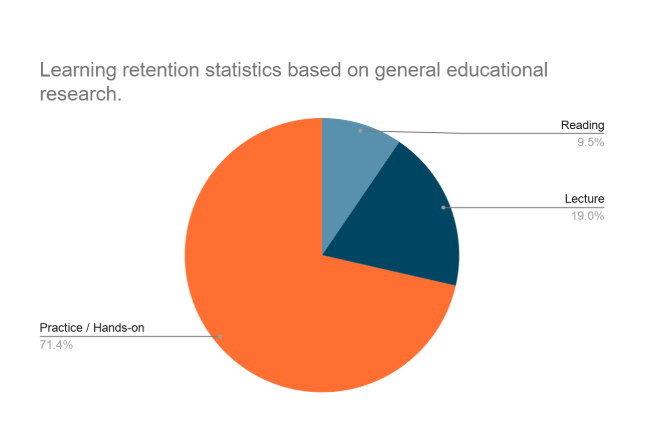
In the IT field, having only theoretical knowledge is often not enough to succeed. Students need practical experience to understand how technologies actually work in real-world situations. Hands-on learning allows students to apply what they learn through projects, practical assignments, and real-time exercises. This approach helps learners gain better technical understanding and prepares them for real industry work.
Through hands-on learning, students can develop important skills such as problem-solving, technical confidence, and the ability to work with modern tools and technologies. It also helps them understand how real IT projects are developed and managed. Because of these benefits, hands-on learning has become an essential part of modern IT courses and plays a key role in making students job-ready and industry-ready.
1. Better Understanding of Technical Concepts
Hands-on learning helps students understand complex IT concepts in a much clearer way. When learners only read theoretical explanations, it can sometimes be difficult to fully grasp how a concept actually works. However, when they apply the same concept in a practical task—such as writing code, building a small application, or configuring software—they develop a deeper understanding. Practical work allows students to see the direct results of their actions, which makes learning more effective and meaningful.
2. Development of Real Problem-Solving Skills
In the IT industry, professionals constantly face technical issues, bugs, and unexpected challenges. Hands-on learning prepares students for such situations by allowing them to encounter and solve problems during their training. When students work on real exercises or projects, they learn how to debug errors, analyze problems, and find solutions independently. This improves their analytical thinking and strengthens their problem-solving abilities.
3. Building Practical Industry Experience
One of the biggest benefits of hands-on learning is that it gives students practical experience even before they start their careers. Through assignments, mini projects, and real-world simulations, students get a chance to apply their knowledge in situations similar to those in the workplace. This experience helps them understand how actual IT projects are developed and managed.
4. Increased Technical Confidence
Regular practical practice helps students gain confidence in their technical abilities. When learners successfully build applications, write programs, or solve technical issues, they become more confident in their skills. This confidence is extremely important when students face interviews, internships, or their first job in the IT industry.
5. Familiarity with Modern Tools and Technologies
Hands-on learning introduces students to the tools, software platforms, and technologies that are widely used in the IT industry. Instead of just learning about technologies theoretically, students actually use them while working on tasks. This practical exposure helps them become comfortable with industry tools and reduces the learning curve when they join a professional environment.
6. Encourages Active Participation in Learning
Traditional learning methods often involve passive learning, where students mainly listen to lectures or read study material. Hands-on learning changes this approach by encouraging active participation. Students experiment with ideas, test solutions, and directly engage with the subject. This active involvement makes learning more effective and engaging.
7. Enhances Creativity and Innovation
Practical learning allows students to experiment with new ideas and create innovative solutions. When students work on projects, they are often required to design systems, improve features, and develop unique approaches to solve problems. This process encourages creativity and helps them think beyond theoretical knowledge.
8. Preparation for Real-World IT Projects
Hands-on learning prepares students for the kind of work they will perform in real IT companies. While working on practical projects, students learn important aspects such as project planning, coding practices, debugging techniques, testing methods, and implementation processes. This exposure makes them more comfortable when they start working on real professional projects.
9. Strengthening Technical Skills
Continuous practice is essential for mastering any technical skill. Hands-on learning allows students to repeatedly practice coding, software development, system configuration, and other technical tasks. Over time, this practice strengthens their skills and improves their efficiency in performing technical work.
10. Development of Teamwork and Collaboration Skills
Many practical projects in IT courses are completed in teams. Working in groups helps students learn how to communicate effectively, share responsibilities, and collaborate with others. These teamwork skills are extremely important in professional IT environments where projects are often completed by teams rather than individuals.
11. Creation of a Strong Professional Portfolio
Hands-on learning allows students to build real projects that can be included in their professional portfolio. A portfolio containing practical work, applications, or project demonstrations helps students showcase their abilities to potential employers. Recruiters often prefer candidates who can demonstrate their skills through actual work rather than only academic qualifications.
12. Improved Knowledge Retention
Studies show that people remember information better when they practice it. Hands-on learning reinforces theoretical concepts through practical application, which helps students retain knowledge for a longer period of time. This makes learning more effective compared to purely theoretical education.
13. Development of Real-World Thinking
Practical learning helps students develop a real-world mindset. Instead of focusing only on academic results, they learn how to approach real business problems, analyze user requirements, and design practical solutions. This mindset is essential for working in professional IT environments.
14. Better Preparation for Job Opportunities
Hands-on learning makes students more prepared for job opportunities because they already have practical experience with technologies and tools. Employers often prefer candidates who can demonstrate practical abilities and contribute to projects from the beginning. This makes hands-on training a valuable advantage in the competitive job market.
15. Makes Learning More Engaging and Motivating
Hands-on learning makes IT courses more interesting and enjoyable. When students see the results of their work—such as a functioning application or a completed project—they feel motivated to learn more and improve their skills. This enthusiasm encourages continuous learning and professional growth.
Benefits of Mentorship and Expert Guidance
In the IT industry, learning from experienced professionals can make a big difference in a student’s learning journey. Mentorship and expert guidance help students gain not only theoretical knowledge but also practical insights about how the industry works. A mentor can guide learners in the right direction, help them improve their skills, and prepare them for real-world challenges. With proper mentorship, students are able to learn faster, avoid common mistakes, and build a stronger foundation for their careers.
1. Clear Direction for Learning
Many students often feel confused about what technologies or skills they should focus on. The IT field offers many different career paths such as web development, data analysis, cybersecurity, cloud computing, and more. Mentors help students understand which skills are most relevant and in demand in the industry. Their guidance allows learners to focus on the right topics and follow a structured learning path instead of wasting time on unnecessary areas.
2. Real Industry Knowledge and Insights
Mentors who have real industry experience can share valuable insights about how companies operate, how projects are handled, and what skills employers expect from candidates. This knowledge helps students understand the practical side of the IT field, which is often not covered in traditional classroom learning. Learning from industry experts gives students a clearer picture of what working in the IT sector actually looks like.
3. Faster Skill Development
When students learn on their own, they may spend a lot of time trying to understand difficult concepts or fixing errors. With the support of mentors, this learning process becomes faster and more efficient. Mentors can explain complex topics in a simpler way, suggest better learning resources, and provide constructive feedback. This guidance helps students improve their skills more quickly and effectively.
4. Career Guidance and Professional Advice
Mentors play an important role in helping students plan their careers. They can guide learners in choosing the right specialization, building the necessary skills, and preparing for job opportunities. Mentors can also share advice about industry trends, future career growth, and professional development. This guidance helps students make informed decisions about their career paths.
5. Confidence Building and Motivation
Support and encouragement from mentors can greatly improve a student’s confidence. When learners receive positive feedback and helpful suggestions, they feel more motivated to continue improving their skills. Mentors also help students overcome challenges and doubts during their learning journey, which makes them more confident in their abilities.
6. Support in Solving Technical Problems
During practical training or project work, students often face technical problems such as coding errors, system issues, or design challenges. Mentors can guide them through these difficulties by explaining how to approach the problem and find the right solution. This process not only helps students solve the issue but also teaches them how to think logically and solve problems independently in the future.
7. Better Preparation for Interviews and Job Opportunities
Mentors often provide valuable advice on how to prepare for job interviews and build a professional profile. They may guide students on resume writing, portfolio building, and improving communication skills. Some mentors also conduct mock interviews or provide tips on how to answer technical questions, which helps students perform better during real interviews.
8. Learning Industry Best Practices
Experienced mentors teach students the best practices followed in the professional IT environment. This may include coding standards, project management methods, teamwork strategies, and effective communication practices. Learning these professional habits early helps students adapt easily when they start working in a company.
In conclusion, mentorship and expert guidance provide students with valuable knowledge, practical skills, and professional direction. With the help of experienced mentors, learners can avoid common mistakes, develop stronger technical abilities, and gain the confidence needed to succeed in the competitive IT industry.
Improving Problem-Solving Skills Through Practical Work
Problem-solving is one of the most important skills required in the IT industry. Professionals working in fields such as software development, web development, data analysis, and cybersecurity regularly face technical challenges that require logical thinking and effective solutions. While theoretical knowledge provides the basic understanding of concepts, practical work plays a key role in developing strong problem-solving abilities.
Practical work allows students to apply what they have learned in real situations. When learners work on coding exercises, technical assignments, or real-world projects, they often encounter various challenges such as errors in code, system issues, or unexpected results. These situations require them to carefully analyze the problem, identify the cause, and find the best possible solution. Through this process, students develop the ability to think logically and approach problems in a structured way.
Another important benefit of practical work is that it encourages active learning and experimentation. Students can test different approaches, modify their solutions, and learn from their mistakes. This trial-and-error process helps them understand how different technologies work and how to improve their solutions over time. As a result, learners become more confident in handling complex tasks and technical challenges.
Practical projects also expose students to real-world scenarios that are similar to those faced by professionals in the industry. For example, while developing an application or building a website, students must deal with issues related to design, functionality, performance, and user experience. Solving these issues helps them develop a deeper understanding of how systems work and how problems can be solved efficiently.
Working on practical tasks also improves critical thinking and analytical skills. Students learn to break down large problems into smaller parts, analyze each part carefully, and implement solutions step by step. This structured approach to problem-solving is essential in IT careers, where complex systems often require careful planning and troubleshooting.
In addition, practical work often involves collaboration and teamwork, especially when students work on group projects. By discussing problems with teammates and sharing ideas, learners can explore different perspectives and discover more effective solutions. This collaborative learning process helps them improve both their technical skills and their ability to work in professional teams.
Practical experience also helps students become more independent and confident learners. When they successfully solve technical problems and complete challenging tasks, they gain confidence in their abilities. This confidence encourages them to explore new technologies, take on more complex projects, and continue improving their skills.
In conclusion, practical work is essential for improving problem-solving skills in the IT field. By working on real tasks, analyzing challenges, and developing solutions, students gain valuable experience that prepares them for professional careers. Practical learning not only strengthens technical knowledge but also helps learners develop logical thinking, creativity, and confidence—qualities that are highly valued in the modern IT industry.
Understanding Real Industry Workflows and Processes

In the IT industry, understanding how work is actually performed in professional environments is very important for building a successful career. While theoretical knowledge helps students understand technical concepts, it is equally important for them to learn how projects are managed, developed, and delivered in real companies. This is where understanding real industry workflows and processes becomes essential.
Industry workflows refer to the structured steps and methods that companies follow to complete projects efficiently. In IT organizations, projects usually follow a systematic process that includes planning, development, testing, deployment, and maintenance. Each stage of the workflow has specific responsibilities and requires collaboration among different team members such as developers, designers, testers, and project managers.
When students learn about real industry workflows, they gain a better understanding of how professional projects are handled from start to finish. For example, before starting a software project, companies usually analyze the client’s requirements and create a project plan. After that, developers begin building the product while testers ensure that the software works properly and is free from major errors. Once the product is ready, it is deployed and maintained to ensure long-term performance.
Understanding these processes helps students realize that IT work is not only about writing code or developing applications. It also involves team collaboration, project management, documentation, and continuous improvement. Learning about these workflows prepares students to work effectively within professional teams and follow industry standards.
Another important benefit of understanding real industry workflows is that it helps students become more organized and disciplined in their work. By following structured development processes, they learn how to manage tasks, meet deadlines, and maintain quality in their work. These habits are essential for working in professional environments where efficiency and reliability are highly valued.
Exposure to real industry processes also helps students become familiar with common development methodologies such as agile development, task management systems, version control practices, and testing procedures. These practices ensure that projects are completed smoothly and that teams can collaborate effectively on complex tasks.
Furthermore, understanding industry workflows helps students develop a professional mindset. They learn how to communicate with team members, handle project responsibilities, and adapt to changing project requirements. This prepares them for the real challenges they may face when they begin working in IT companies.
In conclusion, learning about real industry workflows and processes helps students bridge the gap between academic learning and professional work environments. It provides them with a clear understanding of how projects are managed, how teams collaborate, and how successful products are developed. This knowledge makes students more prepared, confident, and capable of working effectively in the modern IT industry.
How Industry Exposure Builds Professional Confidence
Industry exposure plays a very important role in shaping the confidence and professional mindset of students who want to build a career in the IT field. While classroom learning provides theoretical knowledge and basic technical understanding, real industry exposure helps students experience how work is actually done in professional environments. This exposure allows learners to connect their academic knowledge with real-world practices, which gradually builds their confidence and prepares them for future job roles.
One of the main ways industry exposure builds confidence is by helping students understand real workplace environments. When learners get opportunities to observe or participate in real projects, internships, or live training sessions, they become familiar with the way companies operate. They learn how teams collaborate, how projects are planned, and how tasks are assigned and completed. This understanding reduces fear and uncertainty about entering the professional world.
Industry exposure also allows students to interact with experienced professionals who are already working in the field. Through these interactions, learners can ask questions, receive guidance, and gain insights into how the industry functions. Listening to real experiences and practical advice from experts helps students understand industry expectations and motivates them to improve their skills.
Another important factor is the opportunity to work on real or simulated industry projects. When students participate in practical projects that reflect real business requirements, they learn how to handle tasks, manage deadlines, and solve technical problems. Completing such projects successfully gives them a strong sense of achievement and increases their confidence in their abilities.
Industry exposure also helps students become more comfortable with modern tools and technologies used in professional environments. By practicing with these tools during training or internships, students develop technical familiarity and feel more prepared when they start working in a company. This practical experience reduces the hesitation that many beginners feel when they enter their first job.
In addition, exposure to real industry situations helps students develop important professional skills such as communication, teamwork, time management, and adaptability. These skills are essential for working effectively in a professional environment. When students learn how to collaborate with others, share ideas, and present their work confidently, they become more prepared to handle workplace responsibilities.
Another major benefit of industry exposure is that it helps students build a professional mindset. They begin to understand workplace expectations, professional ethics, and the importance of responsibility and discipline. This mindset helps them approach tasks more seriously and perform their work with greater confidence and commitment.
Furthermore, industry exposure allows students to identify their strengths and areas for improvement. By working in real scenarios, they can evaluate their current skills and understand what they need to learn to grow further. This self-awareness helps them focus on improving their abilities and building a stronger professional profile.
In conclusion, industry exposure plays a key role in building professional confidence among students. By experiencing real workplace environments, interacting with experts, working on practical projects, and learning industry tools and practices, students develop the skills and confidence required to succeed in their careers. This exposure transforms learners from beginners into capable professionals who are ready to face the challenges of the modern IT industry.
Importance of Team Collaboration in IT Training
1. Improves Communication Skills
Team collaboration helps students improve their communication skills. When learners work together on projects, they need to share ideas, explain technical concepts, and discuss solutions. This regular interaction helps them learn how to communicate clearly and effectively, which is very important in professional IT environments.
2. Encourages Knowledge Sharing
In a team environment, every student may have different strengths and skills. Some may be good at coding, while others may be better at design or problem-solving. Collaboration allows team members to share their knowledge with each other. This exchange of ideas helps everyone learn faster and gain a better understanding of different aspects of the project.
3. Develops Problem-Solving Abilities
When working in teams, students often face challenges that require collective thinking. By discussing problems together and exploring different solutions, team members can find better and more efficient ways to solve issues. This collaborative problem-solving approach is commonly used in real IT companies.
4. Prepares Students for Real Work Environments
In most IT companies, projects are rarely completed by a single person. Instead, teams of developers, designers, testers, and project managers work together to achieve a common goal. Team collaboration during training helps students understand how professional teams operate and prepares them for real workplace environments.
5. Builds Responsibility and Accountability
Working in a team teaches students the importance of responsibility. Each team member is usually assigned specific tasks that contribute to the overall project. This encourages learners to complete their work on time and maintain accountability for their responsibilities.
6. Enhances Creativity and Innovation
When multiple people work together, they bring different ideas and perspectives to the project. This diversity of thinking often leads to more creative and innovative solutions. Students learn how to combine their ideas and develop better project outcomes.
7. Improves Time Management
Team projects often involve deadlines and task distribution. Students must plan their work properly and coordinate with other team members to complete tasks on time. This helps them develop strong time management skills that are essential in professional environments.
8. Builds Leadership Skills
Team collaboration provides opportunities for students to take leadership roles. Some students may coordinate tasks, guide team members, or manage project progress. These experiences help develop leadership qualities that are valuable in professional careers.
9. Strengthens Interpersonal Skills
Working in teams helps students develop interpersonal skills such as cooperation, patience, and understanding different viewpoints. These skills are important for maintaining healthy professional relationships in the workplace.
10. Creates a Realistic Project Experience
Team-based learning often involves working on complex projects that require multiple skills. By collaborating with others, students experience a workflow that is similar to real industry projects. This makes the training more practical and career-oriented.
11. Builds Confidence in Working with Others
Team collaboration helps students become more comfortable working with different types of people. As they contribute their ideas and participate in discussions, their confidence grows. This confidence is very helpful when they start working in professional teams.
12. Encourages Continuous Learning
When students collaborate with others, they are exposed to new approaches and techniques. This motivates them to learn continuously and improve their skills.
13. Teaches Conflict Resolution
In team projects, differences in opinions may arise. Learning how to resolve these differences professionally helps students develop conflict management skills, which are important in workplace environments.
14. Helps Achieve Better Project Results
When team members combine their skills and work together effectively, the final outcome of the project is usually better. Collaboration ensures that different aspects of the project are handled efficiently.
15. Prepares Students for Professional Growth
Team collaboration during training prepares students for long-term professional growth. It teaches them how to work in structured teams, handle responsibilities, and contribute to large projects, which are essential skills for success in the IT industry.
Learning Time Management Through Real Projects
Time management is a very important skill for success in the IT industry. In professional environments, employees are often required to complete tasks within specific deadlines while maintaining quality and efficiency. Learning how to manage time effectively during training helps students develop the discipline and organizational skills needed for real workplace situations. One of the best ways to develop this ability is by working on real or project-based assignments.
When students work on real projects, they are usually given a timeline or deadline for completing their tasks. This encourages them to plan their work properly and divide the project into smaller, manageable steps. By organizing their tasks and prioritizing important work, students learn how to use their time more effectively. This structured approach helps them avoid delays and ensures that they complete their work within the given timeframe.
Real projects also teach students how to balance multiple responsibilities. In many cases, a project may involve several stages such as planning, research, development, testing, and final presentation. Managing these stages requires careful planning and proper time allocation. Through this process, students learn how to schedule their work, monitor their progress, and adjust their plans when necessary.
Another important aspect of time management is working efficiently under deadlines. Real projects simulate professional work environments where tasks must be completed within a specific period. By experiencing such situations during training, students learn how to stay focused, avoid unnecessary delays, and maintain productivity even when deadlines are approaching.
Working on projects also helps students understand the importance of task prioritization. Some tasks in a project are more important or urgent than others. Students learn how to identify these priorities and complete critical tasks first. This ability to prioritize work is essential in the IT industry, where professionals often handle multiple responsibilities at the same time.
Real project work also encourages discipline and accountability. When students are responsible for delivering a project or completing specific tasks, they become more aware of how they use their time. They learn the importance of staying organized, meeting deadlines, and maintaining consistent progress throughout the project.
In addition, project-based learning often involves team collaboration, where different team members handle different parts of a project. This requires proper coordination and scheduling so that everyone can complete their tasks on time. Through this process, students not only learn individual time management but also understand how to manage time effectively within a team environment.
In conclusion, working on real projects is an effective way to develop strong time management skills. By planning tasks, meeting deadlines, prioritizing responsibilities, and maintaining productivity, students learn how to manage their time efficiently. These skills are extremely valuable in the IT industry, where the ability to complete projects on schedule is essential for professional success.
How Industry Training Improves Job Opportunities
In today’s competitive job market, having only academic knowledge is often not enough to secure good career opportunities. Employers usually look for candidates who not only understand theoretical concepts but also have practical skills and industry knowledge. This is where industry training becomes extremely valuable. Industry training programs are designed to provide learners with real-world experience, practical exposure, and the skills required to meet the expectations of modern workplaces. As a result, students who complete industry-focused training often have better chances of getting job opportunities.
One of the main ways industry training improves job opportunities is by making students job-ready. These training programs focus on practical learning, real projects, and modern technologies that are used in the industry. By gaining hands-on experience during their training, students develop the ability to perform real tasks that companies require. This practical knowledge helps them stand out from other candidates who may only have theoretical education.
Another important benefit of industry training is that it helps students develop in-demand skills. Industries constantly evolve with new tools, technologies, and methods. Training programs that are aligned with industry standards teach students the latest skills that employers are looking for. When candidates possess these relevant skills, companies are more likely to consider them for job roles.
Industry training also gives students exposure to real industry environments. Through internships, live projects, or practical assignments, learners get a chance to experience how professional work is actually performed. This exposure helps them understand industry workflows, teamwork, deadlines, and workplace responsibilities. When students are already familiar with these aspects, they find it easier to adapt to professional environments after getting hired.
Another factor that improves job opportunities is the development of a strong professional portfolio. During industry training, students often complete multiple projects, assignments, and practical tasks. These projects can be included in their portfolio and shown to potential employers during interviews. A strong portfolio demonstrates a candidate’s practical abilities and problem-solving skills, which makes them more attractive to recruiters.
Industry training also helps students build confidence and professional skills. Through presentations, teamwork, and practical work, learners improve their communication skills, problem-solving abilities, and time management. These qualities are highly valued by employers because they contribute to better performance in the workplace.
Furthermore, many industry training institutes provide career support services such as resume building, interview preparation, and placement assistance. These services help students prepare for job interviews and connect them with potential employers. With proper guidance and preparation, students can approach job opportunities more confidently and professionally.
Another advantage of industry training is that it helps students build professional networks. During their training, they may interact with mentors, trainers, and industry experts who can provide valuable career guidance. Networking with professionals can sometimes open doors to internships, job referrals, and future career opportunities.
In conclusion, industry training plays a significant role in improving job opportunities for students. By combining practical learning, modern technologies, real-world exposure, and professional guidance, it helps learners become skilled and confident professionals. As industries continue to seek talented and job-ready candidates, industry-focused training remains an important step toward building a successful career in the IT sector.
Importance of Internships and Real-World Experience

Internships and real-world experience play a very important role in preparing students for professional careers, especially in the IT industry. While classroom learning helps students understand theoretical concepts, internships provide the opportunity to apply those concepts in real working environments. This practical exposure helps learners gain a deeper understanding of how the industry operates and what skills are required to succeed in professional roles.
One of the biggest benefits of internships is that they allow students to experience real workplace environments. During an internship, learners get the chance to work with professionals, observe how projects are managed, and understand how different teams collaborate to achieve a common goal. This experience helps students become familiar with workplace culture, professional communication, and organizational processes.
Internships also help students develop practical skills that cannot always be learned through theory alone. When working on real tasks or assisting in projects, students learn how to use industry tools, solve technical problems, and follow professional workflows. This hands-on experience strengthens their technical knowledge and prepares them for future job roles.
Another important advantage of internships is that they help students improve their problem-solving abilities. In real work environments, unexpected challenges and technical issues are common. By facing these challenges during internships, students learn how to analyze problems, think critically, and find effective solutions. These experiences are extremely valuable for building strong professional skills.
Real-world experience also helps students build confidence and professional maturity. Working in a professional setting teaches them how to manage responsibilities, meet deadlines, and handle tasks independently. As they complete projects and contribute to team efforts, they gain confidence in their abilities and feel more prepared to start their careers.
Internships also provide opportunities to build professional connections and networks. During their training period, students interact with mentors, colleagues, and industry professionals who can provide valuable guidance and career advice. These connections can sometimes lead to job opportunities, recommendations, or future collaborations.
Another major benefit of internships is that they help students create a strong resume and professional portfolio. Employers often prefer candidates who have some level of real-world experience because it shows that they understand professional work environments. Having internship experience on a resume can make candidates stand out during job interviews.
Furthermore, internships help students identify their strengths and career interests. By working in real projects and exploring different tasks, they can better understand which areas of the IT field interest them the most. This clarity helps them choose the right career path and focus on developing the necessary skills for their future goals.
In conclusion, internships and real-world experience are essential for bridging the gap between academic learning and professional work environments. They provide practical exposure, improve technical and professional skills, and help students become more confident and job-ready. For anyone looking to build a successful career in the IT industry, gaining real-world experience through internships is an important step toward long-term professional growth.
Building a Strong Portfolio During Training
1. Showcasing Practical Skills
A strong portfolio allows students to showcase the practical skills they have developed during their training. Instead of only mentioning skills on a resume, students can demonstrate their abilities through real projects and completed work. This helps employers clearly see what the candidate is capable of doing.
2. Demonstrating Real Project Experience
During training, students often work on assignments, mini projects, or full-scale applications. Including these projects in a portfolio shows that the student has experience working on real tasks. It also highlights their ability to apply theoretical knowledge to practical situations.
3. Highlighting Technical Expertise
A portfolio helps students display their knowledge of different technologies, programming languages, tools, and frameworks. By presenting multiple projects that use different technologies, students can show their technical versatility and depth of knowledge.
4. Building Credibility with Employers
Employers often prefer candidates who can show proof of their work. A well-structured portfolio acts as evidence of a student’s skills and dedication. It helps build credibility and trust with recruiters because they can review the candidate’s actual work.
5. Improving Problem-Solving Demonstration
Projects included in a portfolio often involve solving real problems. When students explain the challenges they faced and the solutions they implemented, it shows their ability to analyze problems and think critically.
6. Creating a Professional Profile
A portfolio helps students present themselves professionally. It may include project descriptions, technologies used, screenshots, project links, and explanations of the development process. This organized presentation makes a strong impression on potential employers.
7. Showing Continuous Learning and Growth
A portfolio can also demonstrate how a student’s skills have improved over time. By including projects completed at different stages of training, learners can show their progress and commitment to continuous learning.
8. Helping in Job Interviews
During interviews, candidates often need to explain their skills and experience. A portfolio gives them concrete examples to discuss. They can show their projects, explain the development process, and describe the challenges they solved, which makes their answers more convincing.
9. Encouraging Creativity and Innovation
While building projects for a portfolio, students are encouraged to experiment with ideas and create unique solutions. This process helps them develop creativity and innovative thinking, which are valuable qualities in the IT industry.
10. Increasing Job Opportunities
A strong portfolio can significantly improve a student’s chances of getting hired. Recruiters often look for candidates who can demonstrate real skills and practical experience. A portfolio provides clear proof of these abilities, making the candidate more competitive in the job market.
11. Building Confidence in Skills
When students see their completed projects and achievements in one place, it boosts their confidence. It reminds them of the skills they have developed and motivates them to continue learning and improving.
12. Preparing Students for Professional Work
Creating and maintaining a portfolio teaches students how to present their work professionally. This habit is useful in the IT industry where developers, designers, and other professionals often need to showcase their work to clients, employers, or collaborators.
Preparing Students for Real Workplace Challenges
Preparing students for real workplace challenges is an important goal of modern IT training programs. While theoretical education provides the basic understanding of concepts and technologies, it is equally important for students to develop the practical skills and professional mindset required in real working environments. Training that focuses on real-world applications helps learners become more confident, capable, and ready to face the challenges they may encounter in their professional careers.
One of the key ways students are prepared for workplace challenges is through practical learning and project-based training. When students work on real or simulated projects, they experience situations that are similar to those in actual companies. They learn how to plan tasks, write code, test systems, and solve technical problems. This hands-on experience helps them understand how to handle responsibilities and complete tasks efficiently.
Another important aspect is learning how to work under deadlines and manage responsibilities. In professional environments, employees often need to complete tasks within specific time limits while maintaining quality. Training programs that include project deadlines and structured tasks help students develop strong time management skills. They learn how to prioritize work, stay organized, and complete projects on schedule.
Students are also prepared for workplace challenges by developing problem-solving and critical thinking skills. During practical work, they may face technical errors, design issues, or unexpected challenges. By analyzing these problems and finding solutions, students learn how to approach difficulties in a logical and systematic way. These problem-solving abilities are extremely valuable in the IT industry.
Another important element is team collaboration and communication. In most organizations, projects are completed by teams rather than individuals. Training programs often involve group projects where students must work together, share ideas, and coordinate tasks. This helps them develop teamwork skills and learn how to communicate effectively with colleagues.
Exposure to industry tools, technologies, and workflows also prepares students for real workplace challenges. By learning how to use modern tools and following professional development processes, students become familiar with the technologies and practices used in companies. This familiarity makes it easier for them to adapt when they start working in real job roles.
In addition, training programs often focus on building professional attitudes and workplace discipline. Students learn the importance of responsibility, accountability, and maintaining quality in their work. These habits help them perform effectively in professional environments and meet employer expectations.
Finally, practical training helps students build confidence in their abilities. When they successfully complete projects, solve problems, and collaborate with others, they gain the confidence needed to handle real professional responsibilities. This confidence plays a key role in helping them transition smoothly from learning environments to the workplace.
In conclusion, preparing students for real workplace challenges requires a combination of theoretical knowledge, practical experience, teamwork, and professional skill development. By providing hands-on training, real project exposure, and industry-relevant learning experiences, training programs help students become capable professionals who are ready to succeed in the modern IT industry.
How Industry-Focused Training Supports Long-Term Career Growth
Industry-focused training plays an important role in helping individuals build a strong and sustainable career in the IT field. In today’s competitive job market, companies are not only looking for candidates with theoretical knowledge but also those who possess practical skills, industry awareness, and the ability to adapt to new technologies. Training programs that are aligned with industry needs help learners develop these essential qualities, which support their long-term professional growth.
One of the main ways industry-focused training supports career growth is by helping students develop relevant and in-demand skills. Technology is constantly evolving, and companies expect professionals to stay updated with the latest tools, platforms, and programming practices. Industry-focused training programs are usually designed to match current market requirements, ensuring that students learn the technologies that are widely used in real workplaces. This makes them more valuable to employers and improves their chances of long-term career success.
Another important benefit is that such training provides strong practical experience. Through hands-on projects, real-world case studies, and practical assignments, learners gain experience in applying their knowledge to solve real problems. This practical exposure not only improves their technical abilities but also prepares them to handle complex tasks in professional environments. Over time, this experience helps individuals grow into more skilled and capable professionals.
Industry-focused training also helps students build a strong professional foundation. During their training, they learn about industry workflows, teamwork, project management, and professional communication. These skills are essential for working effectively in organizations and for taking on greater responsibilities as their careers progress.
Another important factor in long-term career growth is continuous learning and adaptability. Industry-focused training encourages learners to stay curious and keep improving their skills as technology evolves. Professionals who continue to update their knowledge and learn new technologies are more likely to grow in their careers and take on higher-level roles.
Mentorship and guidance from industry experts also contribute to long-term career development. Trainers with real industry experience can provide valuable advice about career paths, skill development, and industry trends. Their guidance helps learners make informed decisions and avoid common career mistakes.
In addition, industry-focused training often helps students build professional networks and connections. Interacting with mentors, trainers, and other learners creates opportunities for collaboration and knowledge sharing. These connections can sometimes lead to job referrals, career advice, or future professional opportunities.
Finally, industry-focused training helps individuals build confidence and professional credibility. By working on real projects and gaining practical experience, learners develop the confidence needed to take on challenging roles and responsibilities. Employers are more likely to trust professionals who have demonstrated practical expertise and industry understanding.
In conclusion, industry-focused training provides a strong foundation for long-term career growth by combining practical learning, industry-relevant skills, professional guidance, and continuous development. It prepares individuals not only for their first job but also for future opportunities, helping them grow into successful and adaptable professionals in the ever-evolving IT industry.
IT Companies That Offer Internship Opportunities
Tata Consultancy Services (TCS)
TCS offers internship opportunities for students interested in software development, data analysis, and emerging technologies. It helps students gain practical exposure to real IT projects and industry workflows.
Infosys
Infosys provides internship programs where students can work on innovative technology projects and improve their technical and problem-solving skills in a professional environment.
HCL Technologies
HCL Technologies offers internships that allow students to learn about real business solutions, software development practices, and modern IT tools used in the industry.
Wipro
Wipro provides internship opportunities for students to explore various technology domains such as cloud computing, cybersecurity, and application development.
Tech Mahindra
Tech Mahindra internships help students gain experience in digital technologies, IT services, and real project-based learning environments.
Capgemini
Capgemini offers internship programs where students can learn about consulting, digital transformation, and software development practices used by global organizations.
Cognizant
Cognizant internships provide students with exposure to real-world IT solutions, helping them understand how technology is used to solve business challenges.
IBM
IBM offers internships in areas such as artificial intelligence, cloud computing, data science, and software engineering, helping students gain experience with advanced technologies.
Conclusion
In today’s competitive IT industry, gaining practical knowledge and real-world experience is just as important as learning theoretical concepts. Industry-focused training helps students develop the skills, confidence, and professional mindset needed to succeed in modern workplaces. Through hands-on projects, internships, mentorship, and exposure to real industry tools and workflows, learners gain a deeper understanding of how the IT sector operates.
Such training not only improves technical abilities but also helps students build important professional skills like problem-solving, teamwork, communication, and time management. These qualities make them more prepared to face real workplace challenges and perform effectively in professional environments.
Overall, industry-focused training bridges the gap between education and employment. It prepares students to become job-ready professionals while also supporting their long-term career growth. By combining practical learning with industry knowledge, students can build a strong foundation for a successful and rewarding career in the IT field.
Explore more about practical IT courses and career-focused training at Pinaki IT Hub: https://pinakiithub.com/