Introduction to Continuous Upskilling in IT
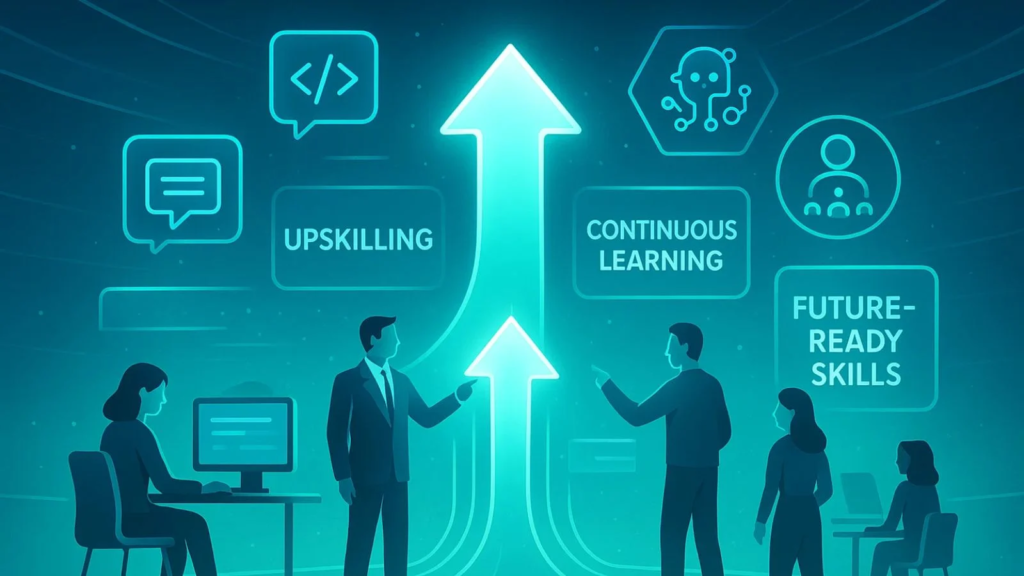
The Information Technology (IT) industry is one of the most dynamic and rapidly evolving sectors in the world. Every year, new technologies, tools, programming languages, and frameworks emerge, transforming how businesses operate and how services are delivered. From artificial intelligence and cloud computing to cybersecurity and data analytics, innovation is constant. In such a fast-paced environment, relying only on the skills learned during college or early career stages is no longer enough. This is where continuous upskilling becomes crucial.
Continuous upskilling refers to the ongoing process of learning new skills, enhancing existing knowledge, and adapting to emerging industry trends. It is not a one-time effort but a long-term commitment to professional growth. For IT professionals, upskilling can involve learning new programming languages, understanding advanced technologies, earning industry-recognized certifications, attending workshops, or even developing soft skills like communication, leadership, and critical thinking.
The IT industry does not stand still. Technologies that were in high demand five years ago may now be outdated. For example, traditional systems are rapidly being replaced by cloud-based solutions, automation tools, and AI-driven platforms. Companies are constantly upgrading their infrastructure to remain competitive in the digital economy. As a result, they seek professionals who are updated with the latest trends and capable of handling modern challenges. Without continuous learning, professionals risk falling behind and becoming less relevant in the job market.
Moreover, competition in the IT job market is increasing globally. With remote work opportunities expanding, companies can hire talent from anywhere in the world. This means IT professionals are no longer competing only locally but internationally. Continuous upskilling helps individuals stand out, improve their expertise, and increase their value in a highly competitive environment.
Upskilling also directly impacts career growth and salary potential. Professionals who regularly update their skills are more likely to receive promotions, leadership roles, and better compensation packages. They are seen as proactive, adaptable, and future-ready employees. On the other hand, those who resist change may struggle with limited growth opportunities.
Beyond career advancement, continuous upskilling fosters innovation and confidence. Learning new technologies enhances problem-solving abilities and allows professionals to contribute creative solutions to complex challenges. It builds adaptability, which is essential in an industry where change is the only constant.
In today’s digital era, continuous upskilling is not optional—it is a necessity. It ensures long-term career sustainability, professional relevance, and personal growth. IT professionals who embrace lifelong learning position themselves for success in an ever-changing technological landscape, making them valuable assets to both their organizations and the broader industry.
Rapid Technological Advancements
The IT industry is driven by rapid technological advancements that continuously reshape the way businesses operate and individuals work. Unlike many traditional industries where changes happen gradually, technology evolves at an extraordinary pace. New programming languages, development frameworks, software tools, and digital platforms are introduced regularly, making it essential for IT professionals to stay updated.
One of the biggest drivers of change is the rise of emerging technologies such as Artificial Intelligence (AI), Machine Learning (ML), Cloud Computing, Blockchain, Internet of Things (IoT), and Cybersecurity innovations. These technologies are not just trends—they are transforming entire industries including healthcare, finance, education, retail, and manufacturing. As businesses adopt these solutions to improve efficiency and customer experience, the demand for professionals skilled in these areas continues to grow.
For example, companies are rapidly shifting from traditional on-premise infrastructure to cloud-based platforms. Automation tools are replacing repetitive manual tasks, and AI-powered systems are being used for decision-making and data analysis. This means professionals who were once focused on older systems must now learn new tools, platforms, and methodologies to remain relevant.
Another key aspect of rapid technological advancement is the short lifecycle of technical skills. A programming language or framework that is highly popular today may become outdated in just a few years. Continuous innovation leads to frequent updates and new versions of technologies, requiring professionals to constantly upgrade their knowledge.
Additionally, customer expectations are evolving alongside technology. Users expect faster applications, stronger security, seamless digital experiences, and innovative solutions. To meet these expectations, companies rely on IT professionals who are well-versed in the latest technologies and best practices.
In such a fast-changing environment, adaptability becomes a critical skill. Continuous upskilling allows IT professionals to keep pace with technological shifts, understand emerging trends early, and leverage new opportunities. Instead of being overwhelmed by change, skilled professionals can use technological advancements as a stepping stone for career growth and innovation.
Ultimately, rapid technological advancements are both a challenge and an opportunity. Those who embrace learning and stay updated can thrive in this evolving landscape, while those who resist change risk being left behind.
Digital Transformation Across Industries
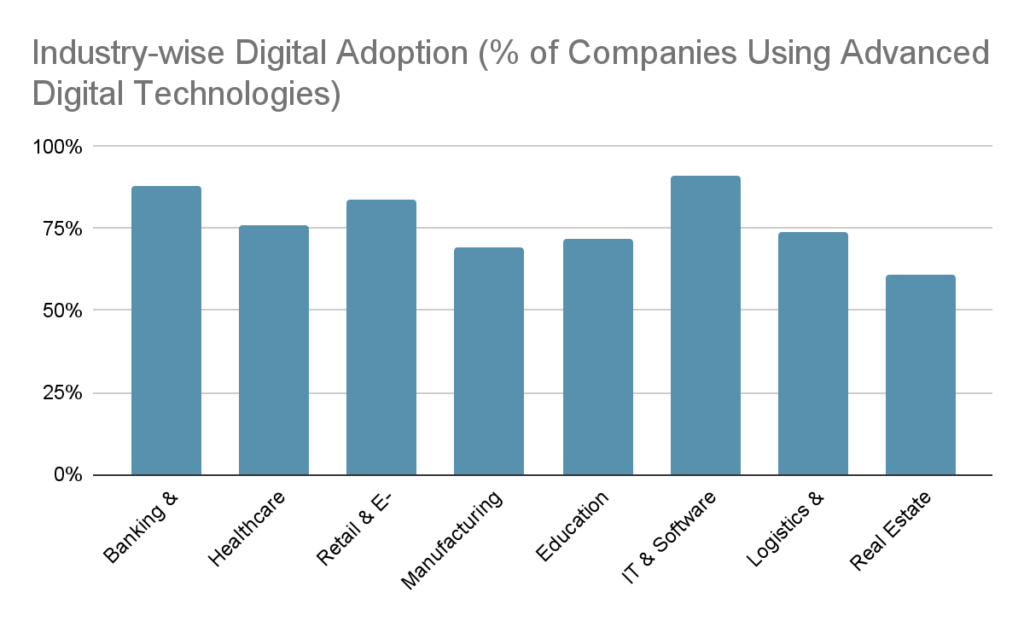
Digital transformation is no longer limited to the IT sector—it has become a global movement impacting almost every industry. From healthcare and banking to retail, education, manufacturing, and even agriculture, organizations are integrating digital technologies to improve efficiency, enhance customer experience, and stay competitive in the modern marketplace.
At its core, digital transformation refers to the adoption of digital tools, platforms, and technologies to fundamentally change how businesses operate and deliver value to customers. Companies are shifting from traditional processes to automated systems, cloud-based platforms, data-driven decision-making, and AI-powered solutions. This shift has created a massive demand for skilled IT professionals who can design, implement, and manage these digital systems.
For example, in the banking sector, mobile banking apps, digital payments, and blockchain technology are transforming financial services. In healthcare, telemedicine, electronic health records, and AI-based diagnostics are improving patient care. Retail businesses are leveraging e-commerce platforms, data analytics, and personalized marketing strategies to enhance customer engagement. Similarly, manufacturing industries are adopting smart factories and IoT-enabled systems to optimize production.
As industries undergo digital transformation, the skill requirements for IT professionals also evolve. Companies now look for expertise in cloud computing, cybersecurity, data analytics, DevOps, automation, and system integration. Professionals who fail to update their skills may struggle to meet these changing demands.
Moreover, digital transformation increases competition among businesses, pushing them to innovate continuously. To support this innovation, organizations need IT teams that are knowledgeable about the latest technologies and capable of adapting to new digital strategies. This makes continuous upskilling not just beneficial but essential.
In today’s interconnected world, digital transformation is accelerating at an unprecedented pace. IT professionals who stay updated with emerging technologies and industry trends are better equipped to contribute to this transformation, making themselves valuable assets in a rapidly evolving digital economy.
Impact of AI and Automation on IT Roles
Artificial Intelligence (AI) and automation are transforming the IT industry at an unprecedented pace. While these technologies bring efficiency, speed, and accuracy to business operations, they also significantly impact traditional IT roles. Tasks that once required manual effort—such as system monitoring, data entry, testing, and basic troubleshooting—are increasingly being handled by automated tools and AI-driven systems.
One of the biggest changes is the shift from repetitive, routine tasks to more strategic and analytical responsibilities. Automation tools can now manage server deployments, software testing, security monitoring, and even customer support through chatbots. As a result, IT professionals must move beyond basic operational roles and focus on higher-value skills such as system architecture, AI model development, cybersecurity strategy, and data analysis.
AI is also changing the skill requirements in the industry. Companies now seek professionals who understand machine learning algorithms, data modeling, cloud integration, robotic process automation (RPA), and AI-based decision systems. Even traditional roles like software developers and system administrators are expected to have knowledge of automation frameworks and AI-powered tools.
While some fear that AI and automation may replace jobs, the reality is more about role transformation than job elimination. New job roles are emerging, such as AI engineers, automation architects, data scientists, and machine learning specialists. Professionals who adapt and upgrade their skills can benefit from these new opportunities and often earn higher salaries due to specialized expertise.
Moreover, AI enhances productivity by allowing IT teams to focus on innovation rather than repetitive maintenance tasks. Automated systems can quickly detect errors, predict system failures, and analyze large volumes of data, enabling professionals to make better decisions and deliver smarter solutions.
In this evolving landscape, continuous upskilling becomes essential. IT professionals must learn how to work alongside AI and automation tools rather than compete with them. Those who embrace these technologies, understand their applications, and develop advanced technical and analytical skills will remain valuable and future-ready in the ever-changing IT industry.
Growing Demand for Cloud Computing Skills
Cloud computing has become one of the most important technologies driving modern business operations. Organizations across the world are rapidly shifting from traditional on-premise infrastructure to cloud-based platforms to improve scalability, flexibility, and cost efficiency. This massive transition has created a strong and growing demand for professionals with cloud computing skills.
Today, companies rely on cloud platforms to store data, run applications, manage servers, and support remote work environments. Services such as Infrastructure as a Service (IaaS), Platform as a Service (PaaS), and Software as a Service (SaaS) have simplified IT operations and reduced the need for physical hardware. As a result, businesses require skilled professionals who can design, deploy, secure, and manage cloud environments effectively.
Major cloud providers like Amazon Web Services (AWS), Microsoft Azure, and Google Cloud Platform (GCP) dominate the market, and expertise in these platforms is highly valued. Roles such as Cloud Engineer, Cloud Architect, DevOps Engineer, and Site Reliability Engineer are now among the most in-demand IT positions globally. Professionals with cloud certifications often enjoy better job opportunities, higher salaries, and faster career growth.
The demand for cloud skills is also increasing because of the rise of remote work and digital transformation. Cloud technology enables organizations to operate efficiently from anywhere, ensuring secure access to applications and data. Additionally, startups and enterprises alike prefer cloud solutions for their scalability and ability to handle growing workloads without heavy infrastructure investments.
However, cloud computing is not limited to basic deployment. It also involves cloud security, cost optimization, automation, containerization (like Docker and Kubernetes), and integration with AI and data analytics tools. This means IT professionals must continuously upgrade their knowledge to keep up with new cloud services and best practices.
In today’s digital era, cloud computing is no longer optional—it is a core part of IT strategy for most organizations. Continuous upskilling in cloud technologies helps professionals remain competitive, future-ready, and capable of meeting the evolving demands of the modern IT landscape.
Rising Importance of Cybersecurity Expertise
As businesses and individuals become increasingly dependent on digital technologies, the importance of cybersecurity has grown significantly. With the expansion of cloud computing, remote work, online transactions, and connected devices, cyber threats are becoming more frequent and sophisticated. This has made cybersecurity expertise one of the most critical and in-demand skill sets in the IT industry.
Organizations today face various cyber risks, including data breaches, ransomware attacks, phishing scams, malware infections, and identity theft. A single security incident can lead to financial losses, reputational damage, legal penalties, and loss of customer trust. As a result, companies are investing heavily in strengthening their cybersecurity infrastructure and hiring skilled professionals to protect their systems and data.
The role of cybersecurity professionals goes beyond just installing antivirus software or firewalls. It involves threat detection, risk assessment, vulnerability testing, security architecture design, compliance management, and incident response planning. With evolving cyber threats, professionals must continuously update their knowledge about new attack methods, security tools, and best practices.
Additionally, governments and regulatory bodies are introducing stricter data protection laws and compliance requirements. Organizations must ensure they meet these standards, further increasing the demand for cybersecurity specialists who understand regulatory frameworks and can implement proper security controls.
The rapid growth of technologies such as IoT, AI, and cloud computing has also expanded the attack surface, making cybersecurity even more complex. Professionals need expertise in areas like ethical hacking, penetration testing, network security, cloud security, and data encryption to effectively safeguard digital environments.
Continuous upskilling is essential in cybersecurity because threats evolve constantly. Hackers are always developing new techniques, and security tools are regularly updated to counter them. IT professionals who invest in learning advanced security practices and earning relevant certifications position themselves for strong career growth and long-term relevance.
In today’s digital-first world, cybersecurity is not just an IT function—it is a business necessity. Skilled cybersecurity experts play a vital role in protecting organizations from digital risks and ensuring secure, reliable operations in an increasingly connected world.
Data Science and Big Data Opportunities
In today’s digital world, data has become one of the most valuable assets for organizations. Every day, massive amounts of data are generated through social media, online transactions, mobile applications, IoT devices, and business operations. This explosion of information has given rise to Data Science and Big Data, creating vast opportunities in the IT industry.
Data Science involves extracting meaningful insights from structured and unstructured data using statistical analysis, machine learning, and advanced algorithms. Big Data refers to extremely large and complex datasets that traditional data processing tools cannot handle efficiently. Together, they help organizations make smarter, data-driven decisions.
Companies across industries—such as finance, healthcare, retail, e-commerce, and manufacturing—are using data analytics to understand customer behavior, improve operational efficiency, predict market trends, and reduce risks. For example, e-commerce platforms use recommendation systems to personalize shopping experiences, while banks use data models to detect fraudulent transactions. This widespread adoption has significantly increased the demand for skilled data professionals.
Career roles in this field include Data Analyst, Data Scientist, Machine Learning Engineer, Big Data Engineer, and Business Intelligence Developer. These roles require expertise in programming languages like Python or R, data visualization tools, SQL, statistical methods, and frameworks such as Hadoop and Spark. Professionals who master these skills often enjoy strong career growth and competitive salaries.
Moreover, as organizations continue to rely on predictive analytics and AI-powered insights, the need for advanced data skills will only grow. Businesses want professionals who can not only analyze data but also interpret results and communicate insights effectively to support strategic decisions.
Continuous upskilling is especially important in this domain because tools, algorithms, and technologies evolve rapidly. New machine learning models, data platforms, and analytics techniques are constantly emerging. IT professionals who stay updated with these advancements can unlock numerous career opportunities and remain highly valuable in the data-driven economy.
In short, Data Science and Big Data are transforming how businesses operate, creating exciting opportunities for IT professionals who are willing to learn, adapt, and grow in this high-demand field.
Increasing Competition in the IT Job Market
The IT job market has become increasingly competitive due to rapid technological growth, digital transformation, and global connectivity. As technology continues to expand into every industry, more students and professionals are choosing IT as a career path. While this has created a wide range of job opportunities, it has also significantly increased the number of skilled candidates competing for the same roles.
One of the biggest reasons for rising competition is globalization and remote work. Today, companies are not limited to hiring talent from a single city or country. With remote working models becoming common, organizations can recruit professionals from anywhere in the world. This means candidates are competing on a global scale, where employers compare skills, experience, certifications, and project portfolios before making hiring decisions.
Another major factor is the accessibility of online education. Platforms offering coding bootcamps, technical certifications, and specialized courses have made it easier for individuals to enter the IT field. Career switchers from non-technical backgrounds are also transitioning into IT roles after short-term training programs. As a result, the talent pool has expanded rapidly, making it essential for professionals to differentiate themselves.
In addition, employers today expect more than just theoretical knowledge. They look for hands-on experience, practical problem-solving skills, familiarity with modern tools, and the ability to adapt quickly to new technologies. Basic technical skills are often considered entry-level requirements, while advanced skills in areas like cloud computing, AI, cybersecurity, DevOps, and data analytics give candidates a competitive edge.
The fast pace of technological change further intensifies competition. Technologies evolve quickly, and companies prefer candidates who are already familiar with the latest frameworks, platforms, and industry practices. Professionals who rely only on outdated skills may struggle to secure promotions or new job opportunities.
To remain competitive, IT professionals must continuously upgrade their skills, build strong project portfolios, earn relevant certifications, and stay updated with industry trends. Developing soft skills such as communication, teamwork, and leadership also plays a crucial role in standing out during interviews and career advancement.
In such a dynamic environment, continuous upskilling is not just beneficial—it is necessary. Those who actively learn, adapt, and improve themselves are more likely to secure better opportunities, achieve career growth, and maintain long-term success in the highly competitive IT job market.
Need for Multi-Skilled IT Professionals

In today’s fast-evolving technology landscape, companies are no longer looking for professionals who specialize in only one narrow skill. Instead, there is a growing demand for multi-skilled IT professionals who can handle diverse responsibilities and adapt to changing business needs. As projects become more complex and integrated, organizations prefer individuals who possess both technical depth and cross-functional knowledge.
Modern IT environments often require collaboration between development, operations, security, data, and business teams. For example, a software developer today is expected not only to write code but also to understand cloud deployment, basic cybersecurity practices, database management, and even DevOps tools. This shift has made versatility a valuable asset in the industry.
Startups and small to mid-sized companies especially prefer multi-skilled professionals because they may not have separate teams for every function. Hiring someone who can manage multiple tasks—such as coding, testing, deployment, and maintenance—helps reduce costs and improve efficiency. Even large enterprises value employees who can work across different technologies and adapt quickly to new roles.
Additionally, the rise of technologies like cloud computing, AI, data analytics, and automation has blurred traditional job boundaries. Roles are becoming hybrid in nature—for instance, DevOps engineers combine development and operations skills, while data engineers require knowledge of programming, databases, and cloud platforms. Professionals who can bridge multiple domains are seen as more strategic and future-ready.
Being multi-skilled also improves career growth opportunities. Individuals with diverse expertise are more likely to move into leadership roles because they understand different aspects of a project or business. They can communicate effectively with various teams and contribute to decision-making processes.
However, becoming multi-skilled does not mean knowing everything superficially. It involves building strong core expertise while gradually expanding into related areas. Continuous upskilling, certifications, hands-on projects, and practical experience help professionals develop a balanced skill set.
In a competitive IT job market, versatility is a major advantage. Multi-skilled IT professionals are more adaptable, more employable, and better prepared to handle technological changes. As industries continue to evolve, the demand for professionals who can wear multiple hats will only continue to grow.
Career Growth and Promotion Opportunities
In the IT industry, career growth is closely linked to skill development and adaptability. Unlike many traditional fields where promotions are primarily based on experience or tenure, IT professionals are often evaluated based on their technical expertise, problem-solving abilities, and knowledge of emerging technologies. This makes continuous upskilling a key factor in achieving faster career growth and better promotion opportunities.
As technology evolves, organizations need professionals who can handle advanced tools, manage complex systems, and lead innovative projects. Employees who consistently update their skills demonstrate initiative, commitment, and the ability to adapt to change. These qualities make them strong candidates for higher roles such as Senior Developer, Team Lead, Project Manager, Solutions Architect, or IT Manager.
Upskilling also allows professionals to move beyond entry-level responsibilities. For example, a junior developer who learns cloud computing, DevOps practices, or cybersecurity fundamentals can take on more strategic tasks within a project. Similarly, gaining expertise in emerging areas like AI, data analytics, or automation can open doors to specialized and high-paying positions.
Promotions in IT are not limited to technical roles. Professionals who develop soft skills such as communication, leadership, time management, and collaboration often transition into managerial or leadership positions. Companies value individuals who can guide teams, manage client interactions, and contribute to business decisions.
Moreover, organizations prefer to promote internally rather than hire externally for senior roles. When employees continuously improve their skills and show consistent performance, they build trust within the organization. This increases their chances of receiving promotions, salary increments, and leadership responsibilities.
In a competitive job market, professionals who fail to upgrade their skills may experience career stagnation. On the other hand, those who invest in learning and certifications position themselves for long-term success. Continuous upskilling not only enhances job performance but also accelerates career progression.
Ultimately, career growth in the IT industry depends on how well professionals adapt to change and embrace learning. By staying updated and expanding their expertise, IT professionals can unlock greater opportunities, achieve higher positions, and secure a successful future in the industry.
Salary Growth Through Skill Enhancement
In the IT industry, salary growth is strongly connected to skill development and expertise. Unlike many traditional careers where salary increases are mainly based on years of experience, IT professionals often see significant pay raises when they acquire new, in-demand skills. The more valuable and specialized your skill set is, the higher your earning potential becomes.
Technology is constantly evolving, and companies are willing to pay premium salaries for professionals who are skilled in high-demand areas such as cloud computing, cybersecurity, data science, artificial intelligence, DevOps, and automation. When employees upgrade their technical knowledge and gain expertise in these advanced domains, they become more valuable to their organizations and the job market.
Skill enhancement also opens doors to better job roles. For example, moving from a junior developer to a senior developer, or from a system administrator to a cloud architect, significantly increases salary potential. Certifications, hands-on project experience, and mastery of modern tools can strengthen a professional’s profile and justify higher compensation during performance reviews or job switches.
Another important factor is specialization. Professionals with niche expertise—such as ethical hacking, machine learning engineering, or advanced data analytics—often command higher salaries because their skills are scarce and critical for business growth. Companies compete to hire and retain such talent, which further drives salary growth.
Additionally, continuous learning improves confidence and negotiation power. When professionals know they possess up-to-date and relevant skills, they are in a stronger position to negotiate better compensation packages, bonuses, or benefits.
However, skill enhancement should be strategic. Focusing on industry trends, understanding market demand, and choosing certifications or technologies wisely ensures that learning efforts translate into financial growth.
In a rapidly changing IT landscape, staying stagnant can limit earning potential. On the other hand, professionals who consistently upgrade their skills not only secure job stability but also unlock higher salary brackets and long-term financial growth. Continuous upskilling, therefore, becomes a powerful investment in both career and income advancement.
Staying Relevant in a Dynamic Industry
The IT industry is one of the most dynamic and fast-changing sectors in the world. New technologies, programming languages, frameworks, and tools emerge regularly, while older technologies quickly become outdated. In such an environment, staying relevant is not just important—it is essential for long-term career success.
Technology trends shift rapidly. For example, traditional on-premise systems have been largely replaced by cloud computing solutions, manual processes are being automated, and artificial intelligence is transforming decision-making systems. Professionals who fail to adapt to these changes may find their skills becoming obsolete. On the other hand, those who continuously learn and upgrade their expertise remain competitive and valuable in the job market.
Staying relevant means more than just learning new technologies. It also involves understanding industry trends, market demands, and evolving business needs. Employers today look for professionals who are adaptable, proactive, and willing to embrace change. Keeping up with certifications, attending workshops or webinars, participating in real-world projects, and staying active in professional communities are effective ways to remain updated.
Another key aspect of relevance is flexibility. The IT industry often introduces hybrid roles that combine multiple skill sets, such as DevOps engineers, cloud security specialists, or AI-driven software developers. Professionals who broaden their knowledge beyond a single specialization can adapt more easily to changing job requirements.
Moreover, staying relevant builds confidence and professional credibility. It ensures that individuals can contribute effectively to projects, offer innovative solutions, and support organizational growth. Continuous upskilling also reduces the risk of career stagnation and improves opportunities for promotions, leadership roles, and better compensation.
In a dynamic industry where change is constant, learning must also be continuous. Professionals who commit to lifelong learning position themselves as future-ready experts. By staying relevant, IT professionals not only secure their careers but also thrive in an ever-evolving technological landscape.
Importance of Soft Skills Along with Technical Skills
In the IT industry, technical skills are essential—but they are not enough on their own. While expertise in programming languages, cloud platforms, cybersecurity, or data analytics is crucial, soft skills play an equally important role in long-term career success. Employers today look for well-rounded professionals who can combine technical knowledge with strong interpersonal and communication abilities.
IT projects rarely involve working alone. Most projects require collaboration between developers, designers, testers, project managers, and clients. Strong communication skills help professionals clearly explain technical concepts to non-technical stakeholders, reducing misunderstandings and improving project outcomes. The ability to listen actively and share ideas effectively enhances teamwork and productivity.
Problem-solving and critical thinking are also vital soft skills in IT. Technology-related challenges often require creative solutions and analytical reasoning. Professionals who can think logically, evaluate options, and make informed decisions add significant value to their organizations.
Time management and adaptability are equally important. IT environments are fast-paced, with tight deadlines and rapidly changing requirements. Being able to prioritize tasks, manage workloads efficiently, and adapt to new technologies or client needs ensures consistent performance under pressure.
Leadership and teamwork skills further contribute to career growth. Professionals who can guide teams, motivate colleagues, and handle conflicts constructively are more likely to move into senior or managerial roles. Emotional intelligence—understanding and managing one’s own emotions as well as others’—also helps in building strong workplace relationships.
Moreover, as remote work becomes more common, soft skills such as self-discipline, accountability, and virtual communication have gained greater importance. Professionals must collaborate across different time zones and cultural backgrounds, making interpersonal skills even more valuable.
Continuous upskilling should therefore include both technical and soft skill development. While technical skills may help secure a job, soft skills often determine long-term success and leadership potential. In today’s competitive IT industry, the combination of strong technical expertise and effective soft skills creates a powerful foundation for sustained career growth.
Remote Work and Global Career Opportunities
The rise of digital technologies and cloud-based tools has transformed the way organizations operate, leading to a significant increase in remote work opportunities. In the IT industry especially, many roles such as software development, data analysis, cybersecurity, cloud management, and technical support can be performed from anywhere in the world. This shift has opened the door to global career opportunities for IT professionals.
Remote work removes geographical limitations, allowing professionals to work for companies located in different cities or even different countries without relocating. This means access to higher-paying international roles, diverse projects, and exposure to global markets. Skilled IT professionals can now collaborate with international teams, work with global clients, and gain experience that strengthens their professional profile.
However, global opportunities also increase competition. Since companies can hire talent from anywhere, professionals must ensure their skills are up to international standards. Continuous upskilling becomes essential to stay competitive in a worldwide job market. Knowledge of modern technologies, global best practices, and industry certifications can significantly improve employability.
In addition to technical expertise, remote work demands strong soft skills. Effective communication, self-discipline, time management, and the ability to work independently are critical for success in virtual environments. Professionals must also be comfortable using collaboration tools, project management platforms, and video conferencing software to stay connected with teams.
Remote work also offers better work-life balance and flexibility, which contributes to higher job satisfaction. Many professionals prefer remote roles because they reduce commuting time and allow more control over daily schedules. For companies, it provides access to a broader talent pool and reduces operational costs.
Overall, remote work has transformed the IT career landscape. It offers unprecedented global opportunities but also requires professionals to continuously enhance their skills and adaptability. Those who invest in learning, maintain high performance standards, and develop strong communication abilities can successfully build thriving international careers in the modern IT industry.
Value of Professional Certifications
In the competitive IT industry, professional certifications play a crucial role in validating skills and enhancing career prospects. While academic degrees provide foundational knowledge, certifications demonstrate practical expertise and up-to-date understanding of specific technologies or domains. They act as proof that a professional has met industry-recognized standards and possesses the required competencies.
One of the biggest advantages of certifications is credibility. Employers often prefer certified candidates because certifications reflect commitment to continuous learning and professional development. Whether it is cloud computing, cybersecurity, data science, networking, or project management, certifications help professionals stand out in a crowded job market.
Certifications also increase job opportunities and salary potential. Many organizations specifically mention certification requirements in job descriptions. Holding recognized credentials can give candidates a competitive edge during hiring and promotion decisions. In some cases, certified professionals earn higher salaries compared to non-certified peers due to their specialized knowledge.
Another important benefit is structured learning. Preparing for a certification exam helps professionals gain in-depth knowledge of a particular technology or framework. It encourages systematic study, hands-on practice, and exposure to real-world scenarios. This not only improves technical expertise but also boosts confidence.
Additionally, certifications help professionals stay updated with the latest industry trends. Technology evolves rapidly, and many certification programs are regularly updated to reflect new tools, features, and best practices. By pursuing certifications, IT professionals ensure they remain relevant and aligned with current market demands.
However, certifications should complement practical experience, not replace it. Employers value hands-on skills along with theoretical knowledge. Combining real-world project experience with recognized certifications creates a strong professional profile.
In a fast-changing IT landscape, professional certifications serve as a powerful tool for career growth. They validate expertise, improve credibility, enhance earning potential, and demonstrate a commitment to lifelong learning—making them an essential part of continuous upskilling in the IT industry.
Role of Online Learning Platforms

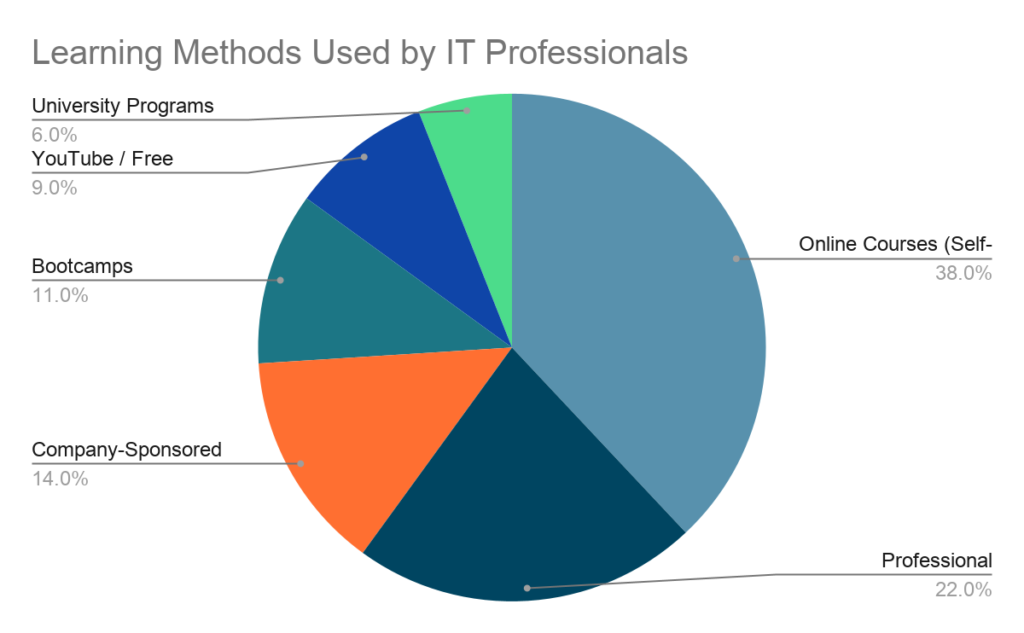
Online learning platforms have transformed the way IT professionals acquire new skills and stay updated with industry trends. In a field where technology evolves rapidly, traditional classroom learning is often not enough. Online platforms provide flexible, affordable, and accessible opportunities for continuous upskilling.
One of the biggest advantages of online learning is flexibility. IT professionals can learn at their own pace, choose courses based on their career goals, and access content anytime, anywhere. This is especially beneficial for working professionals who want to upgrade their skills without leaving their jobs.
Online platforms offer courses in a wide range of high-demand areas such as cloud computing, data science, artificial intelligence, cybersecurity, programming languages, DevOps, and more. Many courses include hands-on projects, real-world case studies, quizzes, and certification programs, which help learners gain practical knowledge along with theoretical understanding.
Another key benefit is affordability. Compared to traditional degree programs, online courses are often more cost-effective. This makes quality education accessible to a larger audience, including students, career switchers, and professionals from different backgrounds.
Online learning also supports self-driven growth. Professionals can quickly learn emerging technologies as soon as they become popular in the market. Instead of waiting for formal training programs, individuals can proactively explore new tools, frameworks, and industry best practices.
Moreover, many platforms collaborate with industry experts and leading technology companies to design updated curricula. This ensures that learners gain relevant and job-ready skills aligned with current market demands.
However, success in online learning requires discipline, consistency, and practical application. Simply completing courses is not enough—professionals must practice regularly and apply their knowledge in real projects to truly benefit.
In the fast-paced IT industry, online learning platforms play a vital role in enabling continuous upskilling. They empower professionals to remain competitive, adapt to technological changes, and build successful long-term careers.
Adapting to New Programming Languages and Frameworks
In the IT industry, programming languages and frameworks continuously evolve to meet changing technological demands. New languages are introduced to improve performance, security, scalability, and developer productivity, while existing frameworks are regularly updated with new features. As a result, IT professionals must constantly adapt to stay competitive and relevant.
A programming language or framework that is highly popular today may lose demand in a few years. For example, modern web development frameworks, cloud-native tools, and automation technologies have replaced many traditional development approaches. Companies prefer developers who are comfortable working with the latest technologies because they help build faster, more efficient, and scalable applications.
Adapting to new programming languages does not mean abandoning core knowledge. Strong fundamentals in logic, algorithms, and problem-solving make it easier to learn new languages. Once the basics are clear, transitioning from one language to another becomes smoother. For instance, understanding core programming concepts allows professionals to shift between languages with minimal difficulty.
Frameworks also play a critical role in application development. They simplify complex tasks, reduce development time, and ensure better code structure. However, since frameworks are frequently updated, developers must stay informed about new versions, features, and best practices. Continuous learning helps professionals leverage these updates effectively.
Being adaptable to new technologies increases employability and career growth opportunities. Employers value developers who are flexible and open to learning, as they can quickly adjust to project requirements. Professionals who resist learning new tools may find themselves limited to outdated roles with fewer growth prospects.
Moreover, adapting to new languages and frameworks enhances innovation. It exposes professionals to improved methodologies, better coding standards, and more efficient development practices. This not only improves productivity but also boosts confidence in handling diverse projects.
In a rapidly changing IT landscape, adaptability is a key success factor. By continuously learning and embracing new programming languages and frameworks, IT professionals can remain future-ready, expand their career opportunities, and maintain long-term relevance in the industry.
Reducing the Risk of Job Obsolescence
In the rapidly evolving IT industry, job obsolescence is a real concern. As new technologies emerge and automation becomes more advanced, certain roles and skill sets can become outdated. Tasks that were once performed manually are now handled by automated systems, AI tools, or more efficient software solutions. Without continuous learning, professionals risk being left behind in this technological shift.
Job obsolescence does not necessarily mean losing employment immediately, but it can lead to limited growth opportunities, reduced relevance, and difficulty finding new roles. For example, professionals who rely solely on outdated programming languages or legacy systems may struggle as companies migrate to cloud platforms, adopt AI-driven solutions, or implement modern development frameworks.
Continuous upskilling is the most effective way to reduce this risk. By regularly updating technical knowledge and learning emerging technologies, IT professionals can stay aligned with industry trends. Gaining expertise in areas such as cloud computing, cybersecurity, data analytics, automation, and DevOps increases adaptability and ensures long-term career security.
In addition to technical skills, developing transferable skills like problem-solving, critical thinking, and adaptability also protects against job obsolescence. These core competencies remain valuable regardless of technological changes and make it easier to transition into new roles when needed.
Another important factor is staying informed about market demands. Understanding which skills are growing in popularity and which are declining helps professionals make strategic learning decisions. Certifications, hands-on projects, and participation in professional communities can further strengthen job security.
The IT industry rewards those who embrace change rather than resist it. Professionals who proactively learn and evolve alongside technology are less likely to face career stagnation. Instead of fearing automation and innovation, they can leverage new tools to enhance their productivity and expand their opportunities.
Ultimately, reducing the risk of job obsolescence requires a growth mindset and commitment to lifelong learning. In a field where change is constant, staying updated is not just beneficial—it is essential for sustained career success.
Building a Personal Learning Roadmap

In the fast-changing IT industry, random learning is not enough. To achieve consistent growth and long-term success, professionals need a clear and structured personal learning roadmap. A roadmap acts as a strategic plan that outlines what skills to learn, in what order, and within what timeframe. It helps individuals stay focused, organized, and aligned with their career goals.
The first step in building a learning roadmap is defining a clear career objective. Whether someone wants to become a Cloud Engineer, Data Scientist, Cybersecurity Analyst, Full-Stack Developer, or DevOps Specialist, having a defined goal makes skill selection easier. Without clarity, professionals may waste time learning technologies that do not directly support their career aspirations.
The second step is assessing current skills and identifying gaps. Understanding strengths and weaknesses helps in prioritizing what needs improvement. For example, a developer aiming to move into cloud computing may need to strengthen networking fundamentals, learn cloud platforms, and understand deployment practices.
Next, professionals should break their goals into short-term and long-term milestones. Short-term goals could include completing a course, earning a certification, or building a small project within a few months. Long-term goals might involve mastering advanced technologies or transitioning into leadership roles. Dividing learning into manageable steps makes progress measurable and motivating.
Practical application is another crucial part of a learning roadmap. Simply watching tutorials is not enough. Hands-on projects, internships, freelancing, contributing to open-source projects, or building personal applications help reinforce knowledge and build a strong portfolio.
Time management also plays an important role. Setting aside dedicated learning hours each week ensures consistency. Even learning one hour per day can create significant growth over time. Tracking progress through notes, completed courses, or project milestones keeps motivation high.
Additionally, professionals should stay updated with industry trends. Following tech blogs, joining professional communities, attending webinars, and networking with experts can provide insights into emerging technologies and market demands.
Finally, a personal learning roadmap should be flexible. The IT industry evolves rapidly, and learning plans may need adjustments based on new trends or career opportunities. Regularly reviewing and updating the roadmap ensures it remains relevant.
Building a personal learning roadmap transforms continuous upskilling from a vague idea into a structured action plan. It provides direction, clarity, and purpose—helping IT professionals grow steadily and achieve long-term career success.
Conclusion: Lifelong Learning as the Key to Long-Term Success
The IT industry is defined by constant change. New technologies emerge, industry standards evolve, and business demands shift rapidly. In such a dynamic environment, the only sustainable strategy for career stability and growth is lifelong learning. Continuous upskilling is no longer optional—it is the foundation of long-term success.
Throughout the industry, we see how advancements in AI, cloud computing, cybersecurity, automation, and data science are reshaping job roles and creating new opportunities. At the same time, they are making certain traditional skills obsolete. Professionals who commit to ongoing learning remain adaptable, competitive, and future-ready, while those who resist change risk career stagnation.
Lifelong learning goes beyond just acquiring technical skills. It also includes developing soft skills, leadership abilities, critical thinking, and problem-solving capabilities. A well-rounded professional who continuously improves both technical and interpersonal competencies is better prepared to take on senior roles, lead teams, and contribute strategically to organizational growth.
Moreover, consistent learning builds confidence and resilience. When professionals regularly update their knowledge, they are better equipped to handle challenges, adopt new tools, and navigate industry disruptions. Instead of fearing change, they learn to embrace it as an opportunity for growth.
In a competitive global job market, continuous upskilling enhances employability, increases salary potential, and opens doors to international opportunities. It ensures that professionals remain relevant, valuable, and capable of adapting to new technological landscapes.
Ultimately, lifelong learning is not just a career strategy—it is a mindset. IT professionals who cultivate curiosity, stay proactive, and invest in their personal and professional development position themselves for sustained success. In an industry where change is constant, the commitment to continuous learning becomes the true key to long-term achievement and growth.
Ready to upgrade your skills? Discover our curated IT learning programs and certifications designed for future-ready professionals.