
Understanding Mentorship in the IT Industry

Mentorship in the IT industry refers to a professional relationship where an experienced IT professional guides, supports, and advises someone who is earlier in their career. Unlike traditional classroom learning, mentorship is practical, experience-based, and focused on real-world challenges. It helps individuals understand not only technical concepts but also how the industry actually works.
In the fast-evolving world of information technology, new tools, programming languages, frameworks, and methodologies emerge regularly. For beginners and even mid-level professionals, navigating this dynamic environment can be overwhelming. This is where mentorship plays a crucial role. A mentor provides clarity, direction, and insights that are often not available through courses or certifications.
Mentorship in IT goes beyond teaching coding skills. It includes guidance on selecting the right career path, preparing for technical interviews, building a strong portfolio, improving problem-solving abilities, and developing soft skills such as communication and teamwork. A mentor can help identify strengths and weaknesses, suggest areas for improvement, and share lessons learned from personal experience.
Another important aspect of mentorship in the IT industry is exposure to real-world problem-solving. While theoretical knowledge can be gained from books or online tutorials, understanding how to apply that knowledge in real projects requires practical insight. Mentors often share case studies, debugging strategies, best practices, and industry standards that significantly accelerate a mentee’s growth.
Mentorship can take different forms in IT. It may be a formal program organized by a company, where senior employees mentor junior staff. It can also be informal, such as a senior developer guiding a fresher within a team. In today’s digital world, mentorship also happens through online communities, tech forums, open-source collaborations, and professional networking platforms.
The relationship between mentor and mentee is built on trust, communication, and mutual respect. A mentor provides honest feedback and constructive criticism, while a mentee remains open to learning and actively applies the guidance received. This two-way interaction makes mentorship more impactful than one-way instruction.
Ultimately, understanding mentorship in the IT industry means recognizing it as a long-term investment in professional growth. It is not just about learning new technologies; it is about developing confidence, gaining strategic career direction, and building a strong professional foundation. In a competitive and rapidly changing industry like IT, mentorship often becomes the key factor that differentiates average professionals from truly successful ones.
Why Mentorship Matters for IT Beginners
Starting a career in the IT industry can be both exciting and overwhelming. With countless programming languages, frameworks, tools, and career paths available, beginners often struggle to decide where to focus. This is where mentorship becomes extremely valuable. A mentor provides direction, clarity, and real-world insight that helps IT beginners move forward with confidence.
1. Provides Clear Career Direction
Many beginners are confused about whether to choose web development, data science, cybersecurity, cloud computing, or another specialization. Without proper guidance, they may spend months learning skills that don’t align with their long-term goals. A mentor helps identify interests, strengths, and market demand, making it easier to choose the right path.
2. Reduces Common Beginner Mistakes
IT beginners often make mistakes such as overloading themselves with too many technologies, ignoring fundamentals, or not building practical projects. A mentor helps avoid these common errors by sharing experience-based advice. This saves time, effort, and frustration.
3. Accelerates Learning
Self-learning is important, but it can be slow and confusing without feedback. Mentors provide structured guidance, suggest reliable resources, and review work. For example, during code reviews, a mentor can point out inefficiencies or bad practices that a beginner might not notice. This significantly improves learning speed and quality.
4. Builds Confidence
Many beginners face self-doubt, especially when they encounter complex bugs or difficult concepts. Having a mentor provides reassurance and motivation. Knowing that someone experienced believes in your potential boosts confidence and encourages persistence.
5. Helps with Real-World Exposure
Academic learning often focuses on theory, but the IT industry demands practical problem-solving. Mentors share real project experiences, industry standards, and workplace expectations. This helps beginners understand how teams collaborate, how deadlines work, and how to handle real clients or stakeholders.
6. Improves Professional Skills
Technical skills alone are not enough in IT. Communication, teamwork, time management, and problem-solving are equally important. Mentors guide beginners on how to behave professionally, communicate effectively in meetings, and work efficiently within a team.
7. Supports Career Opportunities
Mentors often have industry connections and knowledge about job openings, internships, and certifications. They can guide beginners in preparing resumes, building portfolios, and preparing for interviews. This increases the chances of landing the first job successfully.
Types of Mentorship: Formal vs Informal Mentoring
Mentorship in the IT industry can take different forms depending on the structure and setting of the relationship. Broadly, mentorship is divided into two main types: formal mentoring and informal mentoring. Both play an important role in professional development, but they differ in structure, approach, and flexibility.
1. Formal Mentoring
Formal mentoring is a structured program usually organized by a company, institution, or professional organization. In this setup, mentors and mentees are officially assigned to each other with specific goals, timelines, and expectations.
Key Features of Formal Mentoring:
- Organized by HR or management
- Defined objectives and timelines
- Scheduled meetings
- Performance tracking or evaluation
- Often part of onboarding or leadership development programs
In IT companies, formal mentoring is commonly used to support freshers, interns, or newly promoted employees. For example, a junior developer may be assigned a senior developer to guide them through projects, company processes, and technical standards.
Advantages:
- Clear structure and accountability
- Goal-oriented progress
- Equal opportunity for all employees
- Professional and measurable outcomes
Limitations:
- Less flexibility
- Sometimes limited personal connection
- May feel like an obligation rather than a natural relationship
2. Informal Mentoring
Informal mentoring develops naturally without official assignment. It happens when a less experienced professional seeks guidance from someone they respect or connect with. This type of mentorship is based on mutual interest and voluntary interaction.
Key Features of Informal Mentoring:
- No official structure
- Flexible meeting schedules
- Relationship-based guidance
- Long-term and organic growth
In the IT field, informal mentoring may occur when a junior developer regularly seeks advice from a senior colleague, or when professionals connect through online communities, tech forums, or networking events.
Advantages:
- Strong personal connection
- Greater flexibility
- More open communication
- Long-lasting professional relationships
Limitations:
- No fixed goals or tracking
- May lack consistency
- Depends on availability and commitment
3. Comparing Formal and Informal Mentoring
| Aspect | Formal Mentoring | Informal Mentoring |
| Structure | Organized & structured | Natural & flexible |
| Goal Setting | Predefined goals | Self-defined goals |
| Duration | Fixed period | Open-ended |
| Accountability | Monitored | Self-managed |
| Relationship | Professional focus | Personal & professional mix |
How Mentors Help in Career Roadmap Planning
In the IT industry, having a clear career roadmap is essential for long-term success. With so many domains such as software development, data science, cybersecurity, cloud computing, and DevOps, professionals often feel confused about which direction to choose. A mentor plays a crucial role in bringing clarity to this confusion. By understanding a mentee’s strengths, interests, and career aspirations, a mentor helps define clear short-term and long-term goals. This clarity prevents professionals from randomly switching technologies or career paths without purpose.
Mentors also help in breaking down big career goals into manageable steps. Instead of learning multiple tools at once, they guide mentees to first build strong fundamentals and then gradually move toward advanced skills. For example, a mentor may advise focusing on data structures and algorithms before diving deep into complex frameworks. This structured learning path ensures steady growth and prevents skill gaps that can affect job performance.
Another important contribution of mentors in career roadmap planning is recommending the right certifications, courses, and practical experiences. The IT industry offers countless learning resources, but not all of them add real value. Mentors help filter these options and suggest programs that align with current industry demands. They also encourage building real-world projects, participating in internships, or contributing to open-source platforms to strengthen practical knowledge.
Mentors provide realistic timelines and expectations, which is especially important in a competitive field like IT. Many beginners expect quick results, but experienced mentors explain how long it typically takes to master certain skills and become job-ready. This helps mentees stay patient, consistent, and focused rather than feeling discouraged.
Finally, career planning is not a one-time process. Industry trends evolve, and personal interests may change over time. Mentors continuously review progress, offer constructive feedback, and help adjust the roadmap when necessary. Through regular guidance and support, mentors ensure that career growth remains strategic, focused, and aligned with long-term professional success.
Bridging the Gap Between Theory and Real-World IT Skills
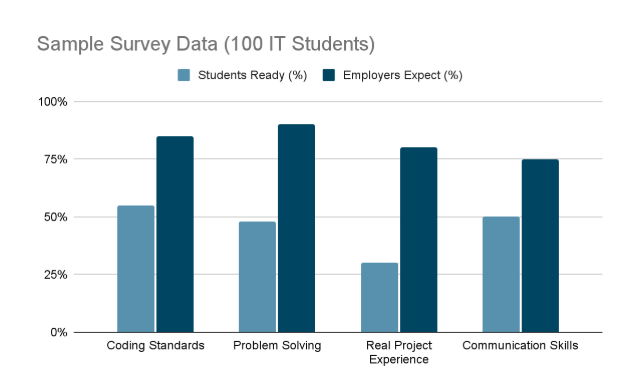
The graph clearly shows a noticeable gap between student readiness and employer expectations in key IT skills. While 55% of students feel confident in coding standards, employers expect 85% proficiency. The gap is even larger in problem-solving (48% vs 90%) and real project experience (30% vs 80%), highlighting the lack of practical exposure.
Even communication skills show a difference (50% vs 75%), proving that technical knowledge alone is not enough in today’s IT industry.
Overall, the data emphasizes the importance of mentorship and hands-on experience in preparing students to meet real-world industry demands.
In today’s rapidly evolving technology landscape, having theoretical knowledge alone is not enough to succeed in the IT industry. While academic learning builds a strong foundation in programming languages, algorithms, databases, networking, and system design, the real challenge begins when professionals step into practical environments. The industry demands hands-on expertise, problem-solving abilities, adaptability, and the confidence to work on live projects with real-time constraints.
Many students excel in understanding concepts in classrooms but struggle when faced with real-world scenarios such as debugging complex issues, handling client requirements, managing deadlines, or collaborating within cross-functional teams. This gap between theory and practice often slows down career growth in the initial stages. Bridging this gap requires more than just certifications — it requires practical exposure, guided mentorship, internships, live projects, and continuous learning.
Real-world IT skills are developed through experience. Working on actual projects helps individuals understand how theoretical concepts are implemented in production environments. It enhances logical thinking, improves coding efficiency, strengthens analytical skills, and builds confidence in decision-making. Additionally, exposure to version control systems, deployment processes, testing frameworks, and industry tools prepares professionals for real corporate settings.
Moreover, soft skills such as communication, teamwork, time management, and adaptability play a critical role in real-world IT success. Technical expertise combined with professional behavior creates a well-rounded IT professional who can thrive in competitive environments.
By actively integrating practical learning with academic knowledge, aspiring IT professionals can accelerate their career growth, increase employability, and stay ahead in a constantly changing industry. Bridging the gap between theory and real-world skills is not just beneficial — it is essential for building a successful and sustainable IT career.
Building Technical Expertise Through Guided Learning
In today’s competitive IT landscape, building technical expertise requires more than just watching tutorials or reading documentation. While self-learning is valuable, it often lacks structure, clarity, and real-world direction. Guided learning, on the other hand, provides a systematic approach that helps individuals master technical skills with confidence and efficiency.
Guided learning ensures that learners follow a clear roadmap aligned with industry requirements. Instead of randomly exploring technologies, they focus on the most relevant programming languages, frameworks, tools, and methodologies that are currently in demand. This structured approach minimizes confusion and helps learners build strong fundamentals before moving on to advanced concepts.
One of the biggest advantages of guided learning is real-time mentorship and feedback. Experienced mentors not only explain concepts but also share practical insights gained from working in real-world IT environments. They help learners understand industry standards, coding best practices, system architecture patterns, debugging techniques, and performance optimization strategies. This exposure bridges the gap between theoretical knowledge and practical implementation.
Moreover, guided learning emphasizes hands-on practice through assignments, case studies, and live projects. Working on real-world scenarios helps learners understand how applications are developed, tested, deployed, and maintained. It improves analytical thinking, strengthens problem-solving abilities, and builds confidence in handling complex technical challenges.
Another crucial aspect of guided learning is accountability and continuous evaluation. Regular assessments, project reviews, and constructive feedback help learners identify their weaknesses and improve consistently. This disciplined approach encourages long-term growth rather than short-term learning.
In addition to technical skills, guided learning also nurtures essential professional skills such as teamwork, communication, documentation practices, and time management. These competencies are equally important for succeeding in collaborative IT environments.
Ultimately, building technical expertise through guided learning creates a strong foundation for a sustainable and successful IT career. With structured support, expert mentorship, and consistent practice, aspiring professionals can transform their knowledge into real-world competence and confidently navigate the ever-evolving technology industry.
The Importance of Networking Through Mentorship
In the IT industry, technical skills alone are not enough to build a successful career. Professional networking plays a crucial role in opening doors to new opportunities, collaborations, and career growth. One of the most effective ways to build a strong professional network is through mentorship.
Mentorship connects aspiring IT professionals with experienced industry experts who not only guide them technically but also introduce them to valuable professional circles. A mentor often shares insights about industry trends, hiring practices, company cultures, and emerging technologies. This inside knowledge helps mentees stay ahead of the competition and make informed career decisions.
Through mentorship, individuals gain access to a broader professional network that may include recruiters, team leaders, project managers, startup founders, and other skilled professionals. These connections can lead to internship opportunities, job referrals, freelance projects, and collaborative ventures. In many cases, career breakthroughs happen not just because of what you know, but also because of who knows you and trusts your capabilities.
Networking through mentorship also builds credibility. When a mentor vouches for a mentee’s skills, work ethic, and potential, it creates a strong professional impression. Recommendations and referrals from experienced professionals carry significant weight in the IT industry, where trust and proven ability are highly valued.
Additionally, mentorship encourages participation in tech communities, industry events, webinars, hackathons, and professional forums. Being active in such platforms expands visibility and strengthens professional relationships. It allows individuals to exchange ideas, learn from peers, and stay updated with technological advancements.
Beyond career opportunities, networking through mentorship fosters confidence and professional growth. Regular discussions, feedback sessions, and career guidance help mentees develop clarity about their goals and build meaningful industry connections that support long-term success.
Ultimately, mentorship is not just about learning skills — it is about building relationships that shape careers. By leveraging mentorship for networking, IT professionals can accelerate growth, increase opportunities, and create a strong foundation for sustained success in the competitive technology landscape.
How Mentors Help You Avoid Common Career Mistakes
Starting a career in the IT industry can be exciting, but it can also be overwhelming. With rapidly changing technologies, multiple career paths, and increasing competition, it’s easy to make mistakes that can slow down growth. This is where mentorship plays a powerful role. A mentor acts as a guide who helps professionals make informed decisions and avoid common career pitfalls.
One of the most common mistakes early in an IT career is focusing on too many technologies at once without building strong fundamentals. Mentors help learners create a clear roadmap, ensuring they first master core concepts before moving toward advanced tools and frameworks. This structured direction prevents confusion and saves valuable time.
Another frequent mistake is choosing a career path based on trends rather than personal strengths and long-term goals. Mentors provide clarity by assessing skills, interests, and market demand, helping individuals choose the right specialization—whether it’s software development, data science, cybersecurity, cloud computing, or another domain.
Many professionals also struggle with job transitions, salary negotiations, or workplace challenges. Without guidance, they may accept roles that limit growth or fail to recognize red flags in company culture. Mentors share real-world insights, helping mentees evaluate opportunities wisely and make strategic career moves.
In addition, technical professionals sometimes underestimate the importance of soft skills. Poor communication, lack of teamwork, or ineffective time management can negatively impact career progression. Mentors highlight the importance of professional behavior, collaboration, and leadership skills, ensuring well-rounded development.
Another major career mistake is neglecting continuous learning. The IT industry evolves rapidly, and staying stagnant can reduce competitiveness. Mentors encourage ongoing upskilling, certifications, and practical experience to keep professionals relevant in the market.
Ultimately, mentors provide perspective gained from experience. They have often made mistakes themselves and can guide others to avoid similar setbacks. With proper mentorship, individuals gain confidence, clarity, and direction—reducing risks and accelerating career growth.
In a competitive IT landscape, having a mentor is not just an advantage; it is a strategic investment in long-term success.
Gaining Confidence and Professional Growth
Confidence is one of the most important qualities for building a successful IT career. While technical knowledge forms the foundation, true professional growth comes when individuals believe in their abilities and apply their skills with clarity and assurance. Mentorship plays a crucial role in building this confidence and shaping long-term professional development.
In the early stages of a career, many aspiring IT professionals struggle with self-doubt. They may question their coding abilities, hesitate to speak in meetings, or feel overwhelmed by complex projects. A mentor helps eliminate these uncertainties by providing consistent guidance, constructive feedback, and practical exposure. With every successfully completed task or project, confidence naturally begins to grow.
Mentors also create a safe learning environment where mistakes are treated as opportunities for improvement rather than failures. This approach encourages experimentation, problem-solving, and independent thinking. As mentees overcome technical challenges under guided supervision, they develop trust in their own decision-making abilities.
Professional growth is not limited to technical skills alone. Through mentorship, individuals learn how to communicate effectively, present ideas clearly, handle client interactions, and collaborate within teams. These soft skills significantly impact workplace performance and leadership potential. Over time, mentees transition from being learners to contributors and eventually to leaders within their organizations.
Another important aspect of professional growth is goal setting and career planning. Mentors help individuals define realistic short-term and long-term goals, track progress, and adjust strategies when needed. This structured approach ensures steady development rather than random career movement.
As confidence increases, professionals become more proactive in taking initiatives, accepting responsibilities, and exploring new opportunities. They are better prepared for job interviews, performance reviews, promotions, and leadership roles. Ultimately, mentorship transforms uncertainty into clarity and potential into performance.
Gaining confidence through mentorship not only accelerates career growth but also empowers IT professionals to thrive in competitive and dynamic environments. With the right guidance and consistent effort, professional success becomes a journey of continuous improvement and self-belief.
Role of Mentorship in Leadership Development

Leadership in the IT industry is not just about managing teams or holding a senior title—it is about inspiring others, making strategic decisions, solving complex problems, and driving innovation. While technical expertise is essential, true leadership qualities are developed over time through experience, guidance, and continuous learning. Mentorship plays a crucial role in shaping future leaders by providing direction, perspective, and real-world insights.
One of the key ways mentorship supports leadership development is by helping individuals expand their mindset beyond technical tasks. Mentors encourage mentees to think strategically, understand business objectives, and align their work with organizational goals. This broader perspective is essential for transitioning from an individual contributor to a leadership role.
Mentors also help build strong decision-making skills. In leadership positions, professionals are often required to make high-impact decisions under pressure. By sharing their own experiences—both successes and failures—mentors provide practical lessons that prepare mentees to handle responsibilities confidently and wisely.
Another important aspect of leadership is effective communication. Whether it’s presenting ideas to stakeholders, resolving conflicts within teams, or motivating employees, communication skills play a vital role. Through mentorship, individuals learn how to articulate their thoughts clearly, provide constructive feedback, and lead discussions with confidence and professionalism.
Mentorship also fosters emotional intelligence, which is a critical leadership trait. Understanding team dynamics, managing stress, and responding thoughtfully to challenges are skills that are refined with guidance and reflection. A mentor helps individuals recognize their strengths and areas for improvement, encouraging self-awareness and continuous growth.
Furthermore, mentors inspire accountability and integrity—qualities that define strong leaders. By setting examples of professionalism, ethical behavior, and commitment, mentors influence mentees to adopt similar values in their careers.
Ultimately, mentorship accelerates leadership development by transforming potential into capability. It prepares IT professionals not only to manage projects but also to inspire teams, drive innovation, and contribute meaningfully to organizational success. In a rapidly evolving industry, mentorship serves as a powerful foundation for cultivating confident, capable, and visionary leaders.
Mentorship in Specialized IT Fields (AI, Cybersecurity, Cloud, etc.)
As the IT industry continues to evolve, specialized domains such as Artificial Intelligence (AI), Cybersecurity, Cloud Computing, Data Science, and DevOps are becoming increasingly important. These fields require not only strong foundational knowledge but also deep technical expertise, hands-on experience, and continuous learning. In such complex and rapidly advancing areas, mentorship plays a vital role in guiding professionals toward mastery and long-term success.
Specialized IT fields often involve advanced tools, frameworks, and industry-specific best practices that can be difficult to navigate alone. For example, AI and Machine Learning require understanding algorithms, data modeling, and real-world implementation challenges. Cybersecurity demands knowledge of threat detection, risk management, compliance standards, and ethical hacking practices. Cloud computing involves architecture design, deployment strategies, scalability, and security configurations. Without proper guidance, learners may feel overwhelmed by the vast amount of information available.
A mentor in these specialized domains provides clarity and direction. They help identify which certifications, technologies, and learning paths are most relevant based on career goals and market demand. Instead of spending time on outdated or less impactful resources, mentees can focus on industry-aligned skills that improve employability and performance.
Mentorship also provides exposure to real-world scenarios. In fields like cybersecurity or AI, theoretical knowledge is not enough—practical experience is essential. Mentors often share real case studies, project insights, and problem-solving approaches that help mentees understand how these technologies are applied in real business environments.
Another major advantage of mentorship in specialized IT areas is staying updated with emerging trends. Technology evolves rapidly, and new tools and frameworks are introduced frequently. Mentors help professionals stay ahead by recommending relevant upgrades, certifications, and skill enhancements to remain competitive in the job market.
Additionally, specialized fields often require collaboration across teams and departments. Mentors guide professionals on how to communicate technical solutions to non-technical stakeholders, work effectively within cross-functional teams, and align technical decisions with business objectives.
Ultimately, mentorship in specialized IT domains accelerates learning, reduces costly mistakes, and builds confidence in handling advanced responsibilities. With expert guidance, aspiring professionals can move from being learners to becoming skilled specialists who contribute meaningfully to innovation and technological advancement.
How to Find the Right Mentor in IT
Finding the right mentor can significantly influence your IT career growth. While many professionals understand the importance of mentorship, they often struggle with how and where to find the right person. The key is to approach the process strategically and with clear intentions.
The first step is to identify your goals. Before searching for a mentor, ask yourself what you want to achieve. Are you looking to improve your coding skills? Transition into a specialized field like AI, cybersecurity, or cloud computing? Prepare for leadership roles? Having clarity about your objectives helps you find a mentor whose expertise aligns with your career path.
Next, look within your existing network. Your workplace, college alumni network, professional connections, or even online communities can be great starting points. Platforms like LinkedIn, GitHub, tech forums, webinars, and industry events often connect you with experienced professionals who are open to guiding others.
When choosing a mentor, don’t focus only on seniority or job title. Instead, look for someone who has relevant experience, strong communication skills, and a genuine willingness to guide. A good mentor should not only have technical knowledge but also the ability to explain concepts clearly, provide constructive feedback, and support your growth patiently.
It’s also important to evaluate compatibility. Mentorship works best when there is mutual respect and open communication. During initial conversations, observe whether the mentor understands your goals, listens actively, and offers practical advice rather than generic suggestions.
Once you identify a potential mentor, approach them professionally. Clearly express why you admire their work, what you aim to achieve, and how their guidance could help you. Keep your request specific and respectful of their time. Many experienced professionals are willing to mentor when they see genuine commitment and seriousness.
Finally, remember that mentorship is a two-way relationship. Be proactive, prepared for discussions, open to feedback, and consistent in your efforts. Showing dedication encourages mentors to invest more time and energy in your development.
Finding the right mentor in IT may take time, but the impact can be transformational. With the right guidance, clarity, and support, you can accelerate your learning, avoid common mistakes, and build a strong foundation for long-term success in the technology industry.
Qualities of a Good IT Mentor
A successful mentorship journey depends greatly on the quality of the mentor. In the fast-paced and ever-evolving IT industry, a good mentor does more than just share technical knowledge — they guide, inspire, and shape the professional mindset of their mentees. Identifying the right qualities in an IT mentor can make a significant difference in career growth and skill development.
1. Strong Technical Expertise
A good IT mentor must have solid hands-on experience and in-depth knowledge in their domain. Whether it’s software development, AI, cybersecurity, cloud computing, or data science, the mentor should understand real-world challenges and industry best practices. Practical experience allows them to provide realistic guidance rather than purely theoretical advice.
2. Clear Communication Skills
Technical knowledge alone is not enough. A great mentor knows how to explain complex concepts in a simple and understandable way. They break down difficult topics, provide examples, and ensure that mentees truly understand the fundamentals before moving forward.
3. Industry Awareness and Updated Knowledge
Technology evolves rapidly. A good mentor stays updated with emerging tools, frameworks, certifications, and industry trends. This ensures that the guidance they provide remains relevant and aligned with current market demands.
4. Patience and Supportiveness
Learning technical skills can be challenging. A strong mentor remains patient, encourages questions, and treats mistakes as learning opportunities. They create a supportive environment where mentees feel comfortable discussing doubts or career concerns without hesitation.
5. Constructive Feedback and Accountability
An effective IT mentor provides honest and constructive feedback. They identify areas of improvement and guide mentees toward better solutions. At the same time, they hold mentees accountable for their goals, encouraging consistency and discipline in learning.
6. Career Guidance and Strategic Thinking
Beyond technical skills, a good mentor helps mentees plan their career path strategically. They provide advice on choosing specializations, preparing for interviews, negotiating offers, and developing leadership skills. Their experience helps mentees make informed decisions and avoid common career mistakes.
7. Inspirational Leadership
A great mentor leads by example. Their professionalism, work ethic, and ethical values inspire mentees to grow not only as skilled professionals but also as responsible individuals in the IT industry.
Ultimately, a good IT mentor is someone who genuinely cares about your growth, invests time in your development, and guides you toward becoming confident, capable, and industry-ready. With the right mentor, learning becomes more structured, career decisions become clearer, and professional success becomes more achievable.
How to Be a Good Mentee
eWhile having a great mentor is important, the success of a mentorship relationship equally depends on the mentee. Mentorship is a two-way partnership, and to truly benefit from it, a mentee must take responsibility for their own growth. Being a good mentee means being proactive, committed, and open to continuous learning.
1. Set Clear Goals
Before starting a mentorship journey, define what you want to achieve. Whether it’s improving technical skills, transitioning into a specialized IT field, preparing for interviews, or developing leadership qualities, clear goals help your mentor guide you effectively. When you know your direction, your mentor can provide more focused and relevant advice.
2. Be Proactive and Prepared
A good mentee does not wait for instructions. They take initiative by researching topics, attempting solutions, and coming prepared with questions. This shows seriousness and respect for the mentor’s time. Preparation also makes mentorship sessions more productive and meaningful.
3. Be Open to Feedback
Constructive criticism is a crucial part of growth. Instead of feeling defensive, a good mentee listens carefully, reflects on feedback, and works actively to improve. Accepting suggestions with a positive mindset accelerates skill development and builds professional maturity.
4. Maintain Consistency and Commitment
Learning technical skills requires discipline. A mentee should consistently work on assigned tasks, complete projects on time, and follow the learning roadmap. Commitment demonstrates dedication and encourages the mentor to invest more effort in guiding you.
5. Communicate Honestly and Clearly
Effective communication strengthens mentorship relationships. If you face challenges, confusion, or delays, inform your mentor openly. Transparency builds trust and ensures smoother collaboration.
6. Show Gratitude and Professionalism
Mentors dedicate valuable time and experience to guide others. Respect their time, follow through on commitments, and appreciate their efforts. Professional behavior strengthens long-term connections and leaves a positive impression.
7. Apply What You Learn
The true value of mentorship lies in implementation. A good mentee actively applies lessons learned to real projects, practice exercises, or workplace scenarios. Taking action converts advice into real growth.
Ultimately, being a good mentee is about having the right mindset. When you approach mentorship with humility, dedication, and eagerness to learn, you maximize the benefits of guidance and accelerate your IT career growth. A strong mentee-mentor partnership creates a powerful foundation for long-term professional success.
Online Mentorship Platforms and IT Communities
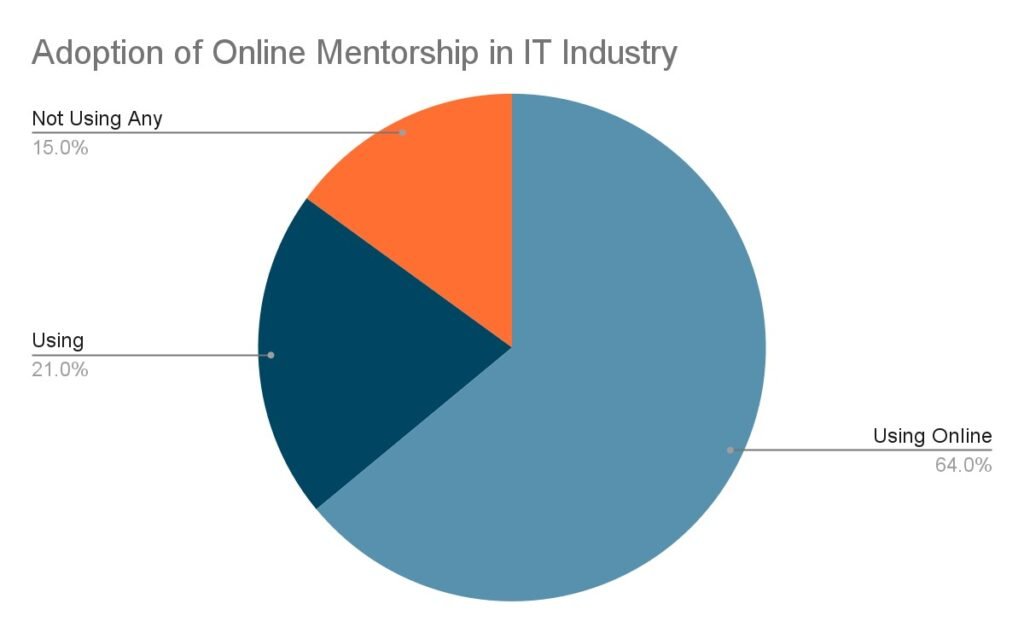
In today’s digital era, mentorship is no longer limited to workplaces or personal networks. With the growth of online platforms and global IT communities, aspiring professionals can now connect with experienced mentors from anywhere in the world. Online mentorship has made guidance more accessible, flexible, and diverse—especially in the fast-growing IT industry.
Online mentorship platforms provide structured programs where learners can connect with industry experts in fields like software development, AI, cybersecurity, cloud computing, data science, and DevOps. These platforms often offer one-on-one sessions, career guidance, mock interviews, resume reviews, and project-based learning. The flexibility of virtual communication allows mentees to schedule sessions conveniently, making it easier to balance learning with work or studies.
Apart from dedicated mentorship platforms, IT communities play a powerful role in professional growth. Platforms like LinkedIn groups, GitHub communities, Stack Overflow, Discord tech servers, and Reddit forums enable knowledge sharing, collaboration, and networking. By actively participating in discussions, asking questions, contributing to open-source projects, and attending virtual webinars or hackathons, professionals can build meaningful connections and gain practical insights.
One of the biggest advantages of online mentorship and communities is global exposure. Learners can interact with professionals from different countries, industries, and technical backgrounds. This diversity broadens perspectives, introduces new problem-solving approaches, and keeps individuals updated with global industry trends.
Online communities also foster peer-to-peer mentorship. Sometimes, guidance doesn’t only come from senior professionals but also from experienced peers who share similar learning journeys. These collaborative environments encourage continuous improvement and mutual support.
However, to truly benefit from online mentorship platforms and IT communities, active participation is essential. Simply joining a group is not enough. Engaging in discussions, seeking feedback, sharing knowledge, and consistently learning are key to maximizing growth.
In a rapidly evolving IT landscape, online mentorship platforms and IT communities have become powerful tools for skill development, networking, and career advancement. They break geographical barriers and create opportunities for anyone willing to learn, connect, and grow in the technology field.
The Impact of Mentorship on Career Advancement and Promotions
In the competitive IT industry, career advancement and promotions are not determined by technical skills alone. While expertise and performance are essential, strategic career planning, visibility, leadership abilities, and professional confidence also play a major role. Mentorship significantly influences these factors, making it a powerful catalyst for long-term career growth.
One of the most important ways mentorship impacts career advancement is by providing clarity and direction. Many professionals work hard but lack a clear roadmap for reaching the next level. A mentor helps identify skill gaps, recommend relevant certifications, suggest challenging projects, and align daily work with long-term career goals. This focused approach increases the chances of being recognized for higher responsibilities.
Mentors also help professionals build leadership qualities that are often required for promotions. Transitioning from an individual contributor to a team lead or managerial role requires strong communication, decision-making, and team management skills. Through regular guidance and real-world insights, mentors prepare mentees to handle these responsibilities confidently.
Another key benefit of mentorship is increased visibility within the organization. Mentors often guide mentees on how to showcase their achievements, participate in high-impact projects, and communicate their contributions effectively. Many talented professionals miss promotion opportunities simply because their work goes unnoticed. With proper guidance, they learn how to present their value strategically.
Mentorship also strengthens problem-solving and strategic thinking abilities. Senior roles demand more than task execution—they require critical thinking and business understanding. By sharing practical experiences and leadership lessons, mentors help mentees think beyond technical tasks and understand broader organizational objectives.
Additionally, mentors provide support during performance reviews, salary negotiations, and career transitions. They offer honest feedback on readiness for promotion and suggest areas for improvement. This reduces uncertainty and helps professionals approach advancement opportunities with preparation and confidence.
Beyond tangible promotions, mentorship accelerates overall career growth by building self-belief and resilience. Professionals who receive consistent guidance tend to take initiative, accept leadership opportunities, and step outside their comfort zones—qualities that naturally attract career progression.
Ultimately, mentorship acts as a growth accelerator. It transforms potential into performance, hard work into strategic progress, and ambition into achievement. In a dynamic IT landscape, those who leverage mentorship often advance faster, earn greater responsibilities, and build sustainable, long-term careers.
Real-Life Success Stories of IT Professionals with Mentors
In the fast-paced world of technology, success stories often highlight innovation, technical brilliance, and hard work. However, behind many of these achievements lies an unseen but powerful influence — mentorship. Real-life examples from the IT industry consistently show that having the right mentor can accelerate growth, provide clarity during uncertainty, and unlock opportunities that might otherwise remain out of reach.
Consider the journey of many software developers who start as fresh graduates with theoretical knowledge but limited real-world exposure. In their early roles, they may struggle with writing production-level code, understanding system architecture, or collaborating within agile teams. With the guidance of experienced mentors, they gradually learn best practices, clean coding standards, version control workflows, and performance optimization techniques. Over time, this structured learning helps them transition from junior developers to senior engineers and eventually to technical leads.
In specialized domains such as Artificial Intelligence, Cybersecurity, and Cloud Computing, mentorship often becomes even more critical. These fields are complex, constantly evolving, and require deep expertise. Many professionals who successfully moved into high-paying specialist roles credit their mentors for helping them choose the right certification paths, build strong project portfolios, and gain hands-on experience. Instead of navigating endless online resources alone, they followed clear roadmaps provided by mentors, which saved time and reduced confusion.
There are also powerful stories of individuals who faced repeated interview rejections early in their careers. Despite having technical knowledge, they lacked confidence, communication skills, or interview strategy. With the support of mentors, they practiced mock interviews, improved problem-solving approaches, refined resumes, and learned how to present their skills effectively. This targeted preparation helped them secure better job offers and achieve faster career progression.
Leadership success stories further highlight the importance of mentorship. Many IT professionals who later became project managers, engineering heads, or startup founders often share how mentors influenced their growth. Mentors encouraged them to take ownership of projects, develop strategic thinking, improve team management skills, and build emotional intelligence. These qualities transformed them from technical contributors into capable leaders.
Entrepreneurial journeys in the IT sector also demonstrate the impact of mentorship. Founders of tech startups frequently rely on experienced mentors for guidance on product-market fit, funding strategies, team building, and risk management. Mentorship reduces costly mistakes and helps entrepreneurs make informed decisions during critical growth phases.
What makes these stories powerful is not just the success achieved, but the transformation experienced along the way. Mentors provide perspective during difficult times, encouragement during setbacks, and strategic direction during important decisions. Their experience helps mentees avoid common pitfalls and move forward with clarity and confidence.
These real-life examples prove that mentorship is more than guidance — it is a catalyst for accelerated growth. In a competitive and ever-changing IT landscape, those who leverage mentorship often gain a significant advantage. Their journeys remind us that while talent and dedication are essential, having someone to guide, challenge, and inspire you can make all the difference.
Ultimately, success in IT is rarely achieved alone. Behind many thriving professionals stands a mentor who helped shape their path, strengthen their skills, and turn ambition into achievement.
Common Challenges in Mentorship and How to Overcome Them

While mentorship can be a powerful catalyst for career growth in the IT industry, it is not always free from challenges. Like any professional relationship, mentorship requires effort, clarity, and mutual commitment from both mentor and mentee. Understanding common obstacles and knowing how to overcome them can ensure a productive and long-lasting mentorship experience.
1. Lack of Clear Goals
One of the most common challenges in mentorship is the absence of defined objectives. Without clear goals, mentorship sessions can become unfocused and less impactful.
How to overcome it: At the beginning of the mentorship, set specific short-term and long-term goals. Define what skills you want to develop, what career milestones you aim to achieve, and how progress will be measured.
2. Poor Communication
Miscommunication or infrequent interaction can weaken the mentorship relationship. Delayed responses, unclear expectations, or lack of transparency may create misunderstandings.
How to overcome it: Establish regular meeting schedules and maintain open communication. Clearly express expectations, challenges, and feedback to build trust and alignment.
3. Lack of Commitment
Sometimes mentees may lose consistency, or mentors may struggle to dedicate time due to busy schedules. This can slow down progress.
How to overcome it: Treat mentorship as a professional commitment. Respect each other’s time, prepare for sessions in advance, and stay consistent with assigned tasks and follow-ups.
4. Mismatched Expectations
If the mentor’s expertise does not align with the mentee’s goals, or if both parties expect different outcomes, the relationship may feel unproductive.
How to overcome it: Have an honest discussion early on about expectations, availability, and areas of guidance. If alignment is lacking, it’s better to reassess respectfully rather than continue ineffectively.
5. Overdependence on the Mentor
Some mentees may rely too heavily on their mentor for every decision, limiting their own growth and independent thinking.
How to overcome it: Use mentorship as guidance, not dependency. Take initiative, attempt solutions independently, and treat mentor advice as support rather than instruction.
6. Resistance to Feedback
Constructive criticism is essential for growth, but some individuals may feel discouraged or defensive when receiving feedback.
How to overcome it: Develop a growth mindset. View feedback as an opportunity to improve rather than as criticism. Continuous improvement is a key principle in the IT industry.
7. Limited Real-World Application
Sometimes mentorship remains theoretical without practical implementation, reducing its effectiveness.
How to overcome it: Focus on real projects, case studies, and hands-on tasks. Applying knowledge strengthens learning and makes mentorship more impactful.
Despite these challenges, most mentorship obstacles can be resolved through clarity, communication, and commitment. When both mentor and mentee approach the relationship with professionalism and dedication, mentorship becomes a powerful partnership that drives skill development, confidence, and long-term career success.
Giving Back: Becoming a Mentor in Your IT Career
As IT professionals grow in their careers, they accumulate valuable knowledge, experience, and insights that can greatly benefit others. At a certain stage, mentorship is no longer just something you receive—it becomes something you give. Becoming a mentor is a powerful way to give back to the community, contribute to the industry, and shape the next generation of technology professionals.
Many successful IT professionals credit their achievements to mentors who guided them during critical stages of their careers. By choosing to mentor others, you continue this cycle of growth and support. Mentorship allows you to share lessons learned from real-world challenges, project experiences, career transitions, and even past mistakes. These insights can save aspiring professionals years of trial and error.
Becoming a mentor also strengthens your own professional development. Teaching concepts, reviewing code, and guiding others enhances your leadership, communication, and strategic thinking skills. It pushes you to stay updated with emerging technologies and industry trends. In many cases, mentoring others reinforces your own technical foundations and broadens your perspective.
Mentorship contributes to stronger teams and organizations. When experienced professionals guide juniors, it creates a culture of collaboration, continuous learning, and mutual support. This not only improves individual performance but also boosts overall team productivity and innovation.
Additionally, mentoring helps build your professional reputation. Being known as someone who supports and develops talent increases your credibility within the organization and the broader IT community. It positions you as a leader who values growth, knowledge-sharing, and long-term impact.
You don’t need to hold a senior leadership title to become a mentor. Even mid-level professionals can guide freshers, interns, or students. Mentorship can take many forms—formal programs, informal guidance, online communities, open-source collaboration, or internal team support.
However, becoming an effective mentor requires patience, empathy, and commitment. It involves actively listening, providing constructive feedback, encouraging independent thinking, and supporting mentees in setting realistic goals. A good mentor inspires confidence while also challenging individuals to step outside their comfort zones.
Ultimately, giving back through mentorship creates a lasting legacy in your IT career. While projects, technologies, and roles may change over time, the impact you make on someone’s professional journey remains meaningful and long-lasting. By choosing to mentor, you not only help others succeed—you contribute to building a stronger, more skilled, and more collaborative IT ecosystem.
Final Conclusion
In today’s fast-evolving IT landscape, success is no longer defined by technical knowledge alone. It requires continuous learning, strategic career planning, real-world exposure, strong professional networks, and confident leadership abilities. Throughout every stage of an IT career—from learning foundational skills to advancing into specialized domains and leadership roles—mentorship acts as a powerful growth accelerator.
Mentorship bridges the gap between theory and practical implementation, helping professionals transform classroom knowledge into real-world expertise. It provides clarity in career decisions, helps avoid common mistakes, and builds the confidence needed to take on greater responsibilities. Whether it’s mastering emerging technologies like AI, cybersecurity, and cloud computing, preparing for promotions, or developing leadership skills, the right guidance can significantly shorten the learning curve and enhance career progression.
Beyond skill development, mentorship fosters professional relationships, expands networking opportunities, and creates long-term growth pathways. Real-life success stories consistently show that behind many accomplished IT professionals stands a mentor who offered direction, support, and perspective during critical moments.
At the same time, successful mentorship is built on mutual commitment. Being a proactive mentee and eventually giving back as a mentor strengthens the entire IT ecosystem. It creates a culture of collaboration, continuous improvement, and shared success.
Ultimately, mentorship is not just a career tool—it is a strategic advantage. In a competitive and constantly evolving industry, those who embrace mentorship position themselves not only for faster advancement but also for sustained, meaningful success. By learning, guiding, and growing together, IT professionals can build careers that are not only successful but also impactful and future-ready.
Ready to accelerate your IT career with the right mentorship? Explore our programs and connect with industry experts at: https://pinakiithub.com/