
Introduction to Industry-Oriented IT Training
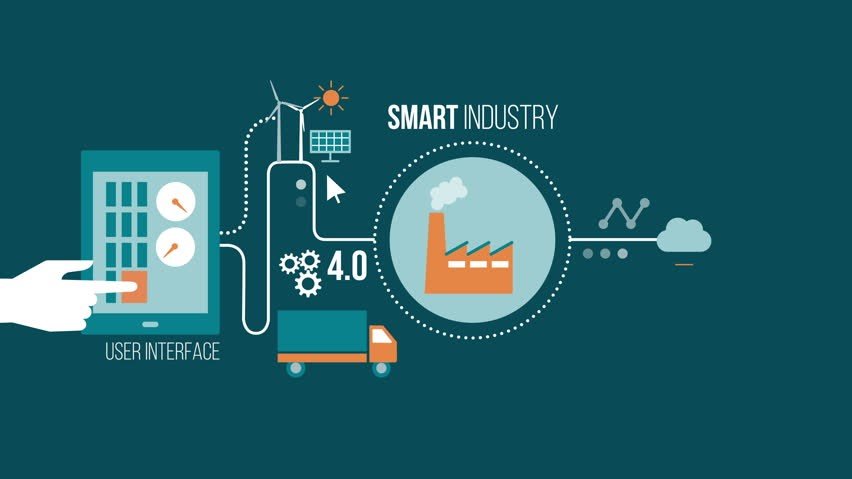
In today’s fast-growing digital era, the IT industry is continuously evolving with new technologies, tools, and work methodologies. Companies are no longer looking for candidates who only have theoretical knowledge from books or classrooms. Instead, they prefer professionals who can understand real business problems, work on live tools, and contribute to projects from the very beginning. This is why industry-oriented IT training has become extremely important, especially for freshers who are starting their careers in the technology field.
Industry-oriented IT training is a learning approach that focuses on making students job-ready by providing practical exposure along with theoretical understanding. Traditional education systems often focus more on concepts, definitions, and exams, whereas industry training focuses on real-time project execution, practical assignments, and hands-on learning. This helps freshers understand how technologies are actually used in companies and how real IT projects are executed.
One of the biggest challenges freshers face after completing their degrees is the skill gap between academic learning and industry expectations. Many students learn programming languages, databases, or networking concepts in college, but they don’t get exposure to real project environments. Industry-oriented training programs help bridge this gap by introducing learners to real-world workflows, development cycles, debugging processes, and team collaboration methods used in IT companies.
Another important aspect of industry-oriented IT training is exposure to the latest industry tools and technologies. With the rapid growth of fields like Cloud Computing, Artificial Intelligence, Machine Learning, Data Analytics, DevOps, and Cyber Security, companies expect candidates to be familiar with modern tools and platforms. Industry training institutes update their curriculum regularly to match current market demand, ensuring that learners stay relevant and competitive in the job market.
Industry-oriented training also focuses on project-based learning. Instead of only learning theory, students work on live or simulated industry projects. This helps them understand client requirements, project planning, execution strategies, testing processes, and deployment methods. Working on projects not only improves technical knowledge but also builds confidence and problem-solving ability.
Apart from technical skills, industry-oriented IT training also helps freshers develop essential professional skills such as communication, teamwork, time management, and adaptability. Since most IT companies work in team-based environments, understanding collaboration tools and work culture is very important. Many training programs also introduce learners to Agile methodology, Scrum practices, and real development workflows followed in companies.
Another major advantage of industry-oriented IT training is mentorship and career guidance. Many training institutes provide guidance from industry experts who share real experiences, career advice, and industry insights. This helps freshers understand market expectations, interview patterns, and career growth opportunities in different IT domains.
Additionally, industry training programs often provide placement assistance, resume building support, portfolio development, and interview preparation. This structured support system increases the chances of freshers getting placed in good companies and starting their careers with confidence.
In simple terms, industry-oriented IT training prepares freshers not only to get a job but also to perform effectively in a professional environment from the first day. It helps them move from theoretical learners to practical professionals who are ready to handle real industry challenges.
As the IT industry continues to grow and competition increases, industry-oriented training is becoming a key factor in building successful careers. Freshers who gain practical exposure, industry knowledge, and real project experience always have an advantage over those who rely only on academic learning.
Why Freshers Need Industry Exposure Before Getting a Job
In today’s competitive job market, having a degree alone is often not enough to secure a good job in the IT industry. Companies are looking for candidates who can understand real work environments, handle practical tasks, and contribute to projects from day one. This is why industry exposure has become extremely important for freshers before they enter the professional world.
Industry exposure helps freshers understand how the real IT industry works beyond textbooks and classroom learning. In college, students mostly learn theoretical concepts, programming basics, and academic projects. However, real companies work on live client requirements, tight deadlines, teamwork, and complex problem-solving situations. Without industry exposure, freshers may find it difficult to adjust to this fast-paced environment.
Another major reason why industry exposure is important is that it reduces the skill gap between academic learning and industry expectations. Many freshers know concepts but struggle when they are asked to apply them in real projects. Industry exposure through training, internships, or live projects helps them understand practical implementation, debugging, testing, and deployment processes used in real companies.
Industry exposure also builds confidence in freshers. When students work on real-time projects or industry-level assignments, they become more comfortable with tools, technologies, and workflows. This confidence is very important during job interviews and also helps freshers perform better once they get hired.
Apart from technical knowledge, industry exposure helps freshers develop professional skills. In real IT companies, employees need to communicate with team members, managers, and sometimes clients. They need to manage deadlines, work in teams, and adapt to changing project requirements. Industry exposure helps freshers learn workplace behavior, communication skills, and teamwork culture.
Another important benefit of industry exposure is better career clarity. Many freshers are confused about which IT field to choose, such as development, testing, cloud computing, data analytics, or cyber security. When they get industry exposure through training programs or internships, they understand which domain matches their interest and skills.
Industry exposure also increases job opportunities. Companies prefer candidates who already understand industry tools, workflows, and project environments because they require less training after hiring. This makes freshers with industry exposure more valuable and increases their chances of getting selected.
Additionally, freshers with industry exposure usually perform better in technical interviews because they can explain practical experiences, real project challenges, and problem-solving approaches. This gives them an advantage over candidates who only have theoretical knowledge.
In simple words, industry exposure helps freshers become job-ready, confident, and technically strong before entering the professional world. It prepares them to face real industry challenges, work in professional environments, and grow faster in their careers.
As the IT industry continues to evolve with new technologies and higher expectations, industry exposure is no longer optional — it has become a necessity for freshers who want to build successful and stable careers in the technology field.
Skill Gap Between College Education and IT Industry Requirements
The skill gap between college education and IT industry requirements is one of the biggest challenges faced by fresh graduates today. While colleges focus mainly on theoretical knowledge and academic understanding, the IT industry expects candidates to have strong practical skills, real project experience, and knowledge of modern tools and technologies. This difference between academic preparation and real job expectations is known as the skill gap.
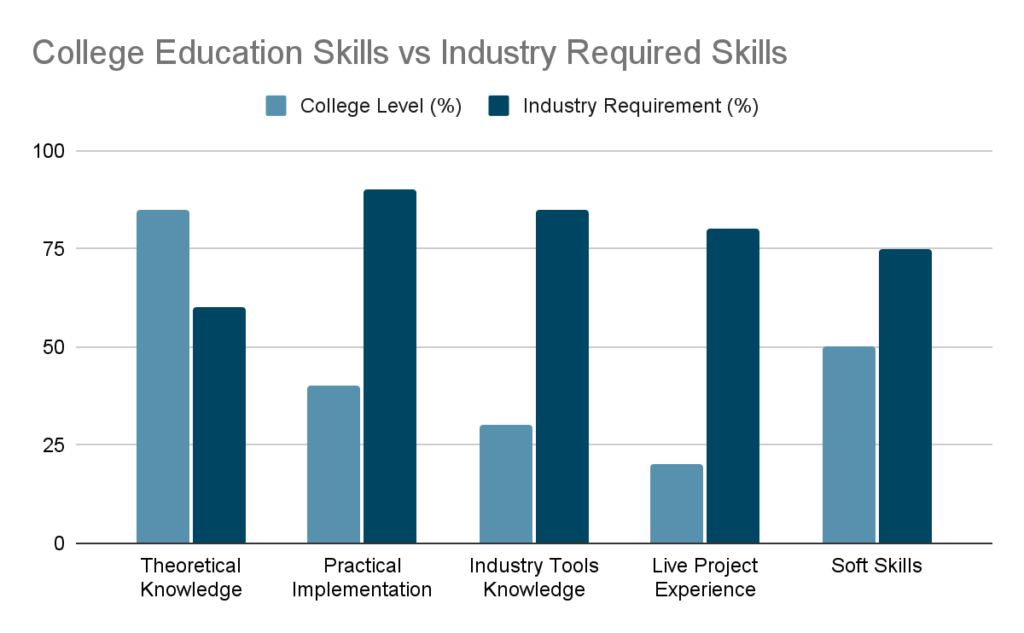
If we look at the comparison between college learning and industry requirements, a clear difference can be observed. The graph below shows how academic learning focuses more on theory, while the industry focuses more on practical application and real work experience.
In most colleges, students gain strong theoretical knowledge in subjects such as programming, databases, and networking. Academic learning often focuses around 80–85% on theory, which helps build concept clarity and technical fundamentals. However, in real IT companies, theory is important but not the primary requirement. Companies expect employees to apply knowledge in real projects, making the theory requirement slightly lower at around 60% compared to practical skills.
The biggest difference can be seen in practical implementation skills. College education often provides limited practical exposure, usually around 40%, because students mostly work on academic assignments or small projects. In contrast, the IT industry expects practical implementation at a much higher level, around 85–90%, because employees need to work on real client requirements, fix errors, and deploy solutions.
A similar gap can be seen in industry tools knowledge. Many colleges provide basic or outdated tool exposure, giving students only around 30% familiarity with modern industry tools. However, companies expect freshers to have knowledge of current tools, cloud platforms, development frameworks, and automation technologies, increasing industry expectations to around 80–85%.
Live project experience also shows a major difference. In college, students may get only around 20% exposure to real project environments, while the IT industry prefers candidates who understand complete project workflows, client communication, testing, and deployment. Because of this, industry expectations for project exposure go up to around 70–80%.
Soft skills also show a noticeable gap. Colleges help develop communication and presentation skills to some extent, giving around 50% soft skill development. However, in real IT work environments, professionals need strong communication, teamwork, and time management skills, which increases industry requirements to around 70–75% or higher.
Overall, the graph clearly shows that while college education builds strong theoretical foundations, the IT industry requires more practical exposure, tool knowledge, and project experience. This is the main reason why many freshers need additional training or industry exposure before they become fully job-ready.
Bridging this skill gap is possible through industry-oriented IT training, internships, and project-based learning. These methods help freshers improve practical skills, gain real project experience, and understand real industry workflows.
In simple terms, college education builds knowledge, but industry exposure builds job readiness. Freshers who focus on both theory and practical experience have better career opportunities and faster professional growth.
Importance of Practical Learning in IT Training
Practical learning is one of the most important parts of modern IT training because the IT industry is completely based on real-time problem solving and hands-on work. While theoretical knowledge helps in understanding concepts and technical logic, practical learning helps freshers understand how those concepts are applied in real industry scenarios. Without practical exposure, it becomes difficult for freshers to adapt to real job environments.
In traditional education systems, students mainly focus on studying concepts, writing exams, and completing theoretical assignments. However, IT companies expect employees to work on real software systems, handle live data, fix errors, and deliver solutions within deadlines. This is why practical learning has become a core part of industry-oriented IT training programs.
If we analyze the impact of practical learning, it clearly improves technical confidence, problem-solving ability, and job readiness. The graph below represents how practical learning increases skill development compared to only theoretical learning.
Students who learn through practical methods such as live projects, lab practice, and real case studies develop stronger implementation skills. For example, when students work on real coding projects, they learn debugging, error handling, testing, and deployment processes. These are the same tasks they perform in real IT jobs. Because of this, practical learning helps freshers become comfortable with real work environments.
Another major benefit of practical learning is better tool understanding. IT professionals work with various tools such as development environments, cloud platforms, automation tools, and collaboration software. Practical training allows freshers to work directly on these tools instead of only learning about them in theory. This makes it easier for them to adapt to company workflows.
Practical learning also improves problem-solving skills. In real projects, problems are not always straightforward. Developers and IT professionals must analyze issues, find root causes, and implement solutions. When students practice through real scenarios, they develop analytical thinking and decision-making skills.
The graph also shows that students who focus on practical learning often gain higher confidence levels compared to those who rely only on theoretical knowledge. Practical exposure reduces fear of working on live systems and helps freshers perform better during interviews and technical tests.
Another important aspect is teamwork and collaboration. Many practical training programs include group projects where students learn how to work in teams, manage tasks, and communicate effectively. Since most IT companies follow team-based project models, this experience becomes very valuable.
Additionally, practical learning improves job placement chances. Companies prefer candidates who already know how to handle tools, understand project workflows, and can contribute from the first day. This reduces company training costs and increases fresher hiring chances.
In simple terms, practical learning converts theoretical knowledge into real skills. It prepares freshers to handle real industry challenges, improves technical confidence, and makes them job-ready.
As the IT industry continues to evolve rapidly, practical learning is no longer optional. It has become a necessity for freshers who want to build strong careers and stay competitive in the job market.
Hands-On Live Project Experience
Hands-on live project experience is one of the most important parts of industry-oriented IT training. It helps freshers move beyond theoretical learning and understand how real IT projects are executed in companies. In classroom learning, students usually work on small academic assignments, but live project experience allows them to work on real or industry-simulated projects that follow actual company workflows.
When freshers work on live projects, they learn how to handle real client requirements, project deadlines, and technical challenges. They understand how different technologies work together in a real project environment. This type of exposure helps students build technical confidence, improve problem-solving skills, and understand professional work culture before starting their jobs.
Live project experience also helps freshers understand the complete project lifecycle, including requirement analysis, development, testing, deployment, and maintenance. This makes them more prepared to work in real IT environments and increases their job readiness.
Key Benefits of Hands-On Live Project Experience
- Real Industry Exposure – Experience similar to real company projects.
- Understanding Client Requirements – Learn how business needs are converted into technical solutions.
- Improves Practical Implementation Skills – Helps apply coding and technical knowledge in real scenarios.
- Better Understanding of Project Lifecycle – Exposure to planning, development, testing, and deployment.
- Learning Real Development Workflows – Understanding of version control, documentation, and team processes.
- Error Handling and Debugging Experience – Learn to solve real-time technical issues.
- Tool and Technology Exposure – Hands-on practice with industry tools and platforms.
- Team Collaboration Experience – Learn how to work in team-based environments.
- Time Management and Deadline Handling – Understand project timelines and delivery pressure.
- Confidence Building – Reduces fear of working on live systems.
- Portfolio Development – Helps build strong resume projects.
- Better Interview Performance – Helps explain real project work during interviews.
- Industry Work Culture Understanding – Exposure to professional work structure.
- Problem-Solving Skill Improvement – Develops logical and analytical thinking.
- Higher Job Readiness – Helps freshers start working effectively from day one.
Learning Latest Industry Tools and Technologies
(Cloud, AI, DevOps, Cyber Security)
In today’s fast-changing IT industry, learning the latest tools and technologies is very important for freshers who want to build strong and future-proof careers. Technology is evolving rapidly, and companies expect employees to be familiar with modern platforms, automation tools, and advanced development technologies. This is why industry-oriented IT training focuses heavily on teaching the latest industry tools instead of only traditional concepts.
Fields like Cloud Computing, Artificial Intelligence (AI), DevOps, and Cyber Security are currently among the most in-demand domains in the IT industry. Companies are moving their infrastructure to the cloud, using AI for automation and data analysis, adopting DevOps practices for faster development cycles, and investing heavily in cyber security to protect data and systems. Freshers who learn these technologies during training have a higher chance of getting selected for job roles.
Learning cloud technologies helps freshers understand how companies store data, host applications, and manage servers online instead of using physical systems. AI and machine learning help in automation, data prediction, and smart system development. DevOps helps improve software development speed and collaboration between development and operations teams. Cyber security helps protect systems from cyber threats and data breaches, which is becoming extremely important for every organization.
Industry training programs usually provide hands-on exposure to these technologies through real tools, live projects, and practical assignments. This helps freshers understand not only how these technologies work but also how they are used in real companies. Learning these tools increases technical confidence, improves job readiness, and makes freshers more competitive in the job market.
Key Benefits of Learning Latest Industry Tools and Technologies
- Higher Job Demand – Modern technologies have higher market demand.
- Better Career Opportunities – Opens doors to high-growth IT domains.
- Future-Proof Skills – Helps freshers stay relevant as technology evolves.
- Higher Salary Potential – Advanced skills often lead to better salary packages.
- Real Industry Workflow Understanding – Helps understand how modern IT companies operate.
- Better Problem-Solving Ability – Advanced tools help solve complex business problems.
- Increased Technical Confidence – Hands-on tool experience improves confidence.
- Stronger Resume and Portfolio – Modern skills make profiles more attractive to recruiters.
- Faster Career Growth – Freshers can move to advanced roles faster.
- Better Adaptability to New Technologies – Makes learning future tools easier.
In simple terms, learning the latest industry tools and technologies helps freshers stay competitive, improve job chances, and build strong long-term careers in the IT industry.
How IT Training Improves Technical Confidence
Technical confidence is one of the most important qualities required for freshers entering the IT industry. Many fresh graduates have strong theoretical knowledge but often hesitate when they are asked to apply that knowledge in real-time situations. IT training helps remove this hesitation by giving practical exposure, real project experience, and hands-on learning opportunities. When freshers start practicing technologies instead of only studying them, their confidence automatically improves.
IT training programs focus heavily on practical implementation. When students work on coding assignments, real-time scenarios, and live or simulated projects, they start understanding how technical concepts work in real environments. This helps them move from theoretical understanding to practical execution. Once students successfully complete real tasks, their fear of handling technical work reduces significantly.
Another major factor that improves technical confidence is regular practice. IT training usually includes daily practice sessions, assignments, and project work. Continuous practice helps freshers strengthen their technical foundation and improves their ability to solve problems independently. Over time, they become more comfortable with writing code, debugging errors, and working with different tools.
Exposure to industry tools and technologies also plays an important role in building technical confidence. When freshers get hands-on experience with development tools, cloud platforms, testing tools, and automation technologies, they feel more prepared to work in real company environments. This reduces the pressure they usually feel when joining their first job.
Working on real or industry-level projects also helps freshers understand how to handle real challenges. In live projects, problems are not always simple or predictable. When students learn how to analyze issues, find solutions, and implement them successfully, they develop strong technical confidence.
IT training also provides mentorship and expert guidance, which helps freshers learn faster and avoid common mistakes. Trainers help explain complex topics, guide students through project challenges, and provide feedback. This support system helps freshers feel more confident while learning new technologies.
Another important benefit is improved confidence during technical interviews. Freshers who have practical training can explain real project experience, technical challenges, and solutions they have worked on. This makes them more confident while answering technical questions during interviews.
In simple terms, IT training helps freshers convert their technical knowledge into real working confidence. It prepares them to handle real technical tasks, work in professional environments, and perform effectively from the first day of their job.
As the IT industry continues to grow and become more competitive, technical confidence is becoming just as important as technical knowledge. Freshers who gain practical exposure through IT training always have an advantage in job opportunities and long-term career growth.
Role of Case Studies in Real-World Problem Solving
Case studies play a very important role in IT training because they help freshers understand how real industry problems are solved in practical environments. Unlike theoretical learning, where students only learn concepts, case studies present real or real-like business situations that require analytical thinking and practical solution approaches. This helps freshers prepare for real challenges they may face in IT jobs.
In the IT industry, problems are rarely straightforward. Developers, analysts, and engineers often need to analyze complex situations, understand root causes, and implement effective solutions. Case studies help students learn this process step-by-step. Instead of simply learning how a technology works, students learn how and when to use it in real scenarios.
Case studies also help improve logical thinking and decision-making skills. When students analyze a case study, they need to understand the problem, evaluate multiple solutions, and choose the best possible approach. This process is very similar to how real IT professionals work when handling system errors, performance issues, or client requirements.
Another important benefit of case studies is that they help students understand business perspectives along with technical solutions. In real companies, technical solutions must also match business goals, user requirements, and project timelines. Case studies help freshers understand how technology supports business operations.
Case studies also expose students to real industry challenges such as system failures, security threats, performance issues, or application bugs. When students practice solving such scenarios, they develop confidence in handling real technical problems. This makes them more prepared for job roles and technical interviews.
Additionally, case studies help improve communication and presentation skills. Many training programs ask students to present case study solutions, explain their logic, and justify their decisions. This helps freshers learn how to explain technical solutions clearly to team members, managers, or clients.
Case study-based learning also helps freshers understand teamwork and collaborative problem solving. In many cases, students work in groups to solve case studies, which helps them learn team coordination and different problem-solving approaches.
In simple terms, case studies help convert theoretical knowledge into practical problem-solving ability. They help freshers think like real IT professionals and prepare them to handle real industry challenges effectively.
As the IT industry becomes more solution-driven and performance-focused, the ability to analyze and solve real-world problems is becoming a critical skill. Freshers who gain case study-based learning experience are usually better prepared for real job roles and career growth in the IT industry.
Internship Opportunities Through IT Training Institutes
Internship opportunities provided through IT training institutes play a crucial role in helping freshers gain real industry exposure before starting full-time jobs. For many students, internships are the first step into the professional world where they can experience how IT companies actually work. IT training institutes often collaborate with companies or provide in-house internship programs that help students gain practical knowledge and real work experience.
Through internships, freshers get the opportunity to work on real projects, understand team workflows, and learn how tasks are managed in professional environments. Unlike classroom learning, internships allow students to experience real deadlines, client requirements, and project responsibilities. This exposure helps freshers understand the difference between academic learning and real job expectations.
Internships also help freshers improve their technical skills. During internships, students work with real tools, technologies, and project frameworks. They learn how to write production-level code, test applications, fix bugs, and support live systems. This real-time exposure helps freshers become more technically strong and confident.
Another important benefit of internships is understanding workplace culture. Freshers learn how to communicate professionally, attend meetings, work in teams, and manage tasks efficiently. This helps them adjust easily when they join full-time job roles later.
Internships also help freshers build strong resumes and portfolios. When students complete real internship projects, they can showcase this experience during job interviews. Recruiters often prefer candidates who already have internship experience because it shows practical exposure and industry understanding.
IT training institutes also help students prepare for internships by providing technical training, interview preparation, and career guidance. Some institutes also help students connect with companies for internship opportunities, which increases their chances of gaining industry exposure.
Internships also help freshers understand their career interests better. By working in real environments, students can identify whether they are more interested in development, testing, cloud, data analytics, or cyber security roles.
In simple terms, internships help freshers move from learning to working. They provide real industry exposure, improve technical and professional skills, and increase job opportunities.
As the IT industry becomes more competitive, internship experience is becoming a strong advantage for freshers. Students who complete internships during or after training usually have better job readiness and higher chances of getting placed in good companies.
Soft Skills Development During IT Training

Soft skills development is an essential part of IT training because technical knowledge alone is not enough to succeed in the IT industry. While technical skills help professionals perform job tasks, soft skills help them work effectively with teams, communicate ideas clearly, and manage work responsibilities efficiently. IT companies today look for candidates who have a balance of both technical expertise and professional behavior.
During IT training, freshers not only learn technical subjects but also develop important workplace skills such as communication, teamwork, time management, and problem-solving. These skills help them adjust quickly to professional environments and improve their overall performance in job roles.
Communication skill development is one of the biggest benefits of IT training. Freshers learn how to explain technical concepts clearly, participate in meetings, and communicate with team members and managers. In real IT companies, professionals often need to discuss project progress, explain technical issues, and sometimes interact with clients. Good communication skills help avoid misunderstandings and improve team productivity.
Teamwork is another important soft skill developed during IT training. Many training programs include group projects, team assignments, and collaborative tasks. This helps freshers understand how to work with different people, share responsibilities, and achieve common project goals. Since most IT companies work in team-based project environments, teamwork experience becomes very valuable.
Time management is also an important skill developed during IT training. Students learn how to complete tasks within deadlines, manage multiple assignments, and prioritize work effectively. This helps freshers handle project deadlines and work pressure in real job environments.
Problem-solving mindset is another key soft skill that IT training helps develop. When freshers work on real projects and case studies, they learn how to analyze situations, think logically, and find effective solutions. This helps them handle technical challenges more efficiently.
IT training also helps freshers understand professional workplace behavior. They learn how to write professional emails, attend meetings, handle feedback, and maintain professional communication. This helps them adapt easily to corporate work culture.
Soft skills development also improves interview performance. Freshers who have good communication skills, confidence, and professional behavior perform better in HR and technical interviews.
In simple terms, soft skills help freshers become complete professionals rather than only technical experts. They help improve work efficiency, teamwork ability, and career growth opportunities.
As the IT industry continues to grow, companies are giving equal importance to technical skills and soft skills. Freshers who develop strong soft skills along with technical knowledge have better job opportunities and long-term career success.
Industry Mentorship and Expert Guidance
Industry mentorship and expert guidance play a very important role in IT training because they help freshers learn directly from experienced professionals who understand real industry requirements. While theoretical learning provides basic knowledge, mentorship helps students understand practical industry expectations, real project challenges, and career growth paths. Learning from experts helps freshers avoid common mistakes and learn faster.
During IT training, mentors often share real industry experiences, project scenarios, and problem-solving techniques. This helps freshers understand how real IT companies work, how projects are managed, and how professionals handle technical challenges. Mentors also help students understand current market trends, in-demand technologies, and career opportunities in different IT domains.
Expert guidance also helps freshers understand complex technical concepts more easily. Industry professionals can explain topics using real project examples, which makes learning more practical and easier to understand. This helps students build stronger technical foundations and confidence in their skills.
Another major benefit of industry mentorship is personalized learning support. Mentors can identify student strengths and weaknesses and guide them accordingly. They help freshers improve technical skills, project understanding, and professional behavior. This type of guidance helps students learn in a more structured and focused way.
Industry mentorship also helps freshers prepare for job interviews and career planning. Mentors often guide students on resume building, portfolio preparation, interview preparation, and technical skill improvement. They also share tips on how to perform well in technical interviews and workplace environments.
Mentorship also helps freshers understand professional work culture. Mentors guide students on communication skills, teamwork, workplace discipline, and project responsibility. This helps freshers adjust quickly when they join real companies.
Another important benefit is networking opportunities. Industry mentors often have strong professional networks, and their guidance helps freshers understand how to build professional connections and explore job opportunities.
In simple terms, industry mentorship helps freshers learn faster, gain real industry knowledge, and build confidence before starting their careers. It provides practical learning support, career guidance, and industry insights that are difficult to get through theoretical learning alone.
As the IT industry continues to evolve and become more competitive, industry mentorship and expert guidance are becoming essential parts of IT training. Freshers who learn under expert guidance often have better technical understanding, higher confidence, and better career growth opportunities.
Understanding Real Work Environment and Team Culture
Understanding the real work environment and team culture is a very important part of IT training because it prepares freshers for how companies actually operate. Many students enter the IT industry with strong technical knowledge but very little understanding of how professional workplaces function. IT training helps bridge this gap by introducing freshers to real corporate work structures, communication methods, and team-based working models.
In real IT companies, work is usually done in teams rather than individually. Different team members handle different parts of a project such as development, testing, deployment, and maintenance. IT training helps freshers understand how teams collaborate, share responsibilities, and work toward common project goals. This helps them adjust quickly when they join real companies.
IT training also helps freshers understand professional work culture, including workplace discipline, meeting structures, reporting systems, and task management. Students learn how daily team meetings work, how project updates are shared, and how tasks are assigned and tracked. This makes it easier for freshers to adapt to company workflows without feeling overwhelmed.
Another important aspect of understanding the work environment is learning how to communicate professionally. In IT companies, employees need to communicate with team members, project managers, and sometimes clients. IT training helps freshers learn professional communication, email writing, and technical discussion skills, which are very important in corporate environments.
IT training also helps freshers understand how companies handle deadlines and project delivery. In real projects, work is often time-bound, and teams need to complete tasks within fixed timelines. By working on project-based assignments during training, freshers learn how to manage time and handle work pressure effectively.
Exposure to real work environments also helps freshers understand responsibility and accountability. In companies, each team member is responsible for specific tasks, and their work directly impacts project success. IT training helps freshers develop a sense of responsibility and professionalism.
Another important benefit is understanding workplace tools and collaboration platforms. Many IT companies use project management tools, version control systems, and communication platforms. IT training often introduces students to such tools, helping them feel comfortable using them in real job environments.
In simple terms, understanding real work environments and team culture helps freshers move smoothly from training to professional jobs. It reduces workplace anxiety, improves team collaboration skills, and helps freshers perform more effectively in real projects.
As the IT industry continues to grow and become more collaborative, understanding workplace culture and team dynamics is becoming just as important as technical knowledge. Freshers who are familiar with professional work environments usually adapt faster and perform better in their careers.
Resume Building and Portfolio Development
Resume building and portfolio development are very important parts of IT training because they help freshers present their skills and experience in a professional way. Many fresh graduates have technical knowledge but struggle to showcase their abilities effectively during job applications. IT training helps students create strong resumes and professional portfolios that highlight their technical skills, project experience, and practical knowledge.
A well-structured resume helps freshers make a strong first impression on recruiters. IT training programs usually guide students on how to create industry-standard resumes, how to highlight technical skills, and how to present project experience properly. Instead of listing only academic qualifications, students learn how to include technical tools, certifications, internship experience, and project achievements in their resumes.
Portfolio development is equally important because it provides proof of practical skills. In the IT industry, companies prefer candidates who can show real work instead of only theoretical knowledge. During IT training, freshers work on live or simulated projects, which they can include in their portfolios. A strong portfolio may include project descriptions, technologies used, problem-solving approaches, and project outcomes.
Resume building during IT training also helps freshers understand how to tailor resumes according to job roles. Different IT roles require different skill highlights. For example, a developer resume may focus more on programming languages and project coding experience, while a cloud or cyber security role may focus more on tools, certifications, and practical implementation skills.
Portfolio development also improves interview performance. When freshers have real projects in their portfolio, they can confidently explain their work, technical challenges, and solutions they implemented. This helps them stand out compared to candidates who only have theoretical knowledge.
Another important benefit is understanding industry resume standards. IT training institutes usually guide students on keyword usage, resume formatting, and ATS (Applicant Tracking System) friendly resume structures. This increases the chances of resumes getting shortlisted by companies.
IT training also helps freshers build online professional presence through platforms like project repositories or professional networking profiles. This helps recruiters verify skills and project experience easily.
In simple terms, resume building helps freshers present their qualifications professionally, while portfolio development helps them prove their practical skills. Together, they increase job opportunities and improve interview selection chances.
As the IT job market becomes more competitive, having a strong resume and portfolio is becoming essential. Freshers who can showcase real skills, project experience, and technical expertise have better chances of getting selected and growing faster in their careers.
Placement Support and Interview Preparation
Placement support and interview preparation are essential parts of IT training because they help freshers successfully move from the learning stage to getting placed in real job roles. Many fresh graduates have technical knowledge but often do not know how to approach job applications, how to perform in interviews, or how to present their skills professionally. IT training institutes help solve this problem by providing structured placement assistance along with proper interview preparation.
If we look at placement success trends using the pie chart data, the difference is very clear. The chart shows that freshers who complete IT training have around 75% placement chances, while candidates without training have around 25% placement chances. This gap exists because trained candidates already have practical exposure, real project experience, and interview preparation, which makes them more job-ready compared to candidates who only have academic knowledge.
Freshers who complete IT training usually build strong resumes, gain live project exposure, and learn industry tools. Because of this, they perform better in technical interviews and are more confident while explaining their skills and project work. Recruiters often prefer such candidates because they can start working with minimal additional training after hiring.
On the other hand, candidates without IT training may have good theoretical understanding but often lack practical implementation experience and real interview exposure. Many freshers face difficulty in technical rounds, project explanation, and real problem-solving questions during interviews. This reduces their placement success rate, which is why their portion in the pie chart is smaller.
Placement support provided during IT training usually includes job opportunity updates, company interview scheduling, resume improvement support, and career guidance. Some training institutes also help students connect directly with hiring companies, which increases interview opportunities.
Interview preparation is another major advantage. Freshers are trained for technical interviews, HR interviews, and sometimes group discussions. They practice technical questions, coding problems, project explanations, and professional communication. Mock interviews are also conducted to simulate real interview environments, which helps freshers improve their confidence and performance.
IT training also helps freshers understand how to present their projects properly during interviews. Since many companies ask project-based questions, candidates who can explain real project work confidently usually have higher chances of getting selected.
In simple terms, placement support helps freshers get interview opportunities, while interview preparation helps them perform well during selection rounds. The placement data clearly shows that freshers who complete IT training have significantly higher job selection chances compared to those who depend only on academic learning.
As the IT job market becomes more competitive, placement support and proper interview preparation are becoming necessary for freshers who want to secure good job opportunities and build stable careers.
Certification Value in IT Industry
In today’s competitive IT job market, certifications play a crucial role in validating a candidate’s skills and technical knowledge. While degrees provide theoretical understanding, industry certifications prove that a candidate is trained according to current industry standards. For freshers especially, certifications act as proof of practical capability, making them more attractive to recruiters.
IT certifications show that a candidate has hands-on exposure to tools, technologies, and real-world scenarios. Many companies use certifications as a filtering factor during the hiring process because certified candidates usually require less training after joining. This helps organizations save time and onboarding costs.
Another major advantage of certifications is credibility. When a fresher holds a certification in a specific domain like cloud computing, cybersecurity, or data analytics, it builds trust in the employer’s mind. It shows commitment to learning and professional growth, which is highly valued in the IT industry.
Certifications also help freshers stand out in a crowded job market. Many candidates may have similar degrees, but certifications create differentiation. They signal specialization and practical expertise, which increases chances of getting shortlisted for interviews.
Additionally, certifications keep professionals updated with the latest industry trends and technologies. Since most certification programs are regularly updated, candidates stay aligned with evolving IT standards, tools, and best practices.
In the long term, certifications not only help in getting the first job but also support career growth, salary increments, and role transitions into advanced technical or managerial positions.
Faster Career Growth With Industry-Ready Skills

In today’s fast-moving IT industry, career growth is no longer based only on academic qualifications. Companies now look for professionals who can work on real projects, use industry tools, and solve practical problems from the beginning of their job. This is where industry-ready skills play a major role. Freshers who gain practical exposure through IT training programs often experience faster career growth compared to those who only have theoretical knowledge.
Industry-ready skills focus on real-world implementation rather than textbook learning. These include hands-on experience in programming, working with live servers, understanding development environments, using version control tools, handling databases, and learning deployment processes. When freshers enter the industry with these skills, they already understand how IT teams work in real companies. This reduces their learning curve and helps them perform better from the start.
One of the biggest advantages of industry-ready training is job performance confidence. Many freshers struggle in their first job because they are not familiar with real project workflows, deadlines, or problem-solving under pressure. But candidates trained with live projects and practical tasks already know how to manage real work situations. This confidence helps them complete tasks faster and more accurately, which creates a strong impression on managers and team leads.
Faster career growth also happens because industry-ready professionals require less supervision. Managers prefer team members who can work independently, troubleshoot issues, and suggest solutions. When freshers show this level of capability early in their career, they are often given more responsibilities, better projects, and leadership opportunities sooner than others.
Another important factor is adaptability. The IT industry keeps changing with new technologies, frameworks, and tools. Freshers who already have practical learning experience find it easier to learn new technologies. They understand system logic, coding standards, and tool usage patterns, which helps them upgrade their skills quickly. This makes them valuable long-term employees for organizations.
Industry-ready skills also directly impact salary growth. Candidates who can contribute to company projects from the beginning often get better starting salary packages. Over time, their faster performance growth leads to quicker promotions, early appraisals, and higher increments compared to average candidates.
Additionally, practical skill-based professionals get opportunities to move into specialized roles faster. For example, they can transition into roles like cloud engineer, data analyst, cybersecurity specialist, or DevOps engineer much earlier in their career journey. This specialization further accelerates their career growth and earning potential.
In simple terms, industry-ready skills help freshers skip the long adjustment phase that many beginners face. Instead of spending years learning basic practical skills after joining a job, they start performing efficiently from day one. This early advantage helps them build strong professional profiles, gain recognition in teams, and grow faster in the IT industry.
In the long run, professionals with strong practical skills not only grow faster but also stay relevant in the industry for a longer time. As companies continue to focus on performance and productivity, industry-ready professionals will always have better career opportunities and growth potential.
Why IT Training is Important for Future Career Stability
In today’s technology-driven world, career stability is closely connected to skill relevance. The IT industry evolves rapidly with new programming languages, tools, frameworks, and technologies emerging every year. For freshers and even working professionals, IT training plays a crucial role in building a stable and secure career. It ensures that individuals stay updated with industry demands and remain employable in the long term.
One of the biggest reasons IT training supports career stability is continuous skill development. Unlike traditional careers where skills remain relevant for many years, IT requires constant learning. Structured IT training programs help professionals stay updated with modern technologies such as cloud computing, automation, artificial intelligence, and cybersecurity. This continuous upskilling reduces the risk of becoming outdated in the job market.
IT training also helps professionals build strong technical foundations. When basics are clear and practical exposure is strong, learning new technologies becomes easier. This adaptability is one of the most important factors for long-term career survival in IT. Professionals who can quickly shift from one technology to another are always in demand.
Another important factor is job security. Companies prefer employees who can handle multiple responsibilities and adapt to changing project requirements. Candidates with proper IT training usually understand multiple tools, workflows, and environments. This makes them valuable assets for companies and reduces their chances of job loss during industry changes or company restructuring.
IT training also improves problem-solving ability, which is a long-term career asset. Instead of just knowing how tools work, trained professionals understand how to solve real business problems using technology. This makes them important contributors to organizations rather than just task executors.
Additionally, IT training supports career stability by opening multiple career paths. A person trained in core technical skills can later move into roles like technical specialist, team lead, solution architect, consultant, or project manager. Having multiple career options creates long-term job safety and growth opportunities.
IT training also builds confidence in handling real-world work challenges. Professionals who have worked on live projects or practical scenarios during training are better prepared for workplace pressure, deadlines, and complex tasks. This professional confidence helps them sustain long-term careers without frequent job switching due to performance pressure.
In the long term, IT training helps professionals stay competitive in the global job market. As companies increasingly hire based on skills rather than degrees alone, trained candidates with practical knowledge, certifications, and project experience always have better career security.
In simple terms, IT training is not just about getting the first job — it is about building a career that can survive industry changes, technology evolution, and market competition. It provides the knowledge, adaptability, and confidence needed for long-term professional success and career stability.
Conclusion
IT training plays a powerful role in shaping a fresher’s professional journey by bridging the gap between academic learning and real industry requirements. From practical skill development and live project exposure to tool-based learning and placement preparation, IT training prepares candidates for real workplace challenges. It not only helps freshers secure their first job faster but also supports long-term career growth, stability, and adaptability in the ever-evolving IT industry.
With companies focusing more on skills, performance, and real-world problem-solving abilities, industry-oriented IT training has become an essential step for anyone planning to build a successful IT career. Freshers who invest in the right training gain confidence, technical expertise, and industry exposure that helps them grow faster and stay competitive in the job market.
Start your industry-ready IT career journey with expert training and real-world project exposure. Learn more at https://pinakiithub.com/.