Powered by Pinaki IT Hub – Turning Data into Decisions for a
Sustainable Tomorrow
The 21st century’s biggest challenge isn’t just about technology — it’s about survival. As climate change accelerates, the world faces more unpredictable weather patterns, extreme heat waves, energy shortages, and food insecurity. But here’s the good news — Artificial Intelligence (AI) is emerging as one of the most powerful tools to fight back. Through predictive analytics, machine learning, and real-time data insights, AI is helping us understand, adapt to, and even reverse some effects of climate change.
In this blog, we’ll explore:
✅ How AI predicts weather and natural disasters more accurately than ever.
✅ How it helps reduce energy waste and improve renewable energy use.
✅ How AI supports agriculture and boosts crop productivity.
✅ Why AI for Climate Intelligence is one of the most in-demand fields in coming year..
✅ And how Pinaki IT Hub can help you build a career in this fast-growing area
Why AI is Key to Tackling Climate
Change
Introduction: The Complexity of Climate Systems
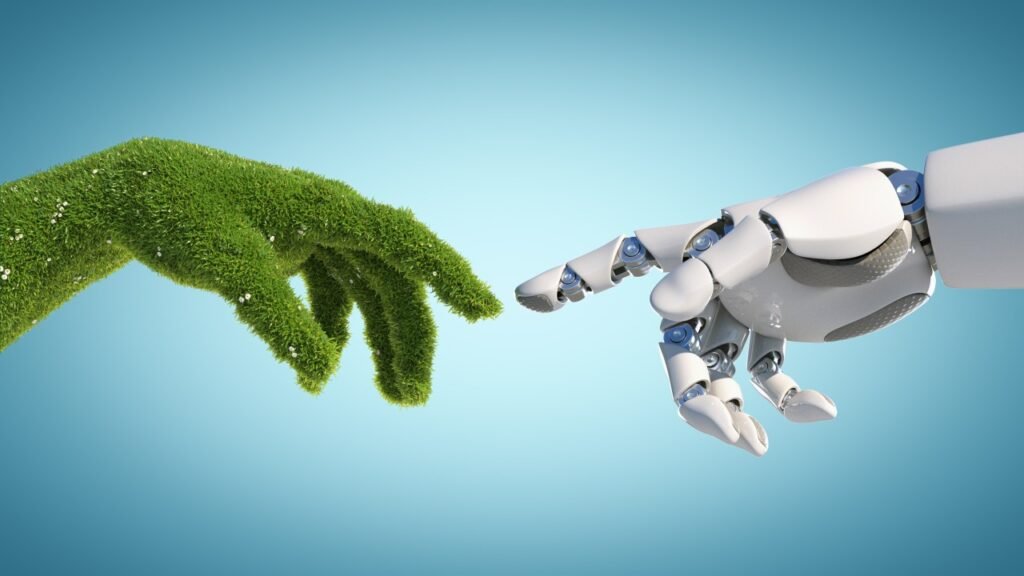
Climate change stands as the defining challenge of the 21st century. It is not just an environmental issue—it’s a social, economic, and humanitarian crisis that affects every aspect of life on Earth. The global rise in temperatures, melting ice caps, rising sea levels, and the increasing frequency of extreme weather events are warning signs that humanity must act decisively and intelligently to protect the planet. However, the Earth’s climate system is extraordinarily complex. It involves billions of data points constantly interacting—temperature shifts, ocean currents, atmospheric pressure variations, soil moisture, greenhouse gas concentrations, and countless other variables. Understanding how these factors influence one another and forecasting how they will behave in the future is a monumental scientific challenge. Traditional models and human analysis alone cannot handle the scale of this data. The sheer volume and speed of global climate information are far beyond what conventional computing or manual analysis can manage efficiently. This is where Artificial Intelligence (AI) becomes a transformative tool—capable of processing, interpreting, and predicting complex climate patterns with unprecedented accuracy and speed.
AI: The New Force in Climate Science
Artificial Intelligence, particularly through Machine Learning (ML) and Deep Learning (DL), can identify hidden relationships within massive datasets. Instead of programming rules manually, AI learns from data itself—making it ideal for understanding dynamic and nonlinear systems like the Earth’s climate. AI-driven climate models can process decades of satellite, oceanographic, and meteorological data in a fraction of the time it would take traditional systems.
These models can:
● Detect early signs of extreme weather events like cyclones, droughts, and heatwaves.
● Predict long-term climate trends, including rainfall variability, glacier melting, and rising sea levels.
● Optimize energy consumption by forecasting electricity demand.
● Help farmers and policymakers make informed, sustainable decisions.
AI doesn’t just describe the current state of the planet—it can simulate future conditions,
test different scenarios, and recommend solutions to mitigate environmental damage.
AI in Extreme Weather Forecasting
One of the most powerful real-world applications of AI in climate management is extreme weather prediction. Traditional weather forecasting models rely heavily on physics-based equations and historical data but struggle with accuracy when predicting rapid, localized events. AI, however, thrives in such complex environments. By learning from millions of historical weather patterns, satellite images, and atmospheric readings, AI systems can identify subtle precursors to major events.
For example:
● Google’s DeepMind has developed AI models capable of predicting rainfall up to 90 minutes in advance with remarkable accuracy—critical for flood-prone regions.
● IBM’s Watson uses AI-driven weather analytics to forecast cyclones, hurricanes, and floods up to 10 days earlier than traditional methods, giving communities more time to prepare.
● Governments and disaster management authorities are using AI tools to predict wildfire spread, analyze wind directions, and assess post-disaster damage through satellite imagery.
Such predictive capabilities can save thousands of lives and prevent billions of dollars in economic losses by enabling proactive disaster response.
AI and Energy Optimization
Energy production and consumption lie at the heart of the climate crisis. Fossil fuels still power much of the world, releasing enormous amounts of carbon dioxide and methane into the atmosphere. Transitioning to renewable energy is vital—but integrating renewables into existing power grids is a challenge due to their intermittent nature (e.g., solar and wind
power depend on weather conditions).
AI plays a crucial role in solving this. Smart grids powered by AI can:
● Balance supply and demand in real time, ensuring efficient energy distribution.
● Predict peak usage hours and adjust energy flow accordingly.
● Integrate renewable sources seamlessly by forecasting solar and wind energy availability.
● Reduce energy wastage and blackouts, cutting operational costs and emissions. For instance, Google applied AI to manage energy consumption in its data centers and achieved a 40% reduction in cooling energy usage, significantly lowering their carbon footprint. Similarly, AI-powered platforms like AutoGrid and FlexGen are helping utilities worldwide optimize energy distribution, predict power surges, and manage energy storage systems for cleaner, more reliable electricity.
AI in Agriculture and Food Security
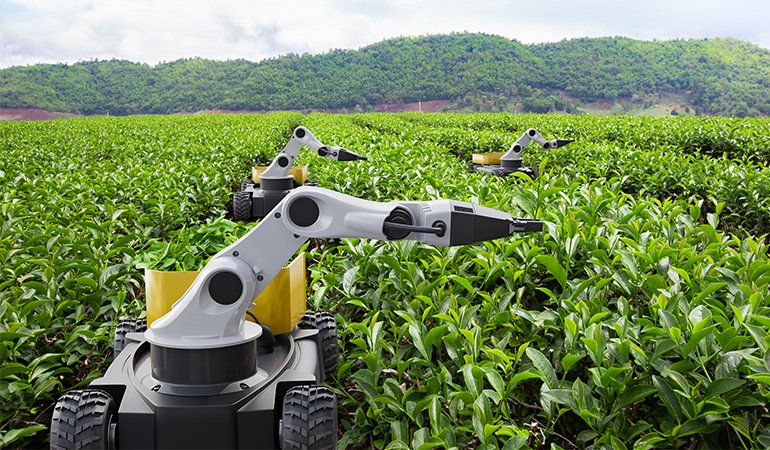
Agriculture is both a victim and a contributor to climate change. It depends heavily on weather patterns and natural resources like water and soil, yet it also produces significant greenhouse gas emissions. As global populations rise, ensuring food security while reducing environmental impact is a delicate balance. AI technologies are reshaping modern agriculture by providing data-driven insights that enable farmers to work smarter and sustainably.
Key applications include:
● Precision Farming: AI drones and sensors monitor soil quality, moisture, and nutrient levels. Machine learning models then suggest optimal planting times, irrigation schedules, and fertilizer use.
● Pest and Disease Detection: AI image recognition tools can identify pest infestations or crop diseases early, helping farmers act before large-scale damage occurs.
● Yield Prediction: Based on rainfall forecasts, temperature trends, and soil data, AI systems can predict yields and guide agricultural planning.
● Resource Optimization: Farmers can reduce water usage and chemical dependency, improving efficiency while preserving the environment. By making farming more adaptive and efficient, AI not only safeguards food production but also reduces carbon emissions and resource waste, supporting sustainable development goals.
AI and Environmental Monitoring
AI also assists in tracking and protecting natural ecosystems. With the help of satellite imagery, drones, and sensors, AI algorithms can monitor forests, oceans, and wildlife in real time.
Applications include:
● Deforestation Detection: AI models analyze satellite images to detect illegal logging or forest fires almost instantly. This helps governments and organizations intervene before large-scale damage occurs.
● Ocean Health Monitoring: AI-powered underwater drones track coral reef health, plastic pollution, and marine biodiversity.
● Air Quality and Emission Tracking: AI sensors in urban environments continuously measure pollutants and carbon levels, enabling better policy responses and public awareness.
● Biodiversity Mapping: Using computer vision, AI identifies animal populations, migration patterns, and habitat changes to support conservation efforts. These applications make environmental management more proactive rather than reactive, giving policymakers the tools to respond swiftly to emerging threats.AI in Climate Research and Policy
Beyond direct applications, AI is revolutionizing climate research and global policy-making. Researchers can now simulate thousands of future scenarios under different carbon emission pathways to understand potential risks and solutions. AI-driven analytics are also helping international bodies like the Intergovernmental Panel on Climate Change (IPCC) process vast datasets for reports and projections. Moreover, AI assists in designing carbon capture systems, optimizing materials for
renewable energy technologies, and predicting economic and social impacts of climate transitions.
In policymaking, AI-driven insights allow governments to:
● Model the outcomes of policy decisions (e.g., what happens if carbon taxes increase by 10%?).
● Prioritize regions most vulnerable to floods, droughts, or food scarcity.
● Allocate resources more effectively for sustainable infrastructure development. By bridging the gap between data and decision-making, AI ensures that policies are informed, efficient, and impactful.
The Ethical and Practical Challenges
While AI holds enormous promise, it also brings challenges.
● Data Quality: AI models depend on accurate, comprehensive data. In many developing regions, climate data collection remains inconsistent.
● Energy Consumption: Training large AI models requires substantial computing power, which can itself produce carbon emissions.
● Bias and Inequality: If data is biased toward certain regions, AI predictions may favor developed countries while neglecting vulnerable ones.
● Ethical Use: The use of AI for surveillance or profit-driven motives can conflict with sustainability goals. To overcome these barriers, global cooperation is essential. Initiatives like AI for Earth (by Microsoft) and Climate Change AI (a global research consortium) are working to ensure that AI technologies remain transparent, energy-efficient, and inclusive.
Future Prospects: AI as a Catalyst for a Greener Planet
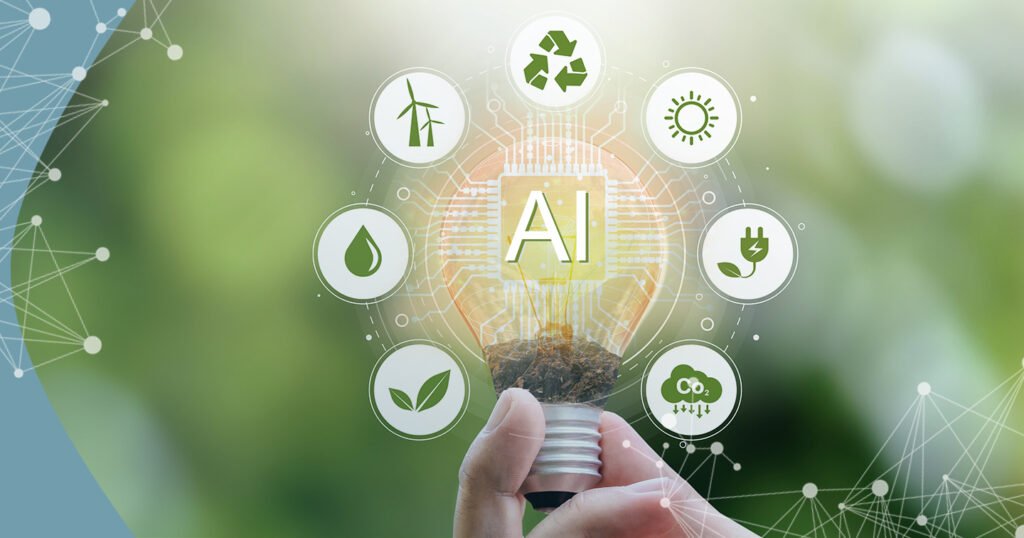
The potential of AI in combating climate change is immense and still expanding. Emerging innovations include:
● AI-designed carbon-neutral materials for manufacturing and construction.
● Autonomous climate robots that plant trees, clean oceans, and monitor ecosystems.
● AI-driven carbon accounting systems that track emissions across industries with real-time transparency.
● Predictive urban planning models that design smart, sustainable cities reducing energy waste. As quantum computing evolves, AI’s processing power will multiply, allowing scientists to simulate climate scenarios with even greater precision. This will enable a deeper understanding of how small changes—like regional deforestation or ocean warming—affect
the planet’s climate as a whole.
Conclusion: A Smarter, Sustainable Future
Artificial Intelligence is not a magic bullet that will solve climate change overnight, but it is undeniably one of the most powerful tools humanity has ever created. It allows us to understand the planet in ways we never could before—to detect invisible trends, predict disasters before they happen, and design solutions that balance progress with preservation. In essence, AI doesn’t just help us react to climate change—it helps us stay one step ahead of it. By combining human creativity, policy action, and AI’s analytical might, we can forge a sustainable future where technology becomes nature’s ally, not its enemy. The real power of AI lies not only in its algorithms but in how humanity chooses to use it—for
awareness, adaptation, and above all, the survival of our planet.
Predicting Weather: Beyond Human
Forecasting
Introduction: The Science of Forecasting and Its Limits
For centuries, humans have tried to predict the weather—observing cloud patterns, wind directions, and temperature changes to make short-term forecasts. With the advancement of science, meteorology evolved into a sophisticated field based on physics, mathematics, and satellite observations. Traditional forecasting models simulate atmospheric behavior through
equations that describe fluid dynamics and thermodynamics, predicting how air masses, pressure systems, and moisture move across the globe. However, the Earth’s atmosphere is immensely complex and chaotic. A small change in one region—such as a rise in ocean temperature or a shift in wind speed—can have cascading effects thousands of kilometers away. This interconnectedness makes weather prediction one of the hardest scientific problems in existence. Even the most advanced traditional models often struggle to deliver precise short-term forecasts, especially for localized weather phenomena like thunderstorms, flash floods, or tornadoes. Human forecasters interpret data from satellites and sensors, but their ability to
identify subtle, nonlinear patterns is limited. This is where Artificial Intelligence (AI) becomes a revolutionary force. AI-driven weather prediction has begun to transform meteorology—offering deeper insights, faster updates, and greater accuracy than ever before.
AI in Weather Prediction: A New Era of Meteorology
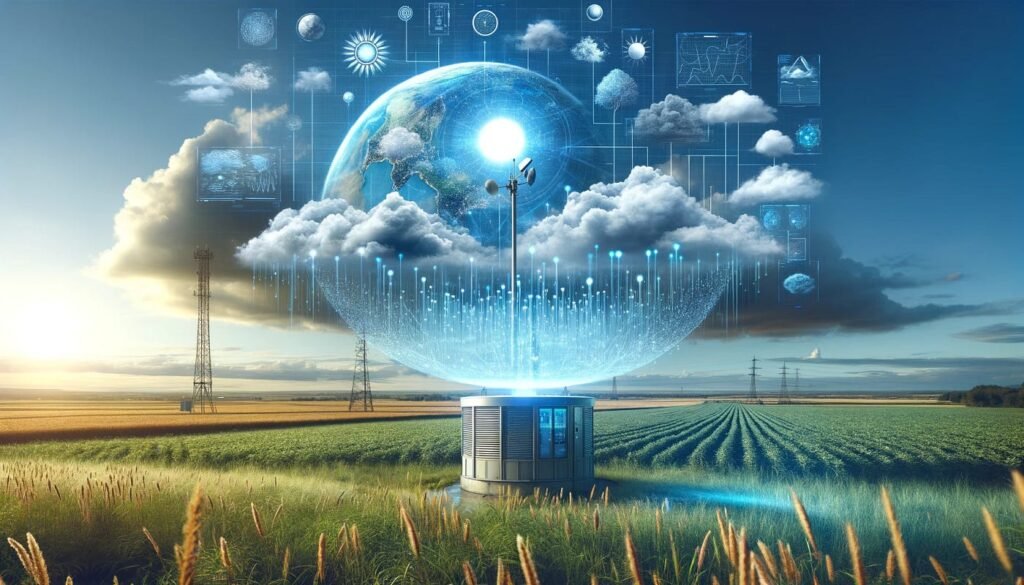
Artificial Intelligence, particularly through Machine Learning (ML) and Deep Learning (DL), brings a data-driven approach to weather forecasting. Unlike traditional physics-based models that rely on equations, AI systems learn patterns directly from the data itself. They can process massive real-time datasets—from satellite imagery, radar signals, ocean buoys, atmospheric sensors, and even smartphone barometers—to produce hyper-accurate forecasts at lightning speed.
How AI Differs from Traditional Forecasting
● Traditional Meteorology: Uses physical laws of motion, temperature, and humidity to model atmospheric behavior. It’s powerful but limited by computational complexity and simplifications required for large-scale modeling.
● AI Forecasting: Learns from actual observed data and identifies nonlinear relationships that humans or physics equations might miss. The more data it receives, the smarter and more accurate it becomes. AI doesn’t replace traditional methods—it enhances them, fusing physics-based understanding with real-time data-driven learning to build hybrid models that outperform older systems in both accuracy and adaptability.
Key Technologies Powering AI Weather Forecasting
Several branches of AI technology converge to make intelligent weather prediction possible. Each technology plays a specific role in understanding and forecasting environmental patterns.
- Deep Learning for Storm Tracking and Rainfall Prediction
Deep Learning (DL), a subset of machine learning inspired by the structure of the human brain, excels at recognizing patterns within huge datasets. In meteorology, DL models are trained on years of radar images, satellite data, and atmospheric readings to:
● Track the formation and movement of storm systems.
● Predict rainfall intensity, timing, and duration.
● Identify early signs of cyclones, hurricanes, and tornadoes from subtle cloud formations.
Convolutional Neural Networks (CNNs), a type of deep learning model, are particularly effective in analyzing spatial data like satellite images. They can detect evolving storm cells or temperature gradients long before they become visible to the human eye. A practical outcome of this technology is short-term precipitation forecasting—sometimes
called “nowcasting.” Deep learning models can predict rainfall or snow just a few hours ahead with extremely fine geographic precision, something traditional models struggle with.
Computer Vision for Satellite Image Interpretation
Computer Vision allows AI to “see” and interpret images, much like humans—but faster and with greater accuracy. By training AI systems on millions of satellite images, computer vision algorithms can:
● Classify cloud types and formations.
● Detect severe weather indicators, such as cumulonimbus clouds (which signal thunderstorms).
● Track the expansion of storm fronts and heatwaves.
● Monitor deforestation, glacier retreat, and urban heat islands affecting local weather.
NASA, ESA (European Space Agency), and private companies like Google and IBM now use AI-based image recognition systems to monitor the Earth’s atmosphere continuously. These systems can analyze visual data from multiple satellites simultaneously, updating weather models in real time. This automation not only improves accuracy but also reduces the time lag between observation and forecast, which can be critical during emergencies like cyclones or floods.
Reinforcement Learning for Real-Time Climate Simulations
Reinforcement Learning (RL) represents the next frontier in AI-based weather forecasting. In RL, an AI agent learns by interacting with its environment—testing strategies, receiving feedback, and gradually improving its performance.
Applied to meteorology, reinforcement learning enables systems to:
● Run real-time simulations of atmospheric conditions.
● Adjust model parameters dynamically to improve forecast accuracy.
● Optimize data assimilation (how new data is integrated into forecasts).
Essentially, the AI “learns” how to simulate the Earth’s climate more efficiently, refining its models with every iteration. This approach drastically cuts the computational time required for accurate predictions, helping forecasters respond quickly to changing weather conditions. For instance, reinforcement learning can optimize where and when to deploy weather
balloons, drones, or sensors—gathering data precisely where uncertainty is highest, making every observation count.
Real-World Example: Microsoft’s AI Project “ClimaCell”
One of the most exciting innovations in this space is Microsoft’s AI-driven weather technology, known as “ClimaCell” (now part of Tomorrow.io). The project leverages machine learning to transform everyday devices into environmental sensors—including smartphones, vehicles, and IoT devices. Each smartphone, for example, contains sensors that measure pressure, humidity, and temperature. ClimaCell collects these readings from millions of devices worldwide, along with data from vehicles, drones, and satellites, creating a dense web of real-time observations.
AI models then process this ocean of data to generate hyperlocal weather forecasts, offering minute-by-minute updates for specific neighborhoods or even city blocks.
Impact of ClimaCell’s Approach
● Improved Rainfall Forecasting: Predicts rainfall within a 500-meter radius up to several hours in advance.
● Disaster Management: Helps cities anticipate flash floods, drought conditions, and storm surges with greater precision.
● Agricultural Planning: Enables farmers to plan irrigation and harvest activities with confidence.
● Urban Infrastructure: Assists city planners and transport authorities in preparing for weather disruptions.
By converting everyday sensors into part of a global climate network, Microsoft’s AI effectively democratizes weather prediction—making accurate forecasting accessible to everyone.
Benefits of AI-Powered Weather Forecasting
The integration of AI into meteorology delivers several transformative advantages that go far beyond incremental improvements in accuracy.
- Faster and More Accurate Predictions
AI can analyze terabytes of incoming weather data in seconds, updating forecasts far more frequently than traditional models. This enables continuous, real-time monitoring of changing weather conditions—vital for early warning systems. - Hyperlocal Forecasting
Instead of broad regional predictions, AI enables street-level forecasts, giving individuals, farmers, and businesses precise information for their exact location. - Enhanced Disaster Preparedness
With AI predicting floods, hurricanes, and heatwaves earlier and more accurately, governments and organizations can plan evacuations, resource distribution, and rescue operations in advance—saving countless lives. - Economic and Environmental Benefits
Accurate forecasts help reduce crop losses, optimize renewable energy generation, improve logistics efficiency, and minimize flight delays—all of which contribute to economic savings and reduced environmental impact. - Continuous Learning and Improvement
AI systems get smarter with every dataset they process. Unlike traditional models that must be manually recalibrated, AI models evolve automatically as new information flows in, ensuring continual improvement in performance.
AI in Global Weather Organizations
Major meteorological institutions worldwide are rapidly integrating AI into their operations:
● European Centre for Medium-Range Weather Forecasts (ECMWF) uses machine learning to improve medium-term forecasts (up to 10 days).
● NOAA (U.S. National Oceanic and Atmospheric Administration) applies AI to enhance hurricane tracking and ocean temperature modeling.
● India Meteorological Department (IMD) is experimenting with AI-driven nowcasting systems to improve monsoon rainfall prediction and flood management.
● Google DeepMind, in collaboration with the UK Met Office, has created “GraphCast,” an AI model that outperforms traditional weather prediction systems on 90% of key metrics.
Such collaborations mark a paradigm shift—from human-dependent interpretation to AI-augmented decision-making—where forecasters use AI insights to validate and communicate forecasts with confidence.
Challenges and Limitations
Despite its impressive progress, AI-based weather forecasting is not without challenges:
- Data Quality and Coverage:
AI needs vast, accurate, and diverse datasets. In many developing regions, reliable sensor networks or historical climate data are limited. - Computational Power and Energy Demand:
Training large deep learning models requires immense computing resources, sometimes generating significant carbon emissions—ironically contributing to the problem AI seeks to solve. - Interpretability of AI Models:
Many AI systems operate as “black boxes,” making it difficult for scientists to understand why a particular prediction was made. This lack of transparency can reduce trust among meteorologists and policymakers. - Integration with Traditional Models:
Seamlessly combining AI-based approaches with existing physics-based models remains a technical challenge.
Addressing these limitations will require collaborative global efforts—open data sharing, investment in sustainable computing, and interdisciplinary research bridging AI and atmospheric science.
Future of AI in Weather Prediction
The future of meteorology will likely be shaped by AI-first forecasting systems. Some emerging trends include:
● Quantum AI Models: Combining quantum computing with AI to simulate atmospheric dynamics at unprecedented resolution.
● Edge AI for Local Forecasting: AI models running directly on smartphones, drones, or local sensors, offering instant hyperlocal predictions without cloud processing delays.
● AI-Enhanced Climate Twins: Digital replicas of Earth’s atmosphere that evolve in real time to test various climate scenarios.
● Collaborative Forecasting Networks: Crowdsourced data from billions of devices continuously feeding AI systems to improve global forecasts collectively. As AI continues to evolve, weather prediction will shift from reactive observation to
predictive prevention, where humans can anticipate and act before severe weather strikes.
Conclusion: Fewer Surprises, More Preparedness
AI is redefining how humanity understands and interacts with the atmosphere. Traditional meteorology laid the foundation, but AI is building the future—a future where weather forecasts are faster, sharper, and hyperlocal; where floods and droughts can be anticipated before they cause devastation; and where every smartphone becomes part of a global climate intelligence network. By fusing data-driven intelligence with human expertise, we move closer to a world where weather surprises become rare and preparedness becomes the norm. Artificial Intelligence is not merely a tool—it’s becoming the heartbeat of a new age of meteorology, ensuring that innovation, safety, and sustainability go hand in hand in the battle against the unpredictability of nature.
Energy Use Optimization: Making Power
Grids Smarter
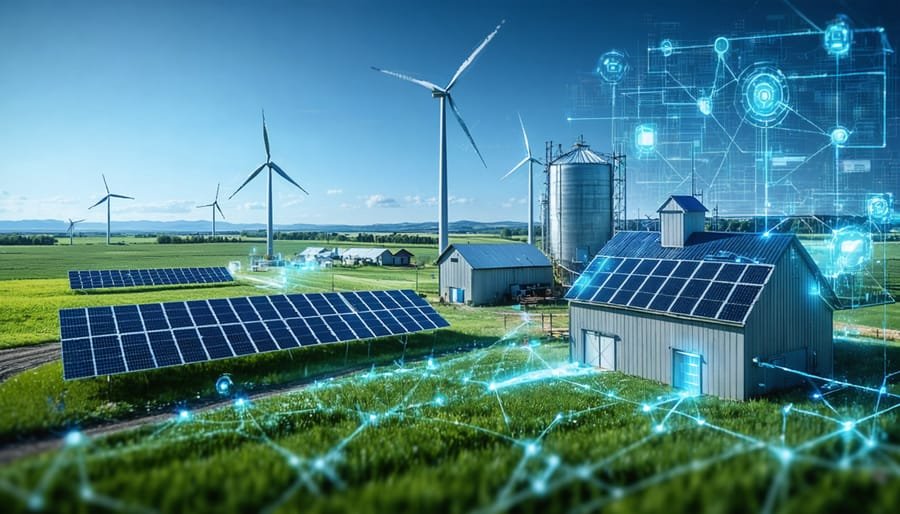
Introduction: The New Energy Revolution
The 21st century is witnessing a profound transformation in the way humanity generates, distributes, and consumes energy. Driven by the urgent need to combat climate change, nations across the world are transitioning from fossil fuels to renewable energy sources such as solar, wind, and hydroelectric power. This shift is essential for a sustainable future—but it also introduces a new set of challenges. Unlike coal or natural gas, renewable sources are inherently intermittent and unpredictable. Solar power depends on sunlight, which fluctuates with time, season, and weather; wind turbines rely on wind speeds that can change dramatically from hour to hour. At the same time, global energy demand continues to grow—especially with the rapid expansion of cities, industries, and electric vehicles. Balancing the unpredictable supply of
renewable energy with the ever-changing demand for electricity is one of the biggest engineering and environmental challenges of our age. To solve this, the world is turning to Artificial Intelligence (AI)—a technology capable of
learning from complex data, predicting patterns, and automating decision-making faster and more accurately than human operators ever could. AI is now the invisible force making power grids smarter, cleaner, and more reliable—helping societies achieve both economic growth and environmental sustainability. Understanding the Modern Power Grid
Before diving into AI’s role, it’s important to understand how power systems work. A traditional electricity grid was designed for a one-way flow of energy: large power plants generate electricity, which is transmitted through high-voltage lines to substations, and finally distributed to homes and industries. This centralized model worked well in the past, but renewable energy introduces two-way energy flows. Solar panels on rooftops, community wind farms, and decentralized storage systems all feed power back into the grid. The modern grid must now act like a living network—constantly adjusting to balance input and output in real time. Any mismatch between supply and demand can lead to blackouts, voltage drops, or wasted energy. AI provides the intelligence needed to monitor this complexity, make instant predictions, and optimize the entire system from production to consumption.
How AI Helps Optimize Energy Use
Artificial Intelligence brings data-driven intelligence and automation to every layer of the energy ecosystem—from power generation to grid management to consumer usage.
Here’s how:
- Load Forecasting: Predicting Energy Demand Before It Happens One of the most critical functions of AI in the energy sector is load forecasting—predicting how much electricity will be needed at any given time, and where.
AI systems use machine learning models trained on vast amounts of data such as:
● Historical energy consumption patterns,
● Weather conditions,
● Industrial activity levels,
● Holidays, festivals, and social events,
● Population growth, and even real-time data from smart meters.
These models can predict minute-by-minute fluctuations in energy demand with remarkable precision.
For instance:
● During hot afternoons, when air conditioning usage spikes, AI systems can forecast increased demand and automatically signal power plants or battery systems to compensate.
● In the evening, as residential usage rises and industrial demand drops, the system dynamically redistributes energy supply to maintain grid stability. By anticipating demand rather than merely reacting to it, AI prevents overloads, reduces waste, and ensures continuous, reliable electricity delivery.
2.Renewable Integration: Balancing Nature’s Variability
While renewable energy is the cornerstone of sustainability, it is also unpredictable. Clouds can block sunlight, wind can suddenly slow, and rainfall may vary from year to year. These fluctuations make it difficult for traditional grids to rely heavily on renewable sources without risking instability. AI addresses this through predictive analytics and real-time control systems. By combining data from satellites, weather forecasts, and energy sensors, AI can predict how much solar or wind power will be available hours or even days ahead.
For example:
● Solar Forecasting: AI models analyze sunlight intensity, cloud movement, and atmospheric conditions to predict solar power generation.
● Wind Forecasting: Algorithms evaluate wind speed, direction, and turbine performance to estimate expected energy output. Once predictions are made, AI systems automatically adjust other energy sources (like hydro or battery storage) to balance the grid. When renewable output drops, AI can draw power from stored reserves; when it increases, the system can store the excess or sell it back to the grid. This smart orchestration ensures that renewable energy can be used more efficiently and reliably—helping countries reach higher levels of clean energy adoption without sacrificing stability.
3.Smart Buildings: The Micro-Level Revolution
While AI is revolutionizing national power grids, its impact is equally transformative at the micro level—within homes, offices, and factories. Smart buildings equipped with AI-driven management systems continuously monitor and adjust energy usage for maximum efficiency. These systems use data from sensors, thermostats, and occupancy detectors to automatically control lighting, heating, ventilation, and air conditioning (HVAC).
Here’s how it works:
● When a room is unoccupied, AI can dim or switch off lights and lower air conditioning.
● During peak hours, the system optimizes appliance operation to reduce strain on the grid.
● Predictive maintenance algorithms ensure that machines and HVAC units run efficiently, preventing breakdowns that waste energy. These adjustments might seem small individually, but when multiplied across thousands of buildings, they result in massive energy and cost savings. In some cities, AI is even being used to create energy-sharing networks, where buildings with surplus energy automatically transfer it to nearby facilities with higher demand.
Example: Google’s AI for Data Center Energy
Optimization
A real-world example of AI’s success in energy optimization comes from Google’s data centers, which consume enormous amounts of electricity to power servers and cooling systems. Google applied a DeepMind AI model to monitor data center conditions in real time—tracking factors like temperature, humidity, server load, and power usage. The AI then learned to adjust cooling systems automatically, predicting how temperature changes in one area would affect the entire environment.
The results were groundbreaking:
● Energy consumption dropped by 40% for cooling systems.
● Overall power efficiency improved by 15%, translating into massive cost and emission savings.
What’s remarkable is that the AI not only optimized performance but also learned continuously, improving its strategies without human intervention. This experiment demonstrated that AI can achieve results far beyond human intuition—and that similar principles can be applied to cities, industries, and homes worldwide.
AI and Energy Storage Systems
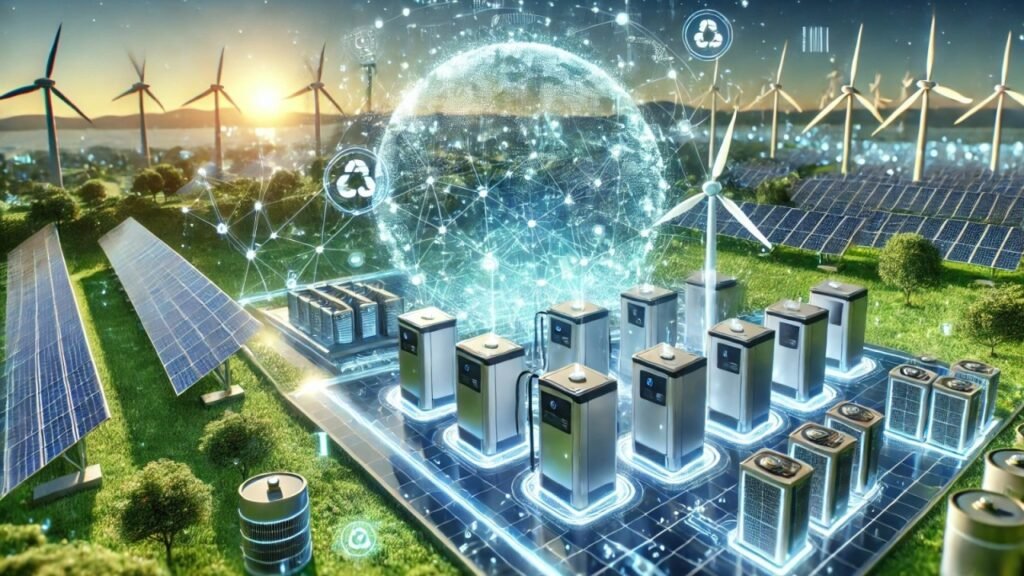
A key challenge in renewable energy management is storage—capturing excess energy when supply exceeds demand and releasing it when shortages occur.
AI enhances this process by:
● Predicting storage needs based on real-time weather and consumption data.
● Optimizing battery charge/discharge cycles to maximize lifespan and efficiency.
● Integrating distributed energy resources (DERs) like home batteries and electric vehicles into the wider grid.
For instance, AI can coordinate thousands of household batteries and EVs to act as a “virtual power plant,” supplying electricity back to the grid during peak demand. This decentralized model reduces reliance on fossil-fuel backup plants and strengthens grid resilience.
Smart Cities and the Future of Energy Management
AI’s potential doesn’t stop at individual systems—it’s reshaping entire urban infrastructures. Smart cities of the future will rely heavily on AI to create integrated, self-regulating energy ecosystems.
In such cities:
● Smart grids, buildings, and vehicles communicate continuously through IoT (Internet of Things).
● AI algorithms analyze this data to optimize traffic flow, lighting, and public utilities in real time.
● Renewable energy from solar rooftops and local wind turbines feeds into neighborhood microgrids, managed autonomously by AI. This creates a cycle of continuous optimization—where every element of the city contributes to overall energy efficiency and environmental sustainability.
Environmental and Economic Impact
The benefits of AI-driven energy optimization are enormous and multidimensional:
- Reduced Carbon Emissions:
Smarter grids reduce dependence on fossil fuels and maximize renewable energy usage. - Lower Operational Costs:
Energy providers save billions through predictive maintenance and optimized operations. - Increased Reliability:
With AI detecting faults early and balancing loads dynamically, power outages become rare. - Empowered Consumers:
Smart meters and home AI assistants allow users to monitor their energy consumption in real time and make informed choices. - Accelerated Sustainability Goals:
Nations can meet their carbon neutrality targets faster through efficient energy management and reduced wastage.
In essence, AI doesn’t just make the energy system smarter—it makes it sustainable, resilient, and human-centered.
Challenges in Implementation
Despite its promise, integrating AI into global energy systems comes with certain challenges:
● Data Privacy: Smart meters and connected devices collect sensitive usage data. Ensuring privacy and security is critical.
● Infrastructure Gaps: Many developing regions lack digital infrastructure for smart grids and sensors.
● High Initial Costs: Implementing AI solutions and upgrading grid infrastructure requires significant investment.
● Algorithm Transparency: Energy regulators need explainable AI systems to maintain accountability.
Overcoming these obstacles requires strong collaboration between governments, industries, and technology providers—supported by policies that promote innovation while safeguarding public interest.
Conclusion: Powering a Smarter, Cleaner Future
Artificial Intelligence is not just a tool—it is the brain behind the future of global energy systems. From predicting demand spikes to integrating renewable energy, from managing storage systems to powering smart cities, AI is redefining how humanity generates, distributes, and consumes energy. By turning reactive systems into proactive, self-learning networks, AI ensures that every watt of energy is used efficiently and sustainably. As Google’s example shows, even small gains in energy optimization can lead to massive environmental impact when applied at scale. The future energy landscape will be one where machines think, learn, and act in harmony with nature’s rhythms—delivering power that is not only reliable but also responsible. In short, AI is the key to making the world’s power grids not just smarter—but cleaner, greener, and truly sustainable for generations to come.
Agriculture & Food Security: Smarter Farming for a
Changing Climate
Climate change and agriculture share a delicate, interdependent relationship. Agriculture not only contributes to global carbon emissions but also suffers deeply from the consequences of a warming planet. Rising temperatures, erratic rainfall, declining soil fertility, and the increasing frequency of droughts and floods are reshaping how and where crops can be
grown. For billions of people around the world, food security is at stake. To meet the growing demands of a global population expected to surpass 9 billion by 2050, the world needs farming systems that are both resilient and efficient. This is where Artificial Intelligence (AI) steps in — transforming traditional farming into smart, data-driven agriculture capable of adapting to climate uncertainty. The Climate-Agriculture Connection Climate change alters fundamental agricultural conditions. Shifting rainfall patterns disrupt planting cycles, while higher temperatures accelerate crop diseases and pest infestations. In some areas, soil degradation and water scarcity make farming unsustainable. These changes threaten not just livelihoods but also national food supplies and economies. Traditional agricultural methods, heavily reliant on experience and intuition, struggle to cope with these complex variables. Farmers can no longer depend solely on seasonal patterns that once seemed predictable. The need for real-time, data-backed decision-making has never been greater — and AI provides exactly that.
How AI is Revolutionizing Agriculture
🌾 1. Precision Agriculture
Precision agriculture uses AI-powered tools to monitor and manage fields with extraordinary accuracy. Drones, satellites, and IoT sensors collect continuous data on soil moisture, temperature, nutrient levels, and crop growth. AI algorithms analyze this data to recommend precise interventions — whether it’s adjusting irrigation, applying fertilizer, or detecting
diseases at an early stage. For example, AI drones equipped with multispectral cameras can identify crop stress invisible to the human eye. They detect irregularities in leaf color, plant height, or texture that may signal pest attacks or nutrient deficiencies. Farmers can then respond immediately, applying targeted solutions only where needed — minimizing chemical use and maximizing productivity. This level of insight ensures that every drop of water, every gram of fertilizer, and every inch of land is used optimally. As a result, costs fall, yields rise, and the environmental impact of farming decreases significantly.
☀️ 2. Yield Prediction Models
Predicting crop yield is one of the most vital and complex aspects of agriculture. Machine learning models analyze decades of climate records, soil health data, and real-time weather inputs to forecast crop output months in advance. These predictions help farmers, governments, and supply chains prepare for shortages, surpluses, and price fluctuations. AI-based yield models are trained using historical datasets combined with satellite imagery, rainfall distribution, and temperature variations. They can estimate how changing weather patterns will affect harvest outcomes. In developing nations, where smallholder farmers depend on seasonal crops, such forecasts can mean the difference between profit and loss — or even survival and crisis. For instance, during uncertain monsoon seasons, predictive models can alert farmers when to plant or harvest. Governments and NGOs can use these insights to plan food imports, manage grain reserves, and ensure that communities don’t face hunger due to unexpected weather shifts.
📱 3. Farmer Advisory Applications
AI isn’t confined to laboratories and research institutions — it’s reaching farmers directly through mobile phones. AI-powered farmer advisory apps act like personal digital assistants, offering real-time, hyperlocal advice tailored to specific crops and regions.
These applications provide:
● Localized weather forecasts to help farmers plan irrigation and harvest schedules.
● Fertilizer and pesticide recommendations based on soil and crop health data.
● Pest and disease alerts using image recognition technology — farmers can upload pictures of infected plants and instantly receive diagnoses and treatment advice.
Platforms such as Plantix, AgroStar, and Krish-e in India are examples of AI bridging the gap between technology and the grassroots. Even farmers in remote villages can now make informed decisions using data-driven guidance — something that was unimaginable a decade ago. Real-World Example: IBM’s Watson Decision Platform for Agriculture A leading example of AI’s role in agriculture comes from IBM’s Watson Decision Platform for Agriculture. This system integrates AI, weather forecasting, IoT devices, and satellite imagery to provide a comprehensive view of farm operations.
The platform helps farmers:
● Monitor soil conditions and crop health in real time.
● Predict yield with higher accuracy.
● Optimize resource use such as water, fertilizers, and energy.
● Minimize waste and enhance long-term sustainability.
By analyzing weather data and satellite images, Watson can even suggest the best days for planting or harvesting specific crops. It also helps large-scale agribusinesses and cooperatives manage logistics, pricing, and supply chain stability. Through these tools, AI is enabling agriculture to become predictive, not reactive — empowering farmers to anticipate changes rather than just respond to them.
Beyond the Farm: AI in the Food Supply Chain
AI’s influence extends beyond fields and farms. It also plays a critical role in food processing, transportation, and distribution. Machine learning systems analyze supply chain data to identify inefficiencies and reduce food waste — which currently accounts for nearly one-third of all food produced globally.
For instance:
● AI algorithms can forecast consumer demand, reducing overproduction.
● Predictive maintenance systems prevent spoilage in storage and transport facilities.
● Automated sorting systems in food processing plants identify damaged produce, improving quality control.
By making every stage of the food system more efficient, AI contributes directly to global food security while reducing environmental footprints. Sustainability and the Future of AI-Driven Farming AI-driven agriculture is not just about technology; it’s about building resilience in a world of climate uncertainty. With machine learning models becoming more sophisticated and accessible, farmers can adapt faster to unpredictable weather, optimize resource usage, and secure livelihoods even in the harshest conditions. Future innovations may include autonomous tractors, robotic harvesters, and AI-powered irrigation systems that adjust water flow minute-by-minute based on soil data. Combined with renewable energy sources and smart logistics, the entire agricultural ecosystem could soon operate as a self-learning, climate-resilient network. However, achieving this vision requires collaboration among governments, tech companies, and agricultural communities. Data-sharing, training, and infrastructure development are essential to ensure smallholder farmers also benefit from these technological advances — not just large industrial farms.
Conclusion
AI has emerged as a silent revolution in agriculture — a guardian angel working behind the scenes to protect crops, optimize resources, and secure the global food supply. From predicting yield to preventing crop failure, from guiding farmers to stabilizing markets, AI is redefining how humanity grows its food. As climate change continues to reshape our planet, the integration of artificial intelligence in farming isn’t just an innovation; it’s a necessity. With every byte of data analyzed and every prediction refined, AI brings us one step closer to a future where technology and nature work together — ensuring that no field goes barren, and no plate goes empty.
Why AI for Climate Intelligence is Booming in 2025
The year 2025 marks a decisive turning point for how the world addresses climate change. After decades of research, pledges, and half-measures, nations, corporations, and innovators are finally converging on a single truth: data-driven climate action is the only way forward. At the heart of this transformation lies Artificial Intelligence (AI) — the silent powerhouse enabling smarter, faster, and more scalable climate solutions. As governments commit to Net Zero goals, industries embrace sustainability metrics, and investors fund climate-tech startups at record levels, a new professional landscape is emerging — one where AI meets environmental intelligence. This merging of two powerful domains is not just redefining how we fight climate change but also creating one of the fastest-growing career sectors of the decade.
The Global Push Toward Climate Intelligence
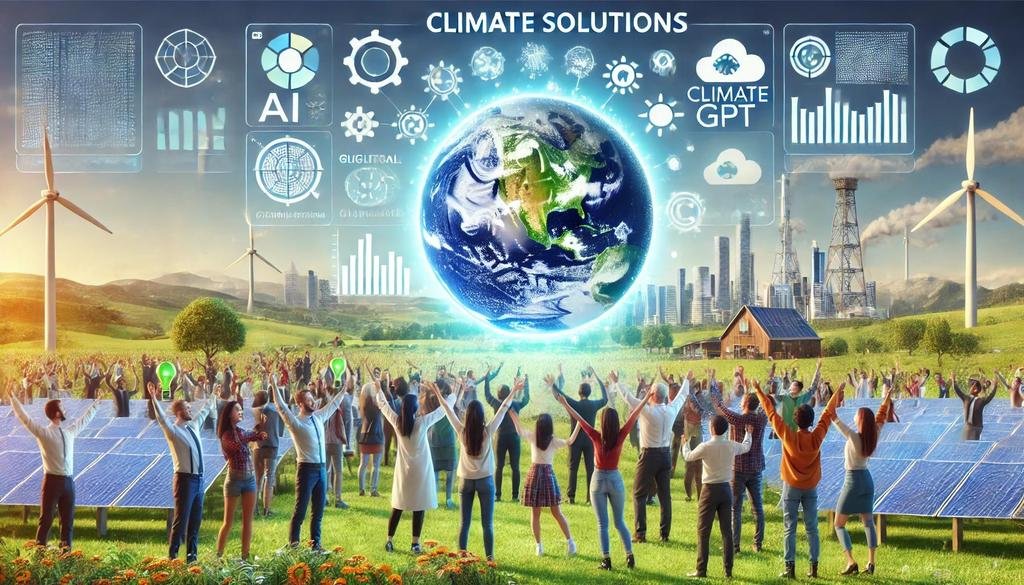
The term climate intelligence refers to the use of advanced data analytics, AI algorithms, and machine learning models to monitor, predict, and respond to environmental changes. Unlike traditional climate science, which relied heavily on physical models and manual interpretation, climate intelligence combines satellite imagery, IoT sensor data, and real-time
analytics to offer precise, actionable insights.
In 2025, this field has exploded for three key reasons:
- Urgency: The frequency and severity of climate-related disasters—wildfires, heatwaves, floods—have made real-time prediction and prevention essential.
- Technology Maturity: Cloud computing, edge AI, and high-resolution satellite networks have made environmental data more accessible and processable than ever before.
- Policy Pressure: Governments and organizations are under stricter global mandates to report, verify, and reduce their carbon footprints — something that only AI can manage efficiently at scale
The Economic Boom Behind Green AI
According to the World Economic Forum (WEF), jobs in “AI for Sustainability” have grown over 200% since 2023. This surge reflects a paradigm shift in how both public and private sectors view climate responsibility — no longer as a cost, but as a competitive advantage. Major economies — from the United States and the European Union to India, Japan, and the
UAE — are heavily investing in AI-driven sustainability infrastructure.
This includes:
● National digital twins for environmental monitoring,
● Carbon-tracking AI systems for industries,
● Smart energy grids using machine learning to balance renewable supply and demand, and
● Agricultural analytics platforms that optimize food production with minimal ecological impact.
The result? A new global ecosystem of startups, research labs, and AI consultancies focusing solely on climate intelligence. Venture capital funding for climate-tech startups surpassed $70 billion globally in 2024, much of it directed toward AI-enabled innovations. Where the Jobs Are: Emerging Domains in Climate AI The demand for professionals who can blend technical expertise with environmental understanding has never been higher. Here are the most in-demand domains within this growing field:
🌎 1. Climate Modeling & Data Analysis
Climate modeling used to be limited to large research institutions. Now, thanks to machine learning and deep learning, organizations can simulate global and local climate scenarios in real time. AI climate modelers build systems that can predict temperature shifts, sea-level rise, or extreme weather events based on decades of historical and real-time satellite data. These models guide urban planning, agricultural policy, and disaster management. In 2025, tools like Google’s DeepMind Climate Forecasting System and IBM’s Green Horizon Project are revolutionizing how governments and industries plan for the future.
⚡ 2. Smart Grid & Renewable Energy AI
As the world transitions from fossil fuels to renewables like wind and solar, maintaining grid stability becomes a complex puzzle. AI solves this challenge through intelligent prediction, optimization, and automation.
AI systems can:
● Predict electricity demand down to the minute,
● Balance renewable supply (which fluctuates with weather),
● Detect grid faults before they cause outages, and
● Reduce overall carbon emissions.
Countries like Germany and Denmark, where renewable penetration exceeds 50%, rely heavily on AI-driven grid balancing to prevent power fluctuations. Meanwhile, companies like Google, Siemens, and Schneider Electric are deploying AI energy-management tools that can cut energy waste by up to 30–40%.
🌾 3. Sustainable Agriculture Analytics
Feeding a growing population under changing climate conditions requires smarter farming — and AI is leading that charge.
From drone-based crop monitoring to soil moisture prediction, AI analytics platforms empower farmers to make climate-smart decisions. Startups like Taranis, CropX, and Prospera use AI to combine satellite data, IoT sensors, and weather models, helping farmers reduce fertilizer use, prevent pest outbreaks, and maximize yield with minimal environmental impact.
Governments, too, are adopting these tools for food security planning, drought management, and rural development programs. By 2025, sustainable agriculture analytics represents one of the top three employment areas in climate-tech AI.
🌍 4. Carbon Footprint Optimization
One of the most critical aspects of achieving Net Zero is the ability to track, measure, and reduce emissions at every stage of production and consumption.
AI-based carbon management systems automate this process by:
● Analyzing energy consumption patterns,
● Calculating emissions across supply chains, and
● Suggesting the most cost-effective reduction strategies.
For example, AI can determine whether it’s better for a company to switch to renewable energy, optimize logistics routes, or redesign packaging to cut emissions. Tools like Microsoft Cloud for Sustainability, Watershed, and Salesforce Net Zero Cloud are enabling corporations to report sustainability metrics with precision and transparency — aligning with global standards such as the Paris Agreement and the EU Green Deal.
AI for Sustainability: From Innovation to Employment Revolution
The rise of AI for climate intelligence isn’t just an environmental trend — it’s shaping the future of work. New interdisciplinary roles are emerging that blend coding, climatology, and policy analysis. Professionals who can understand both datasets and ecosystems are becoming invaluable.
Key emerging roles include:
● AI Climate Modeler
● Sustainability Data Scientist
● Renewable Energy AI Engineer
● Climate-Tech Product Manager
● Carbon Analytics Specialist
● Environmental AI Policy Consultant
These roles are now being listed by major corporations like Amazon, Google, IBM, Microsoft, and Tesla, as well as government agencies and NGOs worldwide. In universities, specialized programs are launching in “AI for Environmental Systems,” “Sustainable Machine Learning,” and “Climate Informatics.” By 2030, experts predict that the green-tech and AI sustainability job market will exceed 10 million global positions, spanning research, engineering, and field implementation.
AI + Sustainability = Purpose with Profit One of the biggest drivers behind this boom is that AI for sustainability is both meaningful and profitable. Unlike earlier “green movements” driven primarily by activism, today’s climate intelligence
sector attracts technologists, entrepreneurs, and investors who see purpose and business opportunity aligning.
AI-based sustainability solutions help organizations:
● Save energy and operational costs,
● Comply with regulatory mandates,
● Build stronger ESG (Environmental, Social, Governance) credentials, and
● Enhance public trust and investor confidence. The result is a rare synergy where doing good for the planet also drives financial growth. Case Studies: Global Momentum in 2025
● Microsoft’s AI for Earth Initiative: Funding over 850 projects worldwide, it supports AI-based innovations in biodiversity monitoring, water resource management, and sustainable agriculture.
● Google DeepMind’s Weather AI: Providing 10-day flood and storm predictions, saving thousands of lives annually.
● India’s Climate Intelligence Mission 2025: A government–private collaboration using AI for crop forecasting, water management, and pollution reduction.
● UN Environment Programme’s Digital Twin Earth Project: Using AI to simulate Earth’s systems in real time, improving global coordination against climate change. These initiatives prove that AI’s role in climate action is no longer theoretical — it’s operational, measurable, and expanding rapidly. The Road Ahead: A Smarter, Greener Future As the planet faces escalating environmental challenges, the fusion of AI and climate intelligence represents one of humanity’s most promising tools for resilience. From predicting natural disasters to optimizing resource use and empowering green industries, AI is transforming how we understand and protect our world. In 2025, AI for climate intelligence stands not only as a technological revolution but as a moral and economic imperative. It’s where innovation meets sustainability — and where
future careers will thrive. In short, climate tech isn’t just a cause — it’s a calling. It’s a space where engineers, scientists, and dreamers can build systems that don’t just generate profit but preserve the planet itself. As we move forward, one thing is clear: The path to a cleaner, smarter, and more sustainable Earth is being charted — line by line, algorithm by algorithm — by the power of Artificial Intelligence.
How Pinaki IT Hub Helps You Build a Career in Climate
AI
In today’s rapidly changing world, the challenges of climate change demand not only awareness — but action powered by innovation. The global race to achieve Net Zero emissions, build sustainable infrastructure, and protect natural ecosystems has created an urgent need for professionals who can bridge technology and environmental science. This is where Climate Artificial Intelligence (Climate AI) comes in — a field where data-driven intelligence meets planetary responsibility. At Pinaki IT Hub, we believe that Climate Intelligence is not just technology — it’s humanity’s most crucial mission. Our purpose goes beyond teaching coding or analytics; we empower learners to apply AI and data science for real-world sustainability challenges. Through world-class training programs, international collaborations, and hands-on project
experience, Pinaki IT Hub helps learners transform their curiosity into career-building skills — skills that directly contribute to global climate action. The Future of Work Lies in Climate AI As industries and governments commit to sustainability targets, AI-powered environmental solutions are redefining how the world measures, manages, and mitigates climate risks.
From optimizing renewable energy grids to forecasting extreme weather, from reducing carbon footprints to improving agricultural yields — AI is becoming the backbone of modern sustainability initiatives. According to the World Economic Forum, roles in “AI for Sustainability” have increased by more than 200% since 2023, and this number continues to rise. The demand is highest for professionals skilled in:
● Climate data modeling
● Renewable energy analytics
● Carbon accounting using AI
● Sustainable agriculture technologies
At Pinaki IT Hub, our programs are designed to prepare students for exactly these emerging domains — helping them build a career that combines purpose with profit.
Pinaki IT Hub’s Vision: Building Tech for a Greener Planet
Our vision is simple yet profound — to equip individuals with the tools of Artificial Intelligence to protect and sustain our planet. We see technology not just as a tool for progress, but as a force for environmental balance. By focusing on the intersection of AI, Data Science, and Sustainability Analytics, we help our learners turn technical skills into meaningful global contributions. Pinaki IT Hub is more than an IT training institute; it is a mission-driven ecosystem where learning meets impact. Every course, every mentorship, and every project is designed with one goal — to empower professionals who can code solutions for climate change. Why Choose Pinaki IT Hub?
Our programs stand out because they combine technical depth, global perspective, and
practical exposure.
Here’s how we turn learners into climate-tech professionals ready for the future.
💻 1. Industry-Focused AI Training
At Pinaki IT Hub, learning isn’t limited to theory — it’s driven by industry-relevant, project-based training. Our students gain hands-on experience with tools and technologies actively used in climate intelligence research and sustainability applications.
You’ll learn:
● Python for Data Analytics: From managing climate datasets to building predictive models.
● TensorFlow and PyTorch: To develop deep learning models that analyze weather data, satellite images, and pollution metrics.
● Geospatial & Satellite Image Modeling: Using tools like Google Earth Engine and ArcGIS to interpret environmental data.
● Data Visualization: Through Power BI, Tableau, and Matplotlib, helping you communicate complex environmental insights effectively. By the end of the training, learners can confidently handle climate-related datasets, build AI prediction models, and contribute to real-world environmental technology projects.
🌱 2. Real-World Sustainability Projects
Our philosophy is “learning by doing.” That’s why every student at Pinaki IT Hub gets the opportunity to work on live
sustainability simulations and AI-driven climate applications.
Some of our flagship project experiences include:
● Rainfall Forecasting Models: Using machine learning to analyze historical rainfall patterns and predict drought or flood conditions.
● Carbon Footprint Estimation Tools: Building AI models that calculate emissions from transport, manufacturing, and buildings — helping industries strategize reductions.
● Energy Demand Prediction: Using predictive analytics to balance renewable energy generation and urban electricity consumption.
● Agricultural Yield Forecasting: Applying data science to forecast crop productivity based on rainfall, temperature, and soil conditions.
These projects are designed in collaboration with industry experts and global partners, ensuring students don’t just learn the concepts — they solve actual sustainability
challenges.
🤝 3. Global Collaboration with Experts
Climate AI is a global effort — and we believe learning should be too. Through Pinaki IT Hub’s international collaborations, students gain exposure to case studies, datasets, and research from sustainability experts across the world.
We regularly conduct:
● Workshops and webinars with professionals working in renewable energy, climate policy, and environmental data science.
● Virtual internships with climate-tech startups and research labs.
● Mentorship programs that connect learners to data scientists and AI engineers tackling global climate issues.
Our partnership with the UK-based DBSL (Data Business Systems Ltd.) provides learners access to international insights, real project briefs, and cross-border training sessions — giving them a truly global edge in the AI job market.
🚀 4. Career Guidance & Certification Support
We understand that building a meaningful career requires both skills and direction. At Pinaki IT Hub, learners receive personalized career mentoring from experts who guide them toward their desired roles in AI and sustainability. Our programs prepare students for globally recognized certifications in:
● Artificial Intelligence & Machine Learning
● Data Science & Analytics
● Environmental Data Science
● Sustainability Management and ESG Analytics Additionally, our placement support network connects students to companies and organizations looking for AI professionals focused on environmental technology.
We also provide assistance with:
● Resume and LinkedIn optimization for the climate-tech industry.
● Mock interviews and technical assessments.
● Job referrals through our global partners and alumni network.
By the time you complete the program, you’ll not only have certification — you’ll have a clear roadmap to launch or elevate your career in Climate AI.
Transforming Education into Climate Action
Every student who joins Pinaki IT Hub becomes part of a mission larger than themselves — the mission to build a sustainable future through technology. The projects you complete here aren’t just academic exercises; they are potential solutions for real environmental problems.
Our learners have gone on to:
● Develop AI models for renewable energy forecasting.
● Build dashboards for carbon footprint tracking.
● Create decision-support systems for agriculture and disaster management.
Through each of these contributions, they’re not just advancing their careers — they’re helping humanity adapt to one of its greatest challenges. Empowering the Next Generation of Climate Innovators At Pinaki IT Hub, we envision a world where every technologist becomes a climate innovator. We aim to build a generation of AI professionals who code with conscience — people who use algorithms to heal, not harm; to preserve, not pollute. Whether you’re a student taking your first step into data science or a professional looking to transition into sustainability analytics, our programs are tailored to give you both technical mastery and environmental awareness.
By combining AI, big data, IoT, and cloud computing with sustainability principles, Pinaki IT Hub helps you contribute to global climate goals — one project, one dataset, and one decision at a time. Conclusion: Building a Sustainable Future with AI At the core of Pinaki IT Hub’s philosophy lies a simple belief — education must lead to impact.
We don’t just teach AI.
We teach how AI can shape a cleaner, smarter, and more sustainable world. Our learners aren’t just future engineers or analysts — they are the builders of a new environmental era. By joining Pinaki IT Hub, you become part of a movement that merges intelligence with purpose, innovation with empathy, and learning with lasting change.
🌍 At Pinaki IT Hub, we don’t just teach Artificial Intelligence — we teach how to build a sustainable future with it.
🌐 Be the Mind that Powers a Greener Planet
The fight against climate change isn’t just about politics — it’s about intelligence. And in 2025, that intelligence is artificial — but the impact is very real.
💡 Learn how to use AI to forecast storms, optimize power, and protect crops — because the future belongs to those who can predict it.
Join Pinaki IT Hub — and turn your data skills into climate action.
👉 Visit Now: www.pinakiithub.com
Powered by Knowledge. Driven by Purpose.