Artificial Intelligence is becoming part of everyday decision-making. From answering questions and writing reports to assisting with healthcare, finance, cybersecurity, and business strategy, people increasingly rely on AI-generated information. But there is one major problem: AI can sometimes sound completely confident even when its answer is wrong.
This is why AI systems should learn to express uncertainty instead of presenting every answer as absolute truth.
The Problem with Overconfident AI
AI models generate responses by identifying patterns in the data they were trained on. They do not always “know” whether an answer is factually correct. When information is incomplete, outdated, ambiguous, or outside the model’s knowledge, the system may still produce a fluent and convincing response.
This is commonly associated with AI hallucinations—situations where an AI generates incorrect or fabricated information while presenting it in a believable way.
For example, an AI system might confidently provide a fake citation, invent a statistic, or misunderstand a complex question. If users trust the tone of confidence rather than verifying the information, the consequences can be serious.
Uncertainty Can Build Trust
Expressing uncertainty does not make AI weaker. In many situations, it can make AI more reliable and trustworthy.
Instead of saying:
“This is definitely the correct answer.”
An AI system could say:
“Based on the available information, this is the most likely answer, but additional verification may be required.”
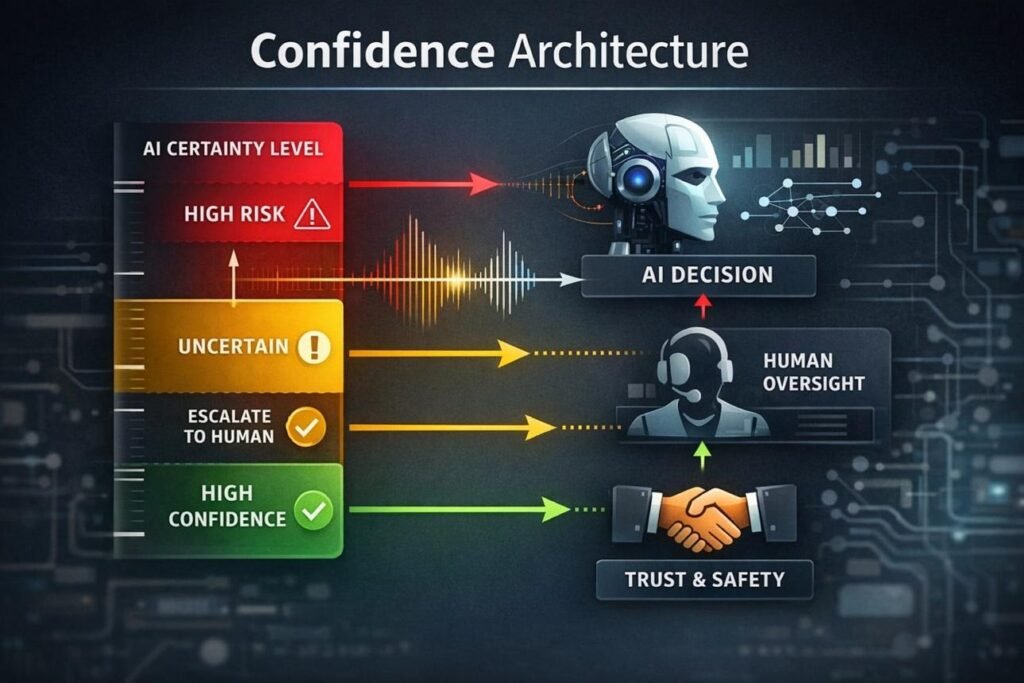
This approach helps users understand the difference between high-confidence information and uncertain predictions.
A well-designed AI system should be able to communicate when:
- The available information is incomplete.
- Multiple answers may be possible.
- The data may be outdated.
- The question is ambiguous.
- Human verification is recommended.
Confidence Should Match Accuracy
The ideal AI is not one that always sounds certain. It is one whose level of confidence reflects the reliability of its answer.
For instance, an AI used in a cybersecurity environment might identify a suspicious login and say there is a high probability of malicious activity rather than immediately declaring that an attack has occurred. A security professional can then investigate before taking action.
This creates a better partnership between humans and AI. AI provides analysis and recommendations, while humans make informed decisions when uncertainty or risk is high.
The Future of Responsible AI
As AI becomes more powerful, transparency around uncertainty will become increasingly important. Developers should focus not only on making AI systems more capable but also on making them honest about their limitations.
The future of trustworthy AI is not about creating machines that always appear confident. It is about building systems that can say “I don’t know,” “I’m not certain,” or “This needs verification” when appropriate.
Ultimately, uncertainty is not a weakness. It is a feature of responsible intelligence.
Suggested Graph for the Blog
You can add a simple conceptual graph comparing AI Confidence with Actual Accuracy:
y=xy=xy=x
Graph idea: X-axis = AI Confidence, Y-axis = Actual Accuracy. The ideal relationship is a positive alignment where higher confidence generally corresponds to higher accuracy. The key message: AI confidence should be calibrated to its actual reliability—not simply expressed as absolute certainty.
Suggested blog takeaway:
The smartest AI isn’t the one that always has an answer. It’s the one that knows when its answer may be wrong.
What Is RadLE 2.0? Understanding the New AI Benchmark
Artificial intelligence is rapidly entering high-stakes fields such as healthcare, where a wrong answer can have serious consequences. But when evaluating medical AI, is accuracy alone enough? RadLE 2.0 argues that it isn’t.
RadLE 2.0, short for Radiology’s Last Exam 2.0, is an uncertainty-aware benchmark developed by the Centre for Responsible Autonomous Systems in Healthcare (CRASH Lab), anchored at Ashoka University’s Koita Centre for Digital Health. It is designed to evaluate whether AI systems are ready for autonomous diagnosis in radiology—not just whether they can identify the correct diagnosis, but whether they understand when they might be wrong and when they should hand the case over to a human expert.
Why Was RadLE 2.0 Created?
Traditional AI benchmarks often focus on one simple question: Did the model get the answer right?
However, in real-world healthcare, another question is equally important: Does the AI know when it should not answer?
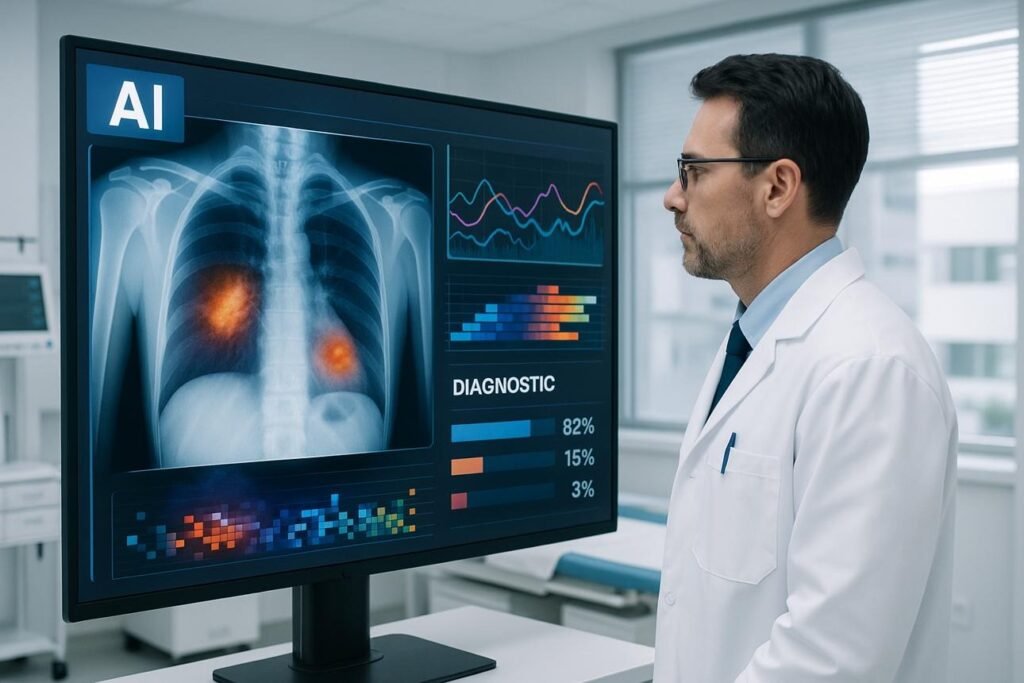
An AI system that gives a wrong diagnosis with high confidence can be more dangerous than one that admits uncertainty. RadLE 2.0 addresses this problem by allowing AI models and human readers to provide a diagnosis alongside a confidence score from 0 to 4—or explicitly respond, “I don’t know.”
This makes the benchmark particularly relevant to the future of autonomous AI systems.
How Does RadLE 2.0 Work?
The benchmark evaluates radiology cases using multiple dimensions rather than relying on accuracy alone. Its primary Confidence Weighted Index (RadLE-C) rewards correct answers when confidence is justified and penalises incorrect answers that are delivered with high confidence. An “I don’t know” response receives neither reward nor penalty.
The benchmark also includes four additional measures:
- Reliability Index – Are highly confident answers actually correct?
- Accuracy Index – How often does the AI reach the correct diagnosis?
- Safety Index – How safely does the system behave when making decisions?
- Handover Readiness Index – Can the AI recognise cases that should be referred to a human specialist?
Together, these metrics create a broader picture of AI readiness for autonomous diagnosis.
What Does This Mean for the Future of AI?
The key lesson from RadLE 2.0 is that being intelligent is not only about answering correctly—it is also about knowing your limitations.
As AI becomes more capable, benchmarks like RadLE 2.0 could encourage developers to build systems that are better calibrated, more transparent, and safer for real-world applications. This idea extends beyond radiology. In the future, similar evaluation frameworks could be valuable for AI used in law, finance, cybersecurity, education, and other high-impact domains.
The goal should not be to create AI that always gives an answer. The goal is to create AI that understands when to answer, how confident to be, and when to ask a human for help.
In the age of autonomous AI, the ability to say “I don’t know” may become just as important as the ability to say “I know.”
Suggested Graph for the Blog
For the visual section, use a benchmark comparison graph showing the difference between Human Experts and AI Performance on the RadLE 2.0 Confidence Weighted Index. The CRASH Lab’s technical report presents this metric on a 0–2,000 scale and emphasises that the benchmark combines diagnostic correctness with confidence.
y=xy=xy=x
Graph concept:
X-axis: AI Confidence
Y-axis: Diagnostic Reliability
Ideal trend: As confidence increases, accuracy should also increase. The gap between confidence and actual reliability highlights the problem of AI overconfidence.
Responsible AI in Healthcare: Building Trust Between Doctors and AI
Artificial Intelligence is transforming healthcare. From analysing medical images and supporting diagnosis to predicting health risks and helping doctors manage large amounts of patient data, AI has the potential to make healthcare faster, more efficient, and more personalised.
But healthcare is not an industry where technology can simply be judged by accuracy alone. Trust, safety, privacy, transparency, and human oversight are equally important. This is where Responsible AI becomes essential.
What Is Responsible AI in Healthcare?
Responsible AI refers to designing and using artificial intelligence in ways that are safe, fair, transparent, accountable, and centred around human well-being.
In healthcare, this means AI should not replace medical professionals without appropriate safeguards. Instead, it should work as a decision-support tool that helps doctors make better-informed decisions.
For example, an AI system may analyse an X-ray and identify patterns that could indicate a potential abnormality. The doctor can then review the AI’s findings alongside the patient’s symptoms, medical history, and other clinical information before making a final decision.
This creates a human-AI partnership, rather than allowing technology to operate without oversight.
Why Trust Matters
Healthcare decisions can directly affect people’s lives. If an AI system produces an incorrect recommendation, fails to recognise a rare condition, or shows bias because of limitations in its training data, the consequences can be significant.
Doctors therefore need to understand how reliable an AI system is, when it may be uncertain, and what information influenced its recommendation.
AI systems should also communicate uncertainty clearly. Instead of presenting every prediction as a fact, responsible AI should indicate when additional testing, expert review, or human judgment is required.
The Key Principles of Responsible Healthcare AI

Several principles can help build trust between doctors and AI:
1. Transparency: Healthcare professionals should understand the purpose and limitations of an AI system.
2. Explainability: Where possible, AI should provide understandable reasons or evidence behind its recommendations.
3. Human Oversight: Doctors should remain involved in important clinical decisions, particularly when risks are high.
4. Privacy and Security: Patient data must be protected throughout the AI lifecycle.
5. Fairness: AI systems should be evaluated for bias and tested across diverse patient populations.
6. Accountability: Organisations must establish clear responsibility for how AI is developed, deployed, monitored, and used.
Building the Future of Healthcare
The future of healthcare is unlikely to be about doctors versus AI. Instead, it will increasingly be about doctors working with AI.
AI can process enormous amounts of information, identify patterns, and provide rapid assistance. Doctors bring clinical experience, empathy, ethical judgment, and an understanding of individual patient circumstances.
The strongest healthcare systems will combine these strengths.
y=xy=xy=x
Suggested Graph Concept: Create a conceptual graph with AI Capability & Automation on the X-axis and Human Oversight & Trust on the Y-axis. The key message is that as AI becomes more capable, the need for responsible governance, transparency, and human oversight remains critical.
Ultimately, responsible AI is not about slowing down innovation. It is about ensuring that innovation moves in the right direction.
The goal is to create healthcare AI that is not only intelligent, but also safe, transparent, fair, accountable, and worthy of trust.
Real-World Clinical Applications of Uncertainty-Aware AI
Artificial Intelligence is rapidly changing healthcare. AI systems can analyse medical images, identify patterns in patient data, support clinical decision-making, and help healthcare professionals work more efficiently. However, as AI becomes more involved in real-world clinical environments, one capability is becoming increasingly important: the ability to recognise and communicate uncertainty.
Traditional AI systems often focus on producing the most likely answer. But in healthcare, an AI that confidently gives the wrong answer can be more dangerous than an AI that admits it is unsure. Uncertainty-aware AI addresses this challenge by helping systems estimate how reliable their predictions are and identifying situations where human expertise is needed.
The goal is not to make AI less capable. It is to make AI safer, more transparent, and more useful in clinical practice.
What Is Uncertainty-Aware AI?
Uncertainty-aware AI is designed to recognise that its predictions may not always be correct. Instead of treating every output as a definite answer, the system can provide an indication of confidence or uncertainty.
For example, an AI analysing a chest X-ray might identify a possible abnormality with high confidence. In another case, the image may be unclear, the condition may be rare, or the available data may be incomplete. Instead of making an overly confident prediction, the AI could flag the case for additional review.
This creates a more responsible workflow:
AI analyses → AI estimates confidence → Human reviews uncertain cases → Clinician makes the final decision
This approach is particularly valuable in healthcare because every patient is different, and real-world clinical data is often more complex than the datasets used to train AI models.
1. Medical Imaging and Radiology
Radiology is one of the most promising areas for uncertainty-aware AI.
AI models can analyse X-rays, CT scans, MRIs, and other medical images to identify potential abnormalities. They can help radiologists prioritise cases, detect subtle patterns, and reduce the time required for image review.
However, medical imaging can contain ambiguous findings. A scan may be affected by poor image quality, unusual anatomy, previous surgery, or a rare disease that the AI has rarely encountered.
An uncertainty-aware system can identify these situations and alert the radiologist:
“Low confidence — specialist review recommended.”
This is much safer than automatically presenting an uncertain prediction as a confirmed diagnosis.
The AI becomes an assistant that knows its limits, rather than an automated replacement for clinical expertise.
2. Early Detection and Risk Prediction
AI is increasingly being explored for predicting potential health risks. Models can analyse patient history, laboratory results, vital signs, and other information to identify patients who may be at increased risk of complications.
For example, an AI system might identify a patient as having a higher risk of deterioration. But instead of simply producing a binary “high-risk” or “low-risk” result, an uncertainty-aware model could communicate how reliable that prediction is.
This allows healthcare professionals to prioritise attention appropriately.
A high-risk prediction with high confidence may require immediate action. A prediction with significant uncertainty may trigger additional tests or closer monitoring rather than an automatic intervention.
The result is a more flexible and informed decision-making process.
3. Emergency and Critical Care
In emergency departments and intensive care units, speed matters. Doctors often need to make decisions with incomplete information.
AI can help by processing large amounts of clinical data quickly. It may identify patterns associated with sepsis, respiratory failure, cardiac events, or other serious conditions.
However, emergency medicine is also an environment where false alarms can create problems. If an AI system constantly raises alerts, clinicians may begin to ignore them—a problem known as alert fatigue.
Uncertainty-aware AI can help by prioritising alerts based on both risk and confidence.
For example:
- High risk + high confidence: Immediate clinical attention.
- High risk + low confidence: Urgent human review.
- Low risk + high confidence: Routine monitoring.
- Low risk + low confidence: Additional information may be required.
This approach can help healthcare professionals focus their attention where it is most needed.
4. Personalised Treatment Decisions
Every patient responds differently to treatment. AI can analyse large datasets to identify patterns that may help clinicians choose appropriate treatment strategies.
But treatment recommendations can be uncertain when a patient differs significantly from the populations represented in the training data.
An uncertainty-aware system could recognise that a particular patient falls outside the model’s familiar experience and communicate this limitation.
Instead of saying:
“Treatment A is the best option.”
The system might say:
“Treatment A is the most likely suitable option based on available data, but evidence for patients with similar characteristics is limited.”
This gives doctors important context before making a final decision.
5. AI-Assisted Clinical Documentation
Generative AI is increasingly being used to summarise clinical notes, organise patient information, and assist with documentation.
Here too, uncertainty matters.
An AI-generated summary may accidentally omit an important detail or misunderstand a medical term. A responsible system should make it easy for healthcare professionals to review and verify important information.
For example, AI could highlight information that has been automatically extracted from a patient’s record and allow clinicians to confirm it before it becomes part of the official documentation.
This creates a human-in-the-loop workflow, where AI improves efficiency without removing professional accountability.
6. Rare Diseases and Out-of-Distribution Cases
One of the most important applications of uncertainty-aware AI is handling cases that are outside the model’s normal experience.
AI models perform best when the input resembles the data they were trained on. But real-world healthcare contains rare diseases, unusual symptoms, and unexpected combinations of conditions.
A conventional AI may still produce a confident answer.
An uncertainty-aware AI can instead recognise that the case is unfamiliar and recommend specialist review.
This capability could be particularly important in rare disease diagnosis, where recognising the limits of automated systems is essential.
Why Human Oversight Still Matters
Uncertainty-aware AI does not eliminate the need for doctors. In fact, it can strengthen the relationship between healthcare professionals and AI.
AI is excellent at processing large amounts of information and detecting patterns. Doctors bring clinical reasoning, experience, empathy, ethical judgment, and knowledge of the individual patient.
The most effective model is therefore not:
AI replaces doctor
but:
AI supports doctor + doctor validates AI + patient receives informed care
y=xy=xy=x
Suggested Graph Concept: Use a conceptual graph with AI Confidence on the X-axis and Clinical Reliability on the Y-axis. The ideal trend should show that confidence increases alongside reliability. Highlight an “overconfidence zone” where AI confidence is high but actual reliability is low, demonstrating why uncertainty calibration is important.
7. The Future of Uncertainty-Aware Healthcare AI
As healthcare AI becomes more advanced, uncertainty estimation will likely become an important part of responsible clinical systems.
Future AI tools may not simply provide a diagnosis or recommendation. They could also communicate:
- How confident is the prediction?
- What evidence supports it?
- Is the case similar to the data used for training?
- Could important information be missing?
- Should a human expert review this case?
These capabilities could help transform AI from a system that simply generates answers into a system that understands when its answers should be trusted.
The biggest opportunity may therefore be in creating AI that is not only accurate but also self-aware about its limitations.
In healthcare, the most valuable AI may not be the one that always says “I know.” It may be the one that can confidently say “I am not sure—this case needs a human expert.”