Careers That Are Growing Faster Because of Data & Technology

In today’s digital-first world, Data and Technology are no longer optional skills — they are the backbone of modern businesses. From startups to global enterprises, companies are using data-driven decisions and advanced technology to grow faster, smarter, and more efficiently. As a result, careers powered by data and technology are growing at an unprecedented speed and offer exciting opportunities for students, freshers, and working professionals. This blog will help you understand: Why Data & Technology Are So Important Today: Powering the Digital Age Introduction: Living in a Data-Driven World We are living in an era where almost every action we perform leaves a digital footprint. From browsing websites and using mobile applications to online shopping, digital payments, social media engagement, and even smart home devices, data is constantly being generated. This massive flow of information has transformed how organizations operate, how governments make decisions, and how individuals interact with technology. Data and technology are no longer optional tools; they have become the foundation of modern business, innovation, and social development. The combination of data and technology enables organizations to gain deep insights, automate complex processes, enhance customer experiences, and remain competitive in fast-changing markets. Companies that understand how to collect, analyze, and apply data effectively are more likely to grow faster, reduce operational risks, and make informed strategic decisions. This is why data literacy and technological skills are now considered essential across industries and professions. Understanding the Role of Data in the Modern Economy What Is Data and Why Does It Matter? Data refers to raw facts and information generated through digital interactions, sensors, transactions, customer feedback, and online activities. While raw data alone may seem meaningless, when it is processed and analyzed using technology, it becomes valuable intelligence that helps organizations understand patterns, trends, and user behavior. In today’s digital economy, data has become one of the most valuable assets. Companies such as e-commerce platforms, social media networks, financial institutions, and healthcare providers rely heavily on data to improve services, personalize user experiences, and optimize internal operations. Data-driven organizations are able to make smarter decisions based on evidence rather than assumptions, leading to improved performance and sustainable growth. Data as a Strategic Business Resource Unlike traditional resources such as machinery or physical infrastructure, data can be reused, refined, and expanded over time. Businesses now treat data as a strategic resource that helps them identify market opportunities, reduce inefficiencies, and gain a competitive advantage. Organizations that invest in data analytics tools and skilled professionals can convert complex information into actionable insights that directly impact profitability and customer satisfaction. How Technology Converts Data into Meaningful Insights The Role of Advanced Technologies Technology plays a critical role in transforming raw data into useful knowledge. Tools such as cloud computing, artificial intelligence, machine learning, big data platforms, and automation systems enable organizations to process large volumes of information quickly and accurately. These technologies allow businesses to extract patterns, predict outcomes, and generate insights that would be impossible to achieve through manual methods. For example, machine learning algorithms can analyze customer purchase behavior to recommend products, while predictive analytics can help companies forecast demand and manage inventory efficiently. Cloud platforms make it possible to store massive datasets securely and access them from anywhere in the world, supporting remote work and global collaboration. Automation and Real-Time Decision Making Modern technology also enables real-time data processing and automation. Businesses can monitor performance metrics instantly, detect issues early, and respond to changes in the market faster than ever before. Automated systems reduce human error, increase operational efficiency, and allow employees to focus on strategic and creative tasks instead of repetitive manual work. Improving Customer Experience Through Data and Technology Understanding Customer Behavior One of the biggest advantages of using data is the ability to understand customer behavior in detail. Businesses can analyze browsing patterns, purchase history, feedback, and engagement metrics to gain insights into customer preferences and expectations. This helps organizations create personalized experiences that build stronger relationships and increase brand loyalty. Personalization has become a key factor in customer satisfaction. Whether it is customized product recommendations, targeted marketing campaigns, or personalized support services, data-driven strategies allow companies to deliver relevant content and offers that match individual customer needs. Enhancing Customer Engagement and Trust Technology also enables businesses to communicate more effectively with customers through chatbots, CRM systems, and automated support tools. These solutions provide faster response times, consistent service quality, and better issue resolution. When customers receive timely and accurate support, their trust in the brand increases, leading to long-term relationships and repeat business. Driving Business Growth and Profitability Data-Driven Decision Making Traditional business decisions were often based on intuition or past experience. Today, organizations rely on data analytics to support decision-making processes. By analyzing market trends, consumer demand, and operational performance, companies can make informed choices that reduce risks and improve outcomes. Data-driven strategies help businesses identify new opportunities, optimize pricing models, and improve resource allocation. This results in higher productivity, better financial performance, and stronger competitive positioning in the market. Optimizing Operations and Reducing Costs Technology enables businesses to streamline operations through automation and process optimization. Supply chain management systems, inventory tracking tools, and enterprise software platforms help organizations reduce waste, minimize delays, and improve overall efficiency. By leveraging data insights, companies can identify bottlenecks and implement improvements that save time and money. The Impact of Data and Technology Across Industries Information Technology and Software Development The IT sector relies heavily on data and advanced technologies to develop innovative software solutions, manage networks, and ensure cybersecurity. Data analytics helps IT professionals monitor system performance, detect security threats, and improve user experience. Cloud computing and artificial intelligence have further expanded the possibilities of digital transformation. Healthcare and Medical Innovation In healthcare, data and technology have revolutionized patient care and medical research. Electronic health records, wearable devices, and diagnostic tools generate valuable patient data that helps doctors make accurate diagnoses and develop personalized treatment plans. Predictive analytics is also being used to identify disease patterns
Choosing the Right Skill Path for Long-Term Career Success

Your Ultimate Guide to Making Smart, Future-Proof Career Decisions In today’s fast-moving and highly competitive world, choosing the right career path is no longer a simple decision driven by passion alone. While interest and motivation still matter, long-term career success now depends on how informed, strategic, and future-ready your choices are. The professional landscape is evolving at an unprecedented pace, and the skills you choose to develop today will directly influence your opportunities, stability, and growth tomorrow. Digital transformation, automation, and global connectivity have reshaped how industries operate and how talent is evaluated. Jobs that were once secure are being redefined, while entirely new roles are emerging across technology, analytics, sustainability, and digital business. In this environment, skills have become the true currency of career growth. Choosing wisely can open doors to global opportunities, while poor decisions can limit progress despite hard work. Why Choosing the Right Skill Path Matters More Than Ever The Career Decisions That Quietly Shape Your Entire Future Every major turning point in life is often defined not by one dramatic moment, but by a series of small, consistent decisions. Career choices work the same way. The skills you choose to learn today silently influence where you will stand five, ten, or even twenty years from now. They determine not just your income, but your confidence, relevance, freedom, and long-term satisfaction. In a world where industries are transforming faster than ever before, choosing the right skill path has become less of an option and more of a necessity. Unlike earlier generations, where one degree could support an entire career, today’s professionals must think dynamically. Skills are no longer static assets; they are living tools that must evolve with market needs. The right skill path can unlock opportunities, while the wrong one can quietly limit growth—even for highly hardworking individuals. Understanding the Shift: How the Job Market Is Being Redefined From Stable Roles to Skill-Driven Careers The global job market is undergoing a historic transformation. Traditional roles that once offered long-term stability are gradually giving way to flexible, skill-centric careers. Employers today are less focused on titles and more focused on capabilities. What you can do now matters far more than what you studied years ago. Technological advancement, globalization, and digital adoption have accelerated this shift. Automation is replacing repetitive tasks, while innovation is creating entirely new categories of work. As a result, professionals who continuously upgrade their skills are moving ahead, while those who rely solely on past qualifications often struggle to stay relevant. Alignment with Market Demand: The Foundation of a Strong Career Why Demand-Driven Skills Create Long-Term Value Choosing a skill path aligned with market demand ensures that your efforts translate into real opportunities. Industries invest in skills that solve current and future problems, and professionals who possess those skills naturally become valuable assets. In 2026 and beyond, sectors such as artificial intelligence, digital analytics, automation, cybersecurity, renewable energy, and advanced software development are shaping the global workforce. Roles like AI and machine learning specialists, data scientists, cloud engineers, digital strategists, and automation experts are no longer niche positions. They are becoming core functions across industries—from healthcare and finance to manufacturing and retail. This rise reflects where businesses are allocating budgets, building infrastructure, and planning for the future. When your skills align with these demands, you are not chasing jobs. Jobs begin to find you. Job Security and Growth in an Uncertain World How the Right Skills Protect You Against Disruption Job security today does not come from staying in one company for decades. It comes from being employable across companies, industries, and even countries. Professionals with in-demand skills enjoy a level of security that goes beyond a single role—they carry their value with them wherever they go. Global employment projections indicate that while some traditional jobs may decline, millions of new roles are expected to emerge by 2030. This shift does not signal job loss; it signals job transformation. New opportunities are being created faster than old ones are disappearing—but only for those who are prepared. When you invest in the right skill path, you position yourself on the growth side of this transformation. You become part of the workforce that is expanding, not shrinking. This leads to higher earning potential, faster promotions, and greater negotiating power throughout your career. Adaptation to Change: The New Career Superpower Why Learning Agility Matters More Than Experience Industries no longer operate on fixed models. Technology, consumer behavior, and global trends continuously reshape how businesses function. Skills that were relevant five years ago may already be outdated today. In this environment, adaptability is no longer optional—it is essential. Choosing the right skill path means choosing skills that evolve rather than expire. Fields like AI, data, digital marketing, and automation are not static disciplines. They constantly update, encouraging professionals to grow alongside them. This continuous learning keeps your mindset flexible and your profile competitive. Professionals who adapt quickly are not threatened by change—they leverage it. They move confidently through transitions, whether it’s a new role, a new industry, or a new market altogether. Financial Stability and Career Sustainability How Skills Translate into Income and Independence Financial growth is a natural outcome of valuable skills. When your expertise solves real business problems, organizations are willing to pay a premium for it. The right skill path often leads to multiple income streams—full-time roles, consulting, freelancing, or entrepreneurial ventures. Moreover, skill-based careers reduce dependency on a single employer. This independence offers greater control over career decisions, work-life balance, and long-term planning. Professionals with strong, relevant skills can adapt their careers around life changes instead of being constrained by them. Over time, this stability compounds—not just financially, but emotionally. Confidence grows when you know your skills will remain valuable regardless of market fluctuations. Personal Fulfillment and Professional Confidence When Growth Aligns with Purpose A well-chosen skill path does more than secure jobs; it builds confidence and fulfillment. Learning meaningful skills creates a sense of progress and control over your future. You
How Does Learning Data Structures and Algorithms(DSA) Differ Across Python, Java, C, and C++?
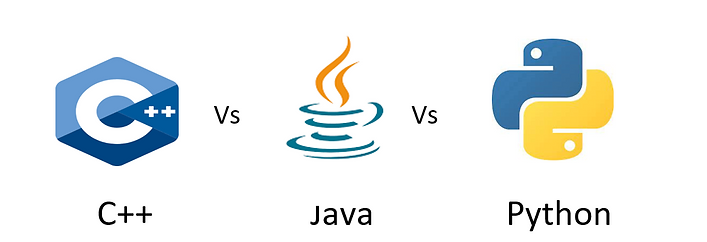
In today’s tech-driven world, Data Structures and Algorithms (DSA) form the foundation of computer science and software development. Whether you’re preparing for coding interviews, competitive programming, or building scalable applications, mastering DSA is a must. But here’s the real question: Does the programming language you choose make a difference in learning DSA? The answer is yes. Let’s explore how DSA concepts differ when you learn them through Python, Java, C, and C++, and how this choice impacts your career. 🔹 Why Learn DSA (Data Structures & Algorithms)in the First Place? When we talk about building a strong career in software engineering, one word always pops up – DSA (Data Structures & Algorithms). For many beginners, it feels like just another subject to study. But in reality, DSA is the backbone of programming, problem-solving, and technical growth. Let’s go step by step and see why mastering DSA is a game-changer. 1️⃣Problem-Solving Skills: Thinking Like an Engineer 🧠 At its core, DSA is not just about writing code—it’s about how you think. When you face a problem, DSA teaches you to: ● Break it into smaller steps● Choose the best method (data structure)● Apply the right process (algorithm) to solve it efficiently. 👉 Example:Imagine you are designing a food delivery system like Zomato. Thousands of users are searching for restaurants, filtering cuisines, and tracking delivery boys in real-time. Without the right data structures like Hash Maps (for quick lookups) or Graphs (for finding the shortest delivery routes), the system will lag, leading to poor customer experience. This is where DSA shapes your logical reasoning. You start thinking like an engineer who doesn’t just solve problems but solves them in the most optimal way. ✅ Benefit: Once you learn DSA, even in daily life, you’ll start approaching problems more logically—whether it’s managing time, optimizing resources, or debugging a complex bug. 2️⃣Cracking Coding Interviews: Your Golden Ticket 🎯 Whether you want to join Google, Amazon, Microsoft, Adobe, or Flipkart, one common filter they use is DSA rounds.Most product-based companies don’t care about how many programming languages you know at the start. Instead, they care about how you think and solve problems under pressure.👉 Example Question:“Given a map of a city with different roads, find the shortest path between two points.” This is a Graph problem (solved using Dijkstra’s or BFS/DFS algorithms). Interviewers don’t want a direct answer; they want to see how you break down the problem and approach it step by step. ● A candidate who knows DSA can explain multiple approaches (brute force vs optimized) and why one is better.● A candidate without DSA knowledge usually struggles or gives inefficient solutions.✅ Benefit:Strong DSA knowledge means higher chances of cracking FAANG-level interviews (Facebook/Meta, Amazon, Apple, Netflix, Google) and landing high-paying jobs. 3️⃣Efficient Development: Writing Code That Scales ⚡ Programming is not just about making things work—it’s about making things work fast and efficiently. A beginner might write code that solves a problem, but an engineer with DSA knowledge writes code that solves it in a fraction of the time and with minimal memory usage. 👉 Example: Suppose you are searching for a name in a contact list of 10 million users. ● If you use a linear search, it could take seconds.● If you use a binary search (with sorted data), it reduces to milliseconds.● If you use a HashMap, you can almost instantly fetch it. This is the power of DSA. Another example is in e-commerce apps like Amazon:● Searching for products● Suggesting related items● Optimizing cart checkoutAll these depend on efficient use of algorithms and data structures. Without them, the app would crash under heavy load.✅ Benefit: With DSA, your code becomes faster, more memory-optimized, and scalable—something every company values. ⃣Career Growth & High-Paying Roles In the software world, DSA is the ladder to success. Most entry-level service-based roles focus only on frameworks and tools. While this is useful, it has limited growth. On the other hand, product-based companies reward those with strong problem-solving foundations. 👉 Example: ● A fresher in a service company (without DSA skills) might get ₹3–5 LPA and spend years doing repetitive tasks.● A fresher with strong DSA skills can crack companies like Google, Amazon, or Microsoft and start at ₹20–40 LPA. Over time, those with DSA knowledge get opportunities to: ● Work on complex system designs● Contribute to high-impact projects● Get promoted faster due to their ability to solve critical problems ✅ Benefit: DSA knowledge = faster promotions + global opportunities + higher salaries. Learning DSA is like building the foundation of a skyscraper. Without it, you may still code, but your career will always remain limited. With it, you gain: ● Strong logical & analytical skills.● Confidence to crack top interviews● Ability to write efficient, scalable programs● A clear edge in career growth and salary So, if you’re serious about a long-term successful career in tech, investing time in DSA is non-negotiable. When we talk about DSA (Data Structures & Algorithms), a big question often arises: 👉 “Which programming language is best for learning DSA?” The truth is, DSA concepts remain the same across all languages. An array is an array, a stack is a stack, and sorting is sorting—whether you implement it in C, C++, Java, or Python. But the learning experience varies depending on the language. Each language has unique features, challenges, and advantages that shape how you understand and implement DSA. Let’s explore DSA in different programming languages one by one, with detailed insights and examples. ⃣DSA in C C is often called the mother of programming languages, and for good reason.🔹 Low-Level ControlC gives you direct access to memory using pointers, which makes it perfect for learning the internal working of data structures.● Example: When you create a linked list, you manually allocate memory using malloc() and connect nodes using pointers.● This helps you visualize how data is stored in memory and how pointers link elements together.🔹 Manual Effort Unlike modern languages, C doesn’t provide built-in libraries for data structures.
A Comparative Analysis of Traditional DSA (Data Structures & Algorithms) and Machine Learning Algorithms, with a Focus on Their Applications in Industry
Powered by Pinaki IT Hub – Building the Next Generation of Tech Leaders Technology has always been built on strong fundamentals. In computer science, Data Structures & Algorithms (DSA) have been the backbone for decades, ensuring efficiency, speed, and reliability in software systems. At the same time, Machine Learning (ML) algorithms are redefining how industries operate in 2025, enabling machines to learn, predict, and automate decisions. But the real question is – do we still need DSA when ML is taking over? Or are they both equally essential for the future of IT? Understanding the Basics Traditional DSA (Data Structures & Algorithms) – The Foundation of Computer ScienceWhen we talk about the fundamentals of computer science, Data Structures & Algorithms (DSA) sit at the very core. They are often called the “language of efficiency” because they determine how data is stored, accessed, and processed in the most optimal way possible. Data Structures: The Building Blocks of Efficient Computing Data structures are not just containers; they are strategic blueprints that decide how information is stored, retrieved, and manipulated in a computer’s memory. Choosing the right data structure can be the difference between a program that runs in milliseconds and one that takes hours. Let’s explore the most important ones in depth: Arrays – The Foundation of Data Storage When it comes to organizing data in computer memory, arrays are often the very first data structure taught to programmers — and for good reason. Arrays provide a simple yet powerful way to store and manage a collection of elements.At their core, arrays are collections of elements of the same type (such as integers, characters, or floating-point numbers) that are stored in continuous memory blocks. This means that if you know the starting address of an array, you can instantly jump to any element by applying a simple arithmetic calculation:Address=Base+(Index×SizeOfElement)Address = Base + (Index times SizeOfElement)Address=Base+(Index×SizeOfElement) This direct computation makes accessing elements almost instantaneous. For example, if you want the 5th element in an array (array[4] in most programming languages, since indexing starts at 0), the computer can fetch it in O(1) time without scanning through the entire collection. How Arrays Work Think of arrays like books on a shelf: each book (element) has a fixed position. If you know the position number, you can immediately pull out the book without scanning others. This ordered arrangement makes arrays extremely efficient for random access operations. However, the “fixed shelf” analogy also highlights their limitation: once the shelf is full, adding new books requires either replacing existing ones or buying a new shelf (resizing), which involves copying everything over. Advantages of Arrays Best for Fixed-Size Collections○ Perfect for storing static data like marks of 100 students, monthly sales data, or weekly temperatures. Constant-Time Access (O(1))○ Direct access to any element without looping. This makes arrays ideal when fast lookups are needed. Simplicity and Predictability○ Easy to implement, understand, and use across nearly all programming languages. Cache Friendliness○ Since elements are stored in continuous memory, modern CPUs can pre-fetch data into cache, boosting performance. Limitations of Arrays Resizing Overhead○ If the array is full and more data needs to be added, the system must allocate a new, larger array and copy all existing elements over. This resizing is computationally expensive. Costly Insertions & Deletions○ Inserting or removing elements in the middle requires shifting elements left or right, which can take O(n) time.○ For example, deleting the 2nd element in an array of 1,000 items requires shifting 998 elements.Fixed Type and Size○ Arrays can only hold elements of the same type and often require size declaration at creation. Real-World Examples of Arrays● Storing Pixel Data in Images○ Images are grids of pixels, and arrays map this perfectly. A photo with resolution 1920×1080 is stored as a two-dimensional array of color values.● Leaderboards in Gaming○ Scores of players can be stored in a sequential array for quick lookups and rankings.● Compiler Symbol Tables○ Arrays are used in low-level operations where speed and direct memory mapping are critical.● IoT Sensor Data○ Continuous streams of temperature, humidity, or pressure readings can be stored in arrays for quick retrieval and analysis. In summary, arrays are fast, predictable, and ideal for scenarios where size is known in advance and random access is critical. However, when flexibility in resizing or frequent insertions/deletions are required, more dynamic structures like linked lists or dynamic arrays (e.g., ArrayList in Java, Vector in C++) are preferred. Linked Lists – Flexible but Sequential If arrays are like books neatly arranged on a shelf, then linked lists are like a chain of treasure chests, where each chest contains not only an item but also the key to the next one. A linked list is a linear data structure made up of individual units called nodes. Each node contains two parts: How Linked Lists Work When a linked list is created, the first node is known as the head. Each node points to the next, and the last node points to null, signaling the end of the list. So, if you want the 10th element, the computer must follow the chain — from the head to the 2nd node, then to the 3rd, and so on — until it arrives at the target. This makes access sequential rather than random, which is both the strength and weakness of linked lists.There are also variations:● Singly Linked List: Each node points to the next one.● Doubly Linked List: Each node points both to the next and the previous, allowing two-way traversal.● Circular Linked List: The last node points back to the first, forming a loop. Advantages of Linked Lists Memory Utilization○ No need for large contiguous memory blocks, which helps when free memory is fragmented. Dynamic Sizing○ Unlike arrays, linked lists don’t require a fixed size. They can grow or shrink as needed, making them memory-efficient in dynamic scenarios. Efficient Insertions and Deletions○ Adding or removing elements doesn’t require shifting other elements, only updating pointers.○ Particularly useful for insertion at the