Careers That Are Growing Faster Because of Data & Technology

In today’s digital-first world, Data and Technology are no longer optional skills — they are the backbone of modern businesses. From startups to global enterprises, companies are using data-driven decisions and advanced technology to grow faster, smarter, and more efficiently. As a result, careers powered by data and technology are growing at an unprecedented speed and offer exciting opportunities for students, freshers, and working professionals. This blog will help you understand: Why Data & Technology Are So Important Today: Powering the Digital Age Introduction: Living in a Data-Driven World We are living in an era where almost every action we perform leaves a digital footprint. From browsing websites and using mobile applications to online shopping, digital payments, social media engagement, and even smart home devices, data is constantly being generated. This massive flow of information has transformed how organizations operate, how governments make decisions, and how individuals interact with technology. Data and technology are no longer optional tools; they have become the foundation of modern business, innovation, and social development. The combination of data and technology enables organizations to gain deep insights, automate complex processes, enhance customer experiences, and remain competitive in fast-changing markets. Companies that understand how to collect, analyze, and apply data effectively are more likely to grow faster, reduce operational risks, and make informed strategic decisions. This is why data literacy and technological skills are now considered essential across industries and professions. Understanding the Role of Data in the Modern Economy What Is Data and Why Does It Matter? Data refers to raw facts and information generated through digital interactions, sensors, transactions, customer feedback, and online activities. While raw data alone may seem meaningless, when it is processed and analyzed using technology, it becomes valuable intelligence that helps organizations understand patterns, trends, and user behavior. In today’s digital economy, data has become one of the most valuable assets. Companies such as e-commerce platforms, social media networks, financial institutions, and healthcare providers rely heavily on data to improve services, personalize user experiences, and optimize internal operations. Data-driven organizations are able to make smarter decisions based on evidence rather than assumptions, leading to improved performance and sustainable growth. Data as a Strategic Business Resource Unlike traditional resources such as machinery or physical infrastructure, data can be reused, refined, and expanded over time. Businesses now treat data as a strategic resource that helps them identify market opportunities, reduce inefficiencies, and gain a competitive advantage. Organizations that invest in data analytics tools and skilled professionals can convert complex information into actionable insights that directly impact profitability and customer satisfaction. How Technology Converts Data into Meaningful Insights The Role of Advanced Technologies Technology plays a critical role in transforming raw data into useful knowledge. Tools such as cloud computing, artificial intelligence, machine learning, big data platforms, and automation systems enable organizations to process large volumes of information quickly and accurately. These technologies allow businesses to extract patterns, predict outcomes, and generate insights that would be impossible to achieve through manual methods. For example, machine learning algorithms can analyze customer purchase behavior to recommend products, while predictive analytics can help companies forecast demand and manage inventory efficiently. Cloud platforms make it possible to store massive datasets securely and access them from anywhere in the world, supporting remote work and global collaboration. Automation and Real-Time Decision Making Modern technology also enables real-time data processing and automation. Businesses can monitor performance metrics instantly, detect issues early, and respond to changes in the market faster than ever before. Automated systems reduce human error, increase operational efficiency, and allow employees to focus on strategic and creative tasks instead of repetitive manual work. Improving Customer Experience Through Data and Technology Understanding Customer Behavior One of the biggest advantages of using data is the ability to understand customer behavior in detail. Businesses can analyze browsing patterns, purchase history, feedback, and engagement metrics to gain insights into customer preferences and expectations. This helps organizations create personalized experiences that build stronger relationships and increase brand loyalty. Personalization has become a key factor in customer satisfaction. Whether it is customized product recommendations, targeted marketing campaigns, or personalized support services, data-driven strategies allow companies to deliver relevant content and offers that match individual customer needs. Enhancing Customer Engagement and Trust Technology also enables businesses to communicate more effectively with customers through chatbots, CRM systems, and automated support tools. These solutions provide faster response times, consistent service quality, and better issue resolution. When customers receive timely and accurate support, their trust in the brand increases, leading to long-term relationships and repeat business. Driving Business Growth and Profitability Data-Driven Decision Making Traditional business decisions were often based on intuition or past experience. Today, organizations rely on data analytics to support decision-making processes. By analyzing market trends, consumer demand, and operational performance, companies can make informed choices that reduce risks and improve outcomes. Data-driven strategies help businesses identify new opportunities, optimize pricing models, and improve resource allocation. This results in higher productivity, better financial performance, and stronger competitive positioning in the market. Optimizing Operations and Reducing Costs Technology enables businesses to streamline operations through automation and process optimization. Supply chain management systems, inventory tracking tools, and enterprise software platforms help organizations reduce waste, minimize delays, and improve overall efficiency. By leveraging data insights, companies can identify bottlenecks and implement improvements that save time and money. The Impact of Data and Technology Across Industries Information Technology and Software Development The IT sector relies heavily on data and advanced technologies to develop innovative software solutions, manage networks, and ensure cybersecurity. Data analytics helps IT professionals monitor system performance, detect security threats, and improve user experience. Cloud computing and artificial intelligence have further expanded the possibilities of digital transformation. Healthcare and Medical Innovation In healthcare, data and technology have revolutionized patient care and medical research. Electronic health records, wearable devices, and diagnostic tools generate valuable patient data that helps doctors make accurate diagnoses and develop personalized treatment plans. Predictive analytics is also being used to identify disease patterns
Choosing the Right Skill Path for Long-Term Career Success

Your Ultimate Guide to Making Smart, Future-Proof Career Decisions In today’s fast-moving and highly competitive world, choosing the right career path is no longer a simple decision driven by passion alone. While interest and motivation still matter, long-term career success now depends on how informed, strategic, and future-ready your choices are. The professional landscape is evolving at an unprecedented pace, and the skills you choose to develop today will directly influence your opportunities, stability, and growth tomorrow. Digital transformation, automation, and global connectivity have reshaped how industries operate and how talent is evaluated. Jobs that were once secure are being redefined, while entirely new roles are emerging across technology, analytics, sustainability, and digital business. In this environment, skills have become the true currency of career growth. Choosing wisely can open doors to global opportunities, while poor decisions can limit progress despite hard work. Why Choosing the Right Skill Path Matters More Than Ever The Career Decisions That Quietly Shape Your Entire Future Every major turning point in life is often defined not by one dramatic moment, but by a series of small, consistent decisions. Career choices work the same way. The skills you choose to learn today silently influence where you will stand five, ten, or even twenty years from now. They determine not just your income, but your confidence, relevance, freedom, and long-term satisfaction. In a world where industries are transforming faster than ever before, choosing the right skill path has become less of an option and more of a necessity. Unlike earlier generations, where one degree could support an entire career, today’s professionals must think dynamically. Skills are no longer static assets; they are living tools that must evolve with market needs. The right skill path can unlock opportunities, while the wrong one can quietly limit growth—even for highly hardworking individuals. Understanding the Shift: How the Job Market Is Being Redefined From Stable Roles to Skill-Driven Careers The global job market is undergoing a historic transformation. Traditional roles that once offered long-term stability are gradually giving way to flexible, skill-centric careers. Employers today are less focused on titles and more focused on capabilities. What you can do now matters far more than what you studied years ago. Technological advancement, globalization, and digital adoption have accelerated this shift. Automation is replacing repetitive tasks, while innovation is creating entirely new categories of work. As a result, professionals who continuously upgrade their skills are moving ahead, while those who rely solely on past qualifications often struggle to stay relevant. Alignment with Market Demand: The Foundation of a Strong Career Why Demand-Driven Skills Create Long-Term Value Choosing a skill path aligned with market demand ensures that your efforts translate into real opportunities. Industries invest in skills that solve current and future problems, and professionals who possess those skills naturally become valuable assets. In 2026 and beyond, sectors such as artificial intelligence, digital analytics, automation, cybersecurity, renewable energy, and advanced software development are shaping the global workforce. Roles like AI and machine learning specialists, data scientists, cloud engineers, digital strategists, and automation experts are no longer niche positions. They are becoming core functions across industries—from healthcare and finance to manufacturing and retail. This rise reflects where businesses are allocating budgets, building infrastructure, and planning for the future. When your skills align with these demands, you are not chasing jobs. Jobs begin to find you. Job Security and Growth in an Uncertain World How the Right Skills Protect You Against Disruption Job security today does not come from staying in one company for decades. It comes from being employable across companies, industries, and even countries. Professionals with in-demand skills enjoy a level of security that goes beyond a single role—they carry their value with them wherever they go. Global employment projections indicate that while some traditional jobs may decline, millions of new roles are expected to emerge by 2030. This shift does not signal job loss; it signals job transformation. New opportunities are being created faster than old ones are disappearing—but only for those who are prepared. When you invest in the right skill path, you position yourself on the growth side of this transformation. You become part of the workforce that is expanding, not shrinking. This leads to higher earning potential, faster promotions, and greater negotiating power throughout your career. Adaptation to Change: The New Career Superpower Why Learning Agility Matters More Than Experience Industries no longer operate on fixed models. Technology, consumer behavior, and global trends continuously reshape how businesses function. Skills that were relevant five years ago may already be outdated today. In this environment, adaptability is no longer optional—it is essential. Choosing the right skill path means choosing skills that evolve rather than expire. Fields like AI, data, digital marketing, and automation are not static disciplines. They constantly update, encouraging professionals to grow alongside them. This continuous learning keeps your mindset flexible and your profile competitive. Professionals who adapt quickly are not threatened by change—they leverage it. They move confidently through transitions, whether it’s a new role, a new industry, or a new market altogether. Financial Stability and Career Sustainability How Skills Translate into Income and Independence Financial growth is a natural outcome of valuable skills. When your expertise solves real business problems, organizations are willing to pay a premium for it. The right skill path often leads to multiple income streams—full-time roles, consulting, freelancing, or entrepreneurial ventures. Moreover, skill-based careers reduce dependency on a single employer. This independence offers greater control over career decisions, work-life balance, and long-term planning. Professionals with strong, relevant skills can adapt their careers around life changes instead of being constrained by them. Over time, this stability compounds—not just financially, but emotionally. Confidence grows when you know your skills will remain valuable regardless of market fluctuations. Personal Fulfillment and Professional Confidence When Growth Aligns with Purpose A well-chosen skill path does more than secure jobs; it builds confidence and fulfillment. Learning meaningful skills creates a sense of progress and control over your future. You
Top 10 Vulnerabilities Cybercriminals Exploit —

And How Ethical Hackers Stop Them In today’s hyper-connected digital world, cyber threats evolve every day. Hackers are more sophisticated, smarter, and constantly probing for weak spots in systems — but ethical hackers work just as hard (if not harder) to safeguard businesses before damage occurs. At Pinaki IT Consultant Pvt. Ltd., we believe strong cybersecurity isn’t just a defense — it’s a proactive shield built on understanding vulnerabilities, testing systems relentlessly, and leveraging cutting-edge technologies like AI for real-time threat intelligence. In this article, we’ll explore: The Top 10 vulnerabilities cybercriminals exploit How ethical hackers identify and fix them How companies implement defenses How AI enhances cybersecurity What Is a Vulnerability? A vulnerability is any flaw or weakness hidden within software, hardware components, networks, or even day-to-day operational processes that can be misused by attackers. These weaknesses create openings that allow unauthorized access, data theft, service interruptions, or complete system manipulation. In today’s digital landscape, no industry is fully immune — whether it’s finance, healthcare, retail, education, or government, every sector carries potential blind spots that cybercriminals actively look for. This is where ethical hackers play a crucial role. They identify these weak points before malicious actors do, helping organizations strengthen their systems, patch vulnerabilities, and build a safer, moreresilient digital environment. Understanding the Role of Ethical Hackers Ethical hackers — sometimes called white-hat hackers or cybersecurity analysts — play a crucial role in identifying, analyzing, and mitigating risks long before they turn into threats. Unlike cybercriminals, they work under legal authorization and follow strict guidelines. Their job is to mimic attackers, uncover vulnerabilities, and provide actionable insights thatstrengthen the organization’s overall security posture. Ethical hackers bridge the gap between potential weaknesses and the strong, resilient systems needed to protect sensitive data, operations, and brand trust. They use a variety of structured methodologies to uncover how an attacker might infiltrate a system. Each technique serves a unique purpose, allowing businesses to see their digital environment through different threat perspectives — whether technical, procedural, or human. This holistic approach ensures that no potential risk is left hidden beneath the surface. Penetration Testing (Pentesting) Simulating Real-World AttacksPenetration testing is one of the most powerful tools ethical hackers use to understand an organization’s true security strength. It involves simulating real-world cyberattacks on networks, applications, servers, and devices. The goal is not just to find vulnerabilities but to demonstrate how deep an attacker could go if those vulnerabilities were exploited. Pentesting helps organizations recognize whether their current security controls are truly effective or simply giving a false sense of protection. Identifying Weak Points Before Criminals DoEvery system, no matter how advanced, carries risks. Penetration tests uncover security gaps such as misconfigurations, outdated software, poor authentication practices, exposed APIs, or insecure data pathways. Ethical hackers use step-by-step, attacker-like methodologies to explore these loopholes and assess how far they can penetrate. This process reveals not just what is vulnerable, but how an actual breach could unfold — making it one of the most realistic security exercises a business can invest in. Delivering Actionable SolutionsAfter completing the test, ethical hackers compile detailed reports explaining the vulnerabilities found, the severity of each issue, and how they can be fixed. This empowers businesses to prioritize repairs, allocate budgets better, and strengthen their systems strategically rather than blindly. Pentesting is not just a test — it’s a pathway toward stronger, smarter, and more resilient cybersecurity. Vulnerability Assessments Scanning for Weaknesses Across the Entire Digital InfrastructureWhile pentesting focuses on attack simulation, vulnerability assessments take a more systematic and wide-angle approach. Ethical hackers perform automated and manual scans across networks, devices, applications, and cloud environments to detect any potential flaw that could lead to a breach. This assessment covers everything from unpatched software to weak passwords, misconfigured firewalls, insecure ports, and outdated libraries. Recognizing Risks Before They Become ThreatsVulnerability assessments help organizations maintain constant awareness of their security posture. New vulnerabilities surface daily — from zero-day exploits to evolving malware strains. Ethical hackers continuously analyze these trends and correlate them with the company’s systems to determine which new weaknesses could have an impact. This process ensures that organizations always stay one step ahead of attackers. Prioritizing Fixes Based on SeverityNot all vulnerabilities pose the same level of danger. Ethical hackers classify them based on criticality, potential impact, and exploitability. This allows security teams to fix the most dangerous risks first and ensure resources are used effectively. Vulnerability assessments are a continuous process — essential for maintaining long-term security and preventingunnoticed risks from piling up. Security Audits Evaluating Compliance, Controls & Best PracticesSecurity audits are comprehensive examinations of an organization’s cybersecurity policies, procedures, and technical configurations. Ethical hackers review everything — from access control to data protection protocols — to ensure the company meets compliance standards such as ISO, GDPR, HIPAA, PCI-DSS, and more. Ensuring Strong Governance Across All DepartmentsUnlike pentesting, which is highly technical, security audits also evaluate non-technical aspects of cybersecurity. This includes employee behavior, documentation quality, incident response readiness, backup policies, and physical security measures. Ethical hackers analyze whether workflows align with industry standards and whether every departmentfollows necessary security practices. Building Long-Term, System-Level SecurityThrough these audits, organizations gain clarity on where they stand and what needs improvement. Ethical hackers provide detailed recommendations that strengthen governance, enhance internal processes, and create a more resilient security culture. Security audits lay the foundation for ongoing protection — not just technical fixes butinstitutional improvements. Social Engineering Tests Testing the Human Side of SecurityTechnology may be strong, but humans are often the weakest link. Social engineering tests are designed to measure how employees respond to real-world psychological manipulation attempts. Ethical hackers mimic attackers by sending phishing emails, impersonating internal staff, making scam phone calls, or attempting unauthorized physical access. Understanding Employee Awareness & Training NeedsThese tests reveal whether employees unknowingly click suspicious links, share sensitive data, or fail to verify identities. Ethical hackers don’t conduct these tests to blame staff — but to diagnose training gaps, improve awareness, and prevent human errors
Ethical Hacking in the Age of Deepfakes:Emerging Threats and How to Prepare
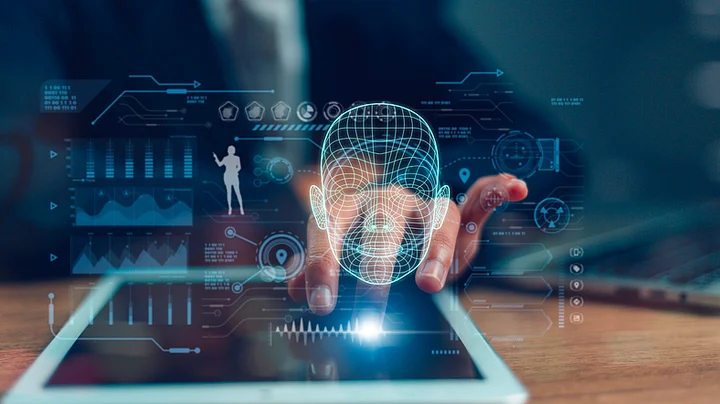
Powered by Pinaki IT Hub – Shaping the Guardians of the Digital FutureCybersecurity has always been a battlefield of strategy, intelligence, and adaptation. But in today’s world, a new, powerful, and highly deceptive threat has emerged — Deepfakes. These AI-generated videos and audio recordings are so realistic that they can easily mimic anyone’s face, voice, tone, and mannerisms. While deepfakes once seemed like entertainment or harmless experiments, they are now being used in fraud, misinformation campaigns, identity theft, extortion, and corporate manipulation. This blog explores what deepfakes are, how they are created, why they are dangerous, and how ethical hackers and security professionals can defend against them — along with practical steps for individuals and businesses. What Are Deepfakes and How Do TheyWork? (In-depth, point-by-pointexplanation) At its core, a deepfake is any piece of digital media — an image, audio clip, or video — that has been synthesized or manipulated by machine learning models so that it appears to show a real person doing or saying something they did not actually do. Deepfakes are distinct from crude photoshops or simple audio edits because they rely on statistical modelsthat learn a person’s visual and vocal characteristics from data and then reproduce those characteristics in new contexts. The output is often not simply “stitched together” media but a coherent, generative recreation that preserves micro-details of behavior: the micro-expressions, timing, inflections, lighting interactions, and other subtleties that make humans trust what they see and hear. Below we unpack every technological and behavioral building block of deepfakes, why those blocks make the results convincing, and what that implies for detection and defense. How deepfakes differ from traditional mediamanipulation ● Traditional manipulation tools (cut-and-paste, manual rotoscoping, basic audio splicing) require human craft and typically leave visible artifacts — seams, unnatural motion, or inconsistent audio levels.● Deepfakes are data-driven: rather than a human hand placing a mouth over a face, a model statistically learns the mapping between expressions, sounds, and visual features, then generates new frames or waveforms that are internally consistentacross time.● Because they are generated by learned models, deepfakes can produce many unique, consistent outputs quickly: multiple video takes, different lighting, or varied speech intonations — all matching the same target persona. The role of deep learning: why the term “deepfake”exists ● The “deep” in deepfakes comes from deep learning — neural networks with many layers that can learn hierarchical patterns from raw data.● Deep learning models move beyond handcrafted rules; they learn feature representations automatically (e.g., the way cheek muscles move when a person smiles) and can generalize those patterns to generate new, believable outputs.● This enables abstraction: the model doesn’t memorize a single frame, it learns what “smiling” means for an individual and can synthesize that smile in new contexts. a) Generative AI models: creating new content ratherthan copying ● Generative models are optimized to produce data that matches the distribution of the training data. In deepfakes, that means images and audio that are statistically similar to the real person’s media.● Key behaviors of generative models in this context:○ Synthesis: generating new frames or audio samples that were not recorded but appear authentic.○ Interpolation: creating smooth transitions between expressions, head angles, or phonemes that the model interpolates from learned examples.○ Adaptation: adjusting to new lighting, camera angles, or backgrounds so the generated output fits a target scene.● Why this matters: a good generative model can convincingly put a public figure into a scene that never happened (speech, interview, courtroom testimony) because it understands — statistically — how that person looks and sounds across manysituations. How GANs (Generative Adversarial Networks) producerealism ● GANs work as a competitive pair:○ The Generator tries to create synthetic media that looks real.○ The Discriminator tries to tell generated media from real media.● Through repeated adversarial training, the generator learns to hide the subtle statistical traces that the discriminator uses to detect fakes.● Practical consequences:○ Early GANs produced blurrier images; modern variants (progressive GANs,StyleGAN) produce high-resolution faces with correct textures, pores, and hair detail.○ The adversarial process pushes the generator to correct micro artifacts (lighting mismatch, unnatural skin texture), producing outputs that pass human scrutiny and evade simple algorithmic checks. b) Neural networks and machine learning: learningbehavior, not just appearance ● Neural networks used for deepfakes are trained on three complementary streams of data: static images, video sequences, and audio when voice cloning is involved. Each stream teaches different aspects:○ Static images teach shape, color, texture.○ Video sequences teach motion, timing, and temporal continuity.○ Audio teaches prosody, pronunciation patterns, and phoneme-to-mouth-motion correlations.● Important learned features:○ Facial landmarks: positions of eyes, nose, mouth relative to face geometry.○ Temporal dynamics: how expressions change frame-to-frame (for example, the timing of a blink).○ Idiosyncratic behaviors: specific mannerisms, habitual smiles, throat clearing, speech cadence. ● Why behavior learning is key:○ Humans judge authenticity by consistent behavior over time. Models that learn behavior can reproduce those consistencies — a powerful reason why modern deepfakes look alive rather than like pasted stills. Training datasets: quantity, diversity, and quality matter ● The more diverse the training data the model sees (angles, lighting, expressions, ages), the more robust its outputs.● Public platforms are a rich source: interviews, social media clips, podcasts, and public speeches become training material.● Small data techniques: With modern approaches, even limited samples (tens of seconds of audio or a few dozen images) can be sufficient for a convincing result due to transfer learning and model pretraining on large, generic datasets.● Practical implication: Privacy leakage is a core risk — content you post publicly can be repurposed to train a convincing synthetic replica of you. c) Voice cloning and speech synthesis: the audio threat ● Voice cloning moves beyond simple mimicry of timbre; it models prosody (how pitch and emphasis vary), micro-timing (pauses and inhalations), and commonly used phonetic inflections. Modern systems can:○ Recreate an emotional tone (anger vs. calm).○ Imitate the speaker’s rhythm and habitual hesitations.○ Produce speech in different acoustic environments (adding reverberation to match a particular room).● How it’s done:○